


Visual routines move reminders out of people’s heads and into the places where daily life happens. For busy families, that shift can make mornings, transitions, and evenings calmer and easier to manage.
Does your morning feel like a sprint of repeated reminders, missing shoes, and one child melting down while another cannot find a backpack? In many families, a visible plan works better than more talking because it gives everyone a shared reference point instead of relying on memory under stress. The goal is not a perfect system. It is a routine that is simple to follow, easy to maintain, and realistic for ADHD households.
Why visual routines help ADHD homes feel calmer
A visual schedule is a clear, visible sequence of tasks shown with pictures, words, symbols, or a digital display. That matters in ADHD-friendly homes because daily friction often comes less from unwillingness and more from executive function strain. When steps are posted where the routine happens, children do not have to hold every instruction in working memory while also managing time, emotions, and distractions.

A consistent ADHD schedule can lower cognitive load, improve transitions, and reduce anxiety by making the next step obvious. In practice, that can mean fewer bedtime arguments, less confusion before school, and less mental load on the adult who usually carries the whole family plan. In homes that run more smoothly, the change is rarely dramatic at first. It usually looks like one fewer repeated reminder, one faster exit, and one calmer evening. Those small wins add up.
Visual routines also help with time blindness, which can make time feel abstract. A child may know school starts at 8:00 AM and still have no real sense of how long it takes to get dressed, eat breakfast, and find shoes. A posted routine paired with a visible timer makes time more concrete.
What a visual routine can look like in real family life
A visual routine does not need to be fancy. Children with ADHD often do better with simple, prominent schedules that match their developmental level, and older kids may prefer short written checklists or electronic schedules. For a preschooler, that may mean photos showing the toilet, toothbrush, shirt, breakfast, and shoes. For an elementary-age child, it may be a five-step morning card on the fridge. For a teen, it may be a shared digital calendar in the kitchen plus a short after-school reset checklist.
Different types of visual routine tools arranged neatly
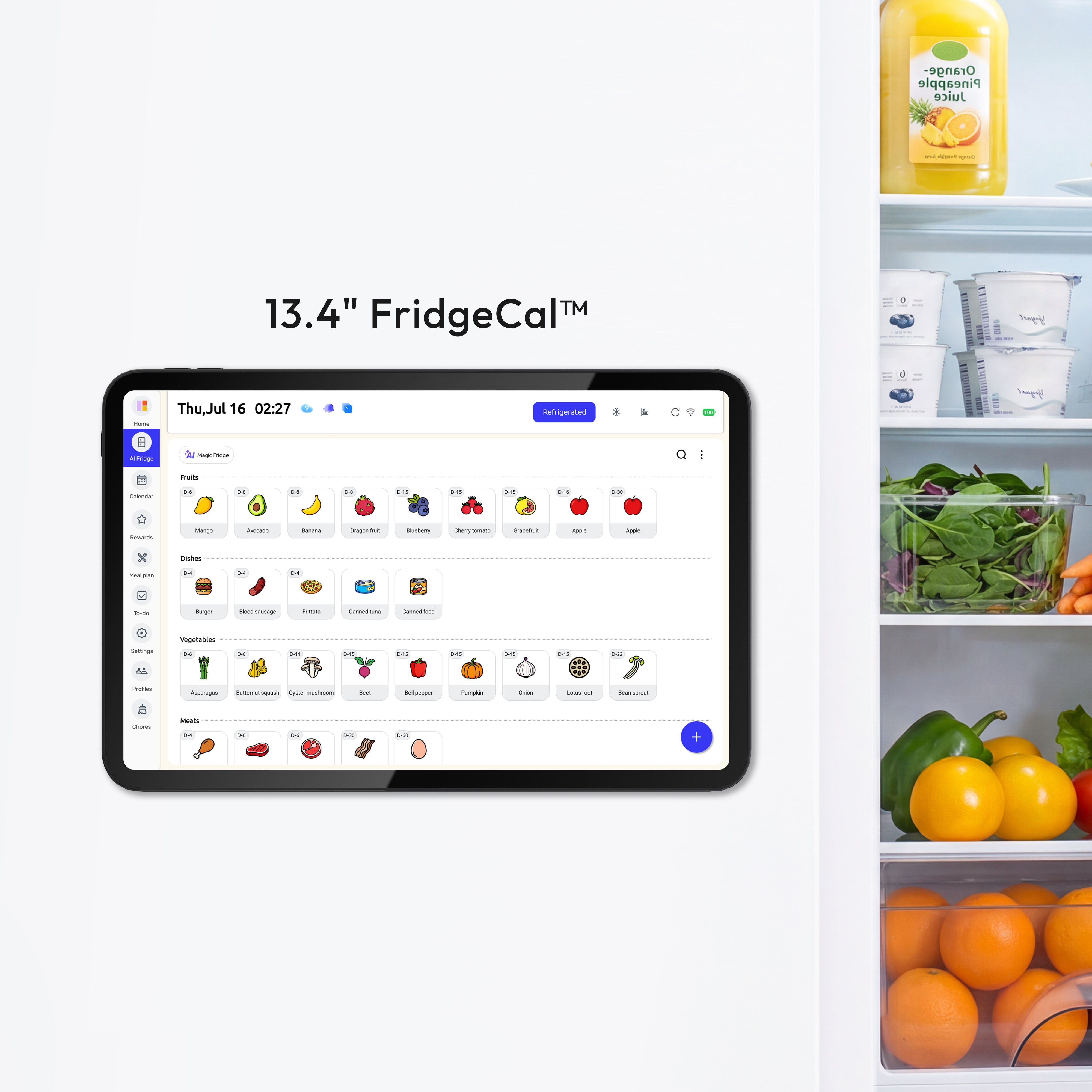
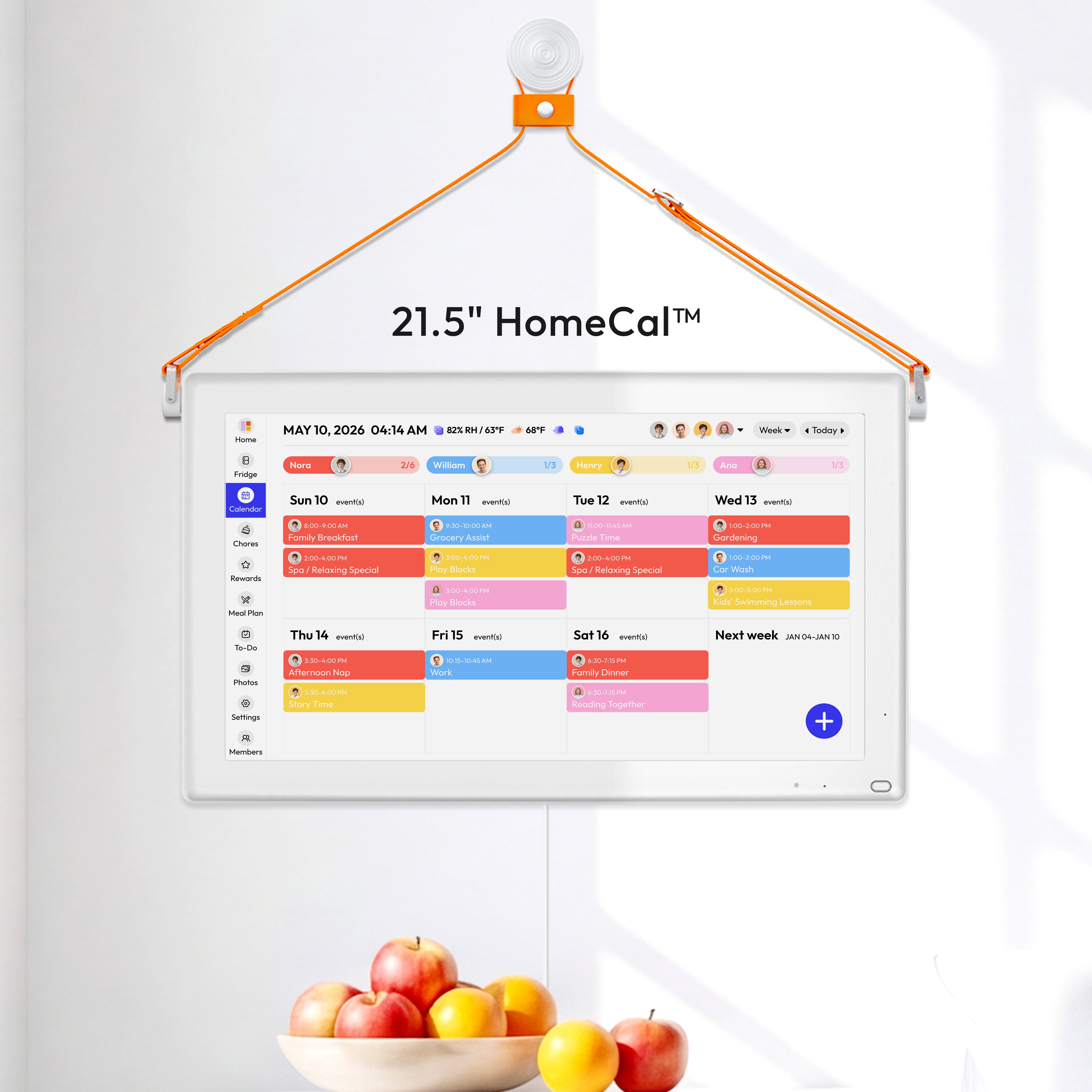
The format matters less than visibility. A cell phone calendar can help, but many families find it falls short as a household tool because it is personal and easy to ignore. A shared digital display on or near the fridge solves a different problem: it keeps the plan visible to everyone and updates automatically when appointments change. Many ADHD-friendly households do best with a layered system, using private reminders on a cell phone and a shared visual anchor at home.
Routine format |
Best use |
Main advantage |
Main drawback |
Picture strip |
Young children, hygiene, bedtime |
Very easy to scan |
Can feel too childish for older kids |
Written checklist |
Readers, chores, homework |
Fast to update |
Easier to ignore if it blends into the background |
First-then board |
Tough transitions |
Reduces negotiation in the moment |
Too limited for longer routines |
Fridge calendar |
Whole-family planning |
Shared visibility and syncing |
Needs setup discipline |
How to build a routine that people will actually use
Start with one pain point, not the whole day
A simple start works better than redesigning the entire household in one weekend. Choose the routine that causes the most friction right now, usually mornings, the homework transition, or bedtime. Then make only that sequence visible.

If school mornings are the problem, begin with the last 20 minutes before leaving. A posted routine might read: bathroom, get dressed, eat breakfast, brush teeth, backpack by the door, shoes on. That is specific enough to follow and short enough to use consistently. A long all-day chart often fails because it becomes wallpaper.
This matches practical visual-schedule guidance that recommends starting with only a few steps and adding support before expecting independence. It also fits what families discover quickly: a routine is more likely to stick when it solves an immediate daily problem.
Put the routine where the problem happens
A morning, after-school, or bedtime checklist works best when it is placed exactly where the action should happen. Bedtime steps belong near the bathroom or bedroom door. Homework steps belong at the homework station. A family schedule belongs in the kitchen because that is where people naturally pass through, ask questions, and make decisions.
Bedtime checklist posted at a child's bedroom door
That placement reduces a common failure point: the system exists, but nobody sees it when it matters. The most effective home setups are almost boringly obvious. If a child needs to remember a water bottle, the reminder belongs by the backpack, not in a parent’s head.
Use fewer words and more concrete steps
A useful ADHD planner or schedule makes the next action obvious. “Get ready” is vague. “Put lunchbox in backpack” is concrete. “Clean room” is too broad. “Dirty clothes in hamper, books on shelf, trash in bin” gives the brain a clear place to start.

This is where many well-meaning routines break down. Adults write categories, while ADHD brains need action cues. If a step takes more than a few minutes or includes multiple hidden decisions, it probably needs to be broken down further.
How shared calendars make routines easier for busy families
A shared digital family calendar becomes more useful when the household treats it as the one place for time-based commitments. For ADHD families, that reduces the “I thought you knew” problem. It also lowers the burden on one parent to keep everyone updated verbally.
The key is to use the calendar for actual events and scheduled blocks, not every possible to-do. ADHD calendar strategies show that unscheduled tasks can clutter the day and then disappear when missed, which leaves people feeling even more behind. A better approach is to keep appointments, practices, pickups, and planned work blocks on the calendar while longer task lists live somewhere else.
A good kitchen display can support routines without becoming another noisy app. If soccer practice changes at 3:00 PM, the update appears on the shared screen. If dinner needs to happen earlier because of a 6:30 PM appointment, the family can see it at a glance. That passive visibility is often more effective than hoping everyone checks a cell phone at the right time.

How to use reminders without creating more noise
A digital calendar can work as a second brain when reminders are specific and limited. For ADHD homes, the goal is not more alerts. The goal is better-timed alerts tied to real commitments.
That matters because time-specific reminders help, while generic reminders often become background noise. “Leave for orthodontist at 3:40 PM” is actionable. “Be more organized” is not. At home, visible routines handle the recurring basics, while the cell phone handles location-based or time-sensitive backup.
A strong combination is a posted routine plus one timer. If homework starts at 4:00 PM, the child can see the after-school checklist on the fridge and hear the timer when transition time begins. That setup is calmer than a parent repeating the same instruction three times and then escalating.
What to do when the routine stops working
Even good systems need adjustment. Flexible planning methods work better than perfectionism because ADHD needs change across seasons, school demands, sleep patterns, and family stress. If the routine is being ignored, simplify it before replacing it.
Sometimes the schedule is too long. Sometimes it is posted in the wrong spot. Sometimes a child has outgrown pictures and needs a short checklist instead. Sometimes the family has added so many categories, colors, and trackers that the system itself becomes overwhelming. When that happens, strip it back to the minimum useful version and rebuild only if needed.
The same rule applies to adults. If the family calendar is packed with every possible task, people stop trusting it. If the morning routine has 10 steps before 7:30 AM, it is probably too ambitious. A system should reduce friction, not prove effort.
A calmer ADHD-friendly home usually does not come from trying harder. It comes from making the next step easier to see, easier to start, and easier to share. When the routine lives in the environment instead of in one exhausted person’s memory, family life gets lighter for everyone.


