




A weekly chore chart works best when it sits where your family already looks, shows only the next seven days, and connects chores to the calendar, meals, and papers that move through your home. In a kitchen or family command center, the point is not to make a prettier board. It is to cut down on missed handoffs, repeat reminders, and hidden work.
If one person keeps carrying the whole week in their head, the chart is not doing its job yet. Families usually get better results when chores live in the same visible spot as school papers, meal plans, and the family schedule. Set that up well, and the next week feels easier to run without redesigning your whole house.
Put the Chart Where People Already Stop
Choose traffic over aesthetics
A high-traffic wall near the kitchen or main entry usually works better than a neat corner in a bedroom or office, because the chart only helps if people pass it several times a day. In most homes, that means a pantry wall, the side of the fridge, a mudroom wall, or the hall between the garage door and kitchen.
A kitchen command center works best when the layout follows real movement: the calendar and meal plan at adult eye level, a paper inbox within one step of the door, and kid-facing lists low enough to read without help. That setup matters because people use what they can see and reach fast.
Small homes do not need one perfect wall. A split command center across two kitchen walls can still work if the pieces stay close together, such as a weekly calendar by the fridge and clipboards or chore sheets by the breakfast area.
Test the location before mounting everything
A simple trial can save you from building a board nobody uses. Tape a temporary paper chart in two possible spots for 3 to 5 days each, then notice where people actually drop keys, check the date, add groceries, or ask schedule questions.
If the chart is near the action, it becomes part of the day without a speech. If it is hidden, it turns into one more thing the household manager has to remember to mention.
Build Around One Weekly View
Keep the weekly chart next to the rest of family life
A visible planning system works because it gives the whole household one quick-glance reference point instead of leaving plans on one person’s phone. That is why the weekly chore chart should sit beside the calendar, meal board, grocery list, and any school-paper pocket, not on a random clipboard in another room.

A starter family command center usually needs only 4 to 6 core tools: a shared calendar, a paper sorter, key hooks, a message or bulletin area, and, for busier weeks, a meal board and grocery list. Once those basics are visible together, chores stop feeling separate from the real week.
Pick a format people will actually update
An editable weekly family chore chart is useful because names and tasks can change as work shifts, sports seasons, and school demands change. For a family of four, one column per person and one row per task is often enough. Print it in US Letter size, slide it into a frame, or laminate it so the surface can be reused.
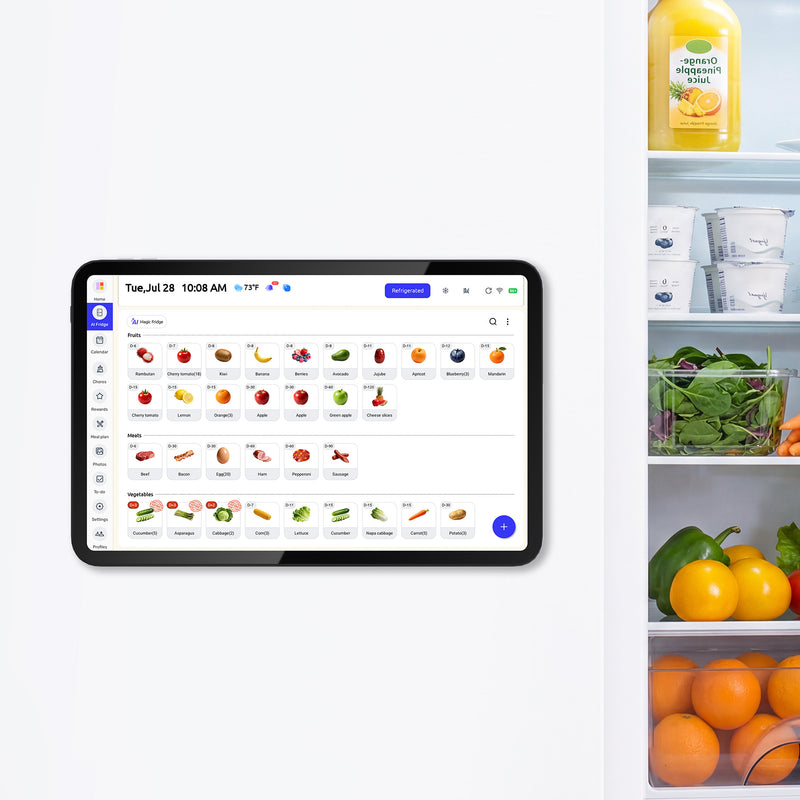
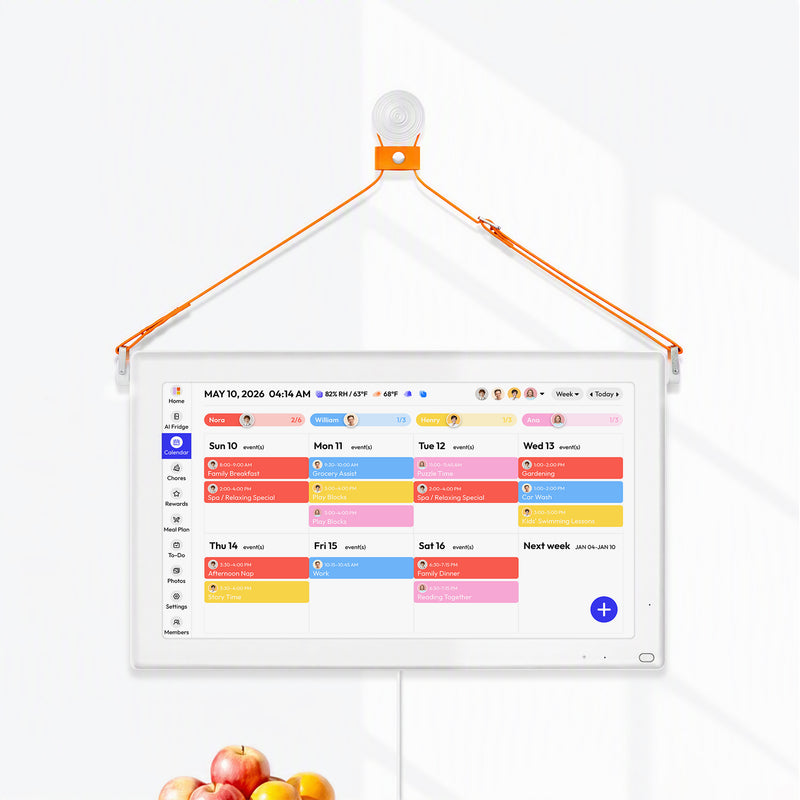
If your household is more likely to use a shared screen than a paper chart, a wall-mounted option like the Everblog 21.5" Digital Calendar can serve as one weekly view for plans, chores, tasks, and events in the same visible spot.
The best-looking system is not always the best-working one. A plain chart that gets updated every Sunday beats a decorative board that freezes after one week.
- Paper layout: columns for day, person, task, done, and notes, with one row per job for the next seven days.
- Dry-erase layout: rows for before school, after school, after dinner, and Sunday reset, with one sample line such as Mon | Ava | unload dishwasher before school | □ | lunch boxes back in sink.
- Quick trial: tape the chart up for 3 to 5 days, watch whether people use it without prompts, and treat it as a miss if one person still carries the whole week mentally after 7 days; a predictable daily routine works best when the structure matches what people can actually follow.
Put the Right Chores on the Weekly Chart
Show only chores that matter this week
A weekly chore schedule works better when chores are grouped by frequency first. Daily and weekly tasks belong on the command center chart. Monthly and seasonal tasks should live on a separate checklist, so the main board does not get crowded with jobs nobody is doing today.
In a kitchen-centered system, that usually means daily dishes, counters, table reset, trash check, floor sweep, lunchbox cleanup, and pet feeding if that happens in the kitchen area. Weekly items might include fridge cleanout, sink deep clean, mopping, pantry check, and family laundry reset.
Write chores as visible actions, not vague reminders
A clear visual plan cuts confusion when every person can see exactly what they own. “Help with kitchen” is weak. “Unload dishwasher before school” is better. “Wipe island and sweep after dinner” is better still.

A printable and editable chart is especially helpful when you need to rewrite chores in plain language for different ages. A 7-year-old might have “put lunch containers in sink.” A teenager might have “run dishwasher and reset counters.” The clearer the wording, the fewer follow-up reminders you need.
- Light, under 10 minutes: unload dishwasher before school, put lunch containers in sink, wipe table after dinner.
- Medium, 10 to 30 minutes: reset counters and sweep, fridge check and toss leftovers, sort and start one laundry load.
- Heavy, 30+ minutes: mop kitchen floor, deep-clean sink and trash area, family laundry reset; chores land better when they match new skills instead of jumping straight to the hardest jobs.
Make the Work Feel Fair, Not Just Even
Count effort, not just task lines
A common reason chore charts fail is that they keep the mental load with one person, who still has to notice, remind, check, and reassign everything. Another problem is that charts often treat a 3-minute wipe-down and a 45-minute bathroom clean as if they are equal. That is how families end up arguing even when the chart looks balanced on paper.
A fairer chore split starts by rating chores by effort: light jobs under 10 minutes, medium jobs around 10 to 30 minutes, and heavy jobs over 30 minutes. Then assign by preference where you can, and rotate the least-liked jobs weekly or every other week.

Add proof of completion
A weekly chart should not only show who is supposed to do a chore. It should also show what was actually done. That can be as simple as a checkbox, initials, or a dry-erase mark next to each task.
Before the week starts, take five minutes to agree on who owns which jobs, which least-liked chore rotates next, and what happens if something is missed; households usually get fewer repeat fights when people discuss and agree on terms before the work starts. If a task becomes a problem, talk first, pause if the conversation gets tense, then swap or reassign it; for teens, keep the assignment public but let proof stay private with initials or a parent check.
For example, “clean bathroom” creates debate. “Scrub sink, wipe mirror, empty trash, replace towels” creates a visible finish line. When families define “done” that clearly, the chart becomes less about nagging and more about shared standards.
A 15-minute check-in once a month also helps. That is the time to notice that soccer season changed who can mop on Thursdays, or that one person quietly took over all the supply restocking again.
Make the System Easy for Kids and Flexible for Adults
Adjust the chart to the reader
A family command center layout works better when kid-facing lists are easy to see and use independently. Younger children often do best with very short task lists, pictures, or simple repeatable routines. Older kids can handle text checklists and multi-step jobs, but they still need the work written clearly.
This matters even more in uneven weeks. If a parent travels, a child has a late practice, or somebody gets sick, the chart should be easy to adjust without rebuilding the whole wall. Editable printables, clipboards, and magnetic task cards all help because they can change with the week.
Use paper for visibility and digital for live changes
A a company is useful when schedules shift in real time, because shared calendars and task boards can sync across devices and update fast. But a screen alone is easy to ignore if nobody walks past it. That is why many families do best with a hybrid setup: a visible kitchen overview plus a shared digital calendar or task tool for live updates.
A paper-and-digital mix also helps with handoffs. The wall shows the family what this week looks like at a glance. The app handles reminders, schedule changes, and the details that would clutter the board.
Setup |
Best for |
Watch out for |
Paper chart only |
Quick weekly visibility |
Goes stale if no one updates it |
Digital only |
Fast schedule changes and reminders |
Easy for kids or partners to miss |
Hybrid system |
Most busy families |
Needs one short weekly refresh |
FAQ
Q: Is a weekly chore chart better than a monthly one?
A: Usually, yes. A weekly chart is easier to read at a glance and fits the way most families actually plan meals, school, pickups, and cleaning. Keep the board focused on the next seven days, then move monthly jobs to a separate list.
Q: Should every family member have the same number of chores?
A: Not necessarily. Fair does not mean identical. A short daily kitchen reset and a full bathroom deep clean are not the same workload, so look at time, effort, age, and schedule, not just the number of boxes.
Q: What if the chart works for two weeks and then nobody checks it?
A: That usually means the system is too vague, too crowded, or too dependent on one person doing all the reminding. Cut the list down, rewrite chores in plain language, add checkboxes, and refresh it during the same short weekly family check-in every time.
Practical Next Steps
A weekly chore chart works when it is visible, specific, and small enough to keep current. Start with the next seven days, not the next six months.
Action checklist
- Pick one kitchen or entry spot your family already passes several times a day.
- Put the weekly chore chart next to the calendar, meal plan, and paper drop zone.
- List only daily and weekly chores on the main board.
- Rewrite each chore so “done” is obvious in one quick read.
- Balance chores by effort and time, not just by counting tasks.
- Add a checkbox or initials column so completion is visible.
- Refresh the board during a short Sunday reset and trim anything that no one is using.
If you want the chart to last, keep it plain and easy to update. The best family command center is the one that helps everyone know what to do next without asking the same question three times.


