
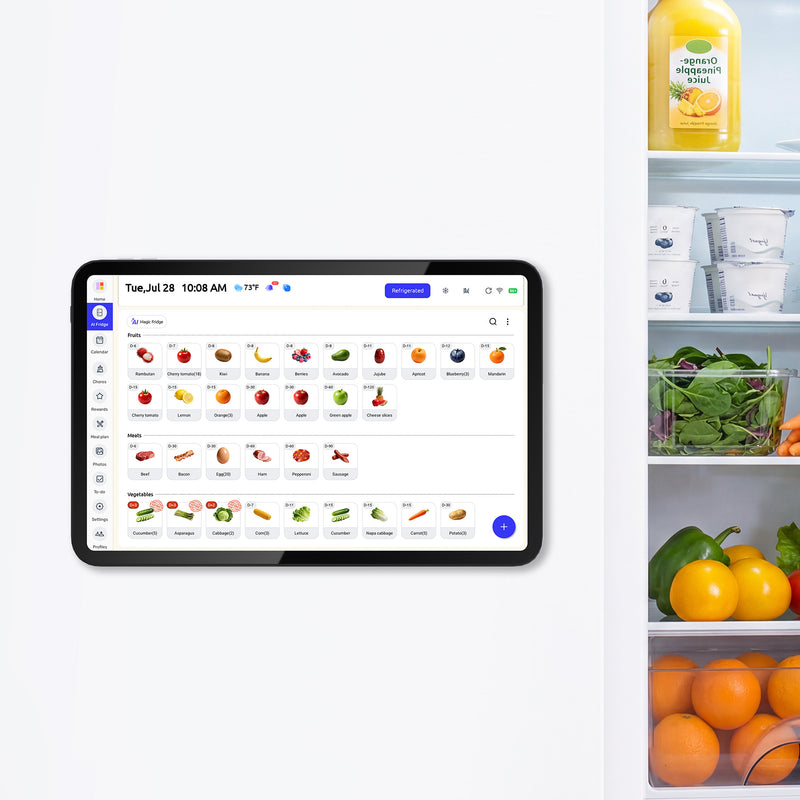


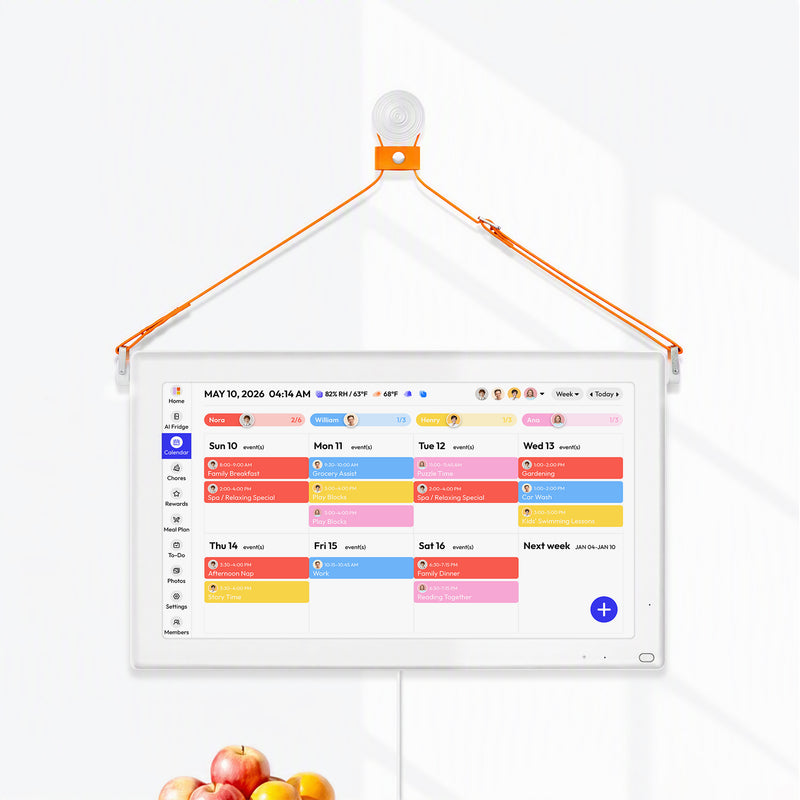



A calendar screen is a shared display that shows your family's schedule, chores, meals, and reminders in one visible place. It works by syncing updates from phones, apps, or email onto a screen everyone in the house can check quickly.
When the school pickup changes, one parent gets stuck in a late meeting, and dinner still needs a plan, the real problem is often that the information is scattered. A screen in a high-traffic spot, like the kitchen or main hallway, is usually more useful than one tucked away in a home office. What follows will help you decide what a calendar screen really does, whether your family would use one, and what setup is worth the effort.
What a Calendar Screen Actually Is
It is a display, not a new kind of calendar
A calendar screen is usually a smart display, wall-mounted touchscreen, tablet, or shared home screen that shows everyone’s plans at once. In a busy home, that can include school events, work meetings, dentist visits, grocery reminders, dinner plans, and chores.

Most of these systems still rely on the Gregorian calendar that people already use for daily life. The screen does not change how dates or months work. It simply puts those dates where the whole household can see them without asking, texting, or digging through email.
What families usually want it to show
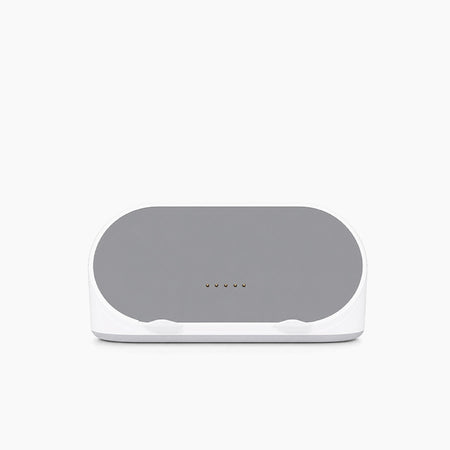
A calendar product is one example of a product built around this idea, and the Everblog 21.5" Digital Calendar is another example of a wall-mounted display designed to show shared events, tasks, and chores in one place. The bigger point is not the brand. It is that a useful family screen mixes schedule items with household follow-through.
That is why these screens often feel more helpful than a regular phone calendar. A parent can glance up during breakfast and spot a conflict between after-school care and soccer practice. A child can see whether it is their turn to unload the dishwasher. A quick visual check can answer, “What’s tonight’s dinner plan?” before the question becomes a scramble.
How a Calendar Screen Works Day to Day
Sync means one update shows up in more than one place
A family calendar on a platform is created automatically when you make a platform family group, and approved members can view it on signed-in devices. In plain English, that means a doctor’s appointment added on one phone can show up on another phone and on the shared home screen without anyone typing it twice.
A digital family calendar comparison also shows why this matters for real households: some tools can pull together calendars from multiple platforms into one view. If one parent uses a work calendar from a company, the other uses webmail from a platform, and a grandparent shares plans from a phone, that kind of integration can save a lot of manual copying.

Editing rules matter more than people expect
People with access to the family calendar can edit events, manage sharing, and rename the calendar. That is useful, but it also means the household should decide early who owns the main setup and who gets full editing rights.
One detail from a platform’s help notes is easy to miss: upcoming-event notifications follow the primary calendar’s defaults, but family members do not automatically get alerts every time someone creates, edits, or deletes an event. In practice, the screen works best as the visible source of truth, while phones still handle urgent reminders like “leave in 10 minutes.”
Why Busy Families Find It Useful
Shared visibility is the real feature
A digital wall calendar helps mainly because everyone can see the same plan in one place. That matters more than extra features when the real problem is not making a schedule, but getting multiple people to look at the same one.
The same review from a consumer organization found that placement was crucial, with a kitchen or other morning gathering area being more useful than a home office. That tracks with family life. The best screen is the one people pass while packing lunches, checking backpacks, or figuring out who is driving to practice.
It reduces small misses that create bigger stress
A review from a consumer organization also noted that adults and kids are dealing with fuller schedules than they used to. A calendar screen will not make life less busy, but it can help you catch avoidable conflicts earlier, like realizing the grocery pickup overlaps with band rehearsal before someone is already late.
Some setups also make chores and meal planning easier to see in public. A home hub in this category can combine schedules, lists, chores, and dinner planning on one screen, which is useful when the question is not just “What time is pickup?” but also “Do we need milk?” and “Who is taking out the trash tonight?”
It can support routine without overcomplicating the house
A visible family schedule can also help homes that do better with predictability and fewer repeated verbal reminders. When routines, dinner plans, and after-school activities stay in one shared place, people are less likely to rely on memory alone.
That does not mean every task belongs on the screen. The best systems usually keep only the items that affect more than one person, such as school closures, carpool changes, shared dinners, or chores that need public visibility.
What Matters When Choosing One
App-first setups cost less, but dedicated screens are harder to ignore
A family calendar setup on a platform can cost nothing if your household already uses phones, tablets, or a shared browser window. For many families, that is enough to test the habit before buying hardware.
A market comparison shows the practical trade-off: one calendar platform is free, one family organizer has a free plan with a $39/year premium tier, one screen product starts at $169.99 for a 10-inch model and goes much higher for larger displays, and one smart display line starts around $299.99. The question is not which product sounds smartest. It is whether your family needs a visible screen that stays on, or just a better shared app.
Integrations matter when your family already uses different tools
A voice-enabled display from a platform can make sense if your kitchen already runs on a voice assistant and your main need is quick access to calendars from multiple platforms. That said, a voice-first device may feel less useful if you want a full command center with chores, meal planning, and a big week view.
A product add-on service is marketed as a way to turn emails, paper schedules, and PDFs into events automatically. The real-life value is simple: if the school sends spirit week details as a PDF and the coach sends practice changes by email, less manual retyping means fewer chances to miss something.
How to Set One Up So It Actually Helps
Start with one main family calendar
A shared family calendar gives households a common place to add events from the start. Whether you use one platform or another, it helps to pick one main calendar for true household items like school schedules, practices, doctor visits, dinner guests, and travel.
Keep names short and consistent so the screen is readable from a few feet away. Color-code by person. Use plain titles like “Pickup - Mia,” “Dinner with Nana,” or “Trash Night.” If your display includes chores, only post the jobs that benefit from public visibility, such as laundry rotation, pet feeding, or unloading the dishwasher.
Put the screen where people already gather
A wall calendar review makes the setup lesson clear: location affects usefulness more than many spec details. Near the kitchen, mudroom, or main hallway is usually better than a bedroom or office because people naturally check it while leaving for school or walking in after work.

A companion app also matters because schedules change away from home. If practice gets moved at 2:15 PM or a grocery pickup shifts to 6:30 PM, the wall screen should be updated before the evening rush starts.
Check ownership and cleanup rules before the family depends on it
The family calendar rules on a platform say the family manager is the default owner, ownership can be transferred, and people who leave the family group lose access. That is worth sorting out early so the system does not become messy when roles change.
The same platform help guidance notes that if the family group is deleted, the calendar and its events must be deleted manually. That sounds minor, but it matters when older kids move off the shared setup or when a household wants a clean restart instead of years of stale events.
FAQ
Q: Do I need a special wall device to have a calendar screen?
A: No. A shared family calendar can work on phones, tablets, or a browser window first. A dedicated wall display mainly adds visibility and convenience.
Q: What is the biggest benefit for a busy family?
A: The main benefit of a digital wall calendar is shared visibility. Everyone can see the same week, which makes school pickups, dinner plans, and chore handoffs easier to coordinate.
Q: What should I watch out for before buying one?
A: A digital family calendar comparison shows that cost, subscriptions, and integrations vary a lot. Before buying, decide whether you need a full household hub or just a simple shared calendar that already works on the devices you own.
Practical Next Steps
If you are curious but not ready to buy hardware, start with the cheapest test: use one shared calendar for two weeks and place it on a kitchen tablet or laptop. If the family actually checks it, then a dedicated screen may be worth the money.
- Put only shared items on it first: pickups, dinners, practices, appointments, and 3 to 5 recurring chores.
- Place it where people already stop in the morning and evening, not where you hope they will remember to look.
- Keep phone reminders for urgent events, and let the screen handle the big picture for the household.
References
- List of calendars - Wikipedia
- Use a family calendar on a platform - desktop
- Use a family calendar on a platform - mobile
- Best Digital Family Calendar for Planning & Chores in 2026
- Shared Calendars for Home Health Management - PMC
- Calendar product
- Calendar product
- Calendar product
- Consumer organization digital calendars review


