





A digital touchscreen calendar works best when it becomes the one visible place your household checks every day for schedules, meals, chores, and reminders. Put it where people already pass through, keep the display simple, and pair it with a short weekly reset.
Ever feel like the real family schedule is spread across text threads, school emails, and sticky notes by the coffee maker? Families usually get better results when they stop hiding planning inside individual phones and move the important stuff into one shared, visible routine. You will get a practical setup for the next seven days, not a whole new life system.
Why a Kitchen Touchscreen Calendar Works Better Than Phone-Only Planning
One visible source of truth
A shared digital calendar helps families stay in sync because everyone can see updates in real time instead of waiting for one person to forward a text or remember a detail. That matters in a kitchen or command center because the schedule stops being private knowledge on one adult's cell phone and becomes shared household information.

A family command center works best when it gives school papers, sports times, meal plans, and household tasks one central home. In practice, that means fewer missed handoffs like "Who is picking up at 3:30 PM?" and less hidden work for the person who usually keeps the mental list.
Visibility beats good intentions
A visible daily-use area makes the system more useful than a calendar tucked into a private office or spare room. The kitchen, mudroom, garage entry, or a drop zone between rooms works because people naturally check in and check out there.
A large shared display also solves a common phone problem: no one sees the full week at once. Parents may still manage details on their phones, but the wall or counter display gives the household a big-picture view that is easier to scan while packing lunches, unloading groceries, or answering "What do we have tonight?"
What to Put on the Screen So It Actually Helps
Start with four categories
A shared calendar as the backbone should cover the basics first: school times, pickups, appointments, practices, and family events. If a sitter, grandparent, or older child helps with driving or supervision, add who is attending and who is responsible for the handoff.
A command center setup gets much more useful when you also include meal plans, chore reminders, and a short note area for time-sensitive items like library books, spirit week, or a bill due date. Keep those items on the same screen only if they help the next decision. If they create clutter, move them to a side list.

Use plain labels and color with restraint
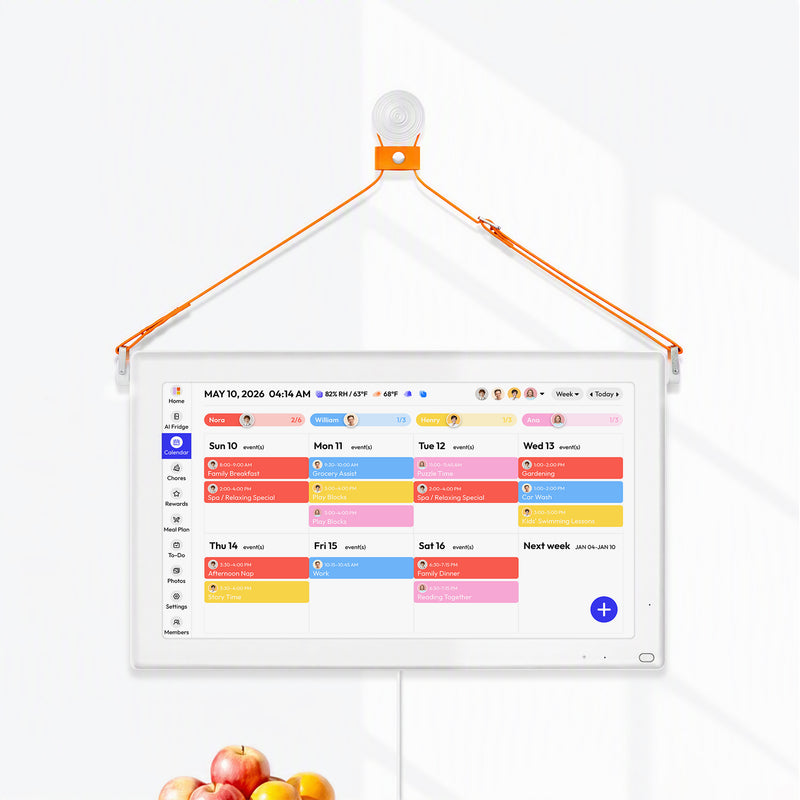
A shared calendar system works well when both adults can add appointments and spot conflicts quickly. Color-code by person or by category, but do not go so far that every shade means something different. Most families do well with simple colors for each person plus one shared family color.
A touchscreen calendar with chores and lists can also carry dinner plans, task checklists, and recurring jobs. A realistic kitchen view might show today's events, this week's dinners, two after-school chores per child, and one household reminder like "trash out Tuesday." That is enough to guide the day without turning the screen into wallpaper.
Where to Place It in a Kitchen or Command Center
Put it near motion, not where it looks nicest
A command center placed where the family already gathers gets used more than one designed around a perfect blank wall. The best spots are often near the garage door, mudroom opening, pantry entrance, kitchen desk, or a short wall beside the refrigerator.
A drop-zone location is especially effective because it catches daily transitions. If people grab backpacks, shoes, or keys there, they are much more likely to glance at tomorrow's pickup plan or notice that Wednesday dinner needs to be moved.
Build the surface around the calendar
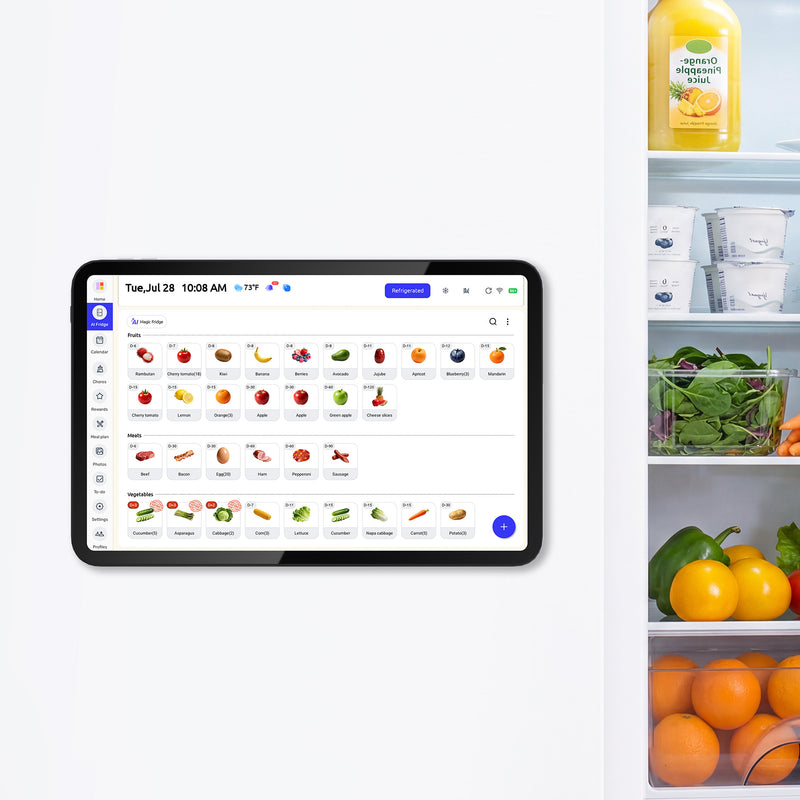
A functional command center usually needs more than the screen alone. If you want a wall-mounted shared display, something like the Everblog 21.5" Digital Calendar can serve as one screen for schedules, chores, and events. Add a small paper zone for forms that still need signatures, hooks for keys or lanyards, and one bin or inbox for items that need action.

A simple system that matches real use matters more than a pretty wall. Avoid stacking papers behind other papers, avoid deep bins that turn into catch-alls, and give each nearby item a clear home. If the touchscreen sits beside mail, backpacks, and lunch notes, the whole area should reduce friction, not create another pile.
Should You Replace Paper Completely? Usually No
The best setup is often hybrid
A hybrid method using shared digital scheduling makes sense for many households because digital tools are portable, shareable, and better for repeating reminders. That is why a touchscreen calendar is strong for family visibility and coordination, especially when multiple adults and older kids need the same information.
A research summary on paper calendars found that paper-calendar users were more likely to complete planned activities and complete them on time in the studies described there. That does not mean a kitchen touchscreen is a bad idea. It means many families do best when the wall display handles shared scheduling while paper still holds personal planning, notes, or a weekly brain dump.
Give each tool a job
A combined-use approach works best when each surface has a clear role. Use the touchscreen for the household schedule, driver assignments, dinner plan, and recurring chores. Use paper for one adult's private notes, rough planning, or a child who remembers better by writing things down.
A simple weekly sync habit keeps the hybrid system from drifting. If the digital display is the public version and a notebook is the personal thinking space, both need a 10-minute check so the visible plan still matches reality.
The Weekly Rhythm That Keeps the System From Falling Apart
What usually breaks
A shared-space system needs regular refreshes because clutter and outdated information build up fast in family areas. The most common failures are simple: too many categories, old events left on screen, unclear ownership, or extra papers collecting around the calendar.
An organization system usually fails from inconvenience or too much complexity more than from lack of effort. If updating dinner takes six taps, if only one person knows how to edit the display, or if the chore list is longer than what kids can finish before bedtime, people stop trusting the system.
A practical 15-minute reset
A short weekly check-in is enough for most households. Pick one time, such as Sunday at 5:00 PM or Monday after dinner, and review the next seven days: rides, meals, forms, childcare coverage, and one or two pressure points.

A priority-based command center plan helps you trim the display back to what the family actually uses. If soccer ends for the season, remove the soccer shortcut. If school papers keep piling up, add one clearly labeled action pocket. The goal is not a perfect system. The goal is a system people can still follow on a rushed Thursday.
Action Checklist
- Put the touchscreen where people already pass through twice a day.
- Show only shared items: events, rides, dinner, chores, and one note area.
- Color-code by person, but keep the legend simple.
- Add one nearby paper spot for forms and mail that still need action.
- Hold a 10- to 15-minute weekly reset at the same time each week.
- Let more than one adult update the system so it does not depend on one person.
- Remove categories that no one checks after two weeks.
FAQ
Q: Is a digital touchscreen calendar better than a paper family calendar?
A: A digital touchscreen calendar is usually better for shared visibility, real-time updates, and reminders across multiple people. Paper can still be useful for personal planning or handwritten notes, so many families do better with a hybrid setup than an all-or-nothing switch.
Q: What should a family command center calendar include first?
A: Start with the weekly schedule, pickup responsibilities, dinner plan, and a short chore list. Add paperwork storage or notes only if they support daily decisions and do not crowd the screen.
Q: Where is the best place to install one?
A: The best place is usually near the kitchen, mudroom, garage entry, or another drop zone where people already stop. A beautiful setup in a low-traffic room tends to get ignored.
Final Takeaway
A digital touchscreen calendar helps most when it reduces hidden work and makes the next few days easier to see at a glance. Keep it in a high-traffic spot, give it a short list of jobs, and protect one weekly reset. If you do only that, your kitchen or family command center can start working like a real household dashboard instead of another surface collecting reminders.


