

If your mornings feel like a relay race of missing shoes, unsigned forms, half-packed lunches, and repeated reminders that somehow still don't stick, you're not failing. You're seeing what many parents of kids with ADHD see every day. Standard organization advice assumes people can remember routines, notice time passing, and hold several steps in mind without much support. In an ADHD household, that assumption breaks down fast.
ADHD isn't a niche issue. The CDC reports that an estimated 7 million U.S. children ages 3 to 17, or 11.4%, had ever been diagnosed with ADHD in 2022. That scale matters because families need organization systems that work in real homes, not just in therapy offices or perfectly tidy planner photos.
The most useful ADHD organization strategies don't ask anyone to "be more responsible" by memory alone. They make tasks visible, break work into short chunks, and move responsibility out of someone's head and into the environment. That's why I like the family command center approach. One shared place for schedules, chores, meals, school papers, and reminders cuts down on guesswork and prevents every parent from becoming the household's walking reminder app.
If you're also sorting through overlapping needs at home, this guide pairs well with understanding ADHD and autism. The overlap in routines, sensory load, and transitions often matters more than parents expect.
1. Visual Time Blocking and Color-Coding Systems
At 7:10 a.m., one child is still in pajamas, a teen cannot find their gym clothes, and a parent is answering a work message while trying to remember whether today is library day or picture day. In an ADHD household, that kind of morning usually gets blamed on poor follow-through. More often, the underlying problem is that the plan is hard to see.
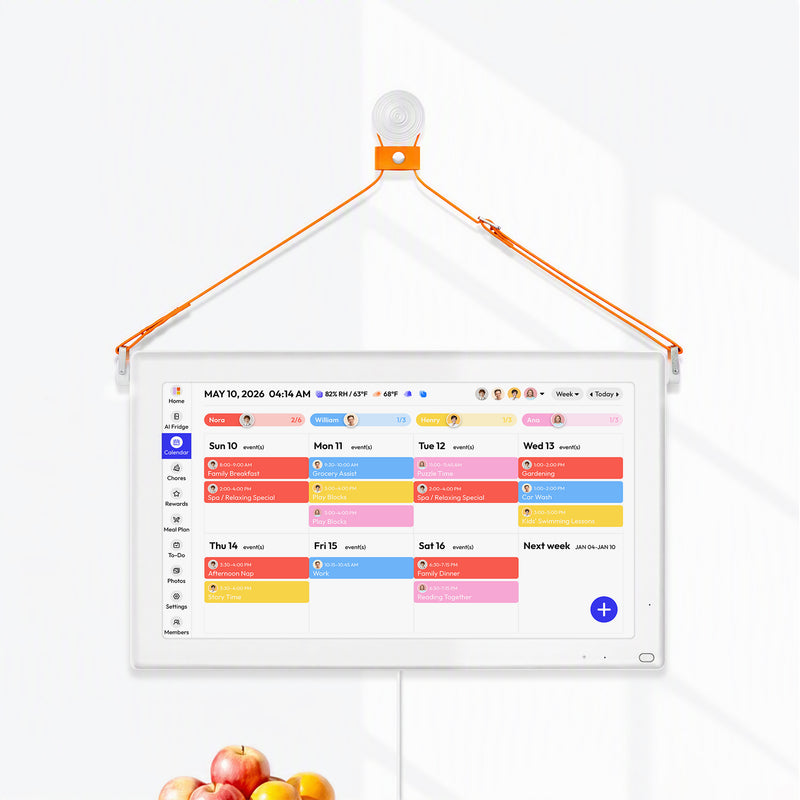
Visual time blocking puts the day where everyone can read it quickly. A shared family command center works well for this because it gives kids, teens, and adults one place to check what is happening now, what comes next, and what needs prep time before the next block starts.

Use a few clear categories and keep them consistent. School might be blue, appointments red, chores green, meals yellow, and activities orange. The goal is fast recognition, not detail for its own sake.
What this looks like should change by age. Younger kids usually do better with broad blocks and visual cues such as breakfast, school, snack, homework, play, and bedtime. Teens often need tighter blocks with start times, end times, and a small prep window for packing, getting dressed, or leaving the house. Adults benefit from seeing work, errands, family admin, and home tasks separated so the whole day does not collapse into one blurry list.
Smaller blocks also make starting easier. "Clean room" is vague and heavy. "10 minutes of clothes pickup" and "10 minutes clearing the desk" gives the brain a visible entry point. If your child or teen freezes when a task looks too big, a micro-task wall list for ADHD paralysis pairs well with time blocks at the family command center.
Practical rule: If a block looks too big to start, it needs to be split.
I usually recommend a wall-based schedule first and a phone version second. The wall is the shared truth for the household. The mobile version helps older kids, teens, and adults check the plan when they are out or moving between rooms.
- Best for kids: Large color blocks, simple labels, and icons if reading is still effortful.
- Best for teens: Fewer colors, firmer start and stop times, and visible prep time before departures.
- Best for adults: Shared visibility for work hours, pickups, appointments, and household admin.
There is a real trade-off here. A board with too many colors, too many notes, or too much text becomes visual clutter fast. A board that is too simple leaves out the details that prevent late starts and forgotten items. Start with four or five categories, run it for one week, then adjust based on what your family ignores, misses, or checks on their own.
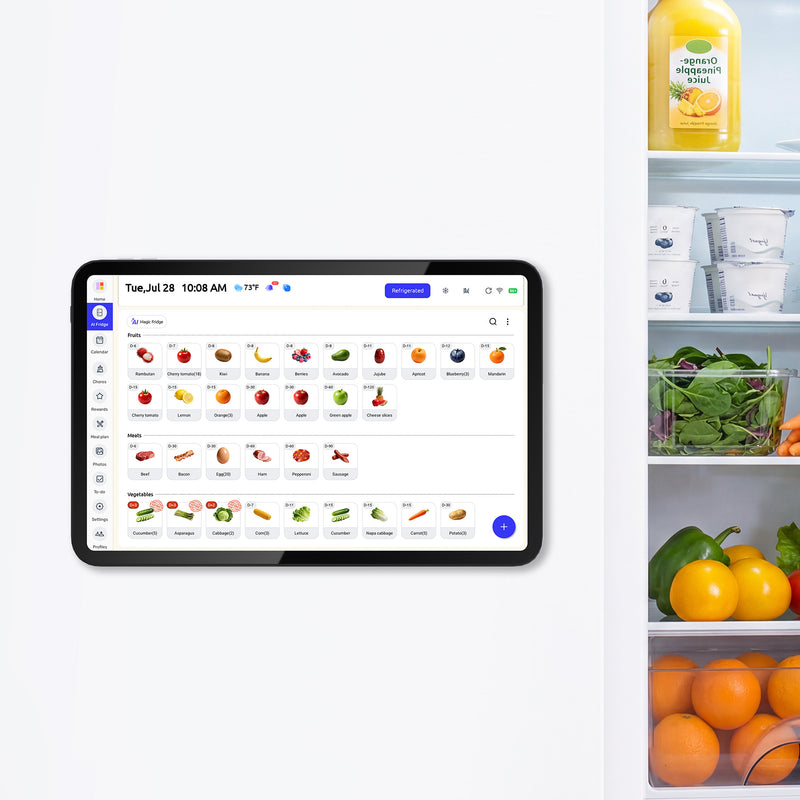
For a factual product reference, Everblog is the platform used in the example setup above.
2. Externalized Task Lists and Single Capture Point Systems
Dinner is half-finished, someone remembers a permission slip, your teen mentions a project due tomorrow, and you realize the grocery list is still in a text thread. That kind of scatter is common in ADHD households. The problem usually is not caring. The problem is that information lands in six places and disappears before anyone can act on it.
A single capture point gives the whole family one place to put incoming tasks the moment they appear. In a family command center, that might be a wall inbox, a notebook tray, or one shared digital list tied to the same physical board everyone checks each day.

Why this matters for ADHD households
A peer-reviewed study on adults with ADHD found that participants could often develop strategies, but had difficulty using them consistently over time, especially for schedules, long-term projects, and workspace organization. Families run into the same problem. A system that depends on each person remembering where to write things, when to check them, and how to pass them along will break under stress.
One capture point reduces that load. School notices, chore requests, appointment follow-ups, shopping needs, and random "don't let me forget" thoughts all go to the same place first. Processing can happen later. Capture needs to happen fast, or the task is gone.
Put the task where your family already pauses every day, not in a spot that makes sense only when the house is calm.
The family-wide perspective is important. A parent should not be acting as the only living reminder system. Younger kids usually need help getting tasks into the system, so the parent captures for them and uses simple visuals. Teens should add their own assignments, practice schedules, and supply reminders. Adults need a low-friction place to drop work tasks, school emails, and household admin without sorting them on the spot.
The trade-off is real. If the capture point becomes a dumping ground with no review time, it turns into wallpaper. If it is too complicated, nobody uses it. The fix is simple. Capture everything in one place, then review it at a set time from the command center, usually after school, after dinner, or during the evening reset.
This setup also makes delegation clearer. One parent can enter the task, another can assign it, and each child can see what belongs to them without repeating the same conversation three times. For families who get stuck after writing the task down, a micro-task wall list for ADHD paralysis helps turn vague items into visible next actions.
It works especially well for blended families, shared custody homes, and busy weeks with sports or appointments. One visible source of truth cuts down on missed handoffs, repeated reminders, and the resentment that builds when one person carries the whole mental load.
For tool reference, the related platform is Everblog.
3. Routine Stacking and Habit Chaining
The fastest way to lose an ADHD routine is to make it stand alone. If the task has no anchor, it depends on memory, mood, timing, and energy. That's a shaky foundation for any family.
Routine stacking ties one action to another action that already happens. Shoes go in the basket after the front door closes. Water bottle gets refilled after lunch dishes hit the sink. Homework folder goes to the command center before screens turn on.
Where families usually get this wrong
Parents often stack a new habit onto a routine that isn't stable. "After school" sounds like an anchor, but for many families, after school is a shifting cloud of snacks, moods, sports, and late buses. A better anchor is something concrete and repeatable, like "after backpack is hung up" or "after teeth are brushed."
Medical News Today, as summarized in the verified guidance above, highlights calendars, phone alerts, batching similar tasks, and color-coded systems for home and school organization. The common thread is external support. Habit chains work best when the environment shows the next step, not just when someone says it out loud.
Try chains like these:
- For younger kids: Backpack on hook, lunchbox to sink, folder to tray, snack at table.
- For teens: Plug in phone, check command center, review tomorrow's first obligation, pack bag.
- For adults: Coffee starts, calendar opens, top three tasks reviewed, one admin item handled.
The strength of this method is reduced decision fatigue. Nobody has to ask, "What should happen now?" as often. The weakness is fragility. If the anchor habit breaks, the chain breaks too.
Make the chain visible
Post the sequence where it happens. Bedtime routine belongs in the bathroom or bedroom, not buried in a planner. Morning exit steps belong by the door. Homework launch belongs where the backpack lands.
Short work periods also fit nicely here. Contemporary ADHD guidance supports using brief organizing intervals and timed sessions rather than marathon cleanup efforts, which is one reason routine chains hold better when they're small and repeated rather than ambitious and occasional.
If your family can only sustain one chain at first, choose the one that removes the most daily conflict. Usually that's the morning exit routine or the after-school reset.
4. Time Blocking with Built-in Transition Buffers
At 3:15, the plan still looks fine. By 3:32, someone cannot find cleats, another child is melting down over a snack, and the adult who thought there was plenty of time is already speaking too fast. That is the point where many family schedules fail. The activities are on the calendar, but the shift between them was never given a place to live.
In ADHD households, transition time has to be scheduled like any other responsibility. I treat it as part of the task, not dead space. A trip to soccer is not just "leave at 4:30." It is find gear, use the bathroom, grab water, get in the car, settle the argument about music, and arrive without everyone feeling ambushed.
The family command center helps here because it turns buffers into a shared expectation instead of one parent carrying the whole timeline in their head. If the board shows "3:30 snack and reset" before homework, or "6:10 shoes, meds, backpack check" before leaving, everyone can see that transition time counts.
A schedule becomes more usable when it includes the time people actually need to switch gears.
This section is different from routine chaining. Chaining answers, "What happens next?" Time blocking with buffers answers, "How much room does this take in real life?" That distinction matters. Families often know the right sequence and still run late because the schedule assumes instant movement.
Use age-specific buffer blocks so the plan matches the person.
- Younger kids: "Clean-up warning," then "shoes and bathroom," then "out the door." Short labels work better than abstract ones.
- Teens: "Decompress plus pack," especially after school and before evening activities.
- Adults: "Calendar check, gather materials, leave prep," which cuts down on last-minute searching and missed appointments.
Three buffer points usually give the fastest relief:
- Morning buffer: A visible block between getting dressed and leaving. Include meds, breakfast cleanup, and a final command center check.
- After-school buffer: Snack, movement, and a short reset before homework, chores, or practice.
- Evening buffer: Space after dinner for drift, cleanup, and regrouping before bedtime tasks begin.
The trade-off is real. Buffers reduce how much you can pack into a day. They also reduce fighting, lateness, and the parent role of constant verbal propulsion. For many families, that is a good trade.
If you need buy-in, start with one trouble spot and make the buffer visible for a week. Put it on the family board, not just in your phone. If your child responds well to short feedback loops, pair the new block with one small motivator from these ADHD reward chart ideas built around short-term feedback loops. That often helps the buffer feel like a routine, not a delay.
A useful rule is simple. If a transition regularly falls apart, the schedule is too tight. Add ten honest minutes before you add more pressure.
5. Gamification and Reward Systems for Task Motivation
At 7:40 p.m., a parent says, "Please clean up your stuff" for the fourth time. Nothing happens. Then the task changes to "put three things in the laundry basket, check the board, and earn tonight's point," and the room starts moving.
That difference matters in ADHD homes. Motivation often improves when the task is visible, the finish line is close, and the payoff shows up now.

Why short feedback loops work
Many ADHD tasks fail for a simple reason. The effort is immediate, but the reward is too far away.
A weekly allowance for a full week of completed chores can work for some families. For many kids, teens, and adults with ADHD, it is too delayed to drive action in the moment. Short-cycle rewards work better because they connect action to result while the task is still in view. That matters even more if your family is already dealing with out-of-sight, out-of-mind patterns. Parents who are still making sense of that piece often find this explanation of understanding ADHD object permanence helpful.
In practice, the reward system should live inside the family command center, not off on a random app or scrap of paper. If the calendar, chore list, school papers, and point tracker all live in different places, the system creates extra work before it creates follow-through. A shared board, wall pocket, or kitchen hub lets everyone see what counts, what is done, and what comes next.
A few versions tend to hold up better than others:
- Kids: One point for one clear action, such as shoes in the bin or backpack on the hook.
- Teens: Points or checkmarks that convert into freedom, like extra screen time, later weekend curfew, or first choice of the car.
- Adults: Visible streaks, shared checkoffs, or a household reset goal tied to something satisfying, such as a quieter evening or a cleaner kitchen before bed.
The trade-off is maintenance. Reward systems lose power when they get too complicated, too delayed, or too generous. I usually recommend starting smaller than parents expect. One behavior. One tracker. One reward window. If it takes longer to explain than to do, it is probably too complex.
A good rule is this. Reward the start or the finish of a small task, not a vague standard like "be more responsible."
If you want examples of ADHD reward charts built around short-term feedback loops, use those ideas to support the command center you already have. The chart should serve the household system, not become a second system you have to manage.
6. Environmental Design and Friction-Based Organization
When parents say, "If they would just put it away," I usually translate that into a design question. Is "away" obvious, visible, nearby, and easy to use in one step? If not, the system is asking too much.
Environmental design is one of the strongest ADHD organization strategies because it doesn't depend on a fresh burst of willpower every time.

Make the right action easier than the wrong one
Recent practical guidance has shifted toward visual and shared systems such as placing planners where they're easy to see, using whiteboards or color-coding, and setting recurring review times. It also points out that families often need an external control center that reduces memory demands and makes responsibilities visible to everyone, not just one person holding it all together. That broader framing appears in this guidance on strategies for adults living with ADHD.
This looks simple in practice:
- At the entryway: Hooks at child height, one bin for shoes, one tray for school papers.
- In the kitchen: Lunch supplies grouped together, visible snack zone, one spot for forms.
- In bedrooms: Open baskets for laundry, labeled shelves, fewer lids and hidden containers.
Families dealing with out-of-sight, out-of-mind struggles may also relate to this discussion of understanding ADHD object permanence, especially when deciding whether to store things openly or behind doors.
What doesn't work
Deep drawers, complicated labels, decorative storage with too many steps, and shared "junk" spaces usually create friction. So do systems that require everyone to fold, sort, and remember the exact method when tired.
The home should carry part of the mental load. If the backpack always lands on the floor, put the storage solution where the backpack lands. If medication gets forgotten, move the cue closer to the existing morning routine. If lunch boxes never make it back to the kitchen, don't keep the drop zone in another room and hope for better behavior.
This is one area where a family command center can efficiently do a lot of work. It becomes the visible home for planning, ownership, and handoffs.
7. Implementation Intentions and If-Then Planning
A lot of family conflict comes from decisions made in the worst possible moment. Everyone's tired, time is short, and now you're negotiating homework, screens, missing gear, or bedtime. If-then planning removes some of that friction by making the decision earlier.
"If you get home from school, then you put your folder in the tray before grabbing a snack."
"If it's Sunday evening, then everyone checks the week ahead at the command center."
Why pre-deciding helps
The CDC-linked guidance in the verified data emphasizes a historical shift in ADHD organization advice. The focus has moved away from "try harder" and toward external scaffolding such as shared calendars, fixed item locations, reminders, color coding, and timed work blocks. That's useful here because if-then plans work best when the cue is visible and the response is simple.
For younger kids, keep the trigger concrete. "If pajamas are on, then dirty clothes go in the basket." For teens, tie the plan to recurring pressure points. "If it's 8 p.m., then I charge my laptop and check tomorrow's first class materials." For adults, use handoff moments. "If I finish dinner cleanup, then I review school messages and add anything urgent to the family board."
Families often repeat reminders because they haven't turned the problem into a rule.
This method also helps co-parents. Pre-decided responses reduce the need to improvise and lower the chance that one adult enforces something the other forgets or phrases differently.
A few good if-then plans share the same traits:
- Specific trigger: The "if" must be easy to notice.
- Small action: The "then" must be short enough to start immediately.
- Visible location: Post the plan where the trigger happens.
- Shared agreement: Everyone should know the routine before the stressful moment arrives.
The trap is making the statement too vague. "If I have time, then I'll organize my room" isn't a plan. It's a wish. Tie the action to a real cue and a small next step instead.
8. Flexible Time Management Using Time Awareness Tools
Some families don't need more scheduling. They need better time visibility. That's a different problem.
Time awareness tools help people see time passing instead of discovering too late that twenty minutes disappeared into one Lego build, one video, or one distracted attempt at finding socks.
Time has to be visible
Medical News Today, as reflected in the verified guidance above, highlights external tools such as calendars, phone alerts, batching similar tasks, and color-coded systems. Those tools matter because they move time out of the abstract. A countdown timer on the kitchen counter, a visual timer during homework, or a large family display showing what's next can reduce the number of verbal reminders parents have to give.
Adults with ADHD can learn organizational strategies, but the evidence summary in the verified data notes that they may struggle to use those strategies continuously over time. Time awareness tools help because they don't require someone to keep manually recreating urgency from scratch every day.
Useful setups vary by age:
- Kids: Visual timers for getting dressed, brushing teeth, or cleaning up.
- Teens: Countdown alerts before leaving, homework sprint timers, visible evening wind-down cues.
- Adults: Shared calendar visibility, task timers, and timed admin sessions for low-interest chores.
Keep the tool gentle
Harsh alarms can backfire. If the sound triggers stress, people start avoiding the tool along with the task. Softer prompts, visible countdowns, and predictable reminders tend to work better in homes where everyone is already overstimulated.
This strategy also pairs well with a command center. A central display can hold the day's structure while timers handle the active moment. One shows the plan. The other shows the passage of time inside the plan.
The limit is obvious. Timers can become wallpaper if overused. Reserve them for known problem points like transitions, launch tasks, and jobs that routinely stretch longer than expected. Used that way, they support the family without taking over the whole house.
8-Point Comparison of ADHD Organization Strategies
| Approach | 🔄 Implementation complexity | ⚡ Resource requirements | ⭐ Expected outcomes | 📊 Ideal use cases | 💡 Key advantages |
|---|---|---|---|---|---|
| Visual Time Blocking and Color-Coding Systems | Medium, initial color scheme and layout setup; periodic tweaks | Low–Medium, calendar or wall display, colored labels or app support | High, clearer day structure, less decision fatigue, better time estimation | Families & visual learners; weekly or daily planning | Quick at-a-glance comprehension; supports shared schedules; limit to 6–8 colors |
| Externalized Task Lists & Single Capture Point | Low–Medium, choose one tool and maintain regular reviews | Low, notebook or app (Notion, Everblog); voice quick-add recommended | High, reduces memory load, fewer missed tasks, easier delegation | Households with scattered obligations; people with working memory challenges | Centralizes tasks; prevents items falling through cracks; provides completion records |
| Routine Stacking & Habit Chaining | Medium, identify reliable anchors and design short stacks | Low, cues, small reminders, visible prompts (Everblog display helpful) | High over time, improved initiation and consistent habits after weeks | Building new routines tied to established daily actions | Automates starts; leverages existing habits; keep stacks to 2–3 actions |
| Time Blocking with Transition Buffers | Medium, requires realistic timing and calibration | Low–Medium, calendar, timers, visual schedule; tracking for calibration | High, reduces rush, cascade lateness, and transition stress | Morning/evening routines, custody exchanges, time-blind individuals | Prevents cascade failures; allows mental gear-shift; use buffer calibration |
| Gamification & Reward Systems | Medium–High, design points, rewards, and ongoing updates | Medium, apps or charts, tokens/stickers, periodic reward budget | High (short-term), strong motivation and engagement, may habituate | Children and families needing extrinsic motivation for chores | Immediate feedback and novelty; customizable rewards; celebrate milestones |
| Environmental Design & Friction-Based Organization | High, significant upfront planning and physical reorganization | Medium–High, storage solutions, labels, possible purchases/space changes | High, long-term reduction in decision fatigue and search time | Homes with multiple ADHD members; reducing distractions and missed items | Embeds behavior into environment; reduces reliance on willpower; visible cues |
| Implementation Intentions ('If–Then' Planning) | Low–Medium, requires deliberate, specific pre-planning | Low, written prompts, posted statements, display triggers (Everblog) | High, increases follow-through and consistency at decision points | Problem transition points, co-parenting rules, predictable triggers | Pre-decides responses; reduces on-the-spot decisions; easy to test & adjust |
| Flexible Time Management (Time Awareness Tools) | Low–Medium, select timers and integrate gentle cues | Medium, visible timers/displays, apps, consistent placement | High, improves time perception and transition pacing | Time-blind individuals or flexible schedules needing awareness | Makes time tangible with countdowns/progress bars; gentle nudges reduce nagging |
Building Your Family's Organizational Toolkit
At 7:12 on a school morning, one child is hunting for shoes, your teen remembers a project at the last minute, and your phone lights up with a pickup change. In families with ADHD, the strain often comes from one problem. Too many people are trying to hold too much in memory at once.
A family system works better when the plan lives outside anyone's head. Put it in one shared command center. That can be a wall calendar, a kitchen whiteboard, a tablet on a stand, or a simple clipboard station by the door. The format matters less than the consistency. Everyone needs one place to check for today's schedule, next steps, and the things your household tends to miss.
Build around the moments that break down every week. Younger kids usually need visual routines, simple color cues, and a launch zone for shoes, backpacks, and permission slips. Teens usually need one visible calendar, fewer repeated reminders, and clear ownership of school deadlines, rides, and chores. Adults usually need one capture point for tasks, a brief weekly reset, and assigned homes for keys, medication, bags, and mail.
Start smaller than you think you should.
One visible system that your family uses every day will beat a more customized setup scattered across apps, paper scraps, and text threads. The trade-off is real. A shared system may feel less personalized at first, especially for a teen who wants more privacy or a parent who prefers a different app. But it cuts down on confusion, repeated questions, and the mental load of figuring out where the information went.
Shared visibility also protects against handoff failures. One parent should not be the household memory. One child should not need five verbal prompts to begin the same routine each day. A command center gives the whole family a common reference point for school forms, practices, medication, meal plans, and chore follow-through.
Pick the hardest part of the day and fix that first. Set up one routine everyone can see. Store high-use items where they are needed. Review the system once a week, and remove anything nobody checks or updates.
If you want one shared place to manage schedules, chores, meals, and reminders, Everblog can support that command center approach without adding another scattered tool to the mix.


