
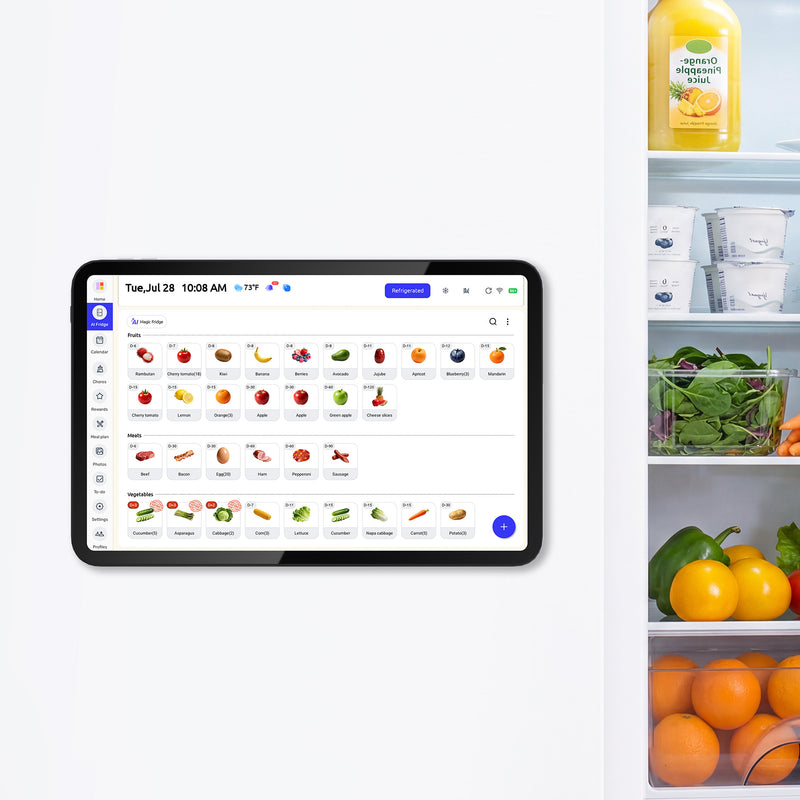


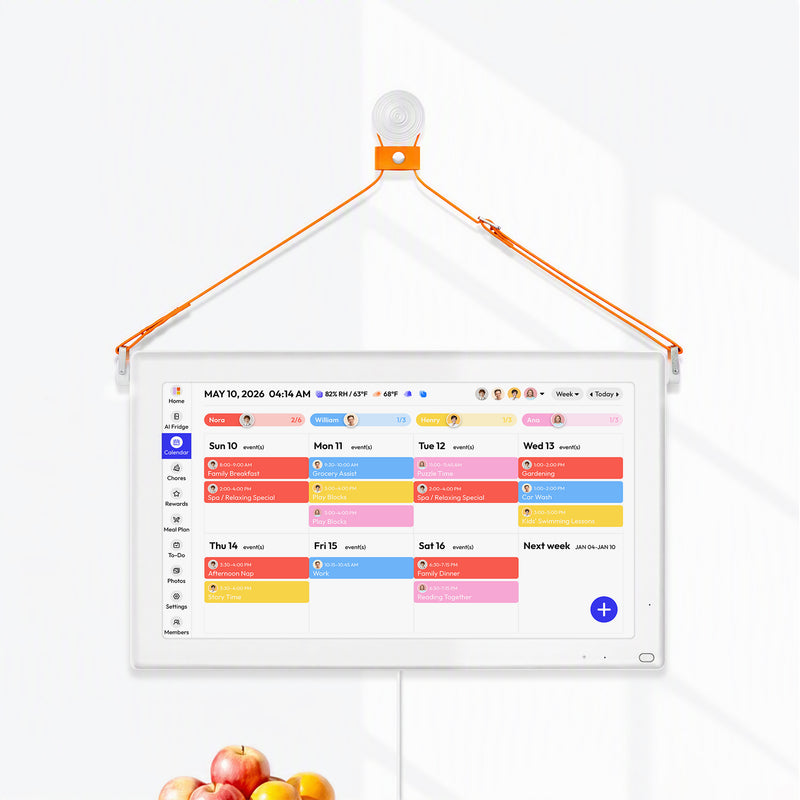



When it comes to the best calendar for a busy mom, one thing is clear: it has to be more than just a place to write down dates. The real game-changer is a single, central hub that pulls together everyone's schedules, chore lists, and meal plans. It's about getting rid of the scattered sticky notes, conflicting phone alerts, and the constant mental gymnastics of keeping it all straight.
Why a Family Calendar Is a Mom's Secret Weapon
Let’s be real. Juggling school pickups, soccer practice, doctor's appointments, and what’s for dinner feels less like parenting and more like being an air traffic controller. That feeling of mental overload isn't just you—it's a daily reality for moms everywhere. A shared family calendar acts as your home's mission control, finally bringing some calm to the chaos.
This isn't just about knowing who's where. It's about creating a system that gets the entire family on the same page. No more double-bookings, forgotten library books, or last-minute panics.
To help you decide what's right for your family, it’s useful to see a direct comparison. Here’s a quick look at how old-school paper calendars stack up against a modern digital hub.
Digital vs Analog Calendars: A Quick Comparison
| Feature | Paper Wall Calendar | Digital Family Hub (like Everblog) |
|---|---|---|
| Syncing | Manual updates only | Automatically syncs with Google, iCal, etc. |
| Reminders | None | Automated alerts and notifications |
| Accessibility | Only viewable at home | Accessible from anywhere via phone |
| Updates | Requires erasing/crossing out | Instantly updates for everyone |
| Chores & Rewards | Separate chart needed | Integrated chore and reward tracking |
| Meal Planning | Manual, requires separate list | Built-in meal planner with grocery lists |
While a paper calendar has a certain nostalgic charm, a digital hub is built for the speed of modern family life, automating the little things so you don't have to.
Reclaiming Your Time and Sanity
Picture this: it’s 7 AM, and you’re already staring at a mental checklist of 15+ things to manage before the day is done. If that sounds familiar, you're not alone. A staggering 78% of U.S. mothers with school-age kids feel this way, spending nearly 2.5 hours every single day just on family logistics.
This pressure is why the calendar market is set to hit USD 61,719.4 million by 2033. Moms are actively searching for a better way. In fact, 65% of parents now say they prefer a smart calendar over a traditional paper one.
A dedicated digital system gives you that time back by:
- Reducing Mental Clutter: It moves the endless to-do list from your head to a visible, shared space.
- Preventing Scheduling Conflicts: Everyone can see who needs to be where and when, stopping clashes before they happen.
- Fostering Accountability: Kids and partners can see their own responsibilities, which means fewer reminders from you.
A centralized calendar is more than an organizational tool—it's a system for reclaiming your mental energy. By automating reminders and creating a single source of truth, you reduce decision fatigue and create more space for what truly matters.
Making the Switch From Chaos to Calm
Parenting is all about finding tools and strategies that make life a little simpler. That might mean getting tips from a guide to First Time Mum Essentials or, in this case, finding the right digital backbone for your home.
A smart calendar is what helps you finally move from chaos to calm. To see how, check out our guide on why every mom needs a digital calendar.
Choosing the Right Calendar for Your Family's Needs
Let’s be honest: finding the right calendar isn’t about picking the prettiest one at the store. It’s about figuring out where the chaos in your family life is coming from.
What works for a family with toddlers who just need a simple picture routine is totally different from what a family with three teens and conflicting sports schedules needs.
So, where does it hurt the most? Is it the nightly “what’s for dinner?” scramble? Or maybe you need a visual chore chart the little ones will actually use. For some, the biggest challenge is just syncing schedules with a co-parent in another house. Nailing down your main headache is the only way to find a tool that actually helps.
If you’re on the fence, this little flowchart says it all.

Feeling overwhelmed? A central family calendar is your most direct path back to sanity. Think of it as the foundation for getting your household back on track.
Paper vs. Digital: The Modern Mom's Dilemma
The classic paper wall calendar still has its charm. It gives you that big, satisfying at-a-glance view of the month, and it doesn't need Wi-Fi. It’s a simple, visual anchor for a family command center.
But its limits show up fast. A last-minute soccer practice change means hunting for a pen, scribbling out the old time, and just hoping everyone sees the update. It’s a passive system that relies on you to do all the manual labor.
This is exactly why so many families are moving to digital hubs. The calendar market is expected to hit USD 20.99 billion by 2035, and it's not because people suddenly love scheduling. It’s because parents are desperate to ditch scattered sticky notes for one central source of truth. In fact, demand for some paper calendars is dropping by as much as 30% annually as families—especially in North America, which makes up over 31% of the market—realize they need something smarter.
A digital calendar isn't just a screen; it's an active participant in your family's organization. It sends reminders, syncs changes instantly, and automates repetitive tasks, freeing up your mental energy.
Matching Features to Your Family Stage
The key is to match the features to your current reality. Don’t get pulled in by bells and whistles you’ll never touch.
-
For Families with Young Kids (Ages 3-7): Your world is all about visual cues and routine. Look for a calendar with simple icons for tasks, a bright display, and maybe a built-in rewards tracker. A digital chore chart they can tap is way more exciting than a paper sticker chart that gets ignored.
-
For Families with School-Aged Kids (Ages 8-12): Life just got more complicated. You need color-coding for each kid’s activities, automatic reminders for library book returns, and shared access so they can start seeing their own schedules.
-
For Families with Teens (Ages 13+): It's all about the sync. The best calendar will integrate seamlessly with the phone calendar your teen already uses. When they add a shift for their part-time job, it should pop up on the main family hub without anyone having to do a thing.
When you focus on what your family actually needs right now, you’ll find the best digital calendar for your family—one that adapts as you grow instead of just adding another thing to your to-do list.
Setting Up Your Family Command Center for Success
So you’ve picked your calendar. Now for the fun part: turning that shiny new screen from a blank slate into the brain of your home. The real magic happens when you tailor it to your family’s unique rhythm, making it a true command center.
A little time spent on setup now will save you a ton of headaches later. Trust me.

Create Clarity with Profiles and Colors
First things first, give everyone in the family their own profile. This isn't just a techy step; it's the foundation for making the calendar work for everyone, especially for a busy mom trying to keep track of it all.
Next, assign each person a unique color. This is one of the simplest but most effective tricks in the book. A quick glance at the week tells you exactly who needs to be where.
- Blue for Ben: All his soccer practices and orthodontist appointments.
- Pink for Lucy: Her ballet classes and weekend playdates.
- Green for Mom: Work meetings, volunteer shifts, and grocery runs.
- Orange for Dad: Gym time and that upcoming business trip.
This system cuts through the visual clutter instantly. You’ll be surprised how fast your brain learns the color code, making it effortless to see who has a busy day and who has free time.
Pro-Tip: Before you add anything else, plug in all your recurring events. Think school drop-offs, weekly music lessons, trash day, and bill due dates. This creates a reliable backbone for your schedule that you can set and forget.
Build a Foundation with Recurring Events
Getting these non-negotiable appointments in the calendar first shows you the fixed points that the rest of your life has to move around. It's the framework for everything else.
This simple step is your best defense against accidentally double-booking a standing commitment. It also gives you a realistic look at how much time you actually have, helping you guard those precious pockets of downtime. If you're looking for more ways to create a beautifully organized space, check out our guide on family command center ideas.
Use Voice Commands for Hands-Free Help
Let's be real—life doesn’t stop to let you type. One of the best features of a modern digital calendar for moms is hands-free voice entry. You’re juggling groceries, helping with homework, or stirring a pot on the stove when you suddenly remember something important.
Instead of dropping everything to find your phone, just say it out loud. "Add dentist appointment for Ben next Tuesday at 3 PM," and boom, it's on the calendar. This feature is an absolute lifesaver for catching those fleeting thoughts before they vanish into the chaos of family life.
Go Beyond Scheduling: Mastering Your Calendar's Smart Features
Once you have your basic family schedule dialed in, it’s time to tap into the features that really make a difference. This is where your calendar stops being a simple list of appointments and becomes the brain of your household—automating the little, repetitive tasks that drain your energy.

It’s no surprise that families are upgrading. The traditional wall calendar market is still huge, expected to hit USD 239.11 million by 2035, but the real innovation is in digital. By next year, an estimated 55% of parents will be using digital planners for chores and meals.
Why the shift? Because a smart hub gives you the at-a-glance convenience of a wall calendar plus dynamic tools that actually help. Think collaborative grocery lists that can cut food waste by 20% or digital reward trackers that boost chore completion by 40%.
Build a Nag-Free Chore System
Let's tackle one of the biggest sources of family friction: chores. Instead of being the designated reminder-in-chief, let your calendar do the heavy lifting.
Start by setting up recurring, age-appropriate tasks for everyone.
- Ages 4-6: Simple, visual jobs like "Put toys in the bin" or "Feed the fish."
- Ages 7-10: Growing responsibilities like "Set the dinner table" or "Take out recycling."
- Ages 11+: More independent duties, from "Walk the dog after school" to "Empty the dishwasher."
When kids can see their tasks on a central screen and check them off themselves, it builds a powerful sense of ownership. The automated reminders come from the calendar, not you, which cuts down on nagging and helps them become more independent. To really streamline this, you can pair your calendar with a dedicated recurring task app to put routines on autopilot.
Create a Rewards System That Actually Motivates
Tying a rewards system to your calendar is incredibly effective, but only if the rewards are meaningful. Cash is easy, but I’ve found that non-monetary rewards often do a much better job of building good long-term habits.
By visually linking effort to a desired outcome, a rewards tracker turns abstract goals into a tangible game they can win. It helps kids understand the real value of being consistent.
For instance, set up a system where completing a full week of chores unlocks a special privilege. And think beyond just more screen time.
Creative Reward Ideas:
- Family Movie Night: The child who finishes all their tasks gets to pick the movie and snacks.
- One-on-One "Date": Offer an hour of totally dedicated time with a parent to do an activity of their choice.
- "Get Out of a Chore" Pass: This is a huge one in my house. It's a coveted prize they can save for a day they really need a break.
Automate Your Meal Planning
Ah, the dreaded "What's for dinner?" question. You can solve it for good. Use your calendar’s meal planning feature to map out dinners for the entire week. As you plug in recipes, a smart calendar will automatically pull the ingredients into a shared grocery list.
This system is a true game-changer. Your partner can grab what's needed on the way home, and you'll never again have that 5 PM panic when you realize you're missing a key ingredient. It’s the ultimate way to make your week less stressful and way more organized.
Making It Stick: How to Keep Your Family On Board
Let's be honest. A fancy new calendar is useless if your family ignores it. The real magic happens when everyone actually uses it, and that’s the key to making this a long-term win instead of just another thing Mom has to manage.
The trick is to position it as a tool for the whole team. This isn’t about adding more rules; it’s about making life clearer, easier, and even a little more fun for everyone.
Start with a Weekly "Sunday Sync"
One of the best habits we’ve seen families adopt is the “Sunday Sync.” It’s a quick, 10-minute family meeting to get a bird’s-eye view of the week ahead. Think of it less as a lecture and more as a team huddle.
Just pull up the calendar and walk through the next seven days. This is your chance to ask, "Anything I'm missing?" You’ll finally catch that science project due Thursday or the birthday party your son forgot to tell you about. It builds shared responsibility and gets everyone on the same page.
This simple routine cements the calendar as the family's official source of truth. It drastically cuts down on morning chaos and last-minute panic, shifting your role from manager-in-chief to a much calmer facilitator.
Give Kids Ownership (and Make It Fun)
Kids won’t engage with something that feels like it’s just for you. They need to see it as their tool, too. Here’s how you can make that happen:
- Let Them Add Their Own Fun: Encourage them to add things they're actually excited about—a sleepover with a friend, a trip to the park, or a movie night. It shows them the calendar is for the good stuff, not just obligations.
- Make Chores Interactive: There's something deeply satisfying about tapping "done." Let them be the ones to physically check off their completed tasks on the screen. It’s way more engaging than a sticker chart.
- Connect It to Their Goals: When the calendar’s reward tracker is the clear path to earning that new LEGO set or extra screen time, you’ll be surprised how quickly they start checking their progress on their own.
When kids see the calendar as something that helps them get what they want—whether it's fun plans or rewards—the resistance just melts away. It becomes part of their world because it serves their own goals.
Handling Common Roadblocks
Even the best systems hit a few bumps. A classic one? A partner who means well but consistently forgets to add their appointments, creating double-bookings and frustration.
The key is to avoid the blame game. You're a team, not opponents.
A simple, non-confrontational approach works wonders. Try something like, "Hey, could you pop your work dinner into the calendar? I want to make sure we don't accidentally plan something over it." This frames it as a way to help both of you.
At the end of the day, making the system work is all about gentle, consistent reinforcement. By making it a positive and collaborative part of your weekly routine, your family calendar for moms grows from a simple schedule into the true command center of a happy, well-run home.
Your Top Questions, Answered
Jumping into a shared family calendar can feel like a big step. You’re looking for something to make life simpler, not add another complicated gadget to the mix. We get it. Here are some of the most common questions we hear from parents trying to get a handle on the chaos.
How Do I Get My Kids to Actually Use It?
The trick is making the calendar about them, not just about your to-do list. Don't lead with chores. The very first things you add should be the fun stuff they’re already excited about—playdates, a family movie night, or the countdown to a big vacation.
When you do introduce chores, tie them directly to a reward they actually want. This is where a digital system is brilliant. You can set up a visual tracker showing them getting closer to their goal, whether that’s more screen time, a new book, or saving up for that toy they won't stop talking about.
When the calendar becomes the official source for fun and the clearest path to their goals, it stops feeling like a list of demands. It becomes a tool they want to check because it directly benefits them.
Is a Digital Calendar Really Better Than Paper?
I love the nostalgia of a big paper calendar on the fridge. It’s what many of us grew up with, and it's great for seeing the whole month at a glance. But where a paper calendar is static, a digital hub is alive.
Think about real-time syncing. Your partner adds a last-minute work dinner from their phone, and it pops up on the main screen instantly. No more double-bookings or "Oh, I forgot to tell you..." moments. And then there's automation. A good calendar for moms can manage recurring chores, send reminders before library books are due, and even build your grocery list straight from your meal plan—all on its own.
Can a Shared Calendar Help with Co-Parenting?
For parents living in separate homes, a shared digital calendar is an absolute game-changer. It creates a single, undeniable source of truth for custody schedules, doctor's appointments, and school events that both parents can see and trust.
It immediately cuts down on the endless back-and-forth texts and the potential for miscommunication. You can use shared notes for important info or a collaborative grocery list for things the kids need. It shifts communication from reactive and scattered to proactive and organized, creating a calmer, more consistent world for your kids.
I'm Not Tech-Savvy. Is It Too Complicated?
This is such a valid concern. The last thing you need is another device that feels like a chore. The best digital calendars are designed with busy, non-technical parents in mind—the goal is to reduce your mental load, not add to it.
Setup is usually straightforward, often just a matter of connecting to Wi-Fi and adding profiles for everyone. Daily use is where the magic happens, especially with voice commands. Being able to add an event by just saying, "Add Liam's soccer practice for Thursday at 5 PM," while your hands are full is a feature built for the reality of a busy parent’s life.
Ready to bring that calm, clarity, and connection to your own family's routine? The Everblog digital family hub was built to be the simple, central command center every busy mom deserves. Learn more about how Everblog can transform your family's organization.


