



A childrens magnetic calendar isn't just another organizing gadget; it's a hands-on tool that uses a board and magnetic tiles to help your kids see their day. It takes fuzzy ideas like schedules and chores and turns them into a tangible, interactive game, cutting down on the family chaos and empowering your little ones to finally understand their routine.
The Secret to a Calmer Family Routine

Can you picture a morning without having to repeat yourself five times? Or a bedtime that doesn’t turn into a drawn-out negotiation? That’s the magic of bringing a simple, visual system into your home. A kids magnetic calendar acts as a roadmap for the day, week, or month, bringing some much-needed predictability to a child’s world.
Let's be honest, kids don't run on our adult schedules. To them, abstract words like "later" or "after dinner" can feel confusing and even cause a bit of anxiety. A magnetic calendar makes time something they can touch and see. By physically moving a tile for "school" or "dentist appointment," they know exactly what's coming next. That simple action transforms a list of verbal commands into a hands-on game they feel in control of.
Building Confidence and Independence
But here's the real game-changer: this tool fosters a genuine sense of ownership. When kids get to help set up their own schedule, they become active participants instead of just following orders. It’s a small shift that builds huge foundational skills in planning, responsibility, and time management.
A predictable routine helps children feel safe and secure. When they know what to expect, they can navigate their day with more confidence and less stress, leading to fewer meltdowns and more cooperation.
The good vibes ripple out to the entire family, creating a much more harmonious home. Instead of a parent constantly having to be the taskmaster, the calendar itself becomes the authority. It's a lifesaver for:
- Morning Rush: Visual cues for "get dressed," "brush teeth," and "eat breakfast" get everyone out the door with less friction.
- Chore Management: When tasks like "feed the dog" or "tidy room" are clearly displayed, there’s a lot less room for arguments.
- Activity Planning: Seeing soccer practice or a playdate on the board helps kids mentally prepare for what’s next, making transitions smoother for everyone.
Ultimately, this is about more than just getting organized. It’s an investment in your child’s executive functioning skills. You’re turning daily to-dos into an interactive activity, laying the groundwork for a lifetime of independence. A well-placed calendar can even become the anchor for a larger organizational hub. For more inspiration, check out our guide on creating effective family command center ideas.
How a Magnetic Calendar Works for Kids
So what’s the secret sauce? How does a simple magnetic board bring so much calm to a chaotic family schedule? Think of it less like a calendar and more like a physical dashboard for your child's week.
It’s an interactive system made of two simple things: a main board (usually a weekly or monthly grid) and a whole bunch of magnetic tiles. The board gives you the basic structure, but the tiles are where the real magic happens.
Each little magnet represents a piece of your child’s world—from the days of the week and the weather outside to bigger events like "Soccer Practice" or "Playdate." You'll even find tiles for feelings like "Happy" or "Tired," which is a game-changer.
Turning Time into a Toy
Ever tried explaining "next Tuesday" to a four-year-old? It’s like trying to grab smoke. The concept is just too abstract.
But when you hand them a "Grandma's Visit" magnet and let them place it on the board, that future event suddenly becomes real. It's something they can see, touch, and anticipate.
The power is in that physical interaction. The simple act of a child moving the "Brush Teeth" magnet from a ‘To-Do’ space to a ‘Done’ space does more than a dozen verbal reminders ever could. It gives them a sense of ownership and turns a chore into a small victory.
A childrens magnetic calendar transforms abstract concepts like time and responsibility into concrete objects. When a child can physically hold and place a tile, they build a much stronger mental map of their day.
This isn’t just a parenting hack; it's a proven educational method. It’s why the educational magnetic calendar market is booming, with projections showing a 7.3% compound annual growth rate between 2026 and 2032. The market is expected to hit USD 1.8 billion by 2032.
This huge growth shows just how many parents of kids aged 3 to 12 see these calendars as powerful learning tools, not just organizers. You can read more about these educational market trends to see why tactile tools are making such a big comeback.
The Key Components of an Effective System
When you're shopping for one, a good magnetic calendar will feel like a complete "life kit" for a kid. Look for a set that includes a solid variety of tiles covering these key areas:
- Days and Dates: The basics—days of the week, months, and numbers to set the date.
- Weather: Simple, clear icons for sunny, cloudy, rainy, or snowy days help them connect to the world outside.
- Activities: A wide range of magnets for school, homework, sports, music lessons, and fun family plans.
- Chores: Visual reminders for tasks like "Clean Room" or "Feed Pet" are far more effective than nagging.
- Feelings: Emotion tiles give kids a simple way to show you how they’re feeling, opening the door for great conversations.
When you put all these pieces together, the calendar becomes so much more than a schedule. It’s a daily hub for learning about time, communicating needs, and understanding emotions—all disguised as a fun little game.
Choosing the Best Childrens Magnetic Calendar
Walk into any toy store, and you'll see a dozen different magnetic calendars. They all look bright and promising, but which one will actually get used instead of just collecting dust?
The secret is to stop thinking of it as just a calendar. It's an interactive tool, one of the most practical educational toys for children you can bring into your home. When you see it that way, the features that truly matter become obvious.
First, think about durability. This thing is going to get a lot of love (and abuse) from tiny, enthusiastic hands. You need a sturdy magnetic board that won't "ghost" with marker stains and magnets thick enough for little fingers to pry off the fridge without tearing. A flimsy board that looks messy after a week is a waste of money.
Match the Calendar to Your Child
Nothing will kill the calendar habit faster than a poor fit for your child's age. If it's too simple, they'll get bored. Too complex, and they'll get frustrated. You're looking for that "just right" sweet spot.
For the little ones—toddlers and preschoolers around 3-5 years old—it’s all about pictures. Big, clear icons for "brush teeth," "story time," or "play outside" are instantly understood. At this age, the goal isn't complex planning; it's about learning the rhythm of the day and what comes next.
Once they hit school age, around 6 and up, they’re ready for more. This is when calendars with text-based magnets for chores, school subjects, and after-school activities become a game-changer. It cleverly reinforces their reading skills while teaching them the basics of managing their own time.
This little chart breaks it down perfectly.

Starting with simple icons and graduating to text isn't just a good idea—it's a strategy that helps the calendar grow right alongside your child.
Find the Right Features for Your Family
Every family is different, so a one-size-fits-all calendar just doesn’t cut it. To find the perfect match, you need to weigh the features against your child's age and your family's specific organizational needs.
This table breaks down what to look for and, more importantly, why it matters.
Magnetic Calendar Feature Comparison
| Feature | What to Look For | Why It Matters for Your Family |
|---|---|---|
| Magnet Type | Large, picture-based icons for ages 3-5. Text-based tiles for ages 6+. | Icons build sequence understanding for pre-readers. Text reinforces reading and allows for more detailed planning for older kids. |
| Customization | Blank, write-on magnets included in the set. | This is non-negotiable. It lets you add magnets for family-specific events, unique chores, or appointments like "Visit Grandma." |
| Durability | A thick, sturdy magnetic board and tiles that resist bending or tearing. | The calendar will be handled daily. Flimsy parts won't survive enthusiastic use and will need to be replaced. |
| Size & Placement | Compact for the fridge or a large board for a dedicated wall space. | A fridge calendar becomes part of the kitchen routine. A larger "command center" is great for multiple kids or more detailed schedules. |
Ultimately, choosing the right features is about making sure the calendar is a tool you'll actually use every day, not just another piece of wall decor.
Finally, don't underestimate the power of placement. Where you put this calendar can make all the difference.
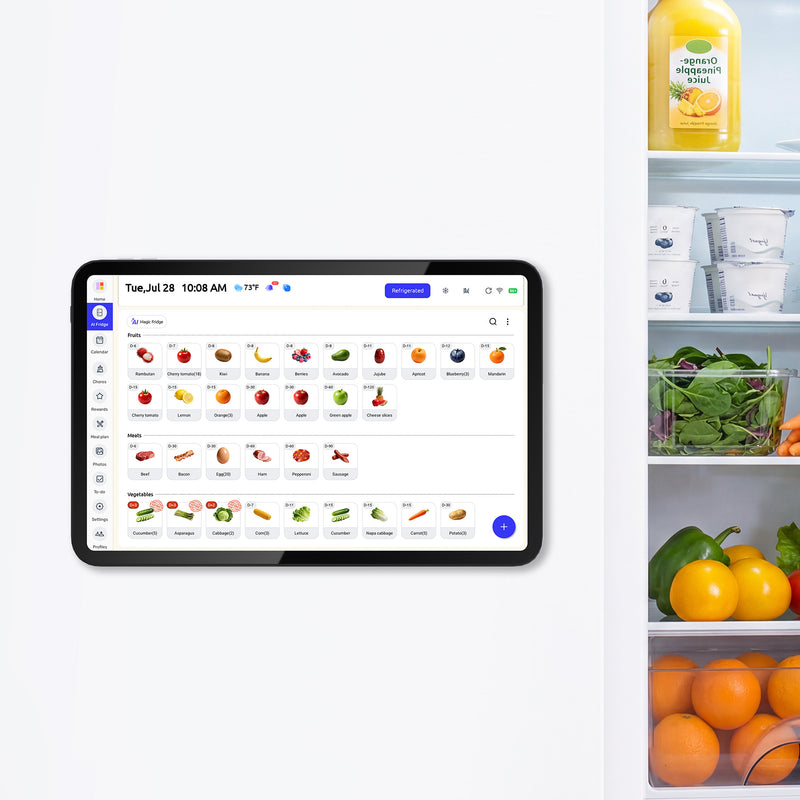
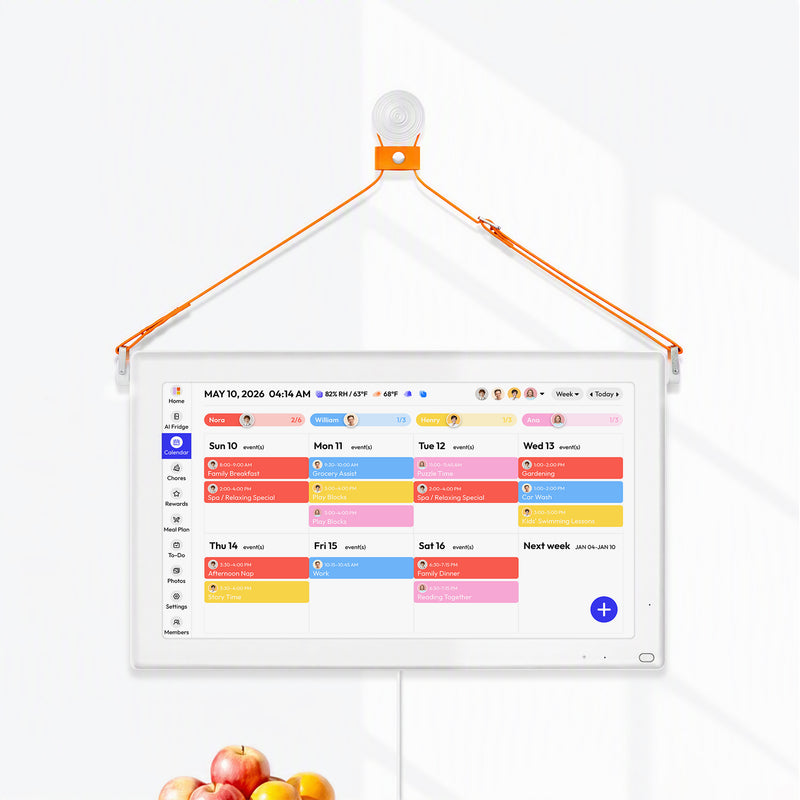
- Fridge-Friendly: A smaller board on the refrigerator is always in sight during breakfast and dinner. It becomes a natural hub for daily conversation. The 13.4-inch Everblog FridgeCal Calendar is a great example of a compact option that fits right into the family workflow.
- Wall-Mounted: A larger board works beautifully as a dedicated "command center" in a mudroom or playroom. This gives you more real estate, which is perfect for tracking multiple kids’ schedules side-by-side.
When you pick the right spot, the calendar transforms from a simple chart into the interactive heart of your family's organization.
Bringing Your Magnetic Calendar to Life

That brand-new magnetic calendar isn’t going to organize your family by itself. Right now, it’s just a colorful decoration on your wall. The real magic happens when you weave it into the fabric of your family’s daily life, turning it from a static object into your family’s mission control.
The key is to introduce it as something fun—not another list of rules from mom and dad. Set it up together. Let your kids stick on the familiar magnets for school, meals, and playtime. This small act gives them an immediate sense of ownership and sets a positive tone right from the start.
Establish a Daily Check-In
Consistency is everything. The best way to make the calendar stick is to start a daily “calendar check-in.” This isn’t a formal family meeting; a quick two-minute huddle every morning is all it takes.
Gather by the calendar after breakfast to glance at the day ahead. Ask simple questions like, "What's on the schedule for today?" or "I see you have soccer practice this afternoon!" This simple habit reinforces the day's plan and turns the calendar into a natural conversation starter.
A consistent daily check-in makes the calendar a reliable source of truth for the family. It becomes the go-to spot for answering "What are we doing today?" which reduces parental stress and empowers kids with information.
This routine is also the perfect time to point out anything unusual, like a dentist's appointment. By talking about it ahead of time, you take the surprise out of the day and help ease any potential anxiety.
Map Out Routines and Chores
This is where the calendar really starts to build responsibility. Instead of just listing events, use it to visually map out those morning and evening routines that always seem to cause friction.
Create a simple flow of magnets for the must-do tasks:
- Morning Routine: Wake Up → Get Dressed → Eat Breakfast → Brush Teeth → Pack Backpack
- Evening Routine: Tidy Up Toys → Take a Bath → Read a Book → Bedtime
When a child can literally see the steps and move a magnet from a ‘To-Do’ area to a ‘Done’ area, the vague idea of "getting ready" becomes a clear, satisfying game. That visual feedback is so much more powerful than another verbal reminder.
The same idea works for weekly chores. Assign specific chore magnets to certain days so everyone knows their role. You can find some great chore chart ideas for kids that pair perfectly with a visual calendar, teaching them that helping out is just a normal part of the week.
Connect Tasks to Tangible Rewards
Want to really boost motivation? Visually connect completed tasks to a reward everyone is excited about. This isn't about bribery; it’s about teaching a core life lesson: effort leads to good things.
It's easy. Just place a "Goal" magnet at the end of the week—maybe for "Family Movie Night" or a "Trip to the Park." Explain that once all the chore magnets are moved to the ‘Done’ column, the family unlocks that fun reward. This creates a powerful link between responsibility and its positive outcomes, making the whole process feel worthwhile.
Magnetic Calendars vs Digital Family Hubs
With a smart device in every pocket, you might wonder: is there still a place for a physical children's magnetic calendar? It’s a fair question. A magnetic board is fantastic for its at-a-glance simplicity and the way it gets kids involved, but its static nature has some real-world limits. You can’t update it from the car when soccer practice is suddenly canceled, and it won't send a pop-up reminder about a forgotten chore.
And that's where the idea of a digital family hub comes in. Think of it not as a replacement, but as the next step up—moving from a simple visual board to a dynamic, connected command center for your entire home. Digital hubs take the core idea of a central calendar and give it a serious upgrade with technology.
The Power of a Connected Hub
A digital hub can do things a physical board just can’t. While your magnetic calendar is great for showing the plan, a digital version actively helps you execute it. It closes the gap between what's on the wall and the real-time chaos of a busy family.
These systems bring some game-changing features to the table:
- Synced Schedules: Everyone’s appointments, lessons, and practices live in one shared space, instantly updated across all your phones and devices.
- Shared Grocery Lists: Add milk to the list from your desk at work, and your partner will see it pop up while they’re at the store.
- Automatic Reminders: Gentle nudges for everything from returning library books to taking daily medication, so nothing falls through the cracks.
For families ready to explore digital tools that bundle scheduling with communication, a digital family hub like Saucial App is a great example. These platforms are built for modern households looking for a more connected way to manage it all.
Why Physical Calendars Still Thrive
Given all these digital perks, you’d be forgiven for thinking the magnetic calendar’s days are numbered. But the data tells a completely different story. The broader market for magnetic calendar sets was valued at a massive USD 1.42 billion in 2026, with the wall calendar segment alone projected to reach USD 998.2 million.
These aren't small numbers. They prove that families still deeply value tangible, visual tools to keep their lives in order. You can learn more about these magnetic calendar market findings and see for yourself why physical systems have such staying power.
The real magic of a physical children's magnetic calendar is its simple visibility. It’s “always on” in a central spot like the kitchen, offering a constant, low-stress anchor for the day without anyone needing to unlock a phone or navigate an app.
This shows the choice isn't really "physical vs. digital." For many of us, the best setup is a smart blend of both. A digital calendar can handle the complex, on-the-go logistics, while a simple magnetic board on the fridge gives a young child a concrete, hands-on way to grasp their daily routine. One manages the data, and the other builds independence—both working together to create a calmer, more organized home.
Common Questions About Magnetic Calendars
Bringing a new organizing tool into the family always raises a few questions. You want to know it’s going to make life easier, not just become another piece of clutter on the fridge. So, let's walk through some of the things parents often ask before diving in.
At What Age Can My Child Start Using a Magnetic Calendar?
You can start surprisingly early. Kids as young as 3 years old can get the hang of a simple, icon-heavy calendar. At that age, it’s all about the visuals—using magnets for "Lunch," "Bath Time," or the weather. It’s a fantastic way to build their understanding of sequences while also working on those fine motor skills.
Once they hit the 5 to 8-year-old range, you can start layering in more complex ideas like the days of the week, specific chores, or after-school clubs. For kids aged 8 and up, the calendar really comes into its own as a tool for teaching time management, planning homework, and tracking bigger responsibilities. The trick is to let the calendar grow with your child.
How Do I Keep My Kids from Losing Interest?
This is the big one. The secret is making the calendar a consistent, positive part of your daily routine—not a chore in itself. A quick family huddle each morning to look at the day ahead works wonders.
Let your kids be hands-on! Have them move their own activity magnets onto the board. Every now and then, throw in a new, fun magnet as a surprise to keep it feeling fresh. But most importantly, make sure the calendar leads to real-world results. If they complete a week of chores, that promised reward needs to happen. That tangible connection is what makes the whole system stick.
Are Physical Calendars Better Than a Chore App?
For younger kids, a physical, magnetic calendar almost always wins. It has an "always-on" visibility that an app just can't match. It’s right there in the kitchen, a constant, gentle reminder that doesn’t involve screen time or push notifications.
The hands-on act of moving a magnet from "To-Do" to "Done" helps kids internalize their responsibilities in a way that tapping a screen can't replicate. A physical board turns planning into a team sport instead of an isolated digital task.
While apps are portable, a big visual calendar makes organization a shared activity that the whole family can see and rally around together.
How Can I Use One Calendar for Multiple Children?
Managing one calendar for a few kids is a great way to teach them about teamwork and how their schedules fit together. The easiest and most effective way to do this is with color-coding.
Assign each child their own color for magnets. This way, a single glance tells you who is doing what and helps you spot any scheduling conflicts before they happen. It helps siblings see how their day fits into the bigger family picture.
It's clear families are looking for these kinds of blended solutions. The children's entertainment market was valued at a massive USD 11.5 billion in 2024, and while educational magnetic calendars are a smaller piece of that, their 7.3% annual growth shows a real demand for tools that mix planning with interactive learning. You can read more about the growing children's products market to see how these trends are shaping family life.
Ready to take your family's organization to the next level? Everblog combines the visual clarity of a calendar with the power of a connected digital hub, creating a single source of truth for your entire household. Discover how Everblog can bring calm and connection to your family today.


