
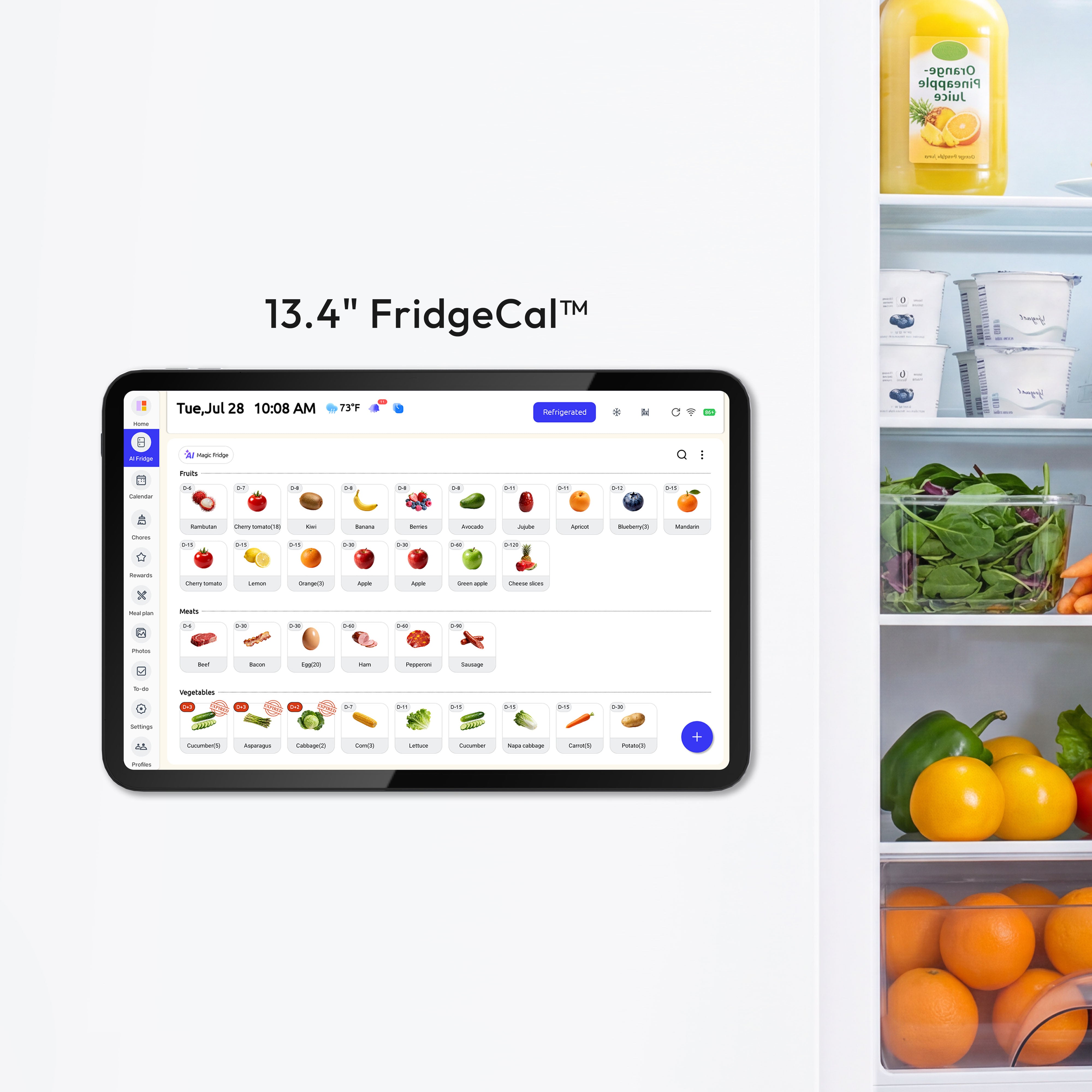
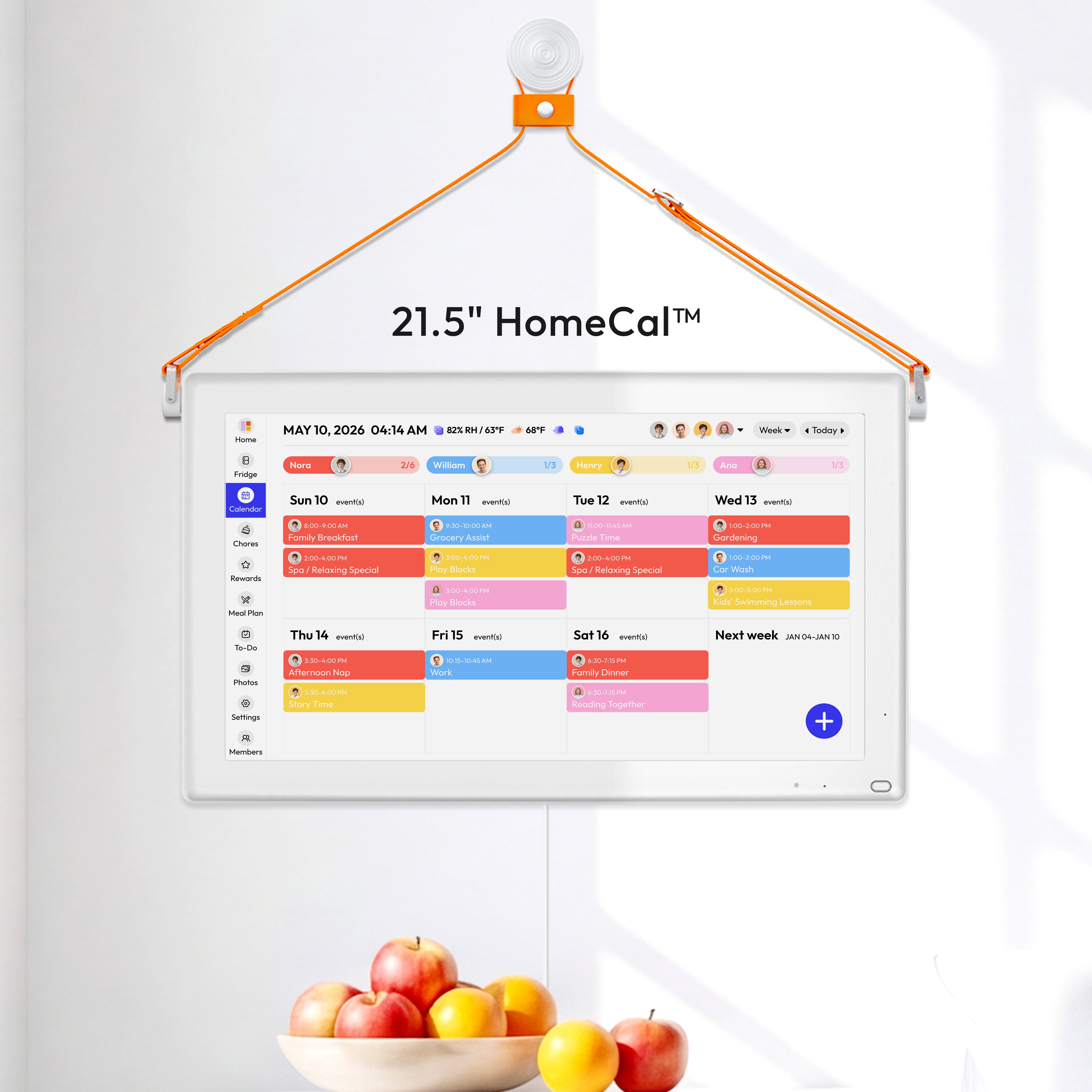

So, what exactly is a digital family calendar? Think of it as your family's command center—a central hub for organizing schedules, tasks, and appointments for everyone in the house. It takes all those scattered paper notes, fridge magnets, and last-minute text messages and brings them together into a single, shared digital display that everyone can see.
It’s the modern answer to the age-old question, "What's going on this week?"
From Family Chaos to Coordinated Calm
If you’ve ever felt like you're running air traffic control for your own family, you get it. The daily juggle of school pickups, dentist appointments, soccer practice, and work deadlines is a lot. The old way of managing this—a cluttered fridge calendar, sticky notes that fall off, and a constant barrage of "don't forget!" texts—is broken.
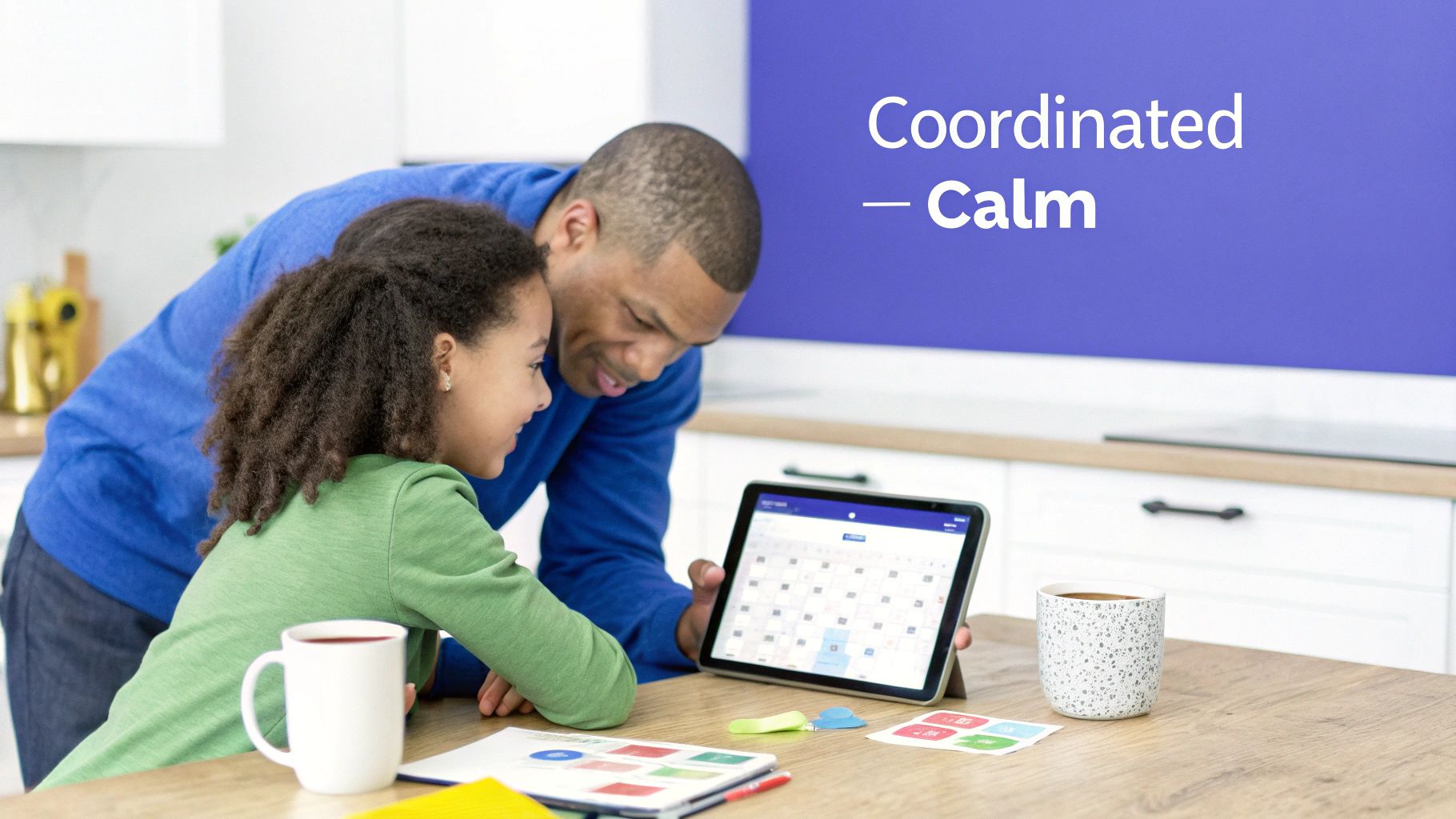
This fragmented system almost always leads to missed appointments, double-booked evenings, and a huge mental load that usually falls on one or two people. It creates friction and confusion where there should be teamwork.
The Power of a Single Source of Truth
A digital family calendar becomes your family's single source of truth. It's a place where every commitment, task, and important date lives, visible to everyone, all the time. This move from scattered information to a central hub is the key to cutting down on household chaos.
Instead of hunting for information, the whole family looks to one reliable spot for answers. You can learn more about setting this up in our guide to creating a digital family command center.
This isn't just about adopting a new gadget; it's about building a better system for communication and accountability. When everyone can see the week's plan at a glance, the constant nagging and reminding naturally fade away. It empowers everyone—from a kid checking their chore list to a teen confirming their practice time—fostering real independence and teamwork.
By providing a clear, shared view of everyone's commitments, a digital calendar transforms scheduling from a reactive, stressful task into a proactive, collaborative process. It’s less about managing time and more about creating shared understanding.
To get a clearer picture, let's look at how the old methods stack up against a modern digital solution.
Traditional vs Digital Family Scheduling
| Challenge | Traditional Method (The Old Way) | Digital Calendar Solution (The New Way) |
|---|---|---|
| Visibility | Information is stuck in one physical spot (e.g., the kitchen fridge). | Everyone can access the schedule from anywhere, anytime. |
| Updates | Changes require manual erasing and rewriting, which can get messy. | Instantly syncs changes across all connected devices. |
| Reminders | Relies on someone remembering to remind everyone else. | Automatic notifications and alerts keep everyone on track. |
| Ownership | One person often becomes the designated "keeper of the schedule." | Encourages shared responsibility and empowers all family members. |
| Integration | It's a standalone system, disconnected from other digital tools. | Connects with work calendars, school schedules, and other apps. |
The difference is night and day. A digital system doesn't just display information; it actively helps your family manage it.
The growing demand for these tools tells the story. The digital calendar market is on track to hit around USD 16.37 billion by 2030, driven by families looking for a smarter way to stay coordinated. This isn't just a niche trend; it shows that families everywhere are actively searching for a better way to manage their wonderfully busy lives.
What a Digital Family Calendar Actually Does
Think of a digital family calendar as your household's command center. Its main job is to be the air traffic controller for everyone's lives, making sure appointments don't collide and everyone gets where they need to be, on time and with the right gear. It's way more than a simple grid of dates; it’s a living, breathing hub for all your family logistics.
Instead of trying to piece together a paper planner, a crumpled school newsletter, and your work calendar, this one tool pulls it all together. It creates a single, shared reality for every dentist visit, soccer practice, project deadline, and parent-teacher conference. No more guesswork.
At its heart, it’s all about centralization. A digital calendar can sync with your Outlook at work, your partner’s Google Calendar, and the school’s online schedule, then display everything in one clean, color-coded view. That kind of instant visibility pretty much ends the "but nobody told me!" excuse for good.
Creating a Single Source of Truth
The most powerful thing a digital family calendar provides is a single source of truth. When the entire family is looking at the exact same information, there’s simply no room for mix-ups. Someone changes an event on their phone? It updates instantly for everyone else. The schedule is always live and always current.
This immediately cuts through the chaos of conflicting information. You’re not left wondering if the time for Saturday’s game was moved or if that birthday party got rescheduled. The calendar has the final say, and everyone can see it.
This shared visibility does more than just organize—it builds trust and accountability. It's not just about knowing what's happening; it's about everyone knowing that everyone else knows, too.
A digital family calendar transforms your family's schedule from a collection of scattered notes into a unified, interactive dashboard. It's the difference between navigating with a dozen crumpled maps and using a live, real-time GPS.
This unified approach makes the whole idea of "getting organized" feel less like a chore and more like a natural part of your day.
More Than Just Dates and Times
But a modern digital calendar is so much more than a scheduler. It’s really an operating system for your household, built to manage the full, messy, beautiful spectrum of family life.
Here's how it goes beyond basic scheduling:
- Task Management: It’s the perfect spot to assign and track chores, set homework reminders, or divvy up errands. This makes it clear who’s responsible for what, which means a lot less nagging from you.
- A Hub for Communication: Many calendars let you leave notes on events, build shared grocery lists, or even plan out the week's meals. This keeps all the important details tied directly to the schedule where they belong.
- Building Good Habits: For the little ones, you can set up visual schedules or emoji-based routines to guide them through their mornings or bedtime rituals, helping them become more independent.
By bringing all these pieces together, the calendar actively reduces the mental load that so often falls on one person. You no longer have to be the keeper of every single detail. Instead, it becomes a proactive assistant for the whole family, making sure everyone is on the same page and working as a team.
Here are the features that actually make a difference in your day-to-day life. A great digital family calendar isn't just a grid with dates on it; it’s a thoughtfully designed command center built to solve the most common household headaches. These tools work in harmony to anticipate your family’s needs, smooth out the friction points, and give you back your time and sanity.
This isn’t about adding another screen to your life. It’s about adopting a smarter, more connected way to manage the beautiful chaos of family.
Let’s dive into the core features that turn a simple calendar into the brain of your home.
Shared Views And Color Coding
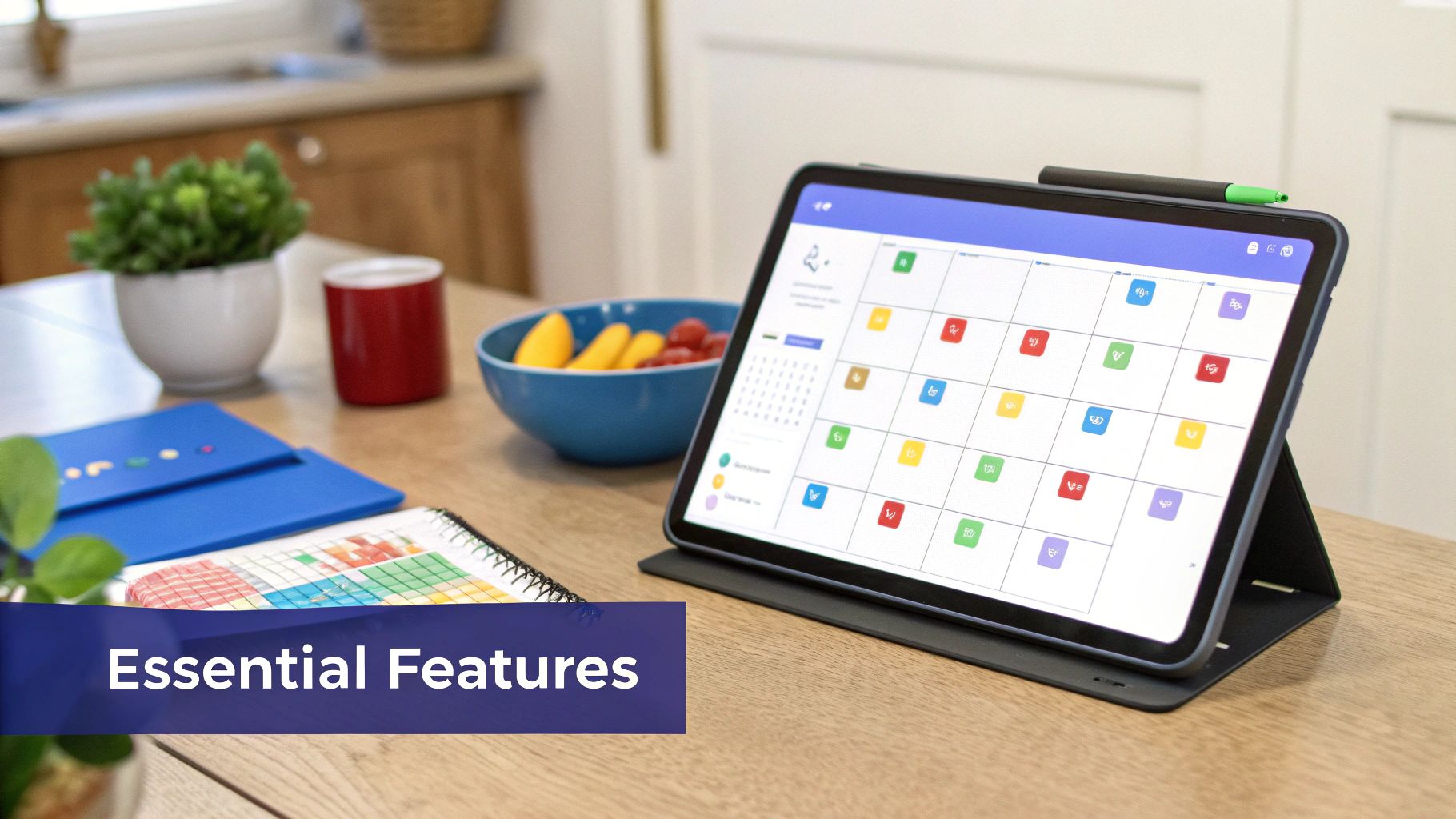
Let’s be honest, the biggest hurdle in family scheduling is just knowing what everyone else is doing. Who’s free for that dentist appointment on Tuesday? Did Dad’s work trip get moved, and who’s on soccer pickup now? A shared calendar with simple color-coding solves this chaos in a single glance.
Give each family member their own color. Instantly, you can see everyone's commitments on one unified screen. This visual clarity makes it dead simple to spot conflicts or find those rare open windows without sending a flurry of "Are you free?" texts.
This single feature is the foundation of a calendar that actually works. It turns a confusing mess of schedules into an easy-to-read map of your family’s week. For more ideas on how this looks in practice, check out our guide on creating a stunning and functional digital calendar wall.
Task and Chore Management
Imagine ending the daily debate over whose turn it is to walk the dog or take out the recycling. That's a huge win for any parent. Integrated task and chore management brings accountability to household jobs and shifts the mental load from you to the system.
With this feature, you can finally:
- Create recurring chores: Set up daily tasks like "Feed the Cat" or weekly ones like "Take Bins to Curb."
- Assign responsibilities: Make it crystal clear who is supposed to do what.
- Track completion: Most systems let kids check off their own chores, giving them a real sense of accomplishment.
When chores become a visible part of the daily schedule, you empower your kids to take ownership. This builds independence and cuts down on the constant nagging, which helps everyone feel more like a team.
Some of the best systems even have built-in reward trackers, turning chore time into a game. It’s a simple tool, but it can completely change the dynamic around helping out at home.
Smart Notifications and Reminders
A schedule is pretty useless if no one remembers to look at it. Smart notifications and reminders act as your family’s personal assistant, gently nudging everyone to stay on track.
This is way more than just a beeping alarm. A good system sends the right alert to the right person at the right time. For instance, it can remind your teenager about their orthodontist appointment an hour before they need to leave, or let the whole family know that pizza night has been moved from Thursday to Friday.
These automated pings are the safety net that catches all the little details that might otherwise fall through the cracks, keeping the day running smoothly even when life gets crazy.
Centralized Lists and Meal Planning
How many half-written grocery lists are floating around your house or on your phone right now? A digital family calendar brings these essential planning tools into one central hub, making them collaborative and always up-to-date.
- Meal Planning: Map out your dinners for the week right on the calendar. This is the ultimate cure for the 5 PM "what's for dinner?" panic and makes grocery shopping so much more efficient.
- Shared Grocery Lists: As you plan your meals, you can add ingredients to a shared list. Anyone in the family can add items as they notice you're running low, so nothing gets forgotten.
This is where a digital calendar really shines. By merging your schedule with your home management, it becomes an indispensable tool. A smart calendar sitting on the kitchen counter isn't just for appointments—it’s the new family information hub. It syncs everyone’s life, shows off photos, and sends those crucial reminders that stop soccer practice from clashing with dinner plans.
How to Choose the Right Calendar for Your Family
Picking the right digital family calendar isn't like buying another gadget. Think of it more like hiring a personal assistant for your household. The truth is, not all of them are created equal, and the "best" one is simply the one that slots perfectly into your family's unique rhythm. Instead of getting lost comparing brands, the real secret is to start by asking the right questions.
Your mission is to find a tool that actually solves your organizational headaches without accidentally creating new ones. A calendar packed with features might be a dream for a family with tech-savvy teenagers, but it could be a nightmare for one with little kids just learning to read.
Start with Your Family’s Needs
Before you even glance at a feature list, take a beat and think about what you really need. Where does the chaos come from in your daily routine? Is it the constant back-and-forth of co-parenting schedules? Or is it just getting the kids to remember to feed the dog without you having to ask... again?
Pinpoint what truly matters by considering these key areas:
- Age Appropriateness: Is the screen simple enough for your youngest to use? If you've got little ones, look for bright, kid-friendly icons and visual cues.
- Tech Comfort Level: Let's be honest—how comfortable is everyone in your family with new technology? An intuitive, ready-to-go solution is often way better than a super-customizable one that requires a weekend to set up.
- Primary Goal: What's the main job you're hiring this calendar for? Are you mostly trying to sync appointments, manage chores and rewards, or do you need a tool that handles it all? Your top priority will tell you which features are must-haves versus nice-to-haves. For families managing two households, features that create clear, consistent communication are absolutely essential, which we cover in our complete guide to co-parenting calendars.
The ideal digital family calendar should feel like a natural extension of how your family already communicates. It should lighten the mental load, not add another complicated device to your plate.
Doing this quick self-check first keeps you from being distracted by flashy features you'll probably never use. It's all about function over frills.
Key Questions to Ask Before You Commit
Once you have a good handle on your family's needs, use these questions as your guide for evaluating the options out there. A truly great digital family calendar will have solid, practical answers for each.
To help you out, we've put together a simple checklist. Sit down with your partner or family and fill this out—it’ll make your decision so much clearer.
Your Family's Digital Calendar Needs Checklist
This checklist is a simple tool to help you figure out what's most important for your family. It turns a vague idea of "getting organized" into a concrete list of must-have features.
| Feature/Question | Our Family's Priority (Low, Medium, High) | Notes/Requirements |
|---|---|---|
| Easy for Kids to Use? | e.g., Needs big icons, visual chore tracking, no complex menus. | |
| Two-Way Sync with Our Current Calendars? | e.g., Must sync with Mom's Google Calendar and Dad's Outlook calendar. | |
| Includes a Meal Planner? | e.g., Bonus if it can generate a grocery list. | |
| Has a Built-in Chore & Reward System? | e.g., Needs to be motivating for a 7-year-old and a 12-year-old. | |
| Is There a Mobile App? | e.g., Needs to work well on both iPhone and Android. | |
| What's the True Cost (Subscriptions)? | e.g., We prefer a one-time purchase, no monthly fees. | |
| How Secure is Our Data? | e.g., Must have a clear privacy policy, data should be encrypted. | |
| Can We Add Events with Our Voice? | e.g., Important for hands-free moments in the kitchen. |
By the end of this exercise, you'll have a much sharper picture of the perfect "assistant" for your family, making the final choice a whole lot easier.
A Few Final Checks
Once you've narrowed it down, dig a little deeper with these non-negotiables:
1. How Seamless is the Syncing?
Your family calendar absolutely must play nicely with the digital tools you already depend on. Can it do a true, two-way sync with Google Calendar, Outlook, or Apple Calendar? This is a dealbreaker for most busy parents who need their work and home schedules to be perfectly aligned.
2. What is the Real Cost?
Look past the sticker price. Many digital calendars rope you in, only to hide their most useful features—like meal planning or chore charts—behind a monthly or annual subscription. Make sure you understand the total cost of ownership so there are no nasty surprises down the road.
3. How Secure is Our Family’s Data?
You’re trusting this device with a lot of personal information about your family’s schedule and whereabouts. Take five minutes to actually read the privacy policy. Does the company take data protection seriously? Do they use encryption to keep your private life private?
4. Is There a Mobile App?
Life happens far beyond the kitchen. A reliable mobile app is critical for adding a last-minute appointment from the doctor's office or double-checking the grocery list while you're at the store. Check that the app is easy to use and available for everyone's phones.
The rise of these smart displays shows a clear trend: families are moving away from chaotic paper systems and toward integrated digital hubs. As you discover more insights about these digital calendar trends on Accio.com, you'll see how smart scheduling and AI are making it easier than ever for parents to manage it all. This just reinforces why it’s so important to pick a platform that not only works for you today but is also built to grow with your family's changing needs.
A Practical Guide to Getting Your Family on Board
Let's be honest: even the most amazing digital family calendar is just a fancy paperweight if nobody uses it. The real challenge isn't the tech—it's getting everyone from your toddler to your teen to actually look at it. The trick is to turn "Mom's new gadget" into the family's central command center that everyone genuinely relies on.
Think of it less like a mandate and more like a team project. When you get buy-in from the start and build a few simple routines, you create lasting habits that make organization feel second nature. It’s about building a system that works for the whole family, not just the person who set it up.
Hold a Family Kick-Off Meeting
Before you even plug the thing in, call a quick "Family Kick-Off Meeting." This isn’t a lecture; it's a launch party. Frame the new calendar as a tool to make life easier for everyone. For parents, that means less nagging. For kids, it means more clarity and fewer surprises.
Here’s what to cover in a quick chat:
- Explain the 'Why': Keep it simple. Mention how it will help put an end to missed soccer practices, double-booked playdates, and those frantic "what time is practice?" texts.
- Assign Colors: This is a big one. Let every family member pick their own color for the calendar. Giving even the little ones this small piece of ownership makes a huge difference in how invested they feel.
- Set Ground Rules: Decide who adds what. Maybe the kids are in charge of their homework due dates and chores, while parents handle doctor's appointments and work trips.
This first meeting sets the tone and makes everyone feel like they're part of the process from day one.
Establish a Sunday Sync Ritual
Consistency is everything. One of the best ways to make the digital calendar the heart of your home is to create a weekly "Sunday Sync." This is just a quick, 10-minute huddle where the whole family looks at the week ahead.
This ritual isn’t about micromanaging; it's about creating shared awareness. It eliminates Monday morning surprises and ensures everyone starts the week on the same page, feeling prepared and in control.
During your Sunday Sync, you can run through the schedule, confirm who's handling pickups, and add any last-minute plans. This simple routine reinforces the calendar’s role as the single source of truth for your family. The demand for this kind of organization is skyrocketing—the digital planner app market is expected to hit USD 3.5 billion by 2033, because families are actively looking for better ways to manage their lives. You can discover more insights about these digital calendar trends on Accio.com.
Of course, the first step on this journey is picking the right tool for your family, which always starts with your core needs.
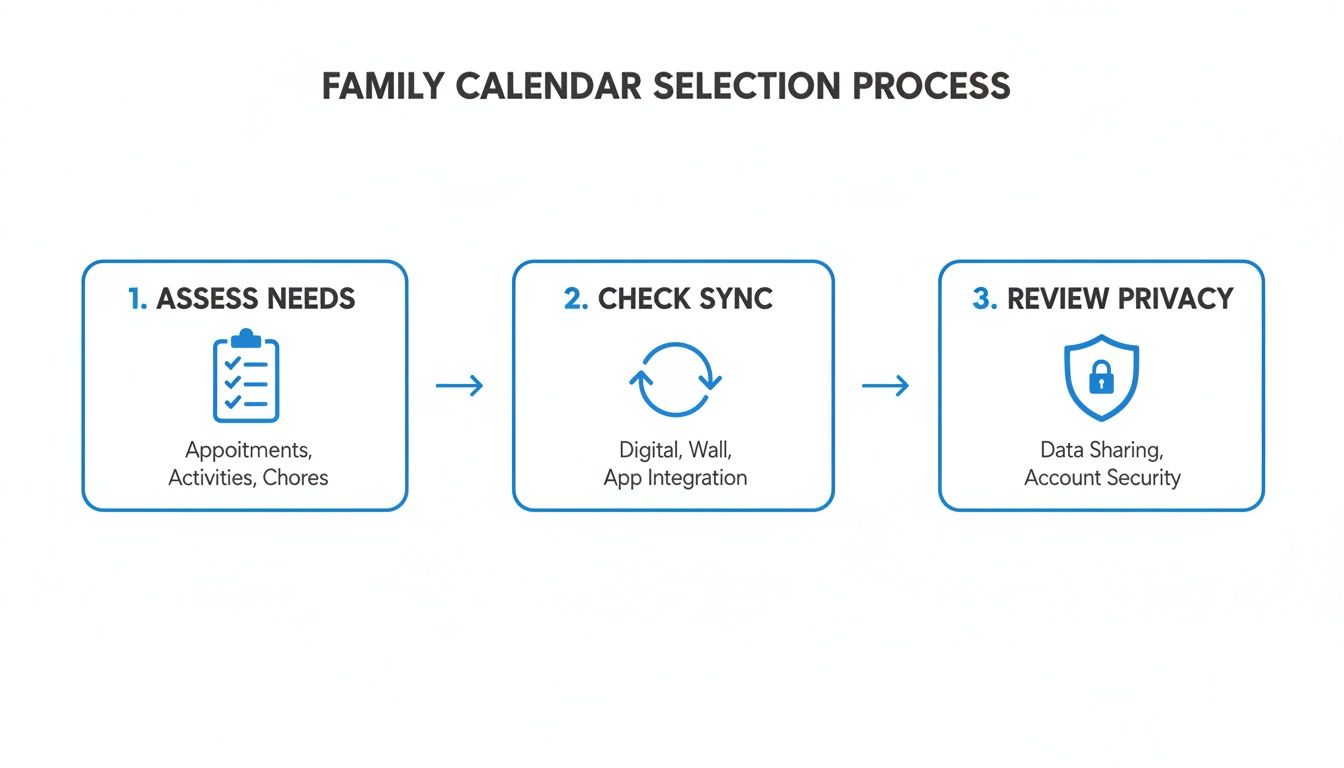
This simple visual breaks it down: start by assessing your family's unique needs, then check how well it syncs with your existing tools, and finally, review the privacy policies to keep your family's data safe.
Lead by Example and Encourage Consistent Use
Your own enthusiasm (or lack thereof) will be contagious. The more you use and reference the calendar in everyday conversation, the more naturally your family will follow suit. Instead of shouting a reminder about a dentist appointment, try saying, "I put your appointment in the calendar—check it for the exact time."
Make it the default answer for any scheduling question. When someone asks, "What are we doing this weekend?" your immediate response should be, "Let's check the calendar!" This simple redirection trains everyone to look to the shared display first, building the habit organically. When you model this behavior, you’re showing them that it's a reliable tool, cementing its place at the heart of your home.
Protecting Your Privacy in a Connected Calendar
Let’s be honest—handing over your family’s entire schedule, from school pickups to doctor's appointments, requires a huge amount of trust. In a world where personal data is gold, it’s only natural to wonder how a smart calendar keeps your private life, well, private.
Think of it like hiring a babysitter. You wouldn't just let anyone into your home. You'd check their background and make sure they’re trustworthy. The same logic applies here. Before you commit to a digital calendar, take a minute to read its privacy policy. You're looking for clear, simple language that says your data won't be sold to advertisers or other companies.
How Your Data Stays Secure
A truly secure digital calendar doesn't just promise privacy; it builds it into its DNA with multiple layers of protection. The most important of these is encryption.
Encryption basically scrambles your data as it travels between your device and the company’s servers, making it completely unreadable to anyone trying to snoop. It’s what keeps your daughter's soccer schedule or your upcoming vacation plans from being exposed. This is non-negotiable.
This commitment to security is why digital calendars are trusted worldwide. In fact, Europe holds a 25.66% market share and Asia Pacific leads with 28.19%, showing just how much families globally rely on these platforms to be secure. You can discover more insights about these digital calendar trends on Accio.com.
A platform's commitment to privacy is a direct reflection of its commitment to its users. Your family's data isn't just another asset; it's a responsibility the company must protect with robust security practices.
Safely Syncing With Other Calendars
One of the best things about a digital family calendar is its ability to sync with other tools like Google Calendar or Outlook. This is how you create that perfect, unified view of your family, work, and personal schedules. But this convenience has to be handled securely.
When you connect an external calendar, the platform uses an authorized, secure connection—a digital handshake—to pull in only the necessary event information. It never gets access to your email password or other private details. Think of it like using your Google account to sign into another app you trust.
To take it a step further, it’s always a good idea to follow general data privacy best practices across all the tech you use.
By choosing a calendar that’s transparent about its policies and uses strong encryption, you get to enjoy all the powerful features without worry. That peace of mind is what lets a digital calendar truly become the heart of your home.
Got Questions? We’ve Got Answers
Stepping into a new way of organizing your family’s life is a big move, and it’s natural to have a few questions. Let’s walk through the most common ones so you can feel totally confident about leaving the chaos behind.
How Do We Get Teenagers to Actually Use It?
Ah, the million-dollar question. Here’s the secret: don’t frame it as another rule they have to follow. Position it as a tool for their independence.
Make the digital calendar the one and only source of truth for their schedule. If it’s not on the calendar, it’s not happening. Suddenly, it’s the key to getting rides to practice, getting plans with friends approved, or knowing when they have the car. When they see it as their go-to resource, not another chore, they’ll jump on board.
Getting buy-in, especially from older kids, is about shifting from a top-down mandate to a collaborative tool. When the calendar serves their needs—like securing car privileges or planning social time—they're far more likely to embrace it.
Free Shared Calendar vs. a Dedicated Family App?
So, what’s the real difference between a free shared calendar and a dedicated app built just for families? While both can track appointments, a dedicated platform is designed for the messy, beautiful rhythm of home life. Think of it less as a scheduler and more as your home's operating system.
A free calendar is fine for dentist appointments, but a tool built for families will also:
- Manage chores and even tie them to rewards.
- Help you plan meals for the week and create a shared grocery list.
- Offer kid-friendly views with fun icons and simple routine trackers.
It's a classic case of a general tool versus a specialist one. To dig deeper into this, it's helpful to look at the broader world of understanding digital versus traditional organizational approaches, where specialized tools almost always win for specific problems.
How Does It Handle Last-Minute Changes?
Life with kids is beautifully unpredictable. Soccer practice gets rained out, a friend needs a last-minute ride—changes are the only constant. A solid digital family calendar is built for exactly this reality.
Because it syncs instantly across every connected device, from the wall display in your kitchen to the app on your phone, updates are completely seamless. You can update an event from the car, and everyone at home sees the change the moment it happens. This real-time sync is what makes it a reliable command center that can pivot as fast as your family does.
Ready to bring calm, clarity, and connection to your family's schedule? The Everblog digital calendar is designed to be your single source of truth, with no subscriptions and all features unlocked from day one. Start your journey to a more organized home today.


