




That pristine chore chart you hung on the fridge, full of hope and good intentions? If it’s now just a colorful piece of wall decor that everyone ignores, you're not alone.
The truth is, most traditional chore systems just aren't designed for the realities of modern family life. They often lead to a whole lot of frustration and burnout.
Why Your Current Chore System Is Probably Failing
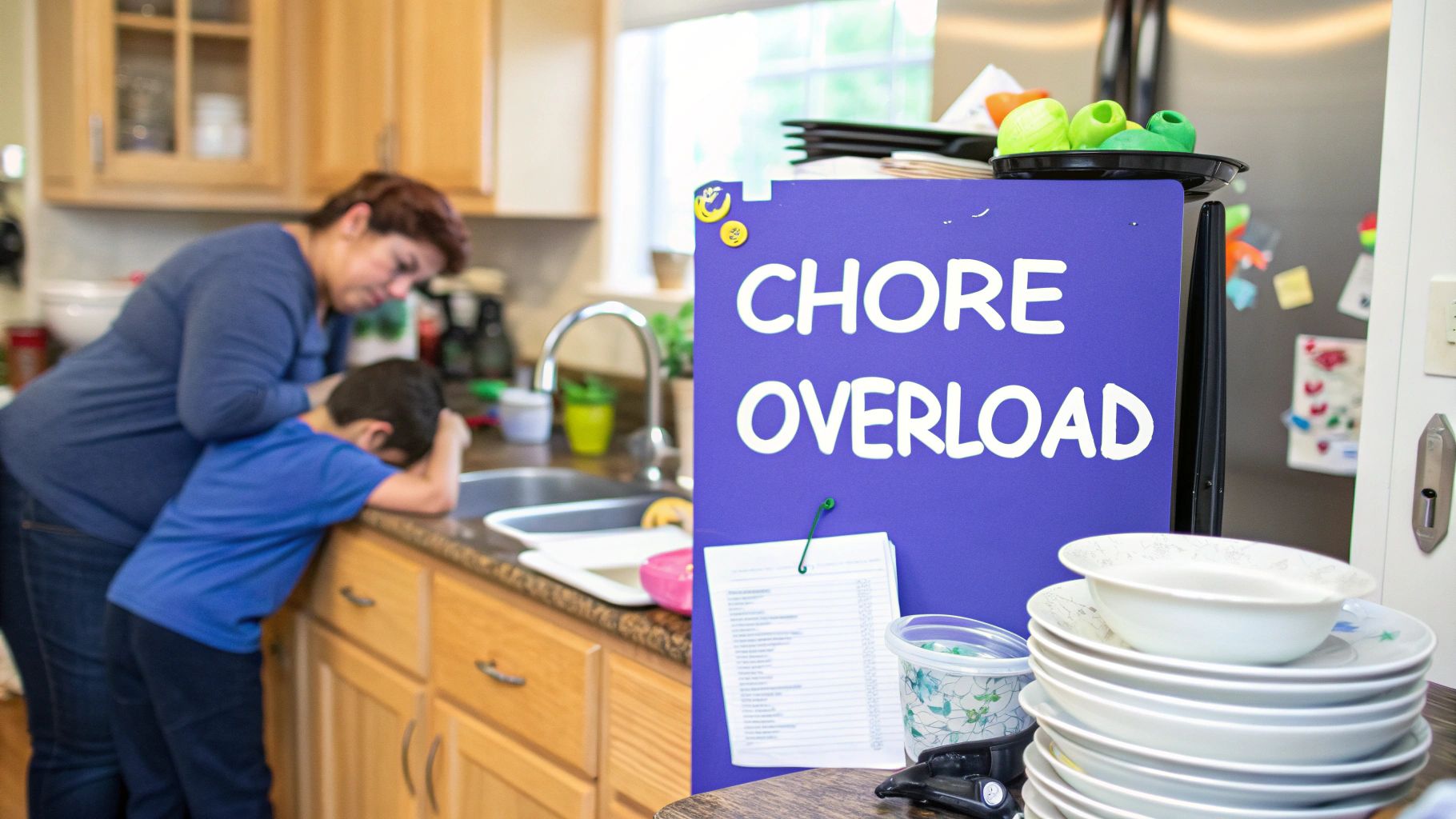
Does the post-dinner cleanup standoff sound familiar? How about the weekend chore battles that leave everyone exhausted and cranky? These scenarios are all too common because many chore charts miss the root causes of household chaos, becoming a static list of duties rather than a dynamic tool for teamwork.
The result is almost always an unequal split of who does what. And it's not just a feeling; it's backed by data. A 2020 Gallup poll found that 59% of women reported being more likely to clean the house compared to just 43% of men.
This imbalance highlights the major flaw in most systems—they don't truly reallocate the mental or physical load. You can dig into more of the numbers from Gallup's research on the topic.
The Breakdown of Good Intentions
Even the best-laid plans for a chore system can crumble, and usually for a few key reasons. Without real buy-in from the entire family, that chart just becomes another task for one parent to manage.
Here’s where things usually go wrong:
- Lack of Shared Ownership: When kids and partners aren't involved in creating the system, they just see it as a list of demands, not a shared family goal.
- Vague Expectations: What does "clean your room" actually mean? Without clear, agreed-upon definitions, tasks get done halfway, and frustration builds.
- The Nagging Cycle: If the chart's only enforcement officer is you, it hasn't solved the problem. It has just given you a new script for your daily reminders.
A chore chart should be a communication tool that reduces your workload, not a to-do list that you have to police. The goal is to build habits and foster a sense of shared responsibility.
When a chore system fails, it's not a personal failure. It’s a sign that the approach itself is flawed. The constant reminders, the ignored tasks, and the uneven workload all point to a need for a smarter, more collaborative strategy.
Instead of just listing what needs to be done, a great system inspires everyone to contribute to the home's well-being. This guide is packed with practical family chore chart ideas designed to finally create that sense of teamwork you've been looking for.
Laying the Groundwork for a Chore System That Actually Sticks
A great chore chart isn't just a to-do list; it's a family pact. The systems that last always start with a conversation, not a command. So, before you even think about sticker charts or shiny apps, call a family meeting. This is your chance to get everyone on the same page and turn a list of demands into a set of shared family goals.
The whole point of this meeting is to agree on what "done" actually looks like. What does a "clean room" really mean? Is it just the bed made and toys put away, or does that include dusting and vacuuming? Getting crystal clear on these definitions now will save you a ton of arguments down the road.
Make Sense of the Mess: Categorize Your Chores
Once you've got your shared goals, it’s time to organize the actual work. Let's be honest, not all chores are created equal. Grouping them into categories helps everyone understand the natural rhythm of the household and keeps overwhelm at bay.
Try breaking tasks into these three buckets:
- Daily Habits: These are the small, non-negotiable things that keep the chaos from taking over. Think making the bed, tossing dirty clothes in the hamper, or wiping crumbs off the counter after a snack.
- Weekly Responsibilities: These are the bigger jobs that happen on a set schedule. We're talking about things like taking out the trash and recycling, watering the plants, or helping bring in the groceries.
- Periodic Projects: This bucket is for the less frequent but still important stuff—things like weeding the garden, organizing the garage mess, or doing a deep clean on a room.
This kind of structure helps kids see that contributing isn't just a once-a-week thing, but a consistent, flowing part of being in the family.
Match the Task to the Tot (and Teen!)
This part is critical. Matching chores to a child’s ability is the secret to building their confidence and sidestepping frustration. A task that’s way too hard will just discourage them, but one that's too easy won't teach them anything new. The best family chore chart ideas are designed to grow right alongside your kids.
Here are a few real-world examples to get you started:
- Toddlers (Ages 2-3): Keep it simple with "helper" tasks. They can put their own toys into a bin, carry their cup to the sink, or help wipe up a tiny spill with a cloth. It's all about participation at this age.
- Preschoolers (Ages 4-5): Now they can handle one or two-step instructions. Good chores for this age include feeding the dog, setting napkins on the table for dinner, or matching clean socks from the laundry basket.
- Early Elementary (Ages 6-8): Kids in this age range can start taking real ownership of their own spaces and contributing to bigger family tasks. Try assigning them things like emptying the small bathroom trash cans, helping unload the dishwasher (the non-sharp stuff!), or being fully responsible for packing their own school bag each day.
Remember, the goal here is contribution, not perfection. Show them how it's done, do it with them a few times, and then step back and let them take the reins. Mistakes are just part of the learning curve.
Finally, you'll need to decide on your family's philosophy around money. Should chores be an unpaid contribution to the household, or should they be tied to an allowance? There’s no single right answer here; it’s about what works for your family's values.
Many families find a hybrid approach works best—basic daily tasks are unpaid expectations of being part of the team, while bigger, extra jobs can be done to earn money. This teaches both responsibility and the value of a solid work ethic. Defining your "family economy" right from the start creates a clear and consistent system that everyone can understand and rely on.
Exploring Different Family Chore Chart Ideas
Okay, so you’ve laid the groundwork. Now comes the fun part—picking the right chore chart format for your family. There are a million family chore chart ideas out there, from simple DIY solutions to powerful digital hubs. The best one really just depends on your family’s vibe, your kids' ages, and what you’re hoping to accomplish.
A simple magnetic whiteboard on the fridge can be a game-changer for younger kids. They get the hands-on satisfaction of moving a magnet or checking a box, which makes the abstract idea of "done" feel real and satisfying. Likewise, printable templates are amazing for getting started fast without a ton of setup.
Chore Chart Format Comparison
To help you decide, let's break down the most common formats. Each one has its own strengths and weaknesses, and what works for one family might not work for yours.
| Chart Type | Best For | Pros | Cons |
|---|---|---|---|
| Magnetic Whiteboard | Toddlers & preschoolers | Highly visual, tactile, and satisfying for little ones to use. Easy to wipe clean and change. | Can look cluttered on the fridge. Magnets can get lost. Limited space. |
| Printable PDFs | Families who want a quick, no-fuss start. | Inexpensive (or free), tons of designs online. Great for testing what works. | Not very durable. Easy to lose or ignore. Requires re-printing weekly. |
| Job Board/Jar | Older kids & teens earning money. | Teaches financial literacy and work ethic. Encourages taking initiative for extra work. | Can feel transactional. Requires cash on hand. Less focus on shared responsibility. |
| Digital App/Hub | Busy families with multiple schedules. | Accessible anywhere, sends reminders, tracks progress automatically, reduces nagging. | Often requires a device. Can have a subscription fee. Less tactile for young kids. |
Ultimately, the goal is to find a system that makes life easier, not more complicated. Don't be afraid to try one and switch if it isn't clicking after a few weeks.
Classic vs Modern Chore Systems
For older kids, a "job board" system can be a huge motivator. This approach usually includes their standard daily chores plus a list of extra, paid jobs they can pick up to earn money for something they want. It's a fantastic way to teach them about work ethic and saving. For example, a family might set up an "economy" where kids earn money for age-appropriate tasks like cleaning a bathroom weekly or even sibling babysitting twice a month so the parents can have a date night.
The infographic below really nails down the core steps that make any of these systems work.
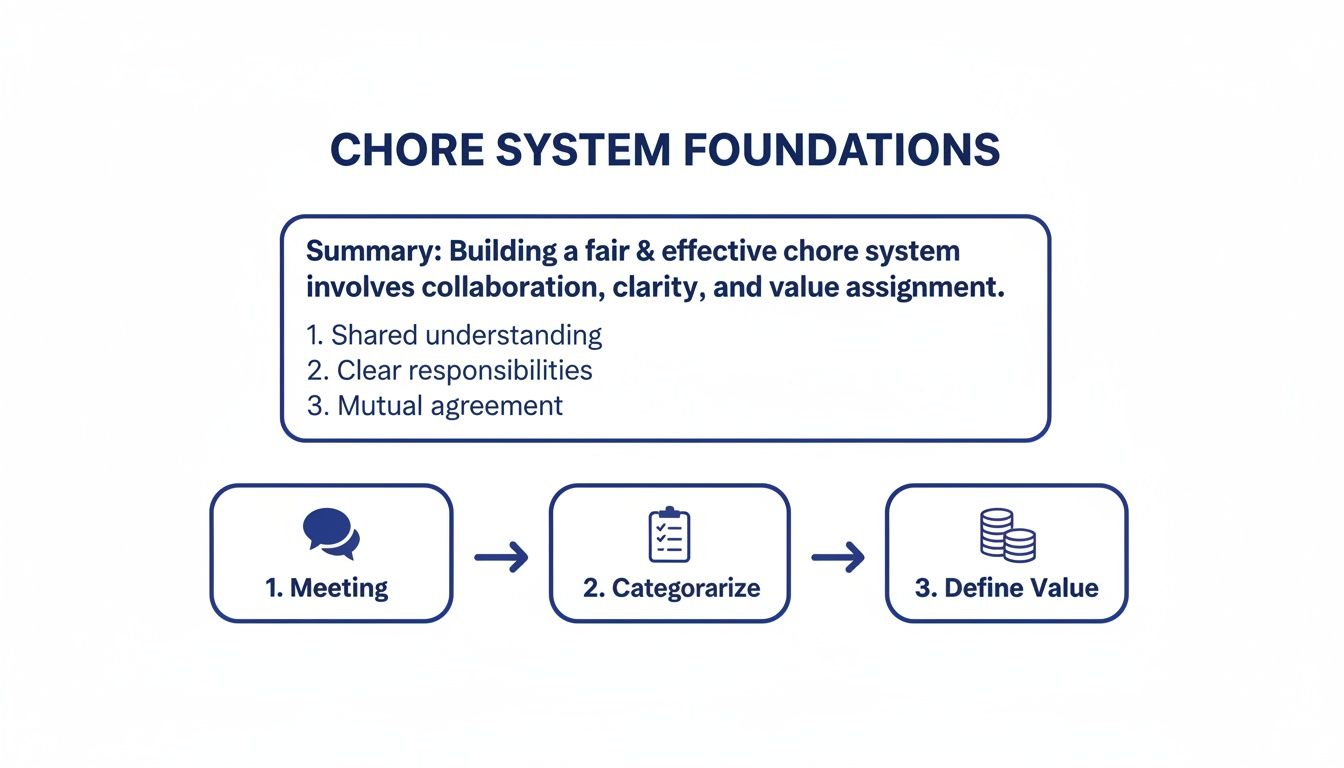
It all starts with a family meeting to get on the same page, then you sort out the tasks and decide what they're worth—whether that's an allowance or just the satisfaction of a job well done.
Of course, physical charts aren't perfect. They get lost, scribbled on by the toddler, or just become part of the background scenery after the novelty wears off. They also tend to put the burden of tracking, updating, and reminding right back on one parent’s shoulders.
The Power of a Centralized Hub
This is exactly where digital solutions step in, solving those classic problems of visibility and accountability. Using an electronic chore chart creates a single source of truth that everyone can see. No more, "I forgot," or, "I didn't know it was my turn."
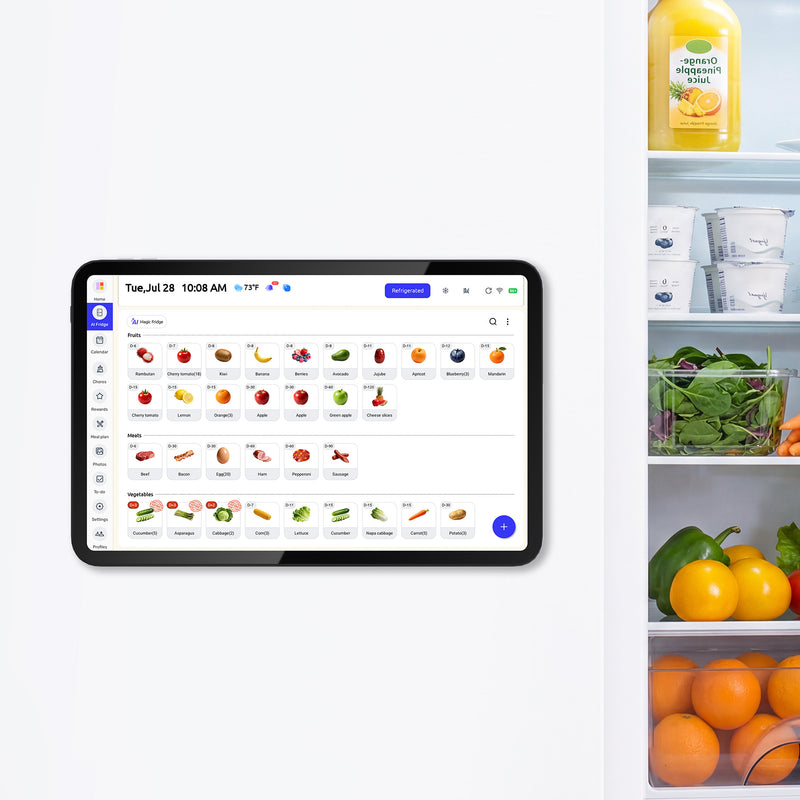
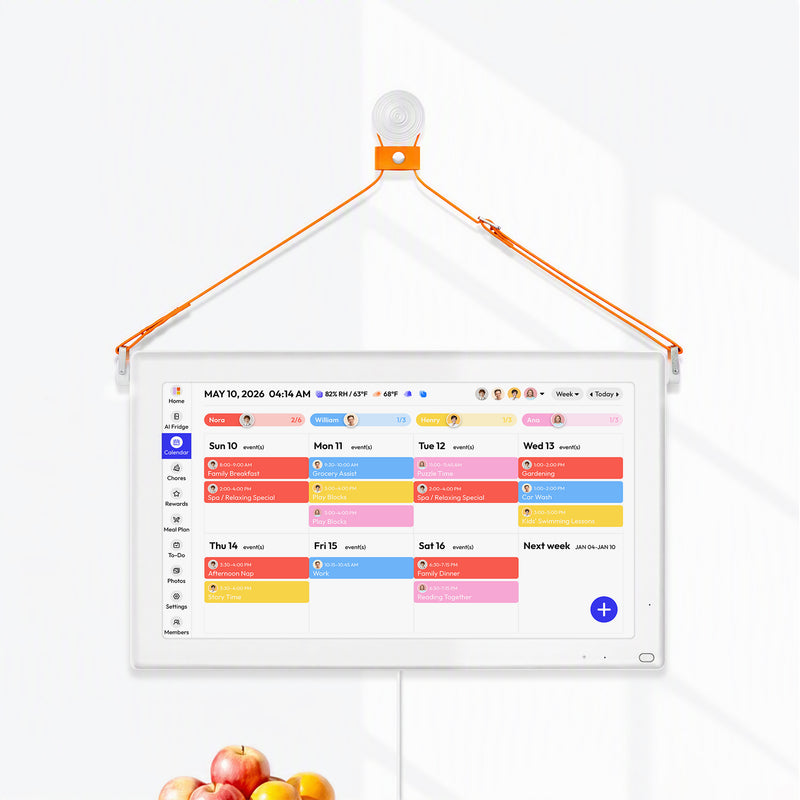
A centralized family hub like Everblog, for instance, moves your entire system off the crowded fridge door and onto an always-on display.
A digital system doesn’t just list chores; it actively manages them. It can handle rotating assignments, send gentle nudges, and track progress automatically, taking the mental load off parents.
With a tool like Everblog’s Chore Manager, you can assign tasks, set schedules, and see completions checked off in real-time. That at-a-glance visibility keeps everyone on track and fosters a genuine sense of shared responsibility. To help manage all the other moving parts of family life, many parents also swear by the best planners for busy moms. This shift from a static list to a dynamic, interactive system is often the key to building habits that actually stick.
Designing a Reward System That Truly Motivates

Once your shiny new chore chart is up, it won’t take long to hear the inevitable kid question: “So, what’s in it for me?” This is where the magic happens. A well-designed reward system is the engine that keeps your whole chore operation running smoothly, turning begrudging sighs into motivated action.
It's about more than just tossing a few dollars their way for a job well done. A great system taps into two different kinds of motivation. The first is intrinsic motivation—that internal satisfaction a child gets from contributing and feeling like a valued part of the family team. The second is extrinsic motivation: the tangible stuff like cash, special privileges, or treats that give them an immediate reason to get going.
Beyond a Simple Allowance
While a weekly allowance is a classic for a reason, some of the most effective reward systems I've seen use non-monetary rewards that kids find just as exciting. Often, these kinds of rewards create positive family memories and give kids a real sense of control.
Think about weaving some of these creative, non-cash rewards into your system:
- Screen Time Credits: Let them earn 30 extra minutes of video game or tablet time.
- Family Activity Control: The person who earns the most points this week gets to pick Friday's family movie or choose the takeout dinner.
- Special Privileges: Let them cash in points for a sleepover with a friend or a coveted "get out of one chore free" pass.
- Family Outings: Everyone can work together toward a bigger prize, like a trip to the zoo or the movies.
To keep things from getting stale, you can rotate the list of available prizes. Better yet, brainstorm some ideas for fun family days out together so everyone has something to get excited about. This adds a powerful collaborative spirit to the whole thing.
The most powerful rewards are often experiences, not just things. Tying chore completion to quality family time reinforces the idea that everyone’s contributions make a better home life possible for the whole family.
Gamifying Chores for Maximum Fun
One of the best ways to keep kids bought-in is to make it a game. Instead of just checking off tasks, try assigning points or stars to each chore based on its difficulty. A simple daily task like making the bed might be worth one star, while a bigger weekly job like cleaning the bathroom could be worth five.
Suddenly, chores aren't just a list of demands—they're a challenge. Kids can watch their points add up and save them for bigger goals, which sneakily teaches them valuable lessons about patience and planning. To see how you can put these ideas into action, check out our deep dive into creating a complete https://everblog.com/blogs/life-with-everblog/chore-chart-reward-system.
This is where digital tools really shine. For instance, Everblog’s built-in Rewards Tracker completely automates the point system. As kids mark tasks complete in the Chore Manager, their progress is tracked visually, making their achievements feel tangible and exciting. It gets rid of all the manual tracking and keeps everyone’s eyes on the prize.
Bringing It All Together with a Digital Family Hub
Okay, you’ve put in the work. You’ve defined your goals, sorted out the tasks, and even figured out a reward system that gets the kids excited. Now for the fun part: bringing all those brilliant ideas to life in a way that’s dynamic, visible, and—most importantly—impossible to ignore.
This is where a digital family hub becomes your household's mission control. It takes your thoughtful strategy and turns it into a seamless part of your daily rhythm.
Forget the paper chart that gets splattered with spaghetti sauce or the whiteboard that slowly becomes part of the wall decor. A tool like Everblog puts your entire system on a clean, central display for everyone to see. Moving your plan over is simple. You can create recurring daily habits like "make your bed" and set up rotating weekly jobs with the Chore Manager. No more "Wait, is it my turn to take out the recycling?" The hub handles all that for you.
From Nagging to Nudging
One of the biggest wins I've seen with a digital system is how it gets parents out of the enforcer role. Seriously, it's a game-changer. You can set up automated, gentle nudges to remind kids about their tasks without you having to say a single word. This simple shift empowers them to take ownership and builds a genuine sense of accountability.
Picture this: Instead of a chaotic morning scramble, your kids glance at the Everblog display, see their short list of to-dos, and know exactly what needs to get done before screen time is even an option. It turns a classic point of friction into a smooth, predictable routine. If you want to see how this looks in practice, check out our guide on setting up your own digital family command center.
Keeping Everyone on the Same Page
Modern family life is always on the move. A huge perk of a hub is its connection to a companion app, which keeps everyone in the loop whether they're at home or at soccer practice. If a new task pops up out of nowhere, features like voice entry let you add it to the list on the fly without missing a beat.
A digital hub doesn't just display chores; it creates a transparent, living record of who did what. When tasks get checked off, that progress is visible to everyone, which naturally leads to a more balanced workload.
This shared visibility is key. When the division of labor feels unfair, it's a huge source of household tension. Research from 2020 showed that only 38% of women were very satisfied with how chores were split, compared to 55% of men. But when families use digital tools, that visibility helps equalize the load. We've seen data that suggests families using digital charts see a 20-30% boost in chore completion, simply because everyone can see what needs doing. You can dig deeper into the data on how chore division impacts relationships on pewresearch.org.
By bringing your carefully planned chore strategy into a digital hub, you’re not just organizing tasks. You’re building a reliable, automated system that fosters independence, cuts down on conflict, and finally makes your chore chart work for you.
Tackling the Tough Questions About Chore Charts
Even the most carefully planned chore chart is going to hit a few bumps in the road. That’s just real life. Getting ahead of those common hurdles with clear, consistent answers is what makes the whole system actually stick.
Let's dive into some of the questions I hear most often from parents.
At What Age Can Kids Really Start Doing Chores?
Honestly, you can start way earlier than you probably think. We're talking as young as two or three years old. The goal at this stage isn't perfect execution; it's about building the habit of participation.
- Toddlers (2-3): Keep it simple. Think "helper" tasks. They can toss their toys into a basket or help wipe up a small spill with a cloth.
- Preschoolers (4-5): Now they can handle a single, clear instruction. Things like feeding the dog a scoop of food or placing napkins on the table before dinner are perfect.
- Elementary Kids (6+): This is where you can introduce multi-step responsibilities. They’re ready to set the entire table, help you unload the dishwasher, or sort their own clean laundry into drawers.
When you normalize contribution from the very beginning, it just becomes part of the family rhythm. It’s not some new, burdensome thing you spring on them when they turn eight.
Should I Pay My Kids for Doing Chores?
Ah, the great debate. There's no single "right" answer here—it really boils down to your family's core values. Some families believe chores are just part of being a team, no payment necessary. Others see an allowance as a fantastic, built-in tool for teaching kids about money.
My favorite approach is a hybrid model that separates "family contributions" from "jobs for hire." Everyday tasks like making their bed are unpaid. But bigger, extra-mile jobs like washing the car or weeding the garden can be done to earn cash.
This method teaches both responsibility and the value of work. Take a minute to think about the primary lesson you want to instill—is it teamwork, work ethic, or financial literacy? Let that guide your decision.
What If My Kid Just... Won't? Or Does a Terrible Job?
Welcome to the club. Resistance and sloppy work are practically guaranteed to happen. How you handle it is everything.
First, take a breath and make sure the chore is genuinely age-appropriate and that you’ve shown them exactly what "done" looks like.
For a flat-out refusal, your best friend is the "when/then" framework. It's not a punishment; it's just a natural consequence. For example: "When your toys are put away, then you can have your screen time."
And if the job is done poorly? Resist the urge to sigh and just fix it yourself. All that does is teach them that "good enough" is the new standard. Instead, calmly and kindly show them what they missed and have them finish it properly. Consistency is your single most important tool here. It's the key to making this whole thing last.
Ready to stop nagging and start collaborating? The Everblog digital family hub brings all your best chore chart ideas into one central, easy-to-use display. Assign tasks, track progress, and motivate your family with a system that finally works. Learn more about Everblog and transform your family's routine today.


