






A good homeschool schedule template daily isn't about boxing you into a rigid, minute-by-minute plan. Think of it less like a rulebook and more like a flexible framework. It’s the simple tool that helps you organize the day, cut down on the chaos, and give your family a predictable rhythm to follow. It’s your key to a much calmer, more focused home learning environment.
Why a Daily Schedule Is Your Homeschooling Superpower
Let’s be honest. The dream of "flexible homeschooling" can go sideways fast, devolving into stressful, unproductive days. Before you know it, one day has bled into the next, and you're left wondering, "Did we even do math this week?" This is where a daily schedule template goes from being just another piece of paper to your most valuable ally.

The real magic here isn't about control; it's about reducing decision fatigue. Instead of waking up every single morning and having to reinvent the wheel, your schedule provides a reliable flow. You already know that math happens after breakfast and reading time is in the afternoon. This simple shift frees up your mental energy to focus on what actually matters: teaching and connecting with your kids.
Creating Calm and Predictability
For children, especially the younger ones, a consistent rhythm creates a deep sense of security. They just plain thrive when they know what to expect. A visual schedule or a predictable daily flow can pretty much eliminate those frustrating power struggles because the structure—not you—becomes the bad guy.
This predictable flow helps you build momentum throughout the day. You’re not just reacting to whatever chaos erupts; you’re proactively shaping a positive learning atmosphere.
Ensuring Comprehensive Learning Without Overwhelm
A well-designed homeschool schedule template daily makes sure every subject gets its time in the spotlight. It's so easy to get caught up in the subjects we love teaching and accidentally let others slide. A schedule creates intentional space for everything:
- Core Academics: Dedicated blocks for math, language arts, and science.
- Creative Pursuits: Built-in time for art, music, or hands-on projects.
- Physical Activity: Scheduled breaks for outdoor play or just getting the wiggles out.
- Essential Downtime: Guarded free time for kids to rest, play, and just be.
The homeschooling movement has absolutely exploded, growing from around 850,000 U.S. students in 1999 to roughly 4 million today. With 34% of parents saying that schedule freedom is a huge reason they chose this path, having a solid template is critical for managing the typical 3-5 hours of core instruction alongside all the other family duties.
A schedule isn't a cage; it's the key that unlocks freedom. By providing structure, you create the mental and emotional space for spontaneous learning and creativity to flourish.
Ultimately, this structure fosters real independence. When kids understand the daily rhythm, they learn to move between activities on their own and start taking ownership of their learning. This foundation is one of the most powerful skills homeschooling can offer. It’s all about putting effective time management strategies into practice, helping both you and your children stay on track and build confidence. It’s not about perfection; it's about progress, peace, and purpose.
Designing a Homeschool Schedule That Actually Works
Staring at a blank planner can be pretty intimidating. But here's the secret: building a homeschool schedule that works isn't about cramming every minute with activities. It's about creating something that mirrors your family's natural rhythm. The best schedules are built from the inside out, starting with your core goals, not with the clock.
So, before you even think about time slots, take a breath. What does a successful day look like for your family? Is it nailing every lesson? Is it about sparking curiosity with a new project? Or is it just making sure everyone gets enough fresh air? Whatever your priorities are, they become the foundation for everything else.
Start with Your Family's Anchors
Every family has a few non-negotiables that hold the day together. I call these our "anchors." They're the fixed points in your day that everything else can flex around. Nailing these down first gives you a solid structure to build on.
Common anchors usually include things like:
- Morning Routine: What time is everyone up, dressed, and fed?
- Meal Times: When do you typically break for lunch and gather for dinner?
- Nap Schedules: For anyone with littles, this is a big one. Nap times are sacred.
- Outside Commitments: Co-op classes, sports, music lessons—anything with a hard start and end time.
Once you get these anchors on paper, you'll immediately see the natural pockets of time opening up for learning, play, and chores. It takes the guesswork out of it and turns that blank page into a manageable framework.
Harnessing Natural Energy Levels
One of the absolute best perks of homeschooling is working with your kids' natural energy cycles, not against them. A traditional school schedule forces everyone into the same box, but you have the power to schedule tough stuff when your kids are actually ready for it.
Pay attention to your children's daily flow. Are they sharp and ready to go in the morning, or do they find their groove after lunch? Just observing this can change everything.
For instance, my "morning lark" can fly through a tricky math lesson at 9 AM but would hit a wall with that same lesson at 2 PM. On the other hand, my more creative, "night owl" kid does their best, most imaginative work in the late afternoon.
A simple rule of thumb: schedule the brain-heavy subjects—like math, grammar, or a dense science concept—during your child's peak focus time. Save the lighter, more hands-on activities for when their energy naturally starts to dip. This one shift can cut down on frustration and make learning stick so much better.
Introducing Time Blocking and Rhythms
Forget a rigid, minute-by-minute plan. Most homeschool families I know, including my own, thrive with a more fluid approach like a daily rhythm or time-blocking. This just means chunking the day into broader categories instead of hyper-specific time slots.
A simple time-blocked homeschool schedule template daily could look something like this:
| Time Block | Focus Activity | Description |
|---|---|---|
| 8:00 - 9:00 AM | Morning Connection | Breakfast, chores, getting ready for the day together. |
| 9:00 - 10:30 AM | Focused Academics | Hitting the core subjects like math and language arts. |
| 10:30 - 11:30 AM | Active Break | Get outside! A walk, playground time, or a hands-on activity. |
| 11:30 - 1:00 PM | Lunch & Quiet Time | Make and eat lunch, then settle in for independent reading. |
| 1:00 - 2:30 PM | Creative Exploration | History, science projects, art, music—the fun stuff. |
| 2:30 PM Onward | Free Time & Wrap-up | Independent play, finishing chores, and child-led learning. |
This kind of structure gives you predictability without feeling like a prison. If a science experiment goes long, it doesn't throw off the entire day. You just adjust within your "Creative Exploration" block. Easy.
Building in the Secret Ingredient: Flex Time
No homeschool schedule, no matter how perfect it looks on paper, will survive real life without one key ingredient: flex time. Life happens. The toddler has a meltdown, a history lesson sends you down an hour-long research rabbit hole, or honestly, everyone just needs a break.
Building in a 30- to 60-minute buffer—or even a whole "catch-up" afternoon each week—isn't a sign of failure. It's the mark of a smart, sustainable plan. That white space on your calendar is permission to be human. It lets you chase those spontaneous learning moments or just hit reset when the day goes sideways. A schedule that can bend without breaking is one that will actually last.
Real-World Schedule Templates for Different Age Groups
Putting a schedule on paper is one thing, but seeing how it actually plays out in a real home is where the pieces click together. It’s pretty obvious that a schedule that works for a curious five-year-old would just frustrate a teenager. The real secret is matching the structure to their developmental stage—honoring their ability to focus and their growing need for independence.
Think of these templates as a starting point, not a set of rigid rules. They’re meant to be bent, tweaked, and personalized until they feel like they were made just for your family. This simple, three-part process is the foundation for building any schedule that actually works.
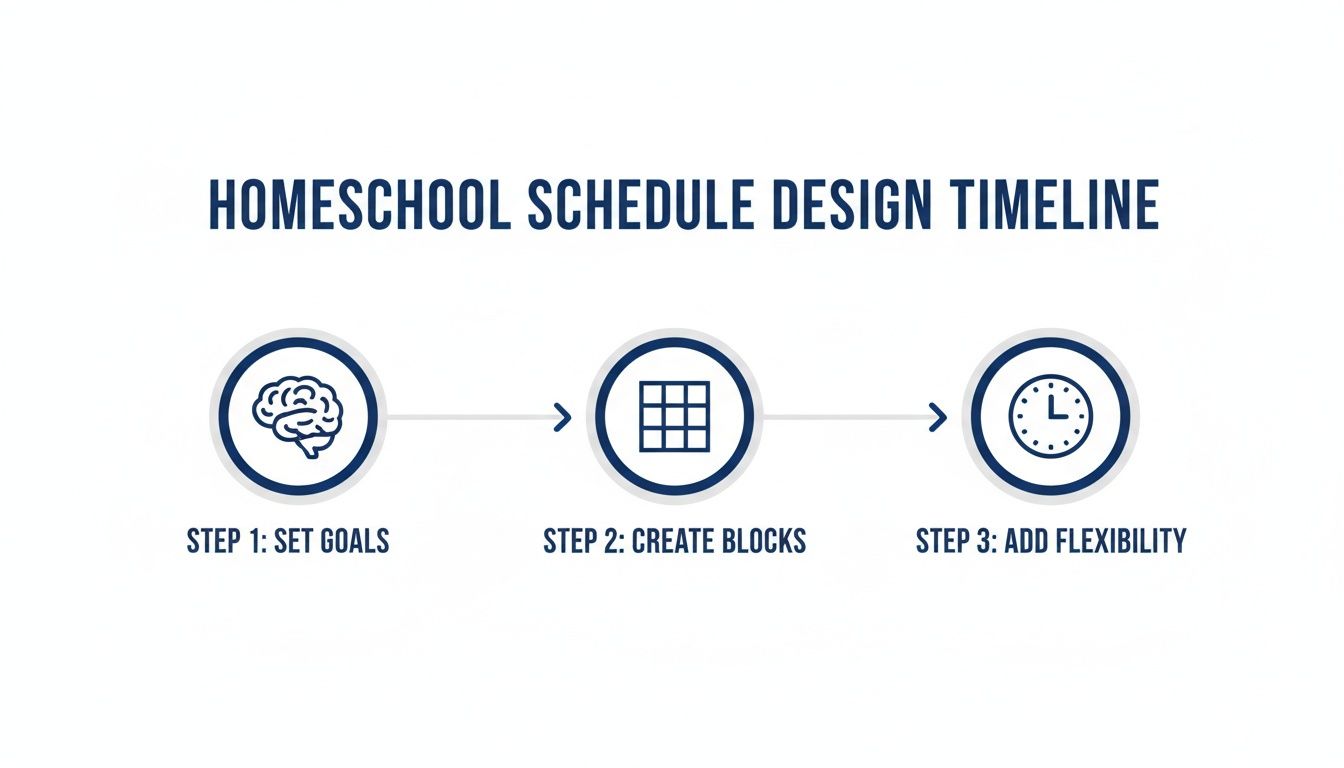
As you can see, a solid schedule always starts with your goals, moves into creating time blocks, and finishes by building in the flexibility you need for real life. Let’s look at how this translates into practical, daily schedules for different ages.
The Preschool and Kindergarten Rhythm
For your youngest learners, a strict, clock-driven schedule is almost always a recipe for disaster. Their world is all about play, discovery, and learning in short, exciting bursts. The goal here is a gentle, predictable daily rhythm—not a rigid timetable.
This approach focuses on short, fun activities that flow into one another. Learning happens organically through stories, songs, and getting their hands dirty.
A typical rhythm might look like this:
- Morning Welcome (around 9:00 AM): Kick off the day together with a song, a story, and a quick chat about what’s happening outside.
- Play-Based Learning (around 9:30 AM): A 45-minute block for building with blocks (hello, early math!), digging into sensory bins (science!), or making crafts (fine motor skills).
- Outdoor Adventure (around 10:15 AM): An absolute must. Time to run, jump, and explore is non-negotiable for burning off that amazing energy.
- Quiet Time & Lunch (around 11:30 AM): Wind things down with puzzles or picture books before heading into lunchtime.
- Nap or Rest (around 1:00 PM): That crucial reset for little minds and bodies.
- Afternoon Read-Aloud (around 2:30 PM): A cozy time to cuddle up with a chapter book or a few favorite picture books.
See how the focus is on the flow? It’s about what comes next, not what the clock says. This gives them predictability without taking away the freedom a four-year-old absolutely needs.
The Elementary Years Structure
Once kids hit the elementary years, they can handle more focused work, but they still need tons of movement and creative time. A great schedule for this age finds the sweet spot between structured academic blocks and plenty of time for projects and free play. This is where you start to see independence bloom.
A time-blocked schedule becomes your best friend here. It brings in more formal learning without making things feel rigid or boring.
The beauty of a daily rhythm lies in its adaptability. It acknowledges that no two days are exactly alike, and that life with children can often lead to unexpected detours. A rhythm provides the freedom to shift activities around as needed.
Here’s a sample structure for an elementary-aged student:
- Morning Meeting & Chores (8:30 AM): A quick family check-in to start the day and knock out personal responsibilities.
- Math & Language Arts Block (9:00 AM): Tackle the heavy hitters first while their minds are fresh. This could be a solid 60-90 minute block.
- Creative Break (10:30 AM): A 30-minute recess for art, music, or pulling out the LEGOs.
- History or Science Exploration (11:00 AM): Dive into subjects that are perfect for hands-on experiments, projects, or an engaging read-aloud.
- Lunch & Outdoor Play (12:00 PM): A full hour to refuel and get some fresh air. Don’t skip this!
- Quiet Reading (1:00 PM): Build a love of books with 30 minutes where everyone in the house grabs something to read.
- Project Time & Wrap-Up (1:30 PM): A flexible block to finish up assignments, work on long-term projects, or explore their own interests.
The Middle and High School Framework
By the time they’re in middle and high school, the goal shifts. You’re now coaching them toward independence and self-management. The schedule becomes less of a mandate and more of a framework that empowers your teen to own their time and their work. You set the structure, but they start filling in the details.
A weekly assignment sheet is the perfect partner to a daily block schedule for teens. It helps them see the big picture and learn how to break down tasks to fit the time they have.
Here is a sample table that shows how these blocks might look side-by-side, adapting to each age group's unique needs.
Sample Daily Homeschool Schedule Blocks By Age Group
| Time Block | Preschool/Kindergarten (Play-Based) | Elementary (Structured Learning) | Middle/High School (Independent Study) |
|---|---|---|---|
| Morning Core | Play-Based Learning (45 min) | Math & Language Arts (60-90 min) | Independent Block 1: Math/Science (90 min) |
| Creative/Break | Outdoor Adventure (45 min) | Creative Break (30 min) | Parent Check-In & Instruction (45 min) |
| Mid-Day | Quiet Time & Stories (30 min) | History or Science (60 min) | Independent Block 2: Humanities (90 min) |
| Afternoon Flex | Free Play/Nap | Project Time & Reading (60 min) | Electives & Project Work (90 min) |
| Wrap-Up | Tidy-Up Time | Daily Wrap-Up & Chores | Daily Check-In & Planning (15 min) |
This comparison highlights how the structure evolves—from short, guided activities for the little ones to longer, self-directed blocks for teens who are mastering time management.
For a deeper dive, check out our guide on finding the perfect homeschool schedule template free to download and make your own.
This sample schedule gives a teen plenty of autonomy:
- Independent Start (8:30 AM): Teen is responsible for getting started on their own, usually with a tough subject like math or science.
- Parent Check-In & Instruction (10:00 AM): A dedicated time for you to review their work, teach a new concept, or talk through any roadblocks.
- Humanities Block (10:45 AM): Independent time for reading and writing for subjects like literature, history, or government.
- Lunch & Break (12:15 PM): A longer break to decompress, maybe chat with friends online, or just get outside.
- Electives & Project Work (1:30 PM): A flexible block perfect for foreign languages, coding, art, or any other passion projects.
- Daily Wrap-Up (3:00 PM): A quick 15-minute check-in to make sure assignments are done and to map out a plan for the next day.
How to Juggle Multiple Kids and Real-Life Demands
The picture-perfect homeschool template often features one parent and one child, working quietly at the kitchen table. But let’s be real—life with multiple kids is a beautiful, chaotic orchestra of competing needs. Juggling a first grader’s phonics lesson while a fourth grader has a fraction meltdown and a toddler is demanding snacks is the reality for most of us.

The secret isn't to create three separate, color-coded schedules that you’ll abandon by Tuesday. It’s about creating a unified family rhythm that brings everyone together for shared learning while carving out dedicated pockets for the one-on-one time that truly matters.
Mastering the Art of Combined Learning
One of the most powerful strategies in a multi-kid homeschool is embracing family-style learning. This works brilliantly for subjects that aren’t strictly sequential, where you can teach a core concept and then expect different outputs based on each child's ability.
These subjects are perfect for teaching together:
- History & Social Studies: Read a chapter about ancient Rome aloud. Your five-year-old can draw a picture of a chariot, while your ten-year-old writes a paragraph summarizing the role of an aqueduct. Same lesson, different tasks.
- Science: A simple nature walk becomes a multi-level classroom. Little ones can gather leaves and sort them by color, while older kids identify tree species or sketch the local ecosystem.
- Art & Music Appreciation: Put on a piece by Mozart or pull up a painting by Van Gogh. The discussion that follows will naturally be different for each age, but everyone is engaged in the same beautiful experience.
This approach doesn’t just save your sanity; it builds a shared learning culture in your home. It’s all about working smarter, not harder.
Staggering Independent and One-on-One Time
While group learning is great, some subjects just need that focused attention. The trick is to stagger your schedule so you’re never pulled in two directions at once. When one child is busy with an independent assignment, that’s your golden window to work one-on-one with another.
Think of it as a "tag team" system. Your schedule becomes a dance, alternating between independent work blocks and direct instruction. This ensures everyone gets the focused help they need without you feeling completely frazzled.
This is where having a visual homeschool schedule template daily is a game-changer. An older, more independent learner can see exactly what they need to work on, freeing you up to sit down with your younger child for reading or math practice.
Integrating Chores and Household Management
Homeschooling doesn't exist in a bubble—it happens inside a busy home that still needs to run. Trying to draw a hard line between "school time" and "home time" is a recipe for frustration. A much better approach is to weave chores and home management right into your daily flow.
Many families swear by the "chore blitz"—a quick 15-minute burst where everyone tackles a specific zone of the house together. It turns cleaning from a parental burden into a fast, collaborative team effort. We dive deeper into making this work in our guide on chore charts for multiple kids.
Even meal prep can become a learning opportunity. Have older kids chop veggies or measure ingredients while a younger child sets the table. By making these tasks part of the daily rhythm, you’re not just keeping the house running—you're teaching responsibility and life skills.
This integrated approach is where homeschooling’s flexibility really shines. It allows families to condense formal learning into just 3-5 hours daily, a sharp contrast to the traditional school day. And it's incredibly effective—over 78% of peer-reviewed studies show that homeschooled students outperform their public school peers academically, making a solid template essential for managing a full, productive life. You can read more about these homeschooling statistics and their implications.
Bringing Your Daily Schedule to Life with Digital Tools
A perfectly designed homeschool schedule on paper is a fantastic starting point, but let's be honest—it can feel a bit static. To make your plan a living, breathing part of your day, taking it digital is a complete game-changer. Digital tools can transform your schedule from a simple reference sheet into an interactive command center for your entire family.
Instead of just being a list of tasks, a digital hub makes your whole operation visible and collaborative. This isn't about using technology for technology's sake; it's about solving real homeschool headaches. Imagine a chore manager that doesn't just list what needs to be done but actually tracks who did it. Or a meal planner that syncs with your grocery list, eliminating that "what's for dinner?" panic.
Centralizing Your Family's Operations
The real magic of going digital is bringing everything into one place. When your homeschool schedule template daily lives in a single shared space, everyone is finally on the same page. There are plenty of great digital tools out there, including options for integrating with Google Calendar, that can help you pull this off.
This centralized approach brings some major wins:
- Visibility: From your spouse down to your oldest kid, everyone can see the plan for the day. This drastically cuts down on the constant "what are we doing next?" questions.
- Collaboration: Kids can check off their own tasks as they complete them, and you can easily adjust the schedule on the fly when life inevitably throws you a curveball.
- Accountability: A shared view of responsibilities helps build a real sense of teamwork and ownership among family members.
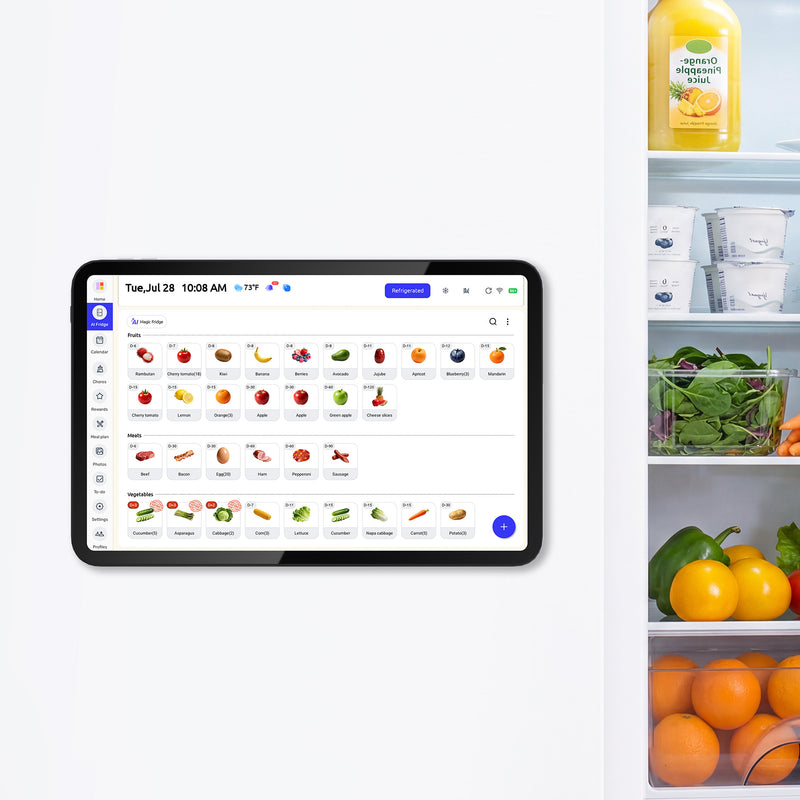
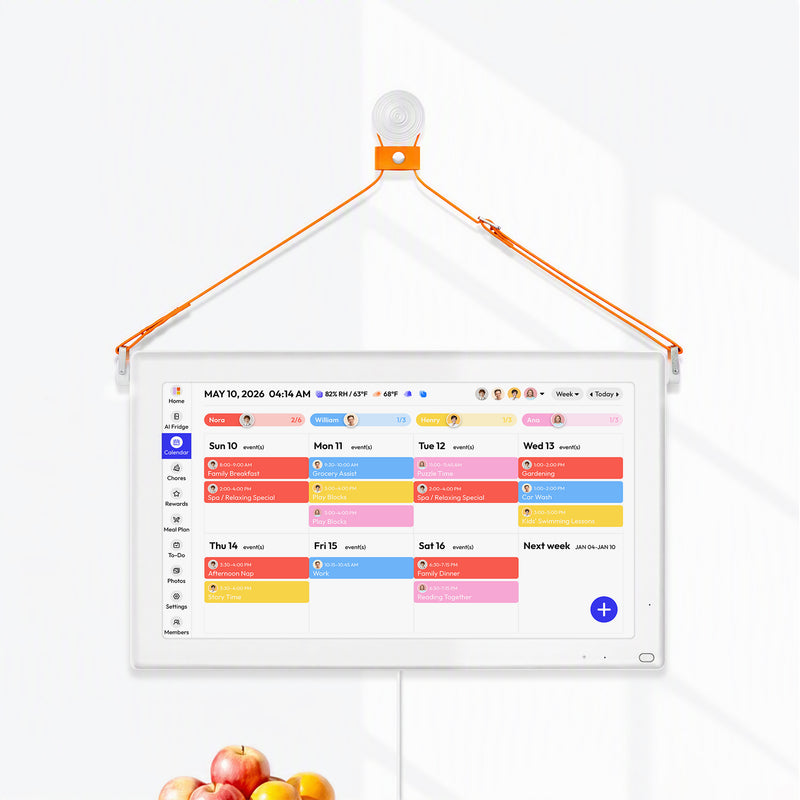
A dedicated digital hub like Everblog is designed specifically to pull all these pieces together. Instead of toggling between a calendar app, a to-do list, and a chore chart stuck to the fridge, everything is unified in one glanceable display.
A centralized digital calendar does more than just organize your time; it organizes your communication. It becomes the single source of truth for your family, eliminating confusion and fostering a more connected, in-sync household.
This is what a centralized digital family calendar looks like in action—pulling together schedules, chores, and meal plans into one clear view.
The at-a-glance format makes it simple for anyone in the family to understand the day's flow, from academic blocks to evening activities.
Going Beyond Basic Scheduling Features
The best digital tools do more than just list appointments. They integrate features that actually streamline the little things that make a homeschool run. Think of them as specialized assistants built to handle the logistics so you can focus on what matters: the teaching.
An integrated chore manager, for example, is a huge step up from a simple checklist. You can assign recurring tasks, set reminders, and even connect them to a rewards system. This little bit of gamification can be incredibly motivating for kids, turning mundane tasks into achievable goals. When chores are visually tracked and celebrated, they become a more positive part of the daily rhythm.
Likewise, a built-in meal planner connected to a grocery list saves an incredible amount of mental energy. You can map out your meals for the week right alongside your lesson plans. As you add recipes, the ingredients automatically populate your shopping list. This simple connection prevents last-minute dinner scrambles and makes grocery runs so much simpler. To see how these elements can work together, you can explore the benefits of a digital family calendar that unifies all these features.
By bringing your daily homeschool schedule into a digital home, you’re not just organizing tasks—you're building a supportive system that helps your entire household run with more ease and connection.
Answering Your Top Homeschool Scheduling Questions
Let's be honest: even the most beautiful homeschool schedule template daily will meet its match. That match is called real life. A sick kid, a sudden deep dive into the history of ancient Egypt, or just a day when everyone wakes up on the wrong side of the bed can throw your best-laid plans right out the window.
Having a schedule is crucial, but knowing how to roll with the punches is what truly makes homeschooling work long-term. Here are some of the most common questions I hear from parents once the schedule goes from paper to reality.
What Happens When the Whole Day Goes Off the Rails?
It's 10 AM. The science experiment was a fizzy, sticky mess. No one has touched a math book. You’re already on your third cup of coffee. Sound familiar?
When a day feels like a total write-off, the single most important thing you can do is give yourself permission to reset. Pushing through a broken schedule just leads to frustration for everyone.
Instead, call it a "reset day." This doesn't mean giving up; it means pivoting.
- Declare a Read-Aloud Day: Grab a great book, pile onto the couch with blankets and snacks, and just read together. This is never a waste of time.
- Take It Outside: A change of scenery is like a magic wand for bad moods. Head to a park, go on a nature walk, or just kick a ball around the backyard.
- Lean on Good Media: Put on a quality documentary, an audiobook, or a fun educational game. You can salvage the learning without the pressure of a formal lesson.
The most successful homeschool parents know that some days, the best lesson you can teach is how to handle a tough day with grace. One "off" day will not derail your child's education. A consistently stressed-out home absolutely will.
Remember, the schedule is a tool meant to serve you, not the other way around. Acknowledge that the day isn't going as planned, adjust your expectations, and focus on connection over curriculum.
How Do I Keep My Kids from Fighting the Routine?
When you first introduce a new schedule, it’s novel and exciting. But after a few weeks, that novelty can wear off, and you might start hearing sighs and seeing some foot-dragging. If your kids are starting to push back, it’s usually a sign they need a little more ownership over their day.
A great way to boost buy-in is to bring them into the planning process. Try having a quick family meeting on Sunday night to walk through the week ahead. Ask for their input. Which art project sounds more fun? What topic should you explore in history this week?
I also love to build in little surprises. Maybe one afternoon you ditch the math worksheets for a trip to the grocery store with a budget and a calculator. Or you spontaneously decide to bake cookies to practice fractions. These small, unexpected shifts break up the monotony and remind everyone that your routine is a rhythm, not a prison.
When Is It Time to Change Our Homeschool Schedule?
So many parents treat their schedule like it’s set in stone. They feel like if they have to change it, they’ve somehow failed. That couldn't be further from the truth. Your family isn’t static, so why should your schedule be? Changing what isn't working is a sign you're paying attention.
Keep an eye out for these tell-tale signs that it’s time for a tweak:
- Consistent Friction Points: If you’re having the same argument every single day at 2 PM, that part of your schedule is broken, not your child.
- Developmental Leaps: The schedule that worked perfectly for your first-grader is not going to cut it for that same kid in third grade. As attention spans grow and academic needs deepen, the routine has to evolve.
- Changes in Seasons: Let’s face it, the rhythm of a dark, cozy winter day looks very different from a long, sun-filled summer afternoon. It’s natural for your schedule to shift with the seasons.
I recommend planning a formal review of your homeschool schedule template daily every six to eight weeks. Put it on the calendar. This regular check-in helps you stay ahead of the curve and adapt your routine before the friction points turn into full-blown burnout.
Ready to stop juggling scattered notes and create a central hub for your family's rhythm? Everblog brings your schedule, chores, meals, and memories together in one beautiful, at-a-glance display. Discover how Everblog can bring calm and connection to your home today.


