

The kitchen fridge is the ultimate family hub. For decades, it has been the go-to spot for grocery lists, school notes, and weekly schedules. While the classic paper calendar worked for years, modern family life moves too fast for markers and magnets. This evolution explains how the traditional fridge calendar changed over time. From the first flexible magnets to digital screens like the Everblog FridgeCal™, we trace how kitchen organization became automated.
Why Did Fridge Calendars Become Part of Family Life?
Families naturally started leaving schedules on the refrigerator because the kitchen is the busiest room in the house.
The Kitchen as the Center of the Home
The kitchen is where breakfast is made, school lunches are packed, and family dinners are prepped. Naturally, conversations about who needs a ride to soccer practice or when the dentist appointment is happen right here in this room. It acts as the physical hub of daily life, making it the most logical place to share information.
The High-Traffic Nature of the Refrigerator
Every person in the household opens the refrigerator door multiple times a day. Placing a note or a schedule on this surface guarantees that it will be seen by everyone at some point. It is a highly visible space that nobody can easily ignore as they go about their morning routine.
The Need for Shared Visibility
Keeping a schedule in a personal planner or a smartphone means only one person has easy access to it. Putting a physical schedule in the kitchen invites everyone in the household to participate and stay informed. It shifts the burden of coordination from one person to the entire family.

1960s: Flexible Magnets Made Refrigerator Organization Possible
The journey toward the modern fridge calendar started with a major material breakthrough in the middle of the twentieth century. This development completely changed how families utilized the vertical space on their kitchen appliances.
The Invention of Flexible Magnetic Sheets
In the 1960s, manufacturers figured out how to combine magnetic powder with flexible plastic binders. This resulted in thin, lightweight, bendable magnets that could easily stick to curved steel refrigerator doors without scratching the paint. For the first time, families had a non-damaging way to stick items onto their appliances.
From Kitchen Decoration to Message Board
At first, these flexible magnets were just novelty items or simple colorful souvenirs. Over time, parents realized they could use these small magnets to clip paper grocery lists, permission slips, and hand-written notes directly to the fridge door. This simple habit laid the groundwork for more structured kitchen organization systems in the future.
Late 1990s: Fridge Calendars Helped Popularize the Family Command Center Concept
As schedules became more packed in the late twentieth century, families needed something more structured than loose papers held by simple magnets. This shift birthed a new way of managing the household.
The Rise of Reusable Magnetic Dry-Erase Boards
In the late 1990s, the magnetic whiteboard became a household staple across the country. These boards featured a slick white surface that could be written on with special markers and wiped clean with a dry cloth. They offered a quick way to write down weekly schedules without wasting paper.
Centralizing the Chaos in One Visual Spot
This period saw the rise of the “family command center” where parents organized mail, keys, and schedules in one physical zone. The whiteboard on the fridge quickly became the centerpiece of this organizational setup.
- Magnetic whiteboards provided a smooth surface that could be written on and erased in seconds.
- Plastic storage bins held incoming mail, school permission slips, and car keys near the kitchen entry.
- Paper chore charts assigned weekly tasks to children using simple colorful stickers.
Early 2000s: Reusable Fridge Calendars Became Mainstream
While blank whiteboards were helpful, busy parents still had to draw their own lines to make a calendar. Manufacturers noticed this extra step and designed a more specialized tool for the kitchen.
Printed Monthly Grids Meet Dry-Erase Markers
In the early 2000s, specialized magnetic calendar for fridge products hit store shelves. These boards came with pre-printed grids showing the days of the week, saving parents the weekly chore of drawing calendar boxes. They combined the convenience of a traditional wall calendar with the reusable nature of a whiteboard.
Managing the Rush of After-School Activities
With more children participating in structured extracurricular activities, the monthly grid became essential. Parents could easily color-code soccer practice, music lessons, and school holidays for the entire month. It allowed everyone to see the monthly flow of activities at a single glance.

2010s: Acrylic Fridge Calendars Became a Popular Option
As home design trends shifted toward modern and minimalist styles, many families felt the old whiteboards looked cluttered. This led to a major aesthetic update in kitchen organization.
Aesthetics Meet Functional Home Decor
The 2010s saw the rise of the acrylic magnetic fridge calendar. Made from clear, durable acrylic, these boards looked sleek and let the natural color of the stainless steel refrigerator show through. They became popular because they helped families stay organized without ruining the look of a modern kitchen.
The Hidden Chore of Manual Monthly Updates
Despite looking beautiful, acrylic calendars still required a lot of manual maintenance. At the end of every month, someone had to spray down the board, scrub off the dry liquid chalk, and rewrite all the numbers and activities for the new month. If plans changed during the week, erasing and rewriting often left messy smudges.
Today: The Rise of Digital Fridge Calendars
Modern life moves at a pace that physical markers and plastic boards struggle to match. The rise of dual-income homes, shared online calendars, and hybrid work has created a need for a more connected solution.
The Struggle of Keeping Modern Schedules in Sync
Today, most parents use digital tools like Google Calendar or Apple Calendar on their phones to manage work and life. Copying these shifting appointments by hand onto a physical kitchen board is double the work and leads to errors. A single change in a work meeting can make the physical board outdated in seconds.
Moving From Static Writing to Real-Time Updates
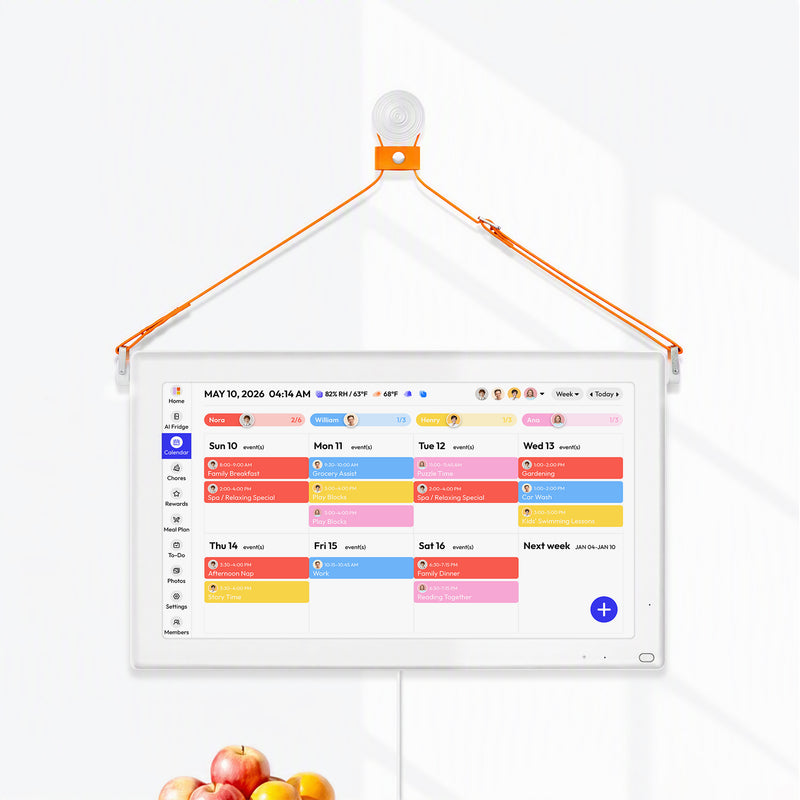
A digital family calendar bridges the gap between the phone in your pocket and the kitchen wall. Instead of manual copying, these devices update automatically when plans change on the go. This ensures that the schedule on the fridge is always accurate and up to date.
Comparing Refrigerator Organization Eras
The transition from basic magnets to modern digital screens has changed how families coordinate their daily lives. The table below shows how these tools compare across key areas of household management.
|
Calendar Type |
Primary Material |
How It Updates |
Best Suited For |
Main Downside |
|
Traditional Magnetic Board |
Coated steel whiteboard |
Manual dry-erase writing |
Quick hand-written lists |
Easily smudged and looks cluttered |
|
Acrylic Calendar |
Clear acrylic plastic |
Manual liquid chalk markers |
Minimalist kitchen aesthetics |
Hard to clean and requires manual updates |
|
Digital Calendar |
Electronic screen |
Automated wireless sync |
Busy, multi-person households |
Requires periodic charging every few days |
While physical boards served families well for decades, they require constant manual maintenance to keep up with changing schedules. The digital family command center solves this problem by keeping everyone updated automatically without the mess of markers.
How Everblog FridgeCal™ Represents the Next Step in Fridge Calendar Evolution
When we look at this long history of kitchen organization, the natural next step is a device that blends perfectly into the kitchen while utilizing modern technology. This is where the Everblog FridgeCal™ Calendar fits in.
A Calming Screen That Blends into the Kitchen
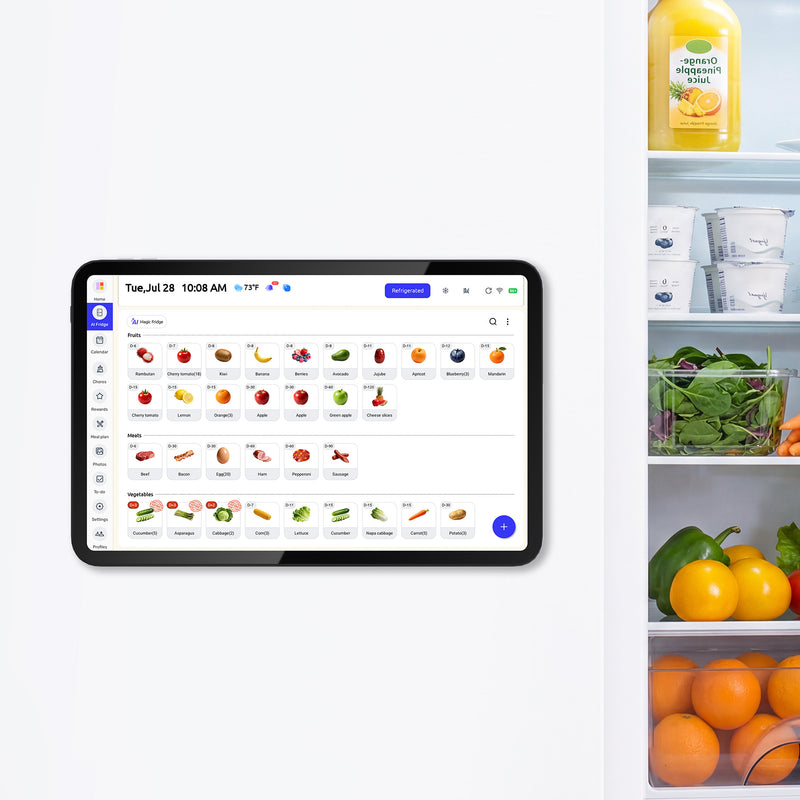
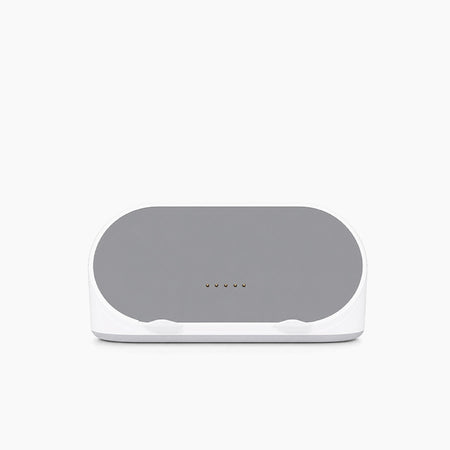
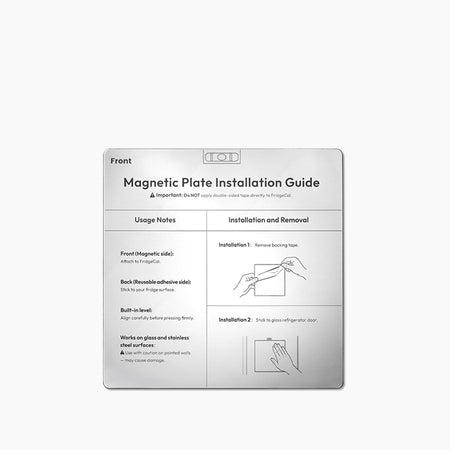
Many electronic devices feel loud, distracting, and out of place in a cozy kitchen environment. The Everblog FridgeCal™ is designed with a sleek, high-definition touchscreen that looks like a natural, modern extension of your appliance. Thanks to its cordless, magnetic design with a built-in battery, it attaches seamlessly to your fridge door without any messy wires. Beyond displaying your schedule, it can stream cooking tutorials or act as a digital photo frame, serving as a quiet helper rather than just another demanding screen.
The Mental Relief of Shared Coordination
By using an electronic calendar for fridge mounting, parents no longer have to carry the mental load of reminding everyone about every single detail. When the kids or your partner walk into the kitchen to grab a snack, they can see the daily agenda clearly displayed. It builds a sense of shared responsibility and family teamwork without anyone having to say a word.
What Is the Future of the Electronic Calendar for Fridge Systems?
The evolution of the fridge calendar will not stop with simple synchronization. As homes become more connected, the tools we use to stay on track will become even more intuitive.
Smarter Automation with Less Screen Time
Future calendar systems will likely focus on reducing the amount of time we spend looking at devices. Instead of forcing us to type out tasks, these systems will gather schedules in the background, keeping our hands free and our minds clear. The technology will work quietly in the background to simplify our days.
Natural Integration with Everyday Kitchen Life
We will see kitchen organizers that feel less like tech gadgets and more like beautiful furniture pieces. The goal is to make managing a household feel lighter, more natural, and completely integrated into our physical environments. The kitchen will remain the heart of the home, supported by tools that respect our peace of mind.
Simplify Your Kitchen Coordination with Everblog FridgeCal™
From simple paper notes held by flexible magnets to sleek dry-erase boards, the way we coordinate our homes has evolved deeply over the decades. Today, digital tools like the Everblog FridgeCal™ Calendar offer the ultimate balance of visual kitchen presence and automated, real-time synchronization. If you are tired of scrubbing dried marker ink or constantly updating schedules by hand, it is time to make household coordination simpler. Visit Everblog to find the perfect electronic calendar for your kitchen and make family life feel lighter today.
FAQs About Your Fridge Calendar
Q1: Who Invented the Refrigerator Magnet?
William Zimmerman secured the patent for the first thin, flexible refrigerator magnet in the early 1970s. Before this invention, people used heavy, bulky magnets or tape to stick notices onto their metal appliances.
Q2: How Did Fridge Magnets Become Popular?
They became popular as local businesses began printing advertisements, calendars, and phone numbers directly onto flexible magnetic sheets. Households kept these promotional items on their refrigerators because they were incredibly convenient for holding up personal notes and grocery lists.
Q3: What Are the Benefits of Using a Magnetic Calendar for a Fridge?
Using a magnetic fridge calendar ensures that your entire household stays in sync because the refrigerator is a high-traffic area. It places important schedules in plain sight, reducing miscommunication and saving busy parents from constantly repeating daily reminders.
Q4: What Are Some Creative Uses for Magnetic Calendars?
Beyond tracking daily appointments, you can use these calendars to plan weekly family dinners, track fitness routines, or manage chore schedules. Some families also use them to count down to exciting events like vacations, holidays, or school graduations.


