
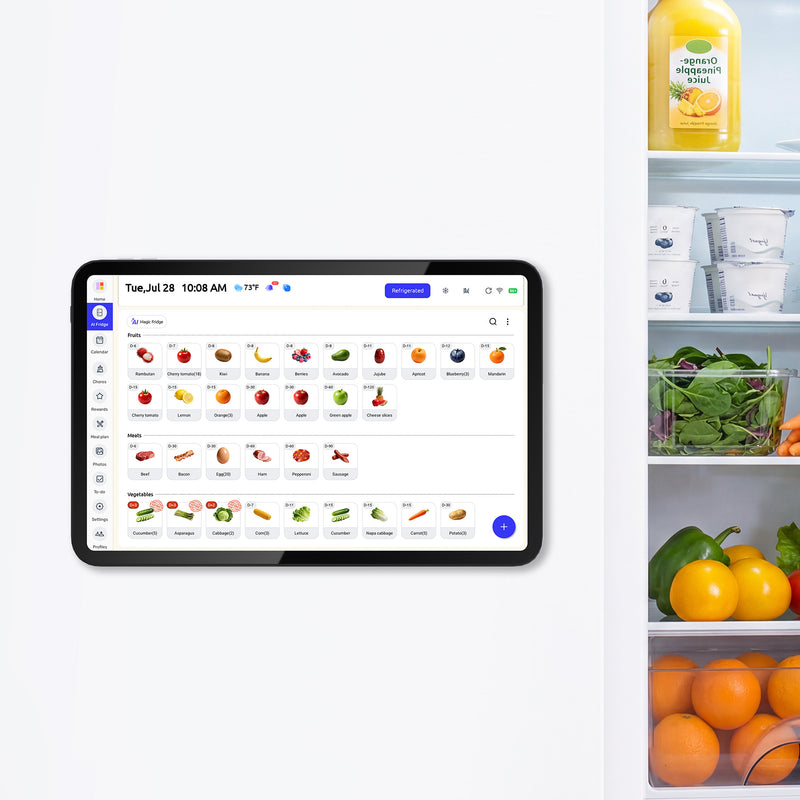



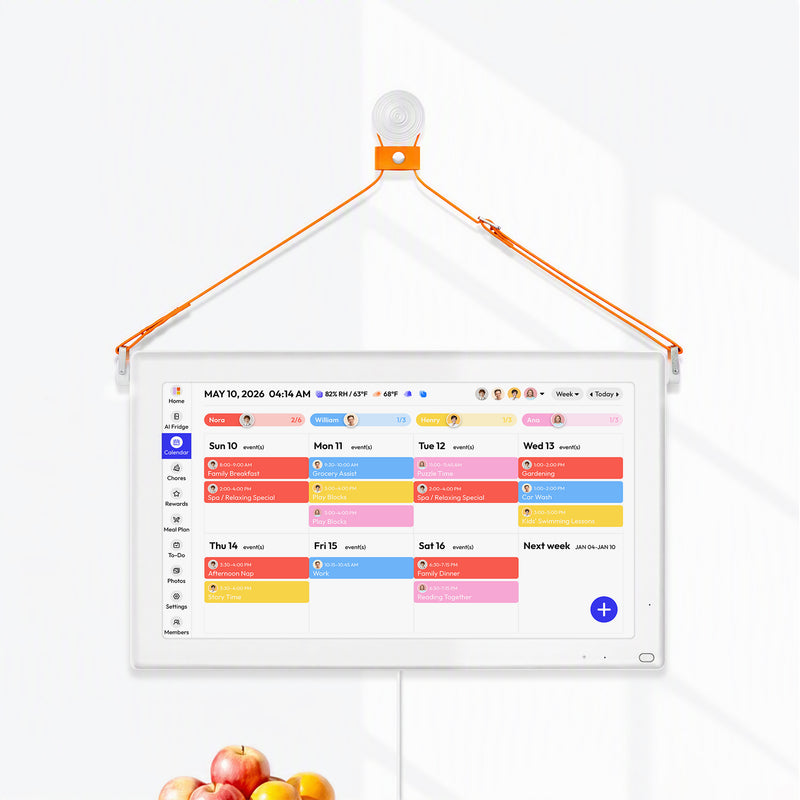



Getting your kids to consistently do chores isn't about finding the perfect threat or reward. It's about building a clear, predictable system that just becomes a normal part of family life.
The most successful approaches I’ve seen all boil down to two things: shared expectations and consistent follow-through. When those two pieces are in place, chores stop being a daily battle and start becoming a habit.
Why Chores Are a Gift to Your Kids, Not a Punishment
When you ask your kid to set the table, it’s so easy to frame it as just another task to get done. But what if we looked at it differently? Chores aren't a penalty for making a mess. They are one of the most practical ways we teach our kids to be capable, responsible, and confident people.
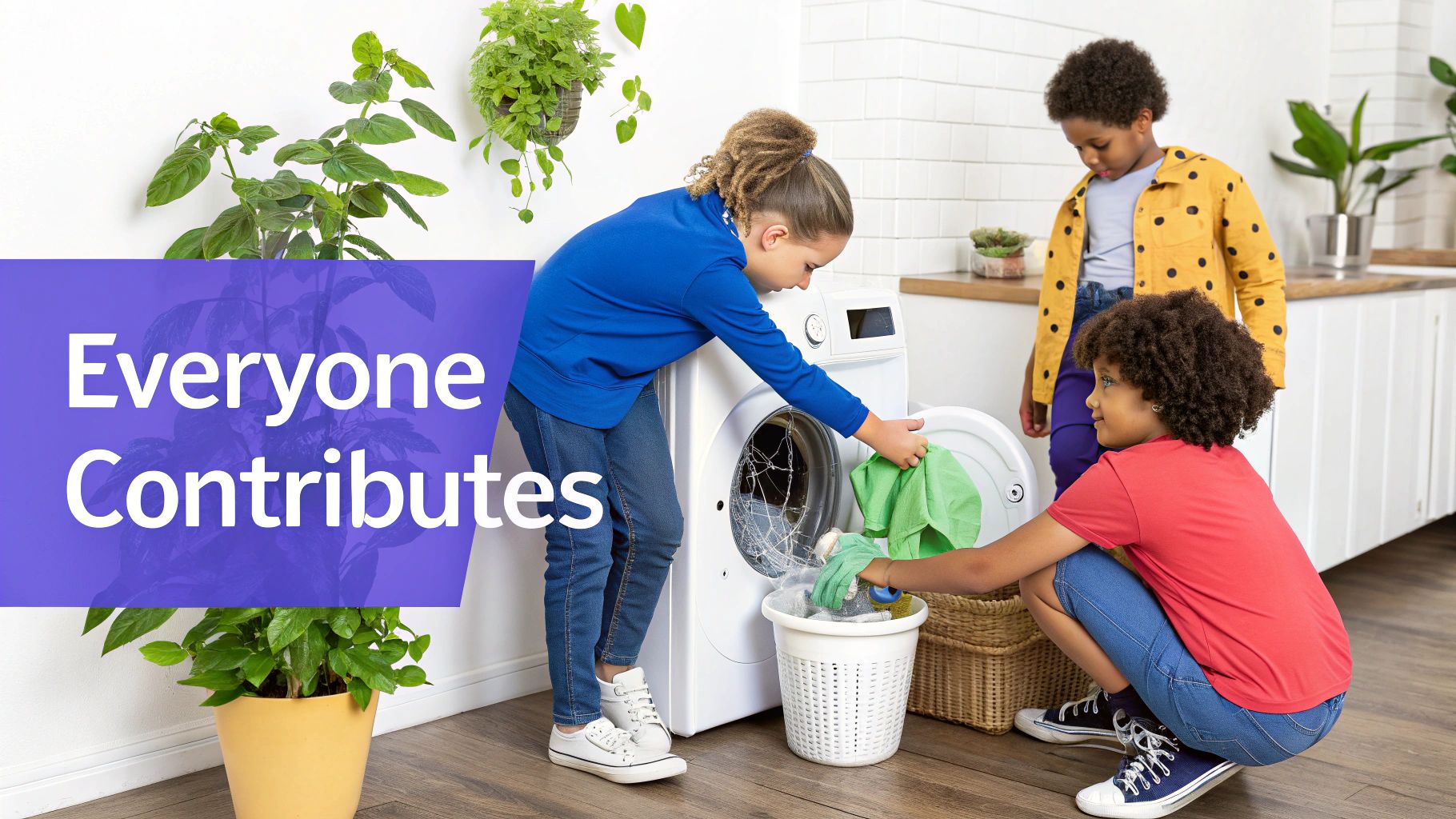
Involving them in the real work of running a home gives them a powerful sense of belonging. They learn that their contribution actually matters, that they have a vital role to play in the family. This isn't about "making them help"—it's about empowering them to contribute.
The Real-World Benefits of Pitching In
The skills they pick up from doing chores go way beyond a tidy room. When a child learns to sort laundry or follow a simple recipe, they're practicing foundational life skills. These small, repetitive actions build a launchpad for future independence. It's a huge deal.
Don't just take my word for it. A multinational study from 2022 confirmed a direct link between consistent chores and better executive functions—the mental skills that help us plan, focus, and juggle multiple tasks. Kids who started with just four hours of chores per week between ages 5-9 showed measurable gains. It’s a simple habit that literally helps build a more organized and resilient mind. You can read more on the connection between chores and child development from the European Institute for Gender Equality.
The greatest gifts you can give your children are the roots of responsibility and the wings of independence. - Denis Waitley
Ultimately, chores teach kids about being part of a team. They start to understand that a home runs smoothly when everyone pitches in. That cooperative spirit is one of the most valuable lessons they can learn, setting them up for success in future relationships, school projects, and even their careers. It shifts their whole perspective from "me" to "we," and that makes the entire family stronger.
Designing Your Family's Chore System Together
The best chore systems—the ones that actually stick—aren't handed down like royal decrees. They’re built together, as a team. When kids have a say in the process, they develop a sense of ownership that’s way more motivating than any sticker chart could ever be. This isn't about letting them run the show, but about making them part of the solution.
I recommend starting with a relaxed "family huddle." Frame it as a team meeting where you’re all figuring out how to make home life run a little smoother for everyone. The goal here is collaboration, not confrontation.
Brainstorming the Master List
Grab a whiteboard or a big sheet of paper and, as a family, list out every single job that keeps the house running. Get really specific. Instead of "clean bathroom," break it down into "wipe down counter," "scrub the toilet," and "refill the toilet paper."
Encourage everyone, even the littlest ones, to shout out ideas. This simple act of putting everything on paper is often a huge eye-opener for kids, showing them just how much work goes into maintaining a home.
Once you have that master list, you can start divvying up the tasks. This is where you can be intentional about fairness. Research from France's INED Elfe cohort study found that by age 10, nine out of ten kids help with tasks like setting the table. But, it also highlighted a clear gender split, with girls often doing more indoor care tasks. A rotating system is a great way to make sure everyone learns a wide range of skills and no one gets stuck with the "yucky" jobs all the time.
"When children contribute to the family, they feel a sense of competence and responsibility. It's not about the task itself, but about their role in the family ecosystem."
A simple chore wheel or weekly assignment swaps can keep things from getting stale and reinforces the idea that household work is everyone's responsibility.
This is all about building essential life skills. It's a flow: responsibility leads to practical skills, which in turn builds genuine confidence.
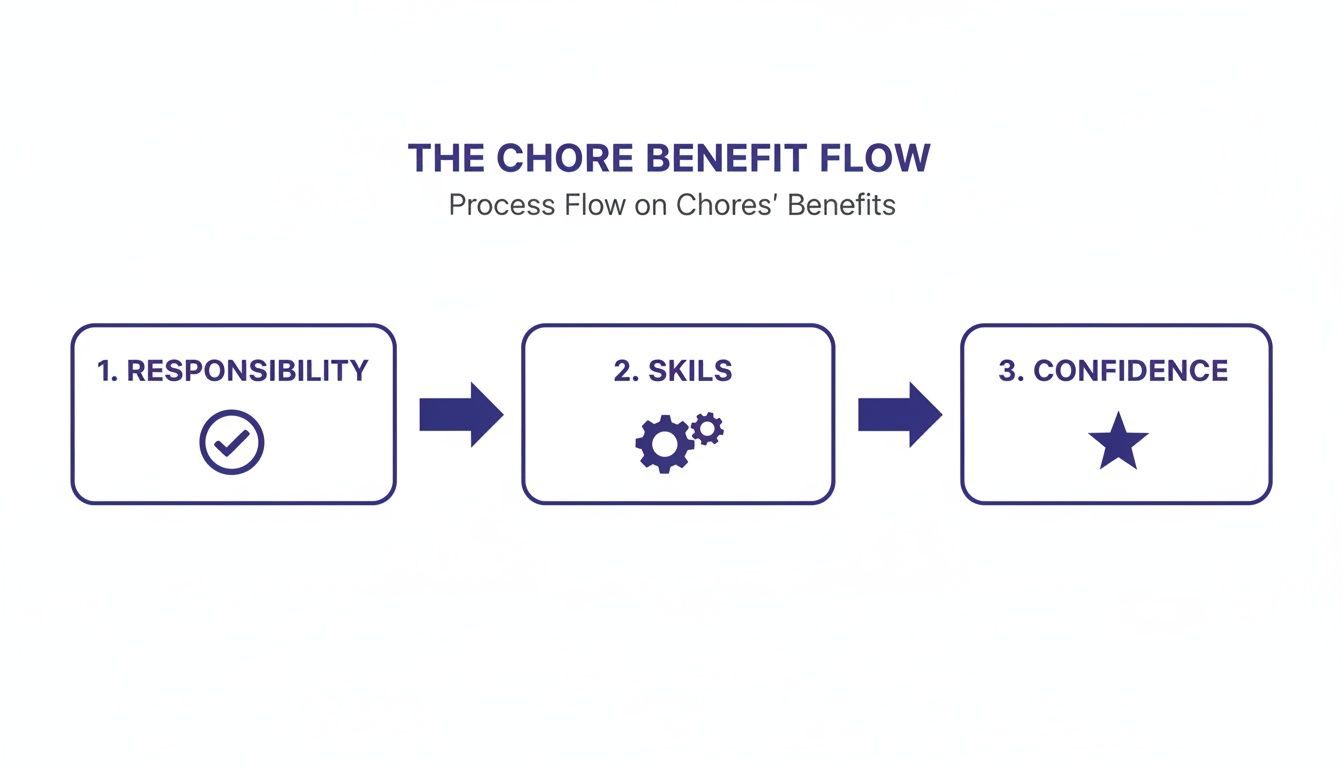
This visual really drives home how consistent contributions help kids develop the self-esteem and practical abilities they’ll carry with them forever.
Age-Appropriate Chore Ideas
To get you started, here's a quick-reference guide to help match tasks with your child's developmental stage.
| Age Group | Example Chores | Skills Developed |
|---|---|---|
| 2-3 Years | Put toys in a bin, Put books on a shelf, Place dirty clothes in the hamper | Sorting, Following directions, Tidiness |
| 4-5 Years | Set the table (napkins/utensils), Water plants, Help feed pets | Responsibility, Fine motor skills, Caring for others |
| 6-8 Years | Empty small trash cans, Fold laundry (towels/washcloths), Help with meal prep (washing veggies) | Contribution, Organization, Basic kitchen skills |
| 9-11 Years | Load/unload the dishwasher, Take out trash and recycling, Walk the dog (with supervision) | Multi-step tasks, Independence, Time management |
| 12+ Years | Prepare simple meals, Mow the lawn, Babysit younger siblings (with training) | Self-sufficiency, Advanced responsibility, Problem-solving |
Remember, these are just suggestions! The key is to find tasks that are challenging but achievable for your child.
Teaching the Task Correctly
This is a big one: never assume your child knows how to do a chore properly. The first time you assign a new task, do it with them. Walk them through it step-by-step. Show them exactly what "clean" looks like for that specific job. A little hands-on training upfront saves a ton of frustration for both of you down the road and sets them up for success.
For a more visual approach, you can explore different chore chart ideas for kids to find a style that clicks with your family. As you design your system, it can also be a huge help to check out expert guides on creating a kids routine chart that works.
Another idea I love is creating "chore zones." Instead of assigning individual tasks, you can put a child in charge of an entire area, like the entryway or the living room. This gives them more autonomy to manage their space and see a project through from start to finish. It’s a fantastic way to teach project management on a small, manageable scale.
Finding Motivation Beyond an Allowance
Look, allowances and sticker charts have their place. They can work wonders... for a little while. But let's be honest, they’re usually a short-term fix. Once the novelty wears off, you're right back where you started, nagging and negotiating.
The real goal is to tap into something deeper—that intrinsic desire every kid has to feel capable, important, and like they're a real part of the family team. This is where lasting motivation comes from.
The secret is a simple but powerful shift in perspective: move from transaction to contribution. Instead of framing chores as, "If you do this, you get that," try framing it as, "When we all do this, we get to do that." This simple change connects their effort to a shared family goal they actually care about, like having enough time for a movie night or a weekend trip to the park. It’s no longer just a task; it's teamwork.
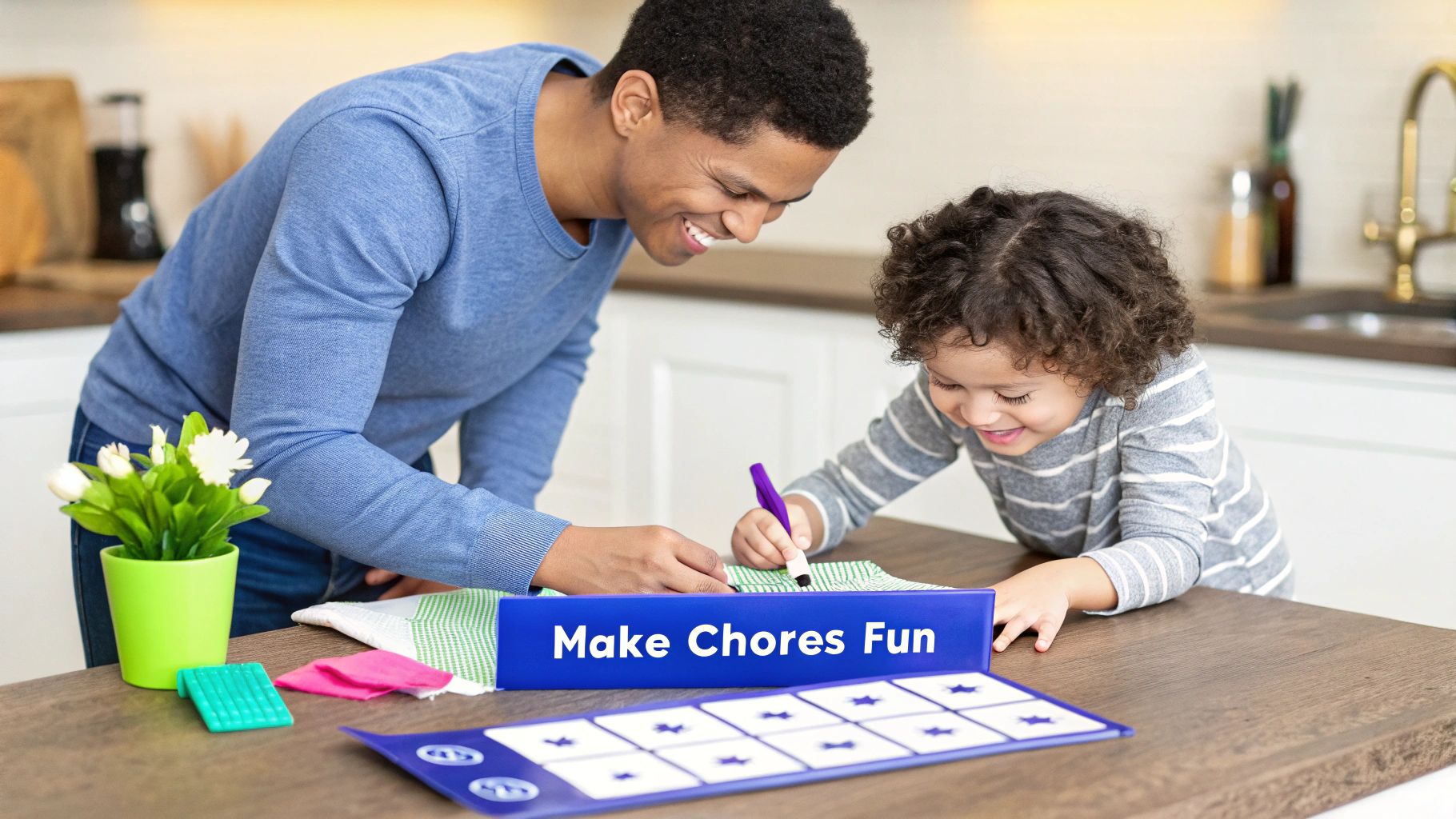
Making Chores Feel Less Like Work
One of the best ways I’ve found to get kids on board without a fight is to just make it more fun. A little bit of creativity can completely flip the script on dreaded household tasks, turning groans into giggles.
Here are a few ideas we've used in our own house:
- The Power-Clean Session: Crank up a fun playlist and set a timer for 15 minutes. Everyone gets a zone, and it's a race to see how much can get done before the final song ends.
- Chore Bingo: I made a simple bingo card with different chores in each square—things like "make your bed," "feed the dog," or "put away one laundry basket." The first one to get a "bingo" gets to pick the family movie that night.
- Race the Clock: This works great for simple pickups. "Think you can get all the LEGOs back in the bin before I finish unloading the dishwasher? Ready, set, go!" It’s amazing how a little friendly competition can get things moving.
Suddenly, a boring task becomes a shared moment of playful connection.
The Power of Specific Praise
The way you praise your kids after they've helped out matters more than you think. A generic "good job" is fine, but it doesn't really land. It doesn't tell them what they did right or why it mattered.
To really build that internal motivation, your praise needs to be specific. Focus on their effort and the positive impact it had on the whole family.
The key to effective praise is to be specific and focus on the process, not just the outcome. It helps children recognize the value of their contribution and builds their internal motivation to help again.
It’s a simple language tweak that makes a world of difference.
| Instead of Saying This | Try Saying This |
|---|---|
| "Good job cleaning your room." | "I really appreciate how you organized all your books on the shelf. It makes the whole room feel so much calmer." |
| "Thanks for helping." | "Thank you for setting the table. It was a huge help to get dinner ready on time for everyone." |
| "You finally did your chore." | "I noticed you took out the recycling without being asked. That shows real responsibility and helps our whole family." |
This kind of praise helps your child see themselves as a genuinely helpful and capable member of the family. It nurtures that internal drive that will keep them contributing long after the appeal of a sticker chart fades. This is how you raise kids who do chores because they understand their role in the family, not just because they’re chasing a reward.
Using Tech to Tame the Chore Chaos
Let’s be honest: are you tired of being the family's human alarm clock? If you feel like a broken record asking, "Did you feed the dog?" or "Is your room clean yet?" it might be time to outsource the nagging to technology. The right digital tools can bring some much-needed structure and predictability to your family’s chore routine, giving your kids more ownership and you more peace.
Modern chore apps and shared calendars are designed to do the heavy lifting for you. They can send reminders straight to a kid's tablet, keep a running tally of completed tasks, and even manage the rewards. All of it happens without you having to say a single word. This creates a clear, impartial system that puts the responsibility right where it belongs—in your child’s hands.
Choosing the Right Digital Chore Manager
The world of family organization apps is a crowded one, but the best ones all share a few key features that actually make a difference in getting chores done.
- Customizable Checklists: You need a tool that lets you create specific, recurring tasks for each person in the family. "Clean your room" is vague; "Put away laundry" is actionable.
- Automated Reminders: This is the real game-changer. When a notification pops up on a screen telling your son it's time to take out the trash, you're no longer the bad guy.
- Simple Reward Tracking: If you're connecting chores to an allowance or screen time, a built-in tracker makes the whole process transparent and easy to manage. No more "But I did do it!" arguments.
For instance, a shared family calendar app like Cozi gives you a visual hub where parents can create color-coded schedules and to-do lists that everyone can see from their own device.
This kind of visual layout makes it incredibly clear who is supposed to do what—and when. It completely shifts the dynamic from parental nagging to a shared, visible family plan. Suddenly, it's not you vs. them; it's just... the plan.
Weaving Tech into Your Daily Routine
It's not just about dedicated apps. The smart speakers and voice assistants already sitting on your kitchen counter can be powerful allies in the chore wars. You can set daily alarms labeled "Empty the Dishwasher" or create a shared family to-do list that your kids can check off with their voice.
For families thinking about using voice commands, it’s worth understanding the different platforms. A little research on choosing the right voice assistant can help you figure out which one will integrate most seamlessly into your family's life.
The point of using technology isn't to add another complicated layer to your life. It’s to simplify and automate, giving your kids the tools they need to manage their own responsibilities.
Ultimately, these tools do more than just get the floors swept. They help create a central hub for running the household, almost like a digital version of the classic family command center ideas you see on kitchen walls.
By offloading the mental load of tracking, checking, and reminding, you free up your own energy to connect with your kids in more positive ways. Chore time can finally stop being a battle and start being a smoothly running part of family life.
Navigating Meltdowns and Missed Chores
Let’s be real. No matter how amazing your chore system is, you’re going to hit a wall of resistance. It’s not a sign of failure; it’s just a completely normal part of teaching kids responsibility.
The key is having a game plan for these moments, so a simple “I don’t want to” doesn’t spiral into a full-blown power struggle that ruins everyone’s evening.
When your child digs their heels in, your first move is to connect before you correct. Take a breath. Acknowledge what they’re feeling without caving.
Something as simple as, "I hear you. It sounds like you're feeling really tired right now," can completely defuse the tension. This little bit of validation shows you're on their team, even when you're holding a boundary. It instantly shifts the dynamic from a battle to a shared problem you can solve together.
Responding to Chore Resistance
Once you’ve validated their feelings, it’s time to calmly and firmly restate the expectation. The goal isn’t to get into a debate—it’s to hold the line with kindness.
Here are a few scripts I’ve used that you can adapt for your own family:
- For the Complainer: "I know it's not your favorite job, but we all pitch in around here. The sooner we get it done, the sooner we can start our movie night."
- For the Sloppy Job: "Hey, thanks for getting the table wiped down. I see a few sticky spots left over here. Can you please finish those up so it’s totally ready for dinner?"
- For the Outright Refusal: "Taking out the recycling is your job. You can do it now or in five minutes, but it needs to be done before you start playing video games."
See how these are direct, respectful, and connect the chore to a logical outcome or a privilege? That’s the magic.
Why Logical Consequences Are Your Best Friend
The most effective consequences are the ones you’ve already talked about when everyone is calm. They need to be directly related to the task and feel fair, not like a punishment you dreamed up in a moment of frustration.
A logical consequence isn't a punishment you impose out of anger. It's the predictable, direct outcome of a child's choice—a powerful teaching moment they can learn from.
For instance, if your kid doesn't put away their art supplies, the consequence isn't losing TV time for a week. The logical consequence is that they can't start a new art project until the last one is cleaned up. Simple.
Here’s another classic example:
- Chore: Put dirty clothes in the hamper.
- Logical Consequence: Clothes left on the floor don't get washed. That means their favorite shirt won't be clean for the party on Friday.
This approach teaches natural cause and effect. It takes you out of the "bad guy" role and puts your child in charge of the outcome.
Remember, the system you build today will need to grow with your kids. A sticker chart that works wonders for a seven-year-old will need a serious overhaul for a teenager juggling homework and a part-time job. Plan for quick, regular check-ins to see what’s working and what isn’t. A flexible system is a system that lasts.
Building a Fair and Equal Chore System
It’s surprisingly easy for old-school biases to creep into the chore chart. We often fall into traditional patterns without even noticing, assigning "boy jobs" and "girl jobs" and setting expectations that can stick with our kids for life.
This isn't just a hunch; the data backs it up. A global UNICEF report revealed that girls between 5 and 14 spend a shocking 40% more time on household chores than boys do. This imbalance eats into their time for play, homework, and just being a kid, all while reinforcing outdated gender roles. You can see the full story in UNICEF's call to action.
So, take a second and do a quick ‘chore audit.’ Look at how tasks are currently divided in your home. Are they assigned based on who is most capable, or are they subtly divided along gender lines?
Creating an Equitable Plan
If you spot an imbalance, it’s a perfect opportunity for a reset. Make it a point to teach every child the full range of household skills. This means everyone learns how to load the dishwasher, take out the trash, do a load of laundry, and help with yard work. No exceptions.
True fairness isn't about splitting chores perfectly 50/50 every single day. It's about making sure every child is equipped with the same life skills and understands that keeping a home running is a shared responsibility, not a gendered one.
This balanced approach doesn't just get the work done—it models the respect and partnership you want your kids to carry into their own homes someday. For families managing chores across two households, our guide to coparenting calendars and their importance has some great strategies for keeping everyone on the same page.
Frequently Asked Questions About Kids and Chores
Even with the best chore chart in hand, a few questions always seem to trip parents up. Let's be honest, the real world of parenting is messy. Getting your family on the same page with these common hurdles is the secret to making your new system actually last.
Should I Pay My Kids for Doing Chores?
Ah, the great debate. There's no single right answer here, but it really comes down to one question: What do you want chores to teach? Are they a job, or are they simply part of being in a family?
I've found a healthy middle ground that works for most families. You separate the two ideas entirely.
- Family Contributions: These are the non-negotiable, unpaid tasks. Think making their bed, putting their dirty clothes in the hamper, or clearing their own plate from the table. These aren’t for cash; they’re about everyone pitching in.
- Earning Opportunities: Now, these are the jobs that go above and beyond the daily grind. We're talking washing the car, helping deep clean the garage, or tackling a big yard project. These are perfect for teaching kids how their effort can translate into earning money.
This approach teaches two critical life lessons at once: everyone contributes to the household just because, but extra work comes with extra rewards.
What if My Child Rushes and Does a Terrible Job?
It’s so tempting to just sigh, grab the sponge, and do it yourself. But that sends the message that their effort wasn't good enough, which can kill their motivation. This is a teaching moment, not a time for criticism.
Remember, the goal here is progress, not perfection. Always acknowledge the effort before you correct the result.
Try framing it gently. For a little one, you might say, "Wow, you wiped the whole counter! Thank you! Let's get this one last sticky spot together." You’re modeling the standard without making them feel like they failed.
For an older kid who definitely knows better? A calm, direct approach works wonders. "This looks like a good start, but you missed a few steps. You'll need to finish that up before you can start your screen time." It respectfully holds the line.
How Do I Start This if We’ve Never Really Had Chores Before?
It is never, ever too late. The key is to start small and keep it positive. Don't just spring a giant, color-coded responsibility chart on them one morning and expect cheers.
Call a quick, low-key family meeting. Frame it as a team huddle, not a lecture. "Hey guys, I was thinking we could work together more as a team to get the house stuff done. That way, we'll have more time for fun things on the weekend."
Brainstorm all the little jobs that keep the house from falling apart. You might be surprised at what they're willing to volunteer for! Just start with one or two simple, daily chores for each child. Let them get that win and build the habit. You can always add more later.
A central, visual hub can make navigating these questions so much easier. In the Everblog Chore Manager, you can clearly label chores as unpaid "Family Contributions" or paid "Earning Opportunities." Kids can see their progress, check off tasks, and watch their rewards add up—turning abstract ideas into a clear, motivating system right on the screen.


