


An organized fridge isn’t just about making things look nice. It’s about creating a system that actually makes your life easier, cuts down on food waste, and keeps your kitchen running like a well-oiled machine. It's the difference between chaos and an organized space that adds calm to family life.
Why Fridge Organization Is a Game Changer for Families
Let's be honest, a well-organized fridge is more than just a pretty picture for Instagram. It’s one of the most powerful tools you have for managing a busy household. Think of it as the central hub of your kitchen. When it's a jumbled mess, it leads to stressful mornings, wasted food, and way too many last-minute takeout orders because you can't find what you need.
But when you finally get a system in place, the benefits are immediate and real.
-
You'll Waste Less Food: When you can actually see everything you have, you're far less likely to find sad, wilted produce in a forgotten drawer or discover expired yogurt hiding in the back.
-
Meal Prep Becomes a Breeze: Grouping ingredients by meal or food type means you can grab what you need for dinner in seconds, no digging required.
-
Mornings Get a Little Calmer: A dedicated spot for breakfast items or school lunch supplies means less frantic searching while everyone’s trying to get out the door.
From Catch-All to Command Center
The aim is to turn your fridge from a basic cold storage into the main hub for your family's food. This change is important, especially with increasing food prices and the varied needs of today’s families. Refrigerators are now crucial in homes, and the global market is expected to exceed USD 120 billion by 2032, highlighting their importance in household management.
Better organization is a direct line of defense against food waste, which is a huge issue—roughly one-third of all food produced globally gets thrown away.
The key to an effective system is having everything visible and easy to access. When each item has a designated spot, the entire family benefits. Kids can easily reach their snacks, and teenagers can find lunch ingredients without hassle.
This strategic mindset can extend beyond just the fridge. It can become part of your home’s entire organizational rhythm. If you’re looking to get more than just your meals in sync, our guide on creating a family command center can help you pull schedules, chores, and more into one cohesive system.
By organizing your fridge clearly and simply, you reduce mental stress and make it easier for everyone in the family. It's the basis for a kitchen that supports you.
Declutter and Map Your Fridge Zones for Success
The journey to a truly functional fridge always starts with a clean slate. Before you can try out any of those genius organization ideas you see online, you have to get real about what you’re working with.
That means taking everything out. Yes, every single jar, container, and that questionable bag of greens hiding in the back. It’s a moment of truth, but it’s the only way to set the stage for a system that actually lasts.
After placing everything on the counter, sort the items into three categories: keep, throw away, and move. Discard expired condiments and anything that seems spoiled. Items like potatoes or onions, which don't belong in the fridge, should be stored in a cool, dark place in your pantry.
Once the fridge is empty, clean it thoroughly. Use warm, soapy water or a vinegar-water mix. Wipe down all shelves, drawers, and compartments to ensure cleanliness and provide a fresh start for organizing.
The Art of Strategic Fridge Zoning
Now for the fun part: the strategy. Different parts of your fridge maintain different temperatures, and understanding this is the key to keeping food fresh longer. Mapping out specific zones ensures everything from your milk to your raw meat is stored exactly where it should be. Think of it like creating a little city map for your food.
This simple act of organizing creates a ripple effect of benefits that you'll feel all week long.
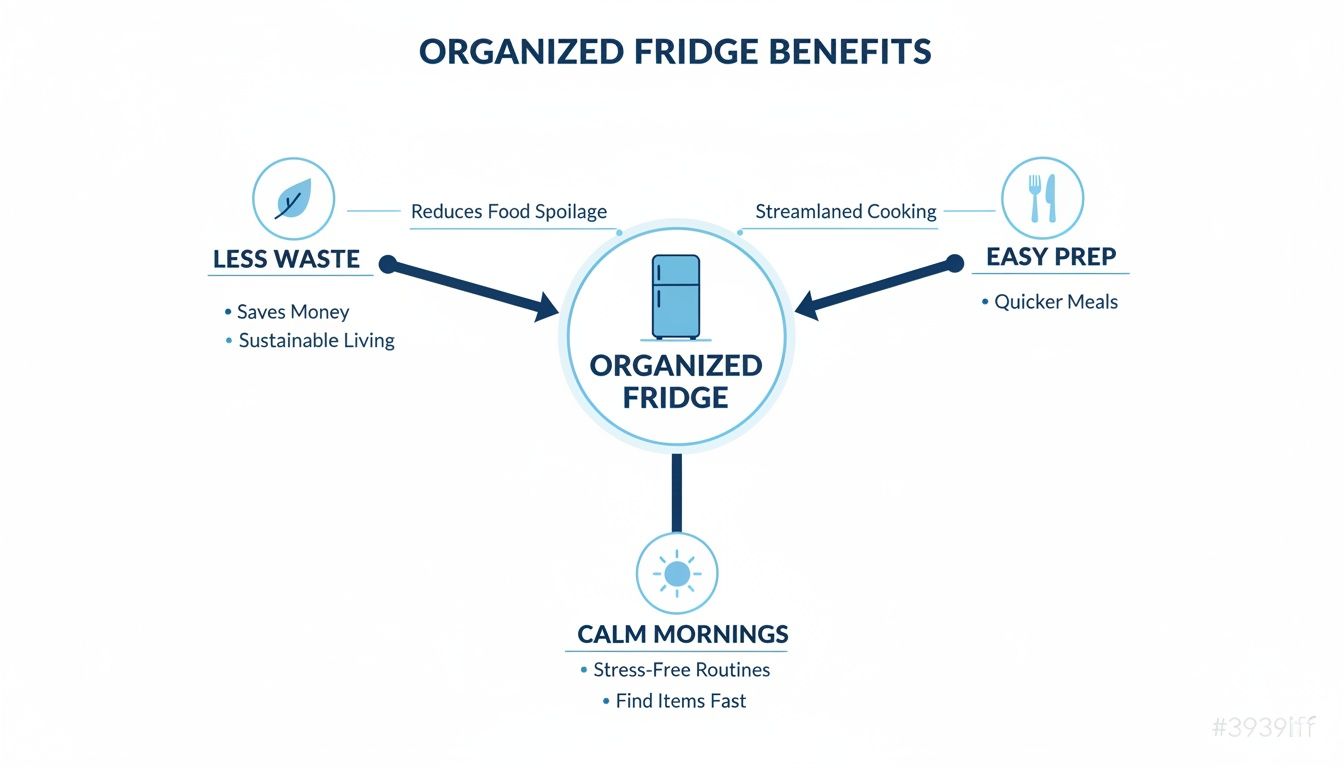
As you can see, a zoned fridge directly leads to less food waste, easier meal prep, and calmer mornings—three things every busy family can get behind. When you're just starting out, creating functional spaces from the get-go is a game-changer. It's a core part of figuring out your first apartment kitchen essentials and setting up a system that works for you.
Your Fridge Zoning Blueprint
Each fridge may vary, but zoning principles apply to all. The aim is to arrange it so clearly that everyone in the family knows where to find things and where to return them.
Below is a simple yet effective blueprint you can adapt for your own refrigerator. It's all about placing items where they'll stay freshest and be easiest to find, which is the secret to cutting down on that "what's for dinner?" stress and reducing food waste.
| Your Fridge Zoning Blueprint | ||
|---|---|---|
| Fridge Zone | Best For | Why It Works |
| Upper Shelves | Leftovers, drinks, ready-to-eat foods (hummus, yogurt) | Most consistent temperature. Keeps grab-and-go items and leftovers at eye level so they get used. |
| Middle Shelves | Eggs, milk, cheese, and other dairy | The temperature here is cool and stable, which is perfect for preserving these daily essentials. |
| Bottom Shelf | Raw meat, poultry, and fish | The coldest part of the fridge. This placement is a food safety must-have to prevent drips from contaminating other food. |
| Crisper Drawers | Fruits and vegetables | Designed to control humidity. Use one for high-humidity veggies (leafy greens) and the other for low-humidity fruits (apples). |
| Doors | Condiments, dressings, juice, butter | The warmest zone. Ideal for items with natural preservatives that can handle temperature fluctuations. |
This layout helps keep your food safe and fresh longer. Placing raw meat in sealed containers on the bottom shelf prevents drips from contaminating other foods. This simple habit can have a big impact.
Choosing the Right Bins and Labels
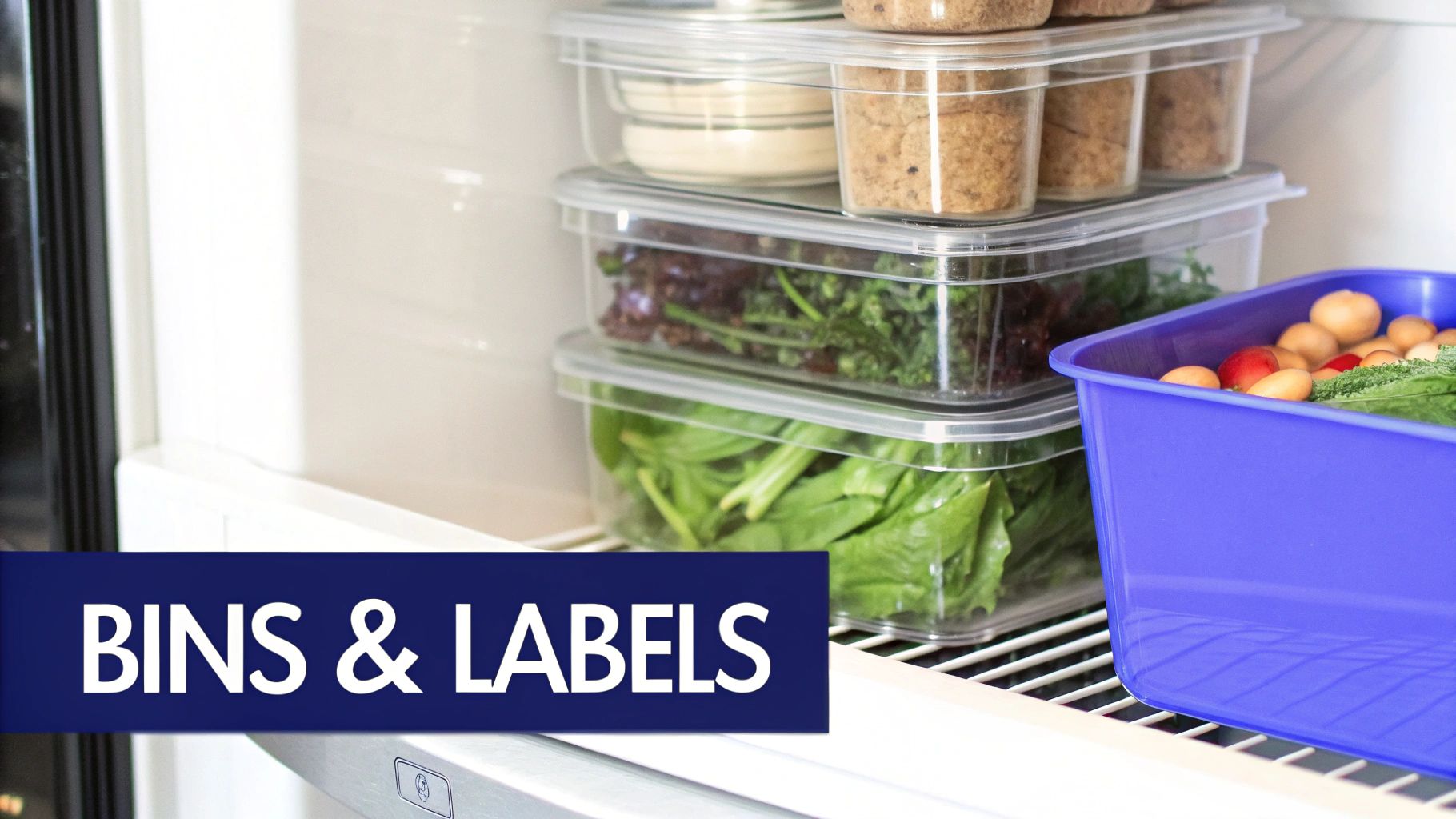
Alright, your fridge is all mapped out with its new zones. Now for the fun part: the tools that make it all work. Bins and labels are what take your plan from a good idea to a functional, everyday system.
Think of them as the guardrails that keep your organization on track. They aren't just for making things look pretty; they create defined homes for everything, make items a cinch to grab, and stop those tiny jars of jam from getting lost in the back.
The aim is to manage disorder by placing yogurt cups in a single bin, creating a neat slide-out drawer. This method speeds up cleanup and quickly reveals what needs restocking.
Selecting Your Storage Containers
The containers you choose can significantly impact your system. There's no universal "best" choice; it's about what suits your family's habits and your fridge's layout. A combination of various types is often the most practical.
-
Clear Acrylic Bins: Their superpower is visibility. You can see exactly what’s inside at a glance, which is a huge help in preventing food from being forgotten. These are perfect for grouping similar things like cheeses, snacks, or drink pouches.
-
Glass Containers: For leftovers, glass is king. It doesn’t hold onto odors or stains like plastic, and you can pop it right into the microwave. Plus, seeing last night's dinner clearly is the best reminder to actually eat it.
-
Stackable Solutions: When you’re short on shelf space, think vertically. Stackable containers are a lifesaver for maximizing every inch of height, especially for meal-prepped ingredients or packed lunches.
The key is to choose tools that make your life easier. If you can't see what's inside a container, you're just not going to use what's in it. Prioritizing clear materials keeps your food front and center.
We keep a "grab-and-go" breakfast bin on an upper shelf with yogurts, hard-boiled eggs, and fruit, making it easy to quickly grab breakfast on busy school days.
Making Your Labels Stick
Labels ensure everyone knows where items belong, preventing a well-organized fridge from becoming disordered. Consistent labeling is key to maintaining order.
You don't need to get complicated. Simple and clear always wins.
-
Use Broad Categories: Instead of getting hyper-specific and labeling a drawer "Carrots, Celery, and Peppers," just call it "Veggies." This gives you flexibility as your groceries change from week to week.
-
Date Your Leftovers: This is non-negotiable for food safety and cutting down on waste. A simple dry-erase marker on a glass lid or a piece of masking tape works perfectly. Just jot down what it is and the date you made it.
-
Choose the Right Tool: A basic label maker creates clean, uniform labels that hold up well. If you want something more flexible, chalk markers on bins or those reusable silicone labels are great because you can easily wipe them clean and update them.
The best bins and labels are those your family will use. By selecting a few essential items and adopting a consistent labeling habit, you establish a self-sustaining system that ends the daily "Mom, where's the...?" question.
Linking Your Tidy Fridge to Your Meal Plan
Getting your fridge organized is a huge win on its own, but the real magic happens when it starts working with your weekly meal plan. This is the moment your tidy zones and clear bins go from being a neat storage system to an active partner in getting weeknight dinners on the table.
Suddenly, your fridge isn't just a cold box holding food; it's practically anticipating what your family needs next.
Imagine it's Taco Tuesday. Instead of rummaging around for the ground beef, the shredded cheese, and that tub of sour cream you know is in there somewhere, you just grab your "dinner ingredients" bin. Everything is there. This is how you turn cooking from a frustrating treasure hunt into a simple, streamlined process.
Prep Smarter, Waste Less
I've found that an "Eat Me First" bin in a visible fridge spot is effective for leftovers and soon-to-expire items. It clearly signals the family to prioritize these items.
This one little change can make a massive dent in your food waste. No more discovering fuzzy science experiments hiding in the back of a shelf. It also makes packing lunches a total breeze—just pull a container from the bin, and you're good to go.
A system like this also makes it way easier to stick to specific meal goals. For instance, if you're trying out some new vegan meal prep ideas, you can keep all your plant-based goodies neatly stored and ready to grab.
Using a Family Hub to Tie It All Together
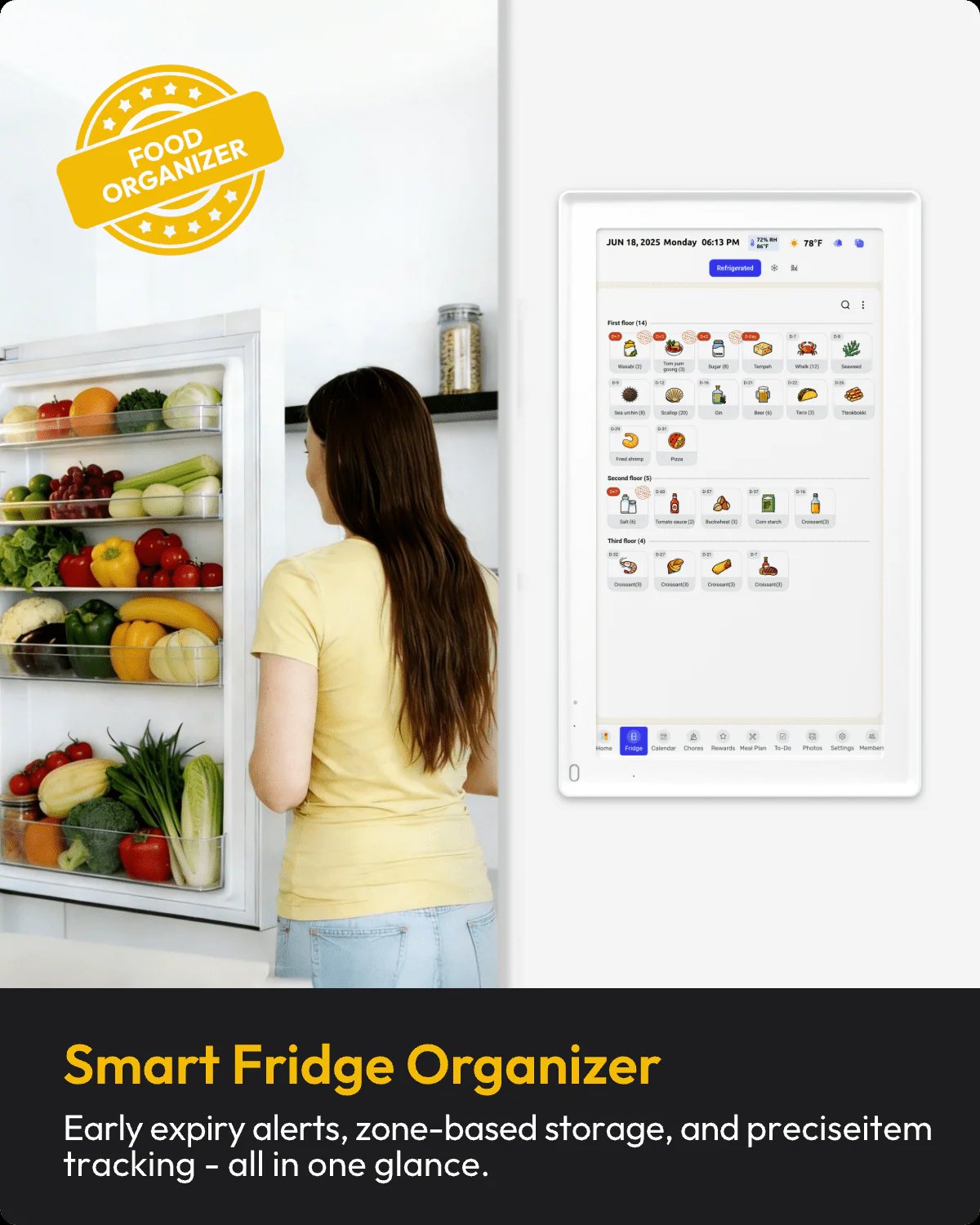
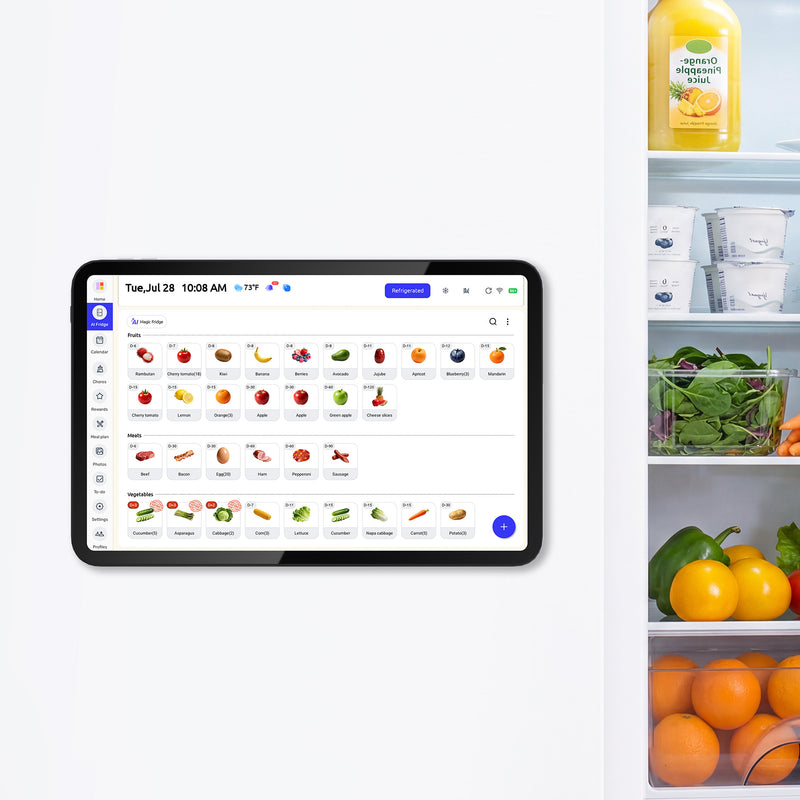
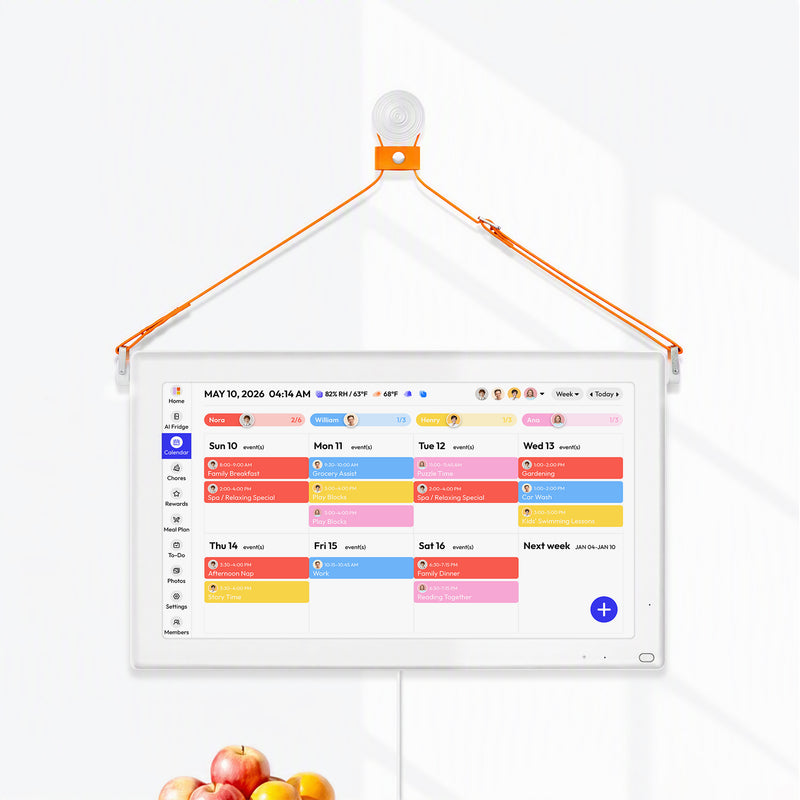
This is where a digital tool can bring your whole system to life. A family hub like Everblog with it's smart fridge manager feature. You can add your all the ingredients to the manager and get notifications before they go expired. You can even generate recipes according to the existing ingredients.
And Everblog Meal Planner feature gives you a clear, visual map of your week's menu, which lets you shop and stock your fridge with total confidence.
Once you get home from the store, you can load up your fridge zones with exactly what you need for each day's meal. It closes the loop between planning, shopping, and cooking. The whole thing gets even smoother when all your family's moving parts are in one central spot, which you can read more about in our guide to setting up a digital family calendar.
An organized fridge paired with a smart meal plan eliminates the daily "what's for dinner?" panic. It empowers you to shop with purpose, cook with ease, and finally get ahead of the weeknight rush.
Making Fridge Maintenance a Family Habit
A perfectly zoned fridge is a beautiful thing, but let's be honest—the real win is keeping it from descending back into chaos by Friday. The secret isn’t just about a great initial setup; it’s about turning maintenance into a simple, shared family habit.
When everyone pitches in, it not only lightens your load but also teaches kids valuable lessons about responsibility and cutting down on food waste. The trick is to make it easy and give them a real sense of ownership over their little corner of the kitchen.
Create Kid-Friendly Zones
Empowerment starts with easy access. Carve out a specific, low-to-the-ground spot just for kid-approved items. Think of it as their "Snack Zone"—a low drawer or a bin on the bottom shelf stocked with things like yogurt pouches, string cheese, and pre-washed fruit.
This simple move does two things at once. First, it gives kids the freedom to grab their own healthy snacks without needing your help. Second, it keeps curious little hands from rummaging through and rearranging all your carefully organized shelves.
When kids have their own designated space, they're far more likely to take pride in it and help keep it tidy. It's a small change that builds great organizational habits for life.
Assign Age-Appropriate Fridge Chores
Delegating isn't just about saving yourself time; it’s about building confidence and capability in your kids. The best fridge systems extend beyond the initial setup and into daily routines. By assigning small, manageable tasks, fridge upkeep becomes a shared responsibility instead of just another thing on your plate.
Here are a few ideas to get you started:
-
Ages 5-7: The "Drink Manager" can be in charge of restocking juice boxes or water bottles in the door after a grocery trip. They can also help wipe up small spills on their shelf with a damp cloth.
-
Ages 8-12: The "Produce Patrol" is perfect for this age. They can help wash and put away fruits and veggies. They're also old enough to spot any produce that’s starting to look a little sad and needs to be used up.
-
Teens: The "Leftover Labeler" is a crucial role. Hand them the masking tape and a marker and put them in charge of dating every leftover container. This is huge for food safety and makes it obvious what needs to be eaten first.
To keep everyone on track and make it feel official, it helps to put these jobs down somewhere visible. You can find more great tips in our guide to creating chore chart ideas for kids that actually work.
Streamline Tasks with a Central Hub
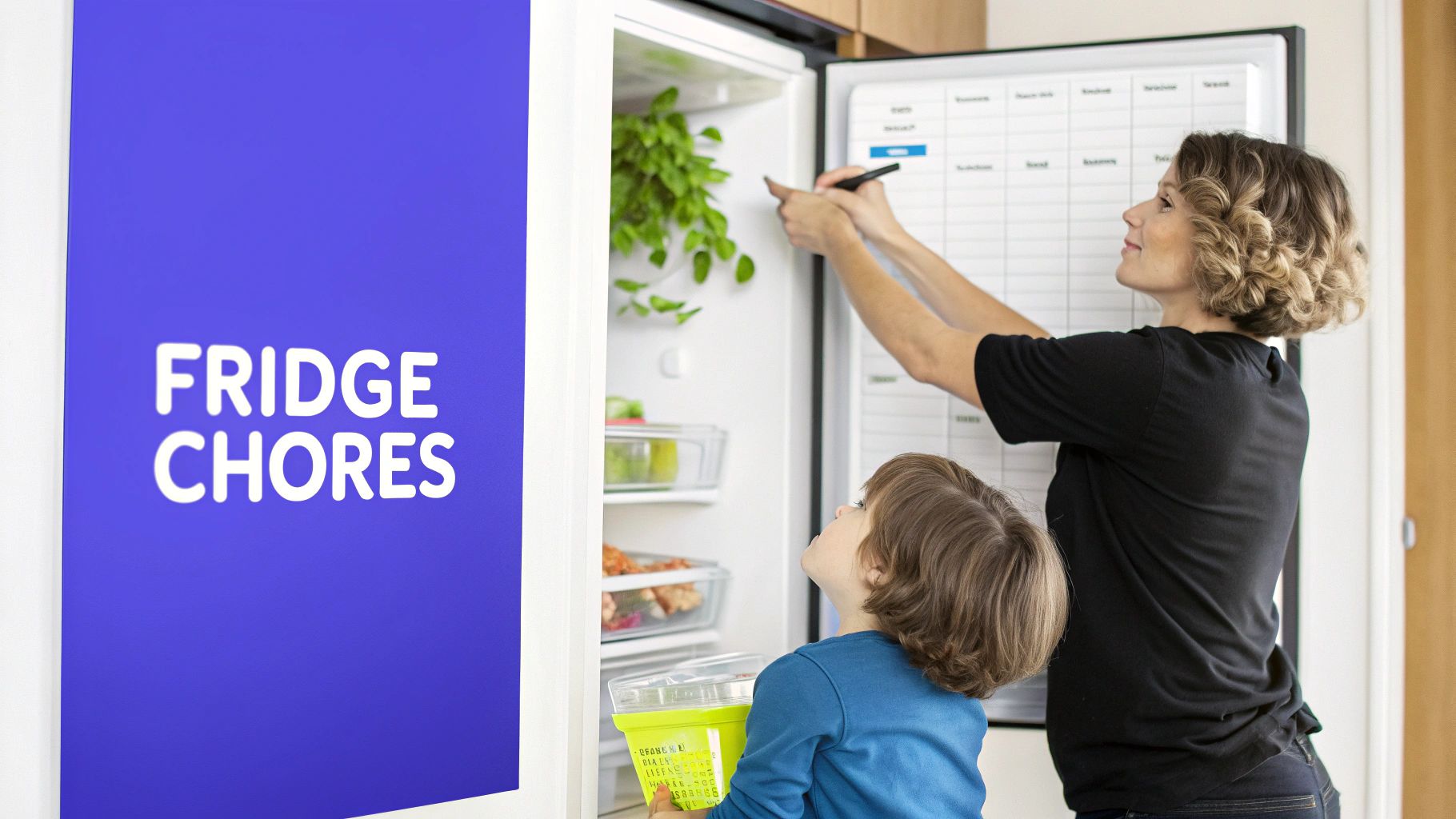
This is where a tool like Everblog’s Chore Manager really shines. By integrating these small jobs into your family’s daily flow, organization becomes a team sport.
You can assign weekly tasks like “snack shelf restock” or “check for expired items,” right from your central hub. And because it's visible to everyone, it’s a constant, gentle reminder of who’s responsible for what. In households with multiple adults, shared digital lists also stop those accidental duplicate purchases that eat up fridge space. By making fridge maintenance a visible part of the family’s routine, you build a system that practically runs itself.
Got Questions? Let's Troubleshoot Your Fridge
Even with the best plan in place, a few real-life questions always pop up once you start living with your newly organized fridge. That’s totally normal! Let's walk through some of the most common snags I hear about, so you can keep your system running smoothly.
So, what do you do with that giant bunch of celery or a whole head of cauliflower that just won’t fit in your pretty new bins? The trick is to prep them as soon as you get home from the store. Don't just stuff them in a drawer and hope for the best.
Chop that celery into sticks and stand them up in a wide-mouth jar with a little water at the bottom—they’ll stay crisp and ready for snacking. Break down the cauliflower into florets and pop them in a clear, airtight container. Not only does this solve your space problem, but it also makes you about 100% more likely to actually eat them.
How Often Should I Really Deep Clean My Fridge?
This is a big one. While you should obviously wipe up spills the moment they happen, a full-on, take-everything-out deep clean isn't a weekly chore. Please don't add that to your list!
A much smarter approach is to tackle one shelf or one drawer each week when you’re putting away groceries. It’s a five-minute job that keeps things from ever getting out of hand. Then, schedule a full deep clean for about every three to four months. That's the perfect time to pull everything out, give it a good scrub, and check if your zones are still working for your family.
The Great Leftover Debate (and How to Win It)
"How long is this actually good for?" We've all been there, sniffing a container suspiciously. For most cooked leftovers, the magic number is three to four days. Anything beyond that gets questionable.
The best way to manage this is to label everything. Seriously. A roll of masking tape and a Sharpie are your best friends here. Write what it is and the date you made it.
My absolute non-negotiable for fighting food waste? An "Eat Me First" bin. It's exactly what it sounds like—a designated spot for anything that needs to be eaten ASAP. Put it right at eye level, and make it a family rule to check there first for snacks or lunch. It's a game-changer.
And finally, a quick reminder about what doesn't belong in your fridge. It’s surprising how many things we automatically chill that actually lose their flavor and texture in the cold. Keep these items on the counter or in a cool, dry pantry instead:
-
Tomatoes: They get mealy and sad in the cold.
-
Potatoes: The cold converts their starches to sugar, making them gritty.
-
Onions & Garlic: They need air to breathe, or they'll get soft and moldy.
-
Bread: The fridge makes it go stale way faster.
By anticipating these little challenges, you're not just organizing your fridge for a day—you're building a system that will actually last.
Ready to sync your organized fridge with a smarter family schedule? Everblog brings your meal plans, grocery lists, and chore charts into one beautiful display, making it easier than ever to maintain a calm, organized home. See how it works at Everblog.


