

Let's be honest, the classic sticker chart is losing its magic.
That trusty piece of paper on the fridge, covered in shiny stars, just doesn’t cut it anymore for most families. Life is way too chaotic. Between juggling school schedules, work deadlines, and after-school activities, we need more than a simple checklist. We need a system that actually reduces the mental load, not adds to it.
It’s no surprise that parents feel stretched thin. In the United States, 80% of people do household chores on any given day, spending about two hours on them. When you’re already investing that much time, the last thing you want is a chore system that creates more work. You can dig into the full details on these trends over at the Bureau of Labor Statistics.
For most of us, a simple digital tool like Everblog makes the most sense. It acts as a central command center for the whole family, turning chore management from a nagging task into a collaborative effort.
Why Sticker Charts Don't Work for Modern Families
The core problem with old-school charts is that they're static. A piece of paper or a magnetic board can't send a reminder when a chore is due, adapt to a last-minute change of plans, or track rewards in a way that gets a tech-savvy kid excited.
The best chore systems don’t just list tasks. They create a dynamic feedback loop that makes kids feel like valued members of the family team, not just employees punching a clock.
When the system is disconnected from your family's actual rhythm, frustration builds fast. You end up policing the chart, reminding everyone to check off their tasks, and manually adding up points or allowances. It completely defeats the purpose.
Finding a System That Actually Fits Your Life
To find a real solution, we need to think bigger than stickers and magnets. A truly great system should build independence, give everyone a clear view of what needs to be done, and grow with your kids. It has to fit into the natural flow of your day, not feel like another chore to manage.
So, let's break down the four main options out there:
- Printable DIY Charts
- Magnetic Boards
- Standalone Chore Apps
- Integrated Digital Family Hubs
By stacking them up against the real-world demands of a busy household, we'll see which ones build real accountability and which ones just create more clutter on the fridge. My goal is to help you find the one that finally brings some calm and cooperation back into your home.
Comparing the Four Main Types of Chore Systems
Picking the right chore chart isn't just about listing tasks; it's about finding a system that actually clicks with your family's pace of life. There are four big players in this space, and they all come with their own quirks. We’re going to break down printable charts, magnetic boards, chore apps, and digital hubs to see how they really stack up in a busy home—no generic pro/con lists here.
The real problem with old-school systems is that they’re static. They can quickly become just one more thing for a parent to manage, rather than a tool that helps kids become more independent. This pretty much sums up why so many of them fail.
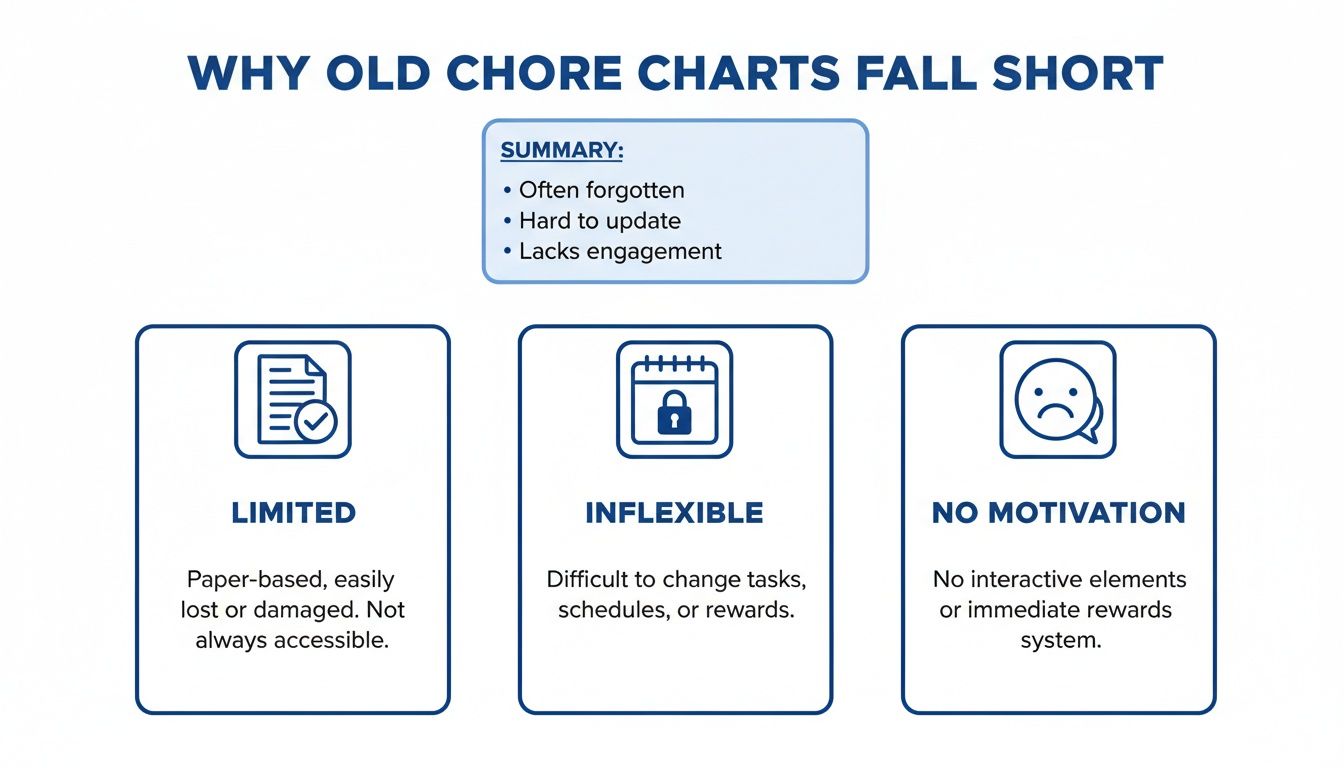
As you can see, they’re often too rigid for modern schedules and just don't have the motivational hook that kids today need. Let's look at how the alternatives try to solve this.
Printable and DIY Charts
These are the classic, entry-level option. You can find them online for free or cheap, and their biggest selling point is total customization. You get to design it from scratch to fit exactly what your child needs and understands.
For a toddler who’s just learning what "helping" means, a simple DIY chart with big pictures for "put toys in bin" is perfect. It’s a zero-risk way to introduce the idea of contributing to the household.
The downside? They’re flimsy. Paper gets ripped, crayons get smeared, and the novelty wears off fast without some real incentive. They also put all the work on you—updating tasks, tracking stars, and doling out rewards. It adds right back to your mental load.
Situational Fit: Perfect for introducing chores to the little ones (toddlers and preschoolers) or for a short-term goal, like prepping for a family trip.
Magnetic Chore Boards
Magnetic boards are a nice step up in durability and daily use. They live on the fridge, so chores stay visible and top-of-mind. There’s something undeniably satisfying for a kid to physically slide a magnet over to the "done" column. That immediate feedback is gold for younger kids.
Most of these come with a mix of pre-printed chore magnets and blank ones, giving you a bit of structure with room to adapt. For a family with a couple of kids in elementary school, a magnetic board can manage everyone’s different tasks in one central spot. It makes it easy for them to see what’s expected.
But they have their limits. You can only cram so many names and tasks onto one board, so they don’t work as well for bigger families. And just like paper charts, they’re still disconnected from everything else. You can’t set reminders, and tracking allowance points is still a manual, pen-and-paper job for you.
Standalone Chore Apps
Chore apps take everything digital, unlocking features that physical charts just can't offer. From your phone, you can assign chores, track progress, and manage rewards. For the kids, it often feels more like a game with points, badges, and virtual prizes keeping them engaged.
Think about a family with tweens who are glued to their devices anyway. An app lets them get notifications for their chores, check things off themselves, and see their allowance balance grow in real time. Giving them that kind of control can be a huge motivator.
The main headache with standalone apps is the "app sprawl." Your chore list is in one app, the family calendar is in another, and the grocery list is in a third. It creates digital chaos and makes it impossible to see the big picture of what's happening in your household. Plus, many run on a subscription model, adding another recurring bill.
Integrated Digital Family Hubs
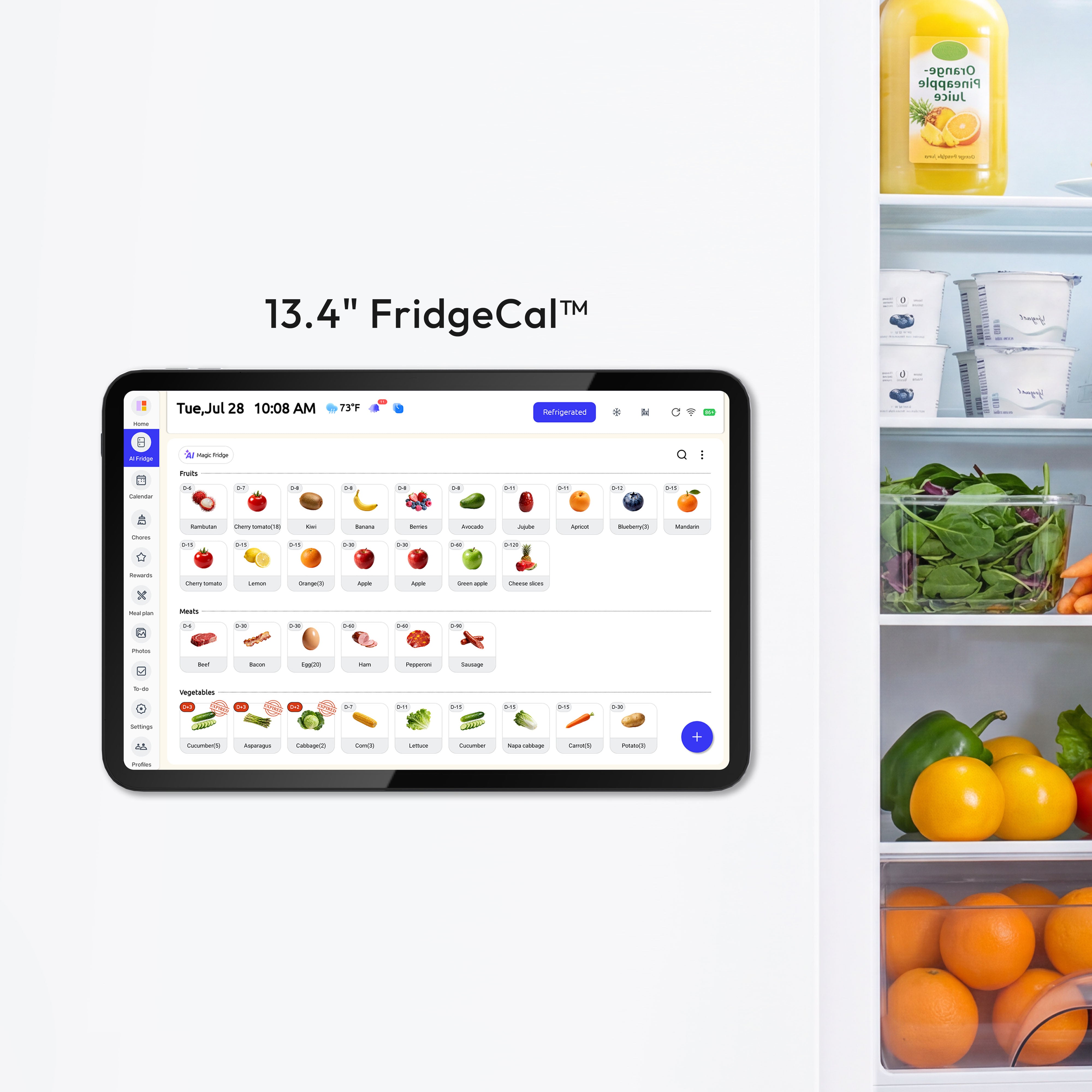
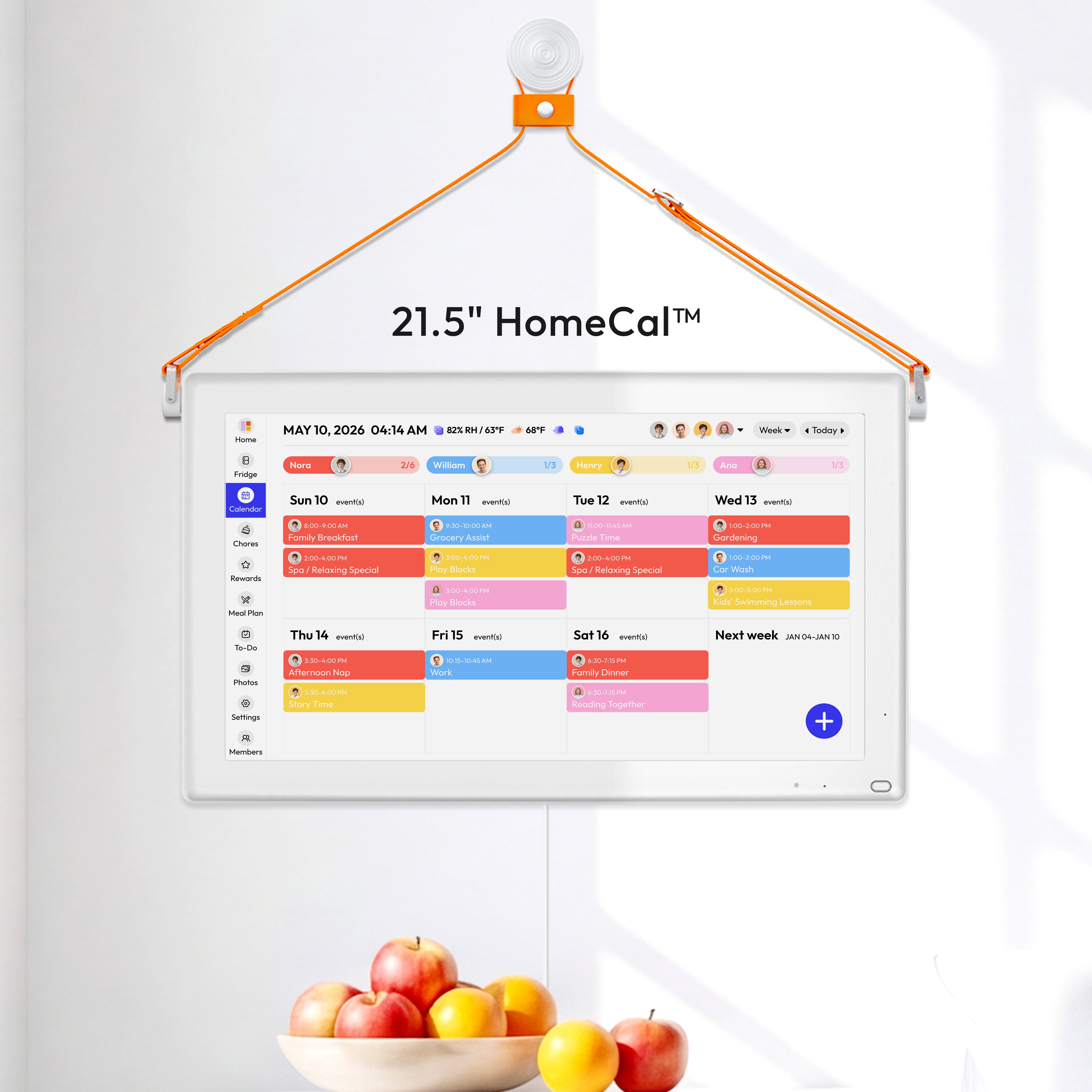
This is where everything comes together. Integrated digital hubs, like Everblog, merge a chore manager with a shared family calendar, meal planner, and message board on one central screen. It creates a single command center for the entire family.
Picture this: a busy home with two working parents and three kids juggling school and sports. The hub shows everyone's schedule right next to the day's chore list. A parent can see their daughter has soccer practice and assign a quick task like "pack your gear" with a timed reminder. The system automatically logs completed chores and updates reward totals. No more manual tracking. No more nagging.
This all-in-one approach finally solves the core issues of visibility, motivation, and fragmentation. Chores stop being a separate, dreaded list and become a natural part of the family’s daily rhythm.
Key Differentiator: By tying chores directly to the family calendar and an automated rewards system, digital hubs give tasks context and cut down the parental workload in a way no other system can.
Chore Chart System Feature Comparison
To make the choice a bit easier, here’s a side-by-side look at how each system performs on the features that matter most to busy families today. Use this to quickly see which tool lines up with what you need.
| Feature | Printable/DIY Charts | Magnetic Boards | Chore Apps | Digital Family Hubs |
|---|---|---|---|---|
| Durability | Low (paper is easily damaged) | High (reusable and sturdy) | N/A (software-based) | High (hardware designed for daily use) |
| Daily Visibility | Medium (depends on placement) | High (typically on the fridge) | Low (requires opening the app) | Very High (central wall display) |
| Motivational Appeal | Low (relies on stickers) | Medium (tactile feedback) | High (gamified, digital rewards) | Very High (gamified, integrated rewards) |
| Scalability | Poor (requires new charts) | Limited (fixed board size) | Excellent (add users and tasks easily) | Excellent (adapts to all ages and family sizes) |
| Parental Effort | High (manual tracking and updates) | Medium (manual reward tracking) | Low (automated reminders and tracking) | Very Low (fully automated and integrated) |
| Cost Structure | Free to very low one-time cost | Low to moderate one-time cost | Often a recurring subscription | One-time hardware purchase, no subscription |
At the end of the day, the best chore chart for kids is the one that smooths out the friction and gets everyone working together. While the simpler charts definitely have their place, the move toward integrated digital hubs shows what families really need: a single, organized place to manage all the moving parts of life.
7 Key Features to Look for in Any Chore Chart
When you’re trying to pick the right chore chart, it’s about so much more than a cute design. A truly great system has a few core features that have to work together—otherwise, you're just adding another task to your to-do list instead of taking things off it.
Before you spend any time or money, run through these seven factors. This is my go-to checklist to figure out if a system is actually going to fit into a family's real life or just end up as wall clutter.
1. Age Appropriateness and Customization
What a four-year-old needs is worlds away from what a fourteen-year-old can handle. This seems obvious, but so many chore systems miss the mark here. For little kids, visuals are everything. A chart with a picture of a toy box is going to work a lot better than a to-do list with the words "clean your room."
As kids get older, their jobs get more complex. You need a system that lets you easily swap out "put away toys" for "empty the dishwasher" without starting from scratch. A rigid, one-size-fits-all chart is pretty much guaranteed to fail the minute your kid masters their first set of tasks.
My Two Cents: The best systems are the ones that grow with your kids. I always recommend looking for tools that let you create separate profiles and task lists for each child. This keeps the chores relevant and challenging, all the way from preschool to their teen years.
2. Task Tracking and Verification
So, how do you know the chore is actually done? A simple checkmark on a piece of paper is based purely on the honor system, and let’s be honest, that can cause some friction. You end up having to inspect everything, which completely defeats the purpose.
This is where a little bit of tech can make a huge difference. Some chore apps, for instance, let a kid snap a photo of their completed task—like a perfectly made bed—and send it over for your approval. It adds a layer of accountability that teaches them to be thorough without you having to hover over them.
3. A Flexible Reward System
Motivation is what makes this whole thing run. Even if you're not a fan of tying chores to a cash allowance, having a flexible reward structure is a game-changer. A sticker might be the perfect prize for a five-year-old, but your tween is probably going to be a lot more interested in earning screen time or saving up for something they really want.
The most successful systems I've seen allow for a mix of rewards. You could have a point system where daily tasks earn small perks (like 30 minutes of tablet time) while bigger weekly chores contribute to a larger goal (like that new video game they've been eyeing). If you're looking for ideas on how to set this up, there are some great guides on building a chore chart reward system that keeps kids from losing interest.
4. Support for the Whole Family
A chore system that only works for one kid just isn't practical. It has to handle multiple kids with different jobs, different schedules, and different reward goals. For bigger families or those with a wide age gap, this feature is an absolute must-have.
Look for a system that gives you a clear, central view of what everyone is supposed to be doing. This is where digital hubs really shine. They give you a dashboard where you can see at a glance who’s responsible for what, what’s done, and what’s still left to do. It cuts down on the confusion and makes everyone feel like they're part of the team.
5. It Has to Be Easy to Use—Every Day
If your chore chart is a pain to set up or update, you're not going to use it. Period. The best systems feel intuitive for both you and your kids. For parents, that means adding or changing a chore should take seconds, not a five-minute tutorial.
For kids, the act of checking off a task should be simple, maybe even a little fun. Think of the satisfying click of a magnet moving to the "done" column or the little celebration animation that pops up in an app. The less friction there is, the more likely the habit will actually stick.
6. Modern Features and Integration
In a busy home, chores don't happen in a bubble—they’re tangled up with school schedules, appointments, and everything else. A basic chart is just a list. A truly helpful, modern solution weaves those tasks into the fabric of your family's life.
Look for a few key features that make a huge difference:
- Recurring Tasks: Set it and forget it. Chores like "feed the dog" should just appear every day without you having to add them.
- Reminders and Nudges: A little notification sent to a child's device is so much better than you having to nag them.
- Voice Entry: This one's my favorite. When you're in the middle of cooking and notice the trash is full, you can just say it out loud and add it to the list.
These kinds of capabilities turn a static list into a dynamic assistant that actually helps you run the house.
7. The Real Cost of Ownership
Finally, think about the full cost, and I don't just mean money. Printable charts are practically free, but they cost you the most in time and effort. Magnetic boards are a one-time buy, but they’re pretty limited. And a lot of those shiny apps hook you with a low price, but then you're stuck with a monthly or yearly subscription that really adds up.
When you're weighing the cost, think long-term. A system with a single upfront price that covers your whole family for years—with all the features and updates included—often ends up being a much better value than a "cheap" subscription app that hides its best tools behind a paywall.
Choosing the Right Chore System for Your Family Stage
The "best" chore chart isn't a single product—it's the one that actually fits your family's unique rhythm. What works for a house full of toddlers will create total chaos in a home with teenagers. The trick is to stop looking at feature lists and start thinking about your family's specific pain points.
Let's break down a few common family scenarios. By looking at what different families really need, you can see which systems are built to solve those specific challenges and bring a little more harmony to your home.
For the Family with Young Children
When your home is run by preschoolers and early elementary kids, simplicity and visual feedback are everything. They're still figuring out abstract concepts like "responsibility," so the whole system needs to be concrete and tangible. A child needs to see their progress in a way that feels immediate.
For this age, a magnetic chore board is a fantastic start. The physical act of sliding a magnet from "To Do" to "Done" gives them that instant gratification they crave. Pairing words with pictures (like a toy box icon for "clean up toys") helps pre-readers know exactly what to do. Keep it simple, stick it on the fridge, and focus on building those first foundational habits.
This stage is all about building positive associations with helping out. The system should feel more like a game than a job, turning small contributions into celebrated wins.
For the Large Family with a Wide Age Gap
Managing chores for a big family, especially with kids ranging from a first-grader to a high-schooler, is basically an exercise in organized chaos. A simple magnetic board just can’t keep up. You need a system that can handle totally separate task lists, different reward structures, and the messy schedules of multiple kids.
This is where a digital family hub like Everblog really shines. It’s built for total customization, letting you create a unique profile for each child.
- Custom Task Lists: Your six-year-old can have a simple list with picture icons, while your sixteen-year-old’s list has complex, multi-step chores with actual deadlines.
- Flexible Rewards: Younger kids can earn points for small toys or extra screen time. Older kids can save up for their allowance or bigger goals, and it’s all tracked automatically.
- Centralized View: Everyone sees their responsibilities on one shared screen, which finally puts an end to the "I didn't know it was my turn!" debate.
For the Busy Single-Parent Household
In a single-parent home, efficiency is the name of the game. The chore system absolutely has to reduce your mental load, not add to it. Being able to manage tasks, check on progress, and communicate schedules when you're not home is a lifesaver when you're juggling work, errands, and parenting solo.
A standalone chore app or a digital hub with a good companion app is the clear winner here. Need to add a last-minute chore while you’re at the office? Do it from your phone. Want to approve a completed task without having to be home? A quick tap in the app gets it done. This remote access keeps things running smoothly and holds everyone accountable, even when you can’t be there to oversee it all. When choosing a system, think about how it supports your bigger goal of creating healthier habits for a happier family, not just checking off tasks.
At the end of the day, the best chore chart for your kids is the one that can grow with them. A magnetic board is perfect for the early years, but a digital hub offers the adaptability to evolve with your family through every stage, seamlessly shifting from picture charts to sophisticated task management as your kids mature.
Why a Digital Hub Is the Best Chore Chart for Most Families
After looking at all the different ways to track chores, there's a clear winner for the modern, over-scheduled family. While printable charts are great for toddlers and magnetic boards offer a hands-on feel, they are usually short-term fixes. The best chore chart for kids today is the one that solves the biggest problems families face: visibility, motivation, and fragmentation. That solution is an integrated digital family hub.
Standalone apps were a good first step, but they often just add another screen to check, keeping chores separate from everything else. A true digital hub is different. It doesn't just list tasks; it weaves them directly into your family's daily rhythm by combining them with your shared calendar, meal plans, and reminders on a single screen everyone can see.
That integration makes all the difference. When a kid can see their soccer practice on the calendar right next to a reminder to pack their cleats, the chore suddenly makes sense. It’s not just another demand from a parent—it’s a logical part of their day.
Unifying Family Management in One Place
The real magic of a digital hub is that it becomes your family's command center. The constant mental gymnastics of remembering who's supposed to do what, when it’s due, and if a reward has been earned just... disappears. The system handles it for you.
This is a game-changer because managing a household keeps getting more complicated. Time-use data shows many caregivers are already putting in 4–6 hours a day on unpaid labor between housework and childcare. It’s no wonder families are looking for whole-home solutions that coordinate everything instead of scattering tasks across sticky notes and different apps. For a deeper look, you can explore this detailed report on household services.
A digital hub transforms chores from a source of conflict into a collaborative effort. It creates a single source of truth that the entire family can see and trust, ending the "I didn't know" or "I forgot" debates for good.
Built for Long-Term Growth and Motivation
A digital hub isn't just a tool for today; it's an investment in your family's long-term harmony. It’s built to grow with your kids, adapting as they move from simple picture-based tasks to complex responsibilities with multiple steps.
Think about these long-term advantages:
- Scalability: The system easily handles new family members and changing skill levels. A five-year-old’s visual checklist can exist right alongside a fifteen-year-old’s detailed task list and allowance tracker.
- Automated Motivation: Built-in rewards trackers with fun, gamified elements keep kids engaged without you having to constantly oversee them. They can watch their points add up in real-time, connecting their effort directly to their goals.
- Reduced Parental Workload: With automated reminders, task approvals, and reward management, the system takes on the role of project manager. This frees you up from being the "chore police" and lets you be their coach instead.
Ultimately, a digital hub is the next logical step for the family chore chart. It tackles the realities of a busy, connected life by offering a smart, central solution that builds accountability and cuts down on household stress. By unifying all the moving parts of family logistics, it becomes the foundation for a more organized and cooperative home. To see this idea in action, check out our guide on creating a digital family command center.
Getting Your New Chore System Off the Ground

Let’s be honest: picking out a chore chart is the easy part. The real work is getting your family to actually use it consistently. The secret isn't a top-down announcement, but a collaborative launch where everyone feels like they’re on the same team.
Kick things off with a low-key family meeting. Frame the new system as a way for everyone to pitch in and make home life better for the whole family, not just a list of new rules. This simple shift helps kids see chores as meaningful contributions, not just jobs they have to do.
Get Everyone on Board from Day One
Your best bet for long-term success is to involve the kids right from the start. Let them have a voice in choosing their age-appropriate tasks and brainstorming some fun, motivating rewards. Giving them that sense of ownership is everything.
A visible, shared chore system also does something else—it models a fairer way to run a household. It's no secret that the "mental load" often falls unevenly. In the U.S., women spend around 12.6 hours per week on housework, while men average 5.7 hours. When everyone's contributions are out in the open, it creates a more balanced and appreciated environment. Science News has some great insights on this.
Make it a Routine
Consistency is what turns a new chart into an old habit. Make it a daily ritual to check the chore list together. A quick huddle over breakfast or a five-minute review before bed can make a huge difference. Don't forget to celebrate the wins, even small ones, to keep that positive momentum going.
Pro-Tip: You want the chore system to feel as natural as brushing teeth or packing lunches. It should be a helpful tool that makes life easier, not a source of daily negotiation.
The initial excitement will eventually wear off—that's totally normal. Plan for it. Schedule a monthly check-in to swap out chores that have become too easy or add new challenges. You can also mix up the rewards to keep things fresh and exciting.
By launching your new system with a spirit of collaboration and a focus on routine, you're not just setting up a chart; you're building a tool that genuinely lightens the load for everyone. For more tips on avoiding the daily power struggles, check out our guide on how to get kids to do chores.
Common Questions About Chore Charts
Diving into the world of chore charts? You're not alone. Most parents have a few questions before they find a system that really clicks for their family. Let's tackle some of the most common ones.
At What Age Should a Child Start Using a Chore Chart?
Most child development pros will tell you that kids as young as 2 or 3 can start handling simple, one-step tasks. The trick is making it age-appropriate. For toddlers and preschoolers, a visual or magnetic chart is perfect because it gives them something tangible to see and touch—a clear signal of a job well done.
Should I Tie an Allowance to the Chore Chart?
This is one of those "it depends" questions, and there's really no wrong answer. It comes down to your family's philosophy. Some parents like to keep chores separate from money, framing them as contributions to the household while using an allowance to teach money management. Others find that tying rewards directly to completed chores is a massive motivator.
The most successful systems I've seen are flexible. They let you mix and match rewards, whether it’s a small allowance, extra screen time, or a special weekend outing.
A great way to introduce any new chore system is by using principles of scaffolding in child development. This just means you provide a lot of support at first and gradually pull back as they gain confidence and master the tasks on their own.
How Do I Keep My Kids Motivated for the Long Haul?
Ah, the million-dollar question. Lasting motivation isn't about one thing; it's about a combination of collaboration, consistency, and evolution.
First, get your kids involved from the start. Let them have a say in choosing their chores and picking out their rewards. This creates instant buy-in. Next, make it a routine. A quick daily or weekly check-in keeps the chart top-of-mind. Finally, the system has to grow with them. As your kids get older, update their tasks and rewards to keep things interesting and appropriately challenging.
Ready to bring your family's schedule, chores, and to-do lists together in one central hub? See how the Everblog digital family hub can help you ditch the chaos and bring more cooperation to your home.


