






Does your personal goals for life list feel less inspiring than accusing? A lot of parents know the pattern. You write down big ambitions in January, then real life takes over. Someone needs a ride to practice, someone forgot the permission slip, dinner still isn't planned, and the laundry has formed its own weather system.
That doesn't mean goals are the problem. It usually means the goals were built for an imaginary version of life, not the one you're living. Gallup found that 70% of U.S. adults were likely to set goals for 2023, so the instinct to plan ahead is already normal. The issue for busy families isn't whether to have goals. It's whether those goals reduce chaos or add more pressure.
For parents, the most useful goals for life list often has less to do with individual achievement and more to do with household design. A calmer morning routine. A meal system that survives a busy Tuesday. A shared calendar everyone checks. A chore setup that doesn't require one adult to remember everything for everyone.
That shift matters because most families don't fail from lack of caring. They fail from friction. Uplifting goals are nice. Repeatable systems are what get dinner made, backpacks packed, and people out the door without a fight.
Below are 10 family-centered goals that work better in real homes. They help you trade scattered intentions for shared structure, so your family can feel more connected and a lot less reactive.
1. Establish a Unified Family Command Center

If your family schedule lives partly in Google Calendar, partly in a Notes app, partly on paper, and partly in your head, you're not disorganized. You're working with too many systems.
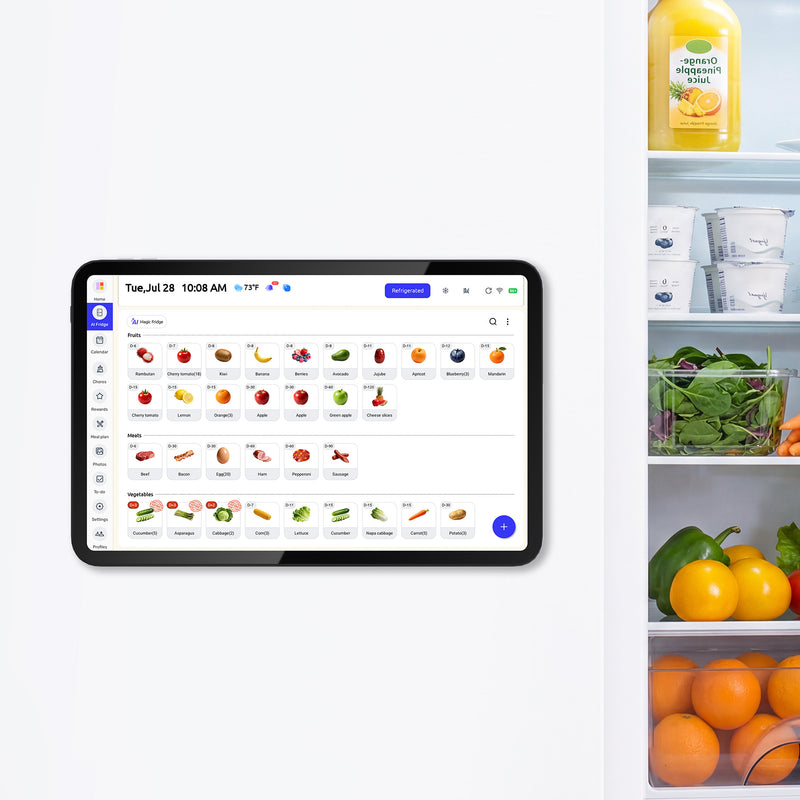
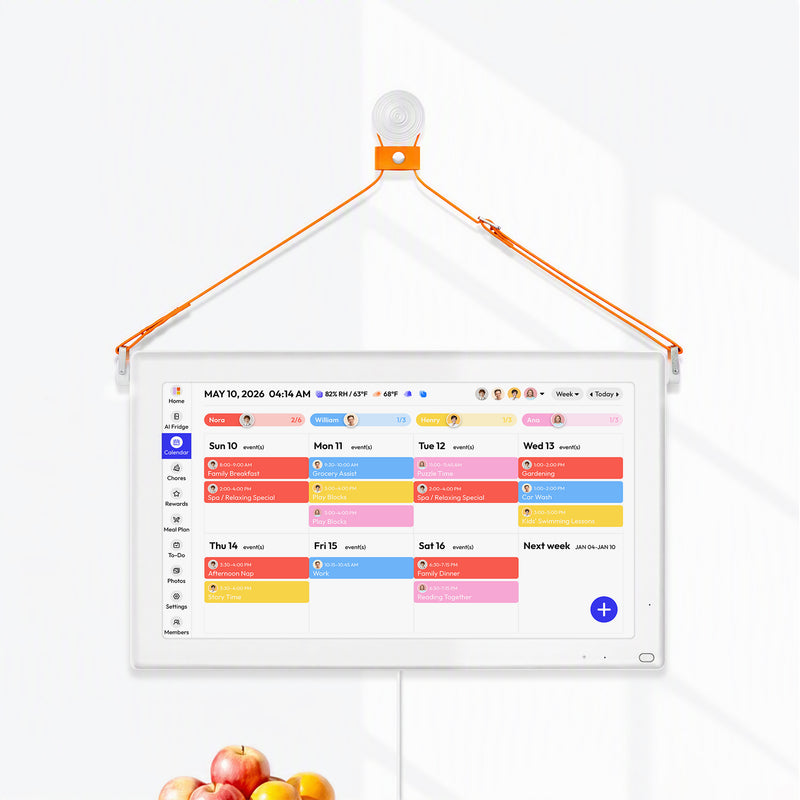
A family command center fixes that by giving everyone one place to check first. In practical terms, that means one visible hub for schedules, meals, tasks, reminders, and school logistics. For many households, that hub lives in the kitchen or near the entryway because that's where the day starts and where last-minute confusion usually shows up.
What belongs there
Keep the first version simple. Start with the weekly calendar, dinner plan, and top household tasks. Once that works, add school reminders, sports gear notes, and recurring responsibilities.
For parents comparing tools, digital calendar display ideas for home are useful because they solve a specific problem. Visibility. A command center only works when people see it.
Practical rule: If a system requires everyone to open three apps and remember a password, it won't become the family's default.
This is especially useful in larger coordination groups. Research on structured planning tool adoption reports 91% adoption among organizations with 10+ employees, about 50% among businesses with fewer than 10 employees, and a 74% overall U.S. implementation rate. Family life isn't a business, but the pattern is familiar. The more people involved, the more valuable shared visibility becomes.
A common example is the multi-child week where one parent handles soccer pickup, another covers a dentist appointment, and a grandparent helps with after-school care. A single source of truth doesn't remove the work. It removes the guessing.
Here's how that kind of setup looks in motion:
2. Teach Children Responsibility Through Chore Management
A good chore system doesn't just keep the house running. It teaches children that family life works better when everyone contributes.
The mistake most parents make is treating chores as random verbal requests. "Can you unload the dishwasher?" isn't a system. It's a reminder loop, and one adult usually ends up carrying the full mental load. A better setup assigns visible responsibilities, tracks completion, and makes follow-through predictable.

Make the work visible
Children do better when expectations are concrete. A younger child might handle feeding the pet, putting shoes away, and clearing their plate. A teenager can rotate through meal prep, laundry folding, bathroom resets, or trash duty. In blended families, visible assignments also reduce the feeling that one child is being singled out.
If you want structure that goes beyond a paper chart, this guide to a chore chart reward system is useful because it connects tasks, consistency, and incentives in one routine.
A few practical rules tend to work better than elaborate punishments:
- Match the task to the child: Give jobs they can realistically complete without constant correction.
- Tie consequences to reality: If lunch containers don't get emptied, they aren't ready the next morning.
- Rotate visible chores: Let every child contribute to work that the whole family benefits from.
Kids usually resist less when the rule feels steady. They resist more when it changes based on adult stress.
The true win isn't a spotless kitchen. It's raising children who know how to notice work, finish it, and understand that home isn't a service one parent provides.
3. Optimize Family Nutrition and Meal Planning
Dinner is one of the most repeated stress points in family life because it combines timing, budget, preferences, and energy. If you don't decide in advance, you end up deciding at the worst possible moment.
A workable meal system doesn't need to be fancy. It needs to be repeatable. Most families do better with a short rotation of dependable meals than with a long list of aspirational recipes saved on social media and never made.
Build a week that survives real life
Start with categories that reduce decision fatigue. Pasta night. Slow cooker night. Leftovers night. Breakfast-for-dinner night. Then plug in family favorites that can flex for allergies, picky eaters, or different dietary preferences.
For grocery coordination, a shared list matters as much as the menu. A family grocery list app setup helps because anyone can add milk, tortillas, or lunchbox snacks the moment they notice they're low instead of hoping one parent remembers later.
If you need fresh meal ideas, you can also discover healthy meal plans and adapt them to your family's schedule rather than copying them exactly.
A realistic meal plan usually includes:
- Fast defaults: Keep a few meals you can make even on an overbooked weekday.
- Prep points: Wash produce, portion snacks, or marinate protein on one predictable day.
- Visible expectations: Post the weekly meal plan where everyone can see it and stop asking what's for dinner at 4:52 p.m.
This is one of the few systems that helps almost immediately. Children complain less when they know what's coming. Parents shop more efficiently. And the family stops reinventing dinner every single night.
4. Synchronize Multi-Child School and Activity Schedules
Parents with one child feel busy. Parents with multiple children often feel like air traffic controllers.
School calendars, early dismissals, practice times, recitals, spirit days, field trips, and doctor appointments don't just fill time. They collide with one another. The challenge isn't remembering one event. It's understanding the whole week clearly enough to prevent impossible overlaps.

Plan for transitions, not just start times
A calendar becomes much more useful when you track the hidden work around events. Soccer at 5:30 isn't just soccer at 5:30. It's changing clothes, packing water, driving time, and the sibling who's doing homework in the bleachers.
Color-coding each child helps. So does reviewing the upcoming week every Sunday evening, especially in homes where both adults work or caregiving shifts between parents, grandparents, or sitters.
For families deep in extracurricular logistics, this article on streamlining kids' sports schedules is a good reminder that transportation, equipment, and communication matter as much as the event itself.
Try these habits:
- Add buffer time: Build in transition time before and after activities.
- Update immediately: Put schedule changes into the system when they happen, not later.
- Teach kids to check: Older children should know where to confirm their own week.
A schedule only calms a family when it reflects reality. If the calendar shows idealized start times but not actual prep and travel, you're still left scrambling.
5. Foster Open Communication and Family Meetings
Monday usually goes off the rails long before anyone is arguing. A child mentions a spirit day outfit at bedtime. One parent learns too late about an early pickup. Someone assumed the permission slip was already signed. The problem is often not attitude. It is that the family has no set time to pass information clearly.
A short weekly family meeting fixes a surprising amount of that friction. It gives everyone one place to raise needs, flag conflicts, and ask for help before the week gets crowded. For busy parents, that matters because household stress rarely comes from one big crisis. It comes from five preventable misses stacked on top of each other.
Keep it brief enough to keep doing it
The meeting does not need to feel formal. It needs to happen regularly. For many families, 10 to 15 minutes at the same time each week works better than aiming for a long, perfect conversation that keeps getting postponed.
The American Academy of Pediatrics recommends creating regular opportunities for family connection and communication, including shared routines that help children feel heard and supported. A weekly check-in gives that advice a practical home. It turns communication into a family system instead of leaving it to memory and last-minute texts.
A useful meeting usually covers four things:
- What is coming up: School events, appointments, practices, rides, meal changes, social plans.
- What each person needs: Supplies, forms, extra help, downtime, one-on-one attention.
- Where the week could break: Tight handoffs, work conflicts, unusual pickups, low-energy days.
- What is working: A child remembered a responsibility. Bedtime went better. Everyone handled a hard day well.
Tone matters.
If the meeting feels like a lecture, kids shut down and adults start dreading it too. If it feels like a quick planning session where everyone gets a voice, it builds trust and makes the load more visible. That is especially helpful in homes where one parent often carries the mental checklist for everyone else.
I have seen families make this easier with one simple rule. End with assignments that are clear enough a 10-year-old could repeat them back. Who is bringing cupcakes, who is handling pickup Thursday, who needs to pack cleats, who wants help studying. Clear beats detailed.
Parents skip family meetings because they are tired, and that trade-off is real. But a few calm minutes at the start of the week usually saves much more time, conflict, and last-minute scrambling later.
6. Establish Healthy Morning and Evening Routines
Routines are boring on paper and powerful in real life. When families don't have them, every morning becomes a debate and every evening becomes cleanup plus negotiation.
The best routines are specific enough that children can follow them without an adult narrating every step. "Get ready for school" is too vague. "Get dressed, eat breakfast, brush teeth, pack water bottle, put backpack by the door" is a routine.
Start where your day breaks down
For some families, mornings are the obvious pain point. For others, evenings cause the damage because bedtime slides late, lunches don't get packed, and the next day starts behind.
U.S. Bureau of Labor Statistics time-use data show women spent 1.31 hours per day on household activities versus 0.81 hours for men in 2023. That gap helps explain why routines matter so much. Without clear shared processes, household work often defaults to the person already carrying the most invisible labor.
A routine works better when it includes:
- Small steps: Break large tasks into actions children can complete independently.
- Visible cues: Put the sequence where kids can see it instead of asking again.
- A buffer: Leave a little room for missing shoes, spilled cereal, or a bad mood.
This isn't about making home feel rigid. It's about making ordinary transitions easier. A calm school morning is not a small thing. It changes how the whole house feels before 8 a.m.
7. Manage Co-Parenting or Blended Family Logistics
Co-parenting systems fail when information gets personal too quickly. The more emotionally charged the adult relationship, the more helpful it is to keep logistics visible, neutral, and boring.
Children don't need perfect harmony between households. They do need consistency around pickups, school events, medications, sports gear, and who is handling what. That's where a shared planning system becomes more than convenient. It becomes stabilizing.
Use one neutral source of truth
The practical standard is simple. Put custody transitions, school obligations, recurring activities, and major household responsibilities in one shared place. Avoid using text threads as the primary record because important details disappear fast.
Written goals and accountability matter here. In widely cited goal-setting research summaries, writing goals down has been associated with a 42% increase in goal achievement, and weekly progress reporting to a supportive peer has been associated with 40% more achievement than not using that system. Family logistics aren't a lab study, but the principle carries over well. Shared commitments work better when they're documented and reviewed.
A few rules protect the system:
- Keep logistics separate from conflict: Use the calendar for facts, not arguments.
- Include all key caregivers: Step-parents, grandparents, or after-school helpers need the same critical information.
- Explain transitions to children clearly: They should know where they're going and what to expect.
In blended families, clarity is often kinder than flexibility. Kids relax when adults stop improvising the basics.
This kind of structure doesn't remove emotional complexity. It does reduce the number of practical failures that make that complexity harder.
8. Maintain Family Health and Medical Appointments
A missed pediatric visit rarely stays a small problem. It turns into a school form delay, a refill scramble on a busy weekday, or a specialist appointment pushed out by another month.
That is why health care belongs on a family goals for life list. For busy parents, this goal is not "be healthier" in some vague personal sense. It is building a household system that keeps everyone cared for without relying on one exhausted adult to remember every detail.
Build a health system your family can actually maintain
Health admin works best when it is treated like regular family operations. Keep appointments on the shared calendar with travel time, office address, and any prep notes. Store insurance cards, medication lists, pediatrician and pharmacy numbers, and after-visit instructions in one easy-to-access place. If a child has ongoing needs such as asthma, therapy, orthodontics, or allergy care, add recurring reminders before problems become urgent.
The goal is simple. Reduce last-minute decisions.
A workable system usually includes a few habits:
- Book the next appointment before you leave: Annual physicals, dental cleanings, and follow-ups are easier to keep when they are scheduled early.
- Set refill reminders before the bottle is low: This matters even more before weekends, holidays, or travel.
- Record visit notes the same day: Include dosage changes, referral details, and what symptoms to watch.
- Share responsibility between adults: One parent can take the child to the appointment, but both adults should be able to find the information later.
This section is also about mental load. In many families, one parent becomes the default keeper of immunization records, medication schedules, therapy updates, and school health forms. That arrangement may work for a while, but it breaks fast during illness, travel, work stress, or changes in custody or childcare.
Shared access matters because real life is messy. Kids get sick on the wrong day. Pharmacies run behind. A provider asks for paperwork you thought was already submitted. Families stay steadier when care lives in a repeatable process, not in one person's memory.
9. Create Accountability and Celebrate Family Achievements
Families often track what's going wrong with great precision and what's going right with almost none.
That imbalance wears people down. If children mostly hear about missed chores, forgotten shoes, and incomplete homework, they start to experience the household system as correction rather than support. Accountability works better when it includes visible wins.
Make follow-through feel meaningful
This doesn't require expensive rewards or a complicated points economy. It does require consistency. A child who finishes their responsibilities all week should see that effort acknowledged. A teen who handled a new task without reminders should get credit for the maturity, not just the result.
One helpful framework for family systems comes from data product measurement. A technical reference recommends tracking adoption, engagement, and reliability before claiming business impact, starting with outputs and then usage rates, active users, and uptime before moving to efficiency and outcomes. In family terms, don't judge a new household goal by ideals alone. Ask whether people are using it, whether they return to it, and whether it works reliably under normal stress.
That translates well into simple habits:
- Celebrate visible effort: Not just perfect outcomes.
- Use short feedback loops: Weekly recognition works better than vague future promises.
- Mark progress publicly: Finished reading logs, chore streaks, or independent mornings deserve space on the family hub.
A family system becomes sustainable when people feel both responsible and appreciated. That's true for kids, and it's just as true for adults.
10. Balance Screen Time and Prioritize Family Media Consumption
Most families don't need a dramatic anti-tech reset. They need clearer defaults.
Screen conflict usually grows in the spaces where the rules are fuzzy. Is a tablet allowed during breakfast? Are phones okay in bedrooms? Does everyone scatter to separate devices after dinner? When no one knows the standard, parents end up renegotiating every day.
Protect the hours that matter most
Start with the moments that shape family life most strongly. Meals. Bedtime. Morning readiness. Car rides, if you want more conversation and less passive scrolling. Then decide which of those need to be screen-free and enforce that consistently.
The deeper issue isn't just media volume. It's well-being. The OECD's 2024 summary reports that 1 in 4 adults globally experienced loneliness the previous day, and the U.S. Surgeon General's 2024 advisory argued that social connection should be treated as a public-health priority in that same summary. That matters for family goal-setting because a home can be digitally full and relationally thin at the same time.
If you need ideas for a healthier rhythm, this advice on summer screen time balance for kids offers a practical starting point.
Good screen rules are usually simple:
- Create device-free zones: Bedrooms and the dinner table are common choices.
- Set device-free times: Especially before bed and during family meals.
- Offer real alternatives: Board games, audiobooks, walks, crafts, and shared shows watched together.
The goal isn't to make technology the enemy. It's to stop letting it consume the parts of family life you care about most.
10-Point Family Goals Comparison
| Item | Implementation Complexity 🔄 | Resource Requirements ⚡ | Expected Outcomes ⭐📊 | Ideal Use Cases 💡 | Key Advantages ⭐📊 |
|---|---|---|---|---|---|
| Establish a Unified Family Command Center | Medium, initial setup and family buy-in 🔄 | Moderate, display device, app access, occasional maintenance ⚡ | High, centralized info, fewer missed appointments, reduced mental load ⭐📊 | Busy households, multi-device homes, co-parenting families 💡 | Transparency, time savings, calmer routines ⭐ |
| Teach Children Responsibility Through Chore Management | Medium, consistent enforcement and adjustments 🔄 | Low–Moderate, chore board/app and parental time ⚡ | High, increased independence, reduced parental burden ⭐📊 | Families with school-age children, multi-child homes 💡 | Accountability, fair expectations, habit formation ⭐ |
| Optimize Family Nutrition and Meal Planning | Medium–High, weekly planning and coordination 🔄 | Moderate, meal plans, grocery integration, prep time ⚡ | High, less waste, cost savings, improved nutrition ⭐📊 | Families with dietary needs, busy working parents, budget-conscious homes 💡 | Saves money/time, better health outcomes ⭐ |
| Synchronize Multi-Child School and Activity Schedules | High, many events, ongoing updates and conflict resolution 🔄 | Moderate, multi-calendar tools, transport coordination ⚡ | High, fewer conflicts, reduced missed pickups, smoother transitions ⭐📊 | Families with several children and overlapping activities 💡 | Conflict detection, clear logistics, improved routines ⭐ |
| Foster Open Communication and Family Meetings | Low–Medium, regular facilitation and commitment 🔄 | Low, shared display and scheduled meeting time ⚡ | Moderate–High, improved connection, fewer misunderstandings ⭐📊 | Families wanting stronger relationships or neutral communication channels 💡 | Builds trust, documents decisions, creates rituals ⭐ |
| Establish Healthy Morning and Evening Routines | Medium, habit formation over 2–3 weeks 🔄 | Low, visual checklists, timers, routine reminders ⚡ | High, reduced morning stress, better punctuality and sleep ⭐📊 | School-age families, households with rushed schedules 💡 | Consistency, less nagging, better self-management ⭐ |
| Manage Co-Parenting or Blended Family Logistics | High, coordination, boundaries, and access control 🔄 | Moderate, shared access, clear rules, communication tools ⚡ | High, reduced conflict, consistent child experience across homes ⭐📊 | Divorced/blended families, shared custody arrangements 💡 | Neutral source of truth, transparency, fewer disputes ⭐ |
| Maintain Family Health and Medical Appointments | Medium, collect records and set reminders 🔄 | Low–Moderate, appointment tracking, secure notes, reminders ⚡ | High, fewer missed appointments, better medication adherence ⭐📊 | Families with chronic conditions or frequent appointments 💡 | Preventive care adherence, consolidated health info ⭐ |
| Create Accountability and Celebrate Family Achievements | Low–Medium, design reward structure and track progress 🔄 | Low, tracking board/app and small rewards ⚡ | Moderate–High, increased motivation, sustained habits, higher morale ⭐📊 | Families building new habits or motivating children 💡 | Positive reinforcement, recognition, habit momentum ⭐ |
| Balance Screen Time and Prioritize Family Media Consumption | Medium, rule-setting and consistent enforcement 🔄 | Low, parental controls, schedules, alternative activities ⚡ | High, better sleep, attention, and family interaction ⭐📊 | Households with heavy device use, young children, teens 💡 | Healthier habits, reduced conflict, improved relationships ⭐ |
From List to Life: Making Your Family Goals a Reality
A useful goals for life list doesn't ask your family to become different people overnight. It helps you build a home that supports the people already living in it. That's why household goals work better than dramatic personal reinventions for most busy parents. They solve recurring friction instead of adding another self-improvement project to the pile.
To begin, don't start with all ten. Start with the point of greatest daily strain. For one family, that's dinner. For another, it's mornings. For another, it's co-parenting handoffs or the constant confusion around after-school activities. The best first goal is the one that gives relief fastest.
There's also a real trade-off worth naming. More goals do not always create a better family system. Too many goals can turn home into a project management exercise that nobody enjoys. It's better to choose a few meaningful changes, make them visible, and let them become normal before adding more. In practice, a stable routine, a shared calendar, and one chore system will usually do more for family peace than a long list of ambitious intentions.
This matters for well-being too. Family life shouldn't feel like a nonstop productivity contest. A strong system creates room for rest, connection, recovery, and the ordinary moments that make home feel good. If your planning method makes everyone feel behind all the time, it isn't helping, no matter how organized it looks.
The most effective family goals are concrete, shared, and easy to revisit. Written plans tend to hold up better than verbal ones. Visible systems reduce the need for one parent to carry every reminder mentally. Regular check-ins catch problems before they become household blowups. And celebration matters. Families are more likely to keep using a system when it helps them notice progress, not just gaps.
For households that want one place to combine schedules, chores, meals, and shared visibility, Everblog is one relevant option. Its format fits the central command center approach described throughout this article, especially for families that are tired of juggling separate apps, paper notes, and verbal reminders.
An organized home isn't about control for its own sake. It's about making daily life gentler. When your family can see the week, share the work, and trust the system, everyone gets a little more breathing room. That's a life goal worth keeping.
If you're ready to turn your goals for life list into a shared family system, take a look at Everblog. It brings schedules, chores, meals, and household communication into one visible hub so your family can stay in sync with less stress.


