



On the hunt for a free homeschool schedule template? I get it. The internet is flooded with options, but the real secret isn't finding just any template—it's finding one that bends to your family’s rhythm instead of trying to box you in.
Why a Flexible Homeschool Schedule Is Your Secret Weapon
Before you hit "download" on the first pretty printable you find, let's talk about why a schedule is such a lifesaver. This isn't about recreating the frantic, bell-driven day from traditional school. Not at all. It's about building a predictable flow that cuts down on the chaos, empowers your kids, and honestly, protects your own sanity.
Think of it as a framework for freedom, not a cage.
When everyone knows what’s coming next—say, math followed by a much-needed nature walk—the transitions between activities become smoother, with way less friction. That predictability gives kids a sense of security and helps them become more independent, which means you're not constantly playing traffic cop.
From Chaos to Calm Intentionality
A good, flexible schedule is your number one defense against burnout. By simply mapping out your core subjects, you make sure you’re hitting your academic goals without the last-minute cramming. But more importantly, it helps you intentionally carve out time for all the things that make homeschooling so amazing.
- Going Down Rabbit Holes: That history lesson on ancient Egypt just sparked a massive wave of curiosity? A flexible plan means you can ditch the next subject and spend the afternoon building sugar-cube pyramids.
- Time for Rest and Play: It ensures you don't skip over unstructured play, quiet reading, or just plain downtime. These are absolutely critical for real learning and good mental health.
- Weaving in Life Skills: You can effortlessly fold in practical skills like cooking, gardening, or taking care of the house right into your daily flow.
A great schedule isn't about controlling every single minute. It's about creating a gentle current that guides your day, leaving plenty of room for spontaneous discoveries and genuine connection.
A Growing Need for Structure
The need for smart, effective home education tools has never been clearer. The pandemic was a huge catalyst, pushing the number of U.S. homeschooled students from 2.65 million in 2020 to a staggering 3.7 million in 2021. That boom changed the game, and the growth continued even after schools reopened.
This huge shift underscores the demand for resources that help families thrive in these new roles. A truly flexible schedule also lets you adapt how you teach to make sure kids are actually absorbing the material. You can even find ways to help them study efficiently for exams using techniques backed by science.
To see how a little structure can transform your entire family's day-to-day, check out our guide on why every mom needs a digital calendar.
Finding the Right Free Homeschool Schedule Template
Diving into the world of free homeschool resources can feel like trying to drink from a firehose. There are so many options out there, but the real goal is to find a homeschool schedule template free from clutter—one that actually serves your family instead of just adding to the overwhelm.
The first step isn't picking a pretty design. It's about understanding the different scheduling philosophies that drive them. Your choice here will set the entire rhythm for your days, so it’s worth thinking about what truly fits your family’s personality and educational goals.
The Most Common Schedule Styles
Not all templates are created equal. Some are designed for minute-by-minute precision, while others offer a more gentle, flowing structure.
- Daily Schedules: These are hyper-detailed, breaking your day into specific time blocks. They're a lifesaver for families who thrive on clear structure or need to juggle multiple kids with different needs at set times.
- Weekly Checklists: This style offers a lot more breathing room. Instead of tying tasks to a specific time, you just list what needs to get done each day of the week. It’s fantastic for fostering independence in older kids and works beautifully for families with appointments that change from day to day.
- Block Schedules: With this method, you dedicate longer chunks of time to a single subject, but you do it less often. Think a two-hour science block on Tuesday and Thursday instead of 45 minutes every day. This approach is perfect for deep dives, messy projects, and cutting down on the daily setup and cleanup grind.
- Loop Schedules: This is my secret weapon for the subjects that always seem to get skipped—things like art, music, or geography. You create a simple list of these subjects and "loop" through them one by one. If you only get to art on Monday, you just pick up with music on Tuesday. It brilliantly removes the pressure of feeling like you're "falling behind."
This simple flowchart can help you figure out where to start.

As you can see, the core decision often comes down to how much your family craves detailed structure versus how much you value organic, day-to-day freedom.
To make it even clearer, let's break down the most popular homeschool scheduling methods to help you decide which free template style is the best fit for your family.
Comparing Homeschool Schedule Styles
| Schedule Style | Best For | Key Feature |
|---|---|---|
| Daily Time-Blocking | Families needing high structure, multiple young children, or specific therapy/lesson times. | Every hour (or even half-hour) of the school day is assigned a specific task or subject. |
| Weekly Checklist | Families with older, more independent kids or those with unpredictable weekly schedules. | A list of "must-do" tasks for the week that can be completed in any order. |
| Block Scheduling | Deep-dive learning, project-based homeschooling, and reducing daily transition time. | Longer, focused periods (e.g., 90-120 mins) dedicated to one subject, a few times a week. |
| Loop Scheduling | Fitting in "extra" subjects like art, music, or nature study without a rigid timetable. | A rotating list of subjects; you do the next one on the list whenever you have time. |
Ultimately, the goal is to find a rhythm, not a rigid set of rules. You can even combine styles—maybe a block schedule for core subjects and a loop for the fun extras.
What to Look For in a Template
Once you've got a style in mind, it's time to sift through the actual templates. A pretty design is nice, but function is what really counts. Look for layouts that are clean, easy to read, and don't feel visually chaotic.
Most importantly, the best templates are editable. A static PDF you can only print is far less useful than a format you can customize in a free tool like Canva or Google Docs. You have to be able to change subjects, add chores, and shift timings as your family’s needs change.
A schedule is a living document. It should breathe and change with your family's seasons. The right template makes this adjustment process simple, not a chore.
The demand for these kinds of flexible tools has skyrocketed right alongside homeschooling itself. After the pandemic, homeschooling saw explosive growth, with U.S. enrollment jumping from about 850,000 in 1999 to an estimated 3.1 to 3.7 million in 2023. This boom is exactly why so many amazing free online templates are now available. You can dig into more data on the rise of homeschooling vs public school.
Taking the time to choose the right starting point will save you countless hours of frustration down the road. Think of it as finding the perfect container for your plans—it should hold everything you need with a little room to grow.
How to Customize Your Schedule for Real Life
A downloaded template is a great starting point, but that's all it is—a start. The real magic happens when you stop trying to cram your family into a pre-made box and start shaping the schedule to fit your unique, wonderful, and sometimes chaotic life.
Making a homeschool schedule template free from generic constraints is how you build a rhythm that actually sticks.
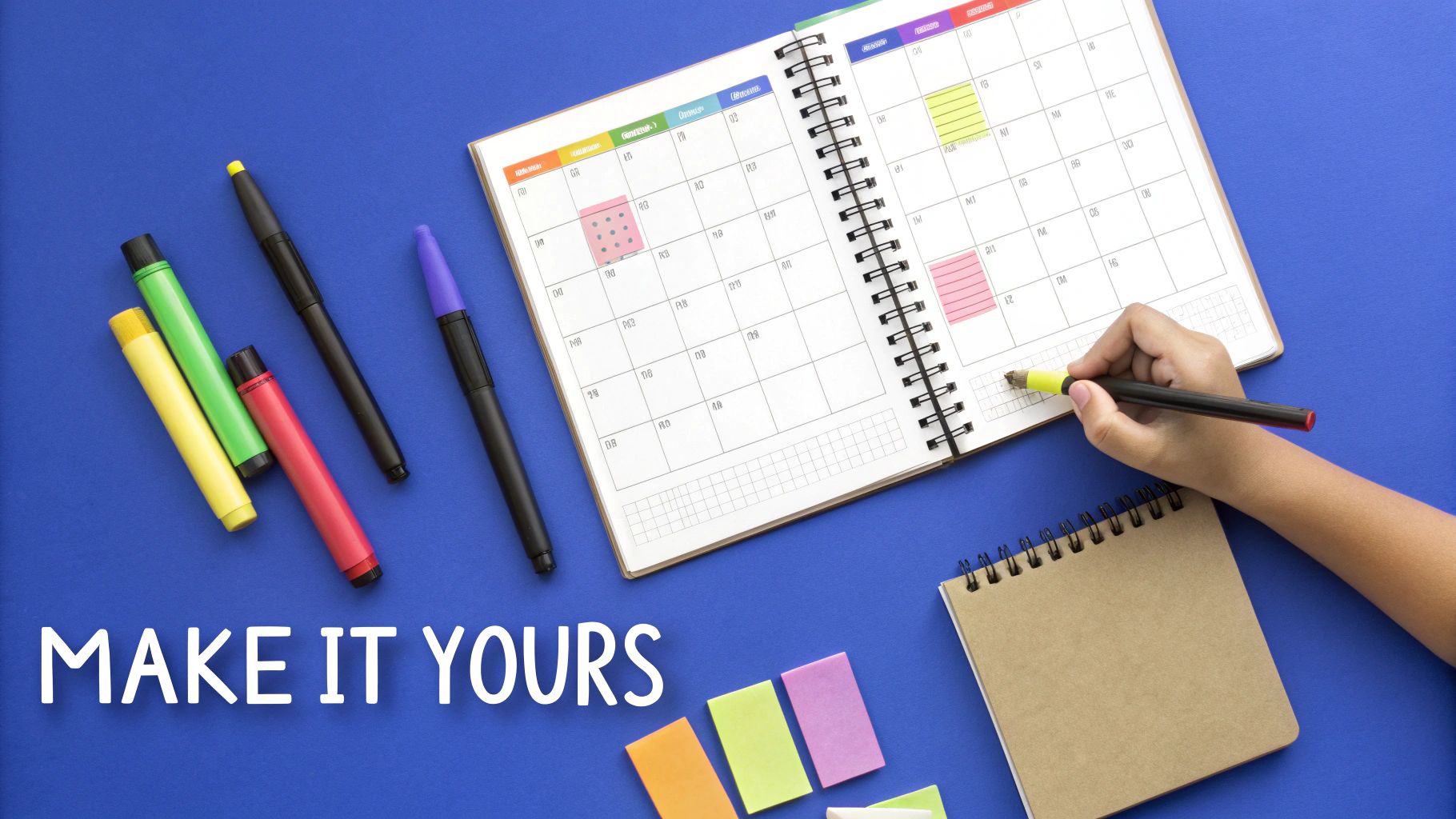
Think less about perfection and more about personality. Is your youngest bursting with energy first thing in the morning? That’s the perfect time for active learning or a nature walk, not a quiet reading lesson. Does your older child hit their stride in the afternoon? Shift their independent work to that time slot.
Make It Visual and Actionable
The easiest way to bring a template to life is with color. Just assign a different color to each kid or each subject. This tiny change creates an instant visual cue, making it easy for everyone to see what’s on their plate at a glance.
- Blue: Math and Logic
- Green: Science and Nature Study
- Orange: Reading and Language Arts
- Purple: History and Social Studies
For families with neurodivergent learners, this kind of visual organization can be a game-changer. If you want to get more specific, exploring effective time blocking strategies can help you dedicate focused periods for different activities and build a more balanced day.
Build in the Buffers
One of the biggest mistakes new homeschoolers make is over-scheduling. Real life is full of interruptions—the dog gets sick, a friend drops by, or a simple science experiment sparks an hour-long rabbit trail of questions. If your schedule is packed from 9:00 AM to 3:00 PM, you’re setting yourself up for stress.
The solution? Build in "flex time" or buffer blocks.
These are unscheduled 20-30 minute periods scattered throughout the day. Use them for catching up, transitioning between subjects, or just taking a much-needed brain break. A well-placed buffer is the difference between a schedule that serves you and one that rules you.
A schedule isn’t a rigid contract; it’s a living document that should bend and flex with the rhythm of your home. The goal is consistency, not perfection.
This isn't just a nice idea—it's backed by results. In fact, homeschoolers often score 15 to 30 percentile points higher on standardized tests than their public school peers, and about 66.7% of them go on to complete college. This success is often tied to the structured-yet-flexible daily plans that make room for core subjects, breaks, and personal interests.
A Real-World Example
Let's imagine a family with three kids: a first-grader, a fifth-grader, and an eighth-grader.
Their shared, color-coded template keeps everyone on track. In the morning, while the oldest works independently on algebra (blue), the younger two do a combined history lesson (purple) with Mom.
Later, while the little one has quiet reading time, the two older kids tackle their language arts blocks (orange) at their own levels. Their schedule also includes a one-hour "flex block" after lunch, which some days is used for a group art project and other days for catching up on assignments. This approach supports both group cohesion and individualized learning, all within one simple, customized framework.
For more ideas on managing the beautiful chaos of family life, you might find our guide on creating a stay at home mom daily schedule helpful.
Building Your Family Command Center
You've spent the time creating the perfect, clutter-free homeschool schedule. But here's the thing: it does absolutely no good hidden away in a binder or lost in a digital folder somewhere. The real magic happens when you make that schedule a visible, interactive part of your home’s daily rhythm.
This is where a family command center comes in, transforming your plan from a static document into a dynamic tool everyone can see and use.
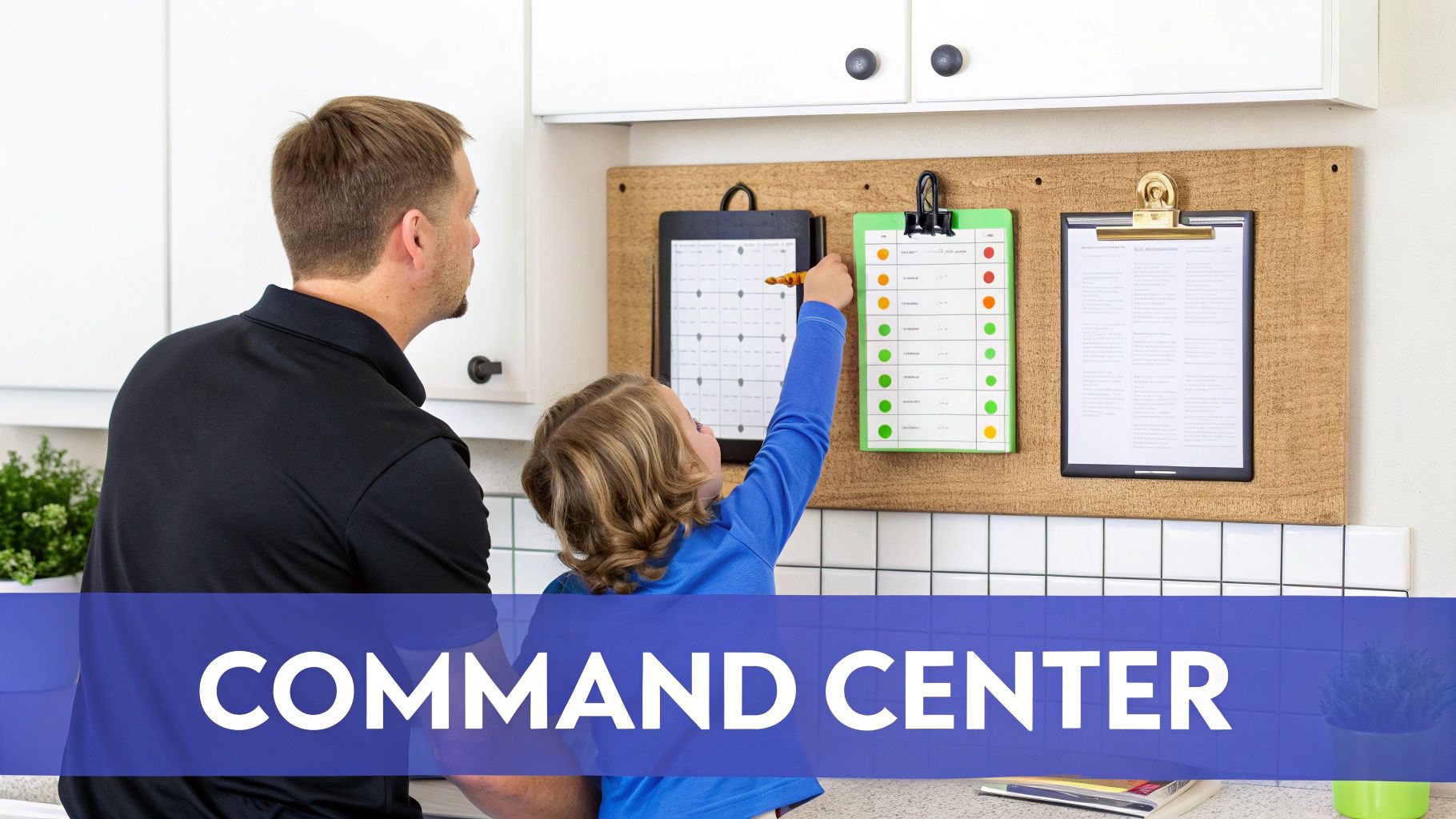
The goal is to put the schedule right out in the open, smack in the heart of your home—think the kitchen or a main hallway. When kids can see what’s coming next, they start to take ownership of their day. It’s amazing how this one simple act cuts down on the constant "What are we doing now?" questions and empowers them to get ready for the next thing on their own.
Simple Command Center Setups
You don't need some elaborate, Pinterest-perfect wall to make this work. A super functional command center can be pulled together with simple things you might already have lying around.
- The Classic Whiteboard: This is the ultimate tool for flexibility. You can quickly jot down the day's schedule, add a to-do list for each kid, and just wipe it all clean for a fresh start tomorrow. Pro tip: use different colored markers for each child or subject to make it scannable at a glance.
- A Humble Corkboard: Just print your weekly schedule and pin it up. This is also the perfect spot to display finished artwork, library book reminders, or tickets for that upcoming field trip. It’s decidedly low-tech, but it’s a highly effective way to keep important stuff front-and-center.
- Chalkboard Paint: Want a more built-in look? A section of a wall painted with chalkboard paint can become your family’s central hub for everything from schedules and meal plans to quick messages.
The most effective command center is the one you actually use. Start with whatever is simplest for your family to maintain, whether that’s a high-tech screen or just a board with sticky notes. The real key is visibility and using it consistently.
Integrating Your Digital and Physical Worlds
Your command center is also the perfect place to bridge the gap between your paper plans and your digital life.
If your family relies on a shared digital calendar for appointments and soccer practice, just make a habit of referencing it when you update your physical command center each week. For those looking to go all-in on digital, check out our guide on creating a digital family command center that syncs everyone's activities automatically.
This central hub quickly becomes more than just a schedule display; it’s the place where academics, chores, appointments, and meal plans all come together. By syncing these different parts of your life, you create one cohesive system that brings a sense of calm and order to the chaos. Your homeschool schedule template, free from being siloed, now works in harmony with the rest of your family’s rhythm, making everyone’s day run just a little bit smoother.
When Your Homeschool Schedule Goes Off the Rails
Let's be real. No matter how much time you spend crafting the perfect homeschool schedule template, some days it will all fall apart before 10 a.m.
It’s just part of the deal. The toddler gets sick, a child has a meltdown over long division, or it’s just too beautiful outside to stay cooped up with books. These moments aren’t failures. They’re just life happening.
The secret is to see your schedule as a compass, not a cage. When you feel that friction, it’s not a sign to force things. It’s a signal to get curious and figure out what needs a little tweak. The resistance is just data.
Figure Out What’s Really Wrong
Before you throw the whole schedule in the trash, take a breath and play detective. Usually, it's not the entire day that's broken—it's just one tiny part.
- Is it a certain subject? If your child groans every time you pull out the language arts binder, maybe the curriculum isn't a good fit, or they’re hitting a wall with a specific concept.
- Is it the time of day? Trying to plow through a tough science lesson right after lunch is a classic recipe for disaster. That post-lunch slump is real!
- Is there too much packed in? Some kids, especially our creative and neurodivergent learners, can feel completely overwhelmed by a back-to-back schedule. They need room to breathe.
Once you have a hunch, try one small adjustment. Maybe you move that tricky subject to first thing in the morning when minds are fresh. Or you break it down into smaller, more manageable chunks. Small shifts are almost always more effective than a massive overhaul.
The Power of a "Reset Day"
Some days are just... off. You can feel it. Instead of fighting a losing battle, give yourself and your kids the grace to call a "reset day."
This isn't throwing in the towel. It's a strategic retreat to protect everyone's sanity and your relationships.
A reset day can be as simple as putting the books away and declaring it a movie-and-popcorn afternoon. It can be a spontaneous trip to the library or a long walk in the woods. It’s about trading stress for connection so you can start fresh tomorrow.
This one simple move can prevent massive burnout for everyone. It also teaches your kids a crucial life skill: it’s okay to recognize when something isn't working and to change course.
The Magic of Built-In Wiggle Room
One of the most practical things you can do to make your schedule nearly foolproof is to build in buffer time. Think of these as small, unplanned gaps of 15-20 minutes between subjects or activities.
This wiggle room acts like a pressure release valve for your day. It gives you space for:
- Finishing a lesson that takes a little longer than you planned.
- Grabbing a snack without rushing.
- Letting a great conversation or a sudden spark of curiosity play out.
- Just transitioning from one thing to the next without feeling frantic.
When you plan for the unplanned, your schedule becomes flexible and resilient. It can absorb the little bumps in the road without derailing the entire day, keeping it the helpful, stress-reducing tool it’s meant to be.
Common Homeschool Schedule Questions, Answered
Jumping into homeschooling always stirs up a few questions, no matter how long you've been at it. When it comes to planning your days, the same uncertainties seem to pop up for everyone.
You've got the templates and the ideas. Now, let's tackle those lingering questions so you can build a family rhythm that actually works.
How Long Should Our Homeschool Day Actually Be?
One of the biggest hurdles for new homeschoolers is letting go of that classic 8-to-3 school day mentality. The truth is, homeschooling is incredibly efficient. You’re working one-on-one, not managing a classroom of 25 kids.
Forget the seven-hour day. The reality is much shorter and leaves so much more room for life and learning.
- Kindergarten to 2nd Grade: You're looking at about 1-2 hours of focused academic work.
- 3rd to 5th Grade: Usually, 2-3 hours is the sweet spot.
- Middle School (6th-8th): Most students do great with 3-4 hours of structured learning.
- High School (9th-12th): Even for high schoolers, 4-6 hours of focused work is typically plenty.
The goal is quality of engagement, not quantity of hours. A productive 90-minute math session is far more valuable than three hours of distracted, frustrated work. The rest of the day is for play, reading, projects, and real-world exploration—all of which are powerful forms of learning.
What’s the Difference Between Block and Loop Scheduling?
These are two of the most popular scheduling styles, and they offer very different kinds of flexibility.
A block schedule is all about going deep on a subject. Instead of doing 45 minutes of science every single day, you might dedicate a longer, 90-minute block to it just on Mondays and Wednesdays. This is amazing for minimizing transition times and allowing for those bigger, more immersive projects that can’t be rushed.
A loop schedule, on the other hand, is about consistency without the pressure. Think of it as a rotating to-do list for subjects like art, music, or geography. You just do the next subject on the list whenever you have an open slot. If you only get to art on Monday, you simply start with music on Tuesday. It’s a brilliant way to make sure the "fun stuff" doesn't get pushed aside when life gets chaotic.
How Often Should We Adjust Our Schedule?
Your schedule is a living document, not a contract set in stone.
A good rhythm is to sit down and review it every 6-8 weeks. This is the perfect time to check in with your kids (and yourself). Ask what's working and what’s creating friction. Maybe a certain subject needs to move to the morning when energy is higher, or perhaps a particular routine just isn't clicking anymore.
Don't be afraid to make small tweaks. That said, try to avoid constant, major overhauls. Kids thrive on consistency, so save the big changes for natural transition points—like the end of a unit, a semester break, or after a big family trip.
Where Can I Find the Best Free Printable Templates?
The good news is you don’t need to spend a dime on a great planner. The internet is overflowing with fantastic free resources.
- Canva is my go-to. It has a massive library of beautiful, totally customizable templates you can edit and print with a free account.
- Homeschooling Blogs: Many veteran homeschool bloggers offer amazing printables they've designed and used themselves.
- Pinterest is a visual goldmine. A quick search for "free homeschool planner printable" will give you more options than you know what to do with. The key is to find one that’s an editable PDF or in a format you can easily adapt to your family.
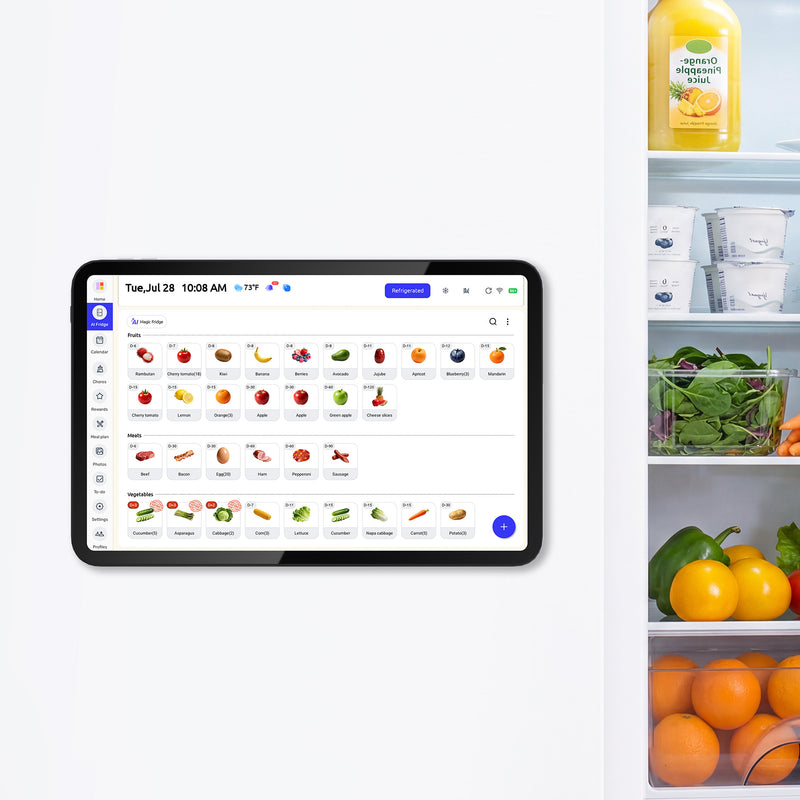
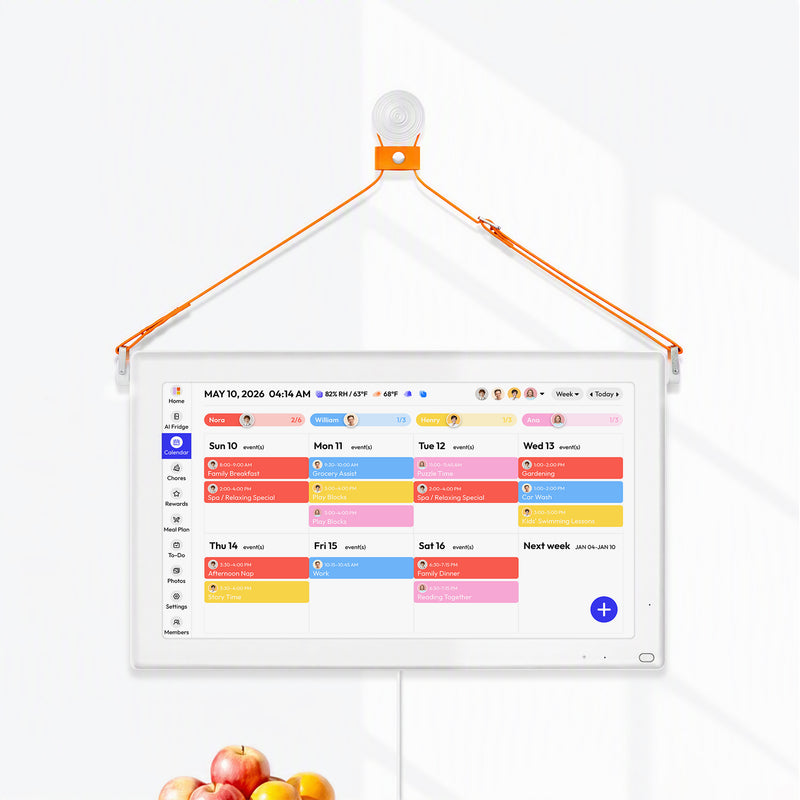
Ready to take your family's schedule off the paper and put it onto a central, interactive hub? The Everblog is a 21.5-inch digital wall calendar designed to sync your entire household. It combines your homeschool plans, chores, meals, and appointments into one beautiful, at-a-glance display that keeps everyone on the same page. Discover how Everblog can bring calm and connection to your home at https://everblog.com.


