





7:12 a.m. One kid cannot find a shoe. Another remembers the permission slip at the door. The dog still has not been fed, and someone is asking what is for dinner before breakfast is finished. That kind of chaos usually is not a discipline problem. It is a system problem.
A kids to do list will not fix every pressure point in family life, but it does reduce the repeat friction that wears everyone down. The catch is choosing the right type of tool. Parents often pick by feature list alone, then wonder why the app gets ignored after a week.
The better approach is to match the tool to the goal. If you want to teach money habits, look at chore and allowance systems like Greenlight or FamZoo. If your main goal is routine independence, Brili solves a different problem. If your household needs one visible place for schedules, chores, meals, and reminders, an all-in-one setup like Everblog makes more sense than stacking separate apps.
Keep the list short.
Kids usually do better with a handful of clear tasks they can finish without constant prompting. In practice, that means simple wording, visible cues, and a routine they can recognize at a glance. A long list may look organized to adults, but it often feels impossible to a child, especially on school mornings when time and attention are already tight.
That is the lens for this guide. It is not just a roundup of apps. It is a way to choose a kids to do list system based on the kind of family habits you are trying to build.
1. Everblog

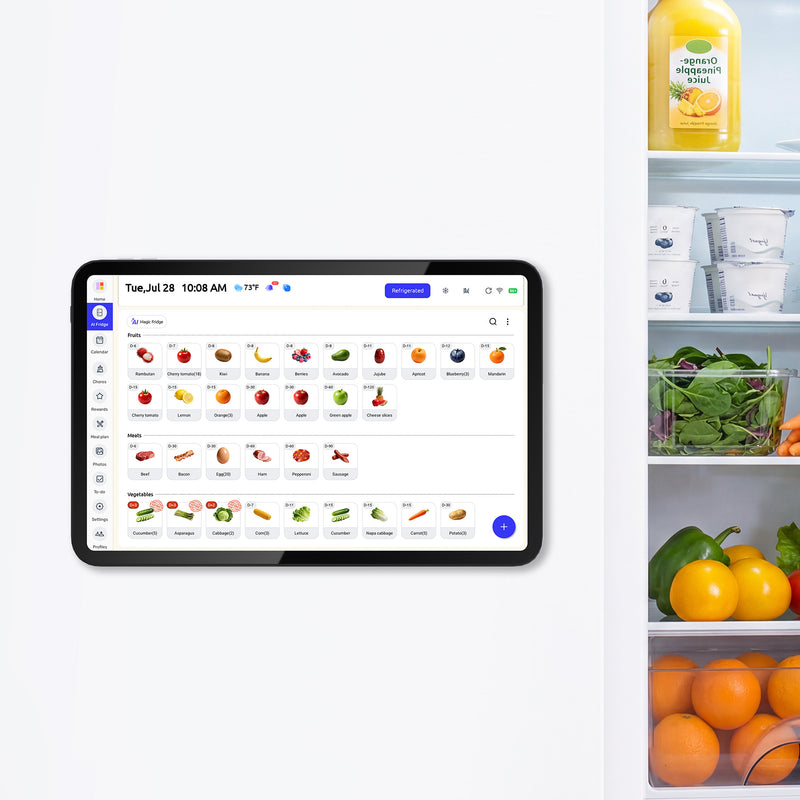
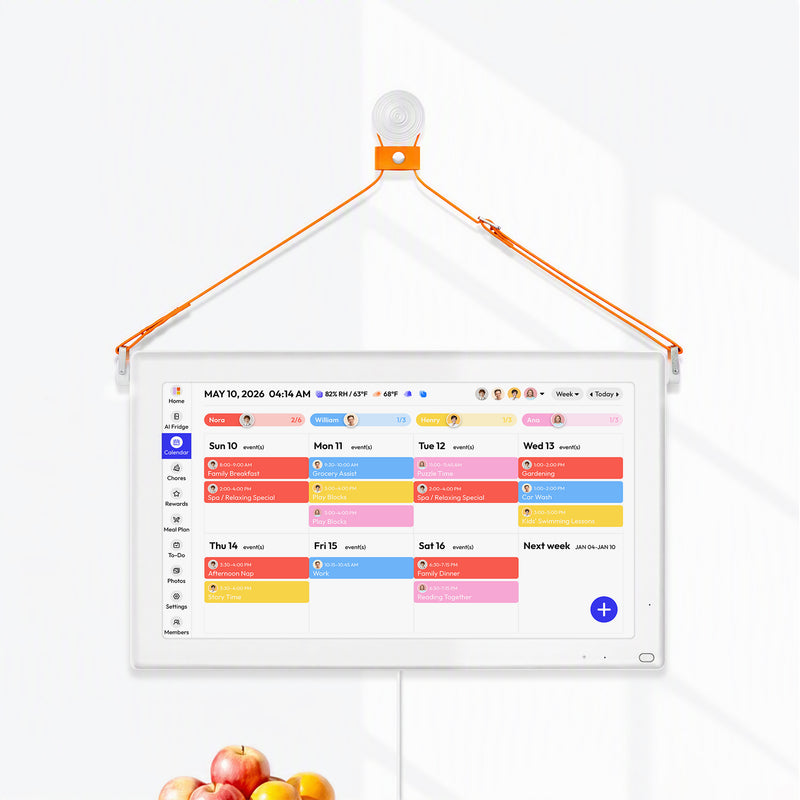
Everblog fits families who do better with one visible home base than a stack of separate apps. The setup centers on a digital wall calendar, and that matters. A kids to do list works better when it lives where everyone passes by, not inside one parent's phone.
That shared-screen approach is Everblog's real value. Tasks, schedules, meals, grocery planning, and family photos sit in the same place, so the morning routine is tied to the rest of household life instead of floating as a separate checklist. For parents trying to build household clarity and shared accountability, that is a practical difference, not a cosmetic one.
Why it works for busy families
Everblog makes the most sense if your parenting goal is coordination. The Chore Manager handles assignment and tracking, and the Rewards Tracker adds a simple incentive layer without turning the whole system into a game. I like that balance. Some families need more than a chore chart, but they do not want kids managing three different apps before school.
The meal planner and grocery list are also more useful than they sound on paper. In a real house, "clear lunchbox," "check after-school pickup," and "we're out of bread" are connected. Putting those pieces together cuts down on the parent who carries all the mental load.
Voice entry helps too. If a system is annoying to update, parents stop updating it.
Practical rule: A kids to do list should be easy for children to see and easy for adults to maintain on a busy day.
There is also a cost trade-off worth calling out. Everblog uses a one-time-purchase model rather than another monthly app subscription, and it includes over-the-air updates plus a 2-year warranty under normal use. That will appeal to families who are tired of paying recurring fees for tools that only solve one slice of the problem.
Trade-offs to know before buying
Everblog asks for commitment. It is a wall-mounted device, so it suits families who want a fixed command center in the kitchen, mudroom, or another high-traffic spot. Parents who want kids checking tasks from a phone in the car or between homes may find that limiting.
You also need to do a little homework before buying. Pricing is not published on the product page, and there are no customer reviews posted there, so it makes sense to confirm cost directly and look for outside feedback before deciding.
For the right household, though, Everblog fills a clear role in this guide's framework. It is the pick for families who want an all-in-one home command center, not a finance app and not a routine trainer. If your biggest problem is that everyone has pieces of the plan but nobody can see the whole day, this category makes a lot of sense.
Best for: families who want an all-in-one home command center, not just a chore tracker.
- Biggest strength: Calendar, chores, meals, grocery planning, and family media live together in one shared display.
- Biggest caution: It needs wall space and works best when the whole household uses that shared screen.
- Parenting philosophy fit: Household clarity and shared accountability.
2. Cozi Family Organizer

Cozi is the app I point to when a family doesn't want "another system." They want one familiar place for calendar events, shopping lists, recipes, and a basic kids to do list. You can find it at Cozi Family Organizer.
Its best feature isn't novelty. It's low resistance. Grandparents, co-parents, and less techy partners can usually figure it out without much coaching, which is a bigger win than fancy gamification if adoption is your real bottleneck.
Where Cozi fits best
Cozi works well when chores are only one piece of your family organization problem. Shared to-do lists can double as kid chore lists, and the family calendar is still the center of gravity. If your household mainly needs a calmer handoff between "what's happening today" and "what still needs doing," Cozi handles that cleanly.
The recipe box and grocery list are also practical. In real houses, tasks aren't isolated. Dinner planning affects after-school timing, and that affects when chores happen.
A simple system that everyone opens beats a feature-rich one that only one parent maintains.
Where it falls short
Cozi's chore features are basic. If you want points, reward logic, proof of completion, or a more game-like child experience, you'll hit the edges quickly. Some conveniences also sit behind Cozi Gold, so it's worth checking whether the free version gives your family enough.
This isn't the app for parents trying to build a strong reward engine or chore economy. It's for families who want broad household coordination first and task tracking second.
- Best for: mixed-tech households that need calendar plus lists in one place.
- Works well when: the main goal is reducing app sprawl.
- Not ideal when: you want deep kid motivation features or detailed chore automation.
3. S'moresUp

S'moresUp takes chores seriously. This isn't a lightweight checklist app pretending to be a family system. It's a more advanced platform with scheduling, approvals, reminders, rewards, and separate parent and child views. The product lives at S'moresUp.
If your current pain point is "my kids say they did it" or "I need recurring chores to run without constant manual setup," this tool earns a look.
Best for families who want accountability
S'moresUp gives parents more control over how chores are assigned, reviewed, and approved. That's useful for tasks that need actual verification, like cleaning a bathroom properly or finishing homework before screen time. Some families love the extra structure because it reduces arguments about whether something was really done.
It also leans into motivation. Rewards, child-facing views, and optional automation features make it more engaging than a bare checklist.
There's also a broader market reason these kinds of kid-focused digital systems keep improving. The kids educational apps market is projected to grow at a 17.4% CAGR from 2025 to 2033 to reach USD 33.5 billion, and the same market snapshot notes that 72% of parents reported children ages 2 to 8 used educational apps in a 2025 summer study, with nearly 940 million educational app downloads in 2023 (kids educational app market and usage data). That doesn't prove one chore app is better than another, but it does explain why gamified, child-facing tools have real traction.
The main downside
Depth creates setup work. S'moresUp asks more from parents at the beginning, and some families won't use half the features. Store reviews also suggest mobile experience can vary by device, so consistency may depend on what your family uses.
- Strong fit: parents who want proof, approvals, and recurring structure.
- Less ideal: families who just need a visible three-step morning list.
- Parenting philosophy fit: Accountability through systems and incentives.
4. Chore Pad

Chore Pad is a good reminder that younger kids often don't need sophistication. They need visuals, quick wins, and an interface that feels playful enough to revisit. You can see the app at Chore Pad.
This is one of the cleaner options for families in the Apple ecosystem who want a star-based reward system without turning chores into a money app.
Why younger kids respond well to it
The star system and Chore Chest setup are easy for kids to understand. Parent Mode is passcode-protected, which helps keep the system from getting "creatively edited" by children who like tapping buttons. The ability to use custom icons or photos also makes tasks clearer for early readers.
That visual clarity matters. Guidance for kids' lists consistently points back to short, understandable task sets, and visuals help children understand what they are being asked to do. If you want more ideas for digital-first chore setups, this roundup of the best chores app options is useful alongside Chore Pad.
For younger children, a kids to do list works better when the child can recognize the task before they can read the sentence.
Limitations parents should expect
Chore Pad is iOS-only. That alone rules it out for a lot of families. It also doesn't offer built-in money or allowance management, which may be perfect if you want chores separated from earnings, but limiting if your goal is financial literacy.
Its offline use is a quiet strength, though. If the tablet stays in the kitchen or family room, the routine doesn't disappear when internet quality does.
- Best for: younger kids and visual learners on iPhone or iPad.
- Big win: low learning curve with strong kid appeal.
- Main drawback: Apple-only, with no built-in finance layer.
5. Greenlight

Some families don't want chores to stand alone. They want chores connected to earning, saving, spending, and real decisions. That's where Greenlight comes in.
Greenlight is a family money app with a debit card, and its chores feature makes the most sense when money habits are part of the lesson. If your parenting philosophy is "responsibility should connect to financial literacy," this is one of the clearest options in the category.
Where Greenlight shines
The Chores tab makes it easy to assign tasks, review completion, and tie work to payments, goals, or allowances. The "up for grabs" approach can also help in households where kids want some choice instead of having every task pre-assigned.
This is a strong fit for older elementary kids, tweens, and teens who are ready to connect daily effort with money management. It turns a kids to do list into part of a broader family money system.
The bigger market context supports why tools like this keep showing up. The global to-do list apps market is projected to be worth USD 1.57 billion in 2026 and reach USD 3.67 billion by 2035, with a projected 9.5% CAGR. The same report says the market split is 56% individual users and 44% enterprise users (to-do list apps market projection). That tells you task management is mainstream. It doesn't tell you which app is best for your child, but it does explain why standalone list features aren't enough anymore. Differentiation comes from the family workflow around them.
What to watch out for
If you don't want the debit card and broader money ecosystem, Greenlight can feel like too much product. You're paying for a financial platform, not just a chore tracker. Some parents also prefer more chore granularity than money-first apps usually offer.
- Best for: families teaching earning, saving, and spending alongside chores.
- Skip it if: you want a simple free-form task app.
- Parenting philosophy fit: Financial literacy through everyday responsibility.
6. FamZoo
FamZoo is for detail-oriented parents. If Greenlight feels polished and consumer-friendly, FamZoo feels more like a flexible family banking system with chores built in. That's not a criticism. For the right family, it's exactly the point.
This is the app for parents who want to customize how allowance, rewards, penalties, approvals, and account types all work together.
The appeal of FamZoo
FamZoo supports chore checklists with approvals, rewards, and penalties. It also works with either prepaid cards or IOU accounts, which makes it more flexible for families with younger kids who aren't ready for cards yet. The Save, Spend, and Give structure can support thoughtful money conversations without forcing every child into the same setup.
If you're deciding between a finance app and a simpler chart, this comparison of allowance apps vs. chore charts helps clarify the trade-off.
One thing I like about FamZoo's positioning is that it doesn't pretend all families manage money the same way. It gives parents more knobs to turn.
Where it can feel heavy
That flexibility comes with a cost in simplicity. FamZoo feels more like a banking tool than a playful child-facing app, and some kids won't find it especially motivating on its own. Parents who just want a kids to do list with checkboxes may feel like they're configuring a system far bigger than they need.
- Good match: families that want detailed allowance logic across multiple kids.
- Less good match: parents looking for a highly visual or game-like chore experience.
- Parenting philosophy fit: Structured money management with chore accountability.
7. Brili Routines

Brili solves a different problem from most chore apps. It isn't mainly about assigning jobs. It's about helping a child move through a sequence without getting lost, stuck, or pulled off course. You can explore it at Brili Routines.
For families dealing with distracted mornings, bedtime stalling, or executive-function challenges, Brili often makes more sense than a standard kids to do list.
Why routine-focused tools matter
Brili uses Kid Mode, visual timers, prompts, and step-by-step progress to show what's next. That's powerful because many children don't struggle with willingness alone. They struggle with sequencing, transitions, and time awareness.
That gap is often under-addressed in mainstream chore advice. Coverage tends to focus on motivation, but the harder question is how to reduce friction for distractible or neurodivergent kids. A recent discussion highlighted chore motivation as especially great for neurodivergent kids and adults, yet the advice around it remained fairly surface-level (discussion highlighting chore motivation for neurodivergent users).
If you need a routine structure rather than a generic task list, a practical starting point is a strong morning checklist for kids, then building it into a timed flow.
When a child melts down halfway through a routine, the problem often isn't attitude. It's that the routine asks them to hold too many steps in their head.
The trade-off
Brili isn't trying to be a full allowance app or family command center. It's focused. That's good if routines are the pain point. It's limiting if you also want meal planning, family scheduling, and chore economy features in the same place.
Some users also report bugs across versions, and the subscription model won't appeal to everyone. Still, if your mornings run on repeated verbal prompts, Brili targets that exact stress pattern better than most apps on this list.
- Best for: ADHD-friendly, step-by-step routine support.
- Best use case: morning, homework, and bedtime flows.
- Parenting philosophy fit: Independence through structure and predictable cues.
Kids To-Do List: 7-App Comparison
| Product | Implementation complexity 🔄 | Resource & cost ⚡ | Expected outcomes 📊 | Ideal use cases 💡 | Key advantages ⭐ |
|---|---|---|---|---|---|
| Everblog | Moderate, wall-mounted hardware + app pairing; guided setup/support | One-time device purchase (price not published); needs wall space and Wi‑Fi; 2‑year warranty | Centralized schedules, chores, meals & media; clearer household coordination | Busy parents, blended households, caregivers who want a visible home hub | ⭐ All-in-one visible family hub; no subscription; gamified chores; OTA updates |
| Cozi Family Organizer | Low, account creation and app install; minimal training | Free tier with optional Cozi Gold premium; works across mobile/desktop | Consolidated calendars, lists and basic chore/to‑do tracking | Non-technical families wanting simple, cross-platform planning | ⭐ Easy to use; cross-device; integrates calendar, grocery and recipes |
| S'moresUp | Medium–High, detailed chore rules, approvals and integrations to configure | Mobile app (freemium/premium likely); time investment to set up automations | Strong chore compliance via scheduling, approvals and rewards | Families wanting automation, approvals/proof flows and child-facing motivation | ⭐ Advanced scheduling/approval flows; gamification; third‑party integrations |
| Chore Pad | Low, install on iOS and configure children/chores | iOS-only app; offline capable; typically one-time purchase | Visual, star-based motivation and simple task tracking for young kids | Families with younger children in the Apple ecosystem | ⭐ Highly visual star rewards; parent passcode controls; offline use |
| Greenlight | Medium, account and card setup plus chore-to-pay linking | Subscription plans and debit card; requires verification and ongoing fees | Teaches financial literacy by tying chores to allowance, saving and spending | Families who want chores directly connected to money and allowance | ⭐ Seamless chores-to-pay flow; polished family card app and money tools |
| FamZoo | Medium–High, configure IOU/prepaid card accounts and granular allowance rules | Subscription with transparent family pricing; supports physical or virtual cards | Detailed allowance control, split accounts and long-term money habits | Families needing configurable family-bank features without per‑kid fees | ⭐ Flexible money flows (Save/Spend/Give), approvals and family-wide pricing |
| Brili Routines | Low–Medium, build step-by-step routines and timers per child | Subscription required for full features; smartphone/tablet needed | Improved routine adherence, independence and reduced parental prompting | Families seeking guided morning/bedtime/homework routines, esp. neurodiverse kids | ⭐ Visual timers and step guidance; designed for ADHD/executive‑function support |
How to Make Any Kids To Do List Stick
Monday at 7:18 a.m., one child is looking for a shoe, another is arguing about whose turn it is to feed the dog, and the list you carefully made yesterday might as well not exist. That is usually the main problem. Most kids do not ignore a to do list because they are lazy. They ignore it because the system is too long, too hidden, too vague, or too advanced for their age.
A list sticks when it matches your parenting goal and your child's current skill level. Families trying to teach money habits need a different setup than families trying to get out the door without ten reminders. If your goal is financial literacy, tools like Greenlight or FamZoo make sense because chores connect to allowance, saving, and spending. If your goal is routine independence, Brili is built for repeated steps and time awareness. If your goal is one shared household command center, Everblog fits better because the list lives alongside the rest of family life instead of in a separate app kids forget to open.
The practical rule is simple. Start smaller than you think you need.
A short list of clear tasks beats an ambitious list every time. Three to five jobs a child can finish creates momentum. Fifteen tasks create avoidance. I have found that parents often overbuild on day one, then assume the child lacks follow-through when the underlying issue is that the setup asks for too much planning, memory, and self-control.
A few habits make almost any system work better:
- Keep tasks concrete: "Put shoes in the basket" works better than "clean up."
- Put the list where the child already looks: on a kitchen display, family tablet, fridge, or the device used during routines.
- Review at the same time each day: before school, after school, or right after dinner.
- Give kids some control: let them help name tasks, pick icons, or choose the order.
- Match rewards to the tool: stars work for younger kids, allowance works for money-focused families, and simple verbal recognition still matters.
Parents also forget the trade-off between flexibility and consistency. A highly customizable app can be great for older kids or complex households, but younger children usually do better with fewer choices and more repetition. Visual systems like Chore Pad can help early readers. Money-based systems can motivate some kids and backfire with others if every helpful act starts feeling transactional. Routine apps reduce prompting, but they work best when adults protect the routine instead of changing it every other day.
Children's schedules are already crowded with school, activities, homework, and basic daily transitions. A good kids to do list reduces friction. It does not pile on extra friction in the name of teaching responsibility.
The homes that get the most out of these tools tend to do the same few things well. They make expectations visible. They define "done" clearly. They reset quickly after a missed day instead of turning the system into a lecture.
That is what makes a list stick. Not the fanciest app. A realistic setup, used consistently, for the reason your family needs it.


