

The family calendar usually stops working long before anyone admits it. The paper version gets crowded with arrows, crossed-out dentist appointments, and a soccer practice scribbled into a corner where nobody sees it. The fridge version starts strong, then slowly disappears under permission slips, takeout menus, and that one sticky note reminding someone to bring cupcakes on Thursday.
That's why so many parents end up looking for magnetic calendar numbers. They're simple, visible, and easy to update without redoing the whole board. You move a number, wipe a note, reset the month, and the system keeps going. It feels small, but that kind of low-friction routine matters when mornings are busy and everyone needs the same information fast.
Why Your Fridge Calendar Needs an Upgrade
A lot of family calendars fail for one reason. They ask too much from tired people.
By the time dinner is over, lunch boxes are half unpacked, and someone remembers a form that has to be signed by morning, nobody wants to rewrite a paper calendar. Most families need something they can glance at from across the kitchen and update in seconds. That's where magnetic calendar numbers start to earn their place.

The before and after on a real fridge
The messy version looks familiar. A paper month view hangs crooked. One child's field trip is written in pen, another child's recital is in pencil, and the grocery list is covering half the weekend. You can tell the family is trying. You can also tell the system is losing.
Magnetic calendar numbers help because they make the board reusable and obvious. The date stands out. The grid stays clean. Kids can participate because moving a number is easier than writing neatly in a tiny square. Parents can reset the month without starting from scratch.
Practical rule: If a calendar takes more than a few seconds to update, your family will stop updating it.
Why physical tools still work
There's something useful about a calendar you can touch. It turns planning into a visible household habit instead of a private phone app. That's one reason decorative wall calendars still appeal to people who want function and personality together. If you like planning tools that also look good in a shared space, unique music wall calendars show how much easier it is to keep a system in view when it fits your home.
For kitchens that already run on magnets, a fridge-based setup often makes more sense than a wall planner in a hallway. A magnetic whiteboard calendar for the fridge keeps the planning surface where your family already gathers, which is usually the true test of whether a calendar gets used or ignored.
Understanding Magnetic Calendar Numbers
Magnetic calendar numbers are the Lego bricks of your schedule. You don't rebuild the whole system each month. You just move the pieces.
That modular quality is what makes them practical for family life. A plain board, fridge, or magnetic whiteboard becomes a working calendar because the pieces can be rearranged as the month changes. The board stays put. The dates change. That's the whole appeal.

What comes in a typical set
Most families start with the basics and add from there.
- Day numbers usually run through the full month range, so you can reset the board without buying refills.
- Month and weekday labels make the board legible at a glance.
- Icons or markers help flag birthdays, school closures, travel days, or appointments.
- Dry-erase compatibility matters if you want to add notes without covering the board in separate labels.
Some sets are minimal and clean. Others lean decorative, classroom-style, or kid-focused. Neither approach is automatically better. A family with older kids may want neutral numbers and lots of writing space. A family with younger children may benefit from larger, more playful pieces that invite hands-on use.
Why they exist at all
Magnetic calendar numbers didn't appear out of nowhere. They became practical as calendars shifted from fixed, engraved formats to reusable planning tools in classrooms and offices. A key milestone behind that logic was the Julian day number system, which assigns a single count to every day and helped standardize modular date displays and moveable calendar components, as explained in this calendar history talk on Julian day numbers.
That history matters because it explains why movable date pieces feel so intuitive. They turn calendar math into something visible. Instead of thinking abstractly about what date lands where, you physically place the date where it belongs.
Magnetic numbers work because they reduce calendar management to one easy action. Move the piece, and the board makes sense again.
How to Choose the Best Magnetic Numbers for Your Family
Pretty numbers aren't enough. In a family kitchen, magnetic calendar numbers need to survive slammed doors, sticky fingers, rushed updates, and curious toddlers. If they slide, chip, peel, or break apart, they become clutter instead of a system.
The first filter should be safety. The second should be durability. Style comes after that.

Start with child safety
This isn't optional in a home with young children. Independent guidance highlighted by the U.S. Consumer Product Safety Commission warns that small, powerful magnets can cause serious internal injuries if swallowed, and magnet-related incidents remain a recognized hazard in homes and classrooms, as covered in this CPSC-related magnet safety video.
That changes how I'd shop for a family board.
- Avoid loose, tiny pieces if you have babies, toddlers, or kids who still mouth objects.
- Choose larger pieces that are easy to spot if one goes missing.
- Look for single-piece construction rather than decorative layers that can peel apart.
- Skip novelty sets that prioritize looks over secure attachment.
If you're organizing a kitchen with kids, use the same mindset you'd use for lunch labels, bottle labels, or food tracking tools. Practical products tend to last longer and create fewer little parts to manage. That's also why some parents like tools such as effective labels for food freshness. They solve a household visibility problem without adding fragile clutter.
Material trade-offs that matter
Different materials solve different problems. Here's the practical comparison.
| Material | What works | What usually doesn't |
|---|---|---|
| Wood | Solid feel, easy to grip, often more durable in daily handling | Can be bulky, edges may wear, some decorative finishes chip |
| Plastic | Bright, lightweight, easy to wipe | Can crack or feel slippery, some cheaper sets separate from backing |
| Foam | Softer feel, easier for young kids to handle | Can tear, compress, or look worn faster in a busy kitchen |
Material isn't just about appearance. It affects how often pieces get dropped, how easy they are to clean, and whether children can handle them without damage.
Later in the section, it helps to see one style of family planner in motion:
Size and grip decide whether the board gets used
One product category uses magnets about the size of a dime for calendars around 12 x 16 inches, while another offers 18 mm and 20 mm number magnets. That tells you the main trade-off. Smaller pieces increase display density. Larger pieces improve readability and make daily handling easier, according to these calendar label sizing examples.
For most families, tiny pieces look neat on day one and become annoying by week three. If kids will touch the board, or if the calendar hangs a little higher than eye level, larger numbers usually work better.
Pay attention to hold and surface
Some commercial magnetic date-number sets use 30 mil thick flexible magnet stock with a dry-erase or damp-erase surface. One listed specification includes 0.7 lb/in² adhering strength on a flat surface and a service temperature range of -15°F to +160°F, as shown on this magnetic date-number product specification.
That tells you two useful things. First, the magnet needs enough pull to stay put on a vertical steel surface. Second, you still want it repositionable for monthly updates. Numbers that grip too weakly slide. Numbers that are too awkward to move also become frustrating.
A good family set should pass three tests in the kitchen:
- Door-slam test. The numbers shouldn't drift when the fridge closes hard.
- Wipe test. The surface should clean up without smearing into a gray haze.
- Kid-hand test. A child should be able to move a number without bending or damaging it.
For younger households, I'd rather have a slightly larger, plainer set that stays safe and readable than a beautiful one that creates stress.
For more family-specific setup ideas, a children's magnetic calendar guide can help you think through age-appropriate layouts and routines.
Beyond Dates Creative Ways to Use Magnetic Numbers
A magnetic board becomes more useful when it stops being only a date keeper. The strongest family systems use the numbers as signals, cues, and routines.
One reason this format lasts is that magnetic calendar magnets often remain in place for a full 12 months or more, and many retail sets are packaged as 31-piece day-number sets so they can cover the longest monthly layout, according to this calendar magnet overview. That reusability is what makes creative uses worth setting up.
Color code the week
Assign a color or style to each family member's important items. One child gets blue markers for activities, another gets green, and adult commitments stay neutral. You don't need a complicated legend. You just need enough consistency that the board answers, “Who has something today?” in one glance.
This works especially well on Sundays. Reset the week, place the visible commitments first, then fill in school extras and transport notes around them.
Turn waiting into a countdown
Kids handle time better when they can see it.
Use magnetic calendar numbers to count down to birthdays, vacations, school breaks, or visiting relatives. Mark the event square, then let your child move a separate marker each morning as the date gets closer. That gives them a concrete routine and cuts down on the constant “how many days left?” questions.
Countdowns work best when the child gets one small daily job. Moving a marker is enough.
Build simple responsibility patterns
Numbers can do chore duty too. A family doesn't always need a separate chart if the calendar already lives in the kitchen.
Try patterns like these:
- Even and odd days for rotating chores between siblings.
- Specific numbered dates for recurring tasks like changing bedding or returning library books.
- Number clusters to batch routines, such as prep-heavy school days or after-school activity nights.
A child doesn't have to understand the whole month to follow a visible rule like “trash goes out on even-numbered days” or “plant watering happens on the dates with a sticker.”
Use the board to teach planning
This is the quieter benefit. Kids learn that calendars aren't decoration. They're tools.
A child who helps move the date starts noticing patterns. School closes on certain days. Activities repeat. Deadlines arrive whether anyone feels ready or not. That kind of visible planning skill carries over into homework, time awareness, and family cooperation.
DIY Magnetic Numbers and How to Care for Them
You don't need a craft room to make useful magnetic calendar numbers. You need a simple system that looks clear from the kitchen and can survive regular handling.
A practical DIY version is enough for many families.
A no-fuss DIY setup
Start with a printable number template, adhesive magnet sheets, and either self-laminating pouches or another wipeable cover. Print the numbers large enough to read easily from a few steps away. Cut them cleanly, seal the front so the surface is easier to wipe, and attach the magnetic backing.
If the board is for younger children, make the pieces larger than you think you need. Bigger pieces are easier to grasp, easier to spot, and less likely to disappear into the house.
A good DIY set usually includes:
- Numbers for the full month range
- A few blank pieces for notes or symbols
- Month labels if you want the board to reset cleanly
- One storage spot so extra pieces don't scatter
How to keep them from wearing out
Commercial sets are often made from 30 mil thick flexible magnet stock with a dry-erase or damp-erase surface and a service temperature range of -15°F to +160°F, which is one reason surface care matters over time, as described in the earlier product specification.
What helps most is boring maintenance.
- Use the right marker for the surface you chose. If it's dry-erase, treat it like dry-erase.
- Wipe regularly instead of letting writing sit until it ghosts.
- Store extra pieces together in a small tin, envelope, or dedicated container near the board.
- Check corners and backing every so often if you made the set yourself.
A homemade calendar only feels organized if the spare pieces have a home.
When Your Family Outgrows Physical Magnets
Magnetic calendar numbers are excellent for visibility. They are not excellent at everything else.
They can't update themselves while you're in the school pickup line. They can't remind a co-parent about a schedule change when nobody is standing in the kitchen. And they often turn one adult into the unpaid calendar manager, because someone has to remember to move the numbers, erase the notes, and keep the whole board current.
That's usually the point where a physical system starts feeling less like support and more like maintenance.
The limits you eventually hit
The biggest issue isn't that magnets stop working. It's that family logistics expand past what a manual board can comfortably hold.
A physical board struggles when you need:
- Remote updates while family members are out
- Automatic reminders instead of hoping someone checks the fridge
- Shared accountability for chores and routines
- One place for meals, grocery planning, appointments, and household tasks
There's also a readability limit. Physical magnetic date systems come in compact formats, with some magnets about the size of a dime and other lines offering 18 mm and 20 mm pieces. That creates a trade-off between dense layouts and easy reading. Digital displays solve that with scalable, clearer text, as noted in the earlier sizing reference and reflected in this digital family calendar approach.

The cleaner next step
For many families, the next step isn't abandoning the central calendar idea. It's upgrading the format.
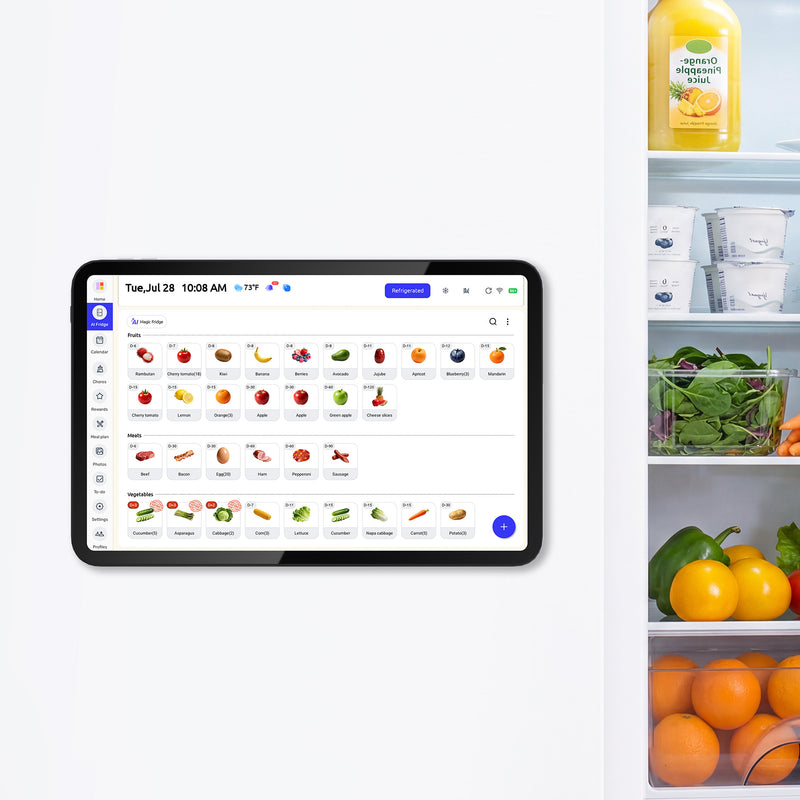
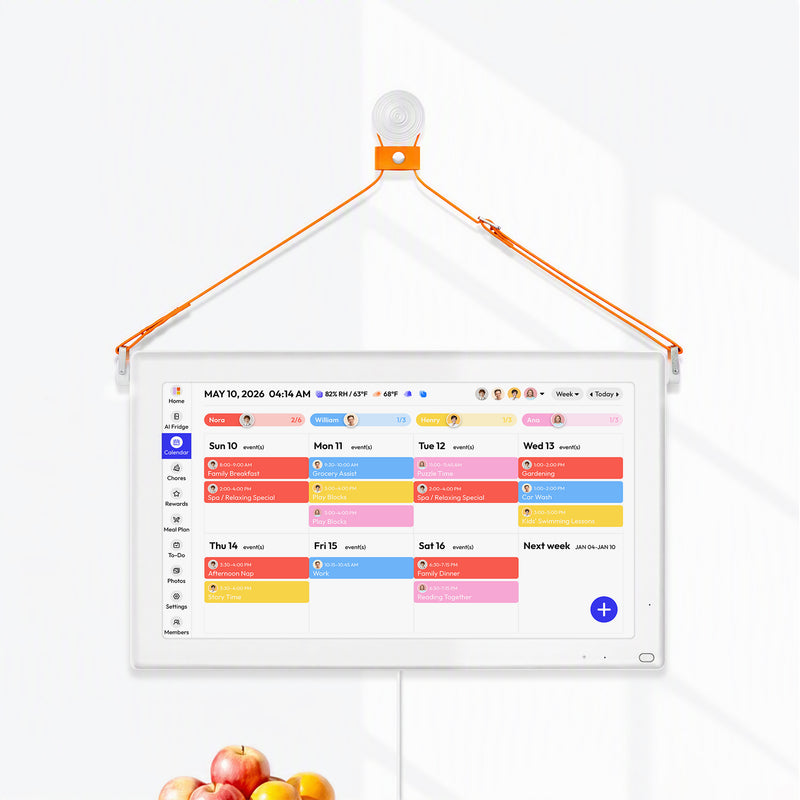
A digital wall calendar can keep the same shared, visible role as the fridge board while removing the parts that depend on one person manually maintaining everything. That's where a tool like Everblog fits. It's a 21.5-inch digital family wall calendar designed to bring schedules, chores, meals, and household planning into one display, with app syncing, reminders, voice entry, and a shared screen that stays visible in the home.
That solves a different set of problems than magnetic numbers solve.
Magnetic numbers are great for tactile simplicity. A digital display works better when your household needs live updates, fewer loose parts, safer child-friendly interaction, and less wiping, sorting, and resetting. For modern families, that's often the natural evolution of the same goal: one calm, visible place where everyone can see what's happening.
If your fridge calendar has turned into a maintenance project, it may be time to move from movable magnets to a shared digital hub. Everblog gives families one screen for schedules, chores, meals, reminders, and everyday coordination, without the loose pieces, clutter, or constant manual resets.


