






When your child falls apart right after school, it often means they spent the day holding themselves together and are finally releasing that strain at home. The most helpful response is usually less pressure, more predictability, and a gentler transition before homework, chores, or hard conversations.
Does your child walk in the door at 4:00 PM, snap at everyone, cry over the wrong snack, or fight with a sibling even though school said the day was fine? That mismatch is real, and it shows up most often in children who have been working hard all day to manage behavior, emotions, noise, social pressure, and change. You can make afternoons calmer by understanding what is happening, setting up a better landing routine, and protecting the first stretch of time after pickup.
What It Is
One pediatric source describes a post-school breakdown that happens when a child uses intense self-control during the school day and then unravels once they reach the safety of home. That term is useful because it captures the pattern clearly, but it is not a formal medical diagnosis.
In plain language, your child may be "good" all day by staying quiet, following directions, tolerating noise, handling transitions, masking discomfort, and keeping big feelings inside. Then the front door opens, the backpack drops, and the child who looked fine at school suddenly screams, refuses, argues, cries, or shuts down. In many households, the hardest part is not the first outburst but the chain reaction that follows: a parent asks too many questions, homework gets mentioned too soon, a sibling answers back, and the whole kitchen goes from normal to combustible in under two minutes.

Why Home Gets the Hardest Behavior
Many parents take it personally when a child saves the meltdown for family. Usually, it means the opposite of rejection. Home is where the nervous system expects safety, so it is often the first place a child stops holding everything in.
That is also why a positive teacher report does not cancel out a rough afternoon. The same pediatric source notes that when a child looks well behaved at school but collapses later, it can mean the child spent more energy coping than other children did. This pattern can show up in any child, but it appears especially often in children with anxiety, high sensitivity, executive functioning challenges, and sensory processing differences.
Why 4:00 PM Feels So Hard
A school day asks a lot from a child, even one who likes school. There is noise, social reading, waiting, transitions, cafeteria chaos, bright lights, adult expectations, and constant self-monitoring. By late afternoon, many children are low on fuel and low on flexibility.
The timing matters more than parents sometimes realize. If school ends at 3:15 PM and dinner is at 6:00 PM, the family has only 165 minutes to get from pickup to evening. When that whole stretch is packed with questions, activities, homework, and chores, it treats every minute as equally usable. They are not. The first part of the afternoon is often recovery time, and families who plan for that usually get less conflict later.
What It Can Look Like
After-school restraint collapse does not look the same in every child. One child becomes loud and oppositional. Another gets clingy, weepy, or impossible to please. Another picks fights with siblings, refuses instructions, or seems unable to start homework even when they normally can. Older children may look less explosive and more withdrawn, irritated, or unreachable.
That difference matters because the goal is not to force one "right" after-school mood. The goal is to notice your child's pattern and stop mistaking depletion for disrespect.
What To Do Between Pickup and Dinner
Lower Demands First
The fastest way to make 4:00 PM worse is to pile on demands. Right after pickup, reduce questions and requests and replace "How was your day?" or "Did you finish your work?" with something simpler and safer, like "I'm glad you're home" or "Let's get settled first."
This does not mean ignoring your child. It means removing one more performance moment. A child who has been performing competence all day may not be able to narrate feelings, remember details, and make good choices the second they hit the car or kitchen. Often, the better conversation comes later, after the body settles.
Meet the Body Before the Behavior
Food, water, restroom needs, and rest are not side issues. They are often part of the main issue. The same pediatric source recommends meeting basic regulation needs first, which is a practical way of saying that a hungry, overstimulated child is not ready for the hardest task of the day.
This is where many families get traction quickly. Keep one easy snack routine, not five new decisions. Have water ready. Let shoes come off. Delay chores and homework until your child has had a little room to exhale. If your child melts down daily over the first request at home, try moving that request later for one week and watch what changes.

Build a Landing Zone, Not a Second Shift
A predictable routine works because it removes uncertainty. After school should feel less like a second job and more like a landing sequence. The same pediatric source recommends a predictable after-school transition routine with quiet time, snacks, and calming activities such as reading or drawing.
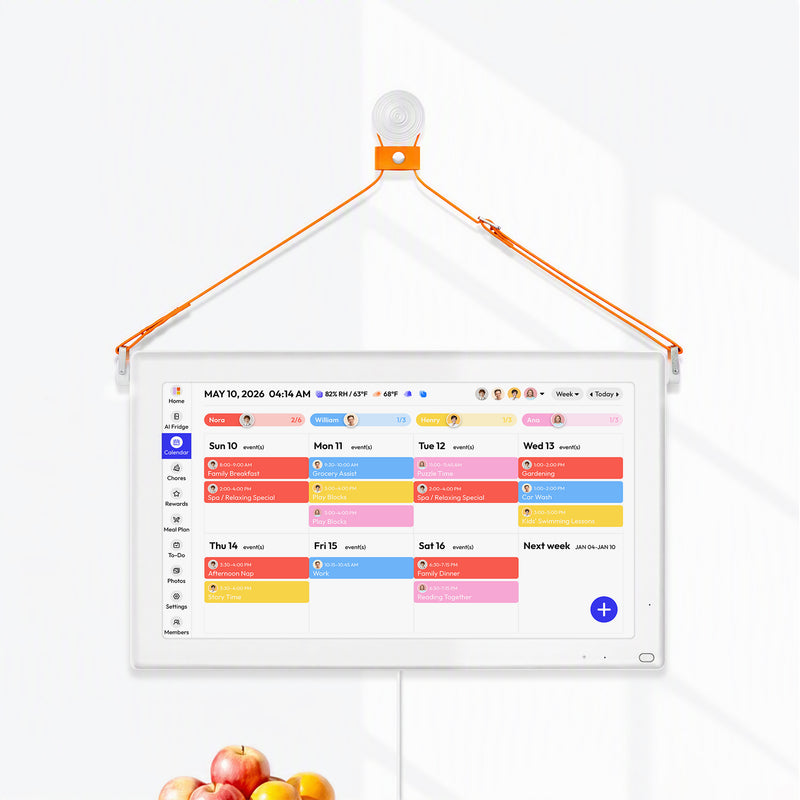
A landing zone can be simple. It might be one chair, one blanket, one basket of books or fidgets, soft lighting, and a snack bin in the same spot every day. The point is not to create a picture-perfect calming corner. The point is to give the child's system fewer surprises. If your home uses a digital family calendar or command center, this is a good place to use it: mark a short reset block after school so every caregiver sees the same plan and does not accidentally turn pickup into a rapid-fire interview.
What Usually Helps and What Can Backfire
After-school move |
Why it can help |
What to watch |
Lowers pressure and meets basic needs |
It can feel slow if the evening is overscheduled |
|
Immediate homework |
Protects evening time on paper |
It often collides with low patience and low fuel |
Many questions at pickup |
Shows interest and care |
It can feel like one more demand to perform |
Low-stimulation retreat space |
Gives the child a safe place to reset |
It only works if it is consistent and not used as punishment |
Use Your Family System To Prevent the Chain Reaction
Put Recovery on the Calendar
A calm afternoon rarely happens by accident. It usually happens because the family decided ahead of time what matters most in that first stretch after school. If soccer starts at 5:15 PM and you leave at 4:45 PM, the answer may not be to push through. It may be protecting a brief snack-and-reset window, packing gear the night before, and postponing nonessential tasks.
This is where household organization is not just nice to have. It directly protects family harmony. When the calendar shows pickup, snack, downtime, homework, and departure in plain view, everyone can stop negotiating in the hardest moment. Predictability helps children regulate, and it helps adults stay consistent.
Keep Caregivers on One Script
The adult response matters almost as much as the child routine. One parent who offers calm space while another immediately pushes homework creates mixed signals and more stress. Pick a shared script. It can be as simple as: arrive, settle, snack, reconnect, then ask.
Parents also need their own regulation plan. One parent-focused source frames need-based self-care as a practical survival tool, not an indulgence. That matters here because a depleted parent and a depleted child often escalate each other. If 4:00 PM is your hardest hour, simplify dinner, prep snacks in advance, and protect one small reset for yourself too.
When To Ask for More Support
When the Pattern Suggests a Bigger Load
Sometimes after-school restraint collapse is occasional and improves with routine. Sometimes it is a sign that the school day is costing your child too much. If the crash happens most school days, if your child is using extraordinary effort to look "fine" at school, or if anxiety, sensory overload, or attention struggles seem to be part of the picture, it is worth looking deeper.
The same pediatric source suggests that individualized breaks during the day and school collaboration can reduce the strain children carry home, and it notes that some students may benefit from exploring a 504 Plan when eligible. The goal is not to make home manage an impossible school day more politely. The goal is to reduce the load in both places.
Where Families Can Get Practical Help
When families need more than home routines, support should be concrete. Parent information and resources can be a national starting point for understanding rights, services, and school-support systems.
Peer support also matters more than many families expect. Free parent support groups can give parents a place to compare notes, reduce isolation, and hear what actually works in real homes. For parents who want confidential encouragement and practical feedback from other parents, virtual or community support groups can be a useful next step. If your child has broader disability, behavioral, or mental health support needs, state-level family resource hubs can also help families find referrals and school-navigation support.
A Gentler 4:00 PM
Your child is not choosing the worst possible moment to make family life hard. More often, that 4:00 PM crash is the moment their body stops pretending it is fine. When you lower demands, protect a predictable reset, and organize the afternoon around recovery instead of immediate productivity, the whole household usually gets more connection and less chaos.


