


Dopamine menu planning turns meal decisions into a visible, low-pressure set of choices matched to your real energy level, so eating becomes easier before hunger, stress, or decision fatigue takes over.
Standing in front of the fridge at 7:18 PM with no appetite for cooking and no clear plan can feel like a household emergency, especially when everyone still needs to eat. A simple meal menu organized by effort can reduce the next decision to one practical question: “What kind of energy do I have right now?” This approach helps you build a calm, flexible food system for tired days, busy family nights, and ADHD-brain evenings.
What Dopamine Menu Planning Means
A dopamine menu is a planned set of rewarding options you choose before your motivation drops, so you are not relying on willpower in the hardest moment. For meals, that means creating a visible menu of food choices that feel satisfying, doable, and low-friction instead of starting from a blank kitchen at dinnertime.
The word “dopamine” matters because dopamine is involved in reward, motivation, attention, and follow-through. For adults with ADHD, the practical point is not to chase a perfect “dopamine diet.” It is to make nourishment feel achievable enough that your brain can start.
A meal dopamine menu borrows the restaurant-style categories often used for dopamine menus, but it applies them to food effort. Your “starters” are quick bites that help you begin eating. Your “mains” are meals that feel complete. Your “sides” are sensory or routine supports that make cooking less boring. Your “desserts” are foods or habits you enjoy but may not want to become the whole plan.

Why ADHD Makes Meals Feel Harder Than They “Should”
Meal planning asks for exactly the skills ADHD can strain: starting, sequencing, remembering ingredients, tolerating cleanup, noticing hunger early, and switching from one task to another. Low-effort ADHD-friendly meals work best when they reduce prep time, cleanup, and the number of decisions required.
This is why “just meal prep on Sunday” often fails in real homes. Some adults love leftovers; others lose interest after one serving or dislike reheated textures. Some families can batch-cook calmly; others need a system that survives soccer practice, medication appetite shifts, work stress, sensory preferences, and a sink already full of dishes.
The goal is not culinary discipline. The goal is repeatable access to food before you hit the point where takeout, cereal, or skipping dinner becomes the only possible answer.
Build Your Menu Around Energy, Not Morality
The most useful ADHD meal system sorts meals by effort level. This removes shame from the decision. A frozen burrito is not a failure; it is a no-energy meal. A rice bowl with rotisserie chicken is not “lazy”; it is a low-effort main that gets food into a body that needs it.
Energy level |
What it means |
Real-world meal example |
No-energy |
No cooking, no chopping, almost no cleanup |
Greek yogurt cup with granola, protein shake, cheese and crackers, frozen entree |
Low-energy |
Two or three ingredients, mostly assembled |
Tortilla with deli turkey and greens, microwave rice with canned beans and salsa |
Medium-energy |
Simple cooking with few steps |
Sheet-pan chicken strips and frozen vegetables, pasta with jarred sauce |
Higher-energy |
More prep, more cleanup, more attention |
Soup from scratch, baked salmon with sides, homemade breakfast burritos |

A zero-dish meal can be a legitimate tool for ADHD-related overwhelm because it removes pots, pans, cutting boards, and cleanup from the equation. In a family kitchen, that might mean keeping protein boxes, microwave grain cups, single-serve nut butter, pre-washed fruit, and frozen meals in predictable places.
What to Put on an ADHD Meal Dopamine Menu
Starters: Food That Helps You Begin
Starters are tiny food decisions that lower the barrier to eating. If you often forget lunch and then crash at 4:00 PM, a starter might be a banana with peanut butter, a yogurt drink, a handful of trail mix, or toast with cheese.
The purpose is momentum. Once your blood sugar and stress level are less chaotic, dinner planning becomes less dramatic. Healthy dopamine levels are associated with feeling more motivated, alert, and focused, but the meal-planning approach stays practical: begin with something easy enough to actually happen.
Mains: Repeatable Meals You Can Trust
Mains should be meals you can make on autopilot. A good family approach might include breakfast-for-dinner eggs, microwave rice bowls, rotisserie chicken wraps, frozen ravioli with jarred sauce, tuna melts, slow-cooker chili, or bagged salad with pre-cooked protein.
Keep the list short. Ten to fifteen dependable meals is more useful than a giant recipe folder you never open. The best mains are familiar, forgiving, and easy to adjust for children, partners, or sensory needs. If one child wants plain rice and another wants salsa, the rice bowl still works.
Sides: Supports That Make the Task Less Painful
A side is not always food. Dopamine-menu side dishes can be podcasts, music, timers, body doubling, or small challenges that make a boring task more stimulating.
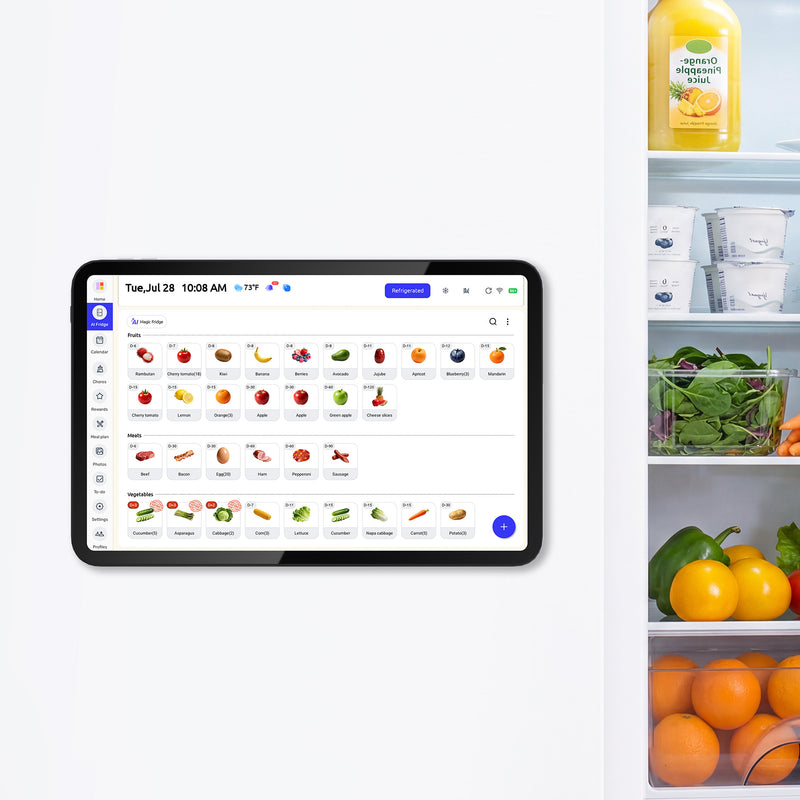
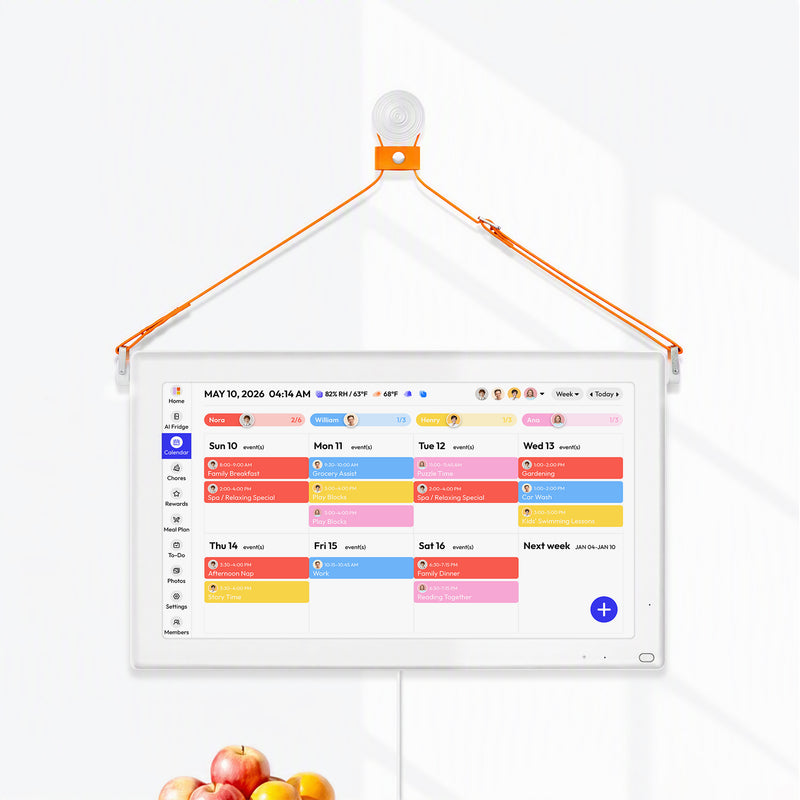
For meal planning, a side might be turning on a favorite playlist while unloading the dishwasher, using a 10-minute timer to prep tomorrow’s lunch, or asking a partner to sit at the counter while you assemble dinner. In a busy household, a digital fridge calendar can also act as a side: the meal plan stays visible without asking anyone to open an app or remember what was decided yesterday.

Desserts: Enjoyable, but Better With Boundaries
Desserts are not banned. They are the things that feel good fast but can leave you less fed, less rested, or more stuck when they take over. That might be scrolling while hungry, grazing on sweets instead of dinner, or ordering delivery every night because the kitchen plan is invisible.
The calmer approach is to plan for pleasure on purpose. If Friday is pizza and a show, it belongs on the menu. If social media is a post-dinner break, set it after food instead of letting it replace food.
Use the Fridge as the Family Command Center
A meal dopamine menu works better when it is visible. ADHD-friendly systems usually fail when they live inside a notebook, a forgotten app, or someone else’s memory. The refrigerator is already where food decisions happen, which makes it a natural home for the plan.
A smart digital fridge calendar can show the week’s meals, grocery reminders, sports practices, late work nights, and who is responsible for dinner. The advantage over a phone calendar is shared visibility: a partner, teen, grandparent, or babysitter can see the same plan without asking the household organizer to repeat it.

For a low-tech approach, use a magnetic whiteboard with four sections: no-energy, low-energy, medium-energy, and higher-energy. For a digital approach, color-code meals by effort and add reminders like “move chicken to fridge,” “use spinach first,” or “freezer meal night.” The point is not to make the calendar fancy. The point is to remove one more decision from the hardest part of the day.
Food Choices That Support Focus Without Overpromising
Food cannot cure ADHD, and dopamine menus are not medical treatment. Still, meal structure can support steadier energy. Protein-rich foods contain nutrients involved in dopamine production, and practical ADHD meal planning often works better when meals include protein, carbohydrates, fat, and produce when possible.
That could look like oatmeal with nuts, eggs with toast, a turkey wrap with fruit, salmon from a pouch over microwave rice, or yogurt with berries and granola. It does not have to be perfect. On a hard day, a frozen entree plus baby carrots is more useful than an ideal recipe you cannot start.
The evidence calls for caution here. Eating more protein is generally sensible for satiety and steadier energy, but it should not be treated as a guaranteed way to directly change brain dopamine in a predictable way. If you have diabetes, an eating disorder history, food allergies, medication-related appetite changes, or major weight concerns, a registered dietitian or clinician can help personalize the plan.
Pros and Cons of Dopamine Menu Meal Planning
Pros |
Cons |
Reduces dinner decision fatigue |
Requires a small setup session |
Makes low-energy meals feel acceptable |
Can become too complicated if you add too many choices |
Helps the whole household see the plan |
Some planned meals may stop sounding appealing |
Supports grocery lists and fewer duplicate buys |
Needs occasional refreshing so the menu does not get stale |
Builds in flexibility for takeout, leftovers, and real life |
Does not replace medical care, therapy, or nutrition support |
The strongest approach is flexible enough to survive a rough Tuesday. If the menu says chili but everyone is depleted, move chili to tomorrow and use a no-energy meal tonight. A system that bends is more family-friendly than one that breaks.
A Simple Setup for This Week
Start with one calm 20-minute session, preferably when you are not hungry. Write down three no-energy meals, three low-energy meals, three medium-energy meals, and two higher-energy meals you genuinely like. Add one rescue dinner that requires no apology, such as frozen pizza, cereal with milk and fruit, or takeout from a place everyone tolerates.
Then place those meals where the household can see them. If you use a digital fridge calendar, add meals to the week beside real schedule pressure. A late meeting night gets a no-energy meal. A quieter Sunday can hold a higher-energy option. A sports-practice night gets something handheld or reheatable.
Finally, stock for the menu rather than for an imaginary self. If pre-diced onion costs more but helps you actually cook, it may save money compared with unused groceries and last-minute delivery. If disposable plates prevent a skipped meal during burnout, use them strategically and move on.
FAQ
Is a dopamine menu the same as meal planning?
Not exactly. Meal planning decides what you might eat. A dopamine menu also considers motivation, reward, effort, and timing, which makes it especially useful when ADHD affects task initiation.
Should every meal be balanced?
Balanced meals are helpful, but “fed first” is the better rule during low-energy moments. When possible, add protein, carbs, fat, and produce. When not possible, eating something is still meaningful.
How often should I update the menu?
Update it when the food starts feeling invisible or annoying. For many households, a quick refresh every two to four weeks keeps the plan useful without turning it into another chore.
A good ADHD meal system should feel like a steadier kitchen, not a stricter one. Put the choices where your family already gathers, keep the effort levels honest, and let the plan protect connection at the end of the day instead of turning dinner into another test.


