
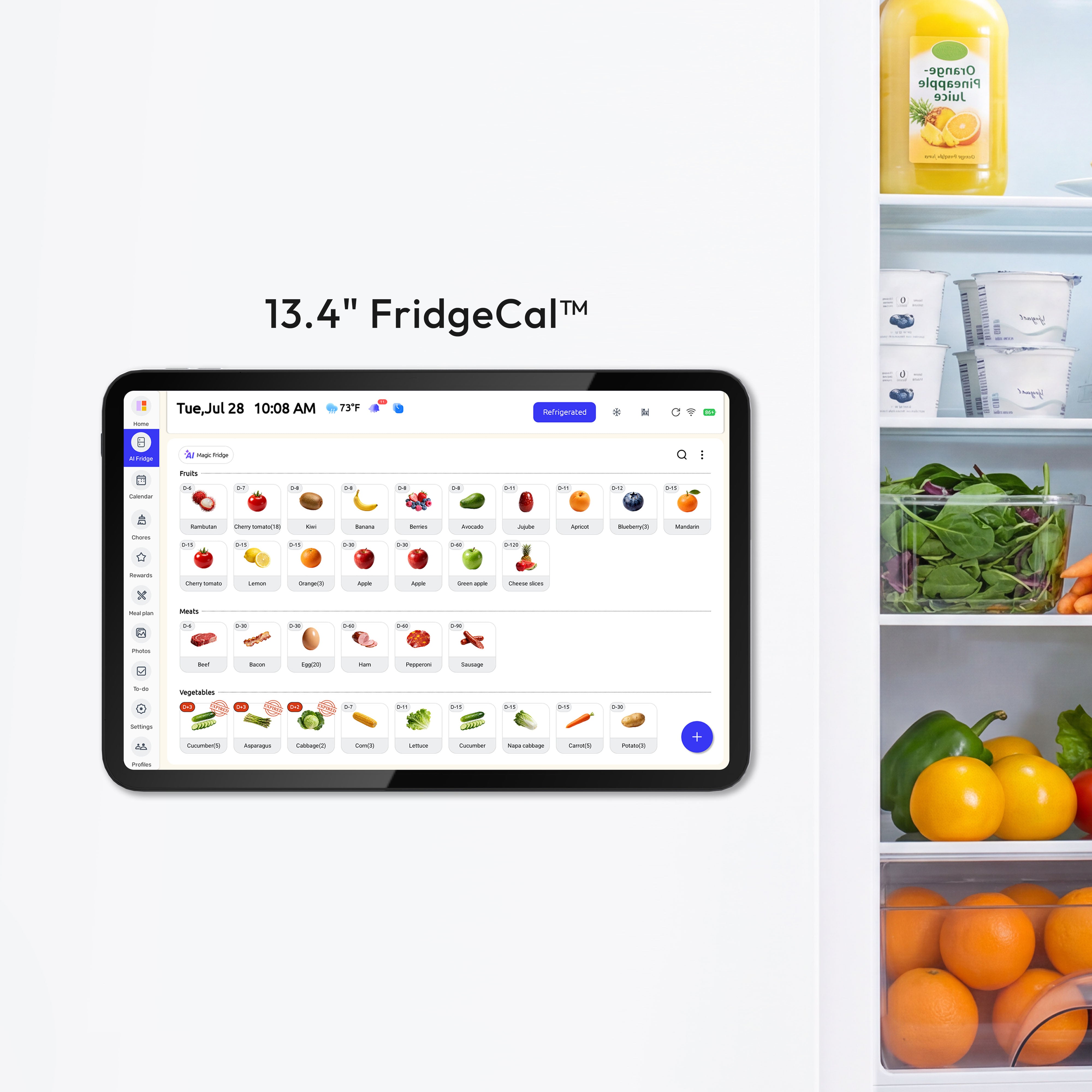
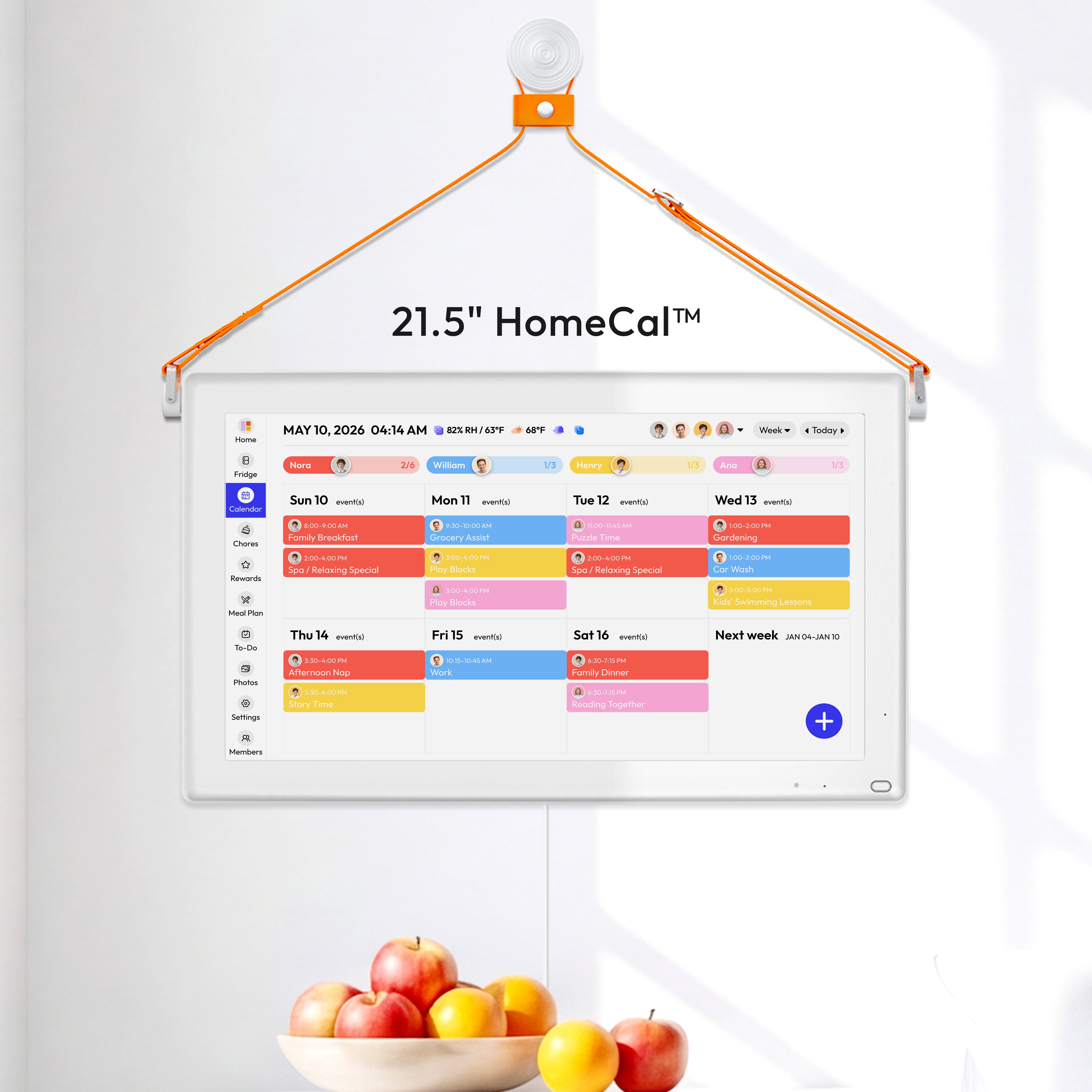


Your fridge door should be a control panel, not a paper pile. The fix is not better sticky notes; it is a simple system that separates meal planning, family scheduling, and food storage.
Does your fridge look organized from across the room but chaotic up close, with coupons, reminders, kids' papers, and half-used sauce bottles all competing for space? Some households who move to a weekly meal routine notice fewer last-minute food decisions and lower waste-related spending, but the payoff depends on shopping habits, schedules, and how often leftovers get used. Track 2 to 4 weeks of emergency takeout, expired-food discards, and grocery spending if you want to test whether the system helps in your own home. You will leave with a practical layout, a weekly reset routine, and a clearer way to manage meals and schedules at home.
Why Sticky Notes Turn Into Fridge Noise
Durable paper, fragile system
Even though Post-it notes have a minimum shelf life of 2 years, the system built around them usually breaks much sooner. Sticky notes are good at capturing one thought at a time, but family life is not one thought at a time. It is dinner, leftovers, pickup times, grocery gaps, and school logistics all moving at once.

A weekly meal plan works better because it turns separate decisions into one repeatable routine. Instead of deciding dinner, lunch, and shopping in the moment, you choose the week once, shop once, and let leftovers do part of the work. That reduces decision fatigue and gives the fridge door one clear job: support the current week.
A a company solves the other half of the problem by pulling scattered information into one shared, color-coded view. The real upgrade is not the screen itself. It is role clarity: schedules live in one place, meal plans in another, and the fridge door stops acting like a catch-all inbox.
What Actually Belongs on the Fridge Door
Warm-zone rules
The a company, which makes them best for durable items like condiments and pickles, not milk, eggs, or raw meat. Interior shelves stay colder and more stable, especially the lower shelf, which is why dairy and eggs belong there; the FDA says eggs belong in the refrigerator itself rather than on the door, where the temperature is warmer. If your family opens the fridge often, those door temperature swings matter even more.
Home food storage guidance recommends keeping refrigerated foods under 40°F, with a practical set point near 35°F and colder zones for dairy, meats, and eggs. The USDA says the refrigerator should be at 40°F or below. That turns organization into a safety issue, not just a visual one. When the door is crowded, it becomes harder to see what needs priority, what should move to the freezer, and what is already past its useful window.

Dates are not a storage plan
Most food date labels indicate quality, not safety, with infant formula as the main exception that should not be used past its printed date. The USDA says product dating is generally about best quality rather than safety for most foods. "Sell by" helps the store, "best by" signals peak quality, and "use or freeze by" tells you when to cook or freeze perishables. A workable home system still needs labels, but it also needs temperature control, FIFO rotation, and an obvious place for food that must be used soon.
Refrigerated leftovers usually keep for 3 to 4 days, and raw ground meats and poultry often only have 1 to 2 days in the fridge before cooking. The FDA treats leftovers as perishable food, so use that window conservatively if your fridge runs warm or you are unsure how long something has been stored. That is why the most useful note on the fridge is not "buy more groceries." It is a visible plan that tells you what gets cooked first, what becomes lunch, and what needs freezing before quality drops.
Build a Three-Layer Family Command Center
Layer 1: Shared family schedule
A a company can combine schedules from multiple accounts, assign colors by person, and track tasks such as chores or study blocks. For a busy household, that removes the need to duplicate the same appointment across paper scraps, text messages, and memory. Kids also respond better to a visible routine than to a chain of last-minute verbal reminders.
Layer 2: Weekly meal plan
A written weekly meal plan starts with five dinners, uses leftovers for most lunches, rotates two or three simple breakfasts, and leaves one or two nights flexible. The manual version is short enough for many households to finish in one sitting, and some families notice fewer weeknight pivots when they add a brief Sunday prep block. Track 2 to 4 weeks of emergency takeout, expired-food discards, and grocery spending if you want to verify the effect in your own home. That structure is what turns food storage into food usage instead of food waste.

Layer 3: Fridge-door status board
A a company gives the fridge door a narrow, useful purpose. Use one slim grocery pad, one short weekly meal view, and one small area for items that must leave the house. If something does not change behavior in the next 24 to 72 hours, it should move off the door.
A 15-Minute Weekly Reset That Actually Sticks
Minutes 1-5: Audit the door
A a company is one of the fastest ways to spot clutter you have stopped seeing. Take a photo, identify the most crowded shelf or magnet cluster, and clear that zone first. Then do a top-to-bottom expiration sweep, combine duplicate packets, and remove papers that no longer drive action.
Minutes 6-10: Match food to the week
FoodSafety.gov includes storage times for hundreds of foods, which makes this the best moment to check deli items, seafood, eggs, pizza, soups, and leftovers against the coming week. Move short-window items into the next two dinners or lunches, and freeze anything you will not realistically use in time. This is where meal planning becomes a practical FIFO system rather than a vague intention.
Minutes 11-15: Reload for visibility
a company keep the door readable without blocking airflow. Place light items high, everyday sauces between 20 and 60 inches from the floor, and heavier jars on the lowest rail; if you keep a grocery pad on the front, two magnets spaced about 1.5 inches apart can support roughly a half-pound pad. The rule is simple: every visible item should earn its spot by making the next decision easier.

Common Failure Points
Treating the fridge like a filing cabinet
Dry goods and adhesives store best in moderate temperature and humidity ranges, but that does not make the fridge door a smart place to archive months of paper. Coupons, old appointment cards, stale takeout menus, and random reminders all crowd out the information that matters tonight. Once the fridge becomes long-term storage, urgent food decisions disappear behind low-value clutter.
Overloading the refrigerator
Refrigerators need airflow and shelf order to reduce cross-contamination, which means raw meats belong on lower shelves and the fridge should not be packed so tightly that cold air cannot circulate.
- If a refrigerator thermometer reads above 40°F for more than 2 hours, discard high-risk perishables such as meat, poultry, fish, eggs, and leftovers; the FDA says food above 40° F for two hours or more should be thrown out.
- If the power is out, keep the door closed; if the outage reaches 4 hours, discard refrigerated perishable food unless you can confirm it stayed at a safe temperature, because the FDA says the refrigerator keeps food cold for about 4 hours if it is unopened.
- If timing is uncertain or someone in your household is more likely to get sick, use a more conservative storage and cleaning routine; the CDC notes people in your household are more likely to get sick may need more frequent cleaning.
- If an item is highly perishable, do not store it on the door; the FDA says eggs belong in the refrigerator itself rather than on the door, where the temperature is warmer.
Store leftovers in shallow containers, label and date frozen items, and discard perishables left out more than 2 hours, or 1 hour if the room is above 90°F, following the USDA 2-Hour Rule. In a power outage, keeping the door closed is the first move, and refrigerated perishables should be judged against the FDA 4-hour rule.
Cleaning without overcomplicating it
Contaminated surfaces increase the risk of disease transmission, and the fridge handle, door edge, and nearby note area are high-touch zones in most homes. That study supports the general point that high-touch surfaces can spread contamination, but the CDC says cleaning regularly is enough in most home settings and that surfaces should be cleaned before sanitizing or disinfecting if needed. Experimental work suggests alcohol-plus-salt formulations can outperform alcohol alone on some surfaces, but that is not a prescription for improvised home mixtures. Consistent cleaning during the weekly reset matters more than turning your kitchen into a lab experiment.
Practical Next Steps
A once-a-week meal and calendar review is usually enough to keep the fridge door useful instead of noisy. The goal is not a perfect command center. The goal is a stable rhythm where scheduling, shopping, storage, and leftovers support each other.
- Set the refrigerator to 35°F to 38°F, and check monthly that the door stays below 40°F.
- Move milk, eggs, and raw proteins off the door and onto colder interior shelves.
- Plan five dinners, assign leftovers to lunches, and leave one flex night open.
- Create four visible labels: Keep, Eat Now, Freeze, and Discard.
- Limit the front of the fridge to one grocery pad, one short meal view, and one schedule snapshot.
- Run a 15-minute Sunday reset: photo check, expiration sweep, shelf reload, and wipe-down of high-touch areas.
A a company is the logical next upgrade if paper keeps multiplying, because it moves recurring schedules and chore lists off the fridge without making them invisible. Sticky notes can still be useful as temporary capture tools. They just should not be your household operating system.
Important Note
The planning templates and organizational systems provided here are intended as adaptable blueprints. Every family’s needs, dietary requirements, and physical capabilities are different. We recommend tailoring these schedules to your specific health needs and household dynamics. Results from productivity or meal-planning systems may vary, and consistency remains the responsibility of the individual user.
References


