

How to organize a fridge for food safety comes down to four controls: keep it at 40°F (4°C) or below, contain raw animal foods so they cannot drip onto ready-to-eat food, refrigerate perishables promptly, and track how long food has been stored. A shelf diagram helps, but temperature, separation, and time make the system safe.
Visibility supports those controls. It reminds you to review leftovers and aging produce, but it cannot reveal pathogens or reconstruct an unknown temperature history. The three-step system below shows what to measure, where to prevent contamination, and how to make time-sensitive decisions visible.

The Short Answer: Control Temperature, Contamination, and Time
A safe refrigerator stays cold, separates hazards from ready-to-eat food, and preserves enough storage history to support a sound decision. Miss any one of those controls and a neat layout may still be unsafe.
One shelf diagram cannot fit every refrigerator
Vents, drawer controls, door exposure, shelf heights, and cooling systems vary by model. Use the manufacturer's manual to identify vents and approved adjustments, then verify the actual temperature with an appliance thermometer. Do not assume that a named shelf is always the coldest location.
Visibility prompts review but does not prove safety
A clear container and a use-first label can prevent neglect. Neither proves continuous refrigeration or the absence of pathogens. FDA notes that food can cause illness even when it does not look, smell, or taste spoiled, so sensory checks cannot replace time-and-temperature guidance.
Step 1: Keep the Refrigerator at 40°F or Below
Temperature control comes first because refrigeration slows bacterial growth but does not stop it. The control dial is a setting, not a temperature reading, so verify conditions with a freestanding appliance thermometer.
An appliance thermometer verifies the real temperature
Place and read the thermometer according to its instructions. Check it regularly and after a setting change, a large grocery load, or a suspected door-seal problem. If a location remains above 40°F, clear blocked vents, reduce crowding, confirm the door closes fully, adjust the setting, and recheck. Persistent warm readings call for the appliance manual, maintenance, or qualified service.
The following 72-hour temperature-and-use audit is an illustrative template, not a completed test. Use one consistent method and record actual readings from your refrigerator.
|
Check |
Location |
Temperature |
Door or loading event |
Vent or airflow issue |
Food needing action |
|
Day 1, start |
__________ |
____°F |
None / note event |
Clear / describe |
__________________ |
|
Day 1, evening |
__________ |
____°F |
Note grocery load or frequent opening |
Clear / describe |
__________________ |
|
Day 2, morning |
__________ |
____°F |
None / note event |
Clear / describe |
__________________ |
|
Day 2, evening |
__________ |
____°F |
None / note event |
Clear / describe |
__________________ |
|
Day 3, morning |
__________ |
____°F |
None / note event |
Clear / describe |
__________________ |
|
Day 3, evening |
__________ |
____°F |
None / note event |
Clear / describe |
__________________ |
|
Day 4, same time as start |
__________ |
____°F |
None / note event |
Clear / describe |
__________________ |
If readings differ by location, adapt storage to measured conditions and the manual rather than publishing one refrigerator's pattern as a universal rule.
Clear airflow supports temperature control
The FDA advises against overpacking because cold air must circulate around refrigerated food. Keep vent paths open and avoid pressing flexible bags against the back wall. There is no evidence-based fullness percentage that applies to every refrigerator; the practical test is whether air can move, the door closes, and packages remain reachable.
Perishable food needs prompt refrigeration
FDA guidance says to refrigerate or freeze perishables within two hours of cooking or purchase, or within one hour when the temperature is above 90°F (32°C). Divide large amounts of leftovers into shallow containers so they cool faster. For technique and container choices, see how to put hot food in the refrigerator safely.
Step 2: Store Food to Prevent Cross-Contamination
Safe placement keeps raw animal foods contained and away from food that will be eaten without further cooking. The goal is not a decorative top-to-bottom chart; it is to prevent leaks, splashes, and handling from transferring hazards.
Raw meat, poultry, and seafood need leak control
Keep raw animal foods sealed and place them in a leak-catching tray in the lowest suitable area permitted by the refrigerator's design. The FDA's home food-safety guidance says to keep raw meat, poultry, seafood, and eggs away from other food in the cart, bags, and refrigerator. A tray adds protection when retail packaging leaks.
Ready-to-eat food belongs above or apart from leak hazards
Cover leftovers, prepared ingredients, dairy, and other ready-to-eat food. Keep them physically separated from raw-food packages and easy to identify. A sealed leftover on an upper or separate shelf avoids the direct drip path that creates the main placement concern.
Produce needs appropriate humidity and clean handling
Use crisper controls according to the refrigerator manual and the produce being stored. Keep produce apart from raw-food leakage. Before preparing or eating it, rinse produce under plain running water; FDA guidance does not recommend soap, detergent, or commercial produce wash.
Eggs and door items need model-aware placement
Keep eggs in their original carton on an interior shelf rather than the door. Use door storage for comparatively stable, label-approved foods, then follow the appliance manual for the final arrangement. The detailed process to organize the fridge door safely should never override package instructions or measured temperature.
Use this adaptable placement map as a safety checklist:
|
Area or zone |
Suitable use |
Primary safety control |
What not to assume |
|
Ready-to-eat zone |
Covered leftovers, cooked food, opened ready-to-eat items |
Protection from raw-food drips |
That visibility proves safety |
|
Raw-food zone |
Sealed raw meat, poultry, or seafood in a tray |
Leak containment below ready-to-eat food where possible |
That retail wrap is always leakproof |
|
Produce drawer |
Produce matched to the drawer setting |
Separation from raw packages |
That all produce needs the same humidity |
|
Interior shelf |
Eggs in carton, dairy, model-appropriate foods |
More protected placement |
That every shelf has the same temperature |
|
Door |
Comparatively stable, label-approved items |
Correct product choice and secure rails |
That anything fitting in the door belongs there |
|
Use First zone |
Covered food needing a prompt decision |
Visibility without mixing hazards |
That priority means safe to eat |

Step 3: Track Storage Time and Surface Priorities
Storage time should come from a prepared, opened, or thawed date plus food-specific guidance, not from memory or a package date alone. Time records make the refrigerator's safety history more useful.
Most package dates describe quality, not safety
USDA explains that, except for infant formula, package dates generally do not indicate food safety. “Best if used by,” “sell by,” and most “use by” wording help describe quality or inventory timing. Infant formula is the important exception and should not be used after its use-by date.
That does not mean food is safe simply because a date has not passed. Handling, recalls, package condition, time outside refrigeration, and food-specific storage limits still control the decision. Read more about what food date labels mean before treating “best by” and “unsafe after” as synonyms.
Date labels preserve useful storage history
Label leftovers and opened foods with contents and the prepared or opened date. Add a thawed date when the safe window changes after defrosting. Then consult the FoodSafety.gov cold-storage chart or FoodKeeper for the specific item.
|
Food or condition |
Refrigerator window at 40°F or below |
Decision note |
|
Cooked meat or poultry leftovers |
3–4 days |
Freeze sooner if they will not be used |
|
Soups and stews |
3–4 days |
Cool promptly in shallow portions |
|
Opened deli or luncheon meat |
3–5 days |
Keep covered and check food-specific guidance |
|
Raw ground meat or poultry |
1–2 days |
Cook or freeze within the window |
|
Raw shell eggs |
3–5 weeks |
Keep in the carton on an interior shelf |
|
Hard-cooked eggs |
1 week |
Label the cooking date |
These are general federal chart values, not a substitute for product instructions or a known unsafe event.
A Use First zone creates a decision queue
Keep a small visible zone for covered foods that need a prompt use, freeze, or discard decision. Do not mix raw packages with ready-to-eat leftovers inside the same bin. Review the zone before meal planning and grocery shopping, then act using the relevant storage guidance.
Unsafe exposure overrides every reminder
A fresh-looking label cannot repair an unknown or unsafe temperature history. Do not taste food to test safety. During an outage, record the start time, keep doors closed, and follow official outage rules; use the dedicated guide on when to discard food after a power outage for that exception.
Build a Fridge Map Around Your Appliance
An effective fridge map combines measured temperature, leak containment, protected ready-to-eat storage, and visible priority. Draw the refrigerator's real shelves and doors, then add four overlays:
- Mark vents and the temperatures you measured.
- Mark the leak-contained raw-food location.
- Mark covered ready-to-eat food and leftovers.
- Mark a separate Use First priority area.
Check the drawing against the appliance manual. If a vent sits behind the planned leftovers zone or a drawer prevents safe tray placement, change the map. The layout must serve the safety controls, not force the appliance to match an online illustration.
Run a Five-Minute Food-Safety Reset
A brief recurring reset keeps the refrigerator accurate after grocery trips, takeout, and changed meal plans. Attach it to one reliable weekly moment.
Start with temperature and airflow
Read the appliance thermometer, check that the door closes, and clear packages from vents. A warm reading deserves investigation, not a cosmetic rearrangement.
Decide what to use, freeze, or discard
Review leftovers, opened foods, thawed items, and the Use First zone against food-specific windows. Freeze suitable food before its refrigerated window closes, or discard it when official guidance requires that action.
Clean raw-food spills immediately
Treat leaking raw-food juices as the first cleanup priority. Move affected food away, clean the surface according to appliance and FDA guidance, and replace or wash the catch tray before restocking.
Households that include pregnant people, young children, older adults, or immunocompromised people should follow the more cautious official advice relevant to that person and consult a healthcare professional when needed.
Common Fridge-Safety Mistakes to Correct
The highest-value corrections are simple controls that can survive an ordinary week. Avoid fear-based rules and focus on errors with a clear remedy.
|
Mistake |
Why it fails |
Safer correction |
|
Trusting the control dial |
A setting does not show the actual temperature |
Use an appliance thermometer |
|
Packing every gap |
Food can block vents and cold-air circulation |
Leave vents and airflow paths clear |
|
Cooling food in one deep pot |
The center may cool slowly |
Divide food into shallow containers and refrigerate promptly |
|
Storing raw food above ready-to-eat food |
A leak can contaminate food eaten without cooking |
Seal it in a tray below or apart where the model permits |
|
Leaving leftovers unlabeled |
Storage history becomes guesswork |
Add contents and prepared date |
|
Using smell as a safety test |
Pathogens may not change smell or appearance |
Follow time, temperature, recall, and food-specific guidance |
|
Treating every package date as a deadline |
Most dates describe quality |
Separate label meaning from handling and storage history |
When Physical Fridge Organization Needs a Digital Layer
Physical tools still do the most important storage jobs:
| Physical tool | What it helps with | What it cannot track |
| Clear bins and trays | Group food and contain leaks | What has been used or replaced |
| Date labels | Preserve storage history | Remind the household to review it |
| Use First zone | Keep priority food visible | Share updates away from the fridge |
| Refrigerator thermometer | Verify temperature | Inventory or meal-planning changes |
For one person, those tools may be enough. The gap appears when several people shop, cook, and use the same refrigerator. A label can show when leftovers were made, but it cannot tell another shopper that someone already finished the milk.
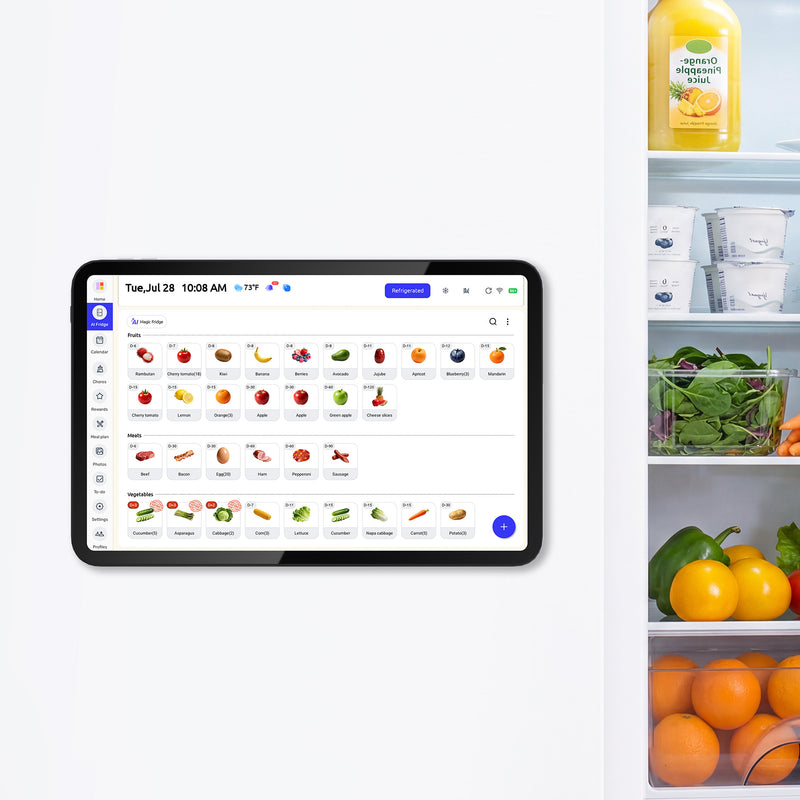
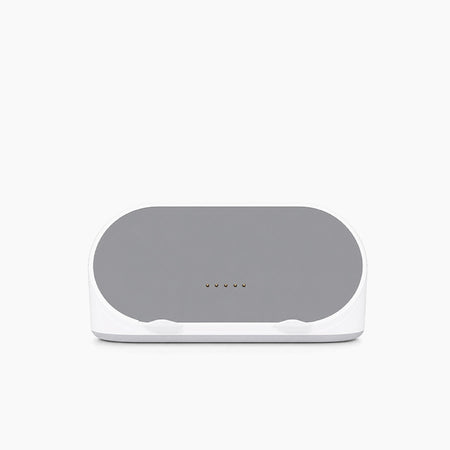
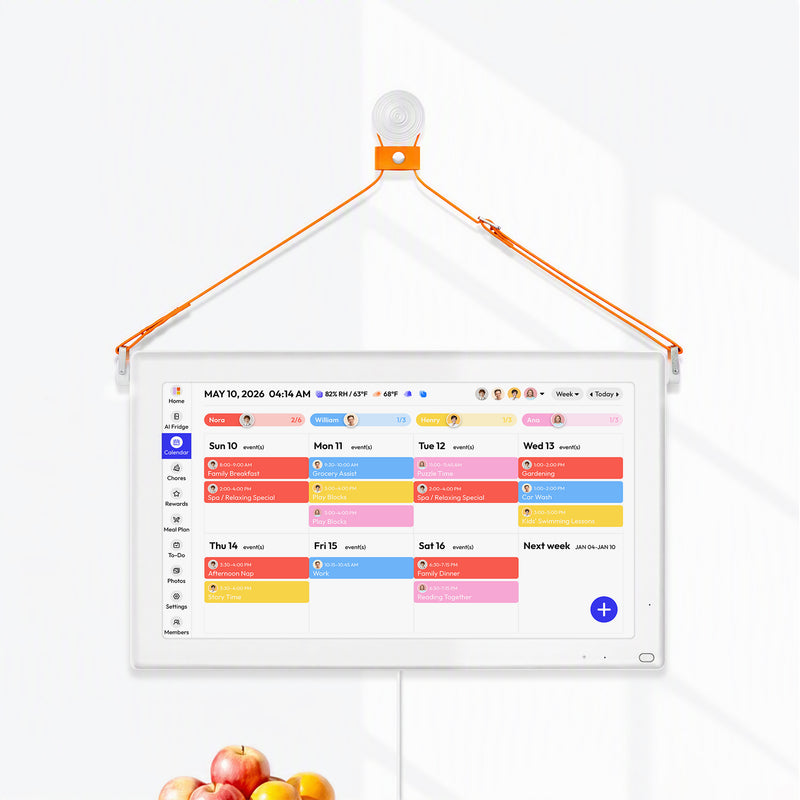
That is where a digital food-management layer can complement physical organization. The Everblog FridgeCal™ AI Fridge Calendar combines a fridge-side display with food inventory, expiration reminders, meal planning, grocery lists, and phone access, helping household members work from the same information.
It does not replace a thermometer, safe food placement, or official storage guidance. Inventory and reminders still need to stay current, and food-safety decisions should continue to follow time, temperature, handling, and FDA or USDA guidance.
Think of the two systems as complementary: physical organization controls where food goes; digital management helps the household remember what is there and what needs attention next.
Frequently Asked Questions
These answers provide a starting point for common refrigerator-safety decisions. Food-specific instructions and known exposure events still take priority.
What temperature should a refrigerator be?
Keep the refrigerator at 40°F (4°C) or below and verify it with an appliance thermometer. The freezer should stay at 0°F (-18°C).
Where should raw meat go in the fridge?
Keep raw meat sealed in a leak-catching container in the lowest suitable location so juices cannot drip onto other food. Adapt the exact location to the refrigerator design and manual.
How long are leftovers safe in the refrigerator?
USDA generally recommends using cooked leftovers within three to four days when kept at 40°F or below. Some foods differ, and unsafe handling can shorten the usable window, so check FoodKeeper or the federal cold-storage chart.
Are sell-by and best-by dates food-safety deadlines?
Usually not. USDA describes most package dates as quality or inventory information, with infant formula as the key use-by exception. Temperature, handling, recalls, and food-specific guidance remain essential.
Can expiration reminders tell me whether food is safe?
No. Reminders prompt review, but safety depends on time, temperature, handling, cross-contamination, recalls, and the food itself. When critical history is unknown, follow official discard guidance instead of relying on an app or sensory check.
A safer refrigerator is not the one with the prettiest shelf diagram. It is the one whose temperature is verified, raw-food leaks are contained, storage time is recorded, and priority food receives a timely decision. That is how to organize a fridge for food safety without confusing reminders with evidence. Set up the three-step map first, then choose the lightest tool that helps the household maintain it.


