
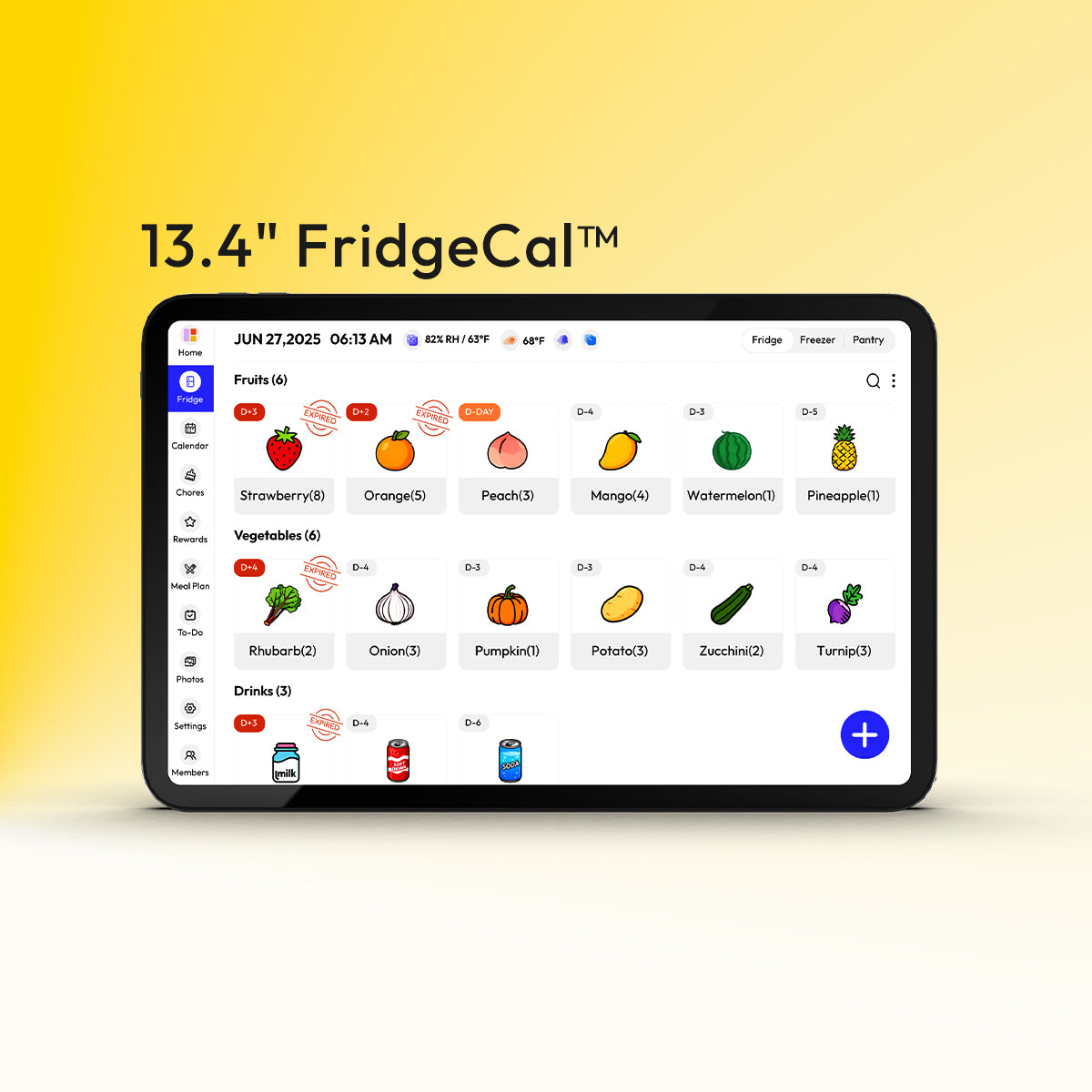
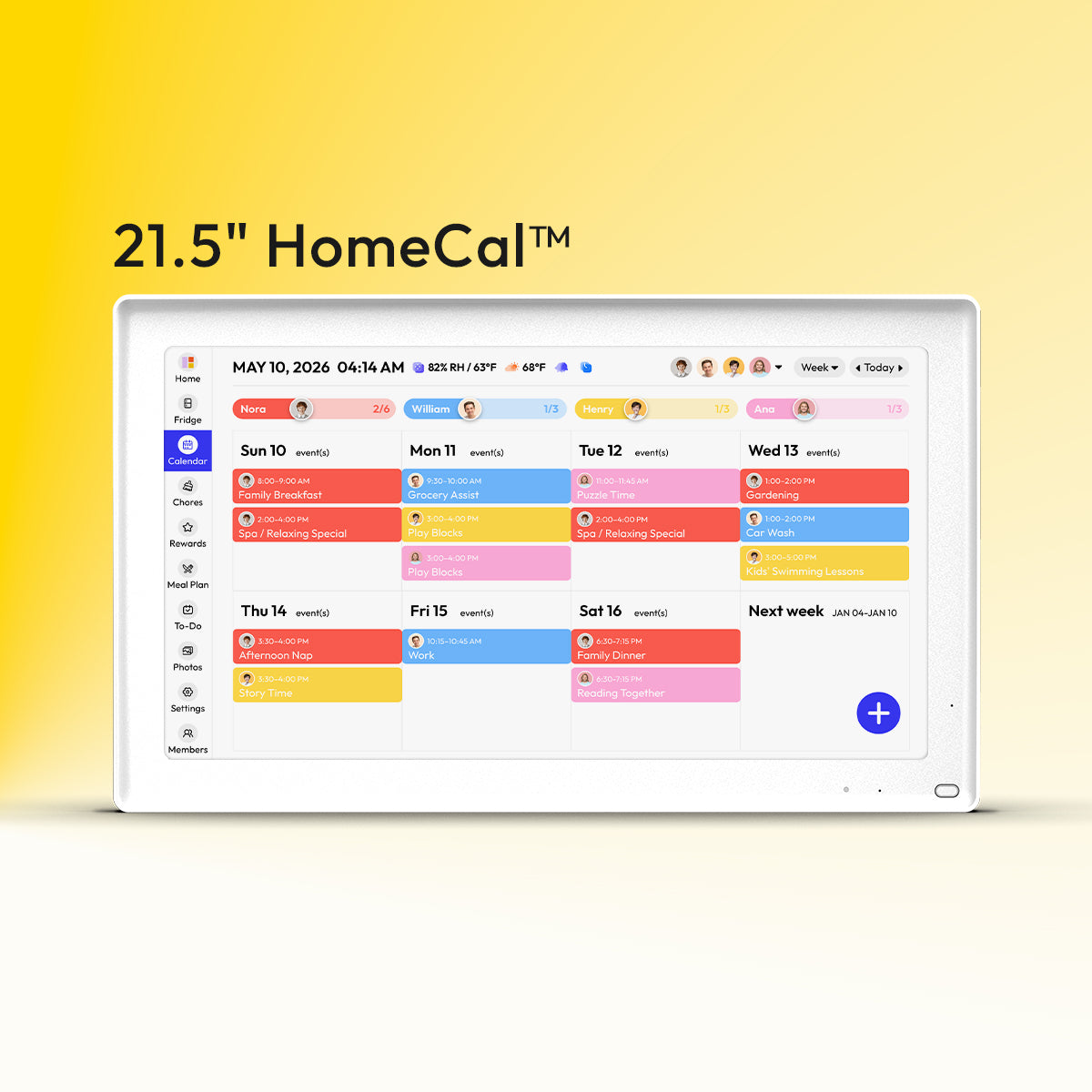


The right digital touchscreen calendar is the one your household will actually look at every day, not the one with the longest feature list. For most families, that means choosing for visibility and easy syncing first, then adding meal and chore tools only if they solve a real problem.
Ever find yourself asking who is picking up from practice, what is for dinner, and whether anyone remembered to empty the dishwasher, all within the same 10 minutes? Families that work best with a shared planning system usually keep it in a high-traffic spot and use it as a daily check-in point, which is why visible command centers near the kitchen or entryway show up so often in real homes. This guide will help you decide whether a dedicated touchscreen calendar, an app on an existing screen, or a simpler setup fits your home better.
Start With the Problem You Need to Solve
A calendar is not always the real issue
A family command center usually exists to hold more than dates. In practice, families use it to keep schedules, school papers, grocery notes, meal plans, chores, and everyday reminders in one visible place. If your main problem is missed appointments, strong calendar sync matters most. If the real problem is dinner and task follow-through, you need a tool that makes meals and chores visible without extra effort.

That distinction matters because many households buy a screen when a shared app or even a simple wall setup would do the job. A digital touchscreen calendar earns its place when several people need to see the same plan at a glance, including children who will not reliably open a phone app on their own.
The best fit depends on what your home already does well
A calendar-platform-based family system can work well when one adult already manages detailed calendars, recurring events, and color-coding. A touchscreen layer then makes that planning visible to everyone else. By contrast, homes that are already good at phone-based coordination may not gain much from an extra device unless chores or meal planning keep getting lost.
A good rule is simple: buy a touchscreen calendar for a visibility problem, not for a motivation problem. If nobody updates the shared system now, a screen alone will not fix that. It can, however, make a solid routine much easier to follow.
Choose the Right Type of Setup
Dedicated touchscreen hardware fits families who need an always-on hub
A dedicated family calendar such as a brand is built for one job: showing the household plan in a shared space. That is useful when you want a kitchen or mudroom screen that is always on, easy for kids to read, and simple enough for quick check-ins before school or after work. Another example is the Everblog 21.5" Digital Calendar, a wall-mounted touchscreen designed to help families keep plans, tasks, chores, and events visible in one shared place. These devices often include chore tracking, color coding, and meal-planning tools in the same interface.

The trade-off is cost and flexibility. Hardware starts around $169.99 in some comparisons, while larger digital wall calendars can run into the hundreds. If you want a single-purpose family hub and will use it every day, that may be reasonable. If you are unsure whether the habit will stick, it is a costly experiment.
Software on an existing screen is often the best value
A digital calendar display built from software on a TV, tablet, a platform display, or a platform streaming device is often the cheaper and lower-risk option. A company says setup can take about five minutes, can use existing hardware, and can show calendars, chores, weather, meal plans, and photos with near real-time sync.
This option fits families who want the shared-screen benefit without committing to specialized hardware right away. The weakness is that not every existing screen is equally easy to place or touch. A repurposed TV in a bad location is still a bad command center, even if the software is good.
App-first systems are better when everyone already lives on their phone
A shared family organizer like a platform works well when adults and older kids already check their devices often. A platform covers shared calendars, grocery lists, to-dos, recipes, and reminders, and it has a free entry point. A family organization platform pushes further into meal planning, shopping lists, private messaging, and even budget tracking.
The weakness is visibility. App-first tools are strong for input and notifications, but weaker for passive household awareness. If your biggest issue is that people do not look unless prompted, an app alone may not be enough.
Compare the Trade-Offs That Matter Day to Day
Focus on five things: visibility, setup, sync, chores, and meals
The right comparison is not “Which one has more features?” It is “Which one will reduce friction in this house?” A shared planning tool should be easy to see, fast to update, reliable about syncing, simple enough for children or tired adults to use, and realistic to maintain over months, not just the first week.
Here is a focused comparison of the main setup types.
Option |
Best for |
Main upside |
Main downside |
Typical cost from notes |
Dedicated touchscreen calendar |
Busy families who want one visible household hub |
Always-on visibility, built-in chores, meal planning, kid-friendly shared use |
Higher upfront cost, often optional subscription features |
About $169.99 and up; some devices several hundred dollars |
Existing screen + display software |
Families who want to test the idea cheaply |
Uses hardware you may already own, fast setup, flexible layouts |
Touch experience and placement depend on the screen you use |
Free plan options; about $35 for a streaming device in one example |
App-first family organizer |
Families comfortable with phones and laptops |
Low cost, easy personal access, strong reminders and lists |
Less visible to younger kids and distracted adults |
Free plans common; paid tiers like $39/year or $44.99/year |
DIY command center with digital support |
Homes that still manage lots of papers |
Combines schedule, mail, forms, menu, and keys in one zone |
More manual upkeep, weaker automatic sync |
Can be budget-friendly, with examples around $75 |
The cheapest good-enough option is often the smartest first step
A budget-friendly command center can still do a lot if your pain points are papers, backpacks, school handouts, and meal notes more than live syncing. In many homes, a basic wall setup plus a shared app handles 80% of the problem for much less money.
That is why a touchscreen calendar is best treated as an upgrade for a working household system, not a replacement for one. If your routines are still messy, start by simplifying what needs to be tracked before paying for a screen.
Make Sure the Calendar Syncs the Way Your Family Actually Lives
Two-way sync and color coding matter more than flashy extras
A shared display that syncs major calendar services is useful because families rarely live in one ecosystem. One parent may use one major calendar service, another may use a different calendar service, and school reminders may arrive by email. If your calendar cannot pull those together reliably, the rest of the feature set does not matter much.
Color coding is not cosmetic. It is one of the fastest ways to make a crowded family week readable. Several tools in the notes, including a platform, a brand, and app-based planners, lean on color by person or category because it lowers the effort of scanning a schedule before heading out the door.
Watch for setup friction before you buy
A platform-based household system can organize schedules, chores, meals, and recurring routines well, but it assumes someone in the house is willing to maintain it. That is true for many flexible digital tools. The more customizable the system, the more likely one adult becomes the household admin.
If your family needs low friction, choose the tool with the shortest path from “new information arrived” to “everyone can see it.” Real-time sync, email imports, and recurring events are worth more than advanced customization if your home runs on speed.
Pick Meal and Chore Features Based on Household Behavior
Meal planning should reduce decisions, not add another app to manage
A family organizer with meal planning can help when dinner planning breaks down because nobody knows the week’s schedule. In that case, meals belong next to the calendar because sports practice, late meetings, and grocery timing all affect what is realistic to cook. Some tools also connect recipes to shopping lists, which is helpful if one person plans meals and another shops.

But if your family already uses a grocery app and has a simple dinner routine, built-in meal planning may be unnecessary. The best test is whether seeing dinner on the same shared screen will actually change behavior by 5:00 PM.
Chore systems work best when expectations are visible and simple
A family planner app with chores and rewards can help families who need clearer accountability, especially with school-age kids. A platform, for example, combines deadlines, notifications, allowance tracking, and rewards. That can be useful when the issue is not assigning chores but confirming that they were done.
Still, more structure is not always better. Many households only need recurring tasks, a visible list, and a clear owner. If your family resists apps or rewards systems, a basic shared chore view inside the calendar may be enough.
Placement Matters More Than Screen Size
Put it where the family already pauses
A central, high-traffic location matters more than almost any hardware detail. Kitchens, mudrooms, garage entries, laundry areas, and nearby hallways show up again and again because families naturally pass through them. A great calendar in a private office is easy to forget.
That is also why many command centers include more than the screen itself. Hooks, paper bins, pens, a mail spot, and a grocery note area help tie the digital plan to the physical things that still enter family life every day.
Start smaller than you think
A small-house command center does not need a full wall. In many homes, a calendar, bulletin area, and simple file system in the kitchen are enough. Starting small also makes maintenance easier, which is one of the biggest reasons systems survive past the first month.
If you are choosing between a large impressive setup and a modest one that will actually be updated weekly, choose the modest one. Long-term household fit beats feature density every time.
FAQ
Q: Do I need a dedicated touchscreen calendar if we already use major calendar services?
A: Not always. If your family already checks phone calendars reliably, a shared app or a display on an existing screen may be enough. A dedicated touchscreen is most useful when the problem is household visibility, not basic calendar access.
Q: What is the best option for meals, chores, and scheduling in one place?
A: A dedicated family calendar or strong family organizer app usually works best when you want all three together. The better choice depends on whether your family responds more to a visible shared screen or to phone-based reminders.
Q: Where should I place a digital family calendar?
A: Put it in a space the family naturally passes every day, such as the kitchen, mudroom, or garage entry area. A shared planning tool works best when it doubles as a daily check-in spot.
Final Takeaway
The best digital touchscreen calendar is the one that matches your household’s real bottleneck. If people forget because they cannot see the plan, choose a visible shared screen. If everyone already uses phones well, an app-first system or an existing-screen setup is often the smarter buy. If paper clutter is still half the problem, build the calendar into a broader command center instead of treating the screen as the whole solution.
For most families, the safest path is to start with sync reliability, clear color coding, and a central location. Add meal planning and chore features only if they will replace a messy routine you already have, not just create one more place to check.
References
- A company: 5 Best Planning Systems for Your Everyday - Meal Planning Included!
- A company: Best Digital Wall Calendar & Family Calendar Display
- A company: The 10 Easiest Family Command Centers to Get Organized
- A platform marketplace: Family & Household Command Center Template
- A family organizer platform
- A family organization platform
- A company: Best Digital Family Calendar for Planning & Chores in 2026
- A platform: Family Organizer Planner App
- A company: Functional Family Command Centers
- A company: The Ultimate DIY Family Command Center Guide
- A marketplace: Family Planner Bundle


