
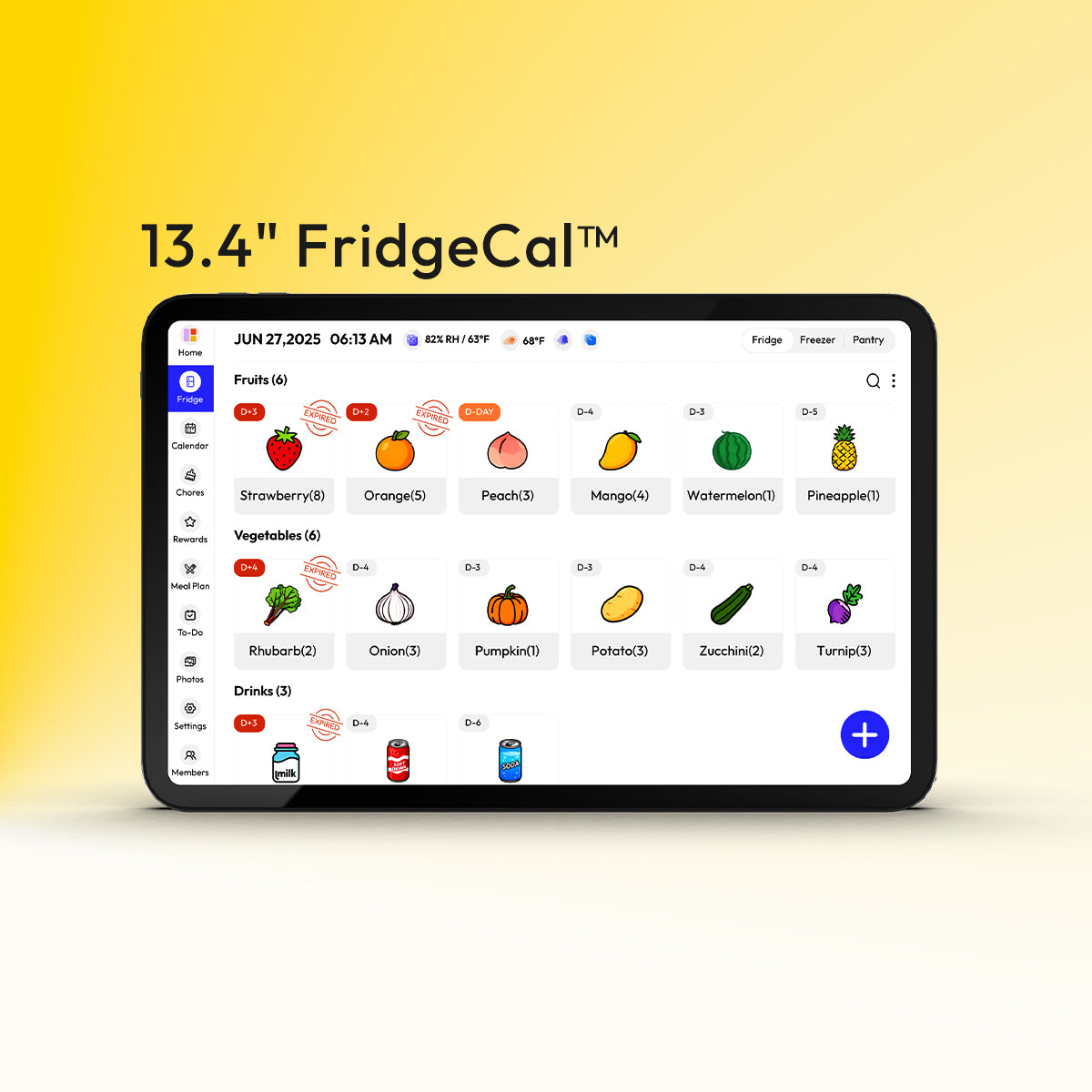
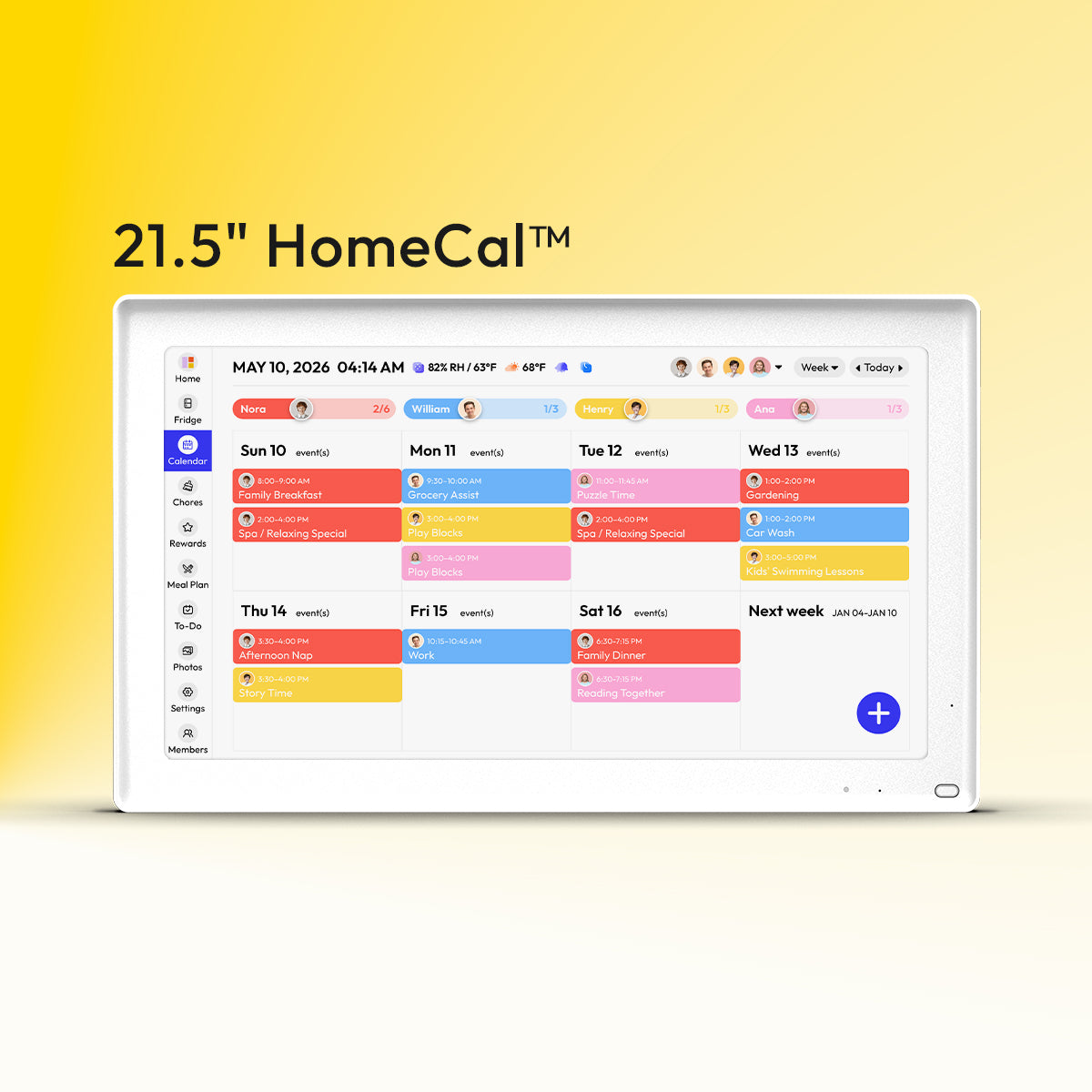


A touch screen wall calendar is a digital family calendar mounted where everyone can see and update it. It helps a busy household keep schedules, meals, chores, and reminders in one shared place instead of scattered across apps, texts, paper notes, and memory.
Ever had one parent ask, “Who is picking up from soccer?” while another is already halfway to the grocery store? A visible shared calendar can make the next pickup, dinner plan, appointment, and chore list clear in a few seconds. This guide explains what a touch screen wall calendar does, how it works, and what setup choices matter most in a real family home.
What a Touch Screen Wall Calendar Actually Is
A touch screen wall calendar is a wall-mounted screen that shows your household schedule and lets family members tap to add, edit, or check items. In daily life, it works like a family command center: school events, work shifts, doctor visits, dinner plans, chores, birthdays, and reminders all appear in one visible place.

A digital family command center usually combines a shared calendar, task lists, meal planning, notes, and reminders into one easy-to-read display. The main point is not the screen itself. The point is giving the household a shared source of truth that is faster than asking in a group text and more current than a paper calendar.
How It Differs From a Paper Calendar
A paper calendar is simple, cheap, and easy to glance at. Its weakness is that it only lives in one place. If a dentist appointment changes while you are at work, someone still has to remember to update the kitchen calendar later.
A touch screen wall calendar adds syncing. In plain English, syncing means a change made on one device shows up on the other connected devices or screens. A parent can add a 4:30 PM school pickup from a cell phone, and the wall display can show it at home before anyone asks.
How It Differs From a Regular Calendar App
A regular calendar app is useful, but it is often hidden on one person’s phone. A wall calendar makes the plan visible to the whole household. That matters when a child needs to know whether piano lessons are today, or when a parent wants to check tomorrow morning before packing lunches.
Research on household calendar use describes calendars as important tools for managing daily life at home, especially when families are coordinating many people and responsibilities. In one study of families managing diabetes and pediatric asthma, adults had to combine ordinary scheduling with health tasks, appointments, medication routines, monitoring, and clinician coordination, showing how quickly home planning can become more than “just dates” on a page household calendar use.
How It Works in a Family Home
A touch screen wall calendar works by connecting a shared calendar account, family profiles, reminders, and sometimes task or meal tools to one home display. The screen usually stays on or wakes quickly, so a family member can walk up, check the day, and move on.

The basic flow is simple: someone adds an event, the calendar syncs, and the wall screen shows the updated schedule. If the system supports shared editing, more than one adult can make changes. If it supports child profiles or limited permissions, kids may be able to check chores or mark tasks complete without changing the whole calendar.
The Daily Rhythm
Most families use the screen in small moments, not in long planning sessions. A parent checks the morning before school. A child looks after breakfast to see whether gym shoes are needed. Someone taps the dinner plan before stopping at the store.
The best use is often a quick daily check. For example, after dinner, the family looks at the next day: 7:30 AM bus, 3:00 PM pickup, 5:15 PM practice, tacos for dinner, trash out before bed. That one-minute review can prevent several “Wait, who knew about this?” moments the next day.
What the Touch Screen Adds
The touch screen matters when it lowers friction. If adding “bring poster board Friday” takes 10 seconds, people are more likely to do it. If marking “dishwasher” complete is a single tap, chores become easier to track without a lecture.
Touch also helps when the display is used by multiple people. A parent can move an appointment. A child can check off reading time. Another adult can add milk to a grocery list. The screen becomes a shared household tool instead of one person’s private planner.
What Problems It Solves Best
A touch screen wall calendar is most useful for repeated family coordination problems. It does not make a busy week less busy, but it can make the moving parts easier to see.
The strongest use cases are schedule visibility, pickup handoffs, meal planning, grocery reminders, chore follow-through, and appointment tracking. These are the moments where family plans often break down because the information is split across people, apps, paper notes, and memory.
School, Work, and Pickup Conflicts
Color-coding is one of the most practical features. One color can show each person, or each type of event: school, work, sports, medical, family, meals, and chores. The goal is not to make the calendar pretty. The goal is to see conflicts before they become problems.
A family calendar can show school events, work hours, appointments, chores, meals, holidays, reminders, and family visits in one shared household schedule shared household schedule. In a busy home, that means the calendar can answer practical questions fast: Who has the car? Who is home for dinner? Is there enough time between soccer and the orthodontist?
Meals and Grocery Lists
Meal planning works best when it is tied to the actual week. If Tuesday has a late practice, the calendar can show leftovers or a slow cooker meal. If Thursday is open, that may be the night for cooking something more involved.
Some digital command center setups include meal tools that can connect dinner plans with grocery lists. The real-life benefit is simple: if spaghetti is on the plan, sauce and pasta can go on the list before someone is already standing in the store aisle.
Chores and Home Responsibilities
A wall calendar can make chores visible without turning every task into a reminder on a parent’s phone. For example, Monday can show laundry, Tuesday can show trash and recycling, Wednesday can show bathroom counters, and Saturday can show sheets.
Shared task tools can assign chores, set due dates, and let family members mark items complete. A family command center often combines these task tools with calendar, meal, and reminder features so the screen can replace scattered whiteboards, sticky notes, and repeated group texts family command center.
Setup Choices That Make It Useful
The best touch screen wall calendar is the one your household will actually check. A beautiful screen in the wrong spot will fail. A simpler setup in the kitchen hallway may work better because everyone passes it several times a day.
Start with the smallest useful setup: one shared calendar, a few clear categories, the next two to four weeks of events, and a daily check habit. Add chores, meals, and grocery lists after the basic schedule is working.
Placement Matters More Than Screen Size
Put the calendar where household decisions happen. Common spots include the kitchen, mudroom, entryway, laundry area, or a wall near the breakfast table. The screen should be easy to see while standing, but not so close to cooking splatter, steam, or crowded counter space that people avoid using it.
For example, the Everblog 21.5" Digital Calendar is a large touch display designed for wall mounting, which makes it a fit for families that want plans, tasks, chores, and events visible on one screen.

For many homes, a screen around tablet size can work if people stand close to it. A larger wall display may be better for a bigger family, a long viewing distance, or a household that wants weekly schedule, meals, and chores visible at the same time. The practical test is simple: can someone read tomorrow’s plan from 3 to 6 ft away without squinting?
Keep Categories Simple
Too many colors and labels can make the calendar harder to read. Start with five or six categories at most: each family member, meals, chores, and appointments. If every small item has its own color, the display becomes visual noise.
A good first setup might look like this:
Category |
Example |
Why It Helps |
Parent 1 |
Work trip, dentist, pickup duty |
Shows adult availability |
Parent 2 |
Late meeting, grocery stop |
Prevents handoff confusion |
Child 1 |
School project, soccer |
Makes kid schedules visible |
Child 2 |
Band, birthday party |
Helps with rides and supplies |
Meals |
Taco night, leftovers |
Reduces dinner guessing |
Chores |
Trash, laundry, dishwasher |
Makes home tasks visible |
Decide Who Can Edit
Shared editing is powerful, but every household needs clear rules. Adults may need full editing access. Older kids may be allowed to add school reminders or check off chores. Younger kids may only need to view the screen.
The point is to prevent accidental changes while still keeping the calendar useful. If one person is the only editor, the system can become another chore for that person. If everyone can edit everything, the calendar may become messy or unreliable.
Features That Matter and Features That Are Mostly Noise
The most useful features are the ones that reduce repeated questions and missed details. Shared access, reliable syncing, easy viewing, reminders, chore support, meal planning, and quick editing usually matter more than flashy animations or a long list of smart-home extras.
A digital family calendar works best when it can show updates across devices, use clear colors or calendar layers, support shared editing, and stay visible on a home display digital family calendar. If a feature does not make the week easier to understand or update, treat it as optional.
Features Worth Prioritizing
Reliable calendar sync should be near the top. If your family already uses a calendar platform you trust, make sure the wall calendar can connect to it. Switching the whole family to a new calendar just to fit a screen can create more work than it saves.
Look for these practical features:
- Shared calendar views that show everyone in one place
- Color categories that are easy to read from a few feet away
- Fast event entry for appointments, school items, and pickups
- Recurring events for practices, chores, medication reminders, or trash day
- Task and chore lists with simple checkoff
- Meal planning and grocery list support if dinner is a common pain point
- Reminders that can appear on the wall display and on a cell phone
- Permissions or profiles for adults and kids
Features to Treat Carefully
Smart-home control can be useful, but it is not the main job of a family calendar. Turning lights on from the calendar screen is nice. Knowing who is picking up from school at 3:30 PM is usually more important.
Some industry guidance reports large improvements from family command center use, including better time management and fewer missed appointments time management. Treat those numbers as directional rather than guaranteed. Your results will depend on whether the calendar is placed well, updated consistently, and simple enough for the whole household to trust.
Hardware Options and Real-Life Trade-Offs
There are several ways to build a touch screen wall calendar. You can use a dedicated wall calendar device, an old tablet, a smart display, or a monitor connected to a small computer. The right choice depends on budget, how polished you want it to look, and how much setup you are willing to manage.
Hardware matters because it affects everyday use. If the screen is too dim, too slow, too small, or always asking for a login, people will stop checking it. If it is easy to read, always available, and placed in the flow of family life, it has a much better chance of becoming a habit.
Dedicated Wall Calendar
A dedicated wall calendar is usually the cleanest option. It is built for always-on family planning and may include calendar, chores, meals, and reminders in one package. It may also have a neater wall mount and a simpler interface for non-technical users.

The trade-off is cost and flexibility. Dedicated devices may cost more, and some rely on subscriptions. Before buying, check whether it works with your current calendars, whether it supports multiple users, and what happens if you stop paying for any connected service.
Tablet or Smart Display
An old tablet can be a budget-friendly option. It may work well if you already use a shared calendar app and can mount the tablet safely near an outlet. The downside is that tablets may go to sleep, need charging, show notifications, or feel small from across the room.
A smart display can be useful for reminders, weather, timers, and voice commands. But some smart displays are better at quick assistant tasks than full family planning. If the weekly calendar view is hard to read or takes too many taps to reach, it may not work well as the main household calendar.
Monitor or Small Computer Setup
A monitor connected to a small computer can create a large, flexible command center. This can work well for families that want a bigger weekly view, multiple calendars, meal planning, chores, and notes on one screen.
The trade-off is maintenance. Someone has to handle updates, login issues, mounting, cables, and occasional troubleshooting. This setup is best for households where at least one adult is comfortable managing a small home tech project.
Common Mistakes to Avoid
The most common mistake is adding too much too soon. A wall calendar should start by solving the biggest household confusion. For many families, that is school pickups, evening activities, appointments, and dinner.
Another mistake is treating the calendar as a parent-only tool. If kids are old enough to read the screen, they can use it to answer simple questions themselves. That does not mean they run the schedule. It means the family plan becomes visible instead of hidden in adult conversations.
Do Not Turn It Into a Cluttered Dashboard
A wall calendar should not show every possible widget. Weather, photos, smart-home controls, countdowns, news, notes, and task lists can crowd out the main schedule. If the calendar is hard to scan in 10 seconds, simplify it.
Use the screen for the information your family checks daily. For example: today, tomorrow, the weekly schedule, dinner, chores, and urgent reminders. Keep less frequent details in the app or a separate list.
Do Not Skip the Weekly Reset
A touch screen wall calendar still needs a routine. Once a week, spend 10 to 15 minutes checking the next seven days. Add school forms, sports gear, ride changes, meal plans, and any appointment details.
This is especially useful on Sunday evening or another calm time before the week starts. A short reset can catch missing supplies, double-booked evenings, and dinner gaps before Monday morning.
FAQ
Q: Is a touch screen wall calendar worth it if we already use phone calendars?
A: It can be worth it if your main problem is visibility at home. Phone calendars are good for personal reminders, but they are easy to ignore when the whole family needs the same information. A wall calendar helps everyone see pickups, dinners, chores, and appointments without opening an app.
Q: What should we put on the calendar first?
A: Start with the next two to four weeks of fixed events. Add school schedules, work travel, practices, appointments, pickup changes, birthdays, holidays, and dinner plans. Once that feels reliable, add chores, grocery reminders, and recurring household routines.
Q: Does every family member need their own account?
A: Not always. Adults usually need editing access. Older kids may benefit from their own profiles if they manage activities, school reminders, or chores. Younger kids may only need a clear view of the day and simple checkoff tasks.
Practical Next Steps
Start by choosing one calendar system your household will trust. If you already use a calendar platform you trust, build around that instead of forcing a full switch. Then choose a wall location where people naturally pause, such as the kitchen, mudroom, or entryway.
Set up only the basics first: family members, color categories, the next few weeks of events, recurring routines, and one daily check time. After one week, ask what still caused confusion. Add only the features that solve those problems, such as meal planning, grocery lists, chore checkoffs, or stronger reminders.
A touch screen wall calendar works best when it stays plain, visible, and current. It should answer the everyday family questions quickly: where people need to be, who is responsible, what is for dinner, and what needs to happen before tomorrow.
References


