
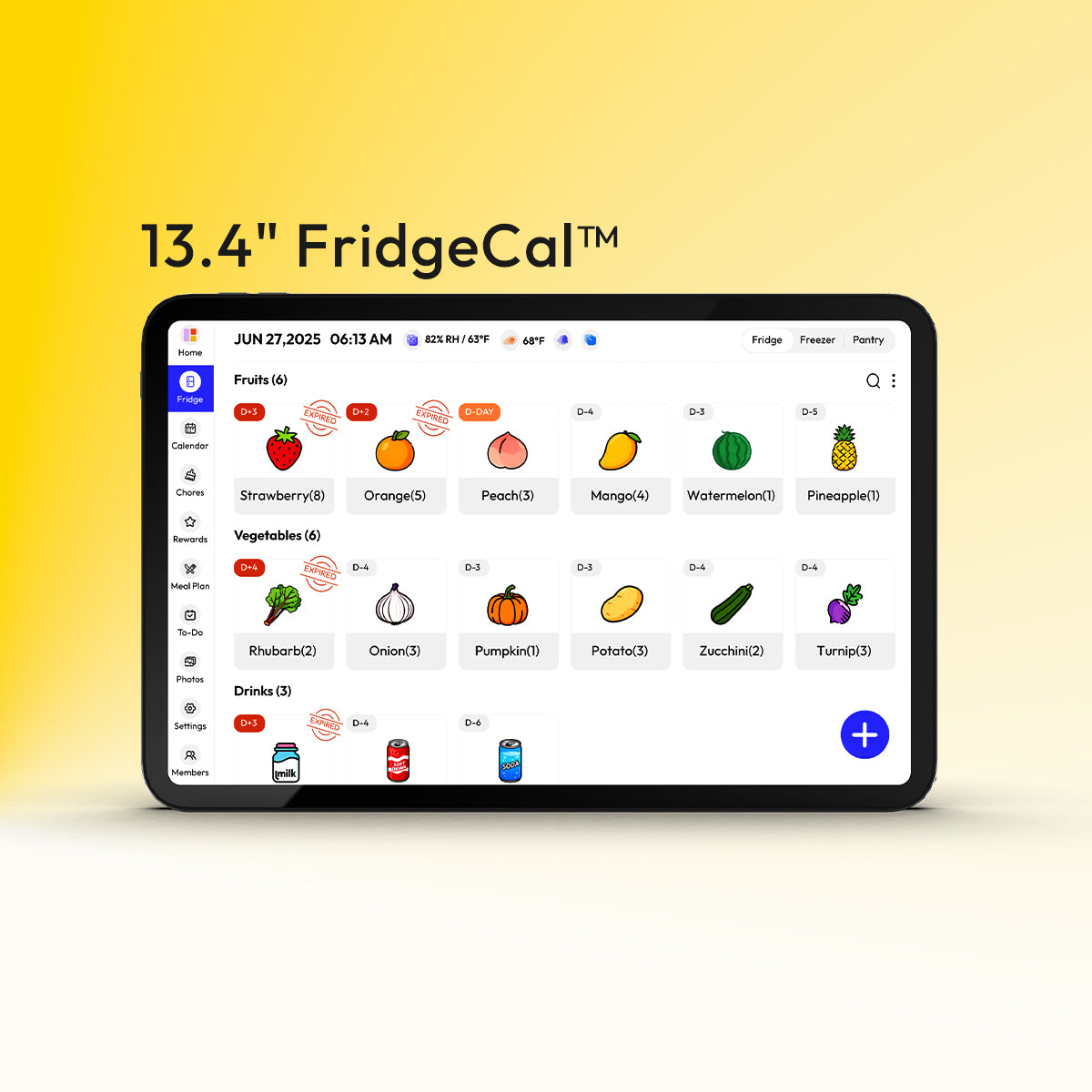


A digital calendar for the refrigerator is a shared home schedule on a screen near the fridge that keeps appointments, meals, and chores visible to everyone.
If your house turns into a relay race every morning, you know how fast pickup times, practices, and dinner plans get lost. A kitchen-based shared calendar helps because the kitchen is one of the few places everyone passes through all day, so the plan stays in view. This article explains how it works, what matters when you choose one, and where it helps most in real family life.
What a Refrigerator Digital Calendar Is
A shared screen for daily family logistics
A digital family calendar is not just a prettier version of a paper planner. It is a live schedule on a phone, tablet, or home display that can update automatically, repeat events, and let more than one person add or change plans. In home use, it usually sits inside a family command center that also tracks chores, groceries, meals, and reminders.

The main difference from paper is that the same event can appear in more than one place at once. If a parent changes a pickup time on a phone, that change should show up on the kitchen display too. That is what people mean by sync: one update, many screens.
Why families put it near the fridge
A refrigerator-side calendar gets repeated attention because people walk past it for drinks, snacks, lunch prep, and dinner cleanup. That matters more than it sounds. A schedule only helps if it gets seen before the decision is already late.
The kitchen also works as a practical command center because it is already where many family routines overlap. Morning leave-times, after-school activities, meal planning, and homework checks all touch the same part of the day. Putting the calendar there makes the plan easier to notice without making anyone open a phone app first.
How It Helps in a Busy Family Home
School pickups, meals, and appointments stay visible
A fridge-mounted calendar is most useful when the household is juggling recurring events. School pickup, soccer practice, a dentist visit, and a late work meeting can all live in the same view, which cuts down on the “what time is that?” loop. It is also a good place to show dinner plans and grocery reminders, because those are the details that often get lost between errands.

The best versions make handoffs visible. If one adult is handling pickup and another is handling dinner, both need the same information in the same place. A shared screen helps because kids, partners, grandparents, and babysitters can check the plan without using someone else’s cell phone.
Chores work better when the next step is obvious
A weekly chore chart on the same display can make household jobs more concrete. Instead of a vague note like “clean kitchen,” the task can say who owns it, when it needs to happen, and whether it is done. That small change matters when chores have to move around because of sports, overtime, or a sick child.
This is also where the hidden planning work shows up. Household schedules are not just about entering events. They also include remembering what to bring, spotting conflicts, and adding backup plans. A shared calendar reduces that mental load when one place holds the reminder instead of one person keeping it in their head.
What Features Matter Most
Sync, permissions, and color coding
The practical features matter more than the screen size. A good digital calendar should connect cleanly with a calendar platform, use clear permissions, and update quickly enough that people trust what they see. Family calendars usually work best when everyone can view the shared plan, but only the right people can edit the parts they own.
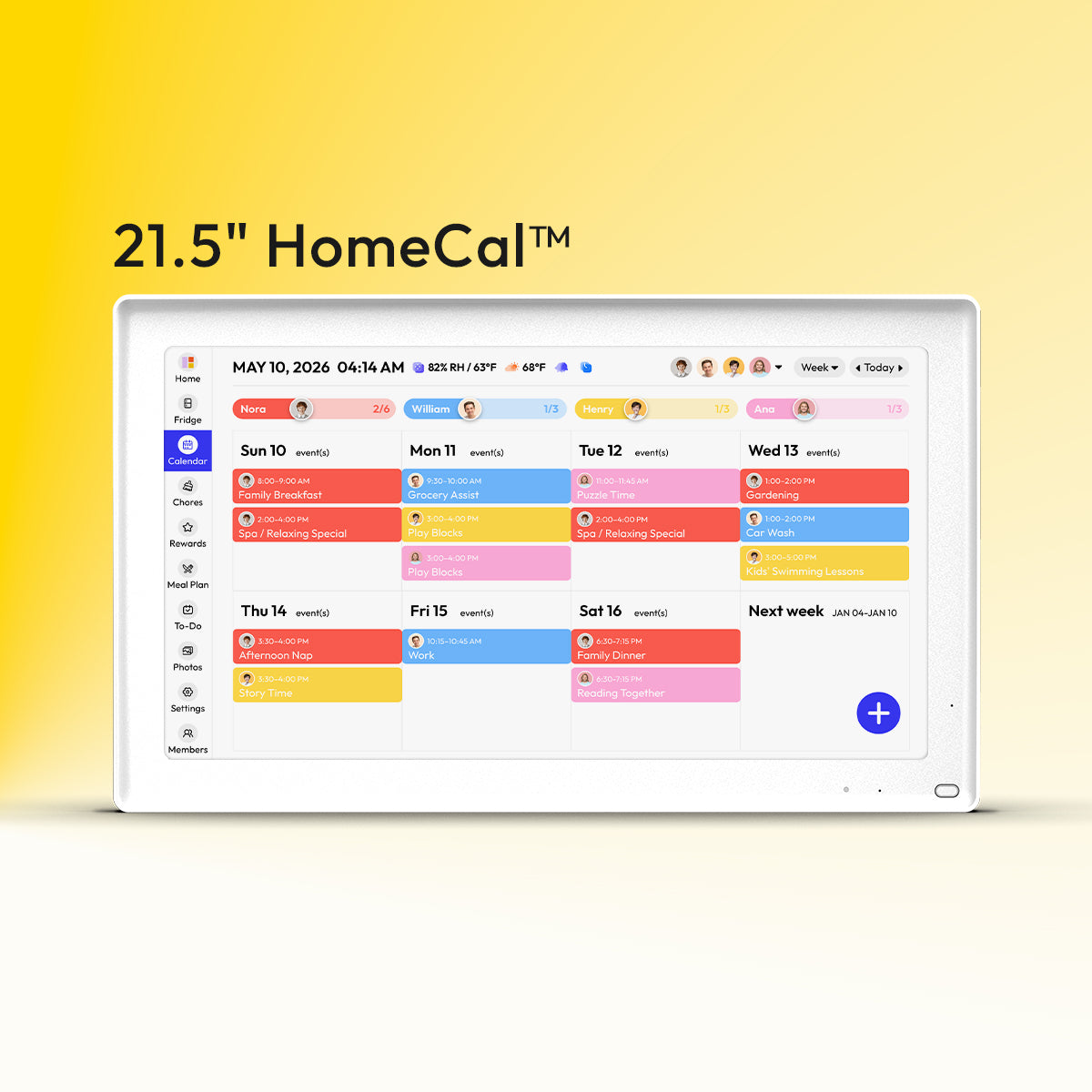
Color coding is not just decoration. It lets a parent spot school events, work meetings, and family plans at a glance. Shared events can use a neutral color, while each person gets a consistent color of their own. That makes the display easier to scan when breakfast is rushed and the kitchen is noisy.
Weekly view, reminders, and event details
For most families, a weekly view is enough. Keeping the display to the next seven days makes it faster to read and less likely to turn into a cluttered wall of information. The point is not to show every future event at once. The point is to help the household move through this week without missing what comes next.
Good events are specific. Include who is responsible, what is happening, where it is, when to leave, and whether something needs to be brought along. If a practice is across town, a travel buffer or commute time belongs in the event too. That is the kind of detail that prevents last-minute scrambling.
Setup Choices That Change the Experience
Mounting, visibility, and power
Placement matters because a calendar only works if people can see it without effort. A digital family calendar setup usually works best in a high-traffic kitchen area, near the fridge, in a mudroom, or by the entryway. Wall mounting saves counter space, and the screen center is often placed around 60 inches from the floor so adults can read it comfortably.
For example, the Everblog 21.5" Digital Calendar is a white wall-mounted family calendar display with a large touch screen for keeping plans, tasks, chores, and events visible in one kitchen spot.
If children need to interact with chores or check off tasks, the display can sit a little lower than adult eye level. A counter stand can make sense in a rental, on a desk, or anywhere wall mounting is awkward. Either way, you want access to power, strong wireless internet, and limited direct sunlight so the screen stays readable.
Digital versus paper, and when a hybrid works better
Paper calendars still have strengths. In university research, paper-calendar users were more likely to finish planned activities on time, and the paper format seemed to support a stronger big-picture view. That is worth taking seriously, because a family planner has to support real behavior, not just look neat on the wall.
For many households, the best answer is a hybrid. Use the digital display for live changes, reminders, and shared visibility, and keep a paper board or notebook nearby for quick planning, meal notes, or the week-ahead overview. That gives you the speed of digital without losing the tactile planning many families still prefer.

A Simple Way to Make It Work
Start with one shared source of truth
The biggest mistake is spreading the schedule across too many places. A shared family calendar works best when everyone agrees on one main place for appointments, school events, and household plans. Work calendars can stay read-only on the family display, while the family calendar itself stays editable for the people who need to add or change things.
A short weekly reset helps keep that system honest. A parenting platform recommends a 20-minute calendar check-in, and that is a realistic habit for a busy home. During that reset, review the next week, assign ownership for tasks, name backup plans, and clear out stale items before they turn into noise.
Make the information easy to scan
Use clear event titles, not vague labels. “Ella soccer, field 3, 5:30 PM” is more useful than “sports.” “Bring lunch money” is better than “school.” The point is to make the plan readable in a few seconds while someone is reaching for the coffee mug or trying to get out the door.
It also helps to keep the display near the other tools families already use. Meal plans, grocery lists, school papers, and key hooks belong in the same general zone because the kitchen command center works best when related tasks sit together. The fewer places people have to check, the fewer things get missed.
Key Takeaways
A digital calendar for the refrigerator is a shared household planning screen, not just a gadget on the wall. It works best when it shows the next week, syncs across devices, and stays in a spot the family passes all day.
For a busy home, the value is simple: fewer surprise conflicts, clearer chore ownership, and less repeated asking. Start with one shared calendar, set up color coding, and decide whether your family needs a full wall mount, a counter stand, or a hybrid with paper nearby.
FAQ
Q: Is a refrigerator digital calendar better than a paper calendar?
A: It is better when your schedule changes often and multiple people need the same update fast. Paper can still be useful if your family likes to plan the week on paper or wants a big-picture view that stays visible without tapping a screen.
Q: Does it have to be mounted on the refrigerator itself?
A: No. Many families use the wall beside the fridge, a pantry wall, an entryway, or a stand on a counter or desk. The real goal is visibility in a place people already walk through.
Q: What should I look for first when choosing one?
A: Start with calendar compatibility, clear permissions, fast syncing, and a layout that is easy to read at a glance. After that, check whether the screen placement, power setup, and wireless internet fit your kitchen.
References
- The Ultimate Calendar for Kitchen Command Centers
- Digital Family Calendar Setup: Organize Your Home Today
- Weekly Chore Chart: Best Ways to Use in a Command Center
- Digital Calendar: A Guide for Busy Family Organization
- Tetris family calendars and the emotional load
- Back to the Basics: Don’t Ditch the Paper Planner


