






The right electronic family calendar is the one your household will actually see and update. For most families, that means a simple shared calendar for appointments plus one visible system for meals, chores, and everyday reminders.
If school pickup, sports, grocery runs, and dish duty are all living in different places, the problem usually is not effort. It is that nobody has one clear view of what is happening next. The goal is to choose a setup that cuts down missed events, makes chores easier to follow, and still feels simple enough to keep using next month.
Start With the Planning Problem You Actually Have
Scheduling trouble and double-booking
For many households, the main pain point is not one busy day but a lack of one shared place for events, reminders, and lists. That matters because the tool you need for missed appointments is not always the same tool you need for dishes, dinners, and grocery runs. One source found that 82% of parents struggle to track events, parents spend about 8.5 hours each week coordinating schedules, and 56% of families have missed something important because of conflicts.

A good first filter is to ask what keeps breaking now. A practical buying guide recommends matching the calendar to the household’s main pain point: missed appointments, double-booking, chore tracking, or managing too many separate calendars. If your stress comes from school and sports collisions, shared scheduling and reminders matter most. If the stress shows up at 5:30 PM, you probably need meal planning and chore visibility just as much as calendar syncing.
Meals and chores that never stay visible
Hands-on app testing published on January 1, 2026 showed that the most useful family tools went beyond events and helped with chores, lists, and routine planning. That is a useful reality check. A calendar that looks great for appointments can still fail at home if nobody can see dinner plans, shopping needs, or whose turn it is to unload the dishwasher.
Pick the Format That Matches Your Home
Shared app, wall display, or hybrid
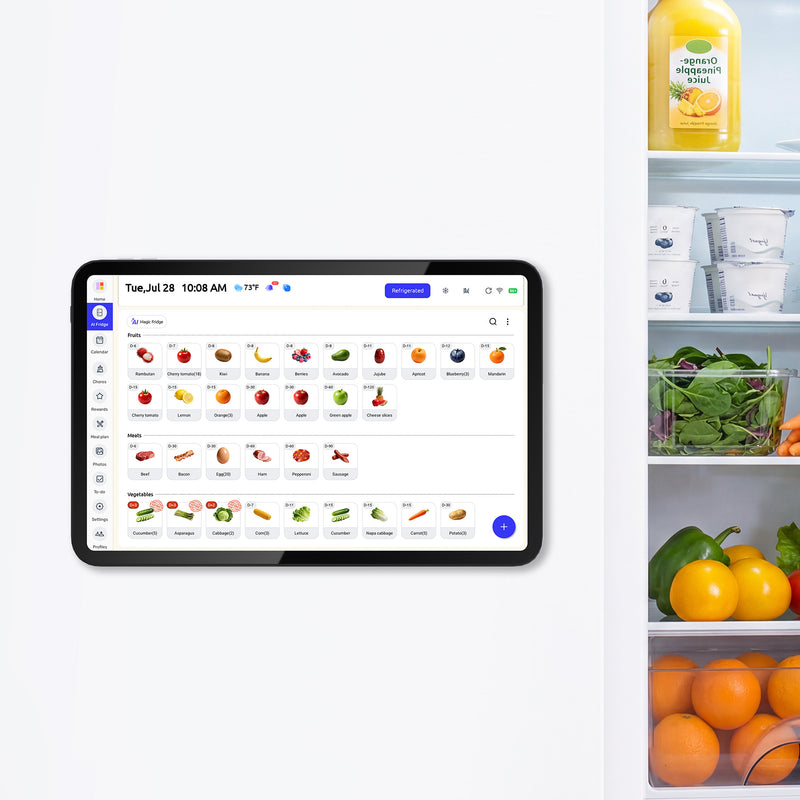
For most families, a hybrid setup works best: one shared calendar app, one simple task system, and one visible home surface for meals, errands, and reminders. That setup covers both kinds of planning. The app helps when someone is at work, in the car line, or at practice. The visible home surface helps when people ignore phone alerts, forget to open the app, or need a quick glance while walking through the kitchen.
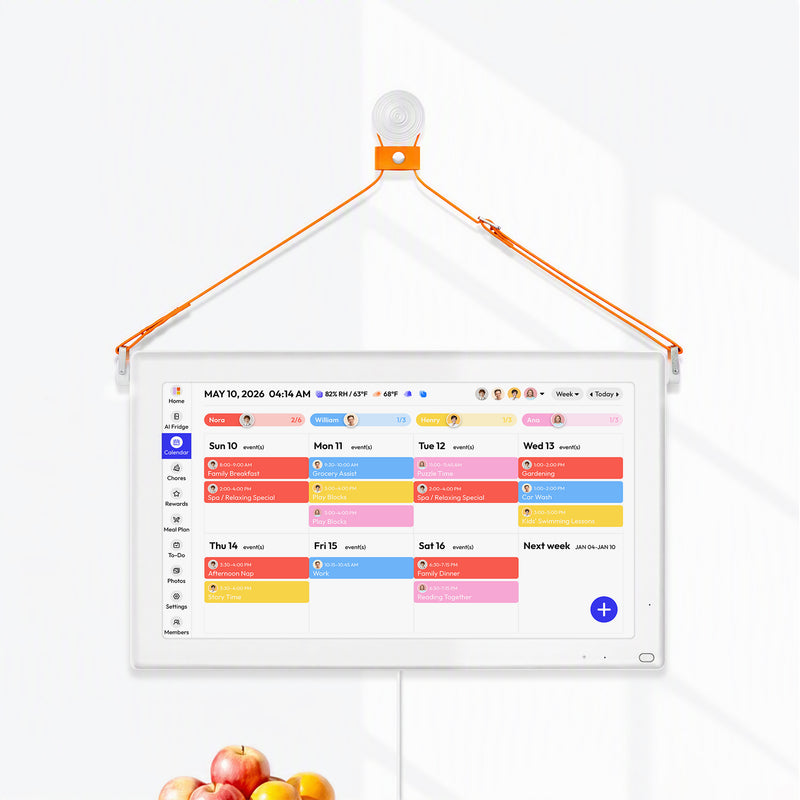
If visibility is the real issue, screen size and viewing distance matter more than many families expect. A 10- to 13-inch display works only at about 3 to 4 feet away. A 15- to 17-inch display is easier to read from 6 to 8 feet. A 21-inch or larger display is much better for a full-week view without constant scrolling. For families comparing wall-mounted options, a larger display such as the Everblog 21.5" Digital Calendar can help keep meals, chores, and events visible in one shared spot. That is the difference between a device people check in passing and one they skip because it is hard to read.
A visible home hub does not need a huge wall or a custom remodel. Family command centers can fit on narrow walls, corners, cabinet backs, and other small unused spaces. If your household already drops keys, backpacks, school papers, and lunch notes in one area, that is usually the right place to anchor the calendar too.
Option |
Best for |
Falls short when |
Typical cost/setup |
Shared app only |
Families who mostly manage life from phones and need fast schedule updates |
People ignore alerts or kids need a visible at-home routine |
Often free or low-cost; quickest setup |
Wall display only |
Homes that need strong visibility in one room |
Family members need remote updates during the day |
Old tablet plus a $20.00 to $50.00 mount, or a dedicated display |
Hybrid app + visible home surface |
Busy households juggling schedules, meals, and chores |
No one wants any setup time at all |
More setup at first, but usually better long-term fit |
Check the Features That Matter Most
Visibility, reminders, and sync behavior
The safest choice is a tool with shared access, color-coding, reminders, and family-wide visibility across phones and computers. Those basics solve most scheduling problems without adding much complexity. Color-coding lets one glance answer “who is this for?” Reminders cut down no-shows. Shared access matters because a family calendar fails fast when only one person can update it.
Sync behavior is where many families buy the wrong tool. Two-way sync is the important standard for a wall display or shared calendar system: if someone adds a dentist visit on a phone, it should appear on the home display, and edits made on the display should flow back. Some systems only mirror outside calendars in a limited way. If your household uses work calendars, school calendars, and personal calendars, this detail matters more than bonus features.
Meal and chore tools that are simple enough to use
For meals and chores, shared grocery lists, recurring tasks, checkboxes, and quick updates matter more than fancy extras. A weekly meal plan that links to a shopping list is useful because it turns “What are we eating?” into “What do we need to buy?” A recurring chore tool is useful because nobody should have to re-enter “trash night” or “wipe counters” every week.
Ease of setup matters because families stop using tools that feel like work. A real-parent test found some shared calendar apps were usable in under 10 minutes, while more structured systems came with a learning curve. That trade-off is worth taking seriously. If your household has never maintained a shared system before, the better choice is often the one with fewer taps and fewer screens.
Design the System for Follow-Through
Make chores concrete and visible
A planning system works better when chores are concrete, observable, and posted where people will see them. In one large family example, daily rotation caused complaints and constant parent mediation, while a weekly rotation worked better because expectations stayed clear for longer. That is a useful lesson for digital calendars too: “clean kitchen” is vague, but “load dishwasher, wipe counters, clear table” is something a child or adult can actually finish.
The strongest chore systems also stay flexible. One family’s weekly wall chart had been used for about six months and averaged only a “C+,” but it still improved visibility and accountability because everyone could see it and update it. That is a healthy benchmark. You do not need a perfect system. You need one that makes the work visible enough that people can recover after a messy week.
Build a routine around the tool
Adoption usually comes from routine, not software. A practical command-center guide recommends one short weekly planning session, a one-minute daily check-in, immediate capture of new items, and a 2- to 3-week overlap when switching systems. That is the kind of rhythm that keeps a tool alive. Sunday evening can be enough: review the next seven days, assign dinners, rotate chores, and add anything new before Monday starts.

Fairness matters too, especially in adult households. A chore audit can reduce resentment by helping couples list cooking, cleaning, shopping, and scheduling work separately and compare what each person thinks they own. A digital calendar helps with visibility, but it will not fix an unfair workload by itself. If one person still notices, plans, reminds, and follows up on everything, the system is only masking the problem.
Know When a Simpler Option Is Good Enough
When not to buy a dedicated display
For some families, paper still works best for younger children and simple at-home routines. If your children need picture-based routines, or if chores mostly happen inside the home, a printed weekly chart or whiteboard may do the job better than another screen. A digital calendar can still run the schedule in the background while the visible chore layer stays simple.
Cost is another reason to stay basic. A buying guide puts the low end at an old tablet with a $20.00 to $50.00 mount, while dedicated displays often land around $150.00 to $400.00 and premium options can go much higher. If you are still proving the habit, start cheaper. A free shared calendar plus a meal board on the fridge is often enough to learn whether your family will actually use a visible system.
Simple chore formats can also outperform more elaborate ones. A zone-based family chore system breaks work into a few repeatable daily areas and keeps the average time to about 30 minutes per child per day. That kind of structure is easier to maintain than a giant master list with too many categories. In practice, fewer moving parts usually means better follow-through.
FAQ
Q: Do I need one app that does everything?
A: Not always. If scheduling is your main problem, a shared calendar may be enough. If meals and chores keep getting missed, a calendar plus one simple visible system usually works better than forcing everything into one app.
Q: How do I know if my family needs a wall display?
A: You probably need one if family members ignore phone calendars, ask the same schedule questions every day, or forget meals and chores unless they are in front of them. If phone reminders already work, a display may be unnecessary.
Q: What is the fastest way to get everyone using the system?
A: Start with one weekly planning session, one daily glance, and only 3 to 5 core chores or routine items at first. Keep the setup visible, easy to update, and specific enough that people know exactly what “done” means.
Final Takeaway
Choose the calendar format by the problem you need to solve, not by the most impressive feature list. If you mainly need shared scheduling, start with a simple shared calendar that syncs well and sends reminders. If your real problem is that nobody sees dinner plans, school papers, or chore assignments, add a visible home surface in a high-traffic spot.
For most households, the best long-term fit is a hybrid: shared digital scheduling on phones, plus one visible command-center area for meals, chores, and paper clutter. Start small, keep tasks concrete, and give the system two or three weeks before deciding whether it is working.
References
- Family calendar decision criteria and shared planning basics
- How to choose a digital family calendar
- How to choose the right chore chart and command-center setup
- Hands-on review of shared family calendar apps
- Shared calendar reminder and access features
- Weekly chore rotation example
- Visible family command center ideas
- Editable weekly family chore chart example
- Household chore audit for couples
- Zone-based family chore system


