




Quick Answer:
A smart kitchen is not defined by the number of connected appliances. It combines technology, food visibility, meal planning, shopping systems, and shared routines to help households make better decisions with less friction.
A smart kitchen uses technology and routines to improve recurring decisions: what food is available, what to cook, what to buy, and who needs to act. Connected appliances can support that system, but more Wi-Fi devices do not automatically produce better decisions.
A tool earns space when it makes a frequent kitchen task safer, clearer, easier to share, or less repetitive without creating more upkeep than it removes.

What a Smart Kitchen Should Actually Improve
A smart kitchen should improve work around food, not merely increase the number of connected products. Appliances are one layer; household information is another.
How Do Smart Appliances Improve Kitchen Automation?
The conventional definition starts with appliances. The Home Depot's smart-kitchen guide, updated in March 2026, covers connected refrigerators, ovens, lighting, faucets, sensors, voice assistants, and hubs. These products may offer remote status, programs, alerts, cameras, or voice control.
Whirlpool's connected-appliance page describes phone controls, compatible voice assistants, remote oven preheating, monitoring, and connected cooking instructions. Those functions add value when they reduce repeated checking or simplify a specific task.
A remotely preheated oven still cannot decide which leftovers need using, whether someone bought milk, or who can cook before soccer practice.
Why Does a Smart Kitchen Need Information Management?
The second layer connects inventory, expiration awareness, meals, grocery lists, schedules, and responsibilities. It helps the household interpret what is stored and coordinate action.
|
Intelligence layer |
Typical tools |
Question it answers |
Common weakness |
|
Appliance and automation layer |
Connected oven, smart refrigerator, multicooker, voice assistant, sensors |
How can this cooking, storage, or control task run more easily? |
Devices may remain isolated from meals, shopping, and schedules |
|
Household information layer |
Food inventory, meal planner, shared list, kitchen display, family calendar |
What should we use, make, buy, or assign next? |
Information becomes unreliable when nobody updates it |
A connected kitchen is strongest when the two layers support each other. The oven can manage a cooking program while the household system explains why that meal fits tonight.
Five Decisions a Smart Kitchen Should Support
Start with decisions the household repeats. If a device improves none of them, its smart features may be novelty.
|
Decision |
Typical failure |
Minimum useful system |
Possible technology layer |
|
What food is available? |
Items hide behind containers or live in someone's memory |
Visible zones and a short inventory |
Photo capture, inventory app, or fridge tracking |
|
What needs attention first? |
Opened food and leftovers are forgotten |
“Use first” area with dates |
Expiration reminders and priority views |
|
What can we cook? |
Meals ignore time, preferences, or equipment |
Flexible plan based on food and schedule |
Recipe search or ingredient-aware suggestions |
|
What should we buy? |
Lists repeat stock or miss meal ingredients |
Meal plan checked against current stock |
Shared grocery list with remote access |
|
Who needs to act? |
Shopping, prep, and schedule changes stay with one person |
Visible assignments and one current plan |
Shared display, calendar, and notifications |
A useful system shows what food is available
Visibility does not require tracking every grain of rice. One household may need labeled zones and a short leftovers note; another with several shoppers may benefit from photos or a digital inventory.
Choose the lightest method that stays accurate. This comparison of smart fridge tracking versus grocery apps explains the maintenance tradeoffs.
Priority cues show what needs attention first
A raw inventory does not show which item needs a decision today. Add a “use first” cue based on opened or prepared dates, safe storage guidance, and visible condition.
Package dates are not universal safety timers, and an alert cannot inspect food. Treat reminders as prompts to check, not permission to eat an item regardless of storage history.
Meal ideas must reflect real constraints
Useful meal planning connects food on hand with time, servings, preferences, equipment, and schedule. “Use the chicken tonight” fails if nobody has time to cook it.
Technology can narrow ideas, but verified guidance still matters for temperatures, allergies, preservation, and other safety-critical steps.
Shopping lists should start with meals and current stock
Build the list from the gap between planned meals and what is already available. This catches duplicate purchases that appear when one person plans meals, another shops, and neither sees the same inventory.
A shared list helps only when everyone knows which version is current. Decide how items are added, marked purchased, and cleared before introducing another app.
Shared ownership makes action visible
A household system should show who will shop, cook, store leftovers, or update a changed plan. Tasks hidden in one person's phone are easy to overlook.
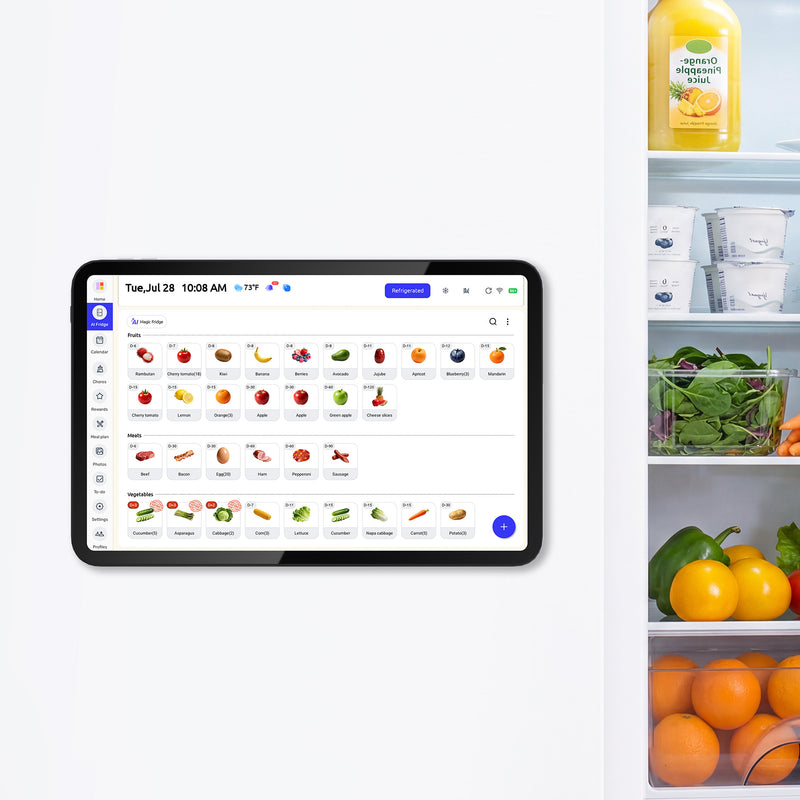
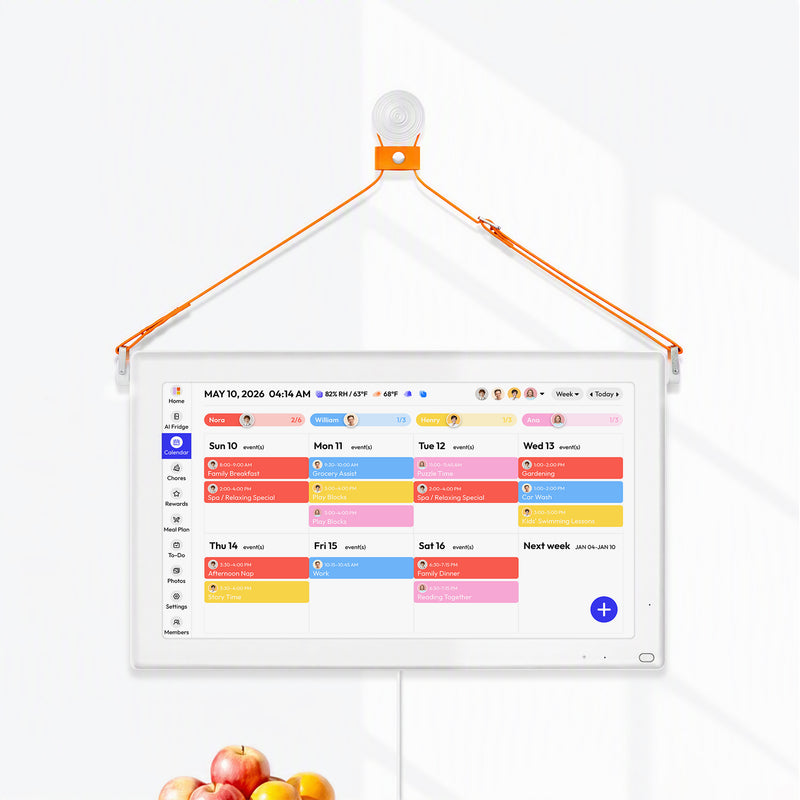
A digital family command center can place meals and grocery decisions beside the schedules that shape them.
Build the Smart Kitchen Decision Stack
Reliable foundations matter more than advanced features. The Smart Kitchen Decision Stack orders upgrades by usefulness; Not every household needs all five layers.

Safety and storage form the foundation
No app compensates for unsafe storage. The FDA refrigerator guidance recommends 40°F or below for refrigerators, 0°F for freezers, and enough space for cold air to circulate.
Use an appliance thermometer rather than trusting the control dial. Contain raw foods, clean spills, cover refrigerated food, and plan for power loss before adding convenience automation.
Visibility makes food and plans reviewable
Visibility combines physical organization with an information surface. Zones reveal food; a whiteboard, planner, tablet, or display reveals meals and responsibilities.
Place information where the decision happens. A refrigerator plan may beat an app nobody opens at 5:30 p.m. This guide can help you choose a calendar for the kitchen.
Planning turns available food into realistic meals
Planning should follow inventory and schedule. Start with ingredients needing attention, choose realistic meals, and leave room for leftovers or a pantry dinner.
The goal is a current, flexible plan that explains what the food is for.
Coordination gives everyone the same current view
Coordination prevents one person's plan from becoming everyone else's outdated assumption. Use one current source for meals and shopping, with clear ownership.
Phones help away from home; a visible kitchen surface supports passive awareness. The right mix depends on who shops, cooks, and updates.
Automation belongs on top of working routines
Automate a process only after the manual version is understandable. A reminder tied to a stale inventory creates noise. A remote appliance control that nobody trusts creates another status check.
Good automation removes a repeated step while preserving confirmation, such as a reviewed low-stock reminder, shared-list update, or oven alert.
Match Smart Kitchen Technology to the Problem
Different tools solve different bottlenecks, so compare their primary job, upkeep, and failure mode instead of their feature count.
|
Tool |
Primary job |
Best fit |
Main limitation |
Setup, privacy, and fallback question |
|
Connected refrigerator |
Storage monitoring, cameras, remote status, or appliance controls |
Households replacing a refrigerator and valuing its specific connected functions |
High replacement cost and features tied to one appliance |
What works if the app, Wi-Fi, or vendor service stops? |
|
Smart oven or range |
Remote status, preheating, programs, and alerts |
Cooks who repeatedly need those controls |
Cannot choose meals or verify ingredients |
Can remote controls be disabled, and which actions require local confirmation? |
|
Smart multicooker |
Guided or automated cooking |
Repeated one-pot meals and batch cooking |
Adds another appliance and cleaning routine |
Is the useful cooking mode available without an account? |
|
Voice assistant |
Timers, hands-free questions, lists, and device control |
Kitchens where hands-free access solves a clear problem |
Microphone privacy and unreliable recognition |
Can recordings, permissions, and connected services be reviewed? |
|
Shared kitchen display |
Visible plans, lists, inventory, and responsibilities |
Several people need the same household information |
Requires placement, power or charging, and consistent updates |
What remains visible offline, and who can edit private schedules? |
|
Phone app |
Portable lists, inventory, and remote updates |
One or more consistent phone users |
Information stays hidden until someone checks |
Can data be exported, shared selectively, or used without a subscription? |
|
Labels or whiteboard |
Simple visibility and reminders |
Low-complexity households and renters |
No automatic remote access or alerts |
Will a photo or paper backup cover shopping away from home? |
The most connected option is not always the most capable system. A thermometer and reliable whiteboard can beat an expensive appliance when the problems are temperature and visibility.
Four Upgrades to Try Before Replacing an Appliance
Many households can improve safety and coordination before replacing an appliance. Start with the lowest-cost change that addresses a repeated failure.
A refrigerator thermometer verifies the safety baseline
Place a freestanding thermometer where it is easy to read, check it regularly, and adjust the refrigerator if it rises above 40°F. This creates a measured baseline.
A visible use-first area surfaces time-sensitive food
Choose one front-facing shelf or bin for leftovers, opened products, and ingredients needing attention. Date items when helpful and keep the area easy to scan.
Connected meals and grocery lists reduce duplicate planning
Use one weekly meal view and one shopping list. Check current stock before adding ingredients, then let the list travel with the shopper through paper, a photo, or shared digital access. Do not assume automatic list generation unless the chosen tool clearly documents it.
A shared display belongs where decisions happen
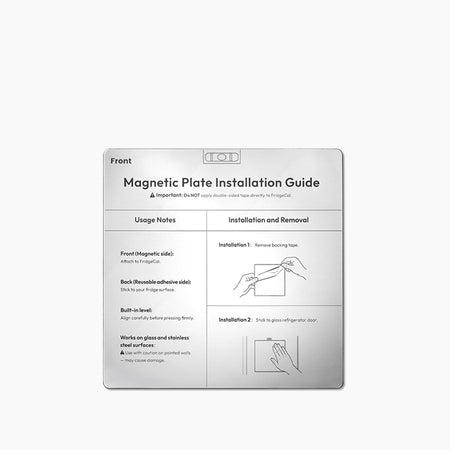
Test placement with a temporary paper plan. Check traffic, reach, glare, power, mounting surface, and whether children or guests would see private information.
Privacy, Reliability, and Maintenance Count
A kitchen system that exposes private schedules, fails without Wi-Fi, or demands constant correction can create more work than it removes. Treat upkeep and failure recovery as product features.
Access settings should match household roles
Review access to calendars, photos, lists, microphones, cameras, and accounts. Check what is stored, how long it remains, and whether it can be deleted or exported.
The FTC's guidance for internet-connected home devices recommends changing default credentials, using two-factor authentication when offered, installing updates, and disabling features you do not use.
An offline fallback preserves trust
Ask what remains available during a Wi-Fi outage, service interruption, account problem, or company shutdown. Essential cooking and food-safety tasks should never depend on cloud access alone.
A practical fallback may be a thermometer, printed recipe, local appliance controls, and a paper or photographed shopping list.
Updates, corrections, charging, and subscriptions are real upkeep
Connected products need software support as well as cleaning and power. NIST's consumer IoT guidance identifies data protection and secure software updates as core capabilities and treats lifecycle support as part of the product decision.
Before buying, check updates, support life, accounts, subscriptions, power, and inventory corrections. End-of-support risk matters most for long-lived appliances.
When a Shared Kitchen Display Adds Value
A shared display helps when household information already exists but stays fragmented or invisible at home. It is not necessary when a simpler system is current, visible, and easy to maintain.
Shared displays fit multi-person, high-change households
A display helps when several people shop or cook, children need visible routines, or meals change with schedules. It creates a common view without requiring everyone to open the same app.
Form factor should follow placement. A fridge-mounted format fits refrigerator-first food and meal workflows. A larger wall or countertop format fits households that need a broader family overview. Both add an information layer; neither replaces physical storage, a refrigerator thermometer, safe handling, or human participation.
Simple households may not need another maintained system
One person with a stable routine may be better served by a whiteboard and phone list. The same is true when household members will not update a shared system or when the proposed screen has no natural, visible location.
Run a seven-day decision audit before purchasing anything. For each failed decision, record the question, who needed the answer, where the information lived, and the consequence. Solve the most repeated bottleneck first with a label, routine, app, appliance, or display.
Frequently Asked Questions
What is a smart kitchen?
A smart kitchen combines useful technology and routines to improve cooking, food storage, planning, shopping, safety, or household coordination. The best setup solves recurring problems without adding unnecessary maintenance.
Do I need smart appliances to have a smart kitchen?
No. A refrigerator thermometer, visible food system, shared meal plan, and accessible grocery list may solve the main problem without replacing an appliance.
What should I automate first?
Automate the recurring task with the clearest failure and lowest maintenance cost. Good starting points include reminders, shared-list updates, or appliance alerts that preserve human confirmation.
Are smart kitchens expensive?
They can range from low-cost labels and thermometers to connected major appliances. Compare total ownership cost, subscriptions, support life, and expected use instead of assuming one budget or buying category.
Can a family calendar be part of a smart kitchen?
Yes. A family calendar becomes part of the kitchen system when schedules determine meals, shopping, and responsibilities, especially when the information is visible where those decisions happen.


