





The most reliable fix is not trying harder. It is moving school events out of your head and into one shared, visible family system that other people can use too.
Did you remember pajama day at 10:47 PM, then realize the permission slip was still in the backpack? When school dates, spirit weeks, practices, dentist visits, and dinner plans all live in one parent’s memory, even a loving home can start to feel like a crisis desk. A shared calendar, visible reminders, and clear ownership can turn “Mom forgot again” into “the family system caught it.”
Why School Events Get Missed When Mom Has ADHD
ADHD often makes the “remember later” part of parenting feel especially fragile. You may care deeply, write things down sometimes, and still lose the thread when an email arrives during breakfast, a paper flyer gets buried under mail, or a teacher message comes in while you are driving.

That is not a character flaw. It is a systems problem.
The mental load is the invisible work of noticing, remembering, planning, and tracking what everyone needs before the visible task happens. Mental load becomes exhausting because it creates a constant internal to-do list: picture day, library books, snack signup, early dismissal, field trip payment, orthodontist appointment, and the child who needs a white shirt by Friday.
Utah State University describes this “worry work” as family labor that often falls heavily on mothers and notes that studies suggest nearly 9 in 10 mothers feel solely responsible for organizing the family schedule. That matters because forgetting a school event is rarely about one date. It is usually the result of one person being treated as the family’s memory.
The Goal Is External Memory, Not Perfect Memory
For an ADHD-friendly household, the goal is to stop depending on your brain as the master calendar. A good system gives every event one trusted place to land, one visible place to be checked, and one routine time for review.
A central family calendar is one of the simplest ways to reduce repeated questions, missed plans, and last-minute scrambling. Family organization works best when calendars, routines, and communication habits are shared instead of managed privately by one parent.

Here is the practical test: if school announces “class photos are next Tuesday,” can that information become visible to the household in under two minutes? If yes, your system is helping. If it requires you to remember the email, tell your partner, remind your child, buy the form, and bring it up again Monday night, the system is still Mom.
Build a Three-Part School Event Capture System
Create One Inbox for School Information
School information usually arrives from too many directions: email, paper folders, apps, text threads, classroom portals, PTO messages, and your child’s half-remembered announcement from the car seat. Start by choosing one capture rule: every school date goes into the family calendar the same day it is seen.
This does not mean you need a perfect admin hour. It means using a low-friction habit. When an email says “field trip on October 18,” add the event immediately with the time, location, cost, and what your child needs to bring. If the flyer is paper, take a cell phone photo before it disappears, then add the date during your next calendar check.
A synced digital calendar is especially useful when adults and teens are moving between home, work, school, and activities. A synced digital calendar can help families see work, school, extracurriculars, and tasks in one place instead of relying on scattered reminders.
Make the Calendar Visible Where Life Actually Happens
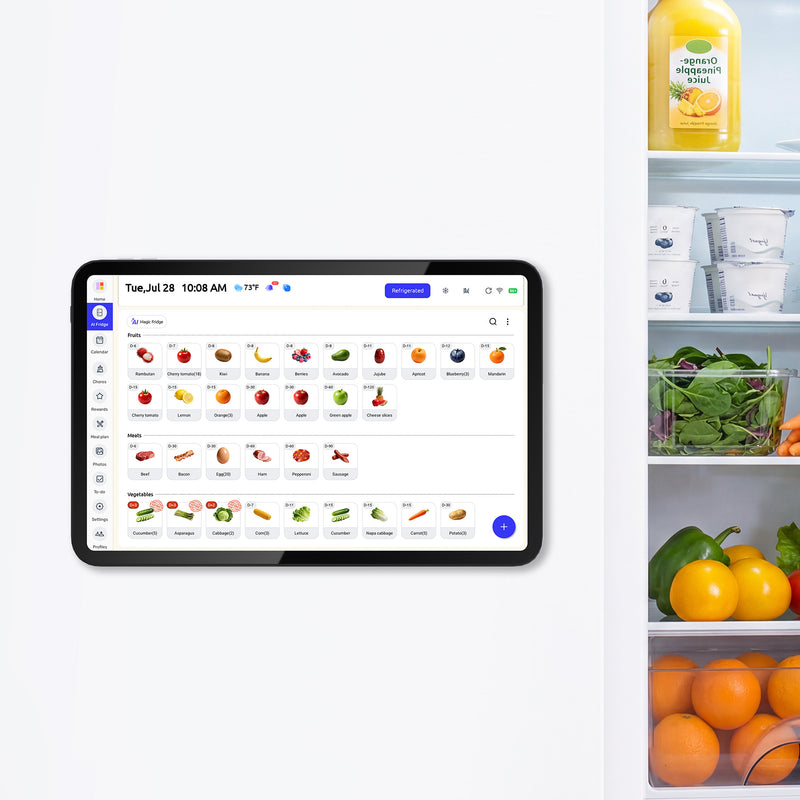
A calendar that only lives on your phone can still be invisible to everyone else. That is why many families do better with a kitchen command center, a fridge calendar, or a digital wall display in a high-traffic space.
Reviewers note that digital wall calendars are meant to make household schedules more visible than standard phone or computer apps, but placement is critical. A digital wall calendar hidden in an office will not help the morning rush; one near the kitchen, fridge, or family entry point has a much better chance of becoming part of daily life.
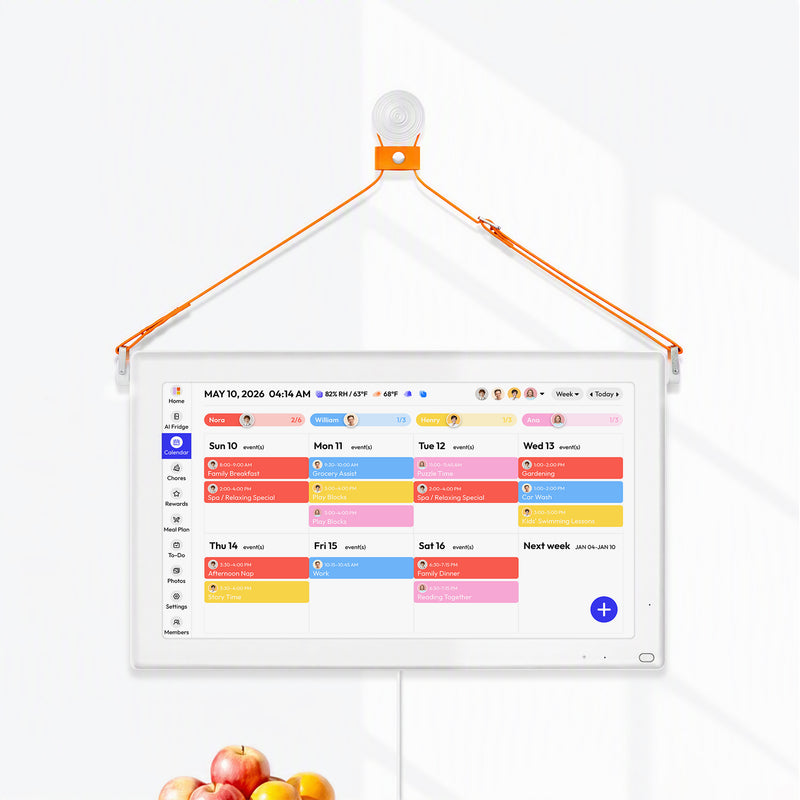
For a school-event example, a visible calendar should show “Book Fair Money Due,” “Wear Red,” and “Early Dismissal 12:15 PM” without requiring anyone to open an app. Children can check it while packing backpacks. A partner can notice Friday’s volunteer slot. Mom no longer has to be the town crier.

Use Color and Reminders Without Overloading the Screen
Color coding is not decoration; it is a scanning tool. Give each child a color, give parents their own colors, and use one shared family color for events that affect everyone. If your daughter’s events are green and your son’s are blue, you can spot conflicts faster.
Reminders should be layered by consequence. A normal spirit day may need one reminder the night before. A field trip may need a reminder one week before for payment, two days before for supplies, and the morning of for the packed lunch. A school concert may need a reminder to invite grandparents, another to prepare clothes, and another for arrival time.
The key is to remind the system, not just Mom. If a partner is responsible for transportation, that person gets the reminder. If a child is old enough to pack library books, the child sees the reminder on the family display or checklist.
Share Ownership, Not Just Tasks
The most common mental-load trap is asking for help while keeping responsibility. “Can you grab poster board?” still leaves you tracking the project, deadline, size, color, and whether the child brought it to school. True delegation sounds more like, “You own the science fair display from supply list to school drop-off.”
Sharing the mental load requires making invisible work visible and dividing responsibilities clearly instead of leaving one partner to assign every task. That difference matters in ADHD households because frequent task-switching and repeated verbal reminders can drain the exact attention you are trying to protect.
A practical split might look like this: one parent owns all school transportation changes, while the other owns forms and payments. One child owns backpack cleanout every Thursday after dinner. Another child owns checking the fridge display each morning and reading the top school reminder out loud. The point is not perfection; it is fewer invisible steps living in one person’s head.

Should You Use a Paper Calendar, Shared App, or Smart Fridge Display?
There is no single best tool for every family. The best choice is the one your household will actually look at and update.
System |
Best Fit |
Pros |
Cons |
Paper fridge calendar |
Families who need simple visual cues |
Cheap, obvious, easy for young kids to see |
Requires manual copying from emails and apps |
Shared phone calendar |
Families already using major calendar apps |
Syncs quickly, easy to update away from home |
Can stay invisible during busy mornings |
Smart digital fridge or wall calendar |
Busy households needing shared visibility |
Combines synced events, chores, routines, and reminders |
Higher cost and may require setup or subscriptions |
DIY dashboard |
Tech-comfortable families |
Highly customizable and flexible |
More maintenance and hardware decisions |
Digital family calendars can centralize events, chores, meal plans, to-dos, and reminders, but price and family adoption matter. Digital family calendars can cost far more than paper systems, and a device only helps if the family actually uses it.
Some products are built around the idea of a shared household display. A touchscreen hub can bring events, chores, dinner plans, tasks, lists, and routines into one place, while a smart family calendar can support shared spaces such as kitchens and dining areas.
For some families, a DIY display can work well. Scott Hanselman’s wall-mounted family dashboard shows how a small computer and monitor can create a glanceable calendar, but his build also highlights the need for reliable hardware, clean mounting, and low-maintenance operation. A wall-mounted family calendar should behave like an appliance, not another weekend project demanding attention.
A Calm Weekly Reset That Prevents Monday Panic
Set one weekly reset time, ideally Sunday afternoon or after dinner. Keep it short enough that the family will repeat it. Ten minutes is better than a beautiful 45-minute meeting that everyone avoids.
During the reset, look at the next two school weeks. Check for early dismissals, special clothes, payments, library days, sports gear, school lunches, volunteer shifts, and transportation changes. Then add missing reminders while everyone is present.
This is also where you reduce overload. If Tuesday has a school concert, late soccer practice, and a work deadline, decide early what dinner will be and who is driving. A busy schedule feels less threatening when the hard parts are named before they become emergencies.
Regular family check-ins also help children build responsibility. A central family calendar works best when it is part of routines, not a one-time organizing project.
What to Do When the System Breaks
It will break sometimes. A teacher will send a late email. A child will forget the folder. A calendar sync will fail. ADHD-friendly organization is not about preventing every miss; it is about recovering without shame and improving the next handoff.
When something is forgotten, ask a systems question instead of a blame question. Did the event have a place to land? Was it visible? Did the responsible person get a reminder? Was the reminder early enough to act on?
If the answer is no, adjust one piece. Add a school-email processing time. Move the display closer to the breakfast area. Add a 7:30 PM backpack check. Give your partner ownership of one school category. Small repairs beat dramatic resets.
FAQ
What if my partner says, “Just tell me what to do”?
That still leaves you managing the invisible work. Try assigning a whole category instead of individual tasks. For example, “You own school forms this semester” is more helpful than “Please sign this one paper.”
What if my child is too young to use a calendar?
Young children can still use visual routines. A picture checklist for backpack, shoes, lunch, and folder builds the habit of checking the system instead of waiting for Mom to remember everything.
Is a smart fridge calendar worth it for ADHD families?
It can be, especially if your family already uses digital calendars and needs a shared visual hub. If no one updates calendars consistently yet, start with a shared phone calendar and a visible weekly review before buying hardware.
Forgetting school events does not mean you are failing your family. It usually means the family has been leaning too hard on one tired brain. Put the dates where everyone can see them, give responsibilities real owners, and let the household calendar become the steady memory your home deserves.


