
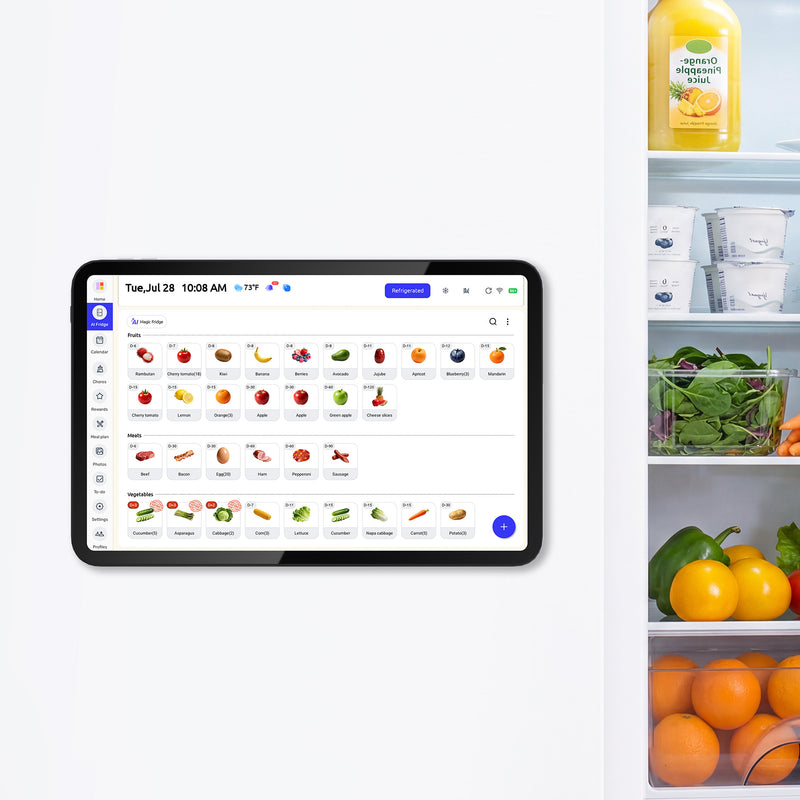



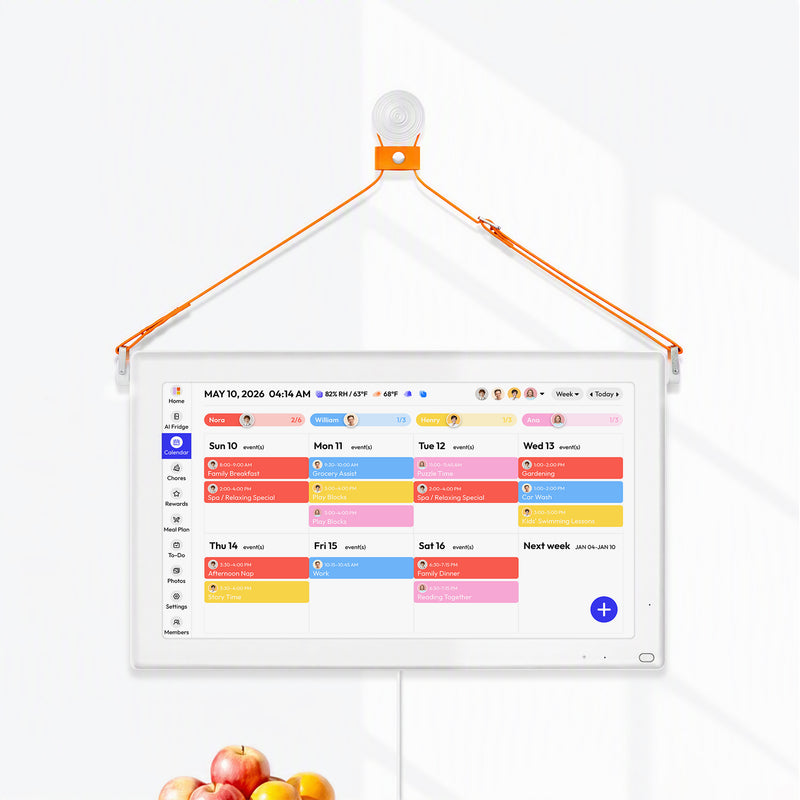




A pet care contract works best as a household operating system: clear ownership, timed routines, and shared backup plans. When it is connected to your family calendar, home cleaning flow, and meal plan rhythm, pet care becomes predictable instead of stressful.
If your calendar says “walk the dog” but nobody owns litter duty at 10:30 PM, friction builds fast. Families usually underestimate how much invisible coordination pet care needs until travel, illness, or a late workday breaks the routine. The plan below gives you a practical structure you can set up quickly and keep running week after week.
Treat Pet Care Like Household Operations
Move from goodwill to written scope
A written pet sitting contract protects both sides when routine costs and emergency bills show up, from a $5.00 litter run to urgent care bills that can escalate quickly. The contract should name each pet, define exactly what care is included, and spell out pay so “extra” tasks or unlisted pets do not turn into conflict.

Court self-help materials describe small claims court as a faster, lower-cost venue for money disputes when payment conflicts happen.
Rules vary by state and county, including claim caps and filing procedures, so local requirements should be checked before relying on any template in a real dispute small claims actions.
Jurisdiction alert: enforceability can differ by state/province and county for claim caps, venue, filing deadlines, and signature rules, so verify local requirements before relying on this contract in any dispute.
Use this jurisdiction checklist before signing:
- Confirm local small-claims claim caps and whether contract reimbursement disputes qualify.
- Confirm proper venue for filing, including where parties live and where services were performed.
- Confirm filing deadlines and statutes of limitation, including any difference between oral and written agreements.
- Confirm signature and e-signature validity requirements, including whether witness or notary steps are required locally.
California court guidance also distinguishes timelines for oral versus written contract claims, which is another reason to keep terms signed and specific. For high-value arrangements, multi-party households, or cross-state caregiving, get a licensed attorney to review the final draft before signing.
A free pet care schedule planner can centralize profiles, recurring tasks, expense logs, and reminders in one browser workflow with no sign-up required. In practical terms, that gives families one visible place to track feeding, scooping, medication, and spending, which matters in a country where pet ownership is already mainstream.
Build the Contract in Three Layers
Layer 1: Routine and responsibility
A shared dog custody arrangement only works when both homes keep consistent rules for feeding, exercise, training, and sleep routines. Even if your pet stays in one home, use the same logic: one written routine that anyone can follow on a normal day or an emergency day.
Layer 2: Money and medical authority
A state-aware contract template set highlights terms that prevent most disputes: emergency decision authority, treatment location, approval thresholds when the owner cannot be reached, and how costs are split for food, supplies, vet care, insurance, and urgent visits. This is the difference between “please do what’s needed” and a plan that can actually be executed at 2:00 AM.
The APPA reported that total U.S. pet industry expenditures reached $152 billion in 2024, which is a useful annual benchmark when setting routine household pet-care budgets (APPA, 2025 release; U.S. scope; as of 2024).
AVMA reported in 2025 that 52% of pet owners in the U.S. report having skipped needed veterinary care, so emergency authorization limits and reimbursement rules should be explicit in writing even when exact clinic fees vary by case and region (AVMA, 2025; as of 2025). Method details in the PetSmart Charities-Gallup State of Pet Care study describe a probability-based panel of 2,498 U.S. adults who own at least one dog or cat, fielded Nov. 13, 2024 to Jan. 9, 2025 (Gallup, 2025; U.S. scope).
Family emergency flow template
Use this one-page template to make urgent decisions fast, document cost handling, and keep care moving when the primary owner is unavailable.
Triage decision flow (urgent vs non-urgent):
- If symptoms are severe, rapidly worsening, or outside your pet’s normal pattern, treat as urgent and call your designated clinic or emergency clinic immediately.
- If symptoms appear mild and stable, call your regular clinic for triage guidance, follow home-monitoring instructions, and set a same-day recheck time.
- If you are unsure, default to immediate clinical triage by phone and follow the clinician’s direction.
Cost-sharing options template (choose one in writing):
- Equal split: “All approved routine and emergency pet-care costs are split 50/50.”
- Income-weighted split: “Costs are split by net-income ratio: [Party A %] / [Party B %].”
- Cap-plus-reconcile: “Each party pays up to [X] are reconciled within [Y] days using the agreed split.”
- Low-cost pathway rule: “When cost is a barrier, request a written estimate, ask for prioritized/staged care options, approve the first priority step, and schedule a callback for next-step authorization.”
Micro-emergency fund setup steps:
- Open a separate pet-only fund account and set a starter goal tied to one routine visit or policy deductible.
- Automate a small weekly transfer and increase contributions after low-expense months.
- Set a written withdrawal rule: emergency veterinary care, urgent transport, and prescribed medication only.
- Review the balance monthly alongside receipts and adjust contribution size before travel-heavy months.
Backup caregiver contact fields:
- Primary caregiver: [Name] | [Phone] | [Email]
- Backup caregiver: [Name] | [Phone] | [Email]
- Primary clinic: [Name] | [Phone] | [Address]
- Nearest emergency clinic: [Name] | [Phone] | [Address]
- Pet medications/allergies: [Details]
- Owner unreachable threshold: [X minutes]
- Max preapproved emergency spend: [$X]
Yes/No readiness checklist:
- Is emergency authority documented and signed by all decision-makers? Yes/No
- Is one cost-sharing formula selected and written in the contract? Yes/No
- Is the current emergency fund balance visible to all responsible adults? Yes/No
- Are clinic numbers, transport steps, and backup contacts current this month? Yes/No
- Are medication instructions and refill dates in one shared place? Yes/No
- Has the backup caregiver confirmed availability for the next 30 days? Yes/No
Layer 3: Home access and edge cases
A practical contract also includes key handling, cancellation terms, and a meet-and-greet standard so caregivers can verify behavior triggers, medication methods, and house rules before the first handoff. Keep one short addendum for edge cases, such as travel coverage, backup caregivers, and contact info for your primary clinic plus the nearest emergency clinic.
Clause pack and sign-off flow
Use this fill-in clause pack for short-term sitting, long-term co-living, or temporary substitute caregiving; common baseline elements appear in a Pet Sitting Contract.
- Ownership and decision rights (lawyer review): “Owner(s) [Name] retain ownership of [Pet Name]. Caregiver [Name] may make only day-to-day care decisions listed in this agreement.”
- Routine duties and schedule: “Caregiver will provide [feeding times], [walk frequency/duration], [litter/cleaning], and [medication instructions] from [start date/time] to [end date/time].”
- Routine cost split: “Owner reimburses food, litter, and preapproved supplies within [X] days after receipt submission; nonapproved extras are caregiver responsibility unless approved in writing.”
- Emergency authorization threshold (lawyer and veterinarian review): “If owner is unreachable for [X] minutes and estimated treatment is under [X], caregiver must contact [backup decision-maker] unless delay risks serious harm.”
- Payment and reimbursement timeline (lawyer review): “Service fee is [$X] due on [date]. Reimbursable medical/transport costs are due within [X] days of invoice.”
- Home access and security: “Keys/codes are for contracted care only, may not be shared, and must be returned by [date/time].”
- Dispute sequence (lawyer review): “Parties attempt written resolution within [7] days, then optional mediation if both agree, then small-claims filing in the proper venue if unresolved.”
- Backup caregiver and continuity (veterinarian review for medical handoff): “If primary caregiver is unavailable for more than [X] hours, [backup name/contact] assumes duties using the same feeding, medication, and clinic instructions.”
Seek licensed attorney review when:
- Expected disputed value could exceed local small-claims limits or include recurring high-cost medical reimbursement.
- Any party lives in a different state/province than where care occurs, or services rotate across jurisdictions.
- More than two adults share ownership/payment rights, or funds involve a dependent’s account.
- Local enforceability depends on specific e-signature, witness, or notarization requirements.
- A demand letter, payment default, or threatened filing already exists.
Emergency planning guidance also emphasizes maintaining updated records, owner contacts, and backup arrangements before disruptions make copies of your pets’ vaccination records and owner contact information.
- Confirm identities, pet profile, clinic preference, emergency contacts, and backup caregiver in writing; both parties initial every money and medical authority clause.
- Run a pre-start handoff check for keys/codes, feeding demo, medication demo, and emergency numbers; store this with the signed agreement.
- At closeout, exchange receipts and a task log within 24 hours, then settle reimbursement by the contract deadline.
- If payment or performance disputes remain, send a written demand first, then use the local filing process and limits in Small Claims Handbook.
Make Work Visible on a Shared Calendar
Score effort, not just task count
The five-step chore framework starts with listing visible and invisible work, and a full household audit usually uncovers more recurring duties than expected. National American Time Use Survey — 2024 Results data frame household activities as ongoing daily workload instead of a fixed universal chore count (BLS, 2025 release on 2024 data; U.S. scope). For pet care, use effort points so “scoop litter twice daily” is weighted more accurately than a simple one-line checkbox, then rotate low-preference tasks weekly or biweekly. Actual workload varies by household size, pet type/count, and care complexity, including medication schedules and mobility support.

Pick a calendar stack your household will actually use
A digital family calendar stack for 2026 ranges from free Google Calendar to paid planning layers and wall displays, so the best choice depends on visibility and follow-through, not feature count. If you need a command center on the wall, hardware-first options can fit well; if you need lower cost and mobile-first adoption, a shared app with lists and meal planning is often enough.
Automate Repetitive Tasks but Plan for Outages
Copy a time-block routine first
A smart plug pet routine can structure day anchors at 6:30 AM breakfast, 12:00 PM snack, 6:00 PM dinner, and 10:30 PM litter-area boost for 15 to 30 minutes. This works best when you only automate devices that are safe to power-cycle and keep manual feed options available.
Pet emergency guidance stresses that a ready-to-go plan is essential, so automation should always sit on top of manual care capability, not replace it.
Safety checklist:
- Acceptable automations: reminders, non-life-critical lighting, air purification, and other devices that can safely restart after a power cycle.
- Acceptable automations: camera and feeder status alerts when a human can intervene quickly.
- Prohibited or high-supervision cases: single-point dependence on automated feeding or water delivery without same-day human verification.
- Prohibited or high-supervision cases: medication dosing without direct human confirmation each time.
- Failure protocol: test manual feeding and manual water delivery weekly.
- Failure protocol: run a no-power outage drill quarterly and verify reconnect behavior for router/hub/alerts.
- Failure protocol: assign a second contact person and keep an incident log with date, failure type, pet impact, and corrective action.
- Failure protocol: if medication is missed or a pet shows distress, contact your veterinarian or emergency clinic immediately.
Build redundancy into your home system
A family calendar display in a kitchen or hallway can surface missed-task alerts where everyone sees them, which reduces “I thought you had it” failures. Pair that visibility with backup power for your router/hub, battery-backed feeders, immediate alerts for missed breakfast, and quarterly failure drills to verify reconnect behavior after outages.

Run a Weekly Clean-and-Feed Cadence
Use a layered cleaning system
A layered cleaning system for multi-pet homes combines robot runs, scooping, grooming, and air purification because no single device solves odor, hair, and litter tracking together. A practical baseline is 10 to 20 minutes daily, including 1 to 2 robot runs, twice-daily scooping in multi-cat homes, and short brushing sessions.
Align feeding with your meal-planning rhythm
A feeder strategy should match household constraints: timed portioning for consistency, battery backup for resilience, and cleaning-friendly parts for weekly reset. For coat and shedding improvements after diet changes, use a full 10-day transition and evaluate results over 6 to 12 weeks rather than expecting same-week changes.
Cadence |
Core tasks |
Time target |
Daily |
Feed schedule checks, scoop litter, quick grooming, wipe paws/fur after walks |
10 to 20 minutes |
Every 2-3 days |
Robot bin/filter check, refresh bedding zones |
10 minutes |
Weekly |
HEPA vacuum stairs/rugs/upholstery, wash pet fabrics in hot water, pre-filter check |
45 to 75 minutes |
Monthly |
Full litter box wash, robot brush/wheel/sensor cleaning, enzyme stain treatment |
60 to 90 minutes |
Practical Next Steps
A calendar setup that takes about 1 hour is realistic when you map chores, assign owners, and add due days with rotation rules. Do that once, then run a 15-minute monthly recalibration so the system keeps matching real life.
Use this checklist to implement without overhauling your whole household at once:
- Write a one-page pet care contract covering pets, duties, pay, emergency authority, and spending limits.
- Build a shared task list that includes invisible work (supplies, appointment booking, medication tracking).
- Assign effort points (Light 1, Medium 2, Heavy 3) and rotate disliked tasks weekly or biweekly.
- Add recurring calendar blocks for feeding, walks, scooping, and weekly reset tasks.
- Set up automation only for safe devices, then test outage recovery and backup power behavior.
- Review completion rate, weekly pet expenses, and missed-task alerts once per month, then adjust owners or timing.
Important Note
The planning templates and organizational systems provided here are intended as adaptable blueprints. Every family’s needs, dietary requirements, and physical capabilities are different. We recommend tailoring these schedules to your specific health needs and household dynamics. Results from productivity or meal-planning systems may vary, and consistency remains the responsibility of the individual user. This material is educational and does not replace legal advice from a licensed attorney or medical guidance from a licensed veterinarian.
Data Notes (Scope and Limits)
- APPA spending and ownership figures in this article come from the 2025 APPA State of the Industry release, which reports U.S. industry expenditures for 2024; annual totals are time-bound and can change in later releases.
- The 52% skipped/declined care statistic is based on the PetSmart Charities-Gallup State of Pet Care study: probability-based Gallup Panel, 2,498 U.S. adults owning at least one dog or cat, fielded Nov. 13, 2024 to Jan. 9, 2025; results are self-reported and may not generalize to households without dogs/cats.
- Household workload benchmarking uses American Time Use Survey — 2024 Results, a U.S. population time-use survey released in 2025; it supports workload framing but does not provide a universal pet-care chore count for every household type.
- Legal process references in this article include jurisdiction-specific court self-help materials, so filing limits, deadlines, and enforceability rules should be verified locally before action.
- Potentially volatile figures should be rechecked against the most recent annual releases before setting long-term budgets or contract thresholds.
References


