






If your family feels scattered, reactive, and always a little behind, you are not failing. You are living inside systems designed to keep attention moving, not settling.
That pressure is real. Nearly half of U.S. teens report being online “almost constantly”, and one-third say they use at least one major social platform almost constantly. When that pace becomes the background noise of family life, communication turns into reminders, corrections, and last-minute scrambles.
The goal is not to reject technology. The goal is to design a home environment where attention serves your values, not the feed.
Why this is harder than “just use less screen time”
The pull is structural, not just personal. The U.S. Surgeon General’s advisory highlights concern about platform designs that maximize time, attention, and engagement, and calls for stronger protections for youth and families (advisory chapter).
Even tiny interruptions matter. In lab research, phone notifications alone disrupted performance on an attention-demanding task, even without touching the phone.
For neurodivergent family members, this can feel even heavier. ADHD symptoms can include distractibility, disorganization, poor time management, and a tendency toward immediate rewards. In other words: the feed is built around novelty, and novelty can hijack already-limited executive bandwidth.

A calmer family system: four practical shifts
1. Protect sleep first
Attention regulation gets much harder when sleep is short. Insufficient sleep is linked to attention and behavior problems, and children and teens need consistent sleep windows (9–12 hours for ages 6–12, 8–10 hours for ages 13–18).
Try:
- A house-wide “screens park here” time 60 minutes before bed.
- Chargers outside bedrooms when possible.
- A short wind-down cue: shower, snack, lights down, repeat.
2. Externalize memory, don’t store it in one person’s head
Many family conflicts are actually memory conflicts: Who knew? Who forgot? Who thought someone else would handle it?
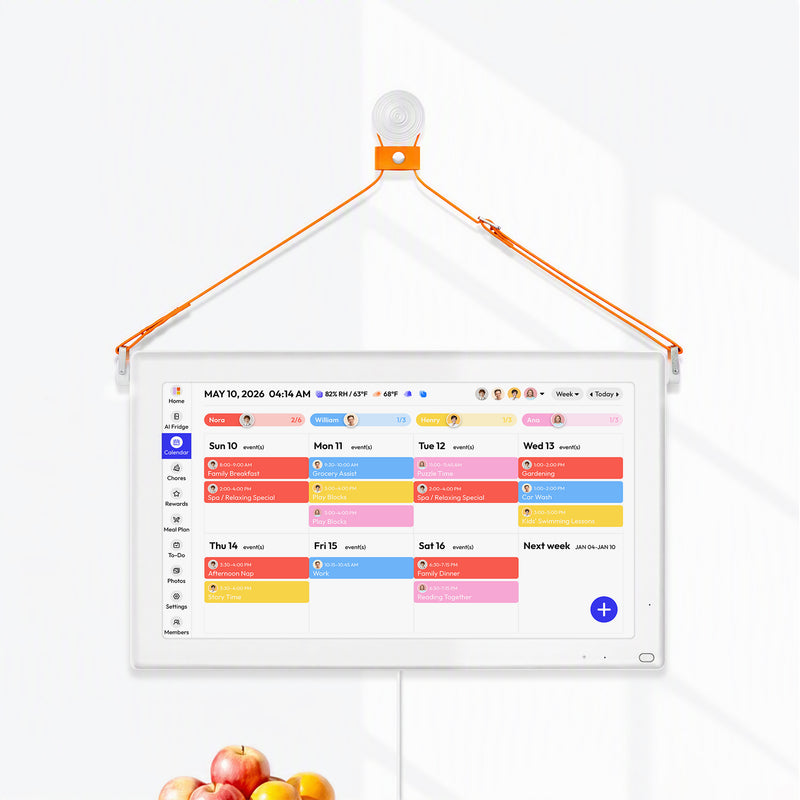
Shared visual systems reduce that ambiguity. For families merging multiple calendars, a tool like the a company can sync Google, Apple, and Outlook schedules into one wall view so plans, chores, and events are visible to everyone.

That visibility matters for communication. You argue less about intent when information is shared in plain sight.
3. Replace “always available” with “planned windows”
Total bans often backfire, especially for neurodivergent kids and adults who need autonomy and predictable choices.
Try feed windows instead:
- Two planned check-in blocks per day (example: after school, after dinner cleanup).
- Notifications off for non-human pings.
- “If urgent, call twice” as the family rule for true interruptions.
This keeps connection while reducing constant context-switching.
4. Use collaborative language, not policing language
The Surgeon General advisory recommends creating a family media plan with agreed expectations, and the AAP offers a Family Media Plan tool you can revise through the year.
Tone matters as much as rules. Compare:
- “You’re always on your phone.”
- “I miss you at dinner. Can we make this meal device-free and pick a check-in time after?”
This shifts the conversation from blame to shared problem-solving.
Where meal planning fits into attention recovery
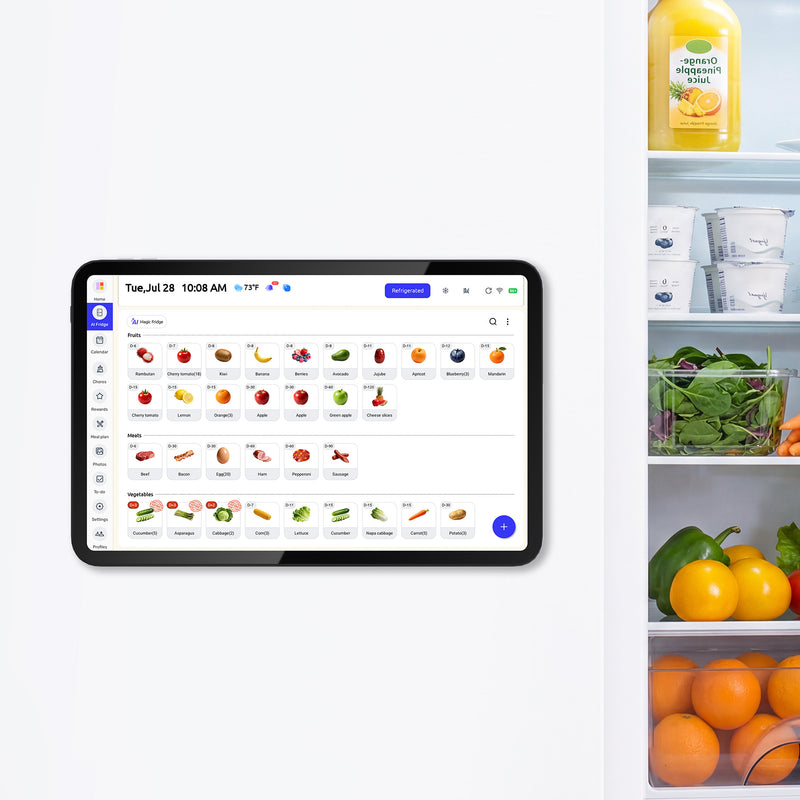
Decision fatigue peaks in the kitchen: What’s for dinner, what’s expired, what needs to be bought. Keeping that workflow on the fridge can prevent late-evening phone spirals.
A fridge-mounted shared tool like the a company can centralize meal plans, expiration reminders, and grocery notes, which helps reduce reminder chatter through the day.

The principle is simple: make essential choices easier than scrolling.
What progress looks like (and what it doesn’t)
Progress is not “no one ever doomscrolls again.”
Progress is:
- Fewer surprise schedule collisions.
- Less arguing about who forgot what.
- More device-free moments that feel natural, not forced.
- A home rhythm where attention returns faster after disruption.
If your family is neurodiverse, expect uneven days. Consistency beats intensity. Small repeatable structures usually outperform dramatic resets.
Reclaiming attention is not about becoming stricter people. It is about creating kinder systems, so the people in your home can spend more energy on each other and less on the feed.
Important Note
The insights and strategies shared here are intended for support and educational purposes only. They do not constitute professional medical advice, clinical diagnosis, or psychological treatment. Neurodiversity and complex family dynamics require personalized care; if you or a family member are experiencing significant challenges, please consult with a licensed healthcare professional or a certified counselor to receive support tailored to your specific situation.
References
- Pew Research Center. Teens, Social Media and Technology 2024. https://www.pewresearch.org/internet/2024/12/12/teens-social-media-and-technology-2024/
- Office of the U.S. Surgeon General. Social Media and Youth Mental Health (NCBI Bookshelf). https://www.ncbi.nlm.nih.gov/books/NBK594760/
- Stothart C, Mitchum A, Yehnert C. The attentional cost of receiving a cell phone notification (PubMed). https://pubmed.ncbi.nlm.nih.gov/26121498/
- National Institute of Mental Health. ADHD in Adults: 4 Things to Know. https://www.nimh.nih.gov/health/publications/adhd-what-you-need-to-know
- CDC. Sleep and Health. https://www.cdc.gov/physical-activity-education/staying-healthy/sleep.html
- CDC. Parent Training in Behavior Management for ADHD. https://www.cdc.gov/adhd/treatment/behavior-therapy.html
- HealthyChildren.org (AAP). Tips & Tools: Family Media Plan. https://www.healthychildren.org/english/tips-tools/pages/default.aspx
- Everblog. 21.5" Digital Calendar. https://everblog.com/products/21-5-inch-everblog-calendar
- Everblog. 13.4" FridgeCal Calendar. https://everblog.com/products/everblog-13-4-inch-fridgecal-calendar


