


Mental load is the invisible planning work that keeps family life moving, and older kids can learn to share it in practical, age-appropriate ways.
Maybe you have seen this at 8:15 PM: backpacks are half-packed, someone asks what is for dinner, and Mom is still mentally tracking tomorrow’s forms, rides, and uniforms. In one survey of 322 mothers (Aviv et al., 2024, n=322 mothers of young children), carrying more planning work was linked to higher stress, burnout, and relationship strain. Evidence tag: cross-sectional self-report, n=322 mothers of young children, so results are correlational and cannot establish cause and effect. The good news is that families can start to change this pattern by making planning visible, assigning full ownership, and using shared calendar and meal systems everyone can follow.
Why Mom Looks “Busy” Even When She Is Sitting Still
What kids see vs. what planning really includes
The mental load of modern parenting is the invisible work of planning, remembering, organizing, and anticipating what comes next. Kids often notice completed chores, but they miss the constant tracking behind them: school messages, permission slips, ride timing, groceries, and appointment deadlines. When that tracking stays in one person’s head, family life depends on constant reminders.

A doctor-visit example shows how deep this goes: one person notices symptoms, picks a provider, schedules, adds it to the calendar, arranges transportation, attends, and manages follow-up. The appointment is visible, but the planning chain before and after it is easy to overlook. The same dynamic appears in food planning, where practice notes often describe mothers carrying most family-feeding coordination; national time-use reporting captures household activity time but not a direct share of cognitive meal-planning load in families American Time Use Survey — 2024 Results.
Why this matters for family health
A survey of 322 mothers (Aviv et al., 2024, n=322) found that the gender gap was larger for cognitive labor than for physical chores across 30 household tasks. Higher cognitive burden was associated with depression, stress, burnout, poorer overall mental health, and poorer relationship functioning. Evidence tag: cross-sectional self-report correlations (n=322), not causal estimates. This sample was self-reported and focused on mothers of young children, so findings may not generalize across all family structures, cultural settings, or income groups. Teaching kids about mental load is not about blaming anyone; it is about making hidden work visible so responsibility can be shared fairly.
Build One Shared Family System
Create one visible source of truth
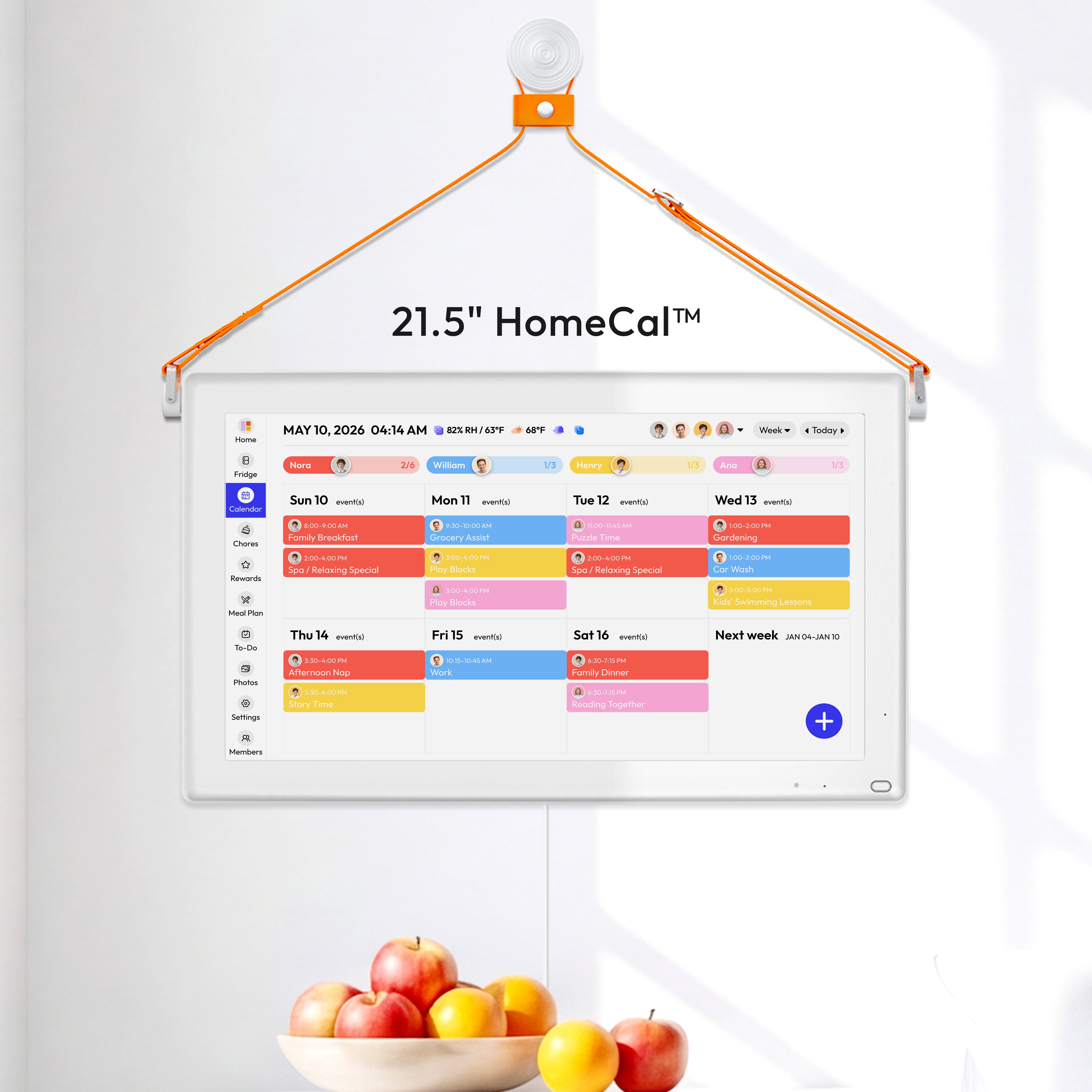
A a company works best as a home command center in a high-traffic area, mounted at a readable height, near power, with glare checked in daylight. A practical setup move is taping a cardboard cutout of the screen size for 1-2 days before mounting. During setup, give each person a color, set edit permissions, and spend about 30 minutes entering recurring events.
The shared visibility problem is why families still miss events even when everyone has apps on their phones. If schedules live in private devices, kids stay reactive and wait to be told what is next. A wall display helps children check plans independently and cuts down on constant texts and verbal prompts.
Mini implementation checklist:
- Required calendar fields: event name, date, start/end time, location or link, primary owner, backup owner, and prep checklist.
- Permissions: adults can edit all items; older kids can edit their own tasks/events; younger kids can be view-only with check-off support.
- Reminder defaults: 24 hours before and 2 hours before events, plus a day-before prep reminder for materials.
- Weekly maintenance: confirm ownership for next week during the family meeting and clear outdated items.
Automate follow-through so reminders are not all on Mom
The three-step load-reduction approach is simple: make plans visible, keep logistics in one system, and automate reminders. This is where smart calendars, shared task lists, and meal-grocery planning tools can work together instead of creating more app clutter. The goal is not “more productivity”; it is fewer dropped details and less emotional strain from chasing everyone down.
Teach Ownership, Not Just “Helping”
Assign whole jobs, including planning
A full-ownership model asks kids to own entire jobs, not just the final physical step. In practice, that means one child owns trash end to end, another owns extracurricular prep, and older teens manage things like haircuts. The note’s dated checklist updates on July 10, 2025, July 14, 2025, and July 16, 2025 show how specific and teachable this can be.
Match expectations to age and skill
Age-appropriate chores are essential because success builds confidence and frustration shuts systems down. The same source highlights long-term value, including University of Minnesota findings that early chores (ages 3-4) predicted later success in the mid-20s. For older kids, ownership can scale from laundry and dinner prep to scheduling-related responsibilities.
A simple responsibility ladder helps families phase ownership by development stage in ways that align with growing autonomy in school-age years Middle-Childhood 9 and 10-Year Visits.
Age band |
Primary ownership to start |
Transition target |
Typical handoff timeline |
Elementary lower grades |
Night-before backpack check, form folder check, one daily home task |
Independent completion with one evening check |
2-4 weeks |
Elementary upper grades |
Homework/deadline tracking, adding activities to shared calendar, one meal-prep support role |
Independent execution with weekly review |
4-8 weeks |
Teens |
Scheduling-related tasks (for example haircuts/activities), transport planning, grocery add-ins for assigned meals |
Primary ownership with parent oversight for safety/logistics |
1 school term |

The a company explains why many “be responsible” talks fail: routines need concrete executive skills like time awareness, memory, and attention shifting Clinical Practice Guideline for the Diagnosis, Evaluation, and Treatment of Attention-Deficit/Hyperactivity Disorder in Children and Adolescents. Replace vague instructions with observable actions, such as “check tomorrow’s calendar at 8:00 PM” or “add missing grocery items by Friday 6:00 PM.” Clear actions reduce conflict and make accountability fair.
Replace Nagging with Systems That Actually Stick
Use tools that reduce admin friction
The a company shows paper charts often fail because parents must remind, verify, and reset everything manually. Digital systems lower that overhead with reminders, timestamps, history, and approvals, and many interactions are short (about 1-2 minutes). The same discussion points to gradual responsibility transfer in a U.S. sample of 2,205 children and youth, which fits a step-by-step ownership approach. Evidence tag: observational U.S. data from low-income families (n=2,205 children/youth), so this supports a pattern but does not prove causation. This evidence comes from a low-income-family context and observational data, so apply it cautiously across different household situations.
Pair technology with weekly decision rituals
A family meeting structure gives the calendar system a human rhythm: solve problems, coordinate schedules, and decide ownership together. Families can review the upcoming week, ask “Who owns this problem?”, and set expectations while everyone is heard. This turns reminders from one-way commands into shared agreements.
Set clear permissions from day one
The a company recommends a primary account, invited family members, unique colors, and clear edit permissions. That small setup step prevents accidental edits and reduces “I thought someone else handled it” confusion. It also helps kids practice responsibility in a structured, low-drama way.
Use Meal Planning to Lighten the Mental Load Fast
Turn dinner from memory work into shared operations
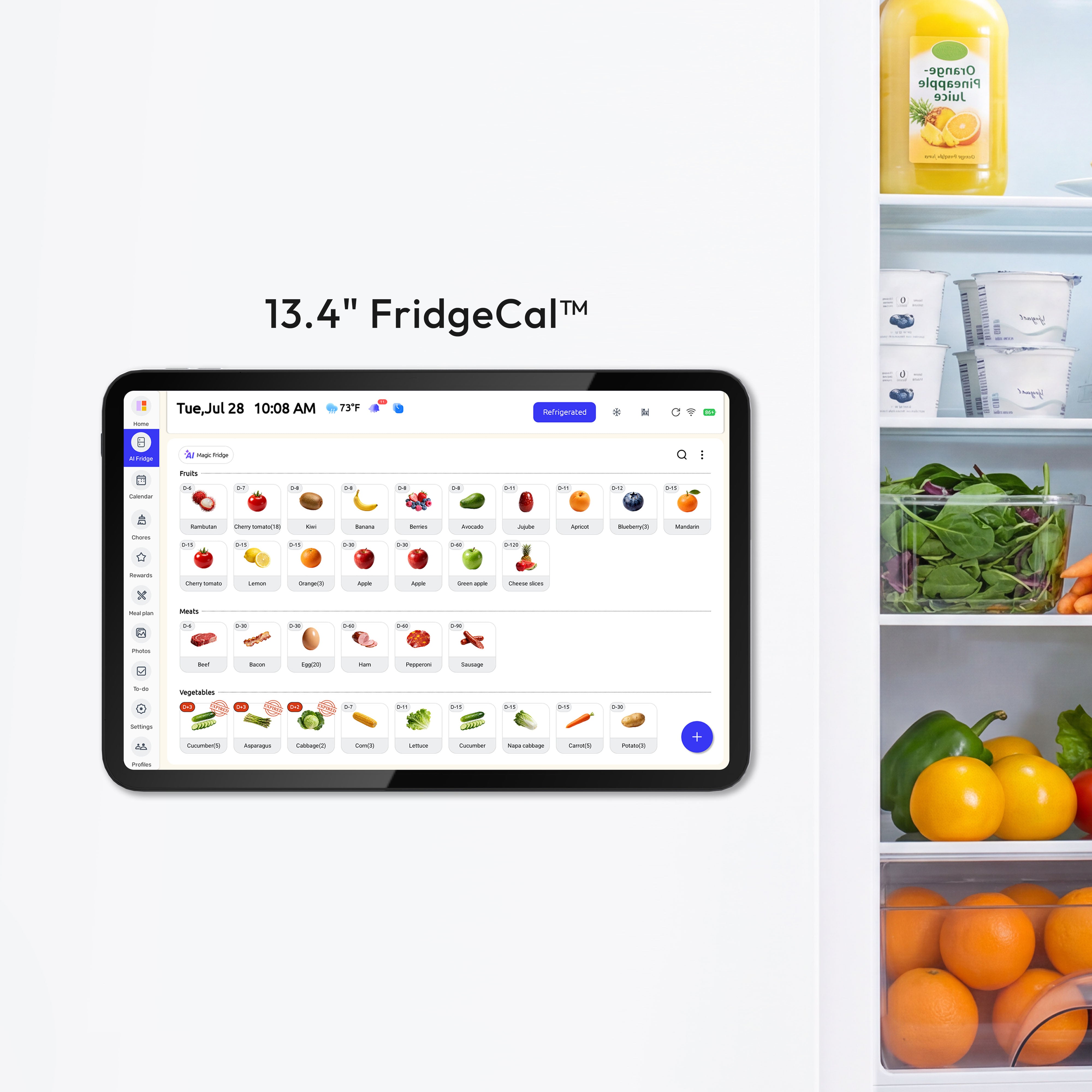
The family-feeding imbalance example is one of the clearest reasons moms feel overloaded: meals require constant planning, not just cooking. Older kids can own parts of the full cycle, such as checking pantry levels, building a draft menu, and tracking their assigned dinner night. This teaches planning, not just kitchen tasks.

Keep meals, groceries, and schedules in one flow
The shared logistics model works better when meals, groceries, school events, and sports are managed in one connected system. If a late practice appears on the calendar, dinner can be adjusted early instead of becoming a 6:00 PM emergency. One system also makes it easier for kids to see why meal timing changes.
Protect one weekly planning block
The a company is a practical benchmark for weekly planning. In many homes, one Sunday block can cover schedule review, meal planning, and grocery assignments for the week. With many U.S. families balancing work across two parents, this kind of routine is less “extra” and more basic household infrastructure.
Practical Next Steps
The no-perfect-formula principle matters here: pick a simple structure your family can sustain, then improve it over time. Progress comes from consistency, not from building a perfect system in week one.
The shared-display shift gives older kids a daily reference point so they can act without being chased. That change alone can reduce tension and help Mom stop carrying every detail alone.
Copy-Paste Templates
Weekly Family Planning Agenda (30 minutes)
Date/Time:
Attendees:
1) Quick wins from last week
- What worked:
- What felt heavy:
2) Week-at-a-glance schedule review
- School/events:
- Work shifts/travel:
- Appointments/transport:
- Conflicts to solve now:
3) Ownership decisions
- Task:
- Owner:
- Backup:
- Deadline/checkpoint:
4) Meals and groceries
- Dinner plan by day:
- Grocery owner:
- Shop-by deadline:
5) KPI check
- Reminder count this week:
- Conflict/argument count this week:
- One adjustment for next week:
Full Ownership Task Card
Task:
Owner:
Trigger (when this starts):
Deadline:
Definition of Done:
Reminder settings (time/channel):
Backup person:
Weekly review note (what helped/what blocked):
- Choose one shared family calendar display location and test visibility for 1-2 days.
- Hold a 30-minute weekly planning meeting at the same time each week.
- Assign each older kid one whole job with full-cycle ownership, including planning and follow-through.
- Add meal planning to the same system: menu, grocery list, and who owns each step.
- Turn on reminders so prompts come from the system, not from one parent’s memory.
- Review weekly: what felt easier, what got dropped, and which ownership handoff is next.
- Keep expectations age-appropriate and concrete, then raise responsibility gradually.
If the system stalls: quick fixes
Common blocker |
Fallback action |
Success metric |
Child resistance |
Reduce to one fully owned task for 7 days, then scale up after one successful week. |
Parent reminder count for that task drops week over week. |
Schedule conflicts |
Add one 10-minute midweek resync to reassign ownership before deadlines slip. |
Missed deadlines and last-minute changes are fewer than the prior week. |
Tech-access limits |
Use a paper backup in one visible location with one daily check-in time. |
Each person can state next-day commitments without prompts. |
Short script options for resistance:
- "You own this task from start to finish this week. Do you want your reminder at 6:30 PM or 7:00 PM?"
- "Check the board first, then tell me your plan in one sentence."
- "If this feels too big, we will shrink the task for 7 days, then step back up."
Weekly KPI line: track parent reminder count and on-time completion rate (completed by agreed deadline / tasks assigned) in the family meeting.
Important Note
This article is general family-management education and is not medical, mental-health, or legal advice. Examples here may not generalize across every culture, income level, family structure, disability profile, or neurodiversity context. For health, safety, legal, or serious relationship concerns, consult a licensed healthcare, mental-health, or legal professional in your area.
When to seek help now
This framework is not a crisis tool. Seek prompt support from a family doctor or licensed mental-health professional when low mood, anxiety, conflict, or behavior changes are persistent and clearly impairing day-to-day functioning at home, school, or work Middle-Childhood 9 and 10-Year Visits. Use emergency services immediately if there are self-harm or suicidal thoughts, threats of harm, or violence/coercive control, and contact a local crisis line when urgent support is needed.
Who this may not fit without adaptation: families dealing with acute mental-health crises, domestic violence, custody disputes, or complex developmental/medical needs should use professional guidance before applying these steps.
Evidence Notes
- 322-mother study: Aviv et al. (published 2024; Archives of Women’s Mental Health, 2025 issue), n=322 mothers of young children across 30 household tasks, measured with self-report cognitive household labor study. Limitation: cross-sectional self-report design limits causal conclusions and broad representativeness.
- Family-feeding “about 80%” estimate: this figure in practice notes is best treated as directional rather than a nationally representative benchmark; federal American Time Use Survey — 2024 Results reports household activity and childcare time but not a direct cognitive meal-planning share. Limitation: time-use categories do not fully capture invisible planning work.
- 2,205 sample claim: the U.S. study on low-income families reports a sample of 2,205 children and youth in analyses of parenting stress, responsiveness, and child wellbeing low-income families study. Limitation: low-income focus and observational methods constrain generalization and causal interpretation.
- More longitudinal and intervention studies are needed to test whether these family-system changes directly improve stress, relationship functioning, and follow-through.
References


