





Family planning often falls apart because the plan lives in memory, scattered texts, or one person’s head instead of in a place everyone can see. Making schedules, meals, chores, and handoffs visible reduces mental load and makes follow-through much more likely.
Have you ever had a week where everyone agreed on the plan, but Tuesday still blew up because the pickup time, dinner idea, and permission slip were all in different places? In real homes, planning boards that were tucked away simply did not get used, while the same tools worked once they were moved to a high-traffic wall near the kitchen or garage door. What helps is not a “better attitude.” It is a visible system that shows what is happening, who owns it, and what comes next.
What Often Breaks When the Plan Lives in People’s Heads
Agreement is not the same as a usable plan
The mental load of family life is not just doing chores. It is the background work of remembering dentist appointments, noticing the milk is low, checking whether Friday needs a snack sign-up, and thinking three steps ahead about transportation, dinner, and bedtime. When that work stays invisible, one person usually ends up acting like air traffic control for the whole house.

Family planning also depends on setting a goal, choosing steps, and putting them in order. That sounds simple until the day gets noisy. “We need to get ready for soccer” may actually mean find cleats, fill water bottles, leave by 5:10 PM, bring a snack, and remember the sibling pickup changed. If those steps are not written down somewhere shared, the family has to rebuild the plan from scratch each time.
This is why “What can I do to help?” sometimes lands badly. The question sounds supportive, but it can still leave one parent doing the noticing, prioritizing, and delegating. A visible plan changes that. It lets people act on the plan instead of asking someone else to hold the whole map.
Why Visibility Matters for Executive Function
Memory is not the system
At home, executive function means the brain skills that help people hold information in mind, switch when plans change, and stop themselves from getting pulled off track. Those skills are under pressure in ordinary family life. Stress, poor sleep, busy school seasons, and constant interruptions can make planning harder for adults and kids alike.
Research on children’s executive function found that visible scaffolds built into daily routines helped more than occasional reminders alone. Supports such as drawings, prompts, private speech, and repeated routines worked because they took some of the load out of working memory and put it into the environment. The same principle fits family planning: if the dinner plan, pickup plan, and chore plan can be seen, they do not all have to be mentally carried.

That does not mean every planning struggle points to ADHD, and a wall calendar is not treatment. It does mean many families get better follow-through when they stop depending on memory alone. For a child, that may mean a visible after-school checklist. For an adult, it may mean one shared meal board and one place to check the week before saying yes to another commitment.
What to Make Visible at Home
The minimum shared dashboard
A family command center works best when important information is in one visible place. The useful basics are simple: a shared calendar, a short meal plan, a task area, and a landing spot for papers that need action. The location matters as much as the tool. If nobody naturally passes it at breakfast, after school, or when coming in from the garage, it will fade into the background.
The calendar should answer only the questions that drive the day: who is where, when they need to leave, what they need to bring, and who is responsible for the handoff. A meal board should answer what is for dinner, who is making it, and whether anything needs to thaw or be picked up. A chore chart should answer what must happen today, what rotates weekly, and what “done” means. In one large family, visible morning and evening chore charts with weekly rotation worked because the tasks were posted, repeated, and adjusted over time instead of kept verbal.
Meals are a good example of why visibility matters. A shared meal and cleanup chart reduces resentment because it creates clear on/off responsibility. If Alex owns Thursday dinner and Sam owns kitchen cleanup, nobody has to keep asking who is handling what. The same logic works on regular weekdays, not just family trips.
When a digital tool helps
A digital organizer can help when family members are in different places during the day or older kids already check a phone or tablet. Tools built for families often combine shared calendars, chores, lists, meals, and dashboards so people can see what is assigned and mark it complete in real time. That can reduce the “I didn’t know” problem, especially when the same information appears on both a home display and personal devices.
Choosing the Right Visible System
Wall board, shared app, or always-on screen
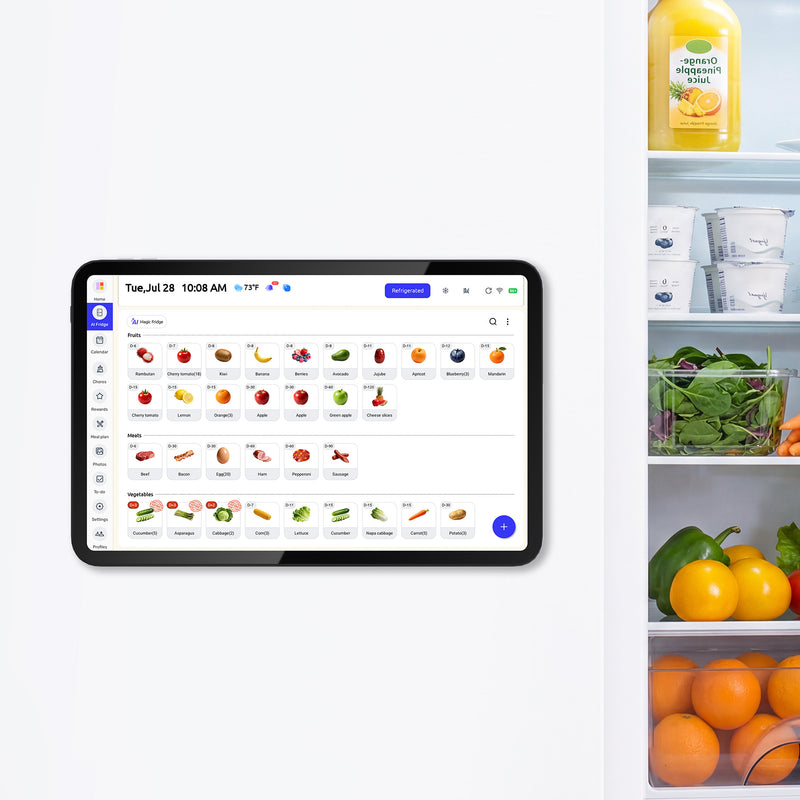
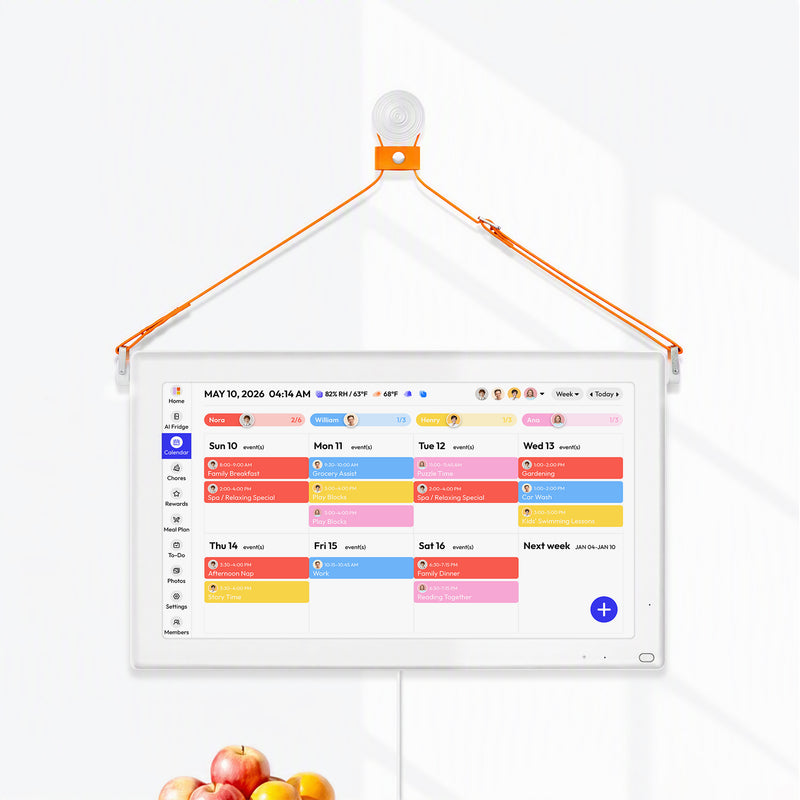
The best system is the one your household will actually look at. A shared digital calendar can pull everyone’s schedules into one place, but visibility still matters. An app that nobody opens can become just another hidden plan. On the other hand, a wall board that never gets updated becomes wallpaper. An always-on display can split the difference: something like the Everblog digital calendar uses a large touch display designed for wall mounting, which helps families keep plans, chores, and events visible on one screen.
Setup |
Best for |
What it helps |
What often breaks |
Paper or dry-erase wall calendar |
Families who need a quick glance in one room |
Easy visibility at breakfast or before leaving |
Manual updates get skipped |
Shared app |
Co-parents, older kids, split locations, frequent changes |
Real-time updates, alerts, portable access |
Hidden if no one checks it |
Always-visible digital display |
Busy homes with many moving parts |
Shared household view plus sync from phones |
Higher cost and internet dependence |
Most families |
Wall visibility plus mobile reminders |
Requires clear rules about the source of truth |
A visible setup does not have to be expensive. One budget-friendly command station was described at about $75, while shared apps may be free or low-cost and larger household displays can run much higher. If money is tight, start with a dry-erase monthly calendar, a weekly meal strip, and a paper inbox for school forms. The point is not the hardware. The point is that the plan is easy to see.
For many families, the hybrid model is strongest. The wall calendar handles quick household awareness. The phone handles reminders and updates away from home. The rule is simple: if it affects more than one person, it goes in the shared system.
How to Make the System Stick
Teach it, review it, and hand off whole domains
A visible plan only works if people know how to use it. That means short weekly check-ins, clear ownership, and fewer vague handoffs. When families divide responsibility more clearly, the plan stops depending on one person to translate everything. “Own Tuesday dinner” works better than “help more with meals.” “Own school paperwork” works better than “tell me what to do.”

Expect a learning curve. In one family with rotating chores, some children needed a few days of help and reminders before a new task became independent. That is normal. A visible system is not proof that everyone should instantly self-manage. It is a support that gets stronger with repetition.
Older kids often need planning tools taught more directly than adults assume. Parents trying to build independence have looked for planners that show the whole week, deadlines, and a way to map steps before high school pressures increase, as shown in this parent discussion about planning support. The same idea shows up in guidance on teaching digital calendars to kids with executive function challenges: do not just hand over the tool. Teach how to enter events, break work into steps, and check the calendar at the same time every day.
Practical Next Steps
A useful system is usually smaller than people expect. Start with the plan points that create the most friction now, then build from there.
- Pick one shared place for the plan: a kitchen wall, mudroom board, tablet near the garage door, or one shared calendar app.
- Make four things visible first: this week’s schedule, tonight’s dinner, today’s chores, and papers that need action.
- Write ownership next to recurring tasks so the plan answers “who handles this” without extra discussion.
- Add one weekly 10-minute reset to update meals, rides, school items, and chore rotation.
- Treat the first two weeks as a trial period and adjust what people ignore, forget, or find too hard to maintain.
FAQ
Q: Do we need a digital family calendar for this to work?
A: No. Visibility matters more than technology. A dry-erase board in the right spot can work better than an app nobody opens.
Q: Will a visible planning system help if someone in the family has ADHD or executive function struggles?
A: It may help because it moves some of the plan out of memory and into the environment. It is a practical support, not a diagnosis or a treatment.
Q: What if one parent still becomes the default planner?
A: Shrink the number of hidden decisions. Put the plan in one shared place, assign full ownership for repeat tasks, and review the week together so one person is not translating the whole system alone.
Disclaimer
This article is for household planning education only. It is not a substitute for mental health care, medical advice, legal advice, or crisis support. If safety, custody orders, or a diagnosed condition are involved, work with the appropriate licensed professional.
References
- Interventions shown to Aid Executive Function Development in Children 4–12 Years Old
- Executive Function Challenges and Evidence-Based Approaches to Help
- Why Kids With Executive Functioning Issues Have Trouble With Planning
- Why Mental Load in Relationships Matters and How to Share It
- The Best Way to Create a Functional Command Center for Your Family
- The 10 Easiest Family Command Centers to Get Organized
- Chore System for Our Family of 12
- A family app
- Family Meal & Clean Up Chart for Family Gatherings
- Best Student Planner for Kids With Executive Functioning Challenges
- How to Teach Kids Digital Calendars
- Best Digital Family Calendar for Planning & Chores in 2026


