
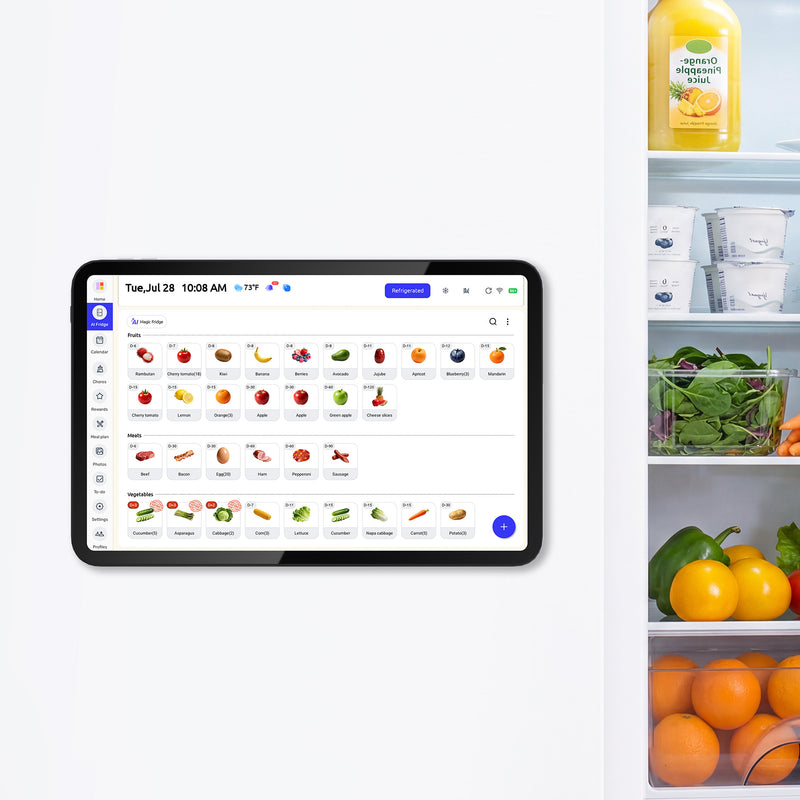



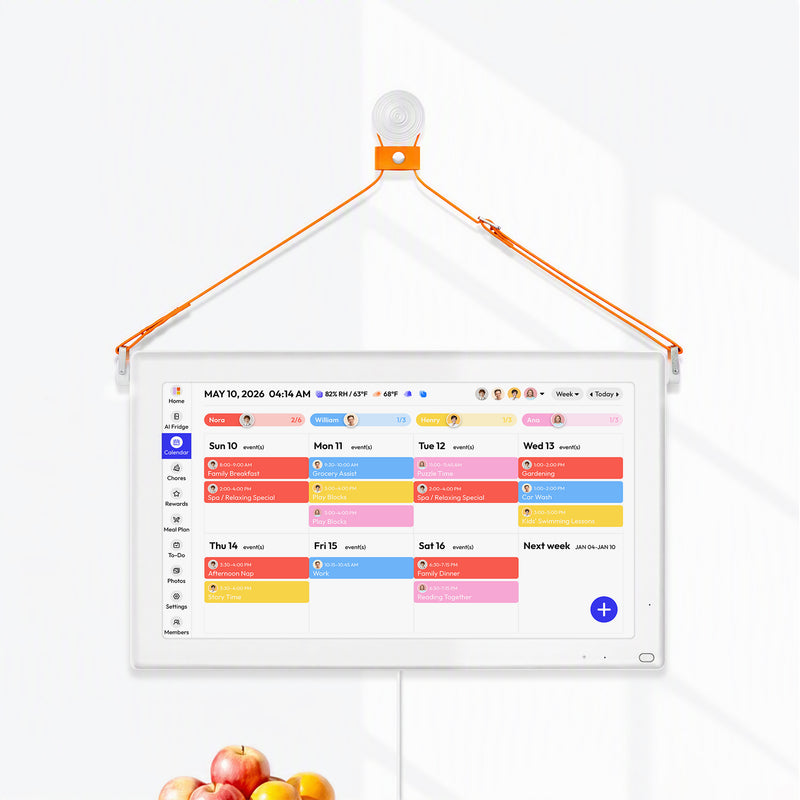



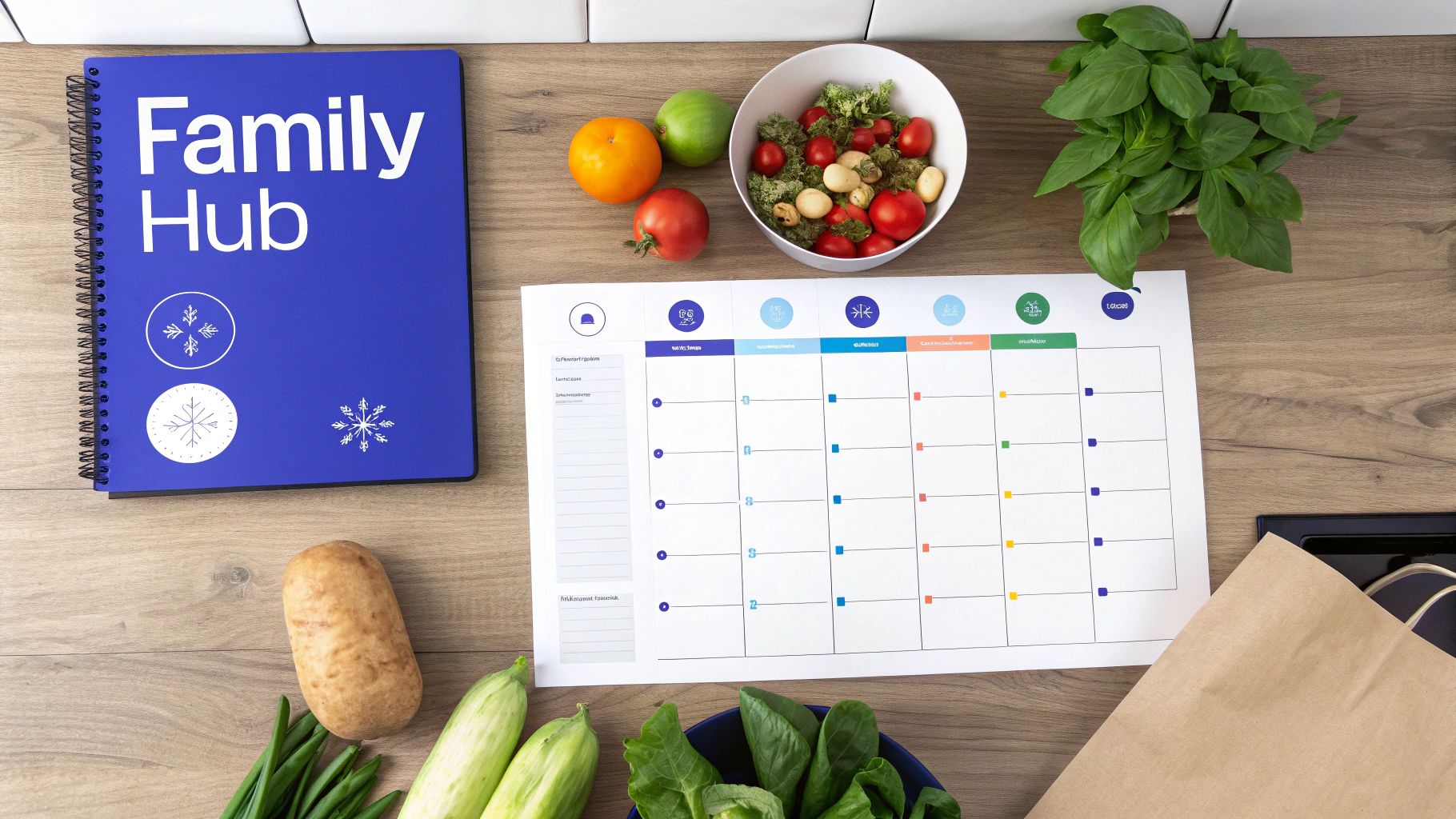
A good calendar for kitchen use is so much more than a way to track dates. It becomes the command center for your entire family—a single, at-a-glance spot for everyone's schedules, meals, and to-do lists. It has the power to transform the busiest room in the house into a hub of calm, turning daily chaos into something predictable.
Why Your Kitchen Is The Perfect Command Center
Let’s be real: the kitchen is the heart of the home. It’s where the morning rush happens, where homework gets done on the counter, and where late-night talks unfold. This constant stream of traffic makes it the perfect, undisputed location for your family’s command center.
So many of our daily frustrations come from scattered information. Missed soccer practices, forgotten dentist appointments, and that all-too-familiar 5 PM question, "What's for dinner?" While our phones help, they keep us in our own little digital bubbles. A visual, shared calendar for kitchen walls creates a single source of truth that a tiny screen just can't match.
Turning Chaos Into Predictable Calm
The whole point is to create one place everyone can see and use. When the week's schedule is right there in front of everyone, it takes a huge mental load off the parents. It also gives kids a sense of ownership over their own routines. This isn't just about scheduling; it’s about creating a rhythm that keeps your household running smoothly.
There’s a reason this simple tool has become a non-negotiable in so many homes. The market for desk and wall calendars is actually projected to hit $2.72 billion in 2025, with more growth on the way. It’s clear that families are actively looking for real, tangible solutions to manage their packed lives, and a kitchen calendar is a proven winner.
A shared calendar doesn’t just organize appointments; it organizes the family. It creates a visual contract of shared responsibilities and upcoming events, fostering communication and reducing last-minute surprises.
More Than Just a Schedule
Turning a little corner of your kitchen into an organizational powerhouse is surprisingly easy. You can check out all kinds of family command center ideas to get inspired for a setup that fits your home's vibe.
To really make it work, think about adding some smart kitchen storage solutions to keep pens, sticky notes, and other essentials tidy. When you bring everything together, you build a system that finally works for you, not against you.
Choosing Your Family's Perfect Calendar
Finding the right calendar for kitchen life isn't just about picking a planner; it’s about establishing your family’s command center. The big question usually comes down to two paths: the classic, tangible feel of a paper calendar or the connected, real-time power of a digital hub. The best choice really depends on your family’s rhythm and how you all operate day-to-day.
A paper calendar is simple and satisfying. There’s a special kind of magic when a little one gets to put a sticker on a completed chore or cross off a day leading up to a birthday. For many of us, the physical act of writing something down helps it stick in our memory way better than typing. The downside? Last-minute changes can turn a neat grid into a mess of scribbles, and there’s no way to instantly update a co-parent who’s already out the door.
The Digital Advantage For Modern Families
This is exactly where a digital calendar changes the game. A central digital display gives everyone real-time updates, syncing right to your phones. When soccer practice gets rained out, one quick edit updates the entire household instantly. No more "I thought you knew!" moments. This kind of seamless coordination is a lifesaver, especially for busy families juggling complex schedules.
But modern digital systems go way beyond just scheduling. They often come with integrated grocery lists, meal planners, and chore trackers built right in. If you want to see just how deep this goes, you can explore how a digital family calendar can pull all these moving parts together.
The kitchen calendar has always been a staple, but now it's evolving. The market shows it, too—planner and calendar sales are on track to hit $2.5 billion in 2025 as families look for smarter ways to stay organized.
This decision tree can help you figure out where to start.
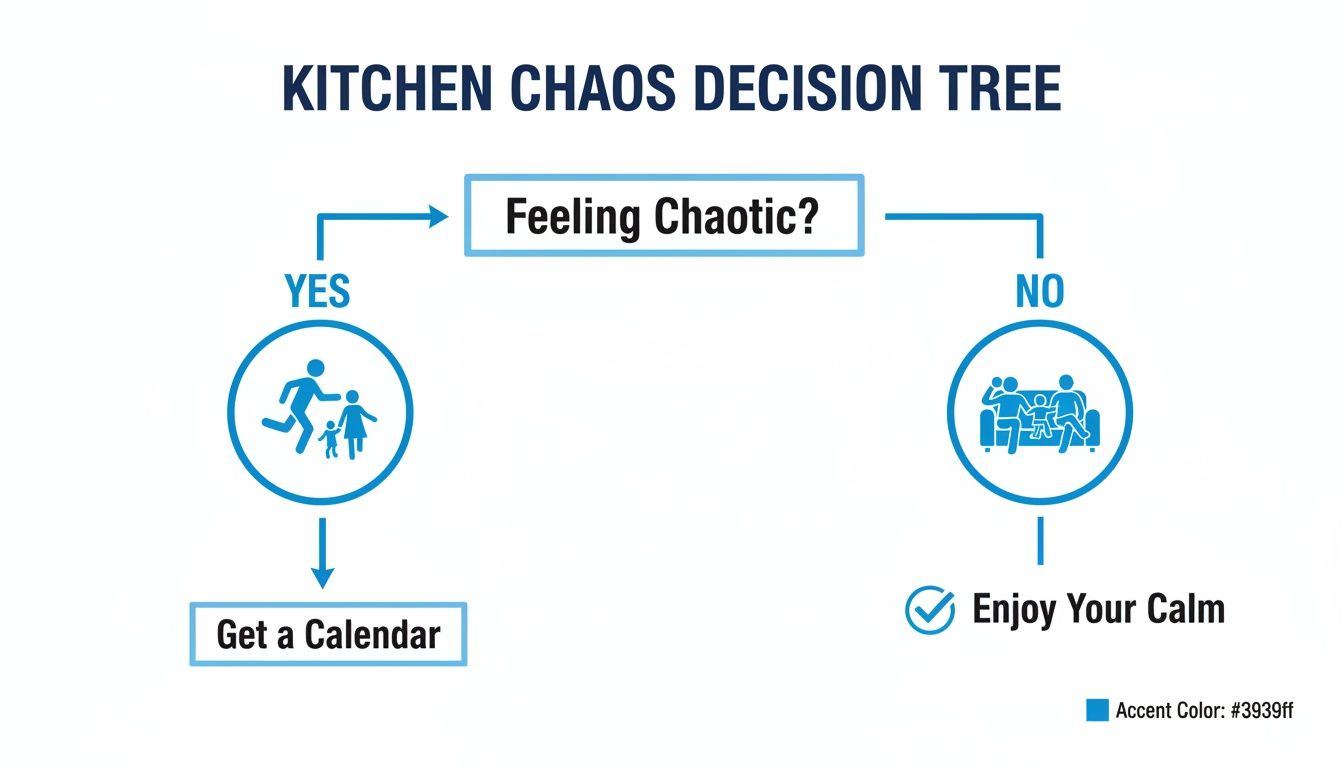
As you can see, the whole point is to move from chaos to calm. A shared calendar is your first, biggest step on that path.
Paper vs Digital Kitchen Calendar: Which Is Right for Your Family?
To really break it down, let's compare them side-by-side. This table should help clarify which features matter most for your crew.
| Feature | Paper Calendar (e.g., Wall Planner) | Digital Calendar Hub (e.g., Everblog) |
|---|---|---|
| Visibility | Excellent at-a-glance view; depends on size and placement. | Bright, clear display visible from across the room. |
| Updates & Syncing | Manual only; requires one person to be the "keeper of the calendar." | Instant, real-time sync across all devices (hub, phones, tablets). |
| Kid Engagement | Great for young kids who love stickers, magnets, and physically checking boxes. | Appeals to older, tech-savvy kids; often includes digital rewards and trackers. |
| Integrated Features | Limited; some have pockets for bills or small notes. | All-in-one: meal plans, grocery lists, chore charts, reminders, and more. |
| Durability & Longevity | Can get messy with changes; needs to be replaced yearly. | A one-time setup that lasts; updates are clean and don't create clutter. |
| Accessibility from Anywhere | Only visible when you're physically in front of it. | View and update the schedule from your phone, no matter where you are. |
Ultimately, there's no single "best" answer—just what's best for your family. If your life is fairly routine and you love the tactile experience, paper might be perfect. But if you're juggling a dozen moving parts, the synced, all-in-one nature of a digital hub is probably going to be a game-changer.
Setting Up Your Calendar For Maximum Impact
A calendar that's out of sight is a calendar that's out of mind. It’s a simple truth. To really make your new calendar for kitchen life the command center you need it to be, how you set it up is just as critical as what you put on it. It all comes down to strategic placement and a clear visual system that everyone can understand in a split second.
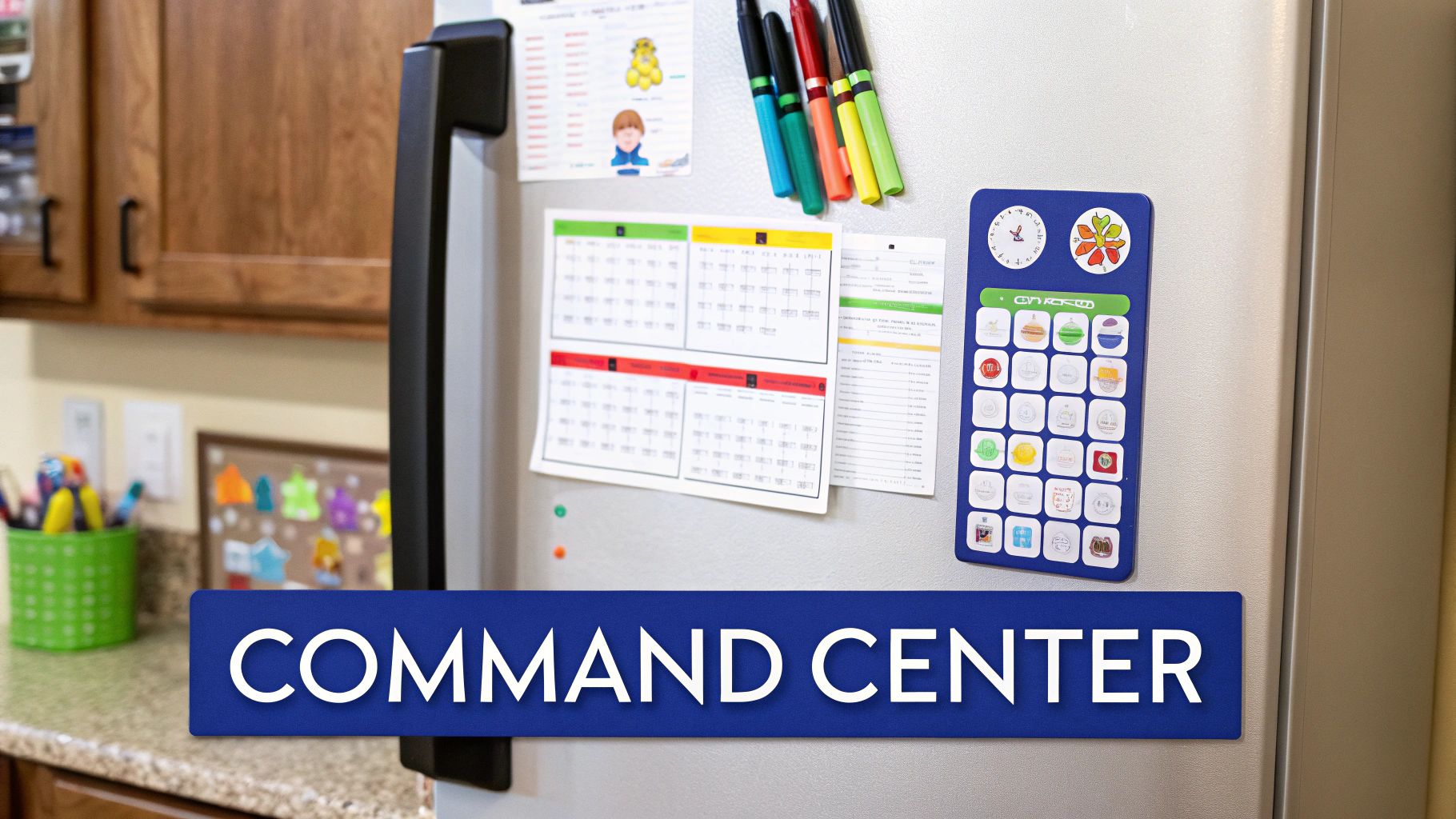
The whole point is to weave the calendar into your family’s natural flow. Think about the high-traffic zones in your home where eyes land without even trying. The side of the fridge is a classic for a reason—it’s the go-to spot for drinks and snacks all day, which guarantees multiple glances from everyone.
Another powerhouse location is right by the door you use for school drop-offs and heading to work. Putting it there prompts that one final check before anyone bolts, saving you from those frantic texts about a forgotten gym bag or a surprise early-dismissal day. This tiny habit can genuinely cut down on morning chaos.
Creating Your Visual System With Color Coding
Once you've nailed down the perfect spot, it's time to make the information jump off the page. You want it to be instantly scannable, even for the little ones who can't fully read yet. This is where a good color-coding system—or what I call "zoning"—is an absolute game-changer. Just assign a color to each person or type of activity, and watch the confusion disappear.
A properly zoned calendar isn’t just a schedule; it’s a visual map of your family’s week. You can see at a glance who’s swamped on Tuesday and when you have a glorious pocket of free time on Thursday.
Here’s a real-world example of how a family of four could set it up:
- Blue for Dad: All of his work meetings, client calls, and project deadlines.
- Pink for Mom: Her work shifts, yoga classes, and personal appointments.
- Green for Leo (Age 8): Soccer practice, homework due dates, and friends' birthday parties.
- Orange for Mia (Age 5): Preschool schedule, ballet class, and show-and-tell reminders.
- Red for Everyone: This is the VIP color, reserved for must-not-miss family events like doctor's appointments or holiday dinners.
This simple system empowers everyone—even the kids—to take a little ownership of their schedule. It turns the calendar from a static board into an interactive tool that quietly builds responsibility.
Pro Tip: Keep your colorful pens or markers in a magnetic cup right next to the calendar. My rule is that if it takes more than three seconds to find the right pen, people just won't bother adding their stuff. Make it effortless.
By combining prime real estate with an intuitive visual system, your calendar for kitchen use becomes the reliable hub that keeps your family connected and on the same page. It’s always the small setup details that end up making the biggest difference in your daily rhythm.
Bringing Your Whole Family's Life Into One Place
A truly great kitchen calendar is so much more than a place to scribble appointments and birthdays. It’s the command center for your entire household. This is where you level up from a simple schedule to a dynamic tool that manages routines, chores, and even your grocery list, taking a huge chunk of that daily mental load off your shoulders.
Imagine looking at your week and seeing a predictable, comforting rhythm instead of just a jumble of obligations. By layering in recurring family routines, you build a stable foundation everyone can rely on. These don't have to be big, elaborate plans—think small, consistent anchors that ground your week.
For our family of four, it looks something like this:
- Taco Tuesday: One less dinner decision to make. Simple, fun, and everyone's on board.
- Wednesday Library Trip: A set time for a quiet outing and new books.
- Friday Family Movie Night: The perfect low-key way to unwind and connect after a hectic week.
These little traditions give kids a sense of security and structure. The calendar stops being a list of "have-to-dos" and becomes a source of things to look forward to.
From Nagging To Natural Accountability
One of the biggest wins for us has been adding chores directly to the calendar. No more constantly reminding everyone what needs to get done. The calendar becomes the neutral, objective source of truth. Assigning tasks like "Leo: Take out recycling" on Tuesdays or "Mia: Set the table" for every dinner builds responsibility without a power struggle.
When chores are just another visual part of the weekly flow, they become as normal as soccer practice. For digital systems like Everblog, the built-in Chore Manager and Rewards Tracker can even gamify these responsibilities, turning mundane tasks into a fun challenge for the kids.
Making chores a visible, scheduled part of the family routine shifts the dynamic from parental nagging to shared household contribution. The calendar doesn't take sides; it just shows what needs to happen.
Connect Your Meals To Your Market List
The final piece of the puzzle is linking your weekly meal plan directly to a running grocery list. This connection is an absolute game-changer for saving time and money. As you map out meals on the calendar—pasta on Monday, tacos on Tuesday, stir-fry on Wednesday—you can add the ingredients you need to your shopping list right then and there.
This simple system puts a stop to those frantic, last-minute grocery runs for one forgotten item. It also slashes food waste because you’re buying exactly what you need for the meals you’ve already planned. If you want to really get this part dialed in, there are some great systems for meal planning for busy families that actually works.
This level of integration is becoming even more powerful with the rise of the smart kitchen. The global market is projected to grow from $21.8 billion in 2025 to $37.2 billion by 2030. Central hubs like a digital kitchen calendar are at the heart of this trend, with some features helping families cut food waste by up to 20%. When your calendar, meal plan, and grocery list all talk to each other, your whole household just runs smoother.
Advanced Tips For A Seamlessly Synced Family
Once your digital calendar for kitchen use is up and running, you're ready to unlock its real magic. Let's move beyond the basics and look at the features that transform your calendar from a simple schedule into a true family command center.
These next-level strategies are all about creating effortless coordination that feels almost automatic. True household harmony happens when the system is so intuitive that it becomes second nature for everyone.
Add Events With Just Your Voice
One of the most powerful features of a modern smart calendar is voice entry.
Picture this: you’re unloading groceries, your hands are full, and you suddenly remember to schedule the dog's vet appointment. Instead of stopping everything to find your phone, you can just call out, "Hey, add a vet appointment for Friday at 10 AM." That’s it.
This hands-free convenience is a lifesaver. It closes the gap between remembering something and actually writing it down, ensuring nothing falls through the cracks during those busy, in-between moments.
Automate Your Updates With Calendar Syncing
The real game-changer is when your kitchen hub becomes the single source of truth for everyone's schedule, automatically. Manually typing in every single work meeting or after-school practice is not only tedious, but it’s also just asking for a mistake to happen.
The solution? Sync everyone’s personal calendars directly to the main family display.
This means your partner's work appointments from their Outlook or Google Calendar and your teenager's school schedule all show up on the hub in real-time, without anyone lifting a finger. An electronic wall calendar that syncs with your iPhone is a must-have for co-parents and families with older kids, finally ending the constant "what's your schedule today?" check-ins.
Information flows both ways, giving everyone the full picture. You can see at a glance that your daughter’s away game overlaps with a work deadline, so you can arrange a carpool well in advance. It turns the calendar from a static board into a living, breathing overview of your collective lives.
Keep Kids Engaged and Connected
For kids, a digital calendar can be so much more than just a list of appointments and chores. Getting them genuinely invested in the system is key, and that's where some of the more advanced features come in.
- Digital Reward Trackers: Link chore completion directly to rewards. When they mark "Feed the dog" as done, they can see their points add up toward a goal, like extra screen time or a trip for ice cream.
- Personalization: Let them make it their own. Allowing kids to add family photos as a screensaver or pick a custom icon makes the calendar feel like it belongs to them, too.
By making the calendar interactive and rewarding, you're not just organizing tasks—you're teaching responsibility and fostering a sense of contribution in a way that actually clicks with a tech-savvy generation.
These advanced tactics help your family calendar evolve. It becomes less of a tool you have to manage and more of a smart assistant that actively helps your family stay connected, coordinated, and ready for whatever the week throws at you.
Common Kitchen Calendar Questions Answered
Even with the best plan, you're bound to hit a few snags. Kicking off a new family command center usually brings a wave of questions as everyone finds their footing. Here are some real-world solutions to the most common headaches families run into when getting their new calendar for kitchen routine off the ground.
How Do I Get My Family To Actually Use It?
The secret weapon for getting buy-in? Involve everyone from day one. This is especially true for kids and reluctant partners.
Let each kid pick out their own color-coded marker or a unique digital icon. It's a small thing, but it gives them a real sense of ownership and makes the calendar theirs, not just another chore mom set up.
More importantly, you have to make the calendar the single source of truth. When someone inevitably asks, "What time is soccer on Saturday?" your only response should be, "Good question, let's check the calendar!" If you lead by example, you'll build the habit for everyone else faster than you think.
We've found that a quick, five-minute family huddle every Sunday evening works wonders. You just run through the upcoming week together. It gets everyone on the same page and cements the calendar as the go-to hub for all family plans.
What Is The Best Way To Handle Last Minute Changes?
Life with a family is anything but predictable. Schedules are going to change, often at the last minute.
For paper calendars, good erasable markers are your best friend. Another pro tip is to use small, repositionable sticky notes for those appointments you know are likely to shift. This keeps your beautiful calendar from turning into a chaotic mess of scribbles and crossed-out entries.
Honestly, though, this is where a digital calendar really pulls ahead. A last-minute change updated on a phone instantly syncs to the main hub in the kitchen. That real-time update means no one is working off an old schedule, which saves a ton of confusion and prevents those dreaded missed appointments.
Our Kitchen Is Tiny. Where Can We Put A Calendar?
You absolutely don't need a massive, empty wall to create a command center that works. The trick is to get creative and use your vertical space.
The side of the refrigerator is a classic spot for a reason—it’s high-traffic real estate that everyone sees, and it doesn’t eat up a single inch of counter space.
Another great, clutter-free option is the inside of a large cabinet or pantry door. It keeps the schedule right where you need it but neatly tucked away when you don't. Slim, wall-mounted digital displays, like the Everblog, can even double as a piece of digital art when they're idle, blending right into your kitchen decor instead of adding more visual noise.
Is It Better To Plan Meals For The Week Or Day By Day?
For almost every busy family I've talked to, weekly meal planning is a game-changer for cutting down on stress and saving money. It lets you make one focused trip to the grocery store with a complete list, which is your best defense against impulse buys and those frustrating forgotten ingredients.
But don't feel like you have to plan every single meal for all seven days right away. That can be overwhelming.
Just start small. Map out three or four dinners for the week ahead. This simple strategy still solves the daily "what's for dinner?" panic and leaves you plenty of breathing room for leftovers or a spontaneous pizza night. Your meal plan on the calendar for kitchen walls should be a helpful guide, not a rigid rulebook.
Ready to create a seamlessly synced command center for your family? The Everblog digital calendar brings schedules, chores, and meal plans into one beautiful, easy-to-use hub.
Learn more and bring calm to your kitchen at https://everblog.com


