






The missed permission slip is on the counter. One child is asking where the soccer jersey went. Another says they told you about library day, and maybe they did, but it was somewhere between a text thread, a school email, and a reminder that never made it onto the fridge. Your phone is buzzing with work notifications while someone in the house still needs to know who is doing pickup.
That’s the point where most families start looking for the best wall calendars. They think they need a place to write things down. What they usually need is something bigger. They need a family operating system.
A good wall calendar doesn’t just hold dates. It becomes the shared place where schedules, chores, meal plans, and household expectations live. When it works, it cuts down on repeated questions, last-minute surprises, and the exhausting job of one parent carrying the whole plan in their head. When it doesn’t, it becomes wall decor with scribbles.
I’ve seen families try every version of this. A paper grid in the kitchen. Individual phone calendars that never match. Sticky notes. Whiteboards. Color-coded planners. They all solve one part of the problem. Few solve the whole thing.
The End of Morning Chaos Finding Your Family's Rhythm
Most family disorganization doesn’t look dramatic from the outside. It looks ordinary. Shoes by the door. Toast in the toaster. A parent asking the same question twice because nobody is sure whether the answer changed since yesterday.
The trouble is that ordinary chaos adds up. A forgotten dentist appointment turns into a missed work block. A practice pickup mix-up creates stress that lingers all evening. A child hears “I told you already” when the actual issue is that the information lived in five places and nowhere at the same time.
What finally helps isn’t usually a better memory. It’s a visible system.
What the bad mornings usually have in common
The roughest mornings tend to share a few patterns:
- Information is scattered: School notices live in backpacks, work meetings live on phones, and family plans live in someone’s head.
- Only one person sees the whole picture: That person becomes the default manager, reminder service, and backup plan.
- Updates happen too late: A change gets mentioned in the car instead of when everyone could have acted on it.
- Children stay dependent longer than they need to: Not because they can’t handle responsibility, but because they can’t see the plan clearly enough to participate.
A family calendar should lower the volume in the house. If it creates more checking, more translating, or more rewriting, it’s the wrong system.
That’s why the best wall calendars work less like stationery and more like infrastructure. They help everyone read the day the same way. Parents stop carrying every detail alone. Kids start seeing what belongs to them. The home gets a rhythm instead of a scramble.
If summer routines are part of your stress point, a practical guide to kids' summer screen limits pairs well with a shared calendar because it transforms “we need more structure” into a schedule the whole family can adhere to.
The shift that matters
The useful question isn’t “Should we get a wall calendar?” The useful question is, what system will this household obey?
That’s the key distinction. Some calendars are note surfaces. Some are coordination tools. A few become the central place your family checks before saying yes, before booking, before leaving the house, and before asking who’s doing what.
Those are the ones that change mornings.
Beyond Paper Planners The Three Types of Family Calendars
Most families choose between three systems without really naming them. They buy a paper calendar, rely on mobile apps, or build some version of a wall-based shared hub. Each one can work. Each one also fails in a predictable way.
The right choice depends on whether you need a memory aid, a communication tool, or a full household dashboard.

Traditional paper calendars
Paper still has real strengths. It’s visible, familiar, and easy for every age group to understand. You don’t need setup, passwords, or an app. You hang it up and start writing.
That simplicity is why paper remains attractive, especially for families who want less screen dependence. It’s also why paper often gets recommended in any solid guide to planners for busy parents. For many households, writing things down by hand still helps plans stick.
But paper has limits that show up fast in active homes. It doesn’t update remotely. It gets messy when plans move. It can’t pull in school, work, and co-parent schedules automatically. And once one person forgets to transfer something from phone to wall, the whole “shared” part breaks.
Mobile calendar apps
Apps solve portability. They’re always with you, they can send reminders, and they’re better than paper for adults who live by Outlook, Google Calendar, or iCloud.
The weakness is visibility. A phone calendar is shared only in theory. In practice, each person sees their own device, their own notifications, and their own version of urgency. Children often can’t access the system independently. A partner may not check the same app. Family logistics end up buried inside private screens.
Many households find themselves in this situation. They’re technically organized, but not collectively organized.
Practical rule: If your system requires everyone to remember to open an app, it isn’t a household system yet.
Digital wall hubs
Digital wall hubs aim to fix the visibility problem without giving up the syncing advantages of apps. They put shared information back into a common space, usually the kitchen, hallway, or family command center.
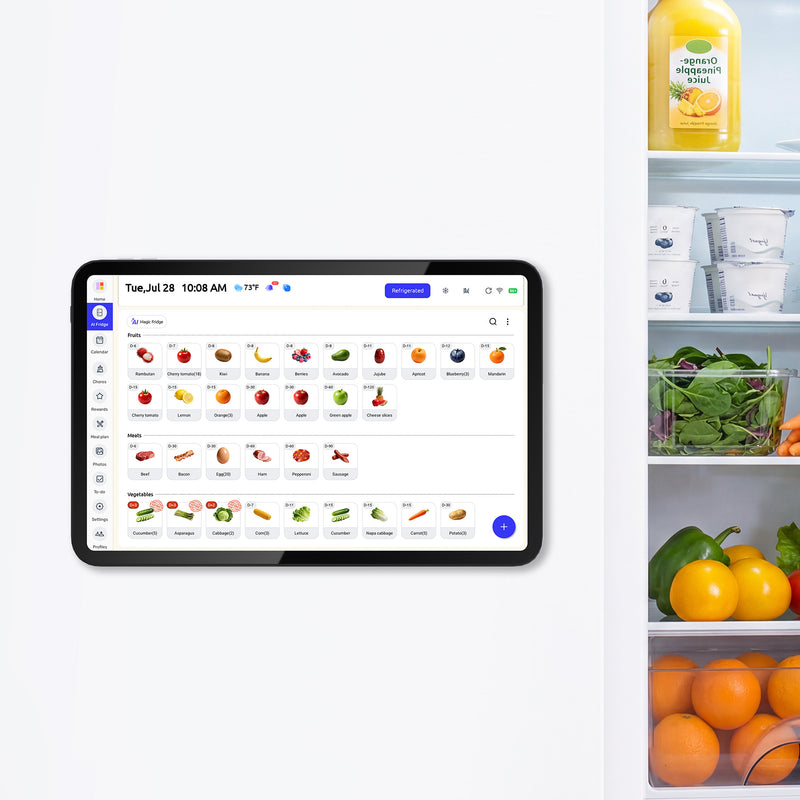
The best versions behave like a permanent at-a-glance dashboard. They don’t just show events. They can include chores, meal plans, shared lists, and family routines. That moves them beyond “calendar” territory into household operations.
If you’re comparing formats, a closer look at a digital calendar for wall use helps clarify how these systems differ from both paper planners and generic tablets.
Family Calendar Systems at a Glance
| Feature | Paper Calendars | Mobile Calendar Apps | Digital Wall Hubs |
|---|---|---|---|
| Shared visibility | Strong when placed well | Weak, each person uses their own screen | Strong, everyone sees one central display |
| Remote updates | No | Yes | Yes |
| Works for kids | Usually yes | Often limited by device access | Usually yes when display is simple |
| Edit without mess | No, changes get crowded | Yes | Yes |
| Screen-time concerns | None | Higher, requires device use | Lower when used as a passive household display |
| Chores and meals in one place | Possible, but manual | Possible, but spread across apps | Strongest fit for all-in-one use |
| Accessibility options | Limited to print size and marker choice | Depends on device settings | Often better for larger shared viewing |
| Best for | Simple, low-tech households | Adults coordinating on the go | Families needing one visible command center |
What works and what doesn’t
A paper wall calendar works when life is fairly stable and one person is willing to maintain it. It struggles when plans change often.
Mobile apps work when all decision-makers are disciplined calendar users already. They struggle when children, grandparents, or co-parents need one visible shared reference.
Digital wall hubs work when the family needs one source of truth in a real room, not just in the cloud. They struggle if the household won’t build the habit of checking them.
None of these systems is magic. But one of them usually matches the way your home runs. That’s the one worth choosing.
Essential Features for a Modern Family Wall Calendar
The right family wall calendar does more than track appointments. It becomes the place where your household runs. If it cannot reduce missed pickups, repeated reminders, dinner confusion, and last-minute scrambles, it is only decoration with dates on it.
That shift matters. You are not choosing a calendar format. You are choosing a family operating system.

Visibility that works during real life
A calendar has to work while someone is making breakfast, tying shoes, and answering a text from school. If people need to stand directly in front of it to figure out the day, the setup is too small, too cluttered, or badly designed.
Good visibility usually comes down to a few practical details:
- Readable layout: Day names, events, and assignments should be clear in seconds.
- Strong contrast: Pale colors and thin fonts look polished online and fail on an actual family wall.
- Enough writing space: A household with school events, work shifts, sports, and appointments needs room to show all of it without turning each box into a blur.
I always judge this with one question. Can a tired adult understand today at a glance?
Shared access that does not create a gatekeeper
Many family calendars break down for one simple reason. One person becomes the keeper of the system, and everyone else waits for updates.
A modern family setup should reduce that bottleneck. Adults need a reliable way to add and change plans. Kids need a clear place to check what affects them. Grandparents, sitters, or co-parents may not need editing control, but they do need dependable visibility.
What matters is not the technology by itself. What matters is whether schedule changes reach the wall fast enough to stay useful. If the soccer time changes at noon and the kitchen calendar still shows the old plan at 5:00, the system is already losing trust.
Household tools that belong beside the schedule
The strongest family wall calendars do not stop at appointments. They also handle the repeatable work that creates friction at home.
That usually includes:
- Chore tracking: Clear assignments beat verbal reminders that disappear ten minutes later.
- Meal planning: Dinner decisions should be made before the hungry part of the day.
- Shared lists: Groceries, school supplies, pharmacy pickups, and weekend errands need one visible home.
- Routine prompts: Spirit days, library books, trash night, and permission slips are small tasks that cause outsized stress when forgotten.
If you are still weighing low-tech options, a dry erase monthly board for simple visual planning can be a solid starting point. It works best for families with predictable weeks and fewer schedule changes.
Why chore features matter
A calendar that only shows events solves part of the problem. Family life also runs on repeated responsibilities, and those responsibilities fall apart when they live only in a parent’s head.
Built-in chore systems earn their place by making expectations visible. The task is named. The timing is clear. Completion can be checked without a debate about whether anyone said it out loud. That structure helps children follow through, and it also helps adults stop acting like a human reminder app.
Everblog’s family wall calendar overview highlights rewards tracking and chore support as part of a shared household setup, and that combination makes sense in practice. Families do better when the plan and the work live in the same system.
If a household has to keep repeating the same expectations out loud, the system is doing too little.
Fast capture matters more than fancy planning
The failure point for any calendar is usually not the monthly setup. It is the moment information appears.
A dentist callback comes in while dinner is on the stove. A teacher email lands during pickup. Someone remembers pajama day while unloading groceries. If getting that detail into the family system takes too many steps, it gets postponed, then forgotten.
That is why low-friction updates matter so much. Voice entry, quick edits, and easy syncing are not luxury features. They are what keep the calendar current enough to be trusted.
Cost, upkeep, and whether the system will last
Cheap and easy are not always the same thing. I have seen families buy the lowest-cost option, then abandon it because updating it felt like extra work every day.
Before you choose, look at the long-term trade-offs:
- Are the useful features included, or locked behind ongoing fees?
- Will the system get regular updates, or stay static while your needs change?
- If it uses hardware, what happens when something stops working?
- Can the household keep using it without one person carrying the whole load?
A good family wall calendar should lower maintenance, not add another household job. The best choice is the one your family will still be using six months from now, because it supports the way your home runs.
Which Calendar System Fits Your Family?
Monday at 7:12 a.m. tells the truth about a calendar system. One child needs a library book. Another has early practice. A grandparent has a morning appointment. One parent is checking email, the other is packing lunch, and everyone is asking the same question: what is happening today?
That is not a calendar problem alone. It is a family operating system problem.
A good choice matches the way your home communicates, who needs to see the plan, and how often plans change. Many “best wall calendars” lists miss that point. They compare products as if every household needs the same tool, when the true job is choosing a system your family can effectively run.

Busy parents juggling work and kids
These families usually already have enough reminders. What they lack is one shared view that cuts down on constant relaying.
The right setup should give both adults a fast read on the day, make updates easy when plans change, and hold more than appointments alone. Meals, pickup notes, and basic household tasks often matter just as much as soccer practice. A visible family calendar display for busy households usually works better than a planner that lives in one person’s bag.
Watch for a common failure point. If one adult becomes the calendar manager and everyone else becomes a spectator, the system will drift.
Co-parenting and blended households
Shared custody adds a different requirement. The calendar has to feel neutral and dependable.
That usually means clear labels, shared access, and simple categories that both homes can follow without translating each other’s system. School events, exchange times, medical appointments, and activities need obvious ownership. Children also benefit from seeing the plan in front of them, especially when they move between homes and need fewer verbal updates.
In these households, the best calendar is often the one that reduces interpretation. Facts visible to everyone prevent many repeat conversations.
Homeschooling families
Homeschool families rarely need a date grid alone. They need one place that holds the day together.
Lesson blocks, co-op days, errands, chores, outside time, and appointments all compete for the same hours. A pure appointment calendar can feel too thin. What works better is a system that shows recurring rhythms, gives children clear visibility into their own responsibilities, and stays flexible when the week changes by Wednesday.
This is also where placement matters. Families building a larger command center sometimes pair the calendar with nearby storage or a work surface. These stylish wall desk solutions for productivity can help if your calendar needs to function as part of a broader household station.
Multigenerational homes and accessibility needs
Accessibility for low vision users rarely gets proper attention, yet it changes the buying decision fast.
For multigenerational homes, aging parents, or anyone with visual strain, choose around readability first. Large displays, high contrast, simple layouts, voice input, and low clutter matter more than decorative styling. A polished paper calendar with tight handwriting can look good on the wall and still fail the person who needs the information most.
I have seen families make this mistake more than once. They buy for appearance, then end up reading the schedule aloud every day. At that point, the wall calendar is acting like wall art.
A family system is only useful if every person who depends on it can read it and trust it.
A helpful example of calendar formats aimed at bigger visibility is below.
A quick way to choose
Choose based on the breakdown point in your home.
If dates are the only thing slipping, paper may be enough. If adults mainly need coordination while away from home, a shared app may cover it. If the underlying problem is that the household has no visible source of truth, a wall-based hub is usually the stronger choice.
That is the difference between buying a calendar and upgrading the way your family runs.
Setting Up Your New Family Hub for Success
Buying the right calendar matters less than using it the right way. Families often expect the device or planner to fix the problem on its own. It won’t. The calendar becomes useful when the household starts trusting it.
That trust begins in the first week.
Start with one source of truth
Don’t build the new system beside three old ones. Move the important information over quickly and make it clear which version is official.
Use this setup order:
- Import or transfer core schedules first: School, work, activities, medical appointments.
- Add repeating family routines next: Trash day, library day, practices, pickup patterns.
- Layer in chores and meal planning after the basics are stable: Too much at once can make the system feel like homework.
If your calendar area is part of a larger home command center, these stylish wall desk solutions for productivity can help you think through placement, writing surfaces, and nearby storage without turning the space into clutter.
Put the calendar where behavior already happens
Families often overthink aesthetics and underthink traffic flow. The best place is usually where people naturally pause. Kitchens, mudrooms, and main hallways beat tucked-away corners.
A strong family calendar display works because it lives in the path of real life, not because it matches the paint color.
Create a daily glance habit
You don’t need a long family meeting. You need a repeatable moment.
Try one of these:
- Breakfast check: Everyone sees the day before leaving.
- After-school reset: Kids review activities, chores, and dinner.
- Evening preview: Adults confirm tomorrow before the house gets quiet.
Keep it short. The goal is consistency, not ceremony.
Families stick with calendars when checking them feels easier than asking another person.
Give each family member a role
A shared system works better when everyone contributes at some level. Even young children can participate by checking their own tasks or noticing special events. Older kids can own activity updates or chore completion. Adults should agree on naming, color use, and where different kinds of information belong.
That buy-in matters. A family calendar should feel like shared equipment, not one parent’s project.
Make it part logistics, part connection
The strongest family hubs aren’t all business. Add photos, seasonal plans, birthdays, or the weekend idea you don’t want to forget. The calendar should help the house run, but it should also remind everyone what the running is for.
That balance is what keeps a tool from becoming another obligation.
Product Spotlight How Everblog Solves the Puzzle
Monday at 7:12 a.m. is when weak systems show their flaws. One parent is checking a phone calendar, another is asking about pickup, a child is looking for practice clothes, and dinner is still undecided. A family wall calendar earns its place when it reduces those conversations instead of adding another place to check.
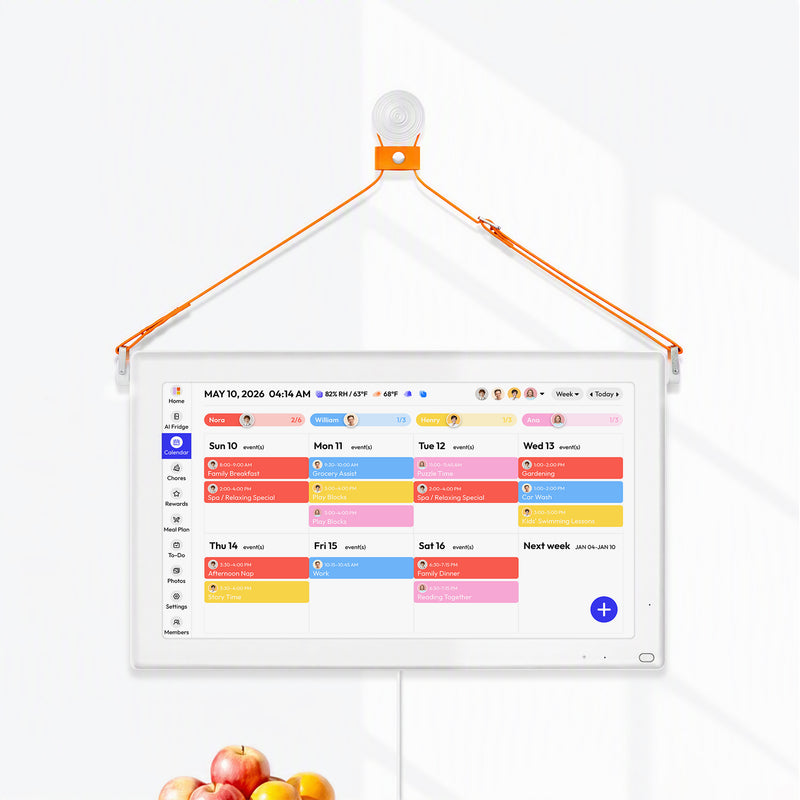
Everblog fits that job because it combines the pieces families usually scatter across paper notes, kitchen whiteboards, and separate apps. The point is not a prettier calendar. The point is a household control center that keeps schedule, chores, meals, and reminders visible in one shared place.

What a complete system looks like in practice
Everblog is a 21.5-inch digital family wall calendar built for common-area use. That size matters more than spec-sheet bragging rights. If people cannot read the plan while walking by, the system breaks down fast.
The practical advantage is consolidation. Instead of asking the family to manage one tool for events, another for chores, another for meals, and a fourth for grocery notes, the display keeps those jobs together. That is what makes it feel less like a gadget and more like a family operating system.
Children can check what is happening without borrowing a phone. Adults can confirm the day without opening three apps. The wall display becomes the shared version everyone trusts.
Why the sync setup matters
A wall calendar only works if it reflects real life. For many families, that means pulling in schedules from Google, Apple, and Microsoft accounts that are already in use.
Everblog’s value depends heavily on that sync layer. If school events live in one calendar, work schedules in another, and activities in a third, the wall hub needs to bring them together reliably. Otherwise the display becomes decoration, and families go back to texting each other for answers.
I have seen this pattern over and over. Households do not quit a calendar because they dislike the idea. They quit because the information on the wall stops matching what is happening.
Where the household tools pull their weight
The strongest part of a dedicated hub is not the screen. It is the reduction in mental switching.
Everblog includes:
- Chore Manager: assigns and tracks recurring responsibilities
- Rewards Tracker: gives kids visible progress instead of vague reminders
- Meal Planner and Grocery List: ties food planning to the actual week
- Voice entry: lets parents add items quickly while cooking, packing, or heading out the door
Those tools solve a daily coordination problem. In many homes, the calendar is only half the work. The other half is all the repeatable household management that sits around it.
Good family systems cut down on repeated questions, repeated reminders, and repeated decision-making.
The trade-offs to weigh
A dedicated wall hub is not the right answer for every household. Paper still works well for families with simple schedules and strong habits. App-only setups can work for homes where every decision-maker already checks a phone calendar consistently.
But families looking for one visible center usually need more than date boxes. They need a system that stays readable, syncs cleanly with existing calendars, supports the adjacent jobs of family life, and does not create extra maintenance. Everblog makes a strong case on that front, especially for buyers who prefer a no-subscription model over another monthly household bill.
That is your key buying decision. You are not choosing a calendar in isolation. You are choosing how your home will run on ordinary Tuesdays.
Frequently Asked Questions About Modern Wall Calendars
Are digital wall calendars just another screen that distracts kids
Not necessarily. A dedicated wall calendar behaves differently from a phone or entertainment tablet. It’s usually a passive information display, not a feed machine. The family walks by, checks the plan, and moves on.
That’s a major difference from handing a child a parent’s phone to look up practice time or dinner plans. The calendar keeps useful information visible without opening the door to games, messages, or endless scrolling.
What happens if the Wi-Fi goes down
That depends on the specific system, but the practical answer is this. A wall calendar that relies on syncing won’t refresh new changes without internet access. Even so, many modern systems are still useful during a short outage because the household usually needs the schedule that was already there, not a brand-new sync every five minutes.
If your home has unreliable internet, keep your expectations practical. Choose a system with a clear display and simple habits, and avoid building a process that collapses the moment connectivity wobbles.
How is my family’s privacy protected
This comes down to product quality and vendor trust. A reputable family calendar should have a clear privacy policy, use secure account connections, and explain how calendar data is handled. That’s very different from mounting a generic tablet on the wall and hoping your household information is protected by default.
The safest buying approach is simple:
- Choose established products with clear support documentation
- Read the privacy policy before connecting personal calendars
- Use strong account security on the calendar services you sync
- Avoid unnecessary app installs on devices meant to be shared
Is a paper wall calendar still worth considering
Yes, if your family’s needs are simple and your schedule doesn’t change much during the day. Paper is still strong for visibility, ease of use, and low-tech reliability.
But if your stress comes from fragmented apps, remote updates, co-parent coordination, or repeated questions from different family members, paper usually reaches its limit quickly. At that point, you’re not choosing between paper and digital aesthetics. You’re choosing whether the house has one working system or several partial ones.
If your family is ready for a wall calendar that acts more like a shared household hub, take a look at Everblog. It brings schedules, chores, meals, and family coordination into one visible place without adding another subscription to manage.


