




If you're reading this while mentally tracking who fed the dog, who still has clean socks, and whether your 8-year-old ever emptied the dishwasher, you're not alone. Most chore battles don't start because a child is lazy. They start because the system depends on one parent remembering, repeating, checking, and chasing every task.
At eight, kids are old enough to contribute in a real way. They're also young enough to need a structure they can see, understand, and trust. A good chore chart for 8 year old children doesn't just get the trash out or the table cleared. It cuts down on nagging, lowers your mental load, and turns household work into a routine instead of a daily argument.
Why Your Current Chore System Is Not Working
The usual pattern looks like this. You ask once. Your child says "okay." Nothing happens. You ask again while making dinner. They wander over halfway, get distracted, and leave the dishwasher open with three forks still inside.
That doesn't mean your child can't handle chores. It usually means the system is too dependent on your voice.

The real problem is hidden labor
Parents often run chores through memory and emotion instead of through a process. You remember what needs doing. You decide who should do it. You remind. You check. You deal with pushback. Then you remember to reward.
That works for a day or two. It falls apart over a month.
A weak chore system usually has one or more of these problems:
- Tasks are vague. "Clean your room" is too broad for many 8-year-olds.
- Expectations change daily. Kids stop taking the chart seriously if the rules move.
- The parent is the reminder system. If the chart only works when you narrate it, it isn't working.
- Nothing feels finished. Children need a visible end point, not a chore that seems endless.
Practical rule: If your chore system creates more supervision than skill-building, it's not a discipline issue. It's a design issue.
Eight is the age when systems start to matter
According to parenting experts, children ages 8-10 are ready for an expanded range of responsibilities, with recommended lists including approximately 15-20 distinct household tasks across personal care, kitchen work, laundry, pet care, and outdoor chores, as noted by the American Academy of Pediatrics resource on chores and responsibility.
That matters because an 8-year-old is no longer just "helping when asked." They're ready to manage a set of repeatable responsibilities. The gap is that many families never move from informal reminders to a system a child can follow independently.
What changes when the system improves
When a chart works, the tone of the home changes. Kids know what's expected. Parents stop repeating themselves. Chores become part of the day, not a negotiation that starts from zero every afternoon.
The goal isn't perfection. The goal is consistency, visibility, and enough structure that your child can succeed without you standing over them.
Choosing the Right Chores for Your 8-Year-Old
The fastest way to make a chore chart for 8 year old kids fail is to overload it. The second fastest is to choose chores that don't matter to the family.
An effective list has to do two things at once. It should match your child's actual ability, and it should solve real household needs.
What chores fit this age
Children in this age range can handle more than simple pickup tasks. They can usually manage kitchen routines, basic laundry, room care, pet help, and outdoor jobs when the steps are clear.
A helpful way to choose is to divide chores into three buckets.
| Sample Age-Appropriate Chores for an 8-Year-Old | ||
|---|---|---|
| Personal Responsibility | Family Contribution | Weekly Projects |
| Make bed | Set the table with silverware and napkins | Rake leaves |
| Put dirty clothes in hamper | Clear the table | Sweep the porch |
| Put away clean clothes | Wipe dining surfaces | Pull weeds |
| Match socks | Feed pets | Vacuum a room |
| Manage hygiene without reminders | Empty accessible dishwasher items | Help clean a bathroom sink or counter |
| Pack lunch or help prepare it | Take out small trash or recycling | Run a load of towels with guidance |
Some families do better with a short daily list. Others prefer a small number of fixed weekly jobs. Both can work. What doesn't work is treating every possible task as mandatory every day.
Build around three kinds of responsibility
A balanced chart usually includes:
- Self-management. Bedroom reset, hygiene, putting clothes away.
- Shared family work. Table duties, dishwasher help, pet care.
- Occasional bigger jobs. Yard work, bathroom touch-ups, helping wash the car.
That mix matters. Self-management teaches independence. Family tasks teach contribution. Bigger jobs teach endurance and follow-through.
Specific skill examples for this age can include making or packing lunch, emptying the dishwasher, setting the table, clearing and wiping dining surfaces, cleaning bathroom fixtures, and matching socks. If you want a broader set of ideas, this list of examples of chores is useful for seeing how families break tasks down by type.
Let your child help choose
Parents often think collaboration weakens authority. In practice, it improves follow-through.
Sit down and ask:
- What jobs does this house need every day?
- Which of those can you do on your own?
- Which ones do you want to learn next?
- Which jobs do you dislike but can still handle?
You still make the final call. But when a child helps build the plan, the chart feels less like a list of demands and more like an agreement.
Children are much more willing to do work they can picture, name, and claim as their own.
Adjust for neurodiversity and real-life capacity
Not every 8-year-old processes instructions the same way. Some need one-step directions. Some need visual sequencing. Some shut down if a task feels open-ended.
For families teaching daily routines alongside broader independence skills, this guide to autism life skills is a strong companion resource because it focuses on practical skill-building, not just behavior correction.
A child who struggles with attention may still be fully capable of chores. They may need the task broken down more clearly. "Clean your room" becomes "put books on shelf, dirty clothes in hamper, stuffed animals on bed." That's not lowering expectations. That's making success visible.
Designing a Chart That Actually Gets Used
A chore chart only helps if people look at it. That sounds obvious, but it's where many systems fail. Parents make a nice chart, hang it up, and then nobody updates it after the third day.
The core decision is simple. Are you using a paper-based system or a digital one?

Where paper charts still work well
Paper is simple. A whiteboard on the fridge or a printed checklist on a clipboard can work beautifully in a smaller household with a steady routine.
Paper charts are a strong fit when:
- Your child responds to visible checkmarks and likes physically marking progress
- The routine rarely changes from day to day
- You want a low-tech setup with no app learning curve
A good paper chore chart should be:
- Short. Daily tasks only, or one clear weekly page
- Specific. "Wipe table after dinner" beats "help clean kitchen"
- Placed where action happens. Kitchen chores near the kitchen, bedtime chores near bedrooms
If you want visual inspiration, this roundup of a picture chore chart shows how families use icons and simple layouts to help children scan tasks quickly.
Where paper breaks down
The problem with paper isn't that it's old-fashioned. It's that it's easy to ignore, lose, or leave stale.
Paper systems struggle when:
| Common issue | What happens |
|---|---|
| Tasks change often | The chart gets messy or outdated |
| More than one caregiver is involved | One adult updates it, the other forgets |
| The child needs reminders | The chart sits there silently |
| Rewards are tracked separately | Parents end up maintaining multiple systems |
This is why many families feel like they "have a chart" and are still doing all the mental work.
When a digital hub makes more sense
Digital chore systems solve a different problem. They don't just display tasks. They centralize them.
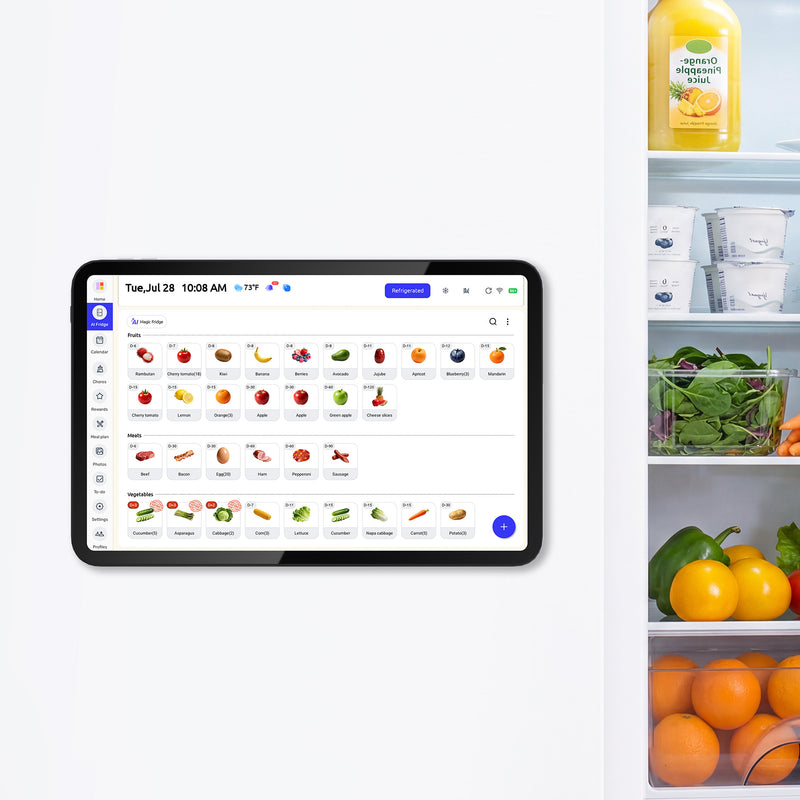
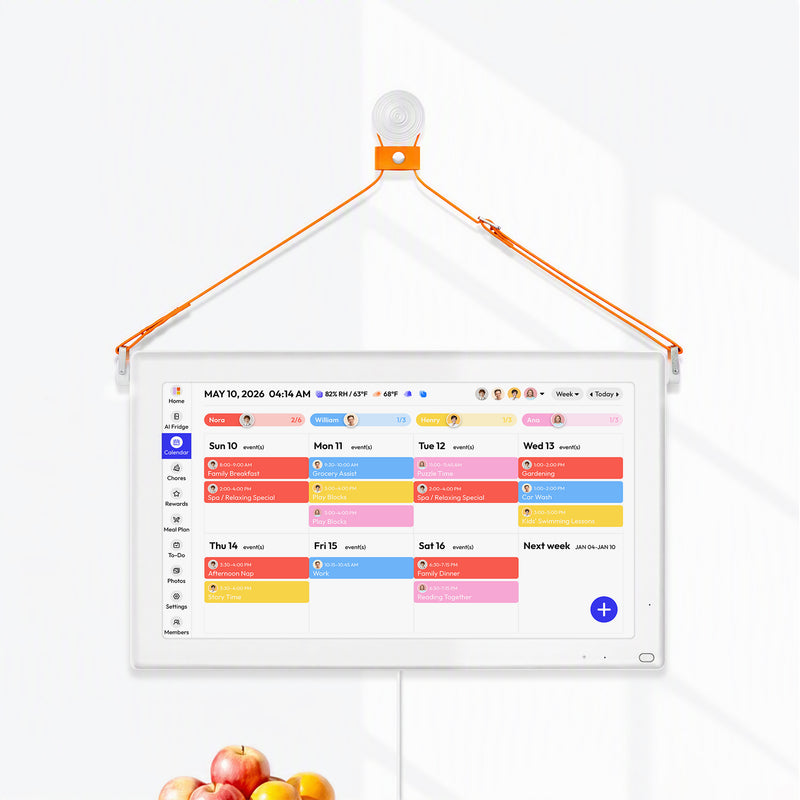
In families with changing schedules, shared custody, multiple kids, or frequent activity transitions, one central screen often works better than scattered printouts. A digital family hub like Everblog can assign chores, show them on a shared display, track completion, and pair chores with rewards in the same system. For some households, that solves the biggest weakness of paper, which is that paper depends on someone manually keeping the whole system alive.
A chart should reduce reminders, not create a new job called "maintain the chart."
The best setup is the one your family can maintain. If a laminated chart and dry-erase marker get used every day, that's a good system. If your home runs on shared schedules, rotating responsibilities, and constant movement, digital usually holds up better.
Beyond Stickers Establishing Meaningful Rewards
By age eight, stickers lose their power in many homes. Kids want rewards that feel connected to effort, progress, and growing independence.
That doesn't mean every chore needs cash. It means the incentive has to feel real.

Rewards that fit this age
Good reward systems for 8-year-olds usually fall into three categories.
- Privileges. Extra screen time, choosing dessert, staying up a little later on Friday, picking the family movie.
- Point accumulation. Small chores build toward a larger reward.
- Direct pay for selected jobs. Some families tie bigger or less routine tasks to money.
Research on chore chart systems shows that point-based rewards can increase task completion, and some models use 15-20 completed tasks to earn a prize, according to this guide on a simple chore chart that works.
The practical takeaway is clear. Eight-year-olds often respond better to visible progress toward something they care about than to praise alone.
Don't reward everything the same way
Not every chore needs a prize. Basic household participation should still feel like part of belonging to the family.
A cleaner model is this:
- Daily self-care and room reset are expected
- Shared family chores earn points or privileges
- Bigger optional jobs can earn extra rewards
That setup protects you from turning every small responsibility into a negotiation.
Make progress visible
Gamification is useful here. Children this age love milestones, levels, and visual tracking. A reward system becomes more effective when your child can see where they are, not just hear "you're doing fine."
A dedicated chore chart reward system can help parents think in terms of progress bars, earned choices, and clear milestones instead of random treats handed out when someone remembers.
A short video can also help if you're trying to rethink how rewards fit into family routines.
Consistency matters more than generosity
A small reward delivered reliably works better than a big reward delivered unpredictably.
If you promise a weekend privilege, follow through. If your child is collecting points, keep the count visible and current. The biggest mistake isn't choosing the wrong reward. It's making the reward feel arbitrary.
Kids don't need extravagant incentives. They need a system they believe will still count on Friday.
How to Introduce the Chart and Keep the Peace
A chore chart can be well designed and still flop if the rollout feels like punishment. If the first conversation sounds like a lecture about everything your child isn't doing, expect resistance.
The launch should feel calm, specific, and team-based.
Start with a family meeting, not a correction session
Use a neutral moment. Not after a mess. Not during a fight.
Keep it simple:
- Name the problem clearly. "We've had too many reminders and too much confusion."
- Frame the chart as a support. "This will help everyone know what to do."
- Connect chores to family life. "Everybody who lives here helps take care of the house."
This keeps the focus on process, not blame.
Teach the task before expecting independence
Many parents assign chores their child has never been taught to do. Then everyone gets frustrated when the result is sloppy or half-finished.
For new chores, use a sequence like this:
- Show the task once
- Do it together
- Let your child try
- Give one correction, not seven
- Repeat until the routine feels familiar
The guidance from Montessori-based chore thinking is useful here. Traditional chore charts can lean too hard on compliance. For long-term success, parents need clear expectations, consistent routines, and genuine positive reinforcement, and inconsistent reward follow-through is a major reason chore charts fail, as discussed in this article on the chore chart debate.
Use clear language
Children do better with timing and location attached to a task.
Try this:
| Vague instruction | Clear instruction |
|---|---|
| Clean up later | Put your shoes in the basket when you come in |
| Help with dinner | Set the table before we eat |
| Take care of the bathroom | Wipe the sink after brushing teeth at night |
Specific language reduces arguments because there is less room for confusion.
Expect pushback without abandoning the plan
An 8-year-old may test the system. That's normal. What matters is your response.
Don't overtalk. Don't renegotiate every chore in the moment. Point back to the chart, restate the expectation, and stay steady.
A few phrases that work:
- "It's on your list for today."
- "You can choose when, but it needs to be done before screens."
- "I'll help you start, but you're finishing it."
Praise effort that shows growth
Avoid turning every success into a generic "good job." Name the skill instead.
Say things like:
- "You emptied the dishwasher without being reminded."
- "You finished all the steps even though you didn't want to."
- "You noticed the dog bowl was empty and handled it."
That kind of feedback builds competence, not just obedience.
Troubleshooting and Advanced Chore Strategies
Every chore system has a honeymoon period. Then a child gets sick, soccer runs late, school gets heavy, or the novelty disappears. That isn't proof the chart failed. It means the system needs adjustment.
The mistake many families make is treating consistency like rigidity. What you want is a stable structure with flexible execution.

When the chart stops working
If chores suddenly slide, check the system before blaming motivation.
Common fixes:
- Reduce the list. Too many tasks create avoidance.
- Change the timing. After-school chores may work better before screens or after a snack.
- Refresh the rewards. A stale incentive stops pulling its weight.
- Rotate a disliked task. Some jobs create daily friction that isn't worth it.
If a child resists every task, the issue may be the load, the timing, or the clarity. It isn't always the child's attitude.
Adapting for neurodiverse children
This is the gap in most chore advice. Many printable charts assume every child can take a broad instruction, hold multiple steps in working memory, and complete the task without drift.
Some children can't do that consistently yet. They still need chores. They just need a different format.
Useful adjustments include:
- Micro-steps. Break "clean bathroom sink" into gather spray, wipe mirror, wipe sink, throw towel in hamper.
- Visual timers. A short timed burst can lower resistance.
- One task at a time. Too many visible chores can create shutdown.
- Gentle prompts. Some kids need a nudge without a parent entering the room and escalating the moment.
Research summarized in this article on free printable chore chart templates notes that for neurodiverse children, rigid paper charts can reduce compliance by 40%, while gamified digital trackers can boost completion by 65%.
That doesn't mean paper never works. It means format matters more than most parents are told.
Use seasons and schedules, not fixed ideals
A smart chore system changes with real life.
During busy weeks, keep only the essential chores. During school breaks, add one larger project. If a child is overwhelmed, shorten the list without removing responsibility completely.
The long game is teaching your child how to contribute steadily, not proving they can follow the exact same chart every week of the year.
Your Partner in Building a Responsible Family
A strong chore chart for 8 year old kids does more than manage tasks. It teaches follow-through, contribution, and the habit of noticing what a home needs. The chart works best when chores are chosen thoughtfully, expectations are clear, and the system is simple enough to survive real family life.
That same principle applies to other family spaces too. If you're trying to reduce clutter and make routines easier, this guide on how to organize a playroom is a practical next step. Organized spaces and organized responsibilities reinforce each other.
If you want one shared place to manage chores, schedules, rewards, meals, and family routines, take a look at Everblog. For busy households, a central family hub can reduce the paper clutter, missed reminders, and repeated nagging that make chore systems hard to sustain.


