

A picture chore chart is a game-changer for little ones. It's a simple visual tool that uses images instead of words to show kids what tasks they need to do. Because it's visual, it’s perfect for young children who haven't learned to read yet. This system turns a vague idea like "clean up your room" into clear, bite-sized steps, giving kids the confidence to jump in and help out.
Why Picture Chore Charts Actually Work
If you've ever tried telling a toddler to "tidy up," you know the blank stare you get back. For a young child, the world is all about what they can see and touch right now. Verbal instructions can feel confusing and overwhelming. A picture chore chart closes that gap by showing them exactly what to do. That visual clarity is its secret weapon.
This approach taps right into how little kids learn. It turns boring duties into a simple, almost game-like, sequence of events. Instead of a power struggle over putting away toys, finishing chores becomes a reason to feel proud and accomplished.
Building Real Independence and Responsibility
A picture-based system lets kids take charge of their own tasks without you having to nag them every five minutes. They can walk over to their chart, see what's next, and feel that amazing satisfaction of checking it off themselves. This isn't just about getting chores done; it's about building foundational life skills.
Kids who use visual charts learn to:
- Follow a sequence: Seeing the tasks lined up helps them understand that one thing comes after another.
- Manage their "to-do" list: The chart gives them a clear set of goals for a specific time, like their morning or bedtime routine.
- See their role in the family: They learn that their small efforts help the whole household run a little more smoothly.
That growing sense of capability is a huge confidence booster. It sets the stage for a positive attitude toward responsibility down the road.
A visual chart transforms a parent's request into a child's personal checklist. That little shift in perspective is the key to less nagging and more cooperation.
The Brain Science Behind It
Here’s a fun fact: the human brain processes images 60,000 times faster than text. This is why visual aids are so incredibly effective, especially for children. A picture of a toothbrush, a toy box, or a pet's food bowl is instantly understood. There's no room for confusion, which means less frustration and fewer meltdowns.
It’s no surprise that families are looking for better ways to get organized. The global market for planners is expected to hit USD 6,259.01 million by 2029, and family-focused tools are a big part of that trend.
Think about it—we use visual aids for all sorts of early learning. From alphabet charts for kids that build literacy skills to picture schedules that ease transitions, these tools create a supportive environment where kids can thrive. They know what’s expected, and they get to feel successful every single day.
Crafting Your Custom Picture Chore Chart
Alright, you're sold on the idea of a visual system. Now for the fun part: making a picture chore chart that actually works for your family. The best chart isn't some fancy template you download; it's one that fits your home's vibe and your child's personality.
Whether you're thinking of a simple, disposable chart for a trial run or a durable, long-term solution, there's a perfect option waiting for you. The goal is to create something that feels less like a list of demands and more like an interactive game.
Choosing Your Chart’s Foundation
First things first, what will your chart be made of? Before you even think about the specific chores, you need to decide on the physical format. This choice shapes everything—how you build it, where you put it, and how your child interacts with it.
Here are a few tried-and-true options that parents swear by:
- The Classic Printable: This is the easiest way to dip your toes in. A simple piece of paper or poster board, a hand-drawn grid, and a sheet of fun stickers. It’s low-cost, low-commitment, and perfect for figuring out what resonates with your kid.
- The Magnetic Whiteboard: This is my personal favorite for a reusable option. A small magnetic whiteboard or even a cheap cookie sheet from the dollar store works wonders. You can find or make little picture magnets for each chore, and kids love the satisfying click of moving a task from the "To Do" column to the "Done" side.
- The DIY Dry-Erase Frame: This is a seriously clever hack. Design your chart on the computer, print it out, and pop it into a basic picture frame. The glass acts as a perfect dry-erase surface. When you need to update the chores, you just print a new sheet. Simple, clean, and endlessly reusable.
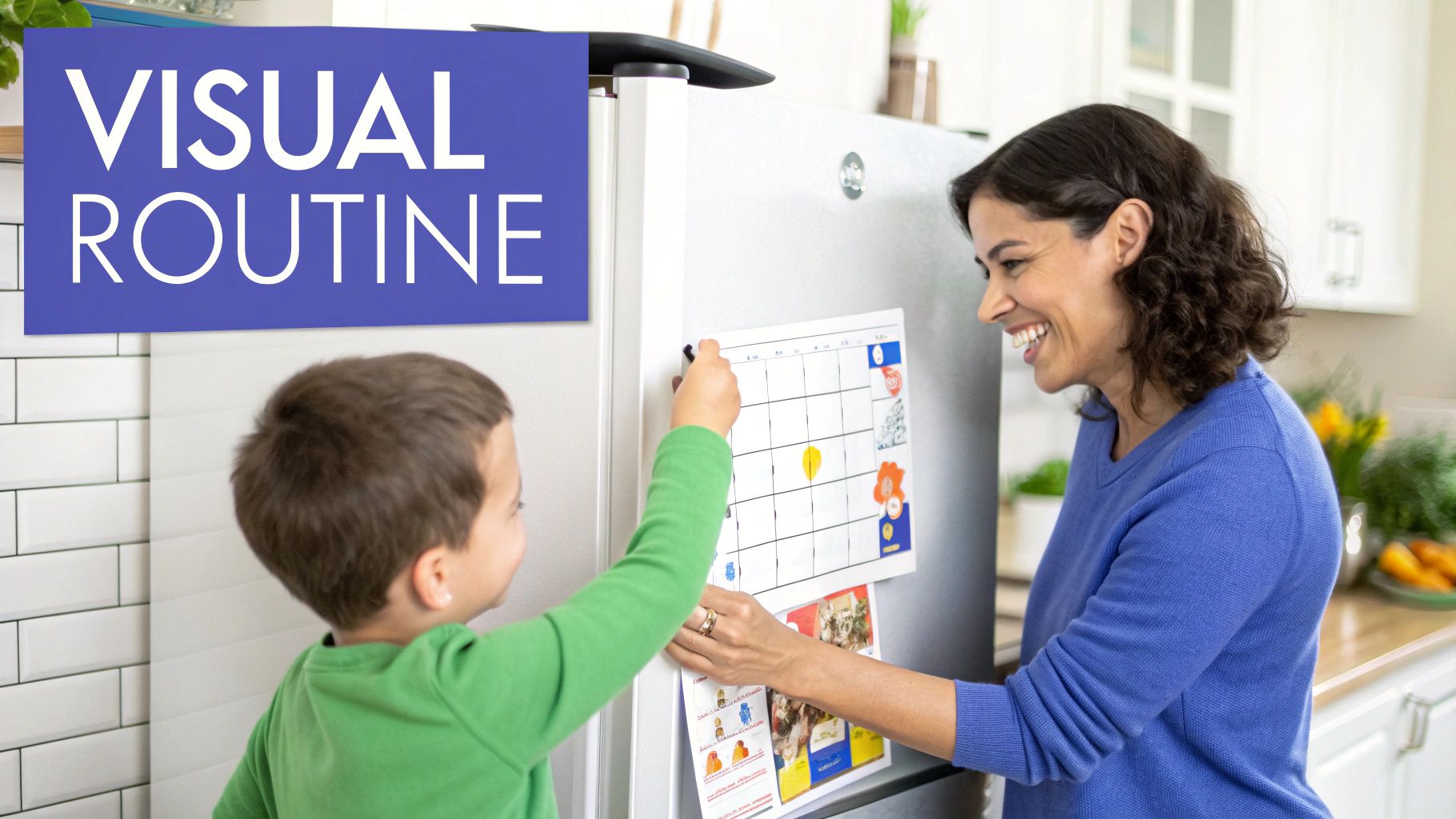
Think about where this chart will live. A magnetic chart on the fridge is a constant visual reminder during breakfast chaos. A framed chart in your child’s bedroom can become a natural part of their winding-down routine at night.
Here's a pro-tip: Involve your child right from the start. Letting them pick the color of the poster board or the theme of the stickers gives them a sense of ownership. That feeling is often more powerful than any reward you can offer.
Designing for Engagement and Clarity
A great design is more than just pretty pictures; it’s about making the chart clear, personal, and motivating. Generic clipart just won't cut it.
The secret? Make the icons hyper-specific to your child's life. Instead of a cartoon drawing of a laundry basket, snap a quick photo of their actual laundry basket. Use a picture of your family dog for the "feed the dog" chore. For a young child, this direct connection makes the task instantly recognizable and leaves no room for confusion.
Once you have your personal photos or icons, think about the layout.
- Group tasks by routine. A "Morning Jobs" section with icons for getting dressed, brushing teeth, and making the bed makes the flow of their morning predictable. You can create similar sections for "After School" or "Bedtime."
- Create a satisfying "done" moment. The physical act of finishing a task is a huge part of the reward. This could be slapping on a shiny star sticker, flipping a chore magnet over to reveal a smiley face, or making a big, bold checkmark with a favorite color marker.
If you need a starting point, you can find a great pack of printable chore icons online that you can mix and match with your own photos. The end goal is a visual guide that speaks your child's language and makes their responsibilities feel clear, manageable, and maybe even a little bit fun.
Choosing The Right Chores For Your Child's Age
The biggest secret to making a picture chore chart actually work isn't the stickers or the design. It's matching the jobs to what your child can realistically do. Hand a chore to a child that’s way too hard, and you’re just setting them up for frustration. Give them one that’s too easy, and they miss out on that amazing feeling of accomplishment.
You're looking for that sweet spot: challenging enough to feel important, but simple enough to nail.
This is where you build real confidence and a genuine sense of responsibility. A great way to approach this is by using the principles of scaffolding in child development—you give just enough support to help them succeed, then gradually pull back as they master the skill. You’re building their competence one small, successful step at a time.
This diagram shows how all the pieces fit together, from the physical chart to the motivation that makes it all click.
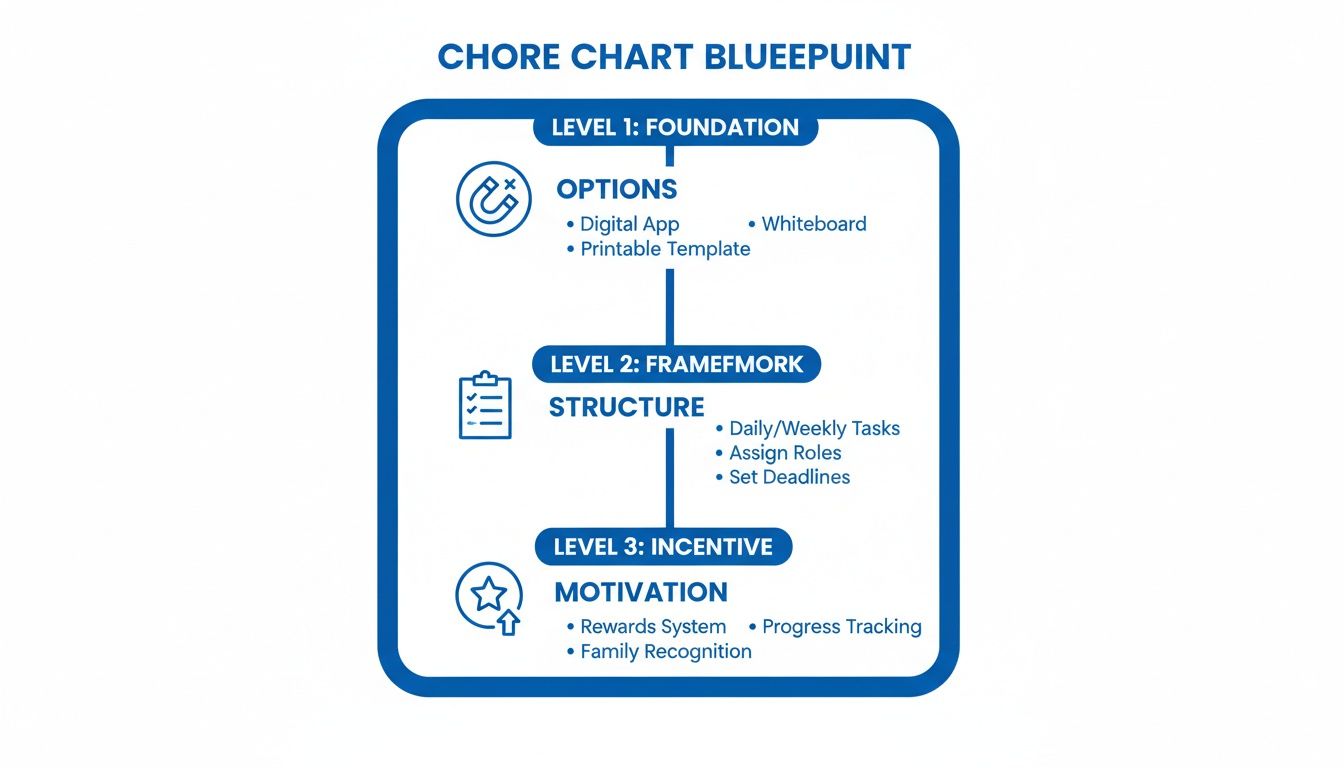
As you can see, the chart itself is just the foundation. What really makes it stick is tapping into what motivates your child.
To get you started, here's a quick-reference guide to developmentally appropriate visual chores that work well for little ones.
Sample Chores by Age Group
| Age Group | Sample Picture Chores | Skills Developed |
|---|---|---|
| Toddlers (2-3) | • Put toys in a bin • Wipe up a small spill • Place books on a low shelf |
• Following simple directions • Basic sorting • Gross motor skills |
| Preschoolers (4-5) | • Help feed a pet • Set napkins on the table • Match clean socks |
• Multi-step routines • Fine motor control • Contributing to family tasks |
| Early Elementary (6-7) | • Sort laundry by color • Water indoor plants • Unload safe dishwasher items |
• Following a schedule • Taking ownership of a task • Planning and organization |
This table is just a starting point, of course. You know your child best! Use these ideas as inspiration and adapt them to fit your family's routine.
Chores For Toddlers (Ages 2 to 3)
At this age, it’s all about participation, not perfection. Toddlers are fantastic mimics and are often desperate to "help" do whatever you're doing. The trick is to keep their jobs super short, focused on just one step, and always with you right there.
- Wipe up spills: Hand them a small cloth for little water dribbles. It makes them feel so capable.
- Put toys in a bin: Keep it simple. "Let's put all the blocks away" is much more effective than "clean your room."
- Place books on a low shelf: A perfect task for building motor skills and a sense of order.
These tiny contributions aren't just chores; they're guided play that teaches them they have a valuable role in the family.
Chores For Preschoolers (Ages 4 to 5)
Your preschooler is ready for a little more responsibility. They can now handle tasks with two or three steps and are getting much better at following the visual cues on their chart. Their motor skills are more refined, too.
- Help feed a pet: Scooping kibble into a bowl (with your help nearby) is a classic for a reason. It's a real, important job.
- Set napkins on the table: This gives them a clear role in getting ready for family meals.
- Match clean socks: This is a fantastic pre-reading activity disguised as a laundry helper.
The best chores for this age are the ones that directly contribute to the family's daily flow. When they see how their actions help everyone, their motivation just soars.
Chores For Early Elementary Kids (Ages 6 to 7)
By now, kids are ready for multi-step chores that require more independence. They can remember a sequence of actions and start to take ownership of a task from beginning to end. For a deeper dive, check out our guide with more chore chart ideas for kids.
- Sort laundry by color: This is a great way to teach categorization while tackling a real household need.
- Water indoor plants: Teaches them about caring for other living things and following a simple weekly schedule.
- Help unload the dishwasher: They can be fully in charge of putting away their own plastic plates, cups, and silverware.
When you introduce chores that grow with your child, the picture chart becomes a tool for empowerment, not a source of arguments. You're building a foundation of helpfulness and confidence that will last a lifetime.
Keeping Chores Fun and Motivating
You’ve got the perfect picture chore chart all set up, and for the first few days, the kids are so excited. But how do you keep that magic alive when the novelty wears off?
The secret isn’t in the chart itself, but in how you use it. It’s about turning a list of tasks into a source of connection and genuine motivation. This is where we stop thinking in terms of bribes and start thinking about what actually makes a kid want to help out.
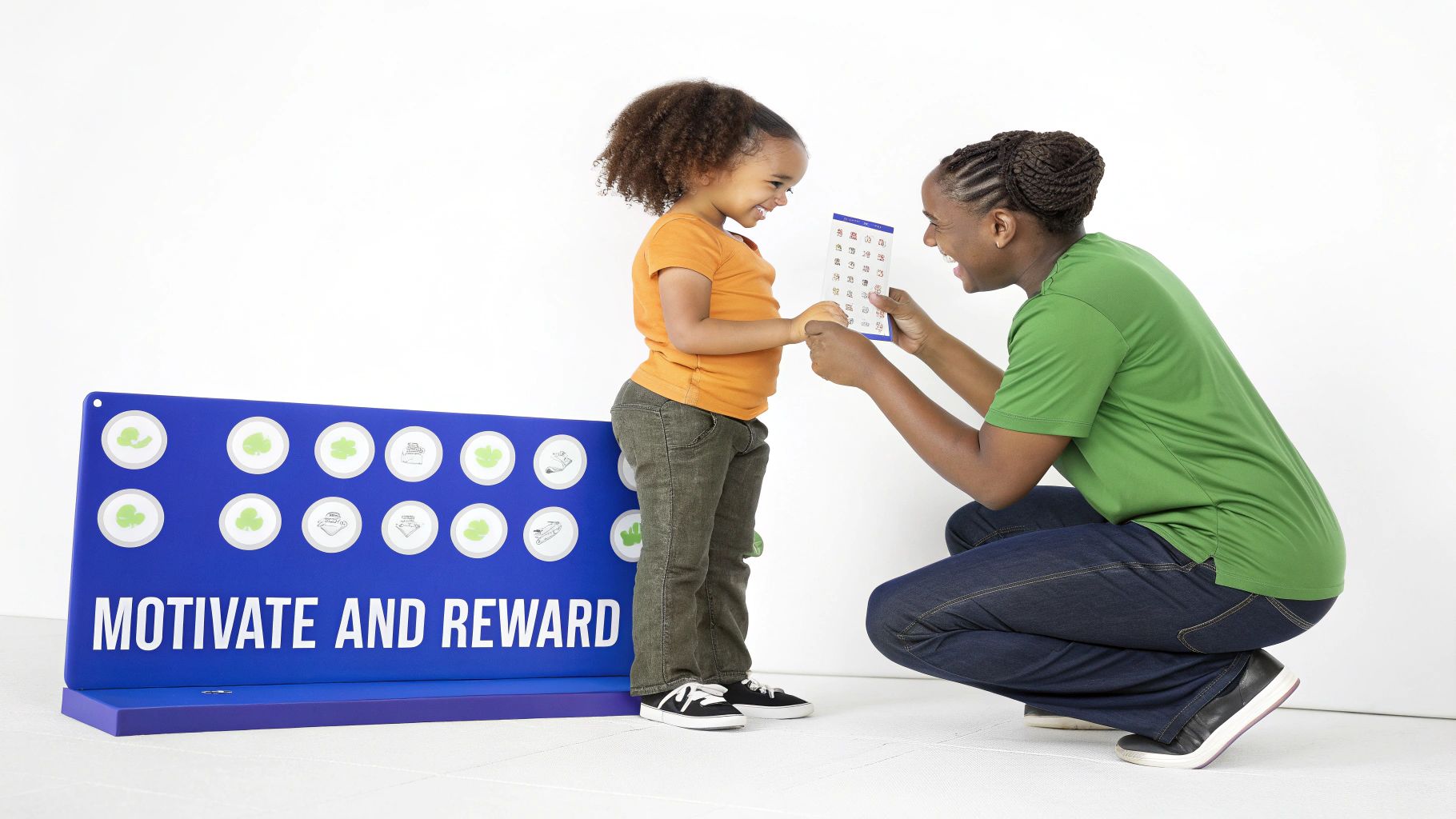
The goal is to frame chores as their special way of being an important part of the family team. Your chart is just the tool we use to celebrate that effort.
Choosing Rewards That Actually Work
Rewards can be a great way to jumpstart good habits, but we need to be smart about it. There's a big difference between tangible goodies and meaningful experiences. A small toy might get the job done today, but relying too much on material stuff can quickly make chores feel like a transaction.
Try mixing things up to see what really clicks with your child:
- Tangible Rewards: Think physical items. A new sticker for their water bottle, a small toy from a "treasure box," or picking out their favorite ice cream. These are perfect for hitting immediate, short-term goals.
- Experience-Based Rewards: This is all about shared time and special privileges. Maybe they get to choose the family movie on Friday, score 15 extra minutes of one-on-one playtime with you, or control the music in the car for a week.
I find that experience-based rewards almost always win out. They build stronger family bonds and create happy memories that your kids will associate with helping around the house. For a deeper dive, check out our complete guide on building a chore chart reward system that lasts.
Building Real, Intrinsic Motivation
While a little external motivation is helpful, the end game is to foster intrinsic motivation—that internal spark that makes a child want to contribute just because it feels good and right. This is where your words and encouragement make all the difference.
Move beyond a generic "Good job." Instead, give specific, heartfelt praise that ties their action to a family value.
Try saying something like, "Thank you so much for watering the plants. You're doing an amazing job helping our home feel so beautiful and alive!" That simple shift in language changes the focus from just getting a task done to being a valued, contributing member of the family.
Your chore chart should be a tool for connection, not compliance. Use it to praise the effort, celebrate the contribution, and reinforce that every family member plays an important part.
This need for structured family management is more important than ever. The global day care market, which often fills the organizational gaps for working parents, is expected to hit USD 94.58 billion by 2030. This number shows just how much modern families are looking for smart systems to manage household duties in busy, dual-income homes.
At the end of the day, your energy is contagious. If you treat the chore chart as a fun and positive part of your family’s routine, your kids will, too.
So, What Happens When the Chore Chart Stops Working?
Let’s be real. Even the best-laid plans with the cutest picture chore charts can go off the rails. That initial buzz of excitement fades, one of your kids starts digging their heels in, or you notice the cat’s food bowl has been consistently “forgotten.”
This is completely, 100% normal. It doesn’t mean your system failed or your kids are destined to be messy forever. A good chore chart isn't a "set it and forget it" tool; it's a living part of your family routine that needs a little tune-up now and then.
Instead of seeing it as a failure, think of these moments as a chance to reconnect and figure out what needs to change. The goal here is building long-term habits, not getting a few weeks of perfect performance. A few simple tweaks can get everything humming again.
When the Novelty Wears Off
This is the big one. The stickers lose their magic, the magnets aren't as fun to slide, and the chart slowly blends into the wall decor. To get that spark back, you have to keep things feeling fresh.
Here are a few tricks I’ve seen work wonders:
- Throw in a "Mystery Chore." Add a card with a big question mark on it. This task could be something fun and fast, like "give three high-fives," or a genuinely helpful one like "wipe down the light switches." The surprise factor alone is often enough to get kids re-engaged.
- Let them "Draft" their chores. If you have multiple kids, hold a quick weekly meeting where they can take turns picking their main jobs for the week. Giving them that little bit of control and choice is incredibly empowering.
- Switch up the "Done" marker. Ditch the stickers for a fun-shaped hole punch. Swap the dry-erase marker for a bingo dauber. Use colorful paper clips to mark finished tasks. Sometimes, just changing how they interact with the chart makes it feel new all over again.
Remember, the chart is just a tool for communication. If it’s not working, it’s a signal that it’s time to sit down, talk, and figure out a better way forward together.
Tackling Resistance and "Forgetting"
But what if your child just flat-out refuses to do a chore? Or consistently claims they "forgot"? This usually points to a deeper issue. Maybe the task is genuinely too hard for them, the directions weren't clear, or they just don’t see the point.
Instead of turning it into a battle of wills, get curious.
Try holding a quick, no-pressure "chart chat" once a week. Sit down together and look at the chart. You could say something like, "Hey, I noticed it’s been tough to get the dog fed in the morning. Is it because we’re all so rushed?"
This simple shift changes your role from enforcer to problem-solving partner. Maybe the chore needs to be simplified (scooping food is easier than opening a can). Maybe it needs to move to a different time of day. Or maybe your child has outgrown it and is ready for something new.
Keeping that dialogue open is what makes a chore system last. It becomes a positive part of your family culture that grows and changes right along with you.
Integrating Your Chart Into a Digital Family System
A physical picture chore chart is an amazing starting point, especially for younger kids. It gives them something tangible they can see, touch, and track. But as your family grows and schedules get more complicated, that simple paper chart can become the foundation for a much more powerful household system.
This is where a digital family hub comes in and beautifully complements what you’ve already started.
Think of your picture chart as the "training wheels" for contributing to the household. It’s perfect for your five-year-old who is just learning to make their bed and put away toys. But your twelve-year-old? They’re probably juggling multi-step tasks like homework, instrument practice, and taking out the recycling—jobs that don't really fit on a simple sticker chart anymore.
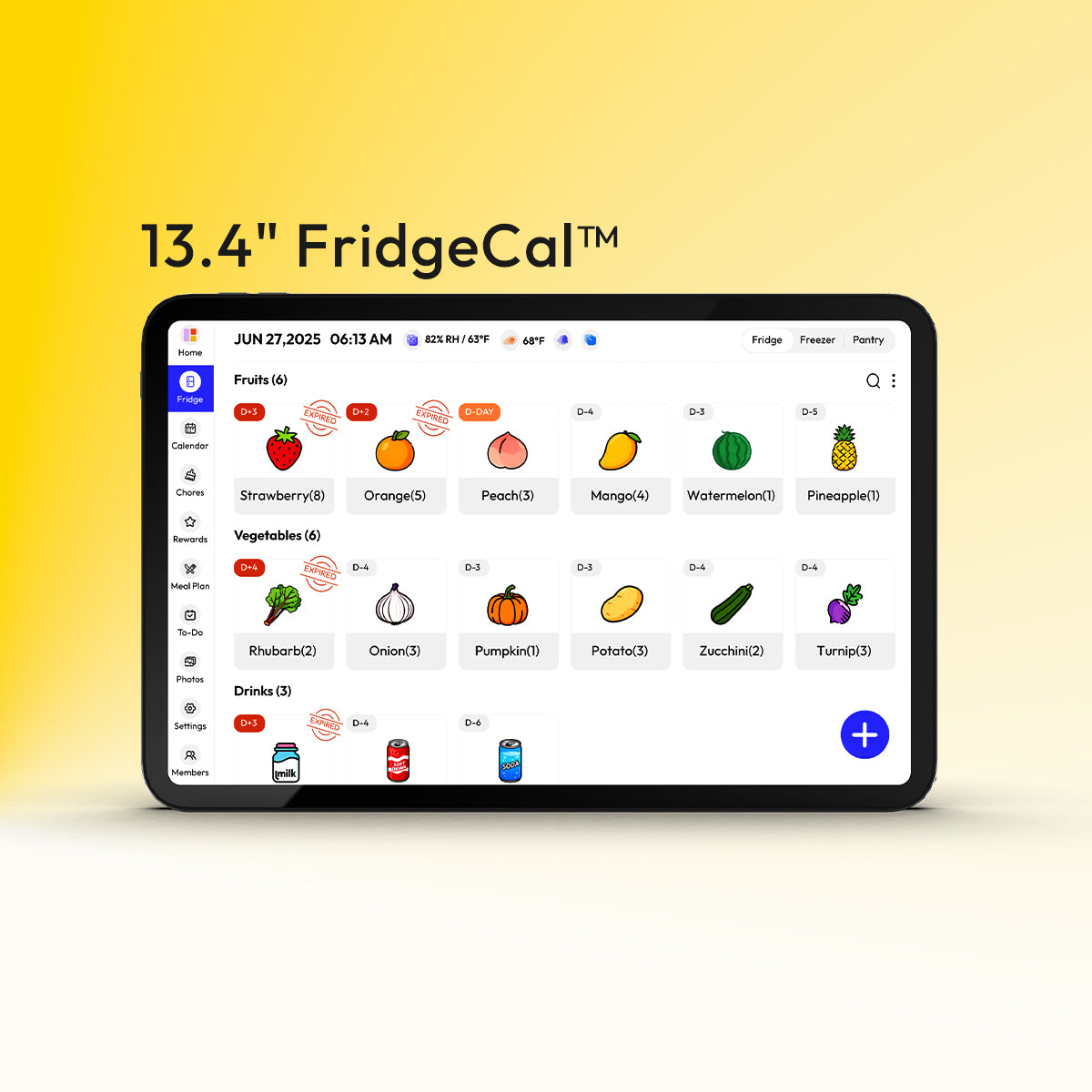
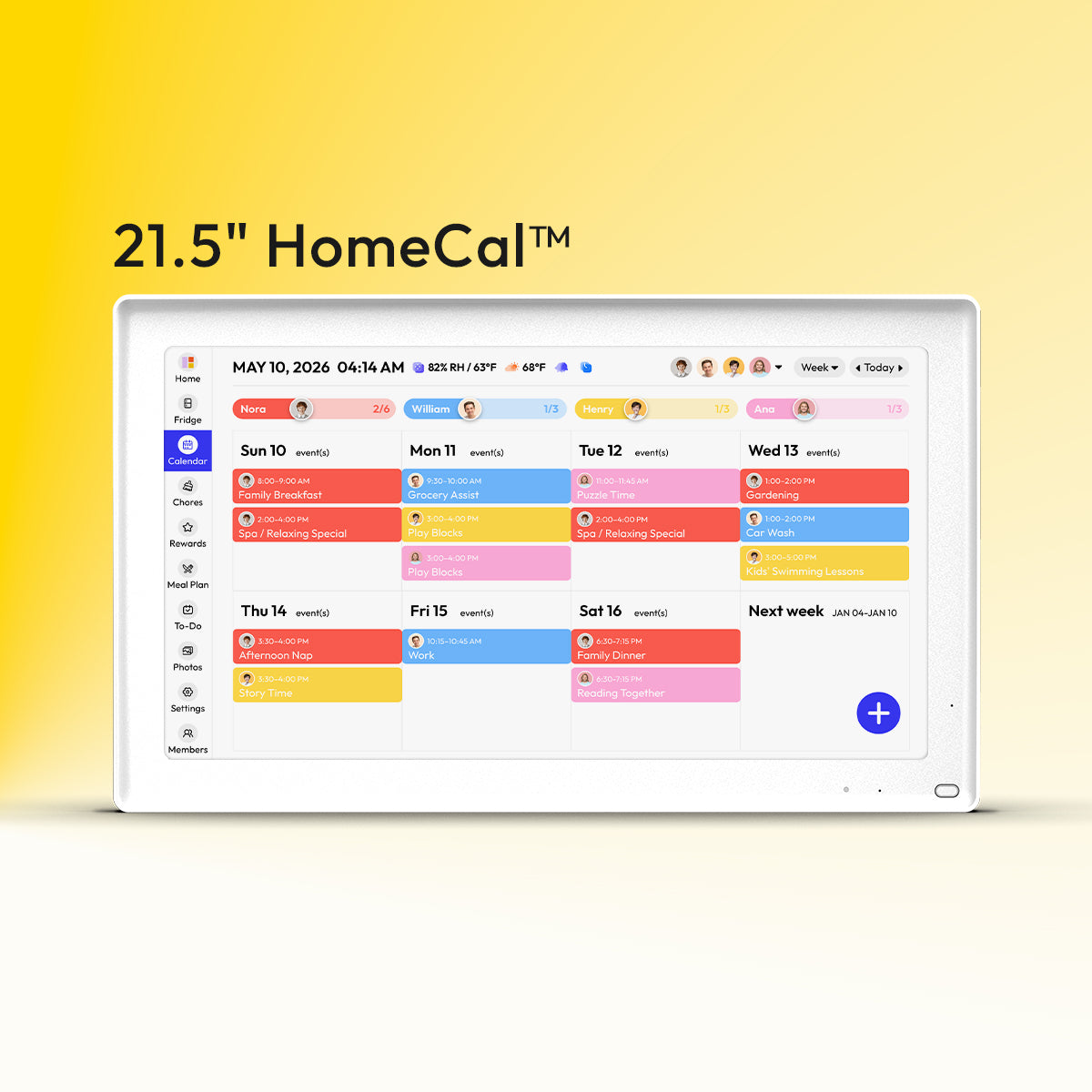
This is the beauty of a hybrid approach. The physical chart can remain the domain of your youngest, while a digital system like Everblog’s Chore Manager handles the more complex assignments for older kids and teens. You can assign one-off tasks, set recurring duties, and even link chores to specific rewards, all from one central dashboard.
Unifying Your Family's Motivation
One of the biggest headaches of managing chores for multiple kids is creating a reward system that feels fair and actually works for everyone. What excites a preschooler (a shiny sticker!) is worlds away from what motivates a pre-teen (usually screen time or a special outing).
A digital hub allows you to create a unified system that grows with your children. It bridges the gap between the sticker chart and more mature responsibilities, ensuring everyone feels their contributions are equally valued.
For instance, you can use a digital Rewards Tracker to manage incentives for the whole family. Your little one might earn a point on the app for every star they get on their physical chart. At the same time, your older child earns points for completing their digital checklist. Everyone’s efforts feed into the same system, creating a cohesive and transparent family economy where everything feels fair.
Connecting Physical Habits to Digital Organization
This combined strategy does more than just keep your house tidy; it teaches a crucial life skill. It shows kids how tangible, hands-on actions connect to broader organizational goals. You can see how much families are leaning into these systems—the private household services market is projected to reach USD 568.75 billion by 2030. It’s a clear sign of just how critical systematic organization is for modern family life, a trend explored by The Business Research Company.
By integrating your picture chore chart with a digital tool, you create a seamless progression. Kids start with a simple, visual guide and gradually move toward managing their responsibilities on a shared digital platform. This really prepares them for a future where they'll need to balance tasks using both physical and digital methods.
For more practical tips, check out our guide on how a digital family calendar setup can sync with chores. Your simple picture chart becomes the first step in a lifelong journey of responsibility.
Ready to create a single source of truth for your family's busy life? Everblog brings schedules, chores, and meal plans into one beautiful display, fostering connection and calm. Discover how Everblog can transform your family's routine today.


