
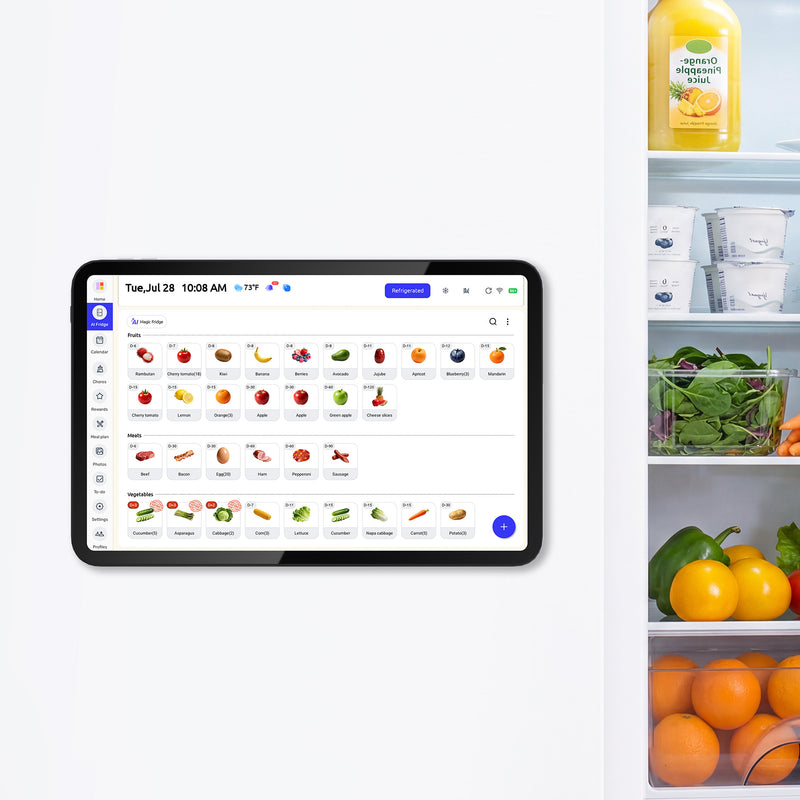



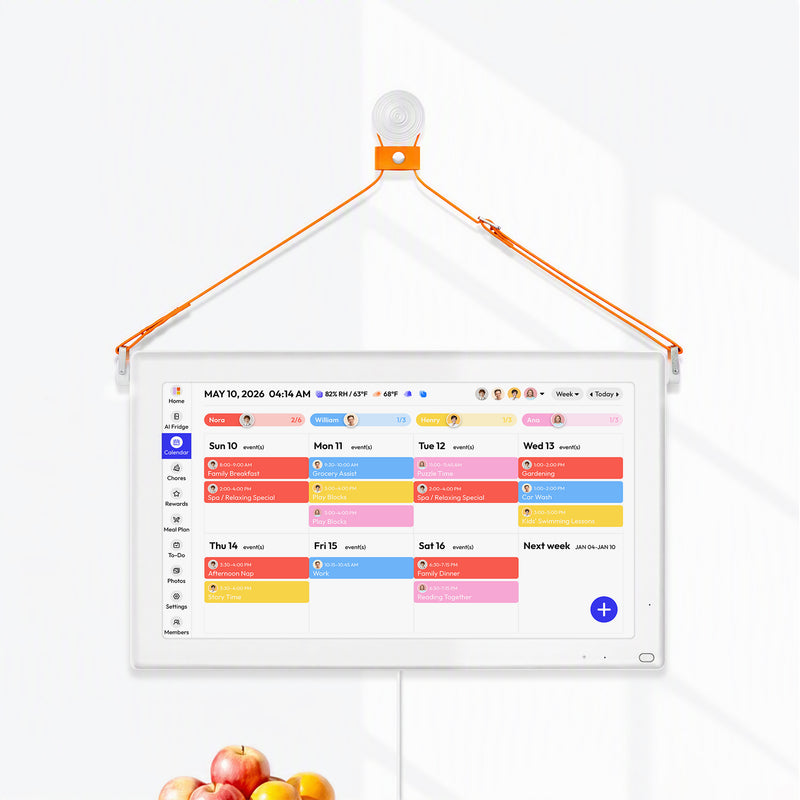



If you've ever downloaded a colorful chore chart, stuck it on the fridge with the best of intentions, and watched it become ignored wallpaper within a week... you're not alone.
Most standard chore charts for multiple kids are doomed from the start. They fail because they don't solve the real problems: fairness, age gaps, and sibling rivalry. The solution isn't just a prettier checklist; it’s a dynamic system built for your family.
Why Most Chore Charts Fail With Multiple Kids

Let's be honest, the static, one-size-fits-all approach is where things fall apart. These generic printables create more arguments than they solve, leaving you feeling more like a referee than a parent.
The core issue is that they completely ignore the reality of a multi-kid household. They don't account for the fact that your seven-year-old is way more capable than your four-year-old. And they certainly don't have a built-in answer for the inevitable cries of, "That's not fair!" when one kid's task seems way easier than another's.
The Cycle of Frustration
Does this sound familiar? You're burned out from the constant nagging, reminding, and mediating. Resentment starts brewing between the kids because the workload feels lopsided. Before you know it, everyone (including you) gives up, and the chart is forgotten.
This is about so much more than just getting the dishwasher unloaded. It's about teaching responsibility and teamwork—skills that last a lifetime. In fact, a landmark 20-year study found that the single best predictor of a child's future success was whether they started doing chores by age 3 or 4. Kids who pitched in early showed greater academic and career achievement down the road.
The goal isn't just a clean house. It's to raise capable, cooperative kids who see themselves as vital members of the family team. A good system is what moves you from chaos to cooperation.
Shifting from a Chart to a System
To really make this work, you have to stop thinking "chart" and start thinking "system." This means creating a living framework that's fair, flexible, and actually motivating for everyone. A true system anticipates the squabbles and solves them before they even start.
Let's compare the two. Here's what a static chart often leads to versus what a thoughtful system can achieve.
Generic Chore Charts vs A Dynamic Family System
| Common Pitfall | Effective System Solution |
|---|---|
| "It's not fair!" | A built-in rotation ensures everyone gets a turn with both easy and hard tasks. No one gets stuck with bathroom duty forever. |
| Unbalanced Workloads | Tasks are scaled to each child's age and ability, so expectations are always realistic and appropriate. |
| Kids Lose Interest | Motivation is baked in. Effort is clearly connected to meaningful rewards, whether that's allowance, screen time, or a special outing. |
| Constant Nagging | The system empowers kids to take ownership. They know what's expected and can track their own progress, reducing your mental load. |
A well-designed system creates a culture of teamwork instead of competition. When the process is fair and expectations are crystal clear, kids are far more likely to buy in without a fight.
Of course, if your current routine feels completely overwhelming, some families find it helps to reset by exploring options like hiring professional help for household tasks. But with the right strategy, you can absolutely build a self-sustaining chore system that finally works.
Building a Fair System for Different Ages and Abilities

Before you can build a chore system that actually sticks, you need a clear inventory of what needs doing. Most families skip this part—the "chore audit"—and jump right to assigning tasks, which is where imbalance and frustration begin.
It’s a simple process. Just grab a notebook and walk through your home, room by room. Think about a typical day, week, and month. What are the constant little jobs? What are the bigger, less frequent ones? Don't filter anything yet; just get it all down.
Sorting Tasks by Effort and Ownership
Once you have that master list, you can start to categorize. This is where you bake fairness into the system from the very beginning. Group tasks not just by room, but by the effort they take. Wiping down the counter takes two minutes; deep-cleaning a bathroom takes thirty. Acknowledging that difference is key.
Next, divide your list into two buckets: Personal Responsibilities and Family Contributions.
- Personal Responsibilities: These are the non-negotiables for taking care of oneself and one's own space. Think making their bed, putting dirty clothes in the hamper, or clearing their plate after dinner. These are foundational life skills.
- Family Contributions: These are the jobs that benefit everyone. We're talking setting the table, feeding the dog, or helping bring in groceries. These tasks cultivate a real sense of teamwork.
This distinction is crucial. It teaches kids that while they are responsible for themselves, they also play a vital role in the well-being of the whole family.
Assigning Age-Appropriate Chores
Now for the fun part: matching tasks to abilities. Pushing a kid to do a chore they aren't ready for is a recipe for frustration—for everyone. The goal is to assign tasks that are challenging enough to build competence but not so tough they cause a meltdown.
Here are some real-world examples to get you started:
- Toddlers (Ages 2-3): Keep it simple. They can put three toys in a bin, place a book on a low shelf, or help wipe up a tiny spill. It's all about "put away" at this age.
- Preschoolers (Ages 4-5): They can handle a couple of steps. Good tasks include matching socks, watering a designated plant, or setting out napkins for dinner.
- Early Elementary (Ages 6-8): Their growing independence is your best friend. They can sort laundry, feed a pet, empty small trash cans, or wipe down bathroom sinks.
- Older Elementary (Ages 9-11): They're ready for more complexity. Think loading and unloading the dishwasher, taking out the big trash and recycling bins, or washing vegetables for dinner.
- Teens (Ages 12+): Time for real responsibility. They can be in charge of preparing a side dish for dinner, doing their own laundry from start to finish, or mowing the lawn.
Assigning appropriate chores does more than just get the work done. It builds a child's confidence and sense of capability, showing them they are a valuable, contributing member of the family.
It's surprising, then, that so many parents have pulled back from this practice. A 2014 Braun Research survey found that while 82% of adults did chores as kids, only 28% require their own children to do them. The same study's findings on chores and success also showed that 87% of parents who assigned chores reported their kids excelled in school.
Introducing a Chore Value
Here’s a final tip to create a truly dynamic system: assign a "value" to each chore. This isn't about money (we'll get to rewards later). It’s about recognizing effort. You could use a simple point system where feeding the cat is 1 point and vacuuming the living room is 3 points.
This idea lays the groundwork for a fair rotation. It helps ensure that over a week, each child completes tasks totaling a similar point value, even if the jobs are different. This strategy shuts down the classic "his job is easier than mine!" argument before it even starts.
For more inspiration, check out these creative chore chart ideas for kids.
Picking the Right Chore Rotation Strategy
Alright, you’ve got your master list of fair, age-appropriate chores. Now comes the real challenge: how do you assign them without starting World War III in your living room? Just handing out the same jobs week after week is a one-way ticket to boredom and cries of "That's not fair!"
The secret to making a chore chart actually work long-term is a solid rotation strategy. It keeps things interesting, ensures no one gets stuck with bathroom duty forever, and helps your kids learn a wider range of skills. Instead of just winging it, let's look at a few systems I've seen work wonders in different families.
The Zone Defense System
This one is a game-changer, especially if you have kids with a noticeable age gap. The idea is simple: you divide your home into "zones"—like the kitchen, the living room, or the entryway.
Each week, a different child is the "manager" of a zone.
The kitchen manager might be in charge of wiping counters and sweeping after dinner. The living room manager handles fluffing pillows and vacuuming. It’s brilliant because you can make the zones fit the kid. Your five-year-old can manage the entryway (lining up shoes, wiping the door), while your teen tackles the more complex kitchen zone.
Then, at the end of the week, everyone rotates. Easy. Fair. Done.
Turn Chores into a Game with Visual Rotations
If your kids are closer in age or just need a little more fun to stay motivated, making a game out of it is the way to go. Visual systems turn picking chores into a quick, fun ritual instead of a lecture from you.
Here are two classics that always work:
- The Chore Wheel: An oldie but a goodie. Grab some cardboard, make a spinner, and write a chore in each slice. Give it a spin each morning, and let fate decide. The randomness is half the fun.
- The Chore Jar: This is my personal favorite for its simplicity. Write chores on popsicle sticks or slips of paper and toss them in a jar. Each day, every kid draws one or two sticks to get their assignments.
The real magic here? The chore jar becomes the boss, not you. It's tough to argue with a popsicle stick, which takes you right out of the referee role.
These methods are also super flexible. If one kid has a crazy week with sports and homework, they can just draw fewer or easier tasks.
Structured Weekly Rotations
For families that run on routine and predictability, a straightforward Weekly Rotation Chart is your best bet. Think of it as a simple grid: kids' names go down one side, chores go across the top, and everything shifts down one spot each week.
It might look like this:
- Week 1: Sarah does dishes, Ben feeds the dog, Maya takes out the trash.
- Week 2: Ben does dishes, Maya feeds the dog, Sarah takes out the trash.
After three weeks, everyone has done every job. It’s crystal clear, easy for everyone to follow, and totally eliminates the "Whose turn is it?" debate. This rhythm also helps kids really master a task before they move on to the next one.
If you’re looking to put this on a shared screen, seeing how an electronic chore chart can automate these weekly shifts is a great next step.
Which System is Best for Your Crew?
Honestly, there’s no single right answer. The "best" method is the one that fits your family's personality.
The Zone Defense is perfect for managing different ages and abilities. Visual methods like the Chore Jar bring in fun and kill the arguments. A Weekly Rotation offers solid, predictable structure.
Don't be afraid to try one out for a few weeks and switch if it's not working. You can even mix and match ideas. The goal is to find a system that reduces your mental load and empowers your kids to become capable, contributing members of the family.
Creating a Reward System That Truly Motivates
Getting the chores down on paper is one thing. Getting your kids to actually want to do them? That's a whole different ball game, especially when you're juggling multiple personalities. Handing out a flat allowance just doesn't cut it for most families—it often feels disconnected from the actual effort.
The trick is to find a balance between intrinsic motivation (that awesome feeling of pride from a job well-done) and extrinsic rewards (the fun stuff, like screen time or cash). A great system uses a little of both to keep everyone on board.
Moving Beyond Simple Allowance
Instead of a standard weekly payout, think about creating a system where the connection between work and reward is crystal clear. This is where you can really tailor things to what makes your kids tick.
Here are a few frameworks I’ve seen work wonders in busy households:
- A Point-Based System: This turns chores into a game. Each task gets a point value—maybe feeding the dog is 5 points and unloading the dishwasher is 10. Kids save up their points to "buy" rewards from a menu you've all agreed on.
- Tiered Privileges: This approach directly links daily effort to coveted perks. For example, finishing the "must-do" chores every day unlocks basic screen time. Going the extra mile with weekly tasks could earn a sleepover or a special family outing.
- A Family Goal Fund: This one is brilliant for building teamwork. Instead of individual rewards, every completed chore adds money to a communal jar. When you hit the goal—a new video game, a trip to the zoo, a big pizza night—everyone gets to celebrate a victory you achieved together.
Figuring out the best structure can feel overwhelming, but a simple decision tree can help you narrow down what fits your family's schedule, fairness concerns, and age gaps.
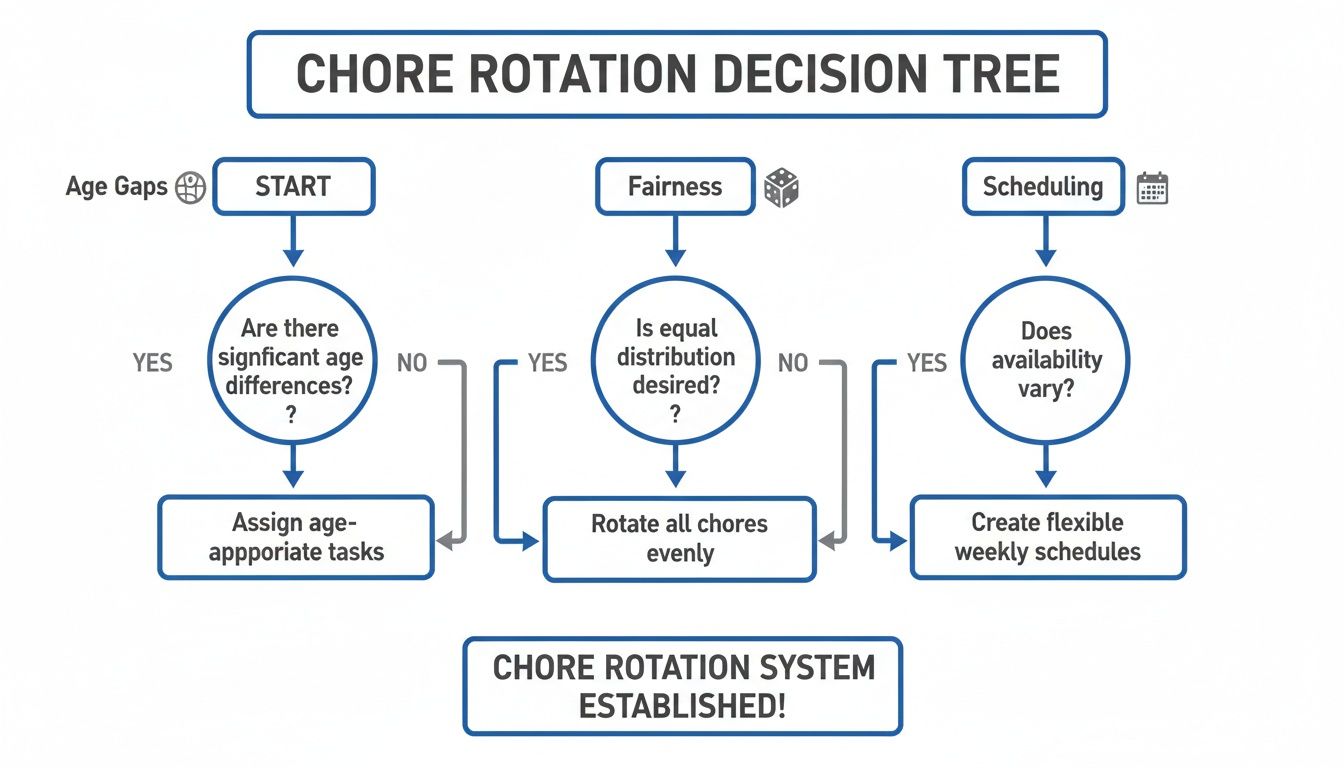
As you can see, there’s no magic bullet. The "right" method is simply the one that makes sense for your family.
Fostering Intrinsic Motivation
While tangible rewards are great, you also want to nurture that inner sense of pride and responsibility. This comes from recognizing the effort, not just the completion. A simple "thanks" is nice, but specific praise is powerful. Try something like, "I really appreciate how carefully you set the table. It makes our dinner feel so special."
This kind of feedback shows them their contribution truly matters. It also helps to remember that chores are more than just tasks; they're teaching real-life skills. It's not just a hunch, either—a recent study found a statistical link between kids doing regular chores and developing better executive functions. Things as simple as making their bed helped predict stronger working memory and impulse control.
A successful reward system isn't just a transaction. It's a tool for teaching financial literacy, the value of hard work, and the satisfaction of contributing to a team.
Tracking Progress and Celebrating Wins
Kids thrive on visual feedback. A chart filling up with stickers or checkmarks gives them an instant sense of accomplishment and a clear picture of how far they've come. This is where a digital tool like Everblog’s built-in Rewards Tracker is a game-changer, letting you monitor points and celebrate wins without any of the manual upkeep. You can learn more about building a chore chart and reward system that keeps everyone motivated.
If you have little ones, checking out some brilliant preschool reward system ideas can give you age-appropriate strategies that really click. At the end of the day, the best system is one that grows with your family—one that stays fair, fun, and true to your values.
Troubleshooting Common Chore Chart Problems
Even the most carefully planned chore system is going to hit a few bumps. It’s inevitable. One kid will refuse, the others will argue about fairness, or the initial excitement just… disappears. This is completely normal, so don't sweat it.
The secret isn’t creating a perfect, unbreakable system from day one. It’s about building something flexible enough to handle real life. When your chore charts hit a roadblock, try to see it as a chance to teach some valuable skills like negotiation and problem-solving. This is where the real lessons are learned.
When a Child Just Refuses
You know the scene. You ask them to do a chore, and they dig in their heels with a flat-out "no." Your first instinct might be to escalate, but trust me, a calmer approach works much better. More often than not, a refusal isn't really about the chore—it's about feeling powerless or just needing a moment of connection.
Before laying down the law, just take a breath and get curious. Is the chore genuinely too hard for them? Are they overwhelmed by homework or something else? A simple, non-confrontational question like, "Looks like you're having a tough time getting started, what's up?" can open the door to what's really going on.
From there, you can lean on natural consequences. They’re so effective because they’re logical, not just punitive. The household rule is simple: responsibilities come before privileges.
- For example: "You can have your screen time as soon as your chores are done. You're in charge of when that happens."
- Or try this: "Your friends are coming over at 4:00. Let's make sure the living room is vacuumed before they get here so you're ready to play."
This reframes the situation by putting your child in control of the outcome. You’re no longer the "bad guy"; you're just the person upholding the family rules. It shifts the dynamic from a power struggle to a straightforward lesson in cause and effect.
Handling Sibling Squabbles
"It's not fair!" That's the unofficial motto in any house with more than one kid. Even with the fairest rotation system imaginable, arguments will pop up over who has the harder job or whose turn it really is to take out the trash.
When the bickering starts, resist the urge to jump in and solve it for them. Instead, get them together and act as a mediator, not a judge. Start by stating the problem neutrally: "It sounds like you both feel the other person isn't doing their share of cleaning the playroom."
Then, put the ball back in their court. Ask, "How can we solve this so you both feel it's fair?"
Your role here is to facilitate, not dictate. Empowering your kids to negotiate their own solutions teaches them a critical life skill and makes them much more invested in the outcome.
Maybe they decide to literally split the room down the middle. Or perhaps they agree to tackle it together and then share a reward. Honestly, the solution itself matters less than the process they use to get there.
When the Whole System Stops Working
Sometimes, the entire system just runs out of gas. The chart that worked like a charm in September feels totally stale by December. This is usually a sign that your family has simply outgrown the current setup. It's time for a refresh.
This is the perfect moment to call a family meeting. Don't frame it as a lecture about everyone slacking off. Position it as a team huddle: "Hey team, I've noticed our chore system isn't really working for us anymore. Let's talk about what we can change to make it better."
Get their honest input. What chores do they absolutely hate? What kind of rewards would actually motivate them now? Kids are way more likely to buy into a system they helped create. Be open to their ideas—maybe they want to scrap the weekly chart and try a "chore jar" for a while.
Treating your chore chart as a living document that evolves with your family is the real secret to long-term success. A system that can bend is one that won't break.
Common Questions About Family Chore Systems
Even the most bulletproof plan is going to spark a few questions. Let's be real—you’re not just making a list of jobs; you’re shifting your family’s entire mindset around how the household runs. It's totally normal to hit a few snags and wonder how to handle real-life situations as they pop up.
So, let's dive into some of the most common hurdles parents face when setting up a chore system for more than one kid. These are the quick, road-tested answers that will help you handle the daily grind like a pro.
How Do I Start a Chore System Without Everyone Freaking Out?
The secret is to start small and build on your wins. Seriously. Don't roll out a massive, color-coded, 20-task spreadsheet overnight. That's a one-way ticket to a family-wide rebellion.
Instead, pick just two or three simple, age-appropriate chores for each kid to own for the first week.
Call a quick, low-key family meeting and frame it as a "teamwork upgrade." Talk about how this helps everyone, freeing up more time for the fun stuff you can do together. The goal is to present it as a way for everyone to contribute to the family's success, not just a new set of rules from on high.
Celebrate that first week of success, even if it wasn't perfect. A family movie night or a trip for ice cream creates a powerful link between contributing and enjoying the rewards together. This slow-and-steady approach builds great habits without the burnout.
This way, you avoid overwhelming your kids (and yourself) and start building a positive vibe around chores from day one.
Should I Tie Chores to Allowance?
Ah, the great debate. There's no single "right" way to do this, but I've seen a hybrid model work wonders for most families. The idea is to separate basic "citizen of the family" duties from "work-for-pay" jobs. It’s a fantastic way to teach the difference between responsibility and earning.
Here’s a simple breakdown:
- Family Expectations: These are the non-negotiable, unpaid tasks that come with being part of the team. Think making their own bed, clearing their plate after dinner, or putting dirty clothes in the hamper.
- Work-for-Pay Chores: This is where the money comes in. These are bigger jobs that go above and beyond the daily basics. We're talking about things like washing the car, deep cleaning a bathroom, or helping organize the garage.
This tiered system makes it easy to scale the pay and complexity for different ages. A seven-year-old might earn a few bucks for watering the plants, while a teen could tackle a bigger project for a bigger payout. It keeps things fair and teaches them that some contributions are just part of being a family, while extra effort earns extra rewards.
What if My Kid Rushes Through a Chore and Does a Lousy Job?
When this happens—and it will—your best friends are crystal-clear instructions and consistency. Sloppy work almost always stems from vague directions. "Clean your room" is a fuzzy suggestion, but "Put your dirty laundry in the hamper and stack all your books on the shelf" is a clear, actionable command.
Your go-to move should be a simple, non-emotional "inspection and do-over" rule. If a chore isn't done right, they just have to do it again before moving on to fun stuff like screen time or playing with friends. This isn't a punishment; it's just the natural consequence of a job half-done. It teaches accountability.
The ultimate goal is to get yourself out of the "chore police" business. A central, highly visible chart—like a digital family hub on the wall—is your best ally here. It puts the responsibility for remembering and completing tasks squarely on your kids, freeing you from the endless cycle of nagging. It’s a simple shift, but it’s incredibly empowering for them.
The Everblog digital family hub is designed to solve these problems before they even start. With its built-in Chore Manager and Rewards Tracker, you can create a fair, visible system that gives kids ownership and takes a huge weight off your shoulders. Simplify your family's routine and bring clarity to your home by visiting https://everblog.com.


