




A digital fridge calendar gives seniors a way to see their full day at a glance, right where they already spend time. For older adults managing medications, meals, and appointments on their own, a screen mounted on the fridge puts every reminder in their natural path. No phone to unlock, no app to find. The information stays visible, and the daily routine stays on track.
What Makes Daily Routines So Hard for Seniors Living Alone?

Aging at home brings a specific set of scheduling challenges that traditional tools fail to solve. The problems are not about laziness or carelessness. They are about memory, visibility, and access.
Missed Medications and Forgotten Appointments
For seniors managing multiple prescriptions, skipping even a single dose can reduce a medication's effectiveness and allow symptoms to return. Over time, inconsistent adherence raises the risk of hospitalization and complications.
The most common reminder methods each have a clear failure point:
- Phone alarms go off at the right time but get dismissed with a single tap, and the reminder never reappears.
- Paper notes and sticky reminders get buried under mail or fall off the fridge, becoming invisible within days.
- Calendar apps on a smartphone require unlocking the screen and opening the app, steps that many seniors skip entirely.
Appointments carry financial consequences too. A missed dentist visit can cost $25 to $50 in cancellation fees. A missed specialist referral can delay care by weeks.
Losing Track of Days, Meals, and Simple Tasks
Losing track of time is common among older adults, even those without a dementia diagnosis. Forgetting what day it is, skipping lunch, or washing the same load of laundry twice are everyday occurrences.
These small lapses add up. Irregular meals lead to blood sugar swings. Skipped hydration leads to fatigue. Without a visible structure, the day loses its shape, and stress rises.
Why a Digital Fridge Calendar Works Better Than Paper or Phone Apps

The core advantage of a digital fridge calendar for seniors is not the technology itself. It is the location and the visibility. The table below compares the three most common reminder systems for older adults living alone.
| Feature | Paper Calendar | Phone App | Digital Fridge Calendar |
| Visible without any action | Only if placed in a high-traffic spot | No, requires unlocking and opening | Yes, always on in the kitchen |
| Updates remotely by family | No | Yes, but senior must check the app | Yes, changes appear automatically |
| Readable from across the room | Depends on handwriting | No, small screen | Yes, large touchscreen display |
| Sends reminders | No | Yes, but easily dismissed | Yes, on-screen and persistent |
| Shows weather and date | No | Yes, inside an app | Yes, on the home screen |
For seniors living alone, a digital fridge calendar removes the most common barriers between the person and their schedule. There is no step between "walk into the kitchen" and "see today's plan."
Always Visible Where Seniors Already Go Every Day
The kitchen is the room seniors visit most often. They go there for coffee in the morning, water throughout the day, and meals at regular intervals. A screen mounted on the fridge sits directly in that daily path.
This placement turns the calendar into a passive tool. The senior does not need to remember to check it. They see it every time they open the fridge or walk past it.
No App to Open, No Phone to Unlock
According to a 2017 Pew Research Center survey, 48% of adults aged 65 and older said they usually need someone else to set up a new electronic device for them. Smartphone calendar apps require multiple taps, good eyesight, and familiarity with touch gestures.
A digital fridge calendar removes that friction entirely. The screen is always on. The schedule is always showing. Reading it takes no more effort than glancing at a wall clock.
Large Display with Clear Text for Aging Eyes
Small text is the most cited frustration among older adults using digital devices. A 13.4-inch display with 1920x1200 resolution shows calendar entries, weather, and reminders in text large enough to read from several feet away.
High contrast and adjustable brightness help in both bright kitchens and dim evening lighting. The difference between squinting at a 6-inch phone and glancing at a 13-inch screen is the difference between avoiding technology and using it daily.
How Seniors Use a Digital Fridge Calendar Throughout the Day

A digital fridge calendar fits into a senior's routine the same way a kitchen clock does. It provides structure without requiring effort.
Morning: Medication Reminders and Weather at a Glance
The senior walks into the kitchen. The screen shows today's date, the current weather, and any calendar events for the morning.
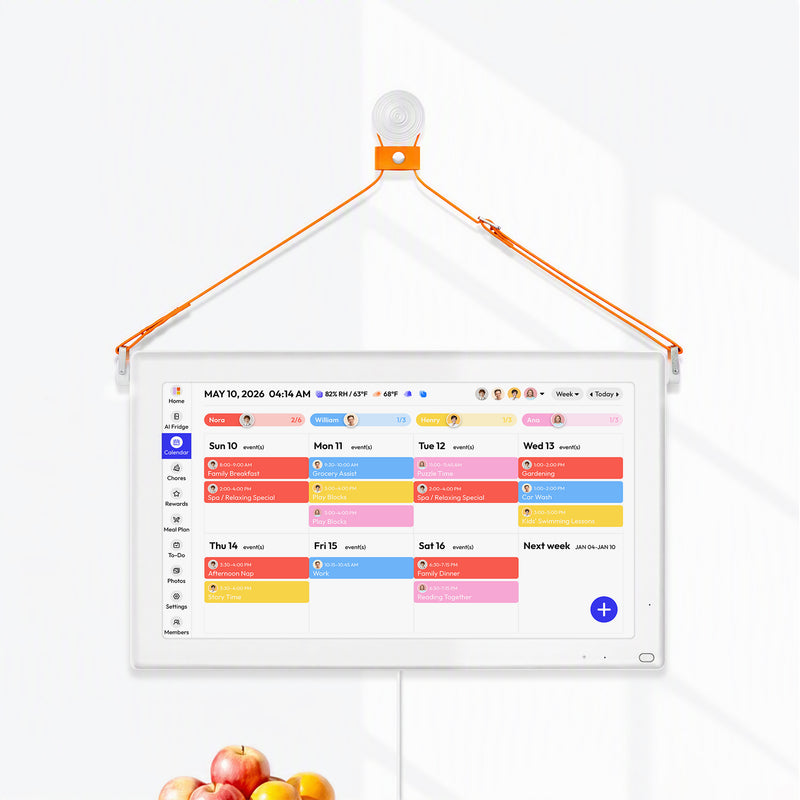
If a family member has added a calendar event labeled "Take blood pressure pill, 8 AM," it appears on the day view as a scheduled reminder. Its calendar sync with Google or Outlook allows families to set recurring daily events for medication times, so the reminder appears on the fridge screen at the same hour each day. The weather display helps with clothing choices and decisions about going outside.
Afternoon: Keeping Meals on Track and Groceries in Check
Lunch is often the meal seniors skip. A calendar event set for noon serves as a gentle, visible prompt to eat.
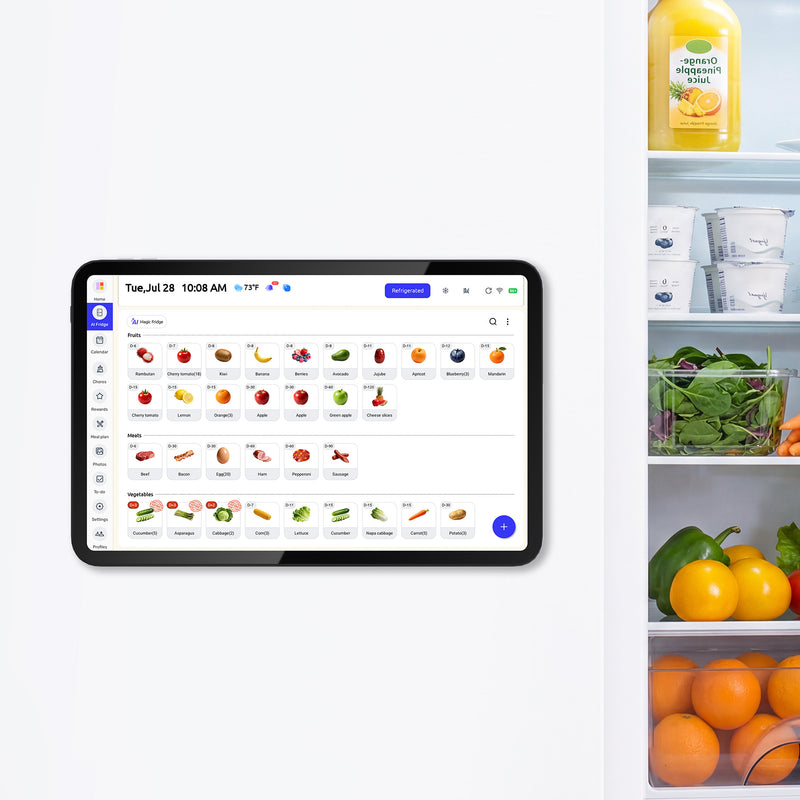
The Smart Fridge Manager feature tracks what food is inside the fridge and sends alerts before items expire. If the yogurt needs to be eaten today, the screen says so. This reduces food waste and supports regular eating habits.
Custom grocery lists stay visible on the same screen. When a senior notices they are low on milk, they can add it to the list, or a family member can add it remotely through the synced companion app.
Evening: Family Photos and Tomorrow's Schedule
After dinner, the screen shifts to screensaver mode, cycling through family photos. For seniors living alone, seeing the faces of children and grandchildren throughout the evening provides comfort and a sense of connection.
Before bed, a glance at the screen shows what tomorrow holds. If there is a doctor's appointment at 10 AM, the senior sees it the night before and again first thing in the morning.
How Family Members Set Up and Manage a Digital Fridge Calendar Remotely
The person who buys the digital fridge calendar is often not the person who uses it daily. Adult children purchase these devices for parents who live alone, sometimes hundreds of miles away. The setup and management process needs to work for both sides.
Simple First-Time Setup That Takes Minutes
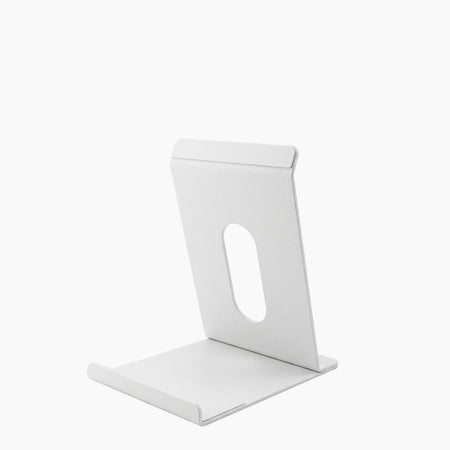
Installation requires no tools. A built-in magnetic mount attaches directly to a metal fridge door. For non-magnetic surfaces like glass, an included magnetic sticker creates the mounting point.
The device connects to Wi-Fi, syncs with Google or Outlook calendars, and displays events within minutes. An adult child can complete the entire setup during a single visit.
Adding Events and Reminders from Anywhere

Once the calendar syncs, any family member with access to the shared Google or Outlook calendar can add events remotely. A daughter in another state can add "Cardiology appointment, Thursday 2 PM" from her phone, and it appears on her father's fridge screen the same day.
This eliminates the cycle of repeated phone calls. Instead of calling to ask, "Did you remember your appointment?" the child adds the event and knows it will be visible all week.
No Maintenance, No Software Updates to Worry About
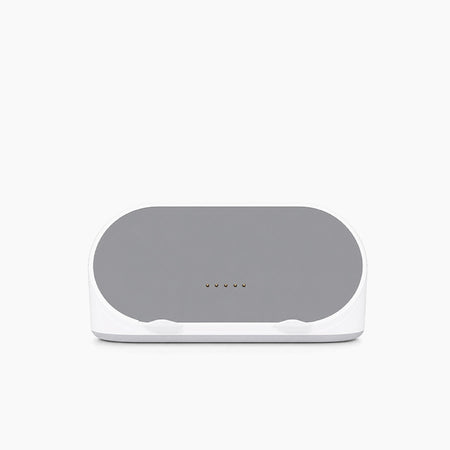
Over-the-air updates keep the device current without any action from the senior. There is no subscription fee, no monthly charge, and no renewal to manage. The device runs on an 8400mAh battery with over 72 hours of standby, so brief power interruptions do not cause data loss.
Sleep mode activates automatically when the screen is not in use, saving energy and extending daily uptime.
Can a Digital Fridge Calendar Help Seniors Live Independently Longer?
Yes. Independent living depends on maintaining a daily structure. A digital fridge calendar supports that structure by keeping key information visible, reducing reliance on memory, and connecting seniors to family support without constant phone calls.
Building Predictable Routines That Reduce Daily Stress
Routine is protective for older adults. Seniors with structured daily schedules tend to report lower anxiety and better sleep. A digital fridge calendar reinforces that structure visually.
When the same events appear at the same times each day (morning medication, lunch, afternoon walk, evening call with family), the calendar becomes a framework the senior can lean on. The day has shape. Decisions become simpler.
Giving Adult Children Peace of Mind from a Distance
For adult children who care for aging parents while raising kids of their own, a synced digital fridge calendar reduces the mental load. Instead of guessing whether Dad remembered his pills, you see the same calendar he sees. Instead of calling three times a day, you add reminders once and trust the screen to deliver them.
The parent maintains independence while the child stays informed. Both sides feel less stressed.
When It Works Best and What to Expect
A digital fridge calendar is most effective for seniors who can still read and follow on-screen information on their own. For older adults in the early stages of memory loss, the always-visible display can serve as a reliable anchor that compensates for mild forgetfulness.
For seniors with moderate to advanced cognitive decline, a calendar alone is not sufficient. It should be paired with in-person support, caregiver check-ins, or additional assistive tools. Being honest about these boundaries helps families make informed choices and set realistic expectations.
Help Your Aging Parent Stay on Track with a Digital Fridge Calendar
A digital fridge calendar solves a clear problem: seniors need to see their schedule without searching for it. Mounted on the fridge, always on, and synced with family calendars, it turns the kitchen into a reliable daily command center. For families looking for a practical, no-subscription solution, the Everblog FridgeCal Calendar offers a 13.4-inch touchscreen with a built-in magnetic mount, Smart Fridge Manager, and calendar sync with Google and Outlook for remote scheduling.
FAQs About Digital Fridge Calendars for Seniors
Q1: Will a Digital Fridge Calendar Stick to Any Refrigerator?
Yes, most models work on 99% of refrigerators. Magnetic mounts attach directly to stainless steel, painted metal, or enamel-coated fridge doors. For glass-door or non-magnetic fridges, included magnetic stickers provide a secure mounting surface. No tools or drilling are needed.
Q2: Do Seniors Need to Learn New Technology to Use a Digital Fridge Calendar?
No. Once set up by a family member, the senior only needs to look at the screen. The calendar displays events, weather, and reminders automatically. There are no apps to open and no buttons to press for daily use.
Q3: Does a Digital Fridge Calendar Need Wi-Fi to Work?
Yes, Wi-Fi is required for syncing calendar events from Google or Outlook and for receiving remote updates from family members. If the connection drops temporarily, the screen continues to display existing events until it reconnects.
Q4: What Features Should a Digital Fridge Calendar Have for Seniors?
Look for a large screen (at least 13 inches), auto-sync with Google or Outlook, an always-on display, simple navigation, and a built-in magnetic mount. Bonus features include weather display, screensaver mode for family photos, food expiration tracking, and a companion app for remote management by family members.
Q5: How Much Does a Digital Fridge Calendar Cost?
Prices range from $150 to $400 depending on screen size and features. Many budget options require monthly subscriptions for full functionality. Subscription-free models with built-in batteries and magnetic mounts tend to offer better long-term value, as there are no recurring fees after the initial purchase.


