



A fridge calendar keeps doctor appointments, feeding schedules, partner tasks, and caregiver handoffs visible without requiring anyone to open an app or remember anything. For most new-parent households, it becomes the one organizational tool that actually holds up through the first twelve months.
Why Baby's First Year Is the Hardest Time to Stay Organized
The first year brings a schedule that changes every few weeks, with real consequences for missing anything on it.
Doctor Visits and Vaccines Stack Up From Week One
According to the AAP Bright Futures schedule, a healthy baby needs well-child visits at 3 to 5 days after discharge, then at 1 month, 2 months, 4 months, 6 months, 9 months, and 12 months. Vaccine rounds are layered on top, with the 2-month and 4-month appointments typically including several doses each.
Missing a vaccine appointment can push the entire schedule back. Missing a well-child visit means missed developmental screenings.
Sleep Deprivation Makes Your Memory Unreliable
In the early months, new parents typically lose one to three hours of sleep per night, with the first few weeks being the most disruptive. That level of fragmented sleep makes it genuinely harder to remember appointment times, task lists, and feeding logs.
Phone reminders get dismissed. Mental notes disappear. A physical calendar on the fridge does not require any mental effort to check.
Two Parents Are Sharing One Schedule With No Clear System
In many households, one parent returns to work earlier while the other manages more of the daily schedule, which means information stops flowing naturally. One parent holds everything in their head, and the other is always a step behind.
This creates repeated friction: missed pickups, double-booked appointments, and one parent consistently carrying the full mental load.
Why a Fridge Calendar Works Better Than an App for New Parents

Apps require a phone, a charged battery, and a free hand. A fridge calendar requires none of those things.
Visibility Without Any Friction
The fridge is the most visited surface in any home. A digital calendar mounted at eye level is visible during late-night feeds, during morning chaos, and during caregiver handoffs without anyone having to search for it.
There is no passcode, no notification to dismiss, and no competing app pulling your attention.
Every Caregiver Can Read It Immediately
Grandparents, babysitters, and partners do not all use the same calendar apps or share the same devices. A fridge calendar is readable by anyone who walks into the kitchen.
Writing emergency contacts, feeding instructions, and the week's appointments on a shared visible surface removes a full category of coordination problems.
When Does a Digital Fridge Calendar Add More Value?
A paper calendar covers the basics. A digital fridge calendar goes further by syncing with Google or Outlook so that appointments added on a phone appear on the fridge automatically.
| Feature | Paper Fridge Calendar | Digital Fridge Calendar |
| Always visible | Yes | Yes |
| Syncs with phone calendar | No | Yes |
| Sends task or expiration reminders | No | Yes |
| Multiple family members color-coded | Manual | Automatic |
| Updateable remotely | No | Yes |
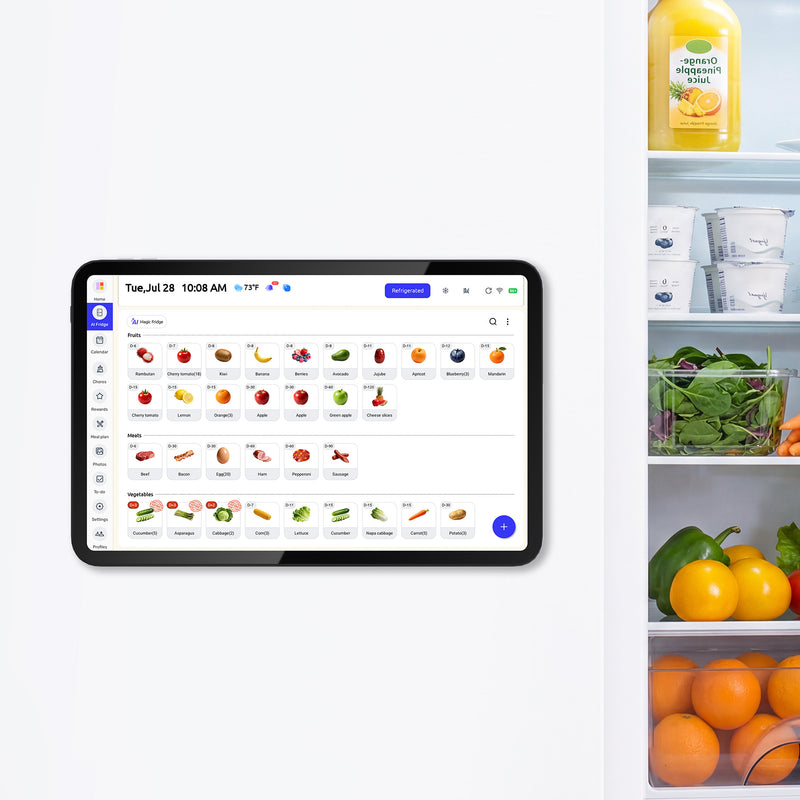
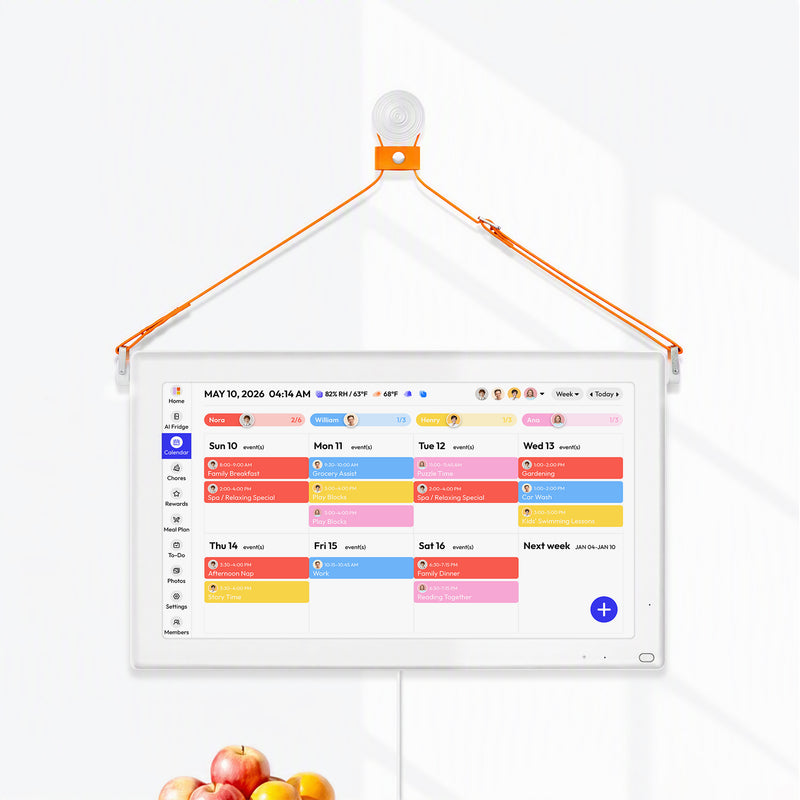
For households where both parents are adding appointments from separate phones throughout the day, automatic sync means neither parent has to manually update the fridge after adding something on their phone. The Everblog FridgeCal Calendar does both on one 13.4-inch screen on the fridge door, combining family scheduling with a fridge inventory tracker that sends expiration alerts before food goes to waste.
What New Parents Actually Put on a Fridge Calendar
The most effective approach is to pre-fill the entire year before the baby arrives. Everything that can be scheduled in advance should go on the calendar during the third trimester.
Baby's Medical and Vaccine Schedule
Write in every well-child visit from the first week through 12 months before the due date. Add the expected vaccine rounds at 2, 4, and 6 months. These dates rarely change, and having them visible from week one prevents any appointment from slipping through.
A missed appointment often triggers a cancellation or no-show fee, and rescheduling can push the vaccine timeline back by weeks.
Feeding, Pumping, and Sleep Windows
In the first three months, the fridge calendar works as a daily anchor for feeding rhythms. Writing the approximate feeding windows for the day gives both parents a shared reference without requiring a separate tracking app.
At 4 to 6 months, add the solids introduction date. At 6 months, note when to schedule a conversation with the pediatrician about food introductions.
Partner Task Split and Weekly Chore Chart
A chore chart on the fridge removes the need to discuss who is doing what each day. Assign night feed rotations, grocery runs, laundry days, and caregiver communication by name and write them in.
Tasks that are written down and visible get done more consistently than tasks that are assumed or verbally agreed upon. Both partners see the same list at the same time without anyone having to ask. A digital fridge calendar with a built-in chore chart, like the Everblog FridgeCal Calendar, makes this visible to every family member the moment they walk past the fridge.
Mom's Recovery Milestones
The postpartum period covers at least 12 weeks, and the mother's physical and mental health checkpoints need the same calendar real estate as the baby's. Write in the 6-week OB visit, any follow-up appointments, and therapy or support group dates at the same time you fill in the baby's schedule.
Postpartum appointments are easy to skip when everything else feels urgent. Pre-scheduling them before birth is the most reliable way to make sure they happen.
How to Set Up Your Fridge Calendar Before Baby Arrives
Starting the calendar system before the birth is the only way to have it functional from day one. Setting it up after arrival, when sleep debt has already started, is significantly harder.
Start During the Third Trimester
The nesting period around weeks 34 to 36 is the practical setup window. Use that time to mount the calendar and fill in all known dates.
Pre-fill the following before the due date:
- All well-child checkups from the first week through 12 months
- Vaccine rounds at 2, 4, and 6 months
- Mother's 6-week postpartum OB visit
- Parental leave end dates and return-to-work days
- Any planned childcare start dates
Choose a Layout That Grows With the Baby
Monthly views work well for the first three months when the schedule is appointment-light but sleep-heavy. Weekly views become more useful at 4 to 6 months when activities, caregiver schedules, and solid food introductions add more day-specific detail.
A digital fridge calendar that allows switching between day, week, and month views adapts to this shift without requiring any reorganization.
Color Code by Person, Not by Category
Assigning one color per family member is more sustainable than color-coding by category. When a third caregiver is added, such as a grandparent or babysitter, they get a new color. Keep the system to four colors or fewer so it stays readable at a glance.
What to Look for in a Digital Fridge Calendar for New Parents
Not all digital calendars are designed for kitchen use. A few things matter specifically for a kitchen-mounted device in a new-parent household.

Features That Matter Most in Year One
- Screen size above 10 inches. A 13.4-inch screen is readable across the kitchen without walking up to it.
- Magnetic mounting with strong grip. Strong magnetic mounting rated at 33 to 40 lbs of grip strength stays in place when the fridge door opens and closes throughout the day.
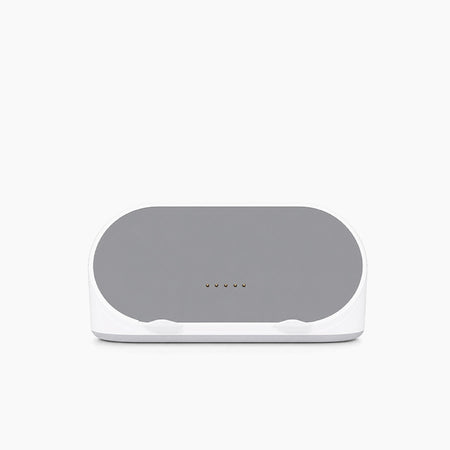
- Multi-day battery life. A device that needs charging every day adds friction. Look for one that lasts several days per charge.
- No subscription fee. Year one is expensive. A one-time purchase with no recurring cost fits the budget better.
- Google or Outlook sync. Both parents add appointments from their own phones and the fridge calendar updates automatically.
- Chore chart and task tracking. This feature is not critical for newborns, but it becomes useful as the baby grows and avoids needing a replacement system later.
Questions to Ask Before Buying
- Is the screen readable in a bright kitchen? Glare on a low-brightness screen makes it harder to check quickly.
- Can both parents update it from their own phones? A system that requires one person to manage it defeats the purpose.
- Does it work on non-magnetic fridge doors? Some stainless steel fridges do not hold magnets. The Everblog FridgeCal Calendar includes residue-free magnetic stickers for glass or non-magnetic doors, making it compatible with 99% of refrigerators.
Start Your Fridge Calendar Before Baby Arrives
Fill in the full year of checkups and vaccine rounds during the third trimester, assign a color to each caregiver, and lock in a consistent shopping day before the first week home.
If you want all of that to stay in sync automatically across both parents' phones without any manual updates, the Everblog FridgeCal Calendar handles it in one place. It is a 13.4-inch battery-powered digital fridge calendar with Google and Outlook sync, a chore chart, meal planner, fridge inventory tracker with expiration alerts, and no subscription fee. It mounts magnetically on standard fridges and includes residue-free magnetic stickers for glass or non-magnetic doors.
FAQs about fridge calendars for new parents
Q1. Can a Fridge Calendar Replace a Baby Tracking App?
Not fully. A fridge calendar handles scheduling, task sharing, and caregiver coordination well. A dedicated tracking app is still useful for logging exact feeding times and diaper counts in the first few weeks. The two work well together rather than as replacements.
Q2. How Do New Parents Split Nighttime Duties Without Constant Negotiation?
Write a fixed rotation directly on the fridge calendar by week or by night. When both parents see the same schedule on the fridge every day, the division of night feeds and morning shifts becomes a given rather than a daily discussion. This removes a significant source of tension in the early months.
Q3. How Do You Manage a Fridge Calendar When Parents Have Different Work Schedules?
Assign each parent a different color on the fridge calendar, and block out work hours, solo parenting time, and any days a grandparent or babysitter is covering. A fridge calendar visible to both makes it easy to spot gaps before they become last-minute emergencies, without requiring constant check-ins or texts throughout the day.
Q4. Is a Digital Fridge Calendar Worth Buying for Just One Year of Use?
Yes, for most households with two or more caregivers. The organizational value compounds quickly as the baby's schedule grows more complex, and features like chore tracking, meal planning, and fridge inventory remain useful well beyond the first year.
Q5. What Is a Good Gift for First-Time Parents Who Already Have Everything?
A digital fridge calendar is a practical gift that most first-time parents would not buy for themselves. It combines scheduling, chore tracking, and meal planning in one visible place, which is more immediately useful than most decorative or novelty gifts during the newborn stage.


