
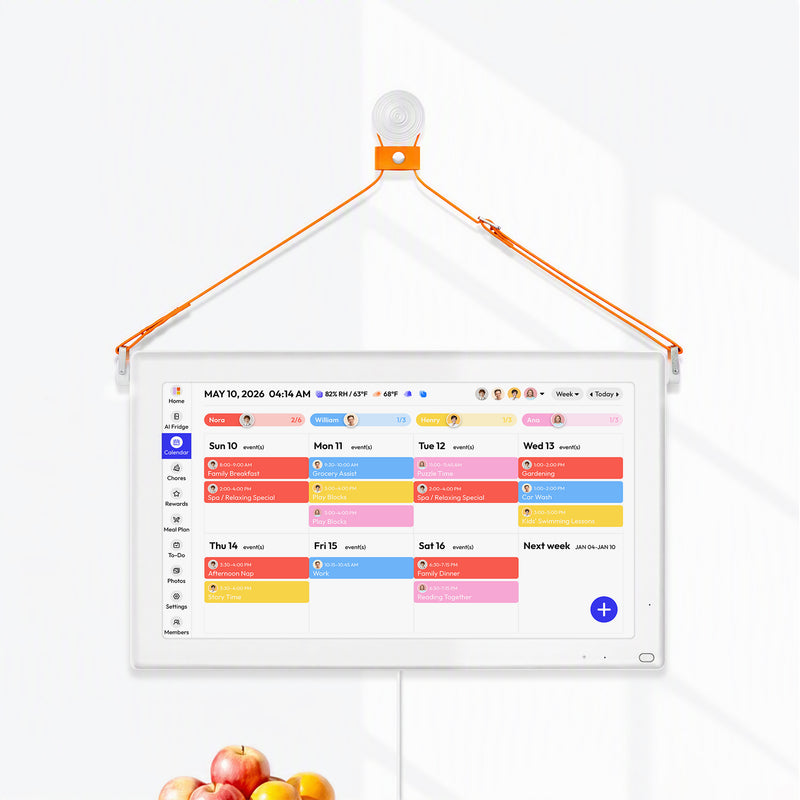


A fridge organization chart isn't just another to-do list you stick on the door. Think of it as the strategic blueprint for your kitchen's command center. It’s a simple visual system that brings order to the beautiful chaos of family life, saving you time and ending that daily scavenger hunt for the jar of pickles you know you bought.
Why a Fridge Chart Is Your Secret to Kitchen Sanity
Let's be real—a chaotic fridge is a low-key source of stress. It’s discovering last week's leftovers have gone bad, buying a third bottle of ketchup by accident, or that feeling of dread when you open the door to a jumbled mess.
A fridge organization chart flips that script. It turns a stressful, disorganized space into a predictable, efficient system.
By creating a "map" for your food with dedicated zones, you build an intuitive layout where everyone in the family—even the kids—knows exactly where things go. This isn't about having a Pinterest-perfect fridge; it's about creating a sustainable system that actually works for a busy family.
The Real-World Benefits of an Organized Fridge
Once everything has a home, the benefits start to add up almost immediately. You’ll find that a little bit of order empowers your family in some pretty big ways.
-
Drastically Reduces Food Waste: Things stop getting lost and forgotten in the back. You can see what you have and what needs to be used up first. This is a huge deal when you realize poor organization contributes to a staggering 40% of household food waste globally. For parents, that means no more fuzzy yogurts or mystery science experiments, which can add up to over $1,500 in wasted food annually for a typical U.S. family. You can explore more data on this topic in recent reports about the refrigerator market on Fortune Business Insights.
-
Cuts Down on Grocery Bills: When you know exactly what you have, you stop buying duplicates. Your shopping list gets sharper, and your grocery runs become way more efficient.
-
Makes Meal Prep Effortless: Finding ingredients quickly makes weeknight cooking feel less like a frantic search-and-rescue mission. It's a small change that makes a massive difference. If you're looking for more ways to streamline, check out our other fridge organization ideas for inspiration.
A well-planned fridge becomes the command center for your family's meals, making everything from meal prep to unloading groceries feel effortless and intentional.
Of course, a big part of kitchen sanity is also having a fresh-smelling space. It’s helpful to know how to effectively get rid of home odors to keep your kitchen pleasant. Ultimately, a fridge chart is less about being perfectly tidy and more about creating a calmer, more functional home.
Crafting Your Custom Fridge Blueprint
Your fridge isn't just a cold box; it's the command center for your family's meals and snacks. So why treat it like a one-size-fits-all appliance? Before you even think about buying a single clear container, the first step is to map out a blueprint that actually fits how your family lives.
This isn’t about chasing a picture-perfect fridge from a magazine. It’s about making your life easier. Think about your last grocery haul. Did you come home with a ton of fresh produce? Are your kids constantly on the hunt for snacks? Do you meal prep on Sundays? The answers to these questions are the building blocks of your fridge layout.
When your blueprint is based on real-life habits, everyone in the family will intuitively know where things go. The goal is a system that feels completely natural, not like a rigid set of rules you have to force on everyone. That's how you make organization stick.
Designing Your Fridge Zones
The absolute foundation of a great fridge chart is zoning. It’s like city planning, but for your groceries. And the most important rule in this tiny city is food safety, which all comes down to the different temperature zones inside your fridge.
To help you get started, here’s a quick-reference guide for setting up your zones safely and efficiently.
Your Fridge Zone and Food Safety Placement Guide
| Fridge Zone | Ideal Temperature | What to Store Here | Why It Works |
|---|---|---|---|
| Bottom Shelf | Coldest (35-40°F) | Raw meat, poultry, and fish in sealed containers. | This is the coldest part of your fridge, and crucially, it prevents any accidental drips from contaminating other foods below. |
| Top & Middle Shelves | Most Consistent Temps | Ready-to-eat foods: leftovers, deli meats, yogurt, drinks, and dips. | The temperature here is stable, making it perfect for items that don't need intense cold. Keeping them at eye level reminds you to use them up. |
| Crisper Drawers | High/Low Humidity | Fruits (low humidity) and vegetables (high humidity). | These drawers are designed to control humidity, keeping your produce fresher for much longer. |
| Fridge Door | Warmest Zone | Condiments, jams, juice, and other items with natural preservatives. | The door is the warmest spot and sees the most temperature swings, so it’s best for items that can handle it. Avoid storing milk or eggs here. |
By following this simple map, you're not just organizing—you're creating a safer kitchen environment from the ground up.
This flowchart shows just how a simple chart can become the cornerstone of a sane, organized kitchen.
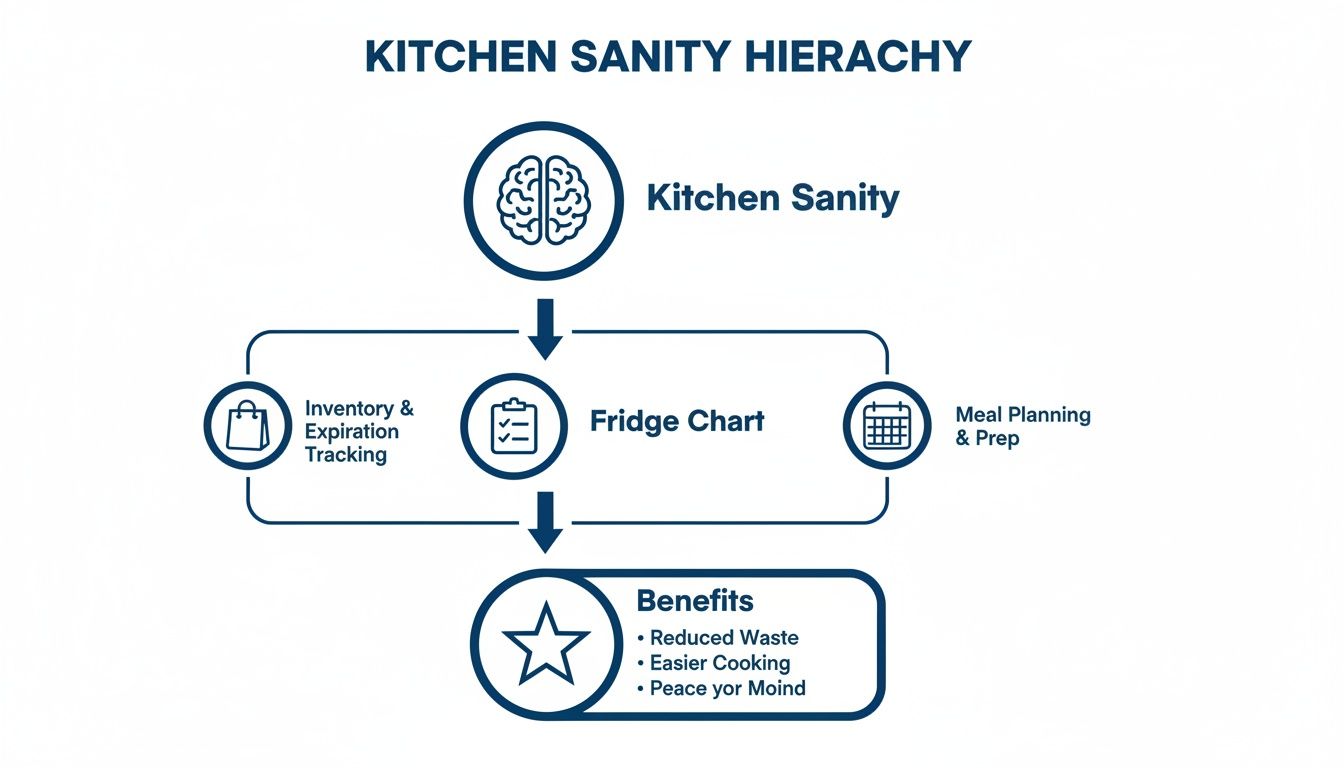
As you can see, that little chart is the tool that makes everything else—less stress, less waste, easier meal times—possible.
Creating Specialized Stations for Your Family
Once you've got the basic safety zones down, it's time for the fun part: customizing your blueprint with specialized stations that solve your family’s biggest fridge frustrations. These little micro-zones are what will make the system feel like it was designed just for you.
A great fridge organization chart isn't just about where things go—it's about creating systems that guide your family toward better habits, like reducing waste and making healthier choices.
Consider adding a couple of these to your plan:
-
An "Eat Me First" Bin: This is an absolute game-changer for cutting down on food waste. Dedicate one clear bin for anything that's getting close to its expiration date—yogurts, that half-used bell pepper, or leftover pasta sauce. Everyone in the family knows to check here first for a snack.
-
A Kid-Friendly Snack Station: tired of hearing "I'm hungry!" a dozen times a day? Set up a low, easy-to-reach bin filled with pre-portioned, parent-approved snacks. It gives kids a sense of independence and gives you a break.
These visual systems aren't just for looks; they deliver real results. We've seen families cut their impromptu shopping trips by 22% and save around 15% on their annual grocery bills just by implementing a chart. Plus, simply keeping raw and cooked foods separate helps prevent cross-contamination, which researchers credit for a 28% drop in foodborne illnesses in organized kitchens.
For more hands-on tips to get your fridge in order, you can explore our detailed guide to fridge organization here.
Bringing Your Fridge Plan to Life with Bins and Labels
Alright, you've mapped out your dream fridge. Now comes the fun part: making it real. This is where your paper plan turns into a system that actually makes your daily life easier. But first, you have to start with a completely empty fridge. I know, it's a pain, but a total clean-out gives you a blank canvas to work with.
Once it’s sparkling clean, you can bring in the tools of the trade. The whole idea is to create a visual system that makes sense in a split second, and you really don't need to break the bank to do it. The right containers and some clear labels are what will make your chart stick.
Choosing the Right Bins and Organizers
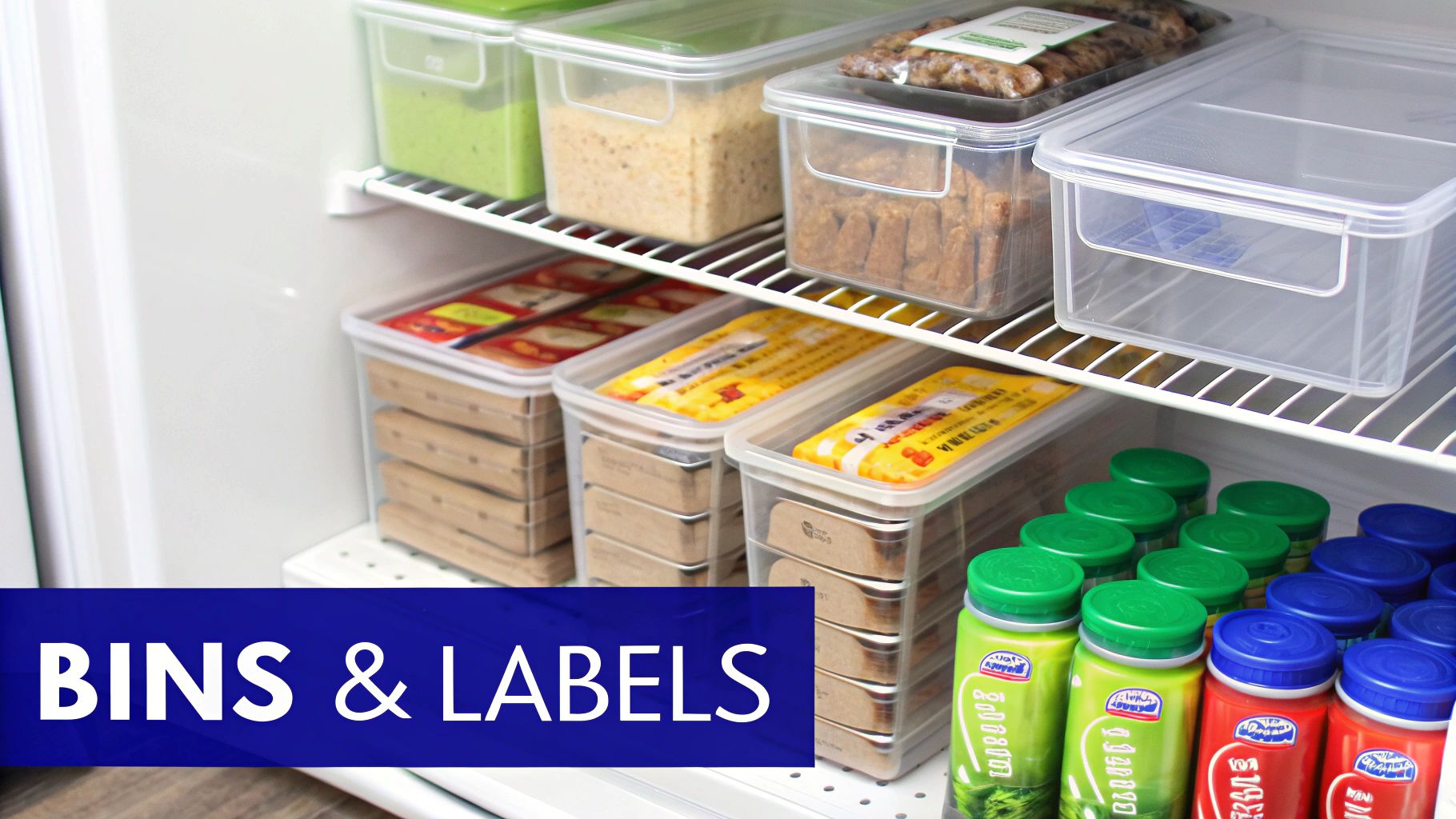
If I could recommend only one thing, it would be clear, stackable bins. They are absolute game-changers for grouping similar items together and finally using all that vertical space that usually goes to waste.
Just think about it: all the yogurts, cheese sticks, or tiny condiment jars can finally have their own home. No more lost items hiding in the back! You can just pull out a bin and grab exactly what you need without digging around.
Here are a few essentials I always recommend:
- Clear Bins: Perfect for grouping dairy, snacks, or your prepped meal ingredients. Being able to see inside is a must.
- A Sealed Meat Bin: This is non-negotiable for the bottom shelf. A lidded container is your best defense against raw meat juices dripping and contaminating everything else.
- Egg Holders: They protect fragile eggs so much better than those flimsy cardboard cartons and usually take up less space.
- Can Dispensers: A simple rack for sodas or seltzers keeps them tidy and rolls the next one forward automatically.
The goal isn't just to put stuff in boxes. It's about creating a system so intuitive that putting away groceries becomes a quick, thoughtless process because everything has an obvious home.
The Power of Simple Labeling
Labels are the final touch that officially turns your zones into designated stations. You don't need a fancy label maker (though they are fun!). Simple waterproof stickers or even a chalk marker on the bin works perfectly. What matters is that they are clear and can withstand a little moisture.
Make sure the text is big and easy to read. For families with little kids, I love adding simple pictures next to the words—like an apple icon for the fruit drawer. It empowers them to find their own snacks and, even better, help put groceries away correctly.
Setting Up the Kid-Friendly Snack Station
One of the most life-changing zones you can create is a dedicated snack station for the kids. I set up a low, easy-to-reach bin on a bottom shelf and fill it with snacks I'm happy for them to eat. This little hack gives them a sense of independence and seriously cuts down on the "Mom, I'm hungry!" chorus.
This isn't just a hunch; this approach really works. For households with multiple kids, especially homeschooling families, clearly labeled "snack stations" at eye level can cut down on rummaging and arguments by as much as 40%. This trend of hyper-organizing our homes is part of a bigger movement—the home organizers market is growing at a 7% CAGR. It also fits right in with the push for sustainability, as the North American refrigerator market is on track to hit $22.855 billion by 2025, with a whopping 60% of consumers preferring energy-efficient models.
Our own Everblog system plugs right into this by letting you add to grocery lists by voice, instantly populating your shopping needs for each fridge zone. You can check out more refrigerator market trends on SkyQuestt if you're curious.
Syncing Your Fridge Chart with Your Meal Plan
An organized fridge is nice, but it’s not really doing anything for you until it starts talking to the rest of your kitchen systems. Your fridge chart shouldn't just be a pretty map of where things go; it needs to be a living, breathing part of how your family shops, cooks, and eats.
When you connect your physical fridge zones to your meal plan, something magic happens. The food you have dictates your meals, and your meal plan dictates your shopping list. Suddenly, you've created a closed-loop system that stops you from over-buying and wasting food. This is where the real savings—in both time and money—kick in.
Turning Your Chart into a Meal Planning Engine
So, how do you make this connection? It all starts with one crucial spot: your "Eat Me First" bin.
This little bin isn't just a graveyard for leftovers. It’s the first place you should look when you sit down to plan your meals for the week. Before you even open Pinterest, open that bin.
See that half an onion? The leftover grilled chicken from Tuesday? That bell pepper that’s looking a little wrinkly? Those are your star ingredients for the next couple of meals. Building your menu around what needs to be used right now is the single most effective way to slash food waste.
To make it official, grab a free downloadable meal planner and jot down your first few dinners based on what's in the "Eat Me First" bin. This simple habit turns potential trash into a delicious, budget-friendly dinner.
Integrating Fridge Maintenance into Family Chores
Let's be real: that beautifully organized fridge won't stay that way by itself, especially with kids grabbing snacks and partners "helpfully" shoving things wherever they fit. The only way to maintain order is to make it a shared, scheduled family job.
This is where your family command center—and your chore system—comes into play.
Instead of letting fridge maintenance become one person's giant, overwhelming project, break it down into tiny, manageable tasks and assign them out.
Here’s a simple way to make it work:
- Schedule a 15-Minute Reset. Every week, right before you go grocery shopping, block out 15 minutes for a "Fridge Reset." Add it as a recurring task on the family calendar. Someone's job is to quickly wipe down shelves and toss anything that's past its prime.
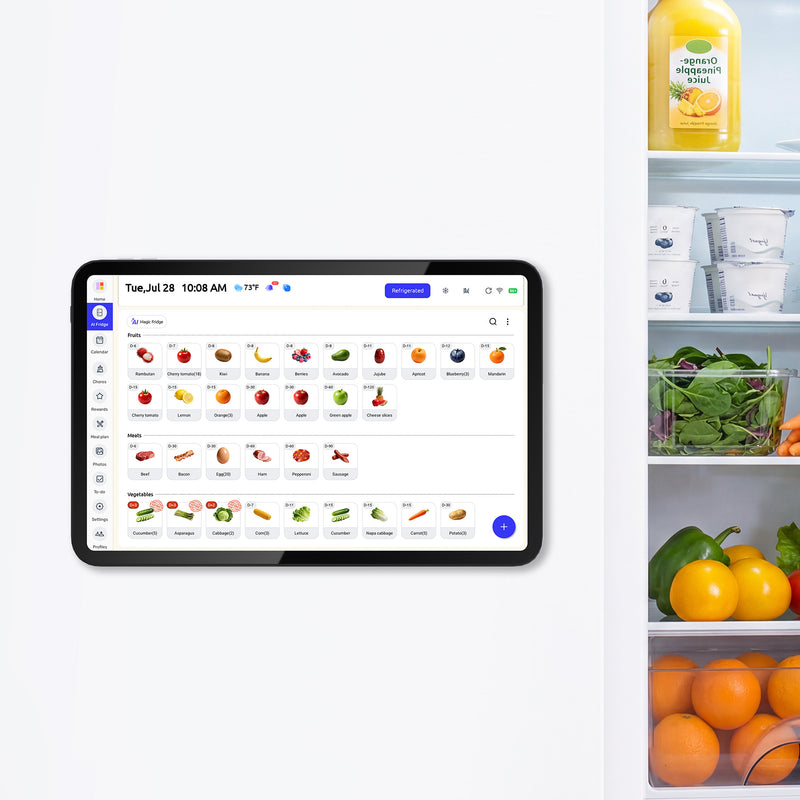
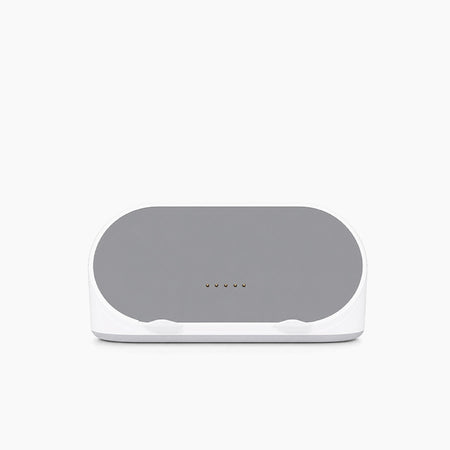
- Assign Restocking Zones. Unloading groceries is the perfect team activity. Give each family member a zone to restock. The kids can be in charge of the snack drawer, while someone else handles drinks and condiments. This reinforces the system and makes the work go faster. A smart display like the Everblog 13.4-inch FridgeCal Calendar can keep these assignments visible right where the action happens.
By linking your fridge chart to your meal planner and chore system, you create a complete, self-sustaining loop. The chart guides the meals, the meals create the grocery list, and the chore system ensures the fridge is always ready for the next cycle.
Keeping Your Fridge Organized with a Weekly Reset
You’ve done it. You’ve mapped out your zones, labeled your bins, and created a fridge that would make a professional organizer weep with joy. But the real victory isn’t in the setup—it’s in keeping it that way.
Great organization isn't a one-and-done project; it's a habit. The secret is a simple, consistent routine that stops your fridge from slowly sliding back into chaos. Forget about overwhelming deep cleans. We're talking about a quick, 15-minute weekly reset.
The best time for this? Right before your weekly grocery run. The fridge is at its emptiest, making the task feel way less daunting. This tiny investment of time makes unpacking new groceries a breeze and protects the beautiful order you worked so hard to create.
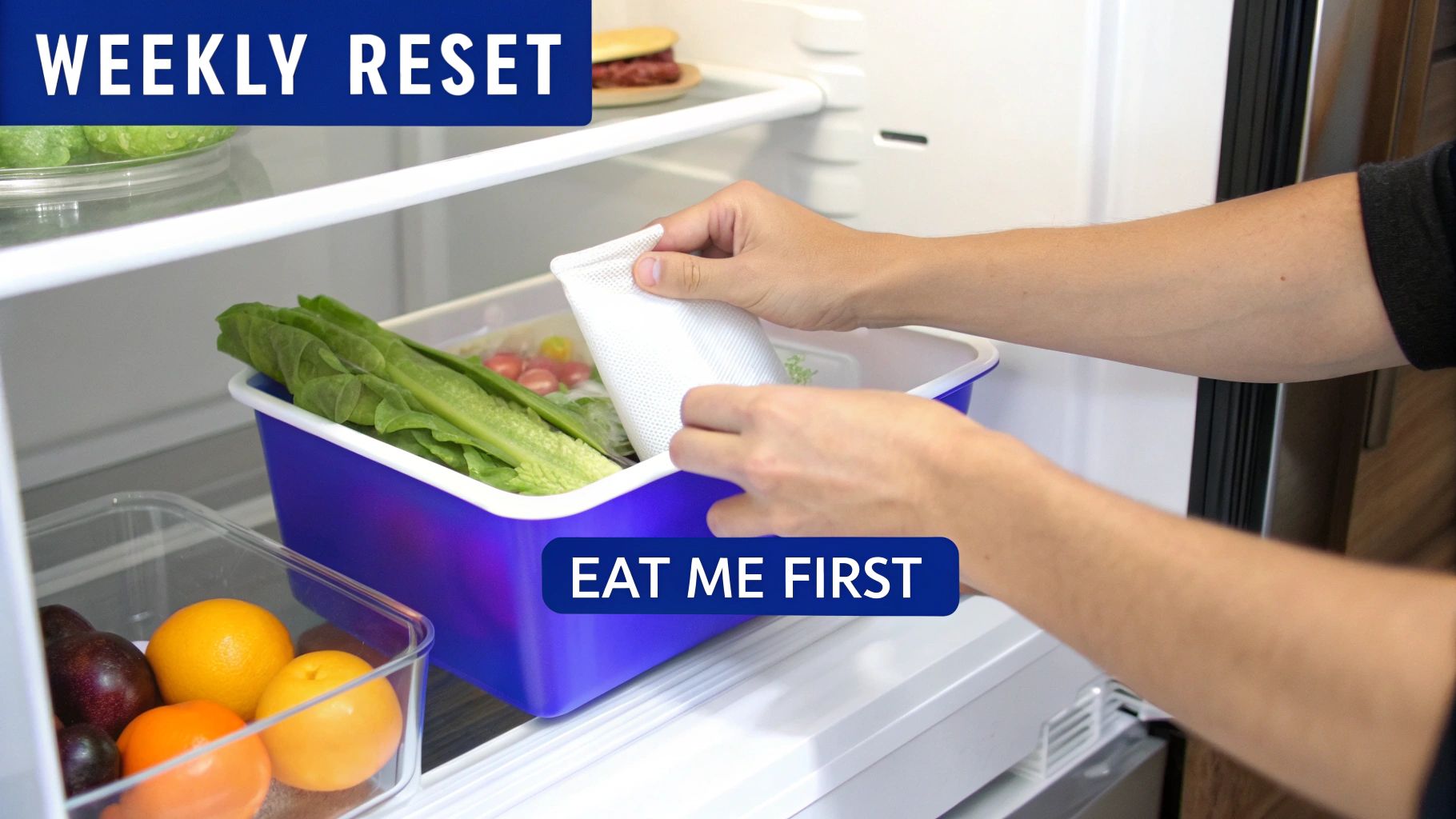
Your 15-Minute Weekly Fridge Reset Checklist
This little routine is all about speed and impact. This isn't a deep clean; it’s a maintenance check that keeps your fridge organization chart humming along.
| Task | Estimated Time | Pro Tip |
|---|---|---|
| Quick Scan & Sort | 5 Minutes | Open the door and pull out anything getting close to its expiration date. Move these items straight into your 'Eat Me First' bin. |
| Wipe Down Surfaces | 5 Minutes | Grab a damp cloth and quickly wipe down sticky spots on shelves, in drawers, and on the door. Catching small spills early saves a ton of work later. |
| Update Shopping List | 3 Minutes | As you scan, jot down staples that are running low (milk, eggs, that one specific mustard). Add them to your list on the spot so you don't forget. |
| Straighten Bins | 2 Minutes | Tidy up the contents of your bins. Restack the yogurts, group similar items together, and make sure everything is back in its designated zone. |
This quick checklist makes it easy to stay on top of things without feeling like you're spending your entire weekend cleaning the kitchen.
Handling Common Organization Challenges
Even with a flawless system, life gets messy. Big Costco hauls and a mountain of holiday leftovers can really test the limits of your perfectly zoned fridge.
When you get home with an influx of groceries, tackle it in stages. First, get the highly perishable items put away—raw meat, dairy, and anything frozen. Then, take five minutes to prep some produce before it goes in. Wash the lettuce, chop some carrots. This "pre-organization" makes items grab-and-go ready and actually saves space in the long run.
The goal here is consistency over perfection. A quick, imperfect weekly reset is way more effective than a massive deep clean once every six months. It keeps your system manageable and prevents burnout.
Holiday leftovers are their own special kind of chaos. My go-to strategy is to use clear, stackable containers and label them with the contents and the date. I'll even dedicate a specific shelf or zone just for these temporary guests. This prevents them from getting lost in the back and ensures they get eaten while they're still delicious, all without messing up your daily organization.
Common Fridge Organization Questions Answered
Even with the perfect plan, you're bound to hit a few real-world snags. As you start putting your shiny new fridge chart into practice, some questions will almost certainly pop up. Don't worry, we've gathered the most common ones to give you clear answers and help you feel confident in your new system.
Think of this as the troubleshooting guide that helps your organized fridge stay organized for the long haul.
My Fridge Is Tiny. Can a Chart Still Work?
Absolutely! In fact, an organization chart is even more crucial when you have a small fridge. Every single inch counts. The trick is to start thinking vertically and get really intentional with what you bring home from the store.
Instead of spreading out, you have to stack up.
- Use Stackable Bins: Clear, stackable containers are your absolute best friend. They let you group things like yogurts or snacks together and finally use the full height of your shelves.
- Add Shelf Risers: A simple wire shelf riser can instantly create a second level for shorter items like cans or jars, literally doubling your storage in that one spot.
The zoning principles are exactly the same; your zones will just be a bit more compact. A system like this forces you to be more mindful with your groceries, which naturally prevents the overcrowding that plagues small fridges.
How Do I Get My Family on Board?
This is the big one. Getting your family to actually follow the new system is often the biggest hurdle. The secret is a mix of involvement and simplicity. Resistance is always high when a new system feels like it was dropped on everyone from above.
To get real buy-in, you have to give everyone a role in the process.
The goal isn't just to assign zones; it's to create a sense of shared ownership. When everyone feels like they helped build the system, they're far more likely to help maintain it.
Let your kids help design and label their own "Snack Zone." Giving them that little bit of control makes all the difference. For partners, talk about the benefits that matter to them—like saving money by not buying duplicate items or saving time because they can always find the ketchup. Finally, add the "weekly fridge reset" to the family chore list so it becomes a shared responsibility, not just yours.
What Bins Are Essential on a Budget?
You definitely do not need a fancy, matching set of expensive organizers to see a huge difference. If you're working with a tight budget, focus your cash on three high-impact items that will give you the most organizational bang for your buck.
- Clear Stackable Bins: These are non-negotiable. You need them to corral all those small, loose things like yogurt cups, cheese sticks, and sauce packets that create chaos.
- A Dedicated Raw Meat Bin: A simple, lidded container for the bottom shelf is a food safety must-have. It keeps potential drips from contaminating everything else.
- An "Eat Me First" Bin: This single bin is an absolute game-changer for cutting down on food waste. It gives expiring items a visible, obvious home, reminding everyone to use them up before they go bad.
You can find affordable versions of all of these at most discount or dollar stores. Just start with these three, and you'll solve 80% of your fridge chaos right away.
How Often Should I Deep Clean My Fridge?
The 15-minute weekly reset is for regular maintenance, but a true deep clean should happen seasonally, about every 3-4 months. This is when you pull everything out, remove all the shelves and drawers, and give them a good wash with warm, soapy water.
This is also the perfect time to tackle those often-forgotten jobs, like wiping down the rubber door seals and vacuuming the coils on the back of the unit. Clean coils actually help your refrigerator run more efficiently, which can save you a little on your energy bill. Just pop a reminder on your family calendar so it doesn't get overlooked year after year.
An Everblog digital calendar on your wall can be the perfect command center to keep these routines on track. Assign the weekly reset, schedule your seasonal deep clean, and keep your meal plan visible right where it matters most. Learn more about how Everblog can sync your entire family.


