
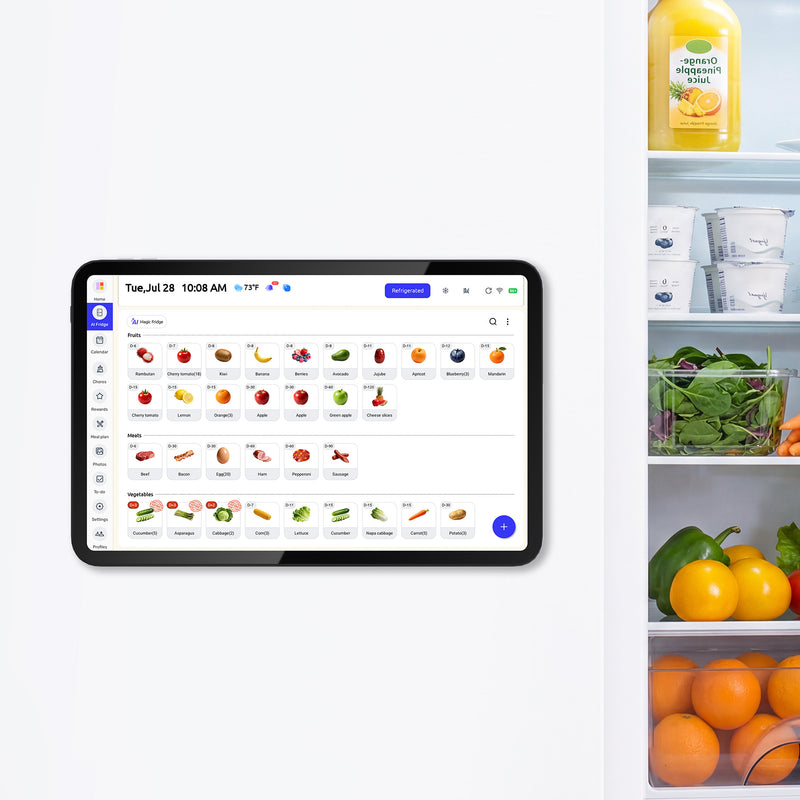
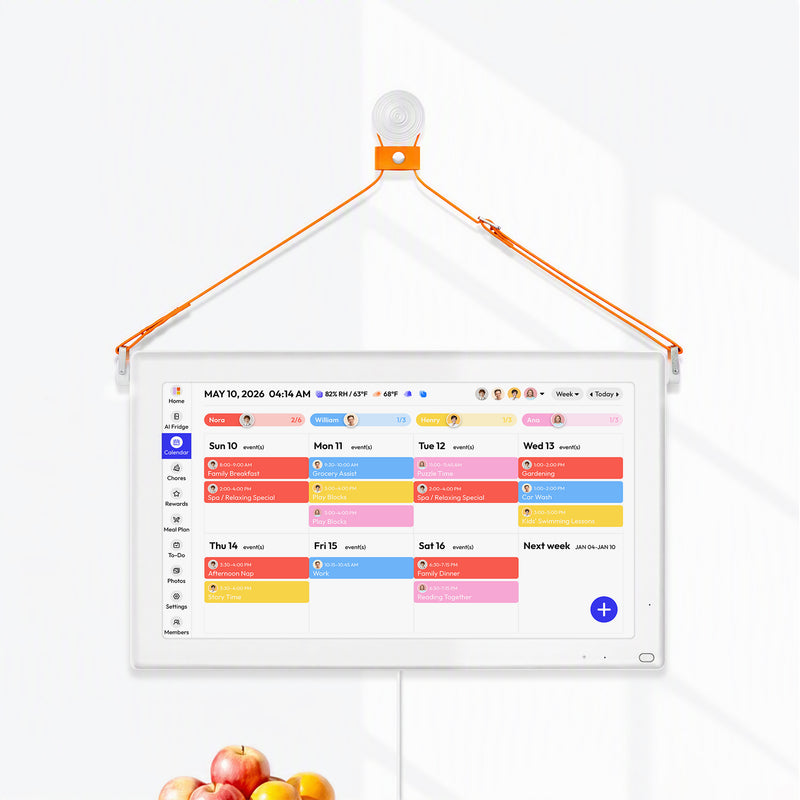

For most busy families, a truly organized fridge is the secret weapon for a calmer kitchen. It’s the difference between daily stress and a streamlined hub that makes meal planning, healthy choices, and less food waste feel almost effortless.
Why Your Fridge Is Your Family's Command Center
Let’s be honest. For many of us, the refrigerator is the chaotic heart of the kitchen—a jumble of forgotten leftovers, wilting produce, and mystery jars. This daily mess quietly adds to your stress, contributes to food waste, and sabotages your best-laid dinner plans. It’s the reason you buy a second jar of mustard when one is already hiding in the back.
But what if you reframed how you see your fridge? Instead of a cold box for random storage, think of it as your family's command center for nutrition. A thoughtfully ordered system saves you time, money, and mental energy. It turns a source of daily friction into a streamlined hub that actually supports your family's rhythm. You can learn more about building a central hub in our guide to creating a family command center.
The Real Cost of a Messy Fridge
The impact of a disorganized fridge goes way beyond simple frustration. Do any of these sound familiar?
- Wasted Food and Money: Items get shoved to the back, expire, and are tossed out. That cycle adds up to a shocking amount of money over a year.
- Mealtime Stress: When you can't find what you need, cooking becomes a frantic scavenger hunt instead of a calm, creative activity.
- Unhealthy Choices: If fresh, healthy snacks are buried, it's just easier to grab whatever processed food is in sight. An organized fridge puts nutritious options front and center.
The refrigerator's role has grown far beyond just keeping food cold. In fact, the global refrigerator market hit a staggering $123 billion in 2024 and is projected to reach $285 billion by 2034, largely fueled by consumers demanding smarter storage solutions. For families, these 'organization fridges' can reduce food waste by up to 30% through better planning and visibility. Discover more insights about the growing refrigerator market on gminsights.com.
The goal of an organized fridge isn't about Instagram-perfect aesthetics; it's about creating a functional system that serves your family's real-life needs, making healthy eating and efficient meal prep the default.
By introducing a bit of strategy, you'll quickly see how a tidy fridge makes healthy choices easy and mealtime seamless. It’s less about a perfect-looking shelf and more about a system that actually works for your busy life.
The Five-Zone Method for Fridge Organization
Let’s be honest, thinking of your fridge as just one big cold box is where the chaos begins. The secret to a truly organized fridge is to treat it more like a well-planned neighborhood, with specific zones for everything. This "zoning" approach creates an intuitive system that everyone in the family can actually follow, which means less time spent searching and more time saved.
The whole idea is to group similar items together and store them in the part of the fridge best suited for them. Not all areas of your fridge are the same temperature—the door is the warmest spot, while the back of the bottom shelf is usually the coldest. By organizing with these temperature differences in mind, you keep food fresher for longer. The same principles that help you create zones and implement smart storage solutions in a cramped closet apply perfectly here: define your spaces and use the right tools for the job.
This simple visual breaks down how to get from a state of fridge-chaos to organized calm. It’s a process, not a one-and-done miracle.
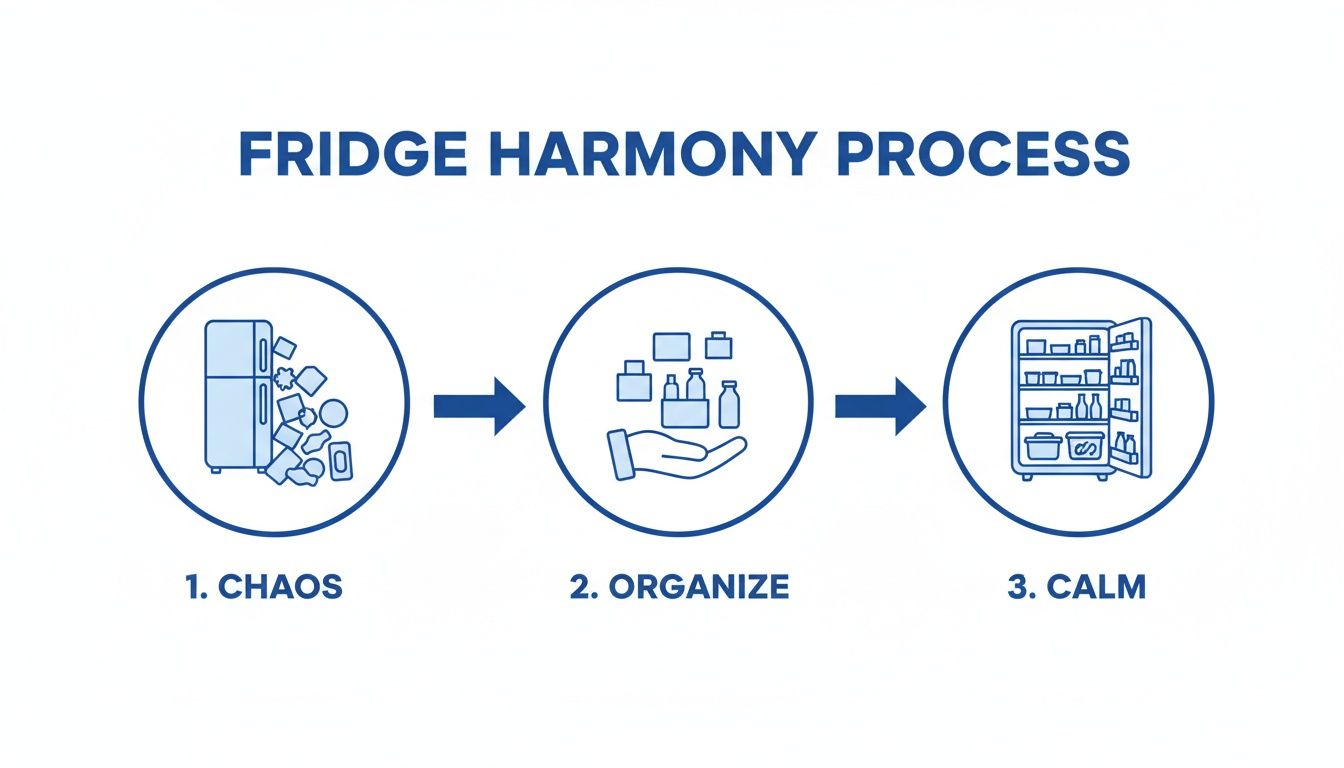
The biggest takeaway here is that creating lasting order doesn't have to be some monumental undertaking. A clear system is all you need to bridge the gap between a stressful, messy fridge and one that actually works for your family.
To make this super easy, here’s a quick-reference table for setting up your fridge zones.
Quick Guide to Fridge Zones
| Zone Name | Best Location | What to Store | Pro Tip |
|---|---|---|---|
| Grab-and-Go | Top & Middle Shelves | Leftovers, snacks, drinks, ready-to-eat foods. | Use clear bins so kids can see and grab healthy snacks without making a mess. |
| Raw Prep | Bottom Shelf | Raw meat, poultry, and fish. | This is the coldest spot and prevents drips from contaminating other foods. |
| Produce | Crisper Drawers | Fruits and vegetables. | Use high-humidity for leafy greens and low-humidity for things like apples and pears. |
| Dairy | Middle Shelves | Milk, cheese, yogurt, eggs, butter. | Avoid the door! A stable, central temperature keeps these items fresh. |
| Condiments | Door Shelves | Jams, pickles, sauces, salad dressings. | The door is the warmest zone, perfect for items with natural preservatives. |
This table is your cheat sheet, but let's break down what makes each zone work so well.
The Grab-and-Go Zone
Think of your top and middle shelves as prime real estate. They’re at eye level and hold a pretty consistent temperature, making them perfect for things you want the family to see and grab first.
- What to Store Here: This is home base for healthy snacks like yogurt cups, fruit bowls, and cheese sticks. It’s also the best spot for leftovers—if they’re visible, they’ll actually get eaten.
- Pro Tip: I swear by clear, stackable bins. A dedicated "Snack Bin" makes it a thousand times easier for kids to find an apple or a yogurt without wrecking the entire shelf.
The Raw Prep Zone
The bottom shelf is your food safety champion. It's typically the coldest part of the fridge, which is exactly what you need for raw meats, poultry, and fish.
Placing these items here is a non-negotiable for me. If anything drips while thawing, it’s contained on the lowest level and won't cross-contaminate your fresh produce or ready-to-eat foods. For extra peace of mind, always keep raw meat in its original packaging or inside a sealed container.
The Produce Zone
Those crisper drawers aren’t just extra bins; they're specifically designed to manage humidity and keep your fruits and veggies from dying a sad, wilted death. Most fridges have two drawers, often with little sliders to adjust the humidity.
Key Takeaway: Set one drawer to high humidity for things that wilt (leafy greens, broccoli, carrots) and the other to low humidity for things that rot (apples, pears, avocados). This simple separation can add days, sometimes even weeks, to their shelf life.
For even more smart storage hacks, check out our complete guide to fridge organization ideas.
The Leftovers and Dairy Zone
The middle shelves provide a stable, cool environment that’s just right for dairy products like milk, cheese, and butter. Please, stop putting your milk in the door! The constant temperature swings every time someone opens the fridge can make it spoil faster. This area also works great as an overflow zone for any extra leftovers.
The Condiment Zone
Finally, we have the refrigerator door. As the warmest part of your fridge, it’s not the place for anything highly perishable like milk or eggs. It is, however, perfect for all those jars and bottles that have natural preservatives.
- Best for the Door: Think condiments, sauces, jams, pickles, and bottled drinks. These items are tough enough to handle the temperature changes.
- Organization Tip: A small lazy Susan on a door shelf is a total game-changer. You can just spin it to find that one specific bottle of mustard without causing an avalanche of other condiments.
Choosing the Right Tools for Your Fridge
A great zoning system is only as good as the tools you use to keep it going. The right organizers do more than just make your fridge look tidy—they create a functional, intuitive setup that genuinely makes your day-to-day life a little less chaotic. Investing in just a few key pieces for your organization fridge can completely transform how your family finds and uses food.
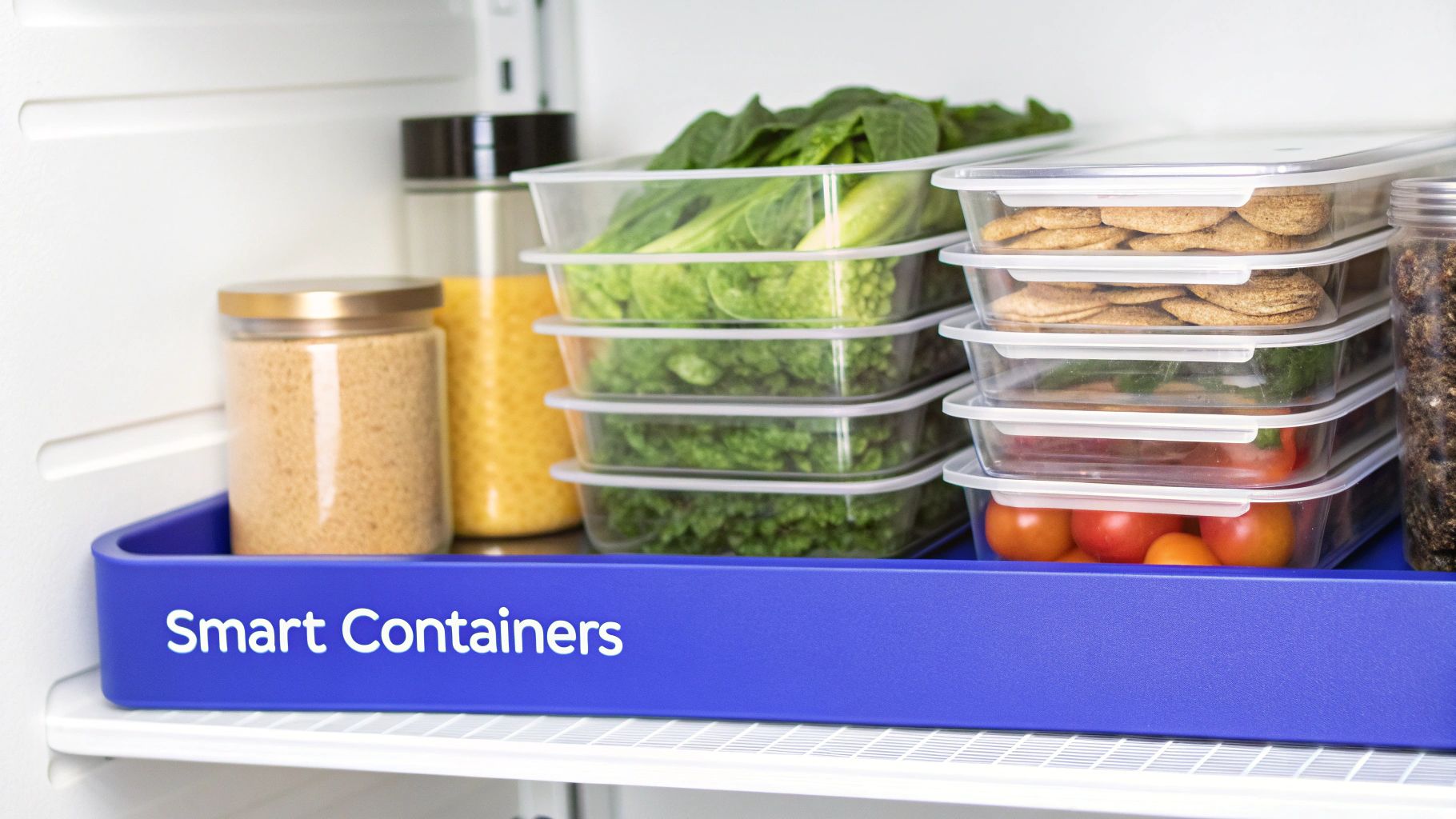
The main goal here is visibility. You want to see everything at a glance, maximizing every inch of space you have. My rule of thumb is simple: if you can't see it, you probably won't eat it. That’s why clear containers are your single most powerful weapon in the war against food waste.
The Foundation: Clear, Stackable Bins
Think of clear, stackable containers as the workhorses of your fridge. They let you see exactly what you have without digging around, which means no more guessing what’s hiding in that week-old opaque container. This kind of visibility is a game-changer for making quick meal decisions and stopping you from buying another tub of sour cream when you already have one.
When you’re shopping for containers, I always recommend looking for:
- Square or Rectangular Shapes: They are so much more space-efficient than round ones. They line up neatly without any weird gaps in between.
- A Stackable Design: Vertical space is gold, especially in smaller fridges. Good stackable bins let you build upward, keeping shelves organized and everything within reach.
- Airtight Lids: A solid seal keeps leftovers, prepped veggies, and other foods fresh for way longer. It’s better for your food and your wallet.
These bins are perfect for creating those zones we talked about. You can have a dedicated "Yogurt & Pudding" bin that lets the kids grab their own snacks or a "Dinner Prep" bin with all your chopped veggies ready to go.
Here's a pro tip: Before you buy a single thing, take two minutes to measure your fridge shelves. Write down the depth, width, and height between each shelf. It feels like a chore, but it saves you the massive headache of returning organizers that don't fit.
Smart Organizers for Those Tricky Spaces
Beyond the basic bins, a few specialized tools can solve those common fridge annoyances and make your zones even more effective. These small additions often make a surprisingly big difference in the daily flow of your kitchen.
A lazy Susan (or turntable) is an absolute lifesaver for deep shelves or that cluttered corner of the fridge door. Instead of reaching into the abyss for the maple syrup, you just give it a spin. I highly recommend getting one with a raised lip to stop jars and bottles from flying off when you turn it.
A few other small additions can make a huge impact:
- Drawer Dividers: These are fantastic for taming the chaos in your crisper drawers. Use them to separate different fruits and veggies, like keeping your lemons from rolling into the bell peppers.
- Can Dispensers: If your family goes through a lot of seltzer or soda, a dispenser is a must. It neatly stacks cans and feeds the next one forward, freeing up precious shelf space.
- Egg Trays with Lids: Ditching the flimsy cardboard carton for a sturdy, clear egg tray not only protects your eggs but also lets you stack lighter items right on top.
These simple, affordable tools aren't just for show—they're functional solutions that support your new system. By making every last item easy to see and grab, you’re setting your whole family up for success long after the initial big clean-out is done.
Tying Your Organized Fridge to Your Meal Prep Routine
An organized fridge isn't just about looking good—it's the engine that powers a seamless meal prep routine. It’s what turns a chaotic Sunday afternoon scramble into a calm, focused session that sets you up for a stress-free week. This is where your new fridge zones really start to pay off.
The refrigerator has become so central to modern family life that the global market is projected to hit $147.45 billion by 2034. It’s no surprise. Families need smarter storage, and many new models come with digital tools that can cut down planning time by as much as 40%. The humble organization fridge has officially become the family command center. You can dive deeper into these trends in household refrigeration from Precedence Research.
This link between planning, shopping, and prepping is where the magic really happens. A well-managed fridge makes grabbing a healthy meal the easiest option, not the hardest.
From Meal Plan to Prep Station
It all starts by connecting your weekly meal plan to your grocery list. Using a shared tool, like the one built into Everblog, gets everyone on the same page. Our family grocery list app features sync across all your devices, so you’ll never find yourself at the store wondering what you forgot.
Once you’re home, it’s time to "pre-prep." Don’t worry, this isn’t about cooking entire meals. It’s about doing the little things now that make assembling meals later incredibly fast.
Here’s a simple workflow to try this week:
- Wash and Chop All Your Produce: Get all those veggies for salads, stir-fries, and snacks washed, chopped, and stored in airtight containers. Pop them right into your "Prep Zone."
- Cook Your Grains in Bulk: Make a big batch of rice, quinoa, or pasta. Once it cools, transfer it to a clear container for quick and easy side dishes all week long.
- Portion Out Your Proteins: Marinate the chicken for Tuesday’s dinner or portion out the ground beef for Wednesday’s tacos. Store them safely on the bottom shelf, ready to go.
This might take an hour upfront, but it will save you so much time and mental energy on those hectic weeknights.
Create Themed Bins for Grab-and-Go Ease
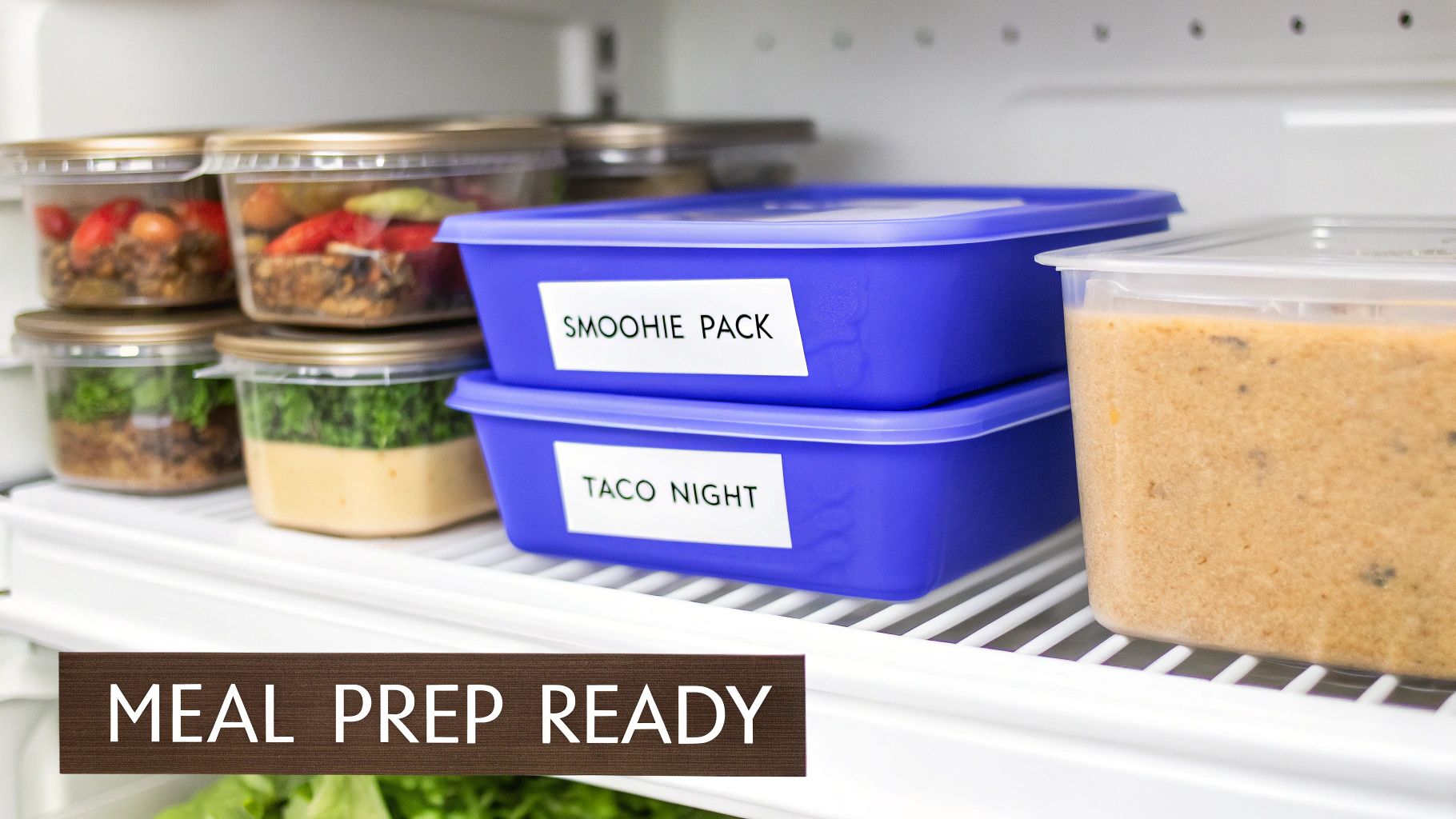
This is my favorite trick: themed bins. They are an absolute game-changer for busy families. Instead of just general zones, you’re creating specific, ready-to-use kits that make certain meals feel almost effortless.
The real goal here is to fight "decision fatigue" when you're already tired. When everything for a meal is already gathered in one spot, you eliminate the mental work of finding and assembling, which makes you far more likely to stick to your healthy meal plan.
Here are a few ideas to get you started:
- The "Smoothie Pack" Bin: Fill a bin with small, pre-portioned bags of frozen fruit, spinach, and protein powder. In the morning, just grab a bag, add your liquid of choice, and blend.
- The "Taco Night" Container: After you get back from the store, go ahead and chop your onions, peppers, and lettuce. Store them in one bin alongside shredded cheese and salsa. Now Taco Tuesday is just minutes away.
- The "Salad Bar" Section: Dedicate a large, clear container to washed greens, chopped cucumbers, tomatoes, and a small jar of your favorite homemade dressing.
Master the 'First In, First Out' System
Finally, let’s talk leftovers. To stop wasting food (and money), you need a system. The "First In, First Out" (FIFO) principle is your best friend here. It’s simple: use the oldest stuff first.
Just designate a specific spot in your fridge—a small shelf or a clear bin—and label it "Eat Me First." When you add new leftovers, put them at the back of this zone and slide the older items to the front. This simple visual cue makes sure nothing gets lost in the back of the fridge until it’s a science experiment. It’s a tiny habit that makes a huge difference for your budget and the planet.
Keeping Your Hard Work Intact: A Simple Maintenance Plan
Getting the fridge organized is a fantastic feeling. But keeping it that way? That's the real magic. An organized fridge isn’t a one-and-done project; it’s a set of small, consistent habits that prevent chaos from creeping back in. The key is to create a routine so simple it doesn’t feel like another chore on your never-ending to-do list.
It's no surprise that the fridge door is often the family command center. We're already wired to see it as a central hub. This instinct is actually driving a massive industry trend. The global refrigerator market is expected to explode from $74.85 billion in 2024 to $148.23 billion by 2035, largely because families want an organization fridge that helps them manage everything from schedules to groceries. So, let’s build a routine that makes your current fridge feel just as smart.
The 10-Minute Weekly Reset
This is the cornerstone of keeping your fridge in check. I like to do this the day before I go grocery shopping when the shelves are at their emptiest. It’s a tiny time investment that stops small messes from snowballing into a huge cleaning project.
Here's my quick-and-dirty checklist:
- Quick Wipe-Down: Grab a damp cloth and just hit the obvious spots—drips, sticky rings under jars, and fingerprints on the handle.
- Expiration Date Scan: Do a quick scan for anything nearing its end. Pull those items into your "Eat Me First" bin. Toss anything that's officially past its prime.
- Straighten and Consolidate: Combine those two half-empty jars of pickles. Tidy up the bins. As you do this, make a mental note of what’s low so you can add it to the shopping list.
This weekly ritual is about more than just cleaning. It’s an inventory check that connects what’s in your fridge directly to your meal plan and grocery list, making that weekly shop so much faster.
The 30-Minute Monthly Deep Clean
Once a month, it's time to go a little deeper. This is what keeps your fridge truly sanitary and fresh-smelling. A genuinely clean fridge is a huge part of maintaining order and making sure funky smells don't take over.
Here’s what my monthly refresh looks like:
- Pull out all the bins and drawers and give them a good wash with warm, soapy water.
- Wipe down all the interior walls and the undersides of the shelves.
- Check the drip pan at the bottom—it’s often forgotten and can get gross.
For those moments when a basic wipe-down isn't enough, knowing how to quickly and effectively clean a smelly refrigerator is a game-changer. This monthly clean is a total reset for your entire system.
Make It a Family Affair
Finally, don't do it all yourself! Get the family involved. Assign easy tasks to the kids, like wiping down their own snack bin or making sure the drinks are all lined up neatly.
When everyone has a small part to play, the upkeep becomes almost effortless. It’s a great way to build good habits and keep your fridge a clean, efficient, and stress-free hub for the whole family.
Common Questions About Fridge Organization
Even with the best game plan, a few questions always pop up when you're trying to get your fridge in order. A beautifully organized fridge is a great goal, but keeping it that way means tackling a few common roadblocks.
Let's walk through some of the most frequent questions we hear from families. These are the little things that can trip you up, but with a few simple tricks, you can keep your system running smoothly.
How Can I Get My Family to Maintain the New System?
This is the big one. You can create the most beautiful system in the world, but if no one else follows it, you’re right back where you started. The secret is to make it easy and get everyone involved.
Start by giving everyone ownership of a specific zone. The kids can be in charge of their "Snack Bin," and part of their job is helping restock it after a grocery trip. Use clear, simple labels—it’s hard to make an excuse for putting the milk in the veggie drawer when there’s a giant "DAIRY" label staring back at you.
The most effective way to make it stick is to turn it into a shared, low-effort habit. Try a quick, five-minute 'fridge reset' as a family right before you bring in new groceries. If you lead by example and offer gentle reminders, the new routine will eventually become second nature.
What Is the Best Way to Handle Leftovers?
Ah, leftovers. The number one cause of fridge chaos and food waste. The best way to wrangle them is by adopting a "First In, First Out" (or FIFO) system. It sounds technical, but it’s incredibly simple.
Designate one specific shelf or a single clear bin just for leftovers. When you put a new container in there, place it at the back. This automatically pushes the older stuff forward, so it's the first thing you see and grab.
Using clear containers is also non-negotiable. If you can see what’s inside, you're a thousand times more likely to eat it. We also swear by scheduling a "Use-It-Up" meal once a week—think frittatas, stir-fries, or a 'kitchen sink' soup—to clear everything out before you restock.
Will These Organization Methods Work in My Small Fridge?
Absolutely. In fact, these principles are even more important when you’re working with a small space where every inch is prime real estate. A smart organization fridge strategy isn't about having a huge refrigerator; it's about making the most of the space you have.
The zoning method still works perfectly; your zones will just be a bit cozier. The real game-changer for small fridges is thinking vertically.
- Use Stackable Bins: Ditch the round containers. Square or rectangular ones use space much more efficiently and let you build upward.
- Add Extra Storage: Look for under-shelf drawers or bins that clip right onto your existing shelves. They instantly create a whole new layer of storage.
- Utilize the Walls: You can find magnetic bins or small racks that stick to the interior walls of your fridge, giving you a bonus spot for small things like spice jars or sauce packets.
With a few clever tools, even the most compact fridge can feel organized and spacious.
Take your family's coordination to the next level with Everblog. Our smart digital calendar centralizes your meal plans, grocery lists, and schedules, making it easier than ever to keep your organized home running smoothly. Learn more about how Everblog can calm the chaos at everblog.com.


