
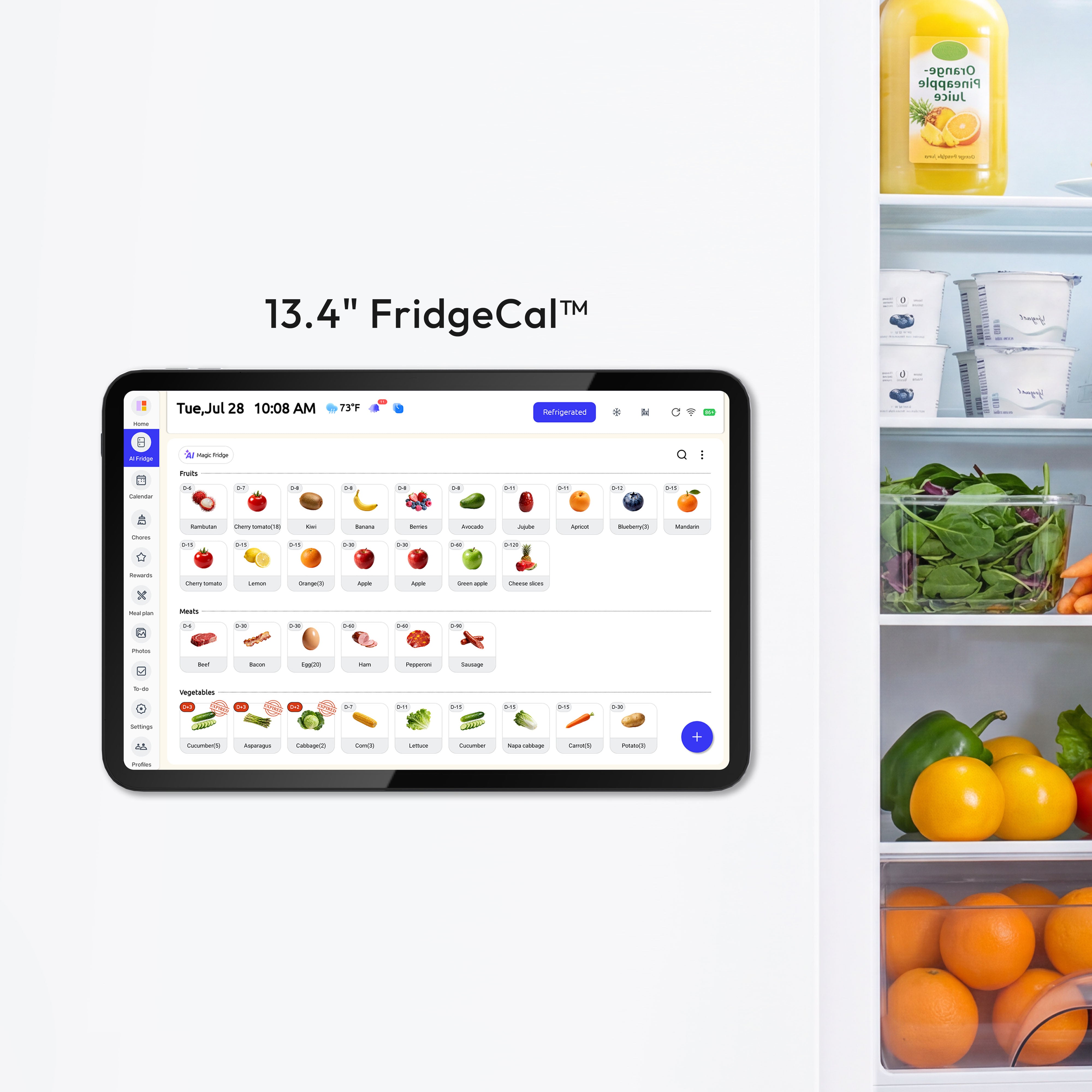
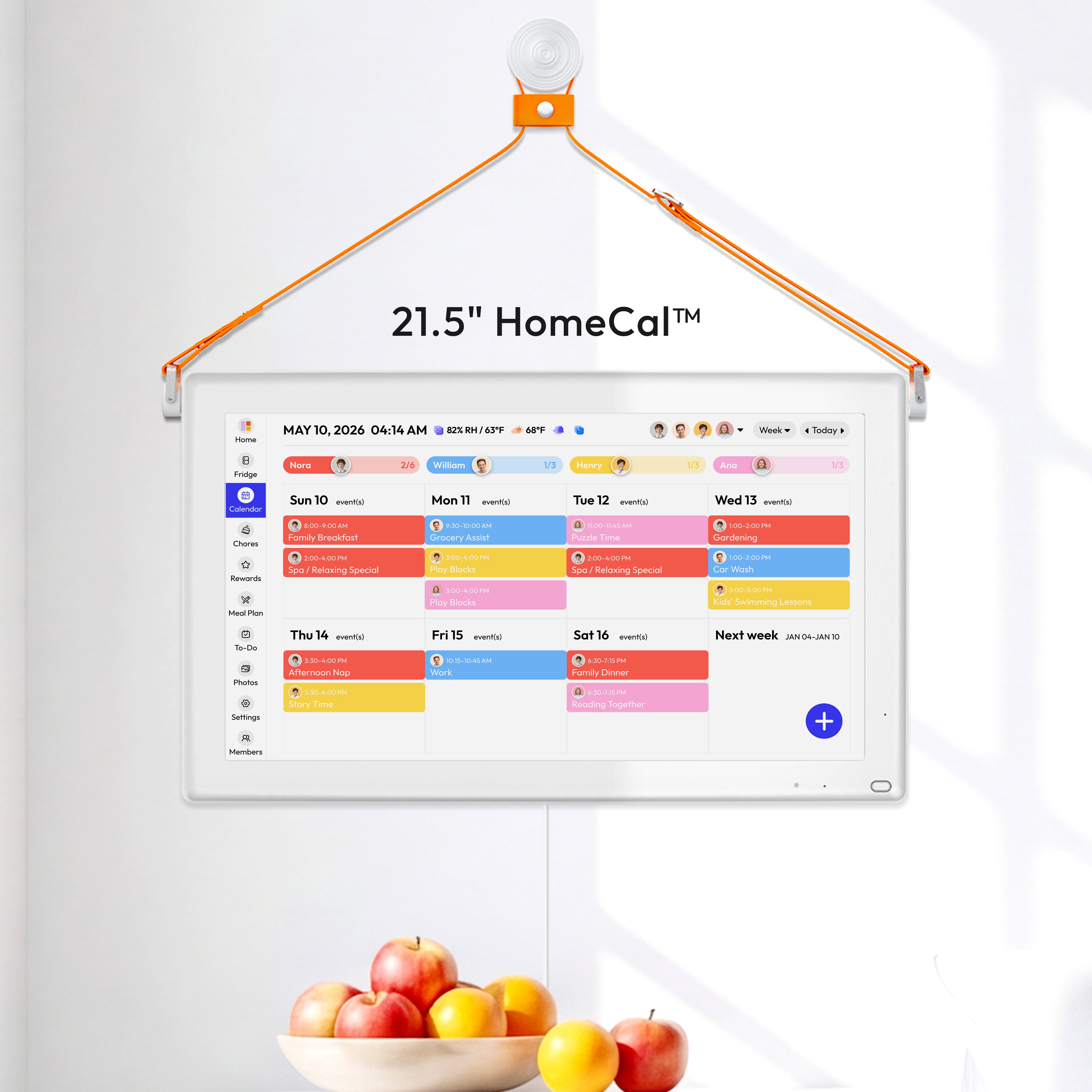

Let's be real—managing a family these days feels less like running a household and more like air traffic control for a chaotic, tiny airport. You've got scattered notes, conflicting schedules, and a constant low-grade hum of stress. A home command center is your secret weapon, bringing everything into one central hub, from daily plans to dinner menus.
It's not just about getting tidy; it’s about creating a single source of truth that finally brings some calm to the chaos.
Your Command Center: The Antidote to Family Chaos
The mental load of coordinating a family is massive. I see it all the time. School permission slips pile up, doctor's appointments get double-booked, and someone always forgets about the last-minute grocery run. It’s no wonder important details fall through the cracks. This constant juggling act is exactly why a well-thought-out command center goes from a "nice-to-have" to an absolute game-changer for your sanity.
Think of it as the physical and digital headquarters for your family's daily operations. Imagine glancing at one spot and instantly knowing the plan for the day, what’s for dinner, and which chores are already knocked out. That’s the kind of effortless order we're aiming for.
Here's a quick look at how a home command center solves common family pain points.
From Family Chaos to Organized Calm
| Common Challenge | Without a Command Center | With a Command Center |
|---|---|---|
| Forgotten Appointments | "Oops, I forgot about the dentist today!" | Automated reminders and a central calendar keep everyone on track. |
| Mealtime Scramble | "What's for dinner?" is asked at 5 PM. | The weekly meal plan is visible, and groceries are already stocked. |
| Chore Wars | Endless nagging and arguments over who did what. | A clear chore chart creates accountability and tracks progress. |
| Paper Clutter | Mail, school forms, and bills take over the kitchen counter. | Designated slots for incoming and outgoing papers keep surfaces clear. |
A command center doesn't just manage your stuff; it helps you reclaim your time and energy.
More Than Just a Calendar on the Wall
An effective command center is so much more than a calendar you hang on the fridge. It's a dynamic system that brilliantly merges the best of both worlds: a digital core for real-time updates and physical components for all the tangible stuff that comes with family life.
This hybrid approach is where the magic happens. You might lean on a digital hub like Everblog for its shared calendar and grocery lists, but you'll also want to integrate analog elements like:
- Wall-mounted files to wrangle incoming mail and those endless school papers.
- A magnetic whiteboard for jotting down weekly goals or quick messages.
- A corkboard for pinning up tickets, invitations, and your kid's latest masterpiece.
This blend ensures that both digital reminders and physical clutter have a proper home, preventing your kitchen counter from becoming the default drop zone for everything. The real goal is to build a system that manages the flow of information and items without you even thinking about it.
A great command center doesn't just organize your stuff; it organizes your family’s time and energy. It creates shared accountability and reduces the friction of daily life, giving everyone more bandwidth to focus on what truly matters.
This structured approach makes a huge dent in household chaos. Believe it or not, 70% of busy parents struggle with coordinating daily activities, and studies show this can contribute to 40% higher stress levels in disorganized homes. When you implement a system with tools like a Chore Manager, you can cut down on scheduling conflicts by up to 60%. It really does foster connection and makes organization a team effort. You can dive deeper into the trends driving this need at Coherent Market Insights.
Designing a Command Center That Actually Works
Hold on. Before you buy a single whiteboard or file holder, let's talk strategy. The absolute most important step is creating a blueprint that fits your family’s unique rhythm. A command center that actually works isn’t about stylish bins and matching labels; it’s a purpose-built system designed to solve your specific organizational headaches.
First, identify your top three to five pain points. Seriously, write them down. Is your kitchen counter a permanent home for school papers and unopened mail? Are you constantly fighting chore wars? Does the 5 PM "what's for dinner?" question send you into a panic?
Your answers are the foundation. If meal planning is the main stressor, a prominent meal board and integrated grocery list will be your central focus. If it's managing the kids' endless activities, a large, easy-to-read calendar becomes the star of the show.
This visual shows the simple yet powerful transition from household chaos to organized calm that a well-designed command center creates.
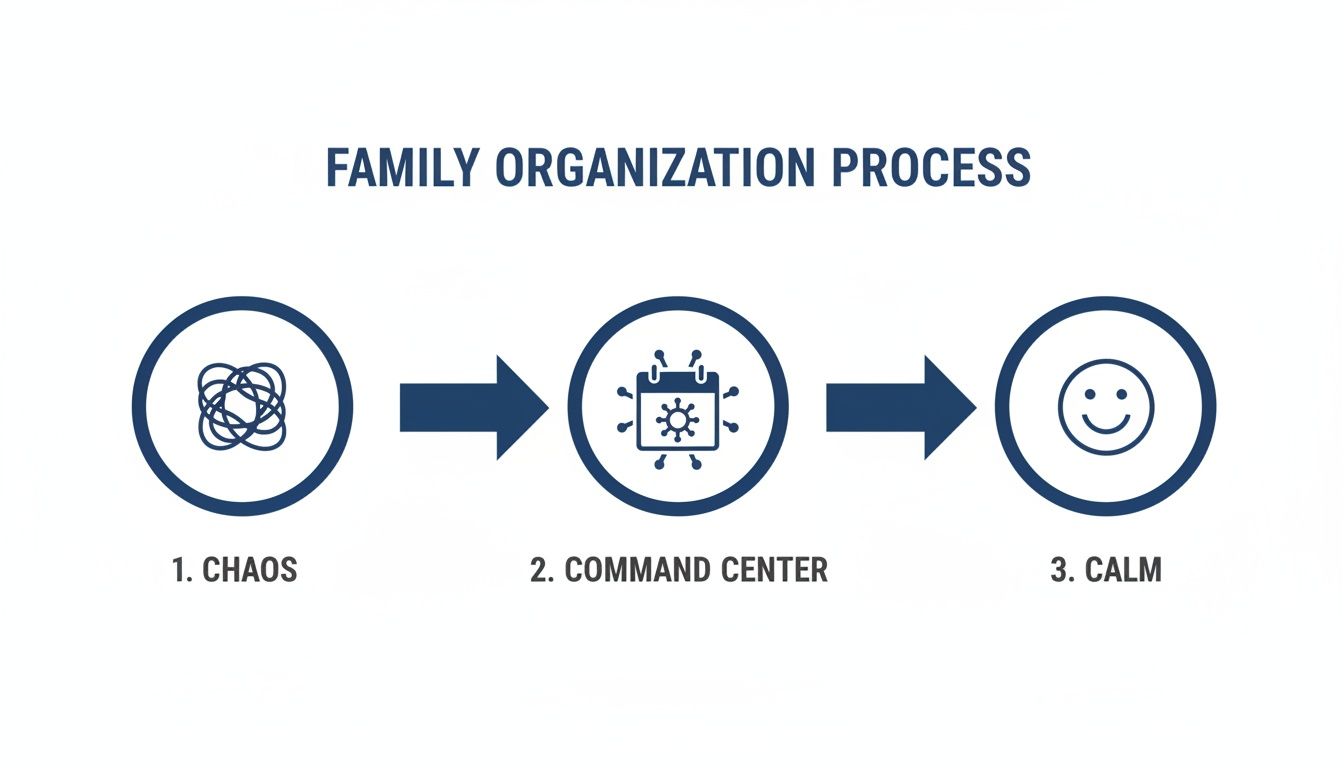
By creating one dedicated hub for all this information, you build a bridge from daily disarray to daily peace. It makes organization a natural part of your family's flow, not another chore to manage.
Find The Perfect Location
Where you put your command center is just as critical as what’s in it. The golden rule? Pick a high-traffic area that everyone moves through every single day. Tucking it away in a quiet corner is a surefire way to have it ignored and, eventually, become just another clutter spot.
Some of the most effective locations I've seen are:
- The Kitchen: This is the heart of the home for a reason. It's a natural gathering spot where schedules and meals are already being discussed.
- The Mudroom or Entryway: This is the perfect spot to intercept bags, mail, and school papers the second they walk through the door.
- A Main Hallway: A busy hallway can be an ideal, centralized spot for the whole family to see what's happening at a glance.
A kitchen-based hub is my personal favorite because it weaves planning right into daily routines like cooking and eating. For some great inspiration on turning a central kitchen space into your home’s mission control, you can explore these kitchen island design ideas for a central hub.
A well-placed command center becomes an active part of your day, not a passive wall decoration. For more specific guidance, our guide on setting up a digital calendar for your kitchen has some practical tips.
Create Functional Zones
Once you have a spot, think in "zones." Don't just throw a random collection of organizational tools on the wall. Assign a specific purpose to each part of your command center. This "a place for everything" approach is what makes the system so intuitive and easy for everyone to actually use.
Think about the natural flow of stuff in your home. Mail comes in, gets sorted, and then needs action. School papers need to be reviewed, signed, and returned. Your zones should mirror this workflow.
Your command center should act like a smart filter for your family's life. It catches, sorts, and directs all the incoming information and physical items, so your countertops and your mind stay clear.
A simple zoning strategy could look like this:
| Zone Name | Purpose | Key Components |
|---|---|---|
| Schedule Central | The main hub for all appointments, events, and activities. | Large digital calendar (like Everblog), color-coded markers, weekly overview. |
| Mail & Paper Hub | The drop-off and processing area for all incoming paper. | Labeled trays: "To-Do," "To File," "To Sign." Wall pockets for each family member. |
| Meal Planning Area | The go-to spot for dinner plans and grocery needs. | A weekly meal planner, a visible grocery list, and recipe card holder. |
| Kids' Corner | A dedicated space for children's responsibilities and accomplishments. | Chore charts, artwork display clips, homework folder slot. |
By breaking your command center into these functional zones, you create a logical system that anyone in the family—from your spouse to your youngest kid—can understand and use. This is what transforms it from a simple bulletin board into a powerful machine for household management, clearing the path for a much more organized and peaceful home life.
Choosing the Right Tools for Your Hub
Okay, this is the fun part: picking out the perfect components to bring your command center vision to life. The heart of any modern family hub is its digital engine, and this is where a large-format display like Everblog's 21.5-inch calendar really makes a difference. It becomes the dynamic dashboard for your entire family, putting everyone's schedules and to-do lists in one easy-to-see spot.
Think of it as your family’s central operating system. Instead of flipping between a half-dozen different apps for calendars, chores, and meal plans, a single, unified display cuts through the digital clutter and makes communication feel effortless. For any busy family trying to stay on the same page, that's a game-changer.
The hard truth is that digital fragmentation is a huge source of stress. While 82% of busy parents admit to using at least five different apps to manage family life, a shocking 60% say they still miss important events every single week. A unified hub like Everblog can slash those missed appointments by up to 70%. This is about tackling both the digital chaos and the paper piles that overwhelm 75% of parents, ultimately leading to a 40% jump in family satisfaction scores.
Balancing Digital Brains with Analog Brawn
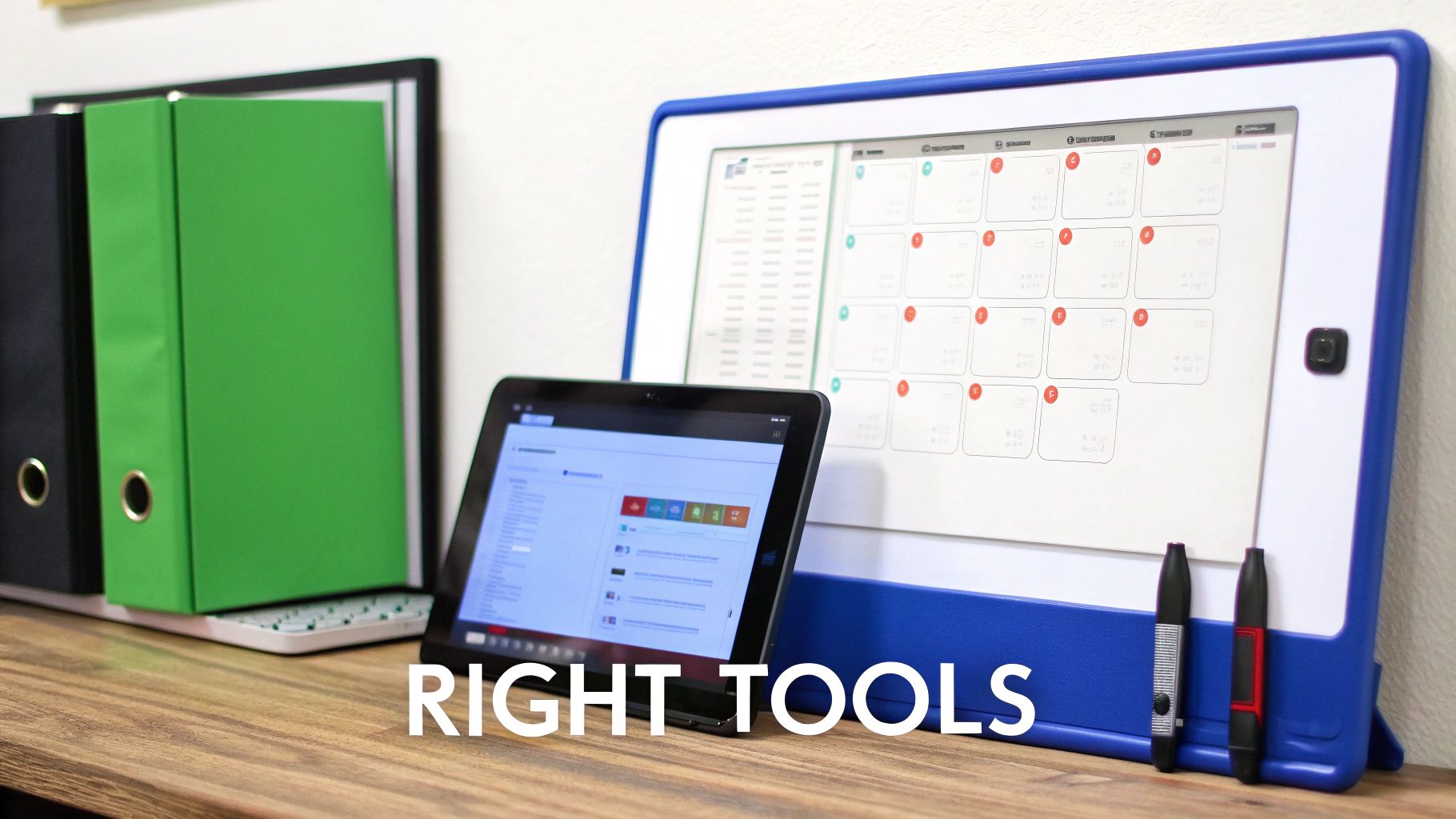
A powerful digital core is non-negotiable, but the best command centers don't stop there. They cleverly blend technology with practical, physical tools to handle all the tangible stuff that flows into our homes daily. This hybrid approach ensures nothing slips through the cracks.
So, let's talk about the analog side. You need tools that actually solve a problem and work with your digital hub, not against it.
Here are a few analog must-haves I always recommend:
- Magnetic Whiteboard: Perfect for jotting down weekly goals, an inspirational quote, or a quick "Don't forget your lunch!" message that doesn't need to live on the main calendar.
- Wall-Mounted File Holders: Finally, a home for school permission slips, bills that need paying, and takeout menus. Label them something simple like "Action," "To File," and "Pending" to create an intuitive workflow.
- Simple Corkboard: An awesome spot for showcasing the kids' latest masterpiece from art class, pinning concert tickets, or keeping birthday party invitations front and center. It adds personality and keeps important items visible.
The most effective command center isn't just a collection of cool gadgets; it's a thoughtful system where every tool has a clear purpose. Your digital hub manages the data, while your analog tools manage the physical stuff.
For families who want to take their collaborative planning even further, you could look into tools like smart interactive whiteboards that can sync notes and drawings digitally.
Matching Tools to Your Family's Style
Let's be honest: your command center should look good. It needs to be as beautiful as it is functional. The tools you choose can either add to your home's aesthetic or become a cluttered eyesore.
If you love a sleek, minimalist vibe, go for clear acrylic wall files, a frameless whiteboard, and a clean digital display. More of a cozy, modern farmhouse family? Try a rustic wood-framed corkboard, some wire baskets for mail, and a classic chalkboard for daily notes.
The goal is to create a space you actually enjoy using. When the command center feels like a natural part of your home, everyone is more likely to use it. Making the kids' zone visually appealing with colorful charts, for instance, can make a world of difference in getting them on board. (We have a whole guide full of chore chart ideas for kids if you need inspiration!)
When you choose tools that are both effective and stylish, you create a hub that your family will naturally turn to, day after day.
Creating a Seamless Digital and Analog Flow
The best command centers aren't about choosing between digital tools and physical ones. It’s about making them work together in perfect harmony. This blend is what turns a random collection of organizers into a responsive system that actually simplifies your family's life.
Think about it this way: the goal is to create a simple, intuitive workflow that handles both information and the physical stuff that comes with it.
Let's imagine a real-world scenario. Your kid bursts through the door, waving a paper invitation to a birthday party. Instead of that invite getting lost in a pile on the counter, you use a quick voice command on the Everblog to add the party to the shared family calendar. Done.
Then, you simply pin the physical invitation to your corkboard. Now the digital schedule is updated for everyone, and the tangible details—like the address and gift ideas—are right there for a quick glance.
Building Simple, Sticky Routines
A command center is only as good as the habits built around it. To make it work, you need to build simple routines that weave it into your family's natural rhythm. These aren't meant to be complicated new chores; they're tiny habits that make using the hub feel automatic.
Here are a few easy touchpoints to get started:
- The After-School Drop: Make it a house rule. All school papers, permission slips, and artwork go straight into a designated "inbox" tray the moment they come through the door. This one habit stops paper clutter before it even starts.
- The Evening Glance: Get everyone into the habit of taking 30 seconds before bed to look at the Everblog display for the next day's schedule. This quick check-in prevents morning chaos and helps everyone feel prepared.
- The 10-Minute Sunday Sync: This is my personal favorite. Gather the family for just ten minutes on Sunday evening. Review the week ahead on the calendar, assign any new chores, and clear out that paper inbox. It’s a powerful weekly reset that gets everyone on the same page.
These small, repeated actions are what build the organizational muscle memory that makes a command center so effective.
The Digital and Analog Handshake
Meal planning is another perfect example. You’re looking at the week's meal plan on your Everblog display and realize you’re out of pasta for Wednesday night. Just add it to the shared grocery list on the Everblog. It instantly syncs to your partner's phone for their trip to the store.
The digital tool handles the live, shared information, while the physical display in your kitchen makes the plan impossible to miss.
The magic is in the handshake between your digital hub and your analog tools. The digital side manages dynamic, shareable information, while the analog side manages the physical items that enter your home.
This seamless flow is the secret sauce. By creating these bridges, you eliminate the mental load of trying to remember where things are or what needs to be done. To dive deeper into setting up your own hub, check out our complete guide to creating a digital family command center.
It’s this combination of smart tech and practical, real-world organization that finally brings a sense of calm and control to a busy home.
Maintaining and Adapting Your Command Center
A command center isn’t a “set it and forget it” project. Think of it as a living, breathing part of your home that needs to evolve right along with your family. If you don't give it a little attention, it'll quickly turn into another clutter hotspot.
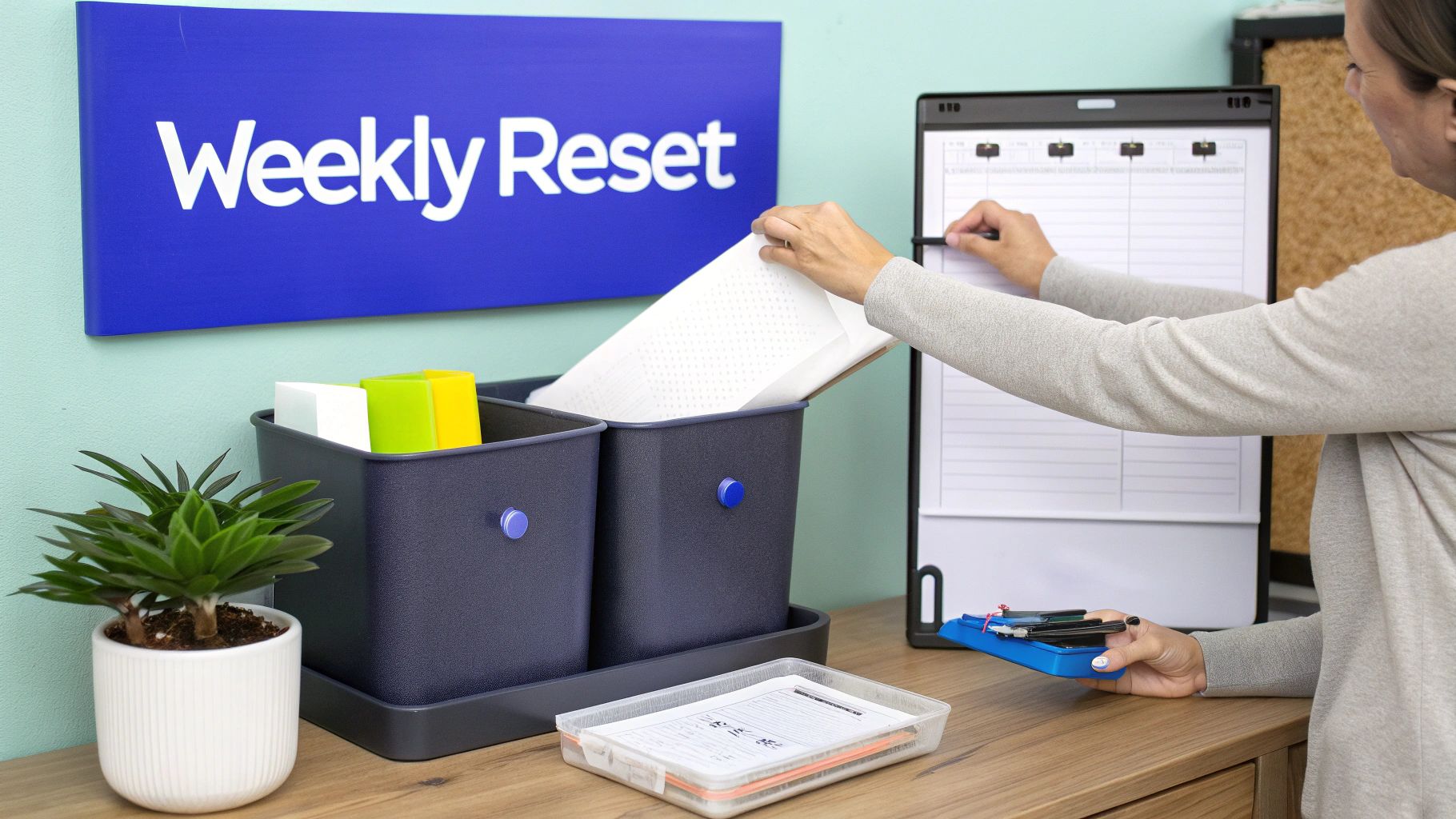
The single most important habit to build? The weekly reset. This isn’t some massive, time-consuming chore.
Just set aside 15 minutes every Sunday. That’s all it takes to clear out old papers, wipe down the boards, and sync up with the upcoming week’s schedule on your Everblog display. It’s a simple ritual that keeps the whole system humming and stops chaos from creeping back in.
Embrace Change and Ask for Feedback
Life moves fast, and your command center has to keep up. When a new sports season kicks off, a work schedule changes, or your kids hit a new developmental stage, your system needs to adapt with it. Maybe you need a bigger bin for soccer gear or a new section on the whiteboard for project deadlines.
The real key here is to periodically check in with everyone. A quick chat can tell you what’s working and what’s driving everyone crazy.
Is the chore chart actually getting used? Is the mail system just becoming a new paper pile? Asking for input does more than just fine-tune the system—it gets everyone invested. Suddenly, it’s not just your project; it’s a team effort.
When everyone has a voice, they have a reason to help it succeed. This kind of collaboration is what keeps your command center practical and effective for the long haul.
Making Adjustments That Stick
As you get feedback, focus on making changes that solve real problems. If the kids are slacking on chores, look at how a digital tool can give them a nudge. For instance, research shows 65% of families struggle with getting chores done, but adding a little gamification can boost follow-through by 75%.
For co-parents, a central digital display can slash miscommunication by 55%. And integrated meal planners? They can cut down on the 80% of prep time that gets wasted on last-minute store runs and figuring out what to eat. If you want to dive deeper, you can read the full research on command center effectiveness.
Making these small, smart tweaks ensures your system doesn't just look organized—it actively solves your family’s biggest headaches, growing and changing right alongside you.
Answering Your Top Command Center Questions
As you start dreaming up your own family command center, you're bound to run into a few hurdles. I see the same questions pop up time and time again from families just getting started. Let's tackle them head-on so you can build a system that actually works.
What if I Have a Very Small Space?
Don't have a giant, empty wall? You're not alone. The good news is, you don't need one.
The real trick is to get creative and think vertically. Often, the best spots are the ones we overlook every day—the side of the fridge, the inside of a pantry door, or that skinny bit of wall at the end of a hallway.
To make the most of a tiny footprint, look for tools that do double duty:
- Magnetic Primer or Paint: This stuff is magic. It turns almost any surface into a magnetic board without adding a single inch of bulk.
- Slim Wall-Mounted Organizers: Perfect for corralling incoming mail and permission slips without creating an obstacle course in a narrow walkway.
- A Digital Hub: This is the ultimate space-saver. A digital calendar like Everblog pulls all your schedules, to-do lists, and reminders onto a single screen, saving you from needing three or four different physical boards.
It’s not about finding more space; it's about making the space you have work smarter.
How Do I Get My Family to Actually Use It?
Ah, the million-dollar question. I've seen beautifully designed command centers gather dust for one simple reason: they were a solo project. If you build it alone, you’ll be the only one using it.
The secret is involvement and ownership, right from the beginning.
Instead of presenting a finished product, bring the family into the planning process. Ask them what would actually help them feel more on top of things. For the kids, that might mean giving them their own color-coded marker for the calendar or turning chores into a game with something like Everblog's Rewards Tracker.
For your partner, focus on the pain points you can solve together. Think: no more frantic "did you grab milk?" texts because the grocery list is synced, or finally having a clear view of the week's commitments to avoid double-booking. Most importantly, you have to lead by example. When everyone sees you consistently using it, it slowly but surely becomes the new family rhythm.
A command center that’s built with your family is one that will be used by your family. Shared creation leads to shared responsibility and, ultimately, shared success in staying organized.
Is Digital Better Than Analog?
This isn't an either/or situation. The most effective command centers I’ve seen are a smart hybrid of both. You don't have to choose!
A digital hub is unbeatable for the dynamic, ever-changing parts of family life. Schedules get rearranged, grocery lists are constantly updated, and you need reminders that can pop up on your phone when you're out and about.
At the same time, you still need a way to manage the physical stuff that comes into your home every single day. Mail, school flyers, permission slips, and your kid’s latest masterpiece all need a tangible place to land.
Combining the two gives you the best of both worlds: the instant-syncing power of digital with the practical, real-world convenience of physical organization. That’s how you create a system that truly covers all your bases.
Ready to build the digital heart of your family's command center? The Everblog digital calendar brings schedules, chores, and meal plans into one beautiful, easy-to-use display, making it the perfect foundation for an organized home. Discover how it can work for your family at https://everblog.com.


