






The sink is full, one child insists they already fed the dog, another swears they never saw the backpack checklist, and you’re answering the same question for the third time before breakfast. Most families don’t have a chore problem. They have a system problem.
Paper charts help for a week, maybe two. Sticky notes disappear. Verbal reminders turn one parent into the household project manager, and nobody likes that role. A good job chart app can fix part of that, but only if the app sits inside a routine that people can follow.
That’s the difference between a digital sticker chart and a working family operating system. The tool matters. The setup matters more. The daily habits matter most.
From Chaos to Clarity The Modern Family Job Chart
A modern family job chart isn’t just a list of chores on a screen. It’s a shared place where everyone can see what needs doing, who owns it, and when it resets. That sounds simple, but in a busy house, simplicity is the whole game.
If you’re choosing between another printable and a digital setup, start by asking a better question. Don’t ask, “Which app has the cutest design?” Ask, “Will this reduce handoffs, confusion, and repeated reminders in my actual house?”
The strongest systems usually include a few core requirements:
- Shared visibility: Everyone can see the same information without relying on one parent’s memory.
- Flexible scheduling: Daily tasks, weekly resets, and rotating assignments all need different logic.
- Kid-friendly use: Young kids need clear labels or visuals. Older kids need enough structure that “I forgot” stops being the default.
- Room for family routines: Chores don’t happen in a vacuum. They connect to meals, school prep, laundry, sports gear, and bedtime.
That last point matters more than most app roundups admit. Demand for more integrated family tools is growing, with a 25% increase in app store searches combining “chore chart + meal planner” in Q1 2026, according to Homey’s discussion of family app demand. Parents aren’t only trying to assign jobs. They’re trying to run a household without juggling separate systems for chores, food, and schedules.
A chore chart works better when it reflects real life. “Unload dishwasher” and “check tomorrow’s lunch ingredients” often belong in the same rhythm.
A basic to-do app can track tasks. A real family job chart system does more. It creates accountability without constant surveillance, makes recurring work visible, and gives kids a fair shot at succeeding without a parent narrating every next step.
When you evaluate options, look for the app that can hold your family’s routine without making you build a second job for yourself.
Choosing the Right Job Chart App for Your Family
The market isn’t new, and that’s good news for parents. Long-standing tools have had time to work through the obvious problems like syncing, recurring tasks, and multi-child management. Foundational apps such as Chores & Allowance Bot have been on the Apple App Store since 2012, with support for unlimited children and automatic syncing, as noted in its Google Play listing. Longevity doesn’t guarantee fit, but it does tell you the category is established.

Start with your household, not the feature list
A family with a preschooler, a middle schooler, and two co-parents needs something different from a single-child household. Before you compare apps, write down three things:
- Who will use it every day
- What kinds of chores need tracking
- Where people will see it
That third question gets overlooked. If the app lives only on your phone, it may become your private admin tool instead of the family’s shared system.
The non-negotiables
When I evaluate a job chart app, I look for fit before flair. This checklist saves time.
- Real-time syncing: Co-parents need the same information without texting screenshots.
- Recurring task logic: Daily, weekly, and monthly tasks should reset cleanly.
- Rotation support: Nobody wants to manually reshuffle trash duty forever.
- Simple completion flow: Kids should be able to mark a task done without a tutorial.
- Rewards flexibility: Some families use allowance. Others prefer privileges, points, or family goals.
- Age adaptability: Pre-readers, independent readers, and teens won’t all use the same interface the same way.
If you want a broader comparison of family-focused tools, this roundup of chores apps for families is useful because it looks at practical differences instead of treating every app as interchangeable.
Questions worth asking before you commit
Some apps look polished in screenshots and fall apart in daily use. Ask these before you migrate your family into one:
| Question | Why it matters |
|---|---|
| Can I assign recurring chores with different frequencies? | Real homes run on mixed rhythms, not one repeating list. |
| Can two adults manage the same household? | Co-parent clarity prevents duplicate reminders and missed jobs. |
| Can younger kids understand the task view? | If they can’t use it, you’ll become the middleman again. |
| Can I reward effort without paying cash for every task? | Transaction-only systems often get old fast. |
| Does it fit with meals and planning tools I already use? | Standalone chore apps can create another silo. |
If your house already struggles with disconnected routines, pairing a job chart app with a planning tool can help. A practical example is using a separate meal planner and grocery list app so “set the table,” “help with lunch prep,” and “check grocery staples” don’t live in totally different worlds.
Practical rule: Choose the simplest app your whole family will actually use. The fanciest one often creates the most parent maintenance.
One more caution. Don’t expect perfect. Expect workable. The right app is the one your family can open, understand, and keep using on a tired Tuesday.
Designing Your Family's Chore Framework
The app doesn’t create the system. You do. If the framework is sloppy, the software just makes the confusion digital.
Families that set up a digital chore system with automated reminders and rotating assignments see a 65% increase in chore completion and a 78% reduction in parental nagging after three months, and those systems outperform paper charts by 40% in long-term adherence, according to the Chap app listing. That result makes sense in practice. A clear system removes argument fuel.

Build the list from real household work
Don’t start with Pinterest chores. Start with your actual bottlenecks. Walk through your week and write down the tasks that repeatedly create stress.
That usually includes things like:
- Morning reset jobs: Make bed, open blinds, put pajamas away
- School flow jobs: Pack bag, refill water bottle, put shoes in place
- Kitchen support: Clear plate, unload dishwasher, wipe table
- Home upkeep: Take out trash, fold towels, sort laundry, tidy toys
- Family support tasks: Feed pets, check sports gear, help with meal prep
If you need help mapping recurring cleaning into a realistic weekly rhythm, this guide on how to create a cleaning schedule is a useful companion because it breaks household work into repeatable patterns instead of one overwhelming list.
Match chores to capability, not age alone
Age matters, but maturity, temperament, and household reality matter too. One child may happily handle laundry sorting. Another may need a simpler sequence and visual prompts for the same category of work.
A stronger framework uses three tiers:
- Daily responsibilities: Small tasks that anchor the day
- Weekly contributions: Bigger jobs that support the household
- Occasional assignments: Seasonal, one-off, or helper tasks
Here’s a practical way to think about it.
| Stage | Better fit | Avoid |
|---|---|---|
| Young kids | Clear one-step tasks, visual cues, short wins | Long chains of instructions |
| Elementary age | Repeatable tasks with visible finish lines | Vague jobs like “clean room” |
| Teens | Jobs tied to household function and independence | Babyish reward framing |
“Clean room” is a parent phrase, not a child-friendly task. Break it into “put laundry in hamper,” “return dishes,” and “clear floor.” Completion goes up when the finish line is obvious.
Use rotation to protect fairness
Some chores are fine as fixed responsibilities. Others get stale fast. Rotation helps with fairness, skill-building, and resentment prevention.
Rotate jobs such as:
- Trash and recycling
- Dishwasher loading or unloading
- Table setting and clearing
- Pet feeding backup
- Bathroom reset tasks
A rotating system also keeps one child from becoming “the dishwasher kid” for life.
Fairness doesn’t mean identical jobs every day. It means the system is visible, reasonable, and consistent.
For a more family-specific setup model, this guide to creating a family chore chart is helpful because it focuses on assigning responsibilities in a way kids can follow.
Motivation should support habits, not replace them
Parents often swing between two extremes. Either every chore gets paid, or rewards are treated as morally suspect. Neither approach works well on its own.
The better path is mixed motivation:
- Core responsibilities: These are part of belonging to the household
- Bonus effort: Extra jobs can earn points, privileges, or allowance
- Shared rewards: Family movie choice, dessert pick, or weekend activity can reinforce teamwork
That distinction matters. If kids learn that every basic act of participation requires payment, the system becomes fragile. If there’s never any recognition, enthusiasm fades.
A good framework says, “Everyone contributes because we live here,” and also, “Consistent effort earns trust, privileges, and bigger opportunities.”
Building Motivation with a Smart Rewards System
A job chart app becomes sticky when kids feel progress, not just pressure. That’s where rewards help. Not as bribery. As feedback.
Benchmarks show 85% of busy parent households using a job chart app achieve over 70% weekly chore completion, but poorly designed rewards or unclear milestones can make completion rates fall by 42%, according to Family Daily’s article on digital chore systems. That tracks with what happens in real homes. Vague rewards drain momentum fast.

What launch day often sounds like
A solid rollout isn’t dramatic. It’s calm, clear, and a little upbeat.
You gather everyone after dinner. You say the house has too many reminders flying around and this new system is how the family will keep track together. You show each child their jobs. You explain what counts as complete. You explain what happens when the list is finished for the week.
Then come the predictable questions.
- “Do I get paid for making my bed?”
- “What if I forget?”
- “Why does my brother get fewer chores?”
- “Can I save points for something bigger?”
Those questions are good. They mean kids are trying to understand the rules. Answer them directly.
Use layered rewards instead of one big prize bucket
One reward type rarely carries a system for long. Layered rewards work better because they meet different kinds of motivation.
Try a structure like this:
- Immediate rewards: Extra screen time, picking dessert, choosing music in the car
- Medium-term rewards: Saving points toward a toy, outing, or sleepover privilege
- Household rewards: Family movie night choice, breakfast pick, game night theme
Many parents often get stuck. They either overpay for tiny tasks or make rewards so distant that kids stop caring.
If a child can’t tell what today’s effort leads to, motivation slips. Keep the path visible.
Make the milestones obvious
Kids don’t need a speech about delayed gratification every evening. They need to see progress. Progress bars, points, badges, streaks, and check marks all help because they turn invisible effort into visible movement.
The most effective systems make three things plain:
- What the child needs to do
- What counts as done
- What the reward path looks like
If you’re building this inside a digital setup, a framework like the one in Everblog’s chore chart reward system guide can help you balance privileges, milestones, and everyday expectations without turning every task into a negotiation.
Rewards that usually backfire
Some rewards look motivating but create headaches later.
- Unlimited rewards: Kids stop valuing them because the target keeps moving.
- Mystery rewards: Surprises are fun sometimes, but unclear systems reduce trust.
- Cash for every basic task: This can turn normal participation into constant bargaining.
- Huge delayed rewards only: Younger kids often need shorter loops to stay engaged.
A smart rewards system doesn’t erase resistance. It gives you a way to move through it without arguing about every sock, bowl, and backpack.
How to Launch the New System and Get Kids Onboard
Most chore systems fail in the handoff. Parents set everything up, announce new rules when everyone is tired, then wonder why the app turns into another ignored icon.
Start the launch when nobody is already in trouble.

Run a short family meeting
Keep the tone matter-of-fact. You’re not delivering a punishment plan. You’re introducing a clearer way to run the house.
A good script sounds like this: “We’ve all been forgetting things, repeating things, and getting frustrated. This system shows what each person is responsible for, so I don’t have to keep reminding and you don’t have to guess.”
Then show them how it works.
- Open the task list together: Let each child see their responsibilities.
- Define done: “Laundry in the basket” is different from “laundry folded and put away.”
- Explain timing: Say when chores should happen, not just that they exist.
- Set the first review point: Kids need to know the system will be adjusted if something doesn’t fit.
One of the most useful mindset shifts is treating launch week as a training week. Correct gently. Repeat the process. Don’t declare the system broken because people need practice.
Expect pushback and keep it boring
You don’t need to win a debate. You need to hold the structure.
Typical pushback sounds like “That’s not fair,” “I forgot,” or “I didn’t know I had to do it today.” Respond with consistency, not volume. Open the app or chart. Point to the task. Restate the expectation.
That’s especially important with routines that already trigger friction, like bedtime and transitions. If you’re trying to make those moments more visual for young children, a simple companion tool like a toddler bedtime routine chart can reduce the number of verbal prompts you need.
Add physical visibility when needed
Many digital systems encounter a limitation. For some kids, especially neurodiverse children, mobile reminders disappear the second the device is put down.
Child psychologists recommend physical wall charts for neurodiverse children because the persistent, at-a-glance visibility helps reduce forgotten tasks tied to “out of sight, out of mind,” as noted in the Chores, Rewards, and Allowance app listing. If your child has ADHD, autism, or struggles with transitions, don’t force a phone-only setup just because it sounds modern.
A hybrid model often works better:
- Use the app for tracking and parent management
- Use a wall display or printed visual for constant visibility
- Keep task wording identical in both places
- Avoid changing the layout too often
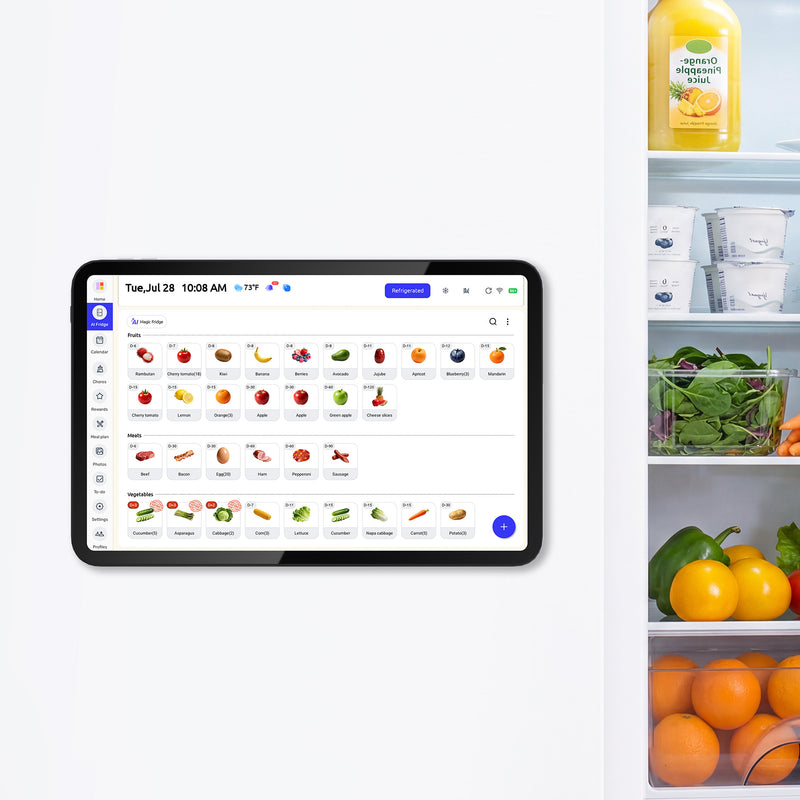
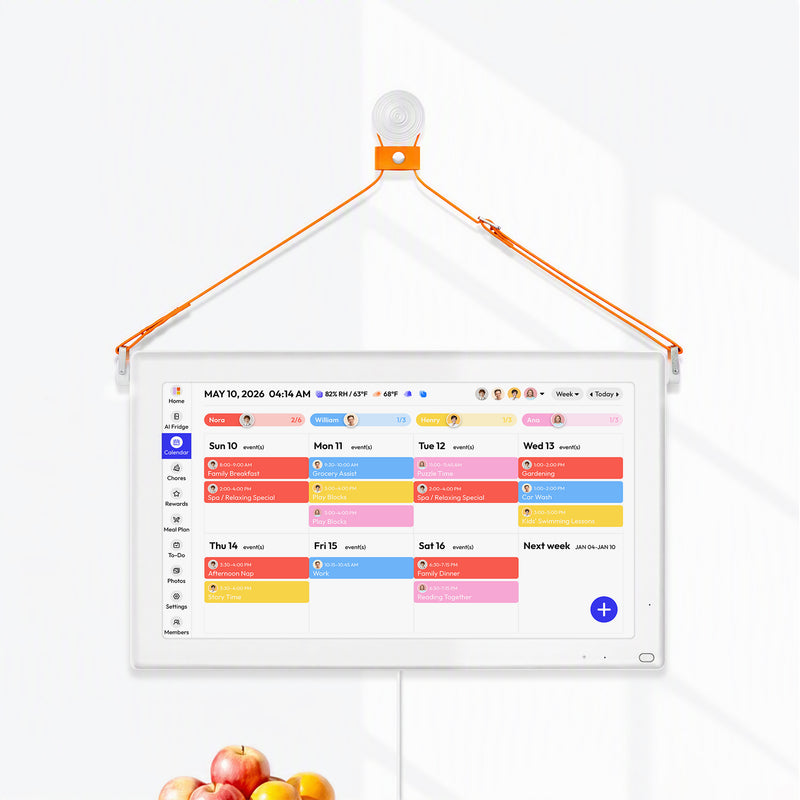
That hybrid approach is also where an option like Everblog can fit. It combines a shared wall display with chore tracking, rewards, meals, and grocery planning in one hub, which can help families who need at-a-glance visibility rather than another phone-based tool.
Here’s a quick walkthrough format many families find useful before the first week starts:
Troubleshoot early, not after resentment builds
During the first two weeks, watch for these signs:
- Tasks are too vague: Rewrite them into smaller steps.
- One child keeps failing at the same time of day: Move that task to a better time.
- Parents are overriding the system verbally: Point back to the chart instead.
- Kids say they didn’t see it: Increase visibility, not lectures.
If you fix those issues quickly, the system starts to feel normal instead of experimental.
Keeping the System Running Day to Day
The third month tells the truth. By then, the novelty is gone, school schedules have shifted, someone has forgotten how to log completed tasks, and at least one chore keeps getting skipped for reasons nobody has named yet.
Analytics are particularly helpful. Advanced job chart apps offer weekly and monthly completion stats, and households that review those patterns and adjust their system can reach 80 to 90% chore completion, based on the performance-metric patterns described in Caction’s explanation of completion dashboards. The value isn’t the graph itself. It’s the conversation the graph makes possible.
Run a weekly system check
Keep it short. Ten minutes is enough.
Ask:
- Which chore was missed most often
- Was the problem timing, difficulty, or confusion
- Did rewards still feel worth the effort
- Did adults follow the same rules
- Does anyone need a task swapped or broken into steps
The point is to improve the system, not interrogate the child. If “empty lunchbox” keeps failing, the problem may be that the backpack lands in three different places after school. Fix the landing zone, not just the child.
Watch for drift
Every family system drifts. Tasks pile up. New activities appear. Parents start making exceptions because it feels faster. Then the whole thing gets fuzzy.
These are the warning signs:
| Sign | What it usually means |
|---|---|
| Kids ask what to do every day | The chart isn’t visible enough or tasks are unclear |
| One parent handles all reminders | The system has slipped back into mental-load mode |
| Rewards stop motivating | Milestones need resetting |
| The same tasks stay overdue | Timing or assignment needs adjustment |
Review the system before you blame the people in it.
Keep the workload human
Parents often break a good system by overloading it. A job chart app should reduce friction, not document every tiny motion in the house.
A cleaner day-to-day approach looks like this:
- Keep core daily tasks short
- Use weekly tasks for heavier lifting
- Save one-off tasks for genuine extras
- Retire chores that no longer fit the season
- Update assignments when school, sports, or work schedules change
The larger payoff isn’t just cleaner counters. It’s a home where responsibility is visible, shared, and less personal. Instead of “Mom is mad about the shoes again,” the message becomes “This is part of how our house runs.”
That shift matters. Kids learn follow-through. Adults carry less invisible labor. The home gets calmer because expectations live in the system, not in one tired person’s head.
A More Collaborative Home Awaits
A good job chart app can help, but the lasting win comes from the structure around it. Clear chores, realistic timing, visible rewards, a calm launch, and weekly adjustments are what make the system stick.
You don’t need a perfect house. You need a house where responsibilities are easier to see, easier to share, and easier to finish. That’s how chores stop being a daily source of friction and start becoming part of family life that everyone can handle with less conflict.
If you want a shared family hub that brings chores, rewards, meals, schedules, and grocery planning into one place, Everblog is worth a look. It’s designed for families who need at-a-glance visibility and one central system instead of scattered notes and disconnected apps.


