






The breaking point usually isn't one huge crisis. It's Tuesday at 7:18 a.m. One child can't find a library book. Another suddenly remembers gym shoes. You realize the dentist slip is still on the counter, the after-school pickup changed yesterday, and nobody told the other parent about Friday's early dismissal. By the time everyone gets out the door, the house feels like it lost a small war.
That kind of chaos doesn't mean you're disorganized. It usually means your family is running on memory, text threads, and scattered paper. That system works until school, activities, chores, meals, and multiple caregivers all start colliding.
A kids weekly calendar fixes that only when it becomes more than a cute printable. It has to show the week clearly, help kids understand what's next, build responsibility into the schedule, and keep every adult looking at the same information. That's where most family calendar advice falls short. It handles the fridge, but not the life being lived around it.
From Morning Chaos to Calm Starts
The families I see struggle most in the morning aren't lazy or unprepared. They're carrying too many moving parts in their heads. One child has spirit day. Another has reading homework due. Breakfast is half made while someone asks who's doing pickup, and the answer depends on a text that never got answered.
A kids weekly calendar changes the tone of the morning because it moves the plan out of your head and into the room. Kids stop asking every question verbally. Adults stop renegotiating the day in fragments. The week becomes visible before the rush starts.
What the calm version looks like
On a calmer morning, the child who forgets everything checks the calendar before breakfast. The school bag note is already there. The activity block shows soccer after school. The chore for the day is small and clear. Nobody's guessing whether today is a home day, a practice day, or a switch-house day.
That doesn't mean the house becomes silent. It means the noise gets more useful.
If your mornings are especially rough during the first school block, structured independent tasks can help children settle faster once they arrive or begin homeschool work. Soul Shoppe's morning work guide has practical ideas for that transition window, especially when kids need something predictable to do before they're fully focused.
Practical rule: If a child has to ask the same question three mornings in a row, that answer belongs on the weekly calendar.
The first shift to make
Most parents start with events only. School. Sports. Appointments. That's useful, but it isn't enough. A working kids weekly calendar also needs the repeatable parts of family life: morning tasks, school materials, house responsibilities, and who handles what.
That's why a short visual launchpad often works better than a long verbal reminder. A simple morning checklist for kids pairs well with a weekly view because it answers two different questions. The weekly calendar says what's happening today. The checklist says what to do right now.
When those two tools line up, mornings stop feeling random. Kids know what day they're in. You stop repeating yourself as much. And the whole house starts the day with less friction.
Choosing Your Calendar Foundation
A kids weekly calendar works only if your family will use it. That's the key test. Not how pretty it looks online, and not whether it came with matching icons.

Three formats handle most families well: paper printables, whiteboards, and digital calendars. Each can work. Each also breaks down in a different way.
A quick side by side comparison
| Format | What works | What breaks |
|---|---|---|
| Paper printables | Fast to start, low pressure, easy for young kids to see physically | Gets outdated quickly, hard to share across households, easy to lose |
| DIY whiteboards | Reusable, visible in a shared space, simple to update during the week | Limited space, messy revisions, no automatic syncing |
| Digital hubs | Shared access, real-time updates, recurring events, reminders, multiple caregivers can view the same schedule | Takes setup, depends on family buy-in, can become cluttered if overbuilt |
Paper is often the easiest entry point. If your child is new to routines, a printed week can be enough to establish the habit of checking what's next. But paper usually fails when the week changes midstream. One rescheduled appointment and the whole page starts lying to you.
Whiteboards solve that problem better. They're flexible, visible, and forgiving. For many families, this is the sweet spot for getting started.
Digital systems become more useful as complexity goes up. If you manage school, activities, custody transitions, chores, meals, and multiple adults, a static board starts lagging behind real life.
Why visual structure matters
This isn't just about parent convenience. Visual scheduling supports attention and follow-through. Research on visual activity schedules for children with ADHD found one case where on-task performance moved from 50% at baseline to 100% during schedule teaching sessions, with sustained performance of 92% to 100% post-intervention in a published study on visual activity schedules and ADHD support.
That matters for calendar choice. If a child does better when they can see the sequence, check progress, and track what comes next, the format needs to make those cues obvious.
Clear visuals beat verbal reminders once the day gets busy.
Choose based on family load, not trendiness
If your household is mostly one location, one parent updating things, and younger children with simple routines, paper or a whiteboard may be enough.
If your week includes rotating pickups, changing practice times, and meal coordination, a shared digital setup is more realistic. A tool like a digital family calendar can hold the weekly view without forcing you to rewrite everything every time the plan changes.
Meal planning also affects calendar success more than people expect. Families get less afternoon friction when dinner is part of the same weekly system. If you're trying to connect schedule and food prep, Dashi's stress-free meal planning guide is a useful complement because it shows how to reduce one of the biggest daily decision points.
A practical decision filter
Use this quick test:
- Pick paper if your main goal is helping one younger child understand the week.
- Pick a whiteboard if everyone needs one shared wall view in the kitchen or hallway.
- Pick digital if the plan changes often, more than one household is involved, or you want chores and reminders tied to the calendar itself.
The right foundation is the one your family can keep current. A stale calendar creates more confusion than no calendar at all.
Designing Age-Appropriate Routines
A kids weekly calendar fails when it asks a child to manage information they can't yet process. Parents often assume resistance means the child won't cooperate. More often, the setup is too abstract, too crowded, or too independent for that stage of development.
Research summarized in K12's discussion of planning skills notes that executive functions like time management and task initiation are still developing through elementary school, and children often miss their own planning mistakes, which is why visual aids, consistent modeling, and age-appropriate task complexity matter so much.

Toddlers and preschoolers need flow, not a full week
For very young kids, a weekly grid is often too broad. They don't need a packed planner. They need a visual rhythm.
Use a small sequence such as:
- Morning basics like get dressed, eat breakfast, brush teeth
- Day anchor points such as school, quiet time, outside time
- Evening wind-down including bath, pajamas, books, bed
Photos, icons, and simple color blocks work better than text-heavy labels. Keep the number of items low. If you overload the board, the child stops seeing it.
What doesn't work at this age is constant revision. Young children need the routine to look stable. If something changes, point to it and explain it briefly. Don't redesign the whole system every day.
Young kids don't need more information. They need fewer decisions.
Elementary-aged kids can handle a real weekly view
A kids weekly calendar starts paying off. Elementary children can usually understand school days, activity days, homework blocks, and simple chores, but they still need heavy support.
The most effective layout usually includes:
- A clear day-by-day view with school and after-school activities
- One homework or reading block rather than a vague “do homework” reminder
- A materials cue such as library book, instrument, or sneakers
- One household task attached to a specific day
Avoid assuming they will proofread their own schedule. In the Weekly Calendar Planning Activity research discussed in the K12 resource, youth often made errors and didn't accurately judge how well they had performed. That's why you should review the calendar together, not just assign it and walk away.
A useful parent habit is to do a short evening preview:
- Check tomorrow's events together
- Ask what needs to go in the bag
- Have the child point to one school task and one home task
- Confirm any non-routine item out loud
That preview matters more than adding more stickers or colors.
Tweens need ownership with guardrails
Tweens usually want more independence, but they still benefit from structure. This is the age to shift from “I tell you the week” to “you help manage the week.”
Use the calendar for:
- Project deadlines
- Activity commitments
- Personal prep time
- Device or free-time boundaries
- Rotating responsibilities at home
Instead of filling every square yourself, hand over part of the process. Let them enter assignment dates, estimate prep time, and review the week on Sunday evening. Then check for blind spots. Most tweens still underestimate how long things take.
Match the tool to the skill you're building
| Age stage | Calendar focus | Parent role |
|---|---|---|
| Toddler and preschool | Sequence and routine | Build and point |
| Elementary | Weekly awareness and follow-through | Review and prompt |
| Tween | Planning and self-management | Coach and verify |
The calendar should stretch a child a little, not a lot. If it creates daily conflict, simplify it. If your child ignores it completely, bring it closer to their actual decisions. A useful calendar is not the most detailed one. It's the one your child can understand well enough to act on.
Integrating Chores and Motivating Kids
A kids weekly calendar becomes much more useful when it includes the work of family life. Without that, the calendar tells children where they need to be, but not how they contribute. That gap is where nagging usually starts.

The motivation problem is real. One market summary states that 65% of parents struggle with getting kids to do chores, gamification can boost completion rates by 30%, and searches for “kids weekly calendar with chores” have risen 40% year over year, while many templates still separate chores from rewards in ways that make follow-through harder, as described in this weekly visual calendar listing discussion.
Why separate chore charts often fail
A stand-alone chore chart looks fine on the wall, but it often lives apart from the family's real schedule. That creates a basic problem. The child sees “clean room” on one sheet and “soccer, homework, reading group” on another. No one has connected the tasks to the actual shape of the week.
That disconnect matters. Kids aren't refusing only because they dislike chores. They're also reacting to poor timing, fuzzy expectations, and delayed feedback.
If Wednesday is packed, don't assign the biggest room reset that day. If Saturday morning is calmer, place the longer task there. The calendar should reflect energy and logistics, not just ideals.
A chore done at the right time teaches responsibility. A chore assigned at the wrong time teaches resentment.
Build a simple reward loop
Gamification doesn't have to mean complicated tokens, expensive prizes, or constant bargaining. The useful version is simple. Children can see what they need to do, mark progress, and earn something predictable.
A strong weekly loop usually includes:
- Visible task placement tied to actual days, not random lists
- Fast completion feedback so the child knows the task counted
- A small reward structure connected to consistency, not perfection
- Reset points each week so kids can try again without carrying failure forward
For younger children, the reward may be choosing dessert night, extra story time, or picking the family movie. For older kids, it might be screen time, later bedtime on weekends, or saving toward a desired item. The key is clarity.
Here’s a helpful example of chore framing in action:
What to assign by age
Not every child should have the same type of task. Match chores to what they can complete with reasonable success.
- Preschoolers: put toys away, carry napkins, place dirty clothes in the hamper
- Elementary kids: feed pets, clear the table, pack school items, sort laundry
- Tweens: empty dishwasher, help prep lunch, vacuum one room, manage a recurring task independently
The best chore systems start with repeatable wins. Don't begin with “clean your whole room” if your child can't yet break that into steps. Use smaller tasks that can be seen, finished, and checked off.
Put motivation inside the family system
An integrated tool offers a solution. Instead of keeping events on one app and chores on another sheet, a shared hub can place responsibilities in the same weekly view as school and activities. How to get kids to do chores becomes more practical when the answer isn't another lecture, but a system where the child can see tasks, mark them done, and watch progress build.
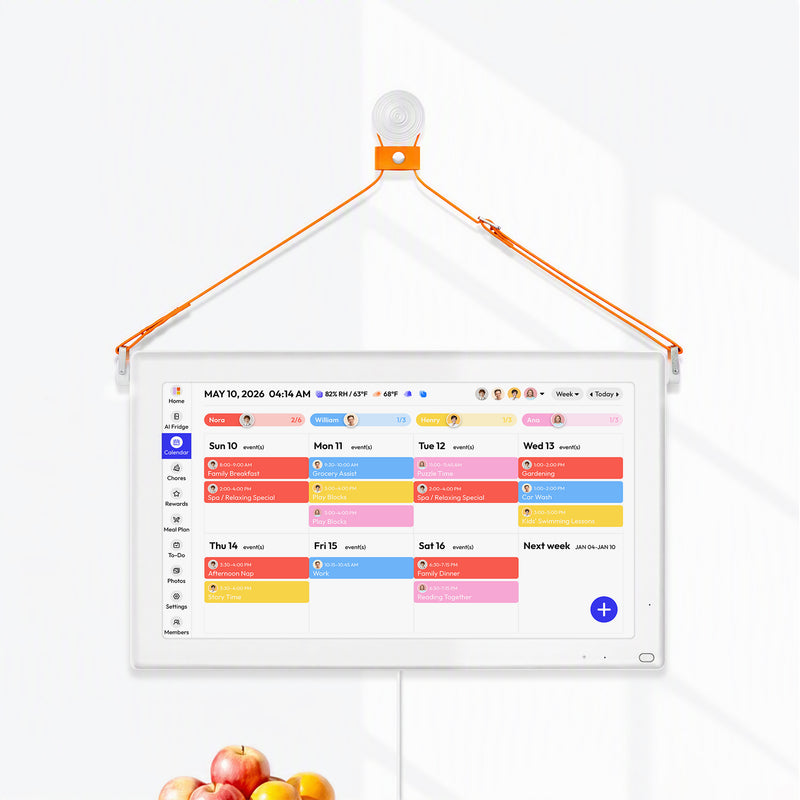
One example is Everblog, which includes a weekly calendar alongside a Chore Manager and Rewards Tracker, so the responsibility piece sits in the same place as the rest of family planning. That matters because children don't experience life in categories. They experience Tuesday.
When the calendar includes both obligations and rewards, kids stop seeing chores as random interruptions. They start seeing them as part of how the week works.
Syncing for Seamless Co-Parenting and Family Teamwork
The single-household calendar is only half the story for many families. The harder version is when one child moves between homes, another caregiver handles pickups, and schedule changes travel through texts, screenshots, school emails, and memory.
That setup wears everyone down. Adults get frustrated because they feel like they're repeating the same details. Kids get uneasy because they can't tell what's happening next, where they'll be, or who already knows the plan.
Shared visibility matters more than most calendar advice admits
One verified summary notes that 16 million U.S. children live in blended families, and that co-parents often look for ways to coordinate schedules without constant texting. It also points out that many existing resources focus on a single household instead of shared visibility across homes, which leaves a major gap for families trying to stay aligned through a weekly planner model built for more than one caregiver.

A paper calendar on one fridge can't solve that. It helps one household see its own week. It doesn't create a common view.
What actually reduces friction
The useful shift is moving from “Did you tell them?” to “It's already on the calendar.”
That usually requires a few essentials:
- Color coding by household or caregiver so kids can identify where they are and who handles the transition
- Shared event editing so changes don't depend on one parent relaying details manually
- Consistent naming for recurring exchanges, practices, and school events
- Child-friendly display so the calendar reduces uncertainty instead of adding more adult-only information
This isn't just an efficiency issue. Predictability helps children settle. When they can see the handoff day, the activity, and the next home transition in one place, the week feels more solid.
The emotional side of a synced calendar
Children often ask repetitive questions around transitions because they're trying to regain certainty. They want to know when they'll see the other parent. They want to know where their belongings need to go. They want to know whether an event is happening at one house, both houses, or neither.
A synced kids weekly calendar answers those questions before the stress spikes. It gives the child a visual map of the week rather than forcing them to gather clues from adult conversations.
Stability isn't only about keeping the schedule. It's about making the schedule visible enough that a child can trust it.
The same principle helps intact households too. Grandparents, babysitters, and older siblings all work better when they can see the same plan. Family teamwork improves when the calendar becomes the shared reference point instead of one parent becoming the human reminder system for everyone else.
Putting It All Together with Your Everblog Hub
Monday at 7:12 a.m., one child is asking where their library book is, another forgot that Tuesday is trash day chore duty, and a pickup change is still buried in yesterday's text thread. A kids weekly calendar helps only if it holds the whole week in one place and gives each person a clear next step.
Build the system in layers. Start with the fixed commitments your family works around, then add the pieces that usually break down under pressure. School blocks, activities, appointments, exchange days, chore assignments, meal planning, and reward tracking all need to live in the same hub if you want the calendar to reduce noise instead of creating another place to check.
A clean setup sequence
Begin with the anchor points of the week. Add school hours, practices, appointments, pickup changes, and recurring caregiver transitions. Keep the labels short and literal so a child can scan the screen and know what happens next without asking for a translation.
Then add routine prompts that prevent the predictable problems. "Pack trumpet." "Wear sneakers." "Bring reading folder." Good family systems are specific. Vague reminders create repeat questions, and repeat questions usually land on the same parent.
Put chores directly on the calendar day they need to happen. That matters. A separate chore chart often turns into background wallpaper, while a chore placed inside Tuesday or Thursday feels tied to real life. If you use rewards, keep the loop simple. Task completed, points logged, reward visible. Younger kids do better with short cycles. Older kids can usually handle a weekly target tied to allowance, screen time, or a weekend choice.
How to keep it useful instead of crowded
Resist the urge to track everything.
The best family calendar shows what your child needs to do, where they need to be, and what changes from the usual pattern. Use one color system and keep it stable long enough for everyone to learn it. Review the week at the same time each week, then do a fast check each evening for the next day's materials, timing, and responsibilities.
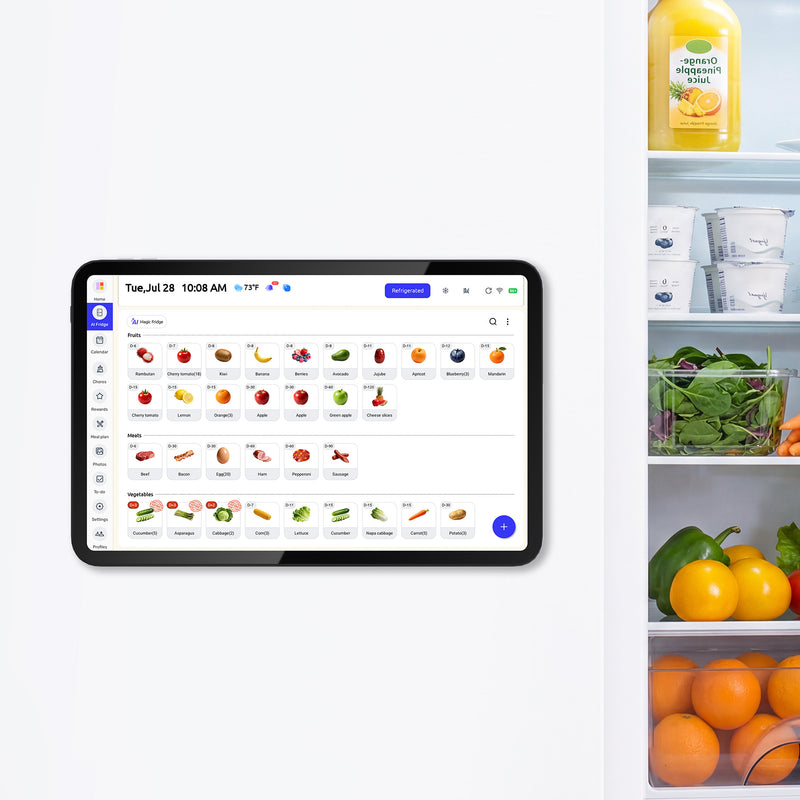
Everblog works well as the central hub because it keeps scheduling, chores, rewards, meals, and shared family access in the same system. The practical setup is straightforward. Enter school and activity schedules, add chores in Chore Manager, connect them to the Rewards Tracker, load meals and groceries for the week, then invite a co-parent or caregiver so updates reach the same shared display and app view.
That last step is what many families miss. A weekly calendar is only as reliable as the people updating it. If co-parents, grandparents, or sitters all work from separate messages and memory, the child still absorbs the confusion. One shared hub cuts down on handoff mistakes, duplicate reminders, and the usual "I thought you added it" problem.
The goal is a week your child can follow and the adults can maintain.


