




Most families do not need more reminders. They need one place where life stops scattering.
A school form is on the counter. Soccer starts earlier than usual. One parent changed a work meeting but forgot to mention it at dinner. A child says they told everyone about spirit day. Nobody can find the library book. The morning turns into negotiation, blame, and rushed apologies before 8 a.m.
That is why the large wall calendar became a classic family tool. It sits in the kitchen, mudroom, or hallway and tries to hold the whole week together. For a lot of households, it helps. But for modern family life, it often becomes a partial solution. The paper grid shows what was written on it. It does not pull in changes, nudge anyone, or connect meals, chores, and schedules in one system.
A calmer home usually starts with one visible, shared command center. If you are already trying labels, bins, and lunch-station routines, these stress-free family organization strategies fit well with that idea. The missing piece is often not more effort. It is a better hub.
The End of Morning Chaos Begins Here

The families I see get organized fastest are not the ones with the neatest pantry. They are the ones who stop treating the schedule like private information held in one exhausted adult's head.
A large wall calendar changes the feel of a home because it makes time visible. That matters when multiple people are moving in different directions before breakfast. Children can see what is happening. Partners can check the day without asking. Grandparents or caregivers can walk in and understand the plan.
Why visibility changes behavior
When the family schedule lives in texts, school emails, and separate apps, everyone works from a different version of reality. That is where avoidable conflict starts.
A central display works more like a departure board than a scrapbook. It tells people what happens next, who owns it, and what needs attention now.
Tip: If your current mornings feel reactive, the first fix is not a more detailed routine. It is one shared place that everyone checks without being prompted.
The old paper calendar solved part of this problem. It gave the home a visible monthly map. The problem is that family life no longer stays still long enough for a static map to keep up.
Why a Central Calendar Is Your Familys Mission Control
A family calendar works best when you stop thinking of it as decor and start treating it as infrastructure.
In a business, teams use project boards because shared work falls apart when tasks stay invisible. At home, the same thing happens. One parent carries appointments, pickup changes, birthday reminders, half-remembered school deadlines, and the mental math of who can be where at what time. That load stays hidden until something gets missed.
Shared visibility creates shared responsibility
A central calendar lowers friction because it moves planning from memory to environment.
When everyone can see the same schedule, three good things happen:
- Questions drop: Family members stop asking the same timing questions all day.
- Ownership improves: Kids and teens can track their own commitments instead of waiting to be told.
- Resentment eases: The planning burden becomes more visible, which makes it easier to share.
That is why the right large wall calendar feels less like an office tool and more like a pressure release valve. It turns household logistics into something the whole family can participate in.
Mission control, not just date tracking
The most useful setups do more than show dentist appointments and school concerts.
They become the family’s operating board for:
- Movement: school drop-offs, work blocks, sports, pickups
- Responsibility: chores, practice, forms to sign
- Preparation: meals, grocery needs, special events
- Communication: changes everyone needs to know before they become emergencies
A weak calendar system asks one parent to translate scattered information for everyone else. A strong one lets the house speak for itself.
Key takeaway: A central calendar does not just organize time. It reduces the mental load that causes tension, repeated reminders, and those “I thought you knew” conversations.
If your home has ever felt like everyone is busy but nobody is coordinated, mission control is the missing layer.
The Great Debate Paper vs Digital Calendars
Paper calendars still earn their place. They are simple, visible, and impossible to ignore when mounted in the right spot.
The strongest paper versions are also much larger than many families realize. A 21x32-inch model gives you a big writing surface, and larger paper formats are easier to read across a room than the small calendars many people buy out of habit. In practical terms, paper works well when your schedule is stable, your handwriting is clear, and one person keeps the whole system updated.

Where paper still works
Paper has advantages. They are not nostalgic. They are functional.
| Format | What it does well | Where it struggles |
|---|---|---|
| Paper large wall calendar | Immediate overview, no power needed, tactile writing | Edits get messy, updates depend on one person, limited interactivity |
| Digital wall calendar | Real-time changes, sync, reminders, shared editing | Requires setup, works best with family buy-in |
A large paper calendar can still be excellent for families who want one monthly snapshot and do not need automation. It also has an aesthetic advantage. Some homes prefer the warmth of a handwritten board.
Where digital pulls ahead
The trade-off appears the moment life changes midweek.
According to the verified benchmark at Skylight Calendar Max, optimal paper large wall calendars, like a 21x32-inch model, offer huge writing blocks, but digital displays like a 27-inch HD screen offer superior legibility from over 8 feet away and allow for real-time updates that are impossible with paper. The same source notes that a 12x24-inch big-grid paper calendar can boost family annotation compliance by up to 30%, while digital hubs with voice entry and automatic sync see nearly 30% higher engagement in households with 4+ members.
That difference matters in houses, not just product comparisons.
Paper shows what was planned. Digital can show what changed.
A digital hub handles the exact problems that make family organization hard:
- Schedule drift: practice times change, meetings move, school events appear late
- Multiple editors: more than one adult needs to update the system
- Connected routines: chores, meals, and lists need to live near the calendar, not in separate silos
Practical rule: If your family manages changes more often than it manages perfect consistency, digital usually fits life better than paper.
The large wall calendar is still the right concept. The medium is what has changed.
Essential Features of an Effective Family Wall Calendar
A family calendar should earn wall space. If it cannot reduce confusion at a glance, it is decoration with extra steps.
The first test is readability. Everyone in the house should be able to understand the day quickly, including kids who scan by color and older adults who need stronger contrast.
Readability is not optional
Many standard calendars look roomy online and disappoint in life. The grid is there, but the text is too small, the contrast is weak, or the writable area gets crowded by the second week of the month.
That problem becomes serious for low-vision users. The verified accessibility benchmark from the Carroll Center large print wall calendar notes that specialized products with 0.75-inch bold numbers and high-contrast design can reduce reading errors by up to 40% for this group. It also highlights a point many family organizers miss: standard large wall calendars often fail people with low vision.
For a family tool, that means readability is not just about convenience. It is about inclusion.
What to look for before you buy
A useful large wall calendar should cover these needs:
- At-a-glance clarity: The day should be readable from normal room distance.
- Writing or entry space: Families need room for overlapping appointments, not just one neat line.
- High contrast: Light gray grids and delicate fonts look polished but often fail in active kitchens.
- Fast editing: A system that makes changes annoying will stop being accurate.
- Shared access: More than one adult should be able to add or review updates.
- Beyond dates: Chores, meals, lists, and reminders should connect to the schedule.
One helpful reference point is this look at a dry erase monthly board. It is a good example of why many families start with writable wall systems. They want flexibility, visibility, and a central surface. The challenge is that a dry erase board still depends on manual upkeep.
The hidden feature that matters most
The strongest calendar systems reduce re-entry.
If you have to write an event on the wall, text your partner, update an app, and remember the grocery impact yourself, the system is broken. A family calendar should collapse steps, not multiply them.
Use this filter: If a calendar helps you see the month but does not help you run the household, keep looking.
Smarter Family Workflows in Action
The most convincing calendar is not the one with the prettiest grid. It is the one that removes a daily argument.

Families are already coordinating through a patchwork of tools. That is part of the problem. The verified market snapshot from Statista says the global smart home display market grew 25% YoY in 2025, and that 60% of parents juggle 5+ apps for schedules. That trend explains why more households are moving toward hybrid digital-physical systems. They want one central surface, but they also want the flexibility of connected tools.
Meals stop being a separate project
A practical calendar workflow starts on Sunday evening.
You map the week, then attach meals to the rhythm of the schedule. Late practice night gets something fast. The home stretch after a long workday gets leftovers. A quieter evening becomes the right time for a longer recipe. Once meals live next to the calendar, grocery planning gets easier because dinner is no longer a separate mental thread.
That kind of setup does not feel flashy. It feels calmer on Wednesday at 5:30 p.m.
Chores become visible, not personal
A shared display also changes how chores get assigned.
Instead of one parent carrying the invisible list and repeating it aloud, the household can see who owns what. Kids stop hearing chores as random commands. They start seeing them as part of the family operating system.
Tip: The less a parent has to act like a live notification system, the less emotional energy chores consume.
Here is a quick visual example of how families think about these shared displays:
A better weekly rhythm
When the calendar becomes the home’s central nervous system, the weekly flow changes:
- Plans land in one visible place instead of getting trapped in messages and email.
- Tasks sit next to time so busy days are planned realistically.
- Family members self-check before asking for updates.
- Changes reach the household quickly instead of relying on one person to relay them.
That is the true upgrade. Not a prettier schedule. A smoother household.
The Digital Leap From Chaos to Clarity with Everblog
At some point, most families stop asking whether they need a central calendar and start asking which system can effectively run daily life.
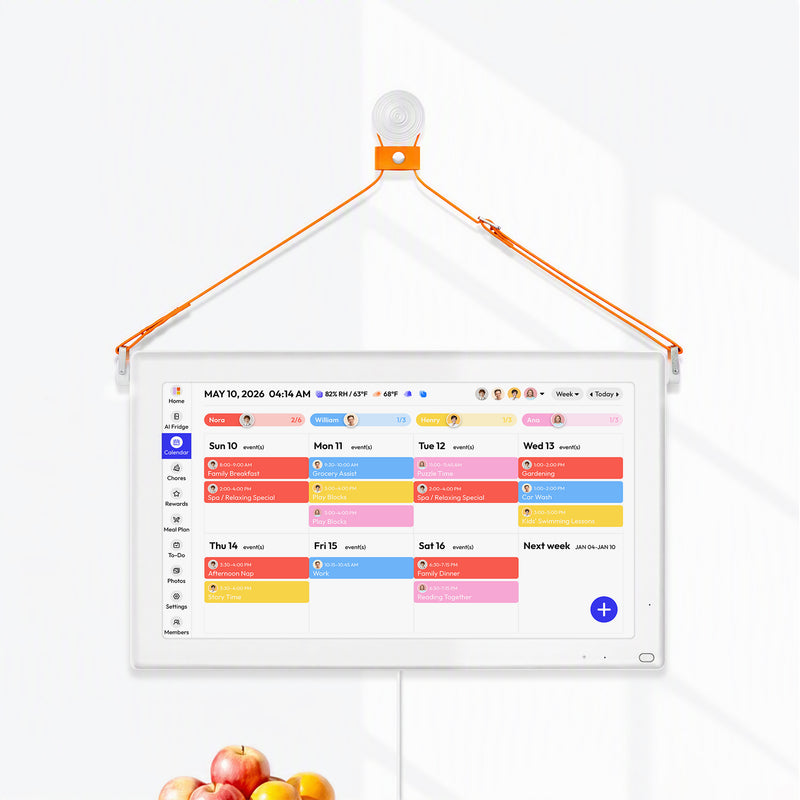
That is where a dedicated digital wall display makes sense. A general app can store information, but it often stays buried in phones. A paper calendar can show the month, but it cannot connect the moving parts of the home. A purpose-built display sits in shared space and keeps the entire household aligned.

What a dedicated family hub should do
The job is straightforward. It should combine schedule visibility with the other systems families already manage every day.
That includes:
- A clear wall display that people can read in passing
- Calendar sync so updates do not have to be entered twice
- Chore tracking that makes responsibility visible
- Meal planning and grocery support tied to the weekly schedule
- Voice entry for quick updates when hands are full
- No hidden friction that turns key features into add-ons
A category page like this guide to a digital calendar for wall shows why families are leaning toward this format. They are not replacing paper just for novelty. They are trying to reduce the number of disconnected systems they manage.
One example of the all-in-one approach
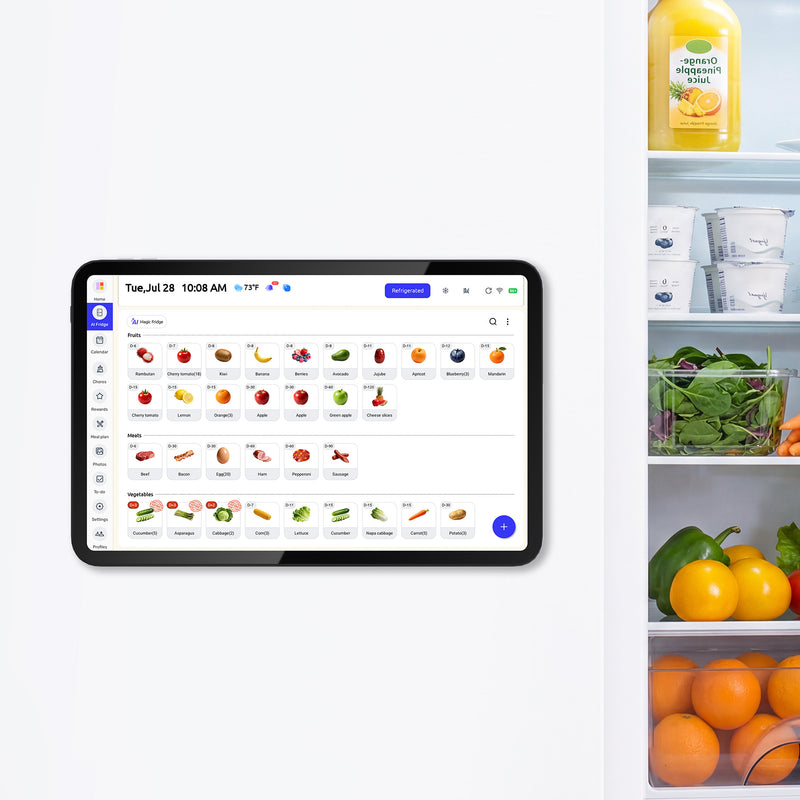
Everblog is a 21.5-inch digital family wall calendar built around that central-hub model. It brings schedules, chores, meals, grocery planning, and media into one shared display. It also includes voice entry, automatic over-the-air updates, and does not require a subscription for its feature set.
That matters because family organization breaks down when basic tools are split across multiple apps or locked behind ongoing upgrades. A wall calendar works best when it is easy to check, easy to update, and broad enough to support how the home functions.
Key takeaway: The digital leap is not about replacing handwriting with a screen. It is about replacing scattered systems with one visible source of truth.
For many households, that is the shift that turns planning from a private burden into a shared habit.
Practical Setup and Placement for Maximum Impact
A large wall calendar only works if people pass it often enough to build a reflex around it.
The best location is usually not the prettiest wall. It is the one your family naturally crosses during transitions. For most homes, that means the kitchen, the path near the garage door, or a busy hallway near backpacks and shoes.
Choose traffic over aesthetics
Placement should answer one question. Where does your family already pause?
Use this rule of thumb:
- Kitchen: Strong for meals, morning check-ins, and after-school resets.
- Mudroom or entry zone: Strong for departures, pickups, and gear reminders.
- Family room: Better for evening planning than morning action.
A helpful reference is this piece on the family calendar display, which reflects the same core principle. The right location supports routine use without asking anyone to change their route.
Launch it like a household system
Do not just hang it and hope.
Give the calendar a start:
- Hold a short family reset meeting. Show what goes on the calendar and what does not.
- Assign ownership. Decide who adds school events, who checks meals, who updates recurring activities.
- Create two anchor moments. One quick check in the morning, one review in the evening.
- Get kids involved early. Let them look for their own colors, chores, or events.
- Keep the first week simple. If you add too many categories immediately, people tune out.
Practical tip: The habit you want is not “remember the system.” It is “glance at the wall before asking.”
That one shift is what makes the calendar part of family life instead of another abandoned organizing project.
The Best Investment in Your Familys Sanity
A large wall calendar does more than track dates. It lowers stress by turning family logistics into something visible, shared, and easier to act on.
That is why the old paper model helped so many homes. It gave chaos a place to land. But most families now need more than a static grid. They need a system that can keep up with changing schedules, shared responsibilities, and the constant overlap of school, work, meals, and chores.
The true investment is not the screen or the board. It is the reduction in friction. Fewer repeated reminders. Fewer dropped details. Fewer tense handoffs at the door.
That kind of stability supports more than organization. It supports the emotional tone of the home. Families working on calmer routines often also benefit from resources on prioritizing children's mental health, because predictable systems and lower household stress tend to move together.
A modern digital hub fits that goal better than a passive calendar for many households. It is not extra. It is infrastructure for family life.
If you want one shared place for schedules, chores, meals, and daily coordination, take a look at Everblog. It is built for families who need their large wall calendar to do more than display dates.


