





By the time most families decide they need a better calendar system, they're already running one. It just happens to be scattered across a work Outlook account, a shared Google Calendar, a school PDF, a paper practice sheet on the fridge, text messages from a coach, and one child who still tells you about a field trip the night before.
That isn't a discipline problem. It's a visibility problem. Managing multiple calendars gets hard when the family schedule stops living in one place and starts living everywhere at once.
Why Calendar Chaos Is the Default for Modern Families
A common week looks like this. One parent blocks meetings in a work calendar no one else can see. Another keeps personal appointments on a phone. The school sends a monthly paper schedule home in a backpack. Soccer posts changes in an app. A grandparent helping with pickup relies on the printed calendar by the door. Then somebody misses orthodontist check-in because everyone assumed it was “on the calendar,” just not the same one.
That pattern is normal.
A NIH-indexed study on how families manage complex schedules found that households “overwhelmingly included multiple tools” and that paper systems often backed up electronic devices in a broader calendar ecosystem rather than a single all-digital setup, as described in the NIH family scheduling study. The same study also noted that families mix active and passive reminders, along with push and pull approaches. In plain terms, most homes don't replace one system with another. They stack systems to avoid something important falling through.
Why mixed systems keep showing up
Families do this for practical reasons.
- Kids need visibility: A middle-schooler won't check a shared app the way an adult checks a phone.
- Work calendars have limits: Many parents can't or shouldn't fully share work details with the household.
- Paper still works: Printed schedules are easy to glance at, carry, and post in a common space.
- Different people trust different tools: One person lives by digital reminders. Another remembers better from a wall display.
Managing multiple calendars usually breaks down at the handoff point, not at the entry point.
That's why adding one more app rarely fixes the problem. Software can store appointments. It can't automatically make the whole household look at the same information in the same moment.
What actually changes the situation
The shift starts when you stop asking, “Which calendar should we use?” and start asking, “How will this family see the same schedule clearly, every day?”
That means building around the whole household, not just the most organized adult in it. It also means accepting that paper schedules, school handouts, and work events aren't going away. They need to be gathered, translated, and displayed in a way everyone can use.
If you want a simple example of what that can look like in a real home, this guide on organizing the family shows the broader household side of coordination beyond just appointments.
Choosing Your Central Calendar Hub
If you're serious about managing multiple calendars, start with an inventory. Not a redesign. Just a list.
Write down every place your family's commitments currently live. Include work calendars, personal calendars, school portals, emailed PDFs, sports apps, therapist or doctor portals, handwritten fridge notes, and recurring obligations that live only in someone's memory.
That first step matters because fragmented scheduling has a real admin cost. One industry review cites a 2024 report showing workers spend 3.0 hours per week managing meetings and coordination, according to calendar scheduling statistics summarized by Arcade. Family life isn't the same as office scheduling, but the lesson carries over. Once several people, tools, and moving parts are involved, calendar management becomes a job in itself.

Option one uses a standard digital calendar
For many families, Google Calendar, Outlook Calendar, or Apple Calendar becomes the aggregator. This is the simplest place to begin because the tools already exist.
| Hub type | Where it works well | Where it usually struggles |
|---|---|---|
| Google Calendar | Shared family schedules, easy event creation, broad compatibility | Kids may not look at it unless it's surfaced somewhere central |
| Outlook Calendar | Households anchored to Microsoft work accounts | Work privacy and account restrictions can complicate sharing |
| Apple Calendar | Apple-heavy families who want simple family sharing | Cross-platform households often run into friction |
This approach works if everyone reliably opens the same app and understands what they're seeing. In many homes, that's the weak point.
Option two uses a sync layer
Some families don't want one calendar replacing everything. They want a service that connects existing calendars and keeps them aligned.
This can be useful when one parent lives in Outlook, another uses Google, and school subscriptions come in through a different format. The upside is flexibility. The downside is maintenance. You still need rules about which calendar wins when two systems conflict, and you still need a visible final destination for the family.
Practical rule: If your sync setup is so technical that only one adult can troubleshoot it, it isn't a family system yet.
For parents who like structured planning support around school, routines, and shared organization, Kuraplan's parent planning support is a helpful companion resource when you're mapping out what belongs in the calendar versus what belongs in broader household planning.
Option three uses a household display as the hub
Many software-only guides offer an incomplete solution. A family doesn't just need synced data. It needs a place where everyone can see that data.
A dedicated home display changes the job from “make sure everyone checks the app” to “put the schedule where the family already passes by.” That matters for kids, co-parents, caregivers, and anyone who won't manage their day from a phone alone.
A digital wall setup can pull shared information into one visual view while still letting each person keep their own preferred input method. If you're considering that route, this overview of a digital calendar display for home is useful for thinking through placement, visibility, and how a family uses a shared screen.
What tends not to work is picking a central hub based only on feature lists. The right hub is the one your family will consult before the day starts.
How to Sync and Share Calendars Without Losing Your Mind
The cleanest sync setups follow a boring sequence. Inventory first. Priorities second. Trial sync third. Then monitor and expand. That workflow matches practical guidance in Schedly's multi-calendar sync process, and it's the reason most successful setups start small instead of trying to merge everything in one afternoon.

Start with one pairing only
Pick the two calendars that create the most friction. Usually that's a work calendar and a personal or family calendar.
Don't bring in school schedules, sports feeds, and recurring household reminders yet. First confirm that your primary calendars display correctly, keep time zones straight, and don't create duplicates.
Use this checklist:
- Choose your direction: Decide whether one calendar will subscribe to another or whether both will appear in a combined view.
- Set a source of truth: If an event changes, know which calendar gets edited.
- Run a short trial: Watch a few real appointments move through the system before adding more.
- Check duplicate behavior: Recurring events are usually where problems show up first.
Protect privacy before you share
Family systems often get sloppy. Sharing isn't one setting.
Some calendars should show full details. Others should only show blocked time. A work account may need to show that you're unavailable without exposing meeting titles, participants, or internal notes. For co-parenting and blended households, this distinction matters even more because visibility and boundaries both matter.
A good rule is simple:
- Share full details for school pickups, family appointments, and logistics everyone must act on.
- Share availability only for work events or personal appointments that affect timing but don't need explanation.
- Keep private calendars separate for journaling, confidential health items, or anything not meant for household display.
If you don't decide privacy rules upfront, people start withholding calendars entirely. Then the system breaks quietly.
Bring paper and PDFs into the system on purpose
A lot of household scheduling is still analog. That's not a failure. It's just another input source.
If the school sends a paper semester schedule or the team posts a PDF, batch-enter it. Sit down once, add the recurring events, and label them clearly. Don't leave paper schedules as side systems if they affect transportation, dinner timing, or supervision.
Families also need a consistent naming style. “Game” isn't helpful. “Liam soccer game, field 3” is.
For iPhone-heavy households trying to feed one central calendar, this guide on how to connect iPhone to Google Calendar is a practical walkthrough for one of the most common setup hurdles.
A visual walkthrough can help if you're doing your first full sync:
Watch for mismatch patterns
After the first sync, don't trust it blindly. Monitor it.
Look for recurring issues such as all-day events shifting, duplicate birthdays, school subscriptions creating clutter, or old calendars continuing to send alerts. Most syncing problems aren't dramatic. They're small inconsistencies that make people stop trusting the calendar.
Once trust drops, everyone starts keeping backup notes somewhere else. Then you're back where you started.
The Art of Strategic Color-Coding and Labeling
A merged calendar isn't automatically a usable calendar. Once everything is visible together, the next problem is interpretation. If every event uses a random default color and vague title, the shared view becomes a wall of rectangles.

A family calendar needs visual grammar
The most useful color systems do less, not more. I've seen families assign a new color to every activity category and end up with something no one can read.
A better approach is to color by person first, then use labels for meaning. For example:
- One color per person: Parent one, parent two, each child, and one shared family color.
- A distinct family color: Use it only for events that affect everyone, such as travel, guests, holidays, or no-school days.
- A tentative marker: Use one label or title tag for events that aren't final yet.
Labels carry the detail that color can't
Color tells you whose event it is. Labels tell you what kind of action it requires.
Try short title prefixes that stay consistent:
| Prefix | Use case |
|---|---|
| [WORK] | Blocks that affect availability but may not need household detail |
| [KID] | Child-specific events, especially when several children share activity types |
| [DUE] | Deadlines, forms, permission slips, tuition, registration |
| [DRIVE] | Transportation duties, carpools, pickup responsibility |
| [TENTATIVE] | Anything still waiting on confirmation |
This matters on busy days. “Piano” could mean lesson, recital, payment due, or practice reminder. “[KID] Maya piano lesson” removes the guesswork.
A readable calendar answers three questions at a glance. Who is this for, what is it, and does anyone need to act on it?
One bad example explains the difference
A cluttered calendar usually looks like this: blue blocks everywhere, repeated shorthand no one remembers, and events called “meeting,” “practice,” or “school.”
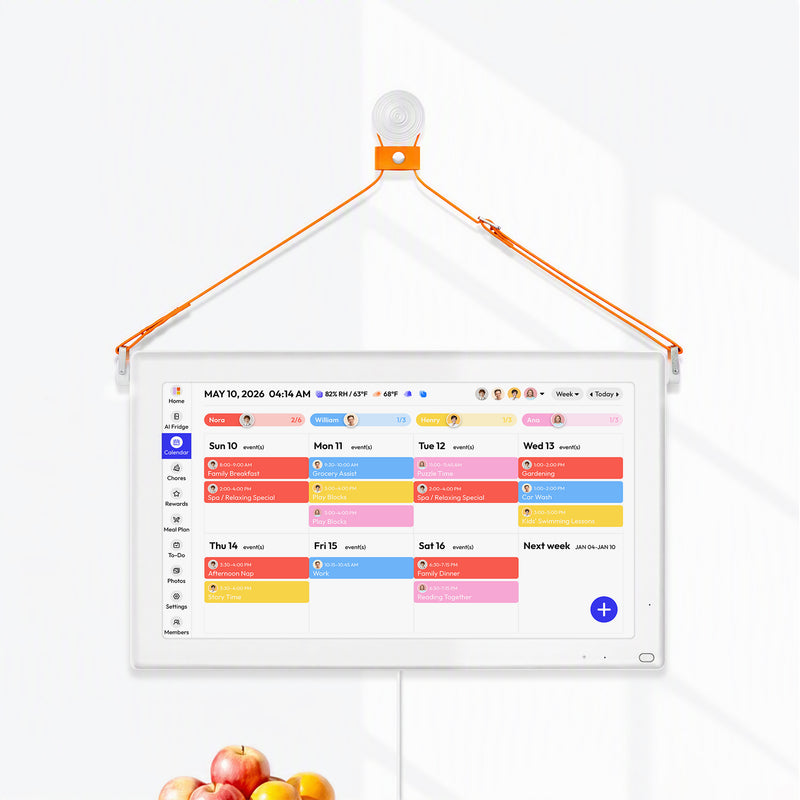
A usable one looks different. Dad's work travel is one color. Ava's activities are another. Shared family commitments stand out immediately. School deadlines use a label that makes paperwork visible before it becomes urgent. Tentative plans are visually marked so nobody assumes they're fixed.
When kids can scan the display and tell what's theirs, and adults can spot logistics without opening every event, managing multiple calendars gets lighter fast.
Creating a Daily Routine to Stay in Sync
A family can spend an afternoon setting up beautiful calendar integrations and still miss Thursday pickup if nobody looks at the schedule together. The system only works when it becomes a habit.
That habit doesn't need to be elaborate. It needs to be repeatable.
Time-management guidance from the University of Georgia emphasizes that when people use multiple planning systems, they need synchronization, a daily review, and a backup system, as described in UGA's time-management guidance. The same guidance also recommends time blocking that reserves about three-fourths of the day for scheduled work so planning and interruptions still have room. For families, that translates into a practical lesson. Don't calendar every minute so tightly that the first delay breaks the whole day.
The morning huddle
This takes a few minutes. Keep it standing, quick, and visible.
Ask:
- What must happen today: Not every event matters equally. Name the essentials.
- Who is driving or handing off: Transportation confusion causes a huge share of calendar stress.
- What looks fragile: Any tight transition, missing item, or event with unusual timing gets flagged early.
If older kids are involved, have them say one commitment out loud. That's often enough to expose a misunderstanding before school starts.
The evening review
Night is when most missed details surface. A permission slip appears. A coach changes a field. Someone remembers an early meeting. Review the next day before everyone disappears into bedtime routines.
Use this sequence:
- Confirm tomorrow's anchors: Start times, pickups, appointments, deadlines.
- Add loose items immediately: Don't trust memory for school dress-up days, snack duty, or medication refills.
- Check the handoff points: Who has the car seats, uniforms, paperwork, or dinner plan.
- Leave room in the day: Overpacked calendars fail first.
For parents trying to pair calendar planning with realistic task placement, these effective time blocking strategies are helpful because they show how to protect necessary structure without making the day too rigid.
Evening review prevents morning improvisation.
Keep one backup, not five
A backup system matters. But families often misread that advice and create more fragmentation.
Your backup might be a printed weekly view in a common area, a visible household display, or a simple written list for the next day. What you don't want is three separate backups maintained by three different people. That's just another version of the problem.
The daily routine should answer one question before anyone goes to bed: does the family have one shared understanding of tomorrow?
Your Command Center Managing Everything with Everblog
The missing piece in many homes isn't another app. It's a place where the family's schedule, tasks, and day-to-day logistics can live together in a form everyone can use.
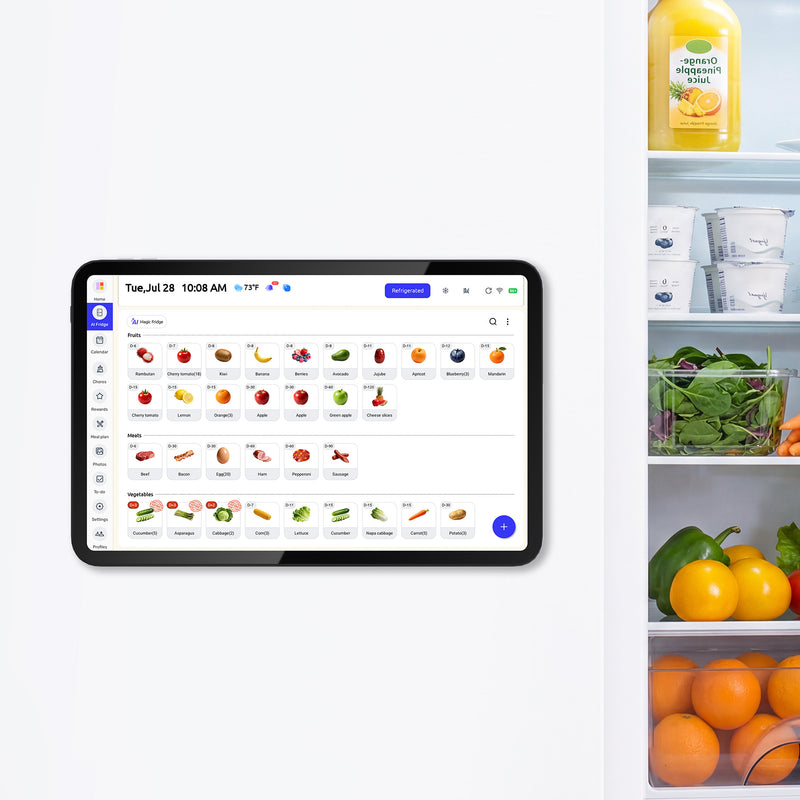
That's the case for a central hardware hub. Everblog is a 21.5-inch digital family wall calendar that brings shared schedules, chores, meals, lists, and media into one household display. It can fit the kind of system described above because the calendar isn't isolated from the rest of family operations. A child can check chores, a parent can review appointments, and the household can see meal planning in the same place. If syncing is part of your setup, Everblog also has guidance on how to sync with Google Calendar.

Why a command center works differently
Software-first systems assume each person will open the right app at the right time. Family life doesn't work that neatly.
A shared display changes behavior in a few useful ways:
- It makes schedules visible to kids: They don't need account access or app habits to see the day.
- It reduces verbal relaying: Fewer “I thought you knew” conversations.
- It connects tasks to time: Chores, groceries, meals, and appointments affect one another in real life, so they help each other when shown together.
What this looks like in practice
A last-minute practice gets added quickly. Tomorrow's lunch supplies can sit next to tomorrow's departure time. A child sees both their after-school activity and the chore they need to finish before leaving. A caregiver helping in the afternoon can glance at the household plan without sorting through several apps or asking for updates.
That's what most families are after when they say they need help managing multiple calendars. They don't just want syncing. They want less ambiguity, fewer handoff mistakes, and a calmer start to the day.
When the schedule is visible, readable, and tied to the rest of household life, the calendar stops being a hidden admin system and starts doing its real job.
If your family is tired of juggling work calendars, school papers, activity schedules, and household to-dos in separate places, Everblog offers a practical way to bring them together in one shared home hub.


