






Some weeks feel like a relay race run in socks. One child can't find a permission slip. Someone remembers the dentist appointment while you're packing lunches. Dinner is still a question mark at 4:30. By bedtime, everyone is tired, and nobody feels like the day worked.
That kind of chaos usually isn't a character flaw. It's a systems problem. Families rarely need more effort. They need fewer loose ends, fewer scattered tools, and a clearer way to decide what matters first.
I've found that organizing the family works best when you treat it like a home operating system, not a pile of random hacks. A color-coded calendar helps, sure. So does a chore chart. But neither fixes much if you haven't figured out where your household is breaking down. Calm starts with diagnosis, then structure, then communication, then tools that support the plan instead of competing with it.
Escape the Daily Chaos of Family Life
Most family stress doesn't arrive all at once. It stacks. A missed pickup leads to a rushed dinner. A rushed dinner pushes homework later. A late bedtime makes the next morning harder. Then the whole house starts reacting instead of deciding.

That pressure is common. According to a 2023 American Psychological Association survey, 70% of U.S. parents report that poor organization of daily routines is a major source of household tension, which is why effective systems matter so much for daily family life (U.S. families overview).
What family chaos usually looks like
In real homes, disorganization rarely looks dramatic. It looks ordinary.
- Morning bottlenecks: everyone needs the bathroom, shoes, lunch, and a signed form at the same time.
- Afternoon confusion: nobody is fully sure who has practice, who has homework, or who's handling pickup.
- Dinner drift: the meal plan lives in one person's head, the grocery list is somewhere else, and the fridge tells a different story.
- Weekend overload: errands, sports, birthdays, housework, and rest all compete for the same hours.
That's why one-off tips don't stick. You can't solve a household rhythm problem with a prettier notepad.
Organizing the family works when the whole home can see the plan, trust the plan, and adjust the plan without starting from scratch every day.
A practical system gives each recurring task a home. It creates one place for schedules, one rhythm for weekly review, and one shared understanding of who handles what. If your weekends are part of the stress cycle, Lounge Wagon's family outing guide is a useful example of planning ahead so fun doesn't turn into more logistics.
If your home setup itself feels scattered, this guide on getting organized at home is a helpful companion. Household organization and family scheduling feed each other. When the landing zone, calendar, and routines line up, the tension drops fast.
First Pinpoint Your Family's Unique Pain Points
Before changing anything, figure out where your family loses traction. Most households don't need a complete reset. They need a clear view of the few repeat problems that throw everything else off.
Run a one-week family audit
For one week, don't try to fix. Just observe. Keep a short note on your phone or a sheet on the counter and capture friction as it happens.
Write down:
- What went wrong
- When it happened
- Who it affected
- What the downstream effect was
For example, “No one packed sports gear Tuesday night, so Wednesday morning started late, breakfast got skipped, and pickup changed last minute.” That tells you more than “mornings are bad.”
Ask better questions
Generic questions lead to generic fixes. You need sharper ones.
Questions that reveal the real issue
- Where does the day first go off track? Not “When are we busiest?” but “What starts the chain reaction?”
- What gets remembered too late? Forms, uniforms, medication, bills, meal prep, laundry, rides.
- Which tasks live in one person's head? If only one adult knows the plan, the household is fragile.
- What do kids ask about repeatedly? Repeated questions usually point to low visibility.
- Where are decisions happening under pressure? Dinner at 5:30, homework at 8:15, leaving the house at 7:58.
Practical rule: If the same argument or scramble happens twice a week, treat it as a system failure, not a bad day.
Sort the pain points into categories
Once you've captured a week of friction, group your notes. Most families land in a few familiar buckets.
- Time problems: late starts, overbooked evenings, no handoff time between activities
- Visibility problems: people don't know the plan, can't find the plan, or are following different plans
- Responsibility problems: chores and prep work are unclear, uneven, or untracked
- Transition problems: after school, before dinner, and before bed feel messy every day
- Supply problems: lunches, groceries, library books, forms, and gear aren't ready when needed
Now pick your top three. Not ten. Three.
A simple priority filter
Use this filter to rank what to solve first:
| Pain point | Happens often | Raises stress fast | Affects whole family | Fix first |
|---|---|---|---|---|
| Morning routine | Yes | Yes | Yes | Yes |
| Laundry backlog | Sometimes | Sometimes | Moderate | Later |
| Weekend planning | Yes | Moderate | Yes | Soon |
The first fixes should target the points that are frequent, disruptive, and shared. That's usually mornings, calendar confusion, and meal or homework transitions.
When families skip this audit, they often build systems around the wrong problem. They create a better chore chart when the underlying issue is pickup confusion. They buy planners when no one agrees on bedtime prep. Good organizing starts with honesty. You're not asking, “How do we become perfectly organized?” You're asking, “Where do we keep bleeding time, attention, and patience?”
Build a Shared Family Schedule That Bends
A useful family schedule isn't rigid. It has structure, but it also has room to absorb real life. Kids melt down. Traffic happens. Shoes disappear. If one delay wrecks the whole day, the schedule was too tight to begin with.
Restrictive family schedules that lack flexibility fail 70-80% of the time due to unpredicted disruptions. Building in 20-30 minute buffers between activities is critical for long-term success (daily family schedule guidance).

Start with the immovable pieces
Build the week around what can't move much. School. Work shifts. Commutes. Sleep. Meals. Standing appointments.
Don't start with ideals like “family walk every evening” or “deep cleaning on Fridays.” Start with reality.
The order matters
-
Sleep first
Protect bedtimes and wake times before adding anything else. Tired families don't follow plans well. -
School and work next
These anchor the day and determine where pressure collects. -
Meals after that
Even a rough dinner plan creates stability. Families need to know what's happening before hunger hits. - Homework, chores, and activities last These fit around the essential priorities, not the other way around.
Add white space on purpose
The strongest family schedules include empty-looking space that isn't empty. It's recovery space. Travel space. Reset space.
If soccer ends at 5:00, don't schedule dinner prep at 5:00. If school pickup ends at 3:15, don't expect calm homework at 3:16.
A schedule should guide your family through the day, not punish your family for being human.
Families often resist buffers because they look unproductive on paper. In practice, they're what keep the day from unraveling.
Use one visible master calendar
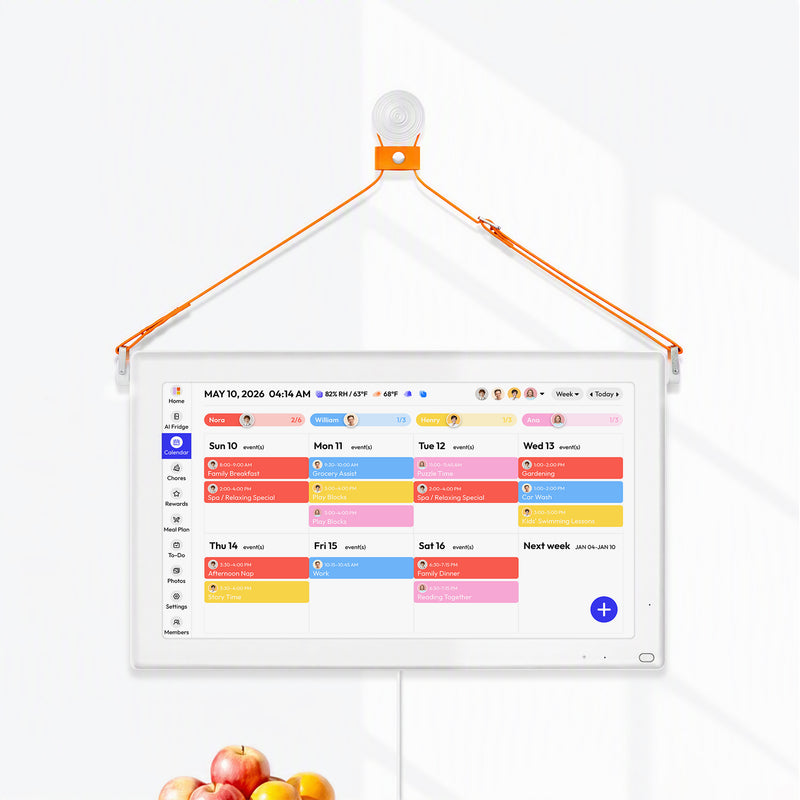
A schedule only helps if people can see it fast. That means one master calendar everyone relies on, whether it's on a wall, shared digitally, or both. It should include appointments, recurring commitments, prep needs, and who is responsible.
Color-coding helps when it stays simple. Assign each person one color. Use another for family-wide events. Avoid a dozen categories that only one parent understands.
A shared digital setup also makes coordination easier. If you're comparing options, this overview of shared calendars for families is a practical starting point.
Build a weekly reset rhythm
The calendar isn't “set and forget.” It needs a brief weekly review so surprises don't become emergencies.
Try this short rhythm:
- Look ahead: appointments, school events, rides, forms, supplies
- Check conflicts: overlapping pickups, dinner crunches, late work nights
- Confirm prep tasks: laundry, lunches, sports gear, medication refills
- Adjust expectations: busy night means simpler dinner, fewer extras, earlier prep
What a flexible weekday block can look like
| Time block | Focus | Notes |
|---|---|---|
| Early morning | Wake up, hygiene, breakfast, launch | Keep steps in the same order |
| After school | Snack, decompress, check schedule | Don't rush straight into demands |
| Late afternoon | Homework, chores, activities | Use buffers between transitions |
| Evening | Dinner, prep for tomorrow, bedtime routine | Lower decisions after dinner |
When organizing the family, the schedule should answer three questions at a glance. What's happening, who owns it, and what needs to happen before it. If those answers are visible, calm follows.
Streamline Chores Meals and Household Responsibilities
Most households don't struggle because nobody is willing to help. They struggle because responsibilities are vague, timing is inconsistent, and too many tasks depend on reminders. Chores, meals, and basic home upkeep need the same thing your calendar needs. Clear ownership and one visible system.
Centralizing family logistics with shared calendars and task lists has been proven to cut coordination friction by 55% in multi-child households, with 62% of families using them achieving 90% task completion (family time organization strategies).
Stop assigning chores as random favors
When chores are announced on the fly, kids hear them as interruptions. When chores are part of the household rhythm, they become normal.
That means each person should know:
- What is theirs
- When it gets done
- What “done” means
- What happens if it's skipped
A good chore system doesn't need to be complicated. It needs to be specific. “Clean your room” is too broad. “Put dirty clothes in the hamper, books on the shelf, and clear the floor before dinner” is usable.
If you want follow-through, define the finish line. Families do better with visible expectations than repeated verbal reminders.
Tie chores to timing, not moods
Chores should attach to natural parts of the day.
Better anchors for household tasks
- Morning anchor: make bed, feed pet, clear breakfast dishes
- After-school anchor: unpack bag, check lunchbox, start homework space reset
- Dinner anchor: set table, fill water glasses, clear plates
- Evening anchor: lay out clothes, pack school items, quick room reset
- Weekly anchor: laundry rotation, trash day, bathroom refresh, grocery check
When a task has a time and trigger, it stops floating around the house waiting for one tired adult to notice it.
Build meals into the same system
Meal planning often fails because it lives separately from the family calendar. But meals are logistics. They affect shopping, evening timing, cleanup, and who can drive where.
Keep it simple:
- Pick meals for the week based on your actual schedule.
- Put those meals where everyone can see them.
- Build a shared grocery list as soon as ingredients run low.
- Match busy nights with easy meals.
- Prep tomorrow's lunch and dinner components the night before when possible.
If money stress and meal planning are connected in your house, a practical family budgeting guide can help you align food planning with spending decisions without treating them as separate problems.
Use rewards carefully
Rewards work best when they reinforce consistency, not when they become a bribe for every small task. The goal is accountability and momentum.
Use rewards for patterns such as:
- completing a full week of assigned tasks
- following through without repeated reminders
- helping with shared responsibilities during a busy week
Keep rewards modest and predictable. Extra screen time, choosing Friday dessert, picking the family movie, or earning toward a bigger privilege all work better than constant negotiation.
Here's a simple model.
| Age Group | Example Chores | Weekly Point Goal | Example Rewards |
|---|---|---|---|
| Early elementary | Put toys away, carry napkins, feed pet with help | Consistent completion of daily basics | Pick dessert, choose game night activity |
| Upper elementary | Make bed, unload part of dishwasher, sort laundry | Complete assigned weekday and weekend tasks | Extra free time, pick weekend movie |
| Middle school | Sweep, prep lunch items, fold laundry, take out trash | Meet task list with minimal reminders | Later bedtime on weekend, choose dinner |
| Teens | Cook simple meal, full laundry cycle, bathroom reset, sibling support | Manage recurring responsibilities independently | Driving privileges, outing choice, added autonomy |
If you want a ready framework for assigning and tracking tasks, this family chore chart guide is useful because it helps turn vague jobs into repeatable routines.
The key trade-off is this. The more flexible your household is about when a task gets done, the clearer you must be about who owns it. Freedom without ownership becomes clutter. Ownership with visibility becomes teamwork.
Master Family Communication and Smooth Transitions
A family can have a beautiful calendar and still feel tense. That happens when the tools are clear but the communication isn't. Organizing the family only sticks when people know the plan, believe the plan is fair, and have a chance to speak before things go sideways.

In blended homes, this matters even more. According to the Scholars Strategy Network, post-pandemic remote work trends led to a 25% rise in blended family disputes, which makes shared visibility and clear communication especially important (transcript on unhoused and underserved families).
Hold a weekly family huddle
The weekly huddle is short, practical, and calm. It isn't a lecture. It's a reset.
Cover four things:
- What's coming up
- What needs prep
- What might feel hard this week
- What went well last week
A simple script helps:
“Here's what's on the calendar. Here's where we'll need extra help. Here's what each person owns. Is there anything we're missing?”
That last question matters. Kids often mention the field trip form, the library book, or the changed practice time right when you ask directly.
Transitions need scripts, not speeches
The most fragile parts of the day are transitions. After school. Leaving the house. Starting bedtime. Those moments improve when the expectations are brief and repeatable.
Try these transition cues
- After school: “Shoes off, bag down, snack, then check today's plan.”
- Before activities: “Water bottle, gear, bathroom, then out the door.”
- Before bed: “Tomorrow clothes, packed bag, teeth, then lights routine.”
Short language works because tired people can still follow it. Long explanations usually arrive when someone is already dysregulated.
For families who need more support around tone and communication patterns, family caregiving kit resources offer a helpful reminder that the way you say something often determines whether anyone can hear it.
Here's a useful example of calm planning in action:
Co-parents need clarity more than convenience
In co-parenting or blended households, assumptions create conflict fast. One household thinks a responsibility is obvious. The other never saw the update. The child ends up carrying the confusion.
Use shared language and visible records for:
- school events
- exchange details
- medication and forms
- sports gear and uniforms
- chores that continue across homes when appropriate
Consistency across homes doesn't mean identical rules. It means fewer surprises, clearer handoffs, and less pressure on children to act as messengers.
The strongest communication systems don't ask family members to remember everything. They make key information easy to find, easy to confirm, and easy to revisit without another argument.
Choose Your Tools and Troubleshoot Common Issues
Tools don't create order on their own. They amplify whatever system you already have. If your plan is vague, a new app just gives the vagueness a login screen. If your routines are clear, the right tool reduces reminders, scattered notes, and last-minute confusion.

A study from the Harvard Family Research Project in 2024 found that families using shared digital organizers report 30% higher satisfaction with their routines and experience 25% fewer missed events. Per the publishing brief, that linked source should appear only once elsewhere, so I'm citing that finding here qualitatively: families using shared digital organizers report higher routine satisfaction and fewer missed events.
Pick the simplest tool your whole family will actually use
Paper still works for some homes. A fridge calendar can be enough when the schedule is light and one adult handles most logistics. But paper struggles when plans change often, kids have multiple activities, or co-parents need shared visibility.
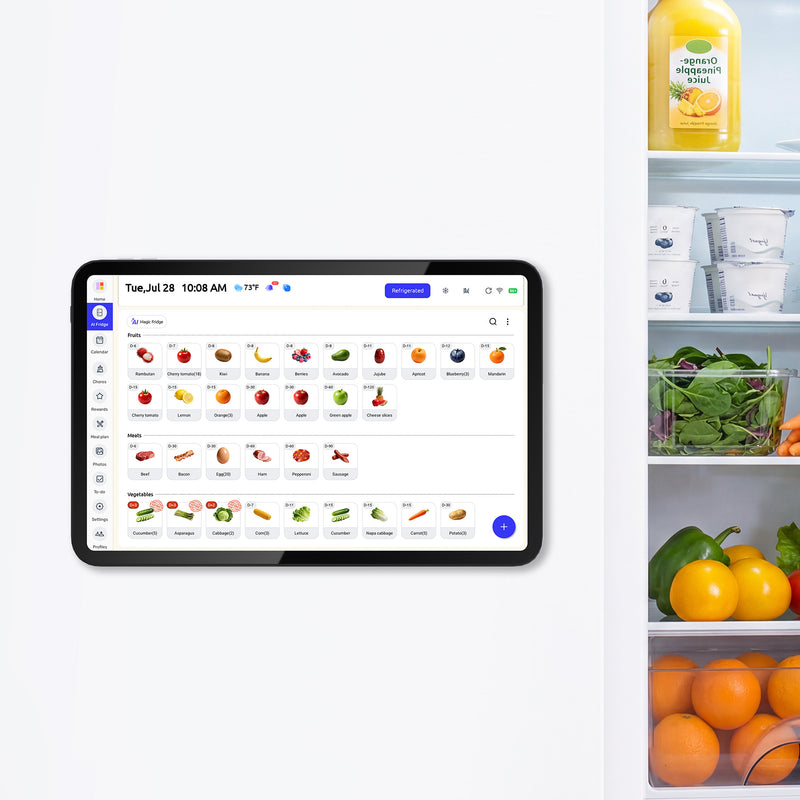
A central digital hub works better when your household needs the schedule, chores, meals, and lists in one place. One option in that category is Everblog, a 21.5-inch digital family wall calendar that combines shared scheduling, chore tracking, meal planning, grocery lists, media, and voice entry in a single display. That kind of setup is useful when your biggest problem is fragmentation, not motivation.
Troubleshoot the issues that usually break the system
Kids won't participate
Usually that means one of three things. The task is too vague, the timing is poor, or the child had no role in the routine. Shrink the task, anchor it to a time, and let the child help name the steps.
The schedule feels too rigid
That's a sign you're scheduling every minute or expecting high-output days every day. Keep the essential priorities. Loosen the rest. Leave breathing room between school, activities, and home responsibilities.
One parent becomes the project manager for everyone
This is the fastest route to burnout. Move information out of one person's head and into the shared system. If the family needs reminders, make the tool do more of that work.
The system lasted two weeks and collapsed
That usually means you built the plan during a calm moment and forgot to test it against a hard week. Rebuild for reality. Busy nights need simpler meals, lighter chores, and earlier prep.
The right system doesn't eliminate hard days. It makes hard days less expensive.
Organizing the family isn't about running your home like a machine. It's about reducing friction so people have more patience, more clarity, and more room for actual family life.
If your household is tired of juggling calendars, chore charts, grocery notes, and meal plans in separate places, Everblog gives you one shared hub to bring those moving parts together. It's designed for families who want a visible plan, clearer ownership, and calmer days without adding another subscription to manage.


