

By late afternoon, most family kitchens stop being calm rooms and start acting like traffic intersections. Someone is hungry now. Someone else has practice in an hour. You open the fridge, see ingredients you meant to use, and still can't answer the question that matters most: what's for dinner tonight?
That daily stall isn't a personal failure. It's what happens when meals live in your head instead of in a visible system. A meal planning whiteboard works because it moves dinner out of memory and into the room where decisions happen. You stop re-solving the same problem every evening, and your family can finally see the plan without asking you to repeat it.
End the 5 PM Scramble for Good
The worst dinner nights usually follow the same script. You bought food with good intentions. You even had ideas. But when everyone gets home, the day has already taken enough out of you that choosing, adjusting, and coordinating one more thing feels heavier than it should.

A whiteboard changes that because it creates a fixed decision point earlier in the week. Dinner stops being a fresh debate at 5 PM. It becomes a plan you already made when nobody was rushing you.
That shift matters financially too. Households that engage in weekly meal planning reduce food waste by 28%, saving an average U.S. family of four approximately $1,500 annually on groceries, according to Brown Health's meal planning guidance. For busy parents, that's not just about money. It's about fewer “backup” grocery trips, fewer spoiled ingredients, and fewer nights where takeout wins because the plan never made it to the kitchen wall.
What the board really does
A good meal planning whiteboard is not décor. It's a visual anchor for the week.
- It answers dinner early: You decide when you're calmer, not when everyone is waiting.
- It reduces repeat questions: Kids and partners can look at the board instead of asking what's for dinner.
- It connects shopping to meals: You buy for a plan instead of buying random possibilities.
The best family systems remove decisions from the busiest hour of the day.
If your week is packed with work demands, commuting, or uneven schedules, it also helps to borrow strategies from meal planning for busy professionals, especially the idea of matching effort to energy instead of pretending every weeknight has the same capacity.
For families who want a broader framework, this guide on meal planning for busy families is also useful for seeing how meal planning fits into household routines instead of standing alone.
Choosing Your Meal Planning Toolkit
A meal planning whiteboard only helps if it's easy to use every day. If it smudges, stains, or sits in a spot nobody sees, the system fades quickly. The toolkit matters more than people think.
Start with the board itself
For a strong setup, choose a board with a 21.5 to 24 inch writable surface in acrylic or porcelain enamel. In productivity trials, whiteboard users achieve 92% weekly compliance versus 55% for paper lists, partly because the board stays visible in the kitchen, according to Make and Takes on wipe-off menu board setup.
That doesn't mean bigger is always better. A board that dominates a small kitchen can feel cluttered. A board that's too small forces cramped writing and skipped details. The sweet spot is large enough to read at a glance, but not so large that updating it feels like maintaining a bulletin board.
Compare materials before you buy
Here's the trade-off most families face:
| Board type | What works | What gets annoying |
|---|---|---|
| Porcelain enamel | Wipes clean well, holds up to repeated use | Usually heavier and less forgiving to mount |
| Acrylic | Lighter, clean look, easier for many kitchens | Can show wear sooner if you use rough cleaning habits |
A magnetic option is worth choosing if you like to pin recipe cards, coupons, or a short grocery list. If you never attach anything, that feature matters less than writing quality and visibility.
Don't overlook the accessories
Markers can make or break the board. Chisel-tip dry erase markers are easier to read from across the kitchen than fine-point markers. Color helps too, but only when it carries meaning. One color for dinners, one for prep notes, one for shopping is enough for most homes.
Add-ons that tend to earn their spot:
- A side notepad: Useful if someone wants to jot down an item without rewriting the whole list.
- A simple eraser or cloth: Makes quick resets easier, which means the board gets updated instead of avoided.
- A mounting location at eye level: If you have to bend, reach, or walk into another room to read it, you'll use it less.
Practical rule: Buy the board for visibility first, aesthetics second.
If you're building a broader planning wall, this roundup of dry erase monthly board ideas can help you decide whether your meal board should stand alone or sit beside a calendar.
Designing Your Command Center Layout
A blank board invites overthinking. Most families don't need a clever layout. They need one that's readable on a rushed Tuesday.
An effective setup often uses a 24x36-inch surface with weekly columns, space for 2 to 3 meal options per day, and a dedicated shopping list quadrant, and that structure helps families achieve up to 85% adherence to planned meals, based on Refined Rooms' meal planning routine.

The weekly grid
This is the easiest layout to maintain. Draw seven columns for the week. Give each day a large meal slot, then leave a smaller line under it for prep reminders such as “thaw chicken,” “cook rice early,” or “leftovers packed for lunch.”
A weekly grid works best when your schedule changes often but you still want structure. It lets you see the whole week in one glance without asking you to think too far ahead.
The theme night approach
Some families hate choosing from scratch. A theme-based board fixes that. Instead of deciding every meal from zero, each day gets a loose category: tacos, pasta, soup, sheet pan, breakfast-for-dinner, leftovers.
That reduces decision fatigue because the board is no longer asking, “What should we eat?” It's asking, “Which taco meal works this week?” That's a smaller question.
The prep-ahead layout
This layout works well if weeknights are packed. Divide the board into two main zones: one for meal assembly days, one for prep tasks. Sunday might list chopped vegetables, marinated protein, cooked grains, or a double batch of sauce. The weekdays then show how those pieces turn into dinners quickly.
If weeknights fall apart, don't plan full recipes. Plan components.
Build the zones that prevent chaos
No matter which layout you choose, four zones do most of the heavy lifting:
- Meal zone: The dinner plan for each day.
- Shopping quadrant: Running list of what the plan requires.
- Prep notes area: Reminders that save time later.
- Family requests corner: A place for input, so requests don't arrive only when everyone is starving.
For smaller kitchens, placement matters almost as much as layout. If wall space is tight, ideas from planning a compact kitchen layout can help you fit a board without turning the room into visual clutter.
Families who want the meal board to connect with papers, calendars, and drop zones often get better results by treating it as one part of a larger family command center setup.
Bring Your Board to Life with Family Systems
A board on its own is passive. The routine around it is what makes it useful. The strongest meal planning whiteboard systems don't rely on one parent remembering everything. They give the whole household a way to read, contribute, and act.

Use color to carry meaning
Color-coding works when it answers a real question at a glance. In one family, green might mean everyone can eat it. Yellow might mean “swap needed.” Red might flag an allergen or ingredient that requires extra caution. Another family may use colors by role, with one color for dinners, one for lunches, and one for grocery items.
Keep the legend small. If the board needs decoding, nobody will use it. Two or three consistent colors are usually enough.
Build for dietary needs, not just meal names
Many boards fail at this point. They show “chili” or “pasta bake,” but they don't show who can eat the base meal as written and who needs a change. That gap creates extra mental work right when you're trying to cook.
Families with multiple dietary needs spend an average of 2 to 3 additional hours per week on meal coordination, and using a whiteboard with designated columns for allergen flags or protein swaps can reduce that cognitive load, as noted in this discussion of multi-diet meal coordination.
Try a layout with these extra fields:
- Base meal
- Swap or modification
- Allergen note
- Prep instruction
A simple example looks like this:
| Base meal | Swap | Allergen note | Prep instruction |
|---|---|---|---|
| Tacos | Beans instead of beef for one family member | Dairy topping optional | Chop toppings the night before |
| Stir-fry | Sauce on the side | Check soy ingredient | Cook rice early |
| Pasta | Gluten-free portion first | Separate serving spoon | Label leftovers |
A dinner plan isn't complete until everyone knows how the meal changes for the people who need it to change.
Assign roles so the board stops being your job alone
The fastest way to abandon a meal planning whiteboard is to make one person the sole planner, buyer, cook, and updater. Shared ownership makes the board durable.
Children can suggest meals, erase completed dinners, or add one snack item to the list. Partners can take one recurring role, such as checking the board before shopping or choosing the easiest dinner on late nights.
A short visual example helps if your family needs to see the rhythm in action:
Keep the system flexible
Rigid systems break first. If one child suddenly refuses a planned dinner or a schedule shift changes who's home, the board should support a quick adjustment. That's why keeping one backup meal and one leftover night visible on the board works so well. It gives you room without making the whole plan collapse.
Maintaining Momentum and Avoiding Burnout
Most meal planning systems don't fail because the idea is bad. They fail because the plan becomes too ambitious, too decorative, or too dependent on a perfect week.
The fix is simple. Treat the board like a household maintenance ritual, not a creative project. You are not trying to impress anyone. You are trying to make Wednesday easier.

Keep your weekly reset short
A reset works best when it has a fixed order. Wipe the board. Check what's still in the fridge, freezer, and pantry. Move any unused ingredients into the coming week before you add new meals.
That routine doesn't need to be long. It needs to be consistent.
Build a master meal list
Decision fatigue usually starts before dinner. It starts when you sit down to plan and your mind goes blank. A master list solves that. Keep a standing list of family-approved meals near the board, then pull from it each week instead of inventing a menu from scratch.
Your list should include:
- Reliable staples: Fast meals everyone knows and generally accepts.
- Low-effort backups: Things you can cook when the day goes sideways.
- A few fresh options: Enough variety to prevent boredom without overloading the week.
What to do when the plan breaks
Takeout happens. Late meetings happen. Exhaustion happens. Don't erase the whole system because one night changed.
Use a simple recovery rule:
- Move the skipped meal to the next open day if the ingredients still work.
- Freeze or repurpose the protein if timing has changed.
- Rewrite the board the next morning, not “later.”
Miss one meal if you need to. Don't miss the reset that gets the system back on track.
What doesn't work is packing the board with overly aspirational meals. If every dinner requires multiple pans, specialty ingredients, or perfect timing, the board starts to feel like pressure. Practical boards last longer than ambitious ones.
Beyond the Board: Syncing Meals with Your Real Life
A physical board is excellent at visibility. It is not excellent at reacting. That matters because family life doesn't hold still just because dinner is written down.
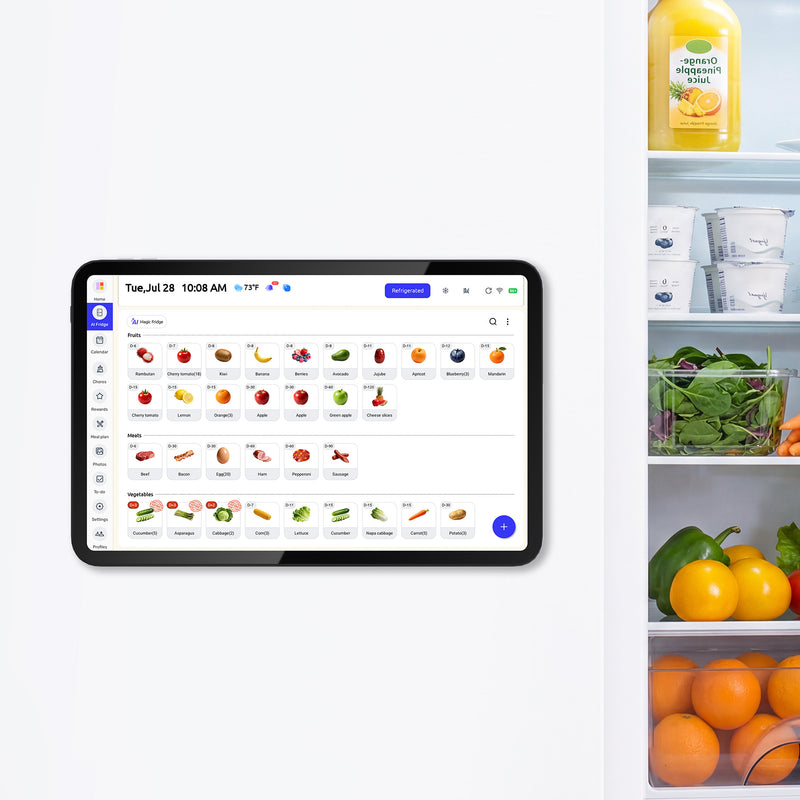
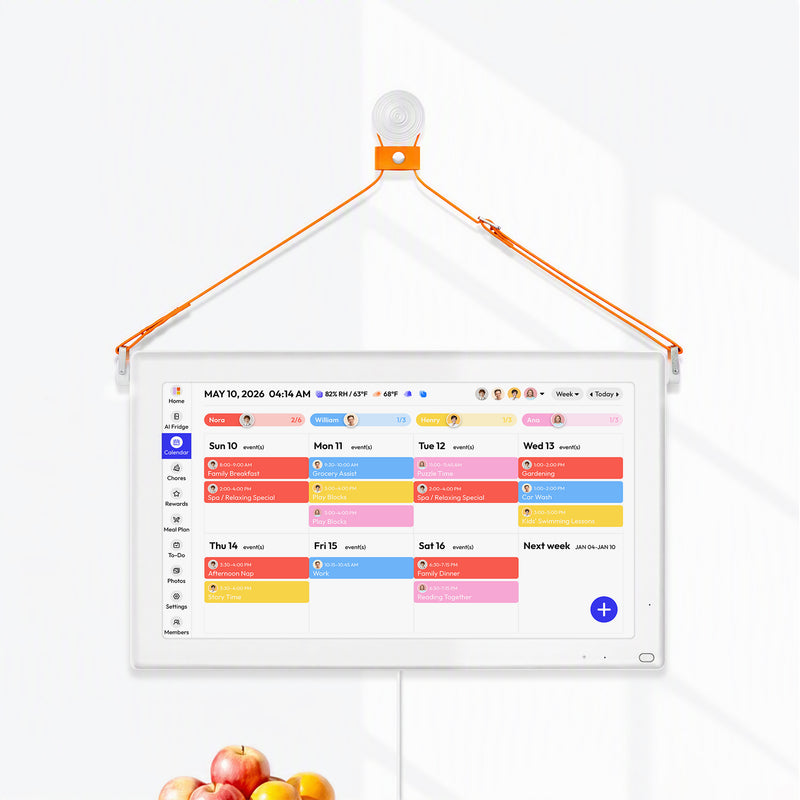
The biggest limitation of a meal planning whiteboard is that it usually lives apart from the schedule that determines whether the meal is realistic. A slow-cooker meal may look perfect on Tuesday until a late meeting, a school event, and a missed pickup change the whole evening.
That mismatch is common. Research shows 67% of families report failed meal plans due to schedule conflicts, as traditional whiteboards can't sync with family calendars, which is why integrated planning tools that show meals alongside time availability are increasingly useful, as described in this overview of meal plan whiteboard limitations.
When a static board stops being enough
A whiteboard still works well for many households. But if your week changes in real time, you may need a system that can do more than display meals.
Look for a setup that can handle these everyday problems:
- Schedule overlap: Dinner should sit beside activities, pickups, and work blocks.
- Shared updates: Both adults should be able to see changes without being home.
- On-the-go grocery edits: If someone notices you're out of tortillas, that update shouldn't wait until they get back to the kitchen.
The right next step is not abandoning planning. It's giving the plan a place to live alongside the rest of family life.
If your paper notes and whiteboard system have hit their limit, Everblog gives your family one shared place to see meals, calendars, chores, and grocery lists together. It's built for the exact problem busy households run into most often: the dinner plan only works when it stays connected to real schedules.


