



Monday at 7:12 a.m. usually tells the truth about a family system.
Someone can’t find soccer socks. Someone else forgot to mention an early meeting. A school form is still sitting on the counter. Dinner hasn’t been decided. The dentist appointment exists, but only in one parent’s head. Everyone is moving fast, and nobody is looking at the same information.
That’s the moment a monthly whiteboard wall calendar starts to make sense.
Not because it’s pretty. Not because it turns your kitchen into a Pinterest board. Because a shared visual calendar can stop the daily re-asking, the duplicate reminders, and the low-grade stress that comes from scattered information. It gives the household one place to look before the day starts getting loud.
Ending Family Chaos with a Central Command Center
A good family calendar changes the tone of the house when it’s placed where life happens.
In most homes, that means the kitchen, mudroom, or hallway near the door. Not a home office. Not a planner tucked in a drawer. A family system only works when tired people can use it without thinking.
One common pattern looks like this. One parent carries the mental load, the kids ask the same schedule questions every day, and the family keeps important details in too many places. Phone apps. Sticky notes. School emails. Group texts. Half-remembered conversations.
A wall calendar helps because it becomes the shared source of truth.
Instead of saying “I think practice is on Thursday,” someone can look. Instead of texting “What’s for dinner?” again, the answer is already visible. Instead of one person translating the family’s week for everyone else, the information lives in a place the household can see.
A visible calendar doesn’t just organize events. It reduces the number of decisions and reminders one person has to carry.
That’s why families often pair a calendar with meal planning, school reminders, pickup notes, and a short list of weekly priorities. When all of that lives together, the board becomes less of a calendar and more of a command center.
If you want examples of how families build that kind of setup around mail drop zones, charging stations, and shared planning areas, these family command center ideas are a useful starting point.
A calmer morning, not a neat wall, is the win.
What Exactly Is a Monthly Whiteboard Wall Calendar
A monthly whiteboard wall calendar is a large reusable wall planner that shows the whole month at once, usually in a grid format with boxes for each day. You write on it with dry-erase markers, wipe it clean, and reset it as the month changes.
That’s the basic definition. In practice, it works more like an airport departure board for family life.

Why the monthly view works so well
Daily planners are too narrow for most families. You can see today, maybe tomorrow, but not the shape of the month.
A phone calendar has the opposite problem. It’s powerful, but it’s personal. You have to access it, open an app, and know what you’re looking for. That’s useful for reminders, but weak for passive awareness.
A monthly whiteboard wall calendar sits in the middle. It shows enough runway for birthdays, school breaks, travel, bill due dates, sports seasons, and recurring appointments, while still being simple enough to scan during breakfast.
That’s why parents tend to use it for questions like:
- What does this week feel like You can spot overloaded stretches before they become a problem.
- Which nights are realistic for cooking A quick glance tells you when dinner needs to be easy.
- Where are the collisions Two events in one box often expose a transportation issue before the day arrives.
What it does better than smaller planners
The strength of a wall calendar is visibility.
Everyone can see it. Kids can reference it. Co-parents can orient themselves fast. Grandparents or caregivers can walk into the house and understand the week without needing access to a dozen apps.
It also stays present. That matters more than people think. A planning tool only helps if the family notices it often enough to use it.
The best family calendar is usually the one people can read in motion, not the one with the most features.
What it doesn’t do well
A physical board won’t send reminders. It won’t sync automatically with school emails or work calendars. It won’t update itself when a dentist office moves an appointment.
That doesn’t make it obsolete. It just means it’s strongest as a shared visual layer, not as the entire scheduling system.
For many families, that’s enough. For others, it becomes the first step before moving to something that keeps the same at-a-glance visibility but removes the manual upkeep.
How to Choose the Right Whiteboard Calendar for Your Home
Most calendar frustration starts at purchase, not at setup.
People buy the wrong board for the room, the traffic level, or the way their family plans. Then they blame the idea when the core problem is the surface, the sizing, or the placement.

Start with the surface, not the style
This is the biggest decision.
Professional-grade magnetic calendars use heat-fused porcelain-like steel surfaces that resist ghosting and staining, maintain clarity for 5+ years of intensive use, and budget laminate alternatives often degrade within 12-18 months. Premium boards may cost 40-60% more initially but deliver 3-4x longer functional lifespans according to Magnatag’s modular month calendar specifications.
That matters because a family calendar gets abused. It gets rewritten in a rush. Kids use the wrong marker. Somebody leaves writing up too long. The board gets wiped with whatever cloth is nearby.
Laminate can work for light use. It usually disappoints under real family conditions.
Porcelain-like steel costs more up front, but it behaves like a long-term household fixture rather than a temporary organizing experiment.
Think about reading distance before wall space
A board can fit physically and still fail functionally.
What matters is whether someone standing across the kitchen can read it during a rushed morning. If not, you didn’t install a command center. You installed decor.
When comparing sizes, use this filter:
- Entryway or narrow wall Good for a simple month view and a few key reminders.
- Main kitchen wall Better for families who need room for appointments, practices, meal notes, and school items.
- Large shared space Best if multiple schedules overlap and you want the board to replace a lot of verbal coordination.
If you also want a visual sense of how different printed wall calendars change the look of a room, it helps to compare them alongside whiteboard options. Style isn’t the main issue, but it does affect whether the calendar feels at home in a visible family space.
Decide whether magnetic matters
For some families, magnetism is optional. For others, it changes the whole system.
A magnetic board lets you add color-coded magnets for recurring categories like school, sports, travel, bills, and childcare. That’s useful when not every item needs handwriting. It also helps younger kids participate without rewriting the board.
Magnetic surfaces are especially helpful if your family uses visual sorting. For example:
- Red magnets for urgent appointments
- Blue magnets for school events
- Green magnets for meal prep or grocery notes
- Yellow magnets for carpool or pickup changes
That flexibility is one reason many families prefer magnetic systems over sticker-style or printed dry-erase sheets.
Match the board to your planning complexity
The right board for a couple with one child isn’t always the right board for a blended family, co-parenting setup, or homeschool household.
A bigger board gives you margin. Margin matters.
If your board fills up too quickly, people write smaller. Then they stop reading it. Then the system breaks.
Practical rule: If you’re already wondering whether a board might be too small, it probably is.
Families who want more ideas on sizing, marker choices, and layout trade-offs can use this guide to a dry erase monthly board as a practical comparison point.
What usually works and what usually doesn’t
Here’s the short version.
| Choice | Usually works | Usually disappoints |
|---|---|---|
| Surface | Porcelain-like steel for heavy family use | Cheap laminate for daily rewriting |
| Visibility | Large enough to read from across the room | Small board with cramped date boxes |
| Function | Magnetic board with flexible categories | Fixed design with no room to adapt |
| Placement | Kitchen, hallway, mudroom | Office wall nobody passes |
A monthly whiteboard wall calendar should lower friction. If the board is hard to read, stains too fast, or doesn’t flex with your routines, it turns into one more thing to manage.
Designing Your Family's Perfect Calendar Layout
A blank board intimidates people more than a bad schedule.
The easiest fix is to stop treating the board like a pure calendar. Treat it like a working dashboard. The monthly grid handles dates, but the surrounding space should carry the recurring information your family asks about all week.
Build the board in layers
Start with the month view first. That’s the anchor.
Then add only the pieces your household will use. Most families do better with a simple repeatable layout than with a highly decorated one that no one maintains.
A practical structure looks like this:
- Main month grid Use this for fixed appointments. Appointments, practices, school events, travel, birthdays, bill reminders.
- This week panel Pull the next few days into a smaller side area. That’s where you place timing details, pickup notes, or anything you don’t want buried in a month box.
- Meals and groceries Put dinner plans where people naturally ask about dinner. Keep a running grocery list underneath or beside it.
- Family to-dos Reserve a narrow strip for household tasks that affect everyone, such as library returns, permission slips, pet supplies, or gift buying.
Use color with discipline
Color-coding works when it’s limited and consistent.
It fails when every category gets its own shade and no one remembers the system. Keep the rules simple enough that a tired parent or a ten-year-old can follow them.
Here’s a starter template.
| Family Member / Category | Marker Color | Example Usage |
|---|---|---|
| Parent 1 | Blue | Meetings, travel, late work nights |
| Parent 2 | Black | Appointments, pickups, errands |
| Child 1 | Green | School events, sports practice |
| Child 2 | Purple | Clubs, lessons, friend activities |
| Household | Red | Bills, repairs, no-school days |
| Meals | Orange | Dinner plan, meal prep note |
If you use magnets, keep markers for writing and magnets for category emphasis. Don’t make both systems compete.
Make the side zones do real work
The monthly boxes should not hold every detail.
When families try to stuff dinner plans, chores, school notes, and appointment logistics into tiny date squares, the calendar becomes unreadable. Use the perimeter for high-frequency decisions.
A strong side layout often includes:
- Meals section Write dinner plans for the week, not the entire month. That keeps the system realistic.
- Grab-and-go reminders Use this for field trip forms, library day, costume day, or “bring snacks.”
- One running shopping list If the list lives somewhere else, the board loses half its value.
- Top household focus One or two priorities only. Too many and people stop seeing them.
If you’re rewriting the same information in multiple places, your layout is too complicated.
Keep chores separate but visible
A monthly whiteboard wall calendar can support chores, but it shouldn’t absorb the whole chore system unless your family is very light on scheduling.
The best approach is a compact chore zone with clear ownership. Use initials, magnet tags, or checkboxes. Keep it simple enough to reset quickly.
For example:
- Daily responsibilities such as dishes, pet feeding, lunch cleanup
- Weekly resets like laundry, trash, bathroom wipe-down
- Floating tasks that need a home but not a fixed day
If you want to motivate younger kids, pair chores with visible progress markers rather than long written explanations. The board should show who owns the task, not become a lecture.
Design for the person walking by
Many layouts go wrong by being built for the person standing inches away with a marker, not for the person moving through the room.
A family member should be able to walk past and answer basic questions fast:
- What’s happening today?
- What’s happening tomorrow?
- Is tonight busy?
- What do I need to remember before leaving?
That means writing larger than feels natural. It means fewer words. It means abbreviations your family understands.
Layouts that hold up under pressure
A good family layout survives a hard week.
School spirit days. Last-minute schedule changes. Sick kids. Split custody handoffs. Teacher conferences. A useful board doesn’t become fragile when life gets messy.
Three layouts tend to hold up best:
The classic family grid
Each date box contains all major events. Colors distinguish the people. A side panel covers meals and groceries.
This works for most households because it’s obvious. No one needs training.
The category-first board
The month grid only shows anchors like events and appointments. A separate panel handles school, meals, chores, and errands.
This works well when the family already feels overbooked and needs visual calm.
The co-parent coordination layout
The calendar highlights transitions, custody dates, extracurriculars, school deadlines, and medical appointments. Shared responsibilities are placed in a neutral household area rather than buried under one person’s notes.
This layout reduces handoff confusion because the board reflects logistics, not ownership.
A family calendar works best when it answers recurring questions before anyone has to ask them.
Whiteboard Maintenance and Common Pitfalls to Avoid
Manufacturers love the phrase “easy to clean.”
Real family use is less forgiving.
The trouble usually starts small. A little ghosting. A marker that won’t fully erase. An adhesive corner lifting off the wall. Then the board starts looking tired, and people trust it less.

The easy-clean claim breaks down fast
A common but unaddressed issue is adhesive failure and surface degradation in humid climates. Consumer reports from 2025 indicated that 40% of dry-erase users experience significant staining within a year, which clashes with “easy to clean” product claims, as noted on the AT-A-GLANCE WallMates product page.
That doesn’t mean every board becomes unusable. It means maintenance deserves more attention than product listings usually give it.
Sticker-style calendars are especially vulnerable in kitchens, laundry areas, and any room that runs warm or damp. Even when the writing surface is acceptable, the mounting method may not be.
Habits that extend the life of a board
A few simple rules make a big difference over time.
- Erase on a schedule Don’t leave old writing baking onto the surface longer than necessary.
- Use the right markers Keep dry-erase markers near the board so family members aren’t tempted to grab whatever is in the junk drawer.
- Wipe with dedicated cloths Kitchen towels pick up grease and residue. That ends up on the board.
- Test cleaners carefully Strong products can damage printing, film layers, or finishes depending on the board type.
Common mistakes families make
The biggest one is buying for installation convenience instead of long-term use.
Peel-and-stick boards look easy. They’re often less forgiving in active spaces. Small glossy boards also tend to age poorly because every smudge becomes visible.
Another mistake is overloading the board with tiny writing. Once writing gets cramped, people press harder and erase less cleanly. The surface starts looking worn even when the issue is layout discipline.
Cleanability isn’t just about the board. It’s about marker choice, room conditions, and how long writing stays in place.
What to watch for before replacing the system
If the board always looks messy even after cleaning, ask a few questions before giving up on wall planning entirely:
| Problem | Likely cause | Better fix |
|---|---|---|
| Faint old writing | Surface wear or delayed erasing | Upgrade material or erase more often |
| Peeling corners | Humidity or weak adhesive install | Use mounted board instead of sticker film |
| Hard-to-read boxes | Layout too dense | Reduce detail or move details to side zones |
| Constant rewrites | Schedule changes too frequent | Shift live updates to a digital tool |
That last row matters. Sometimes the issue isn’t maintenance. Sometimes the household changes too quickly for a manual board to stay current without constant effort.
Physical Calendars Versus Digital Alternatives Like Everblog
A physical board is excellent at one thing. It keeps the family schedule visible in the room where life happens.
Its weakness is that someone has to keep feeding it.
That “someone” is usually one adult. They update school events, rewrite changed appointments, transfer phone calendar items, erase old notes, and translate all of that into a format the household can see. The board may be shared, but the upkeep often isn’t.

Where physical boards still shine
Physical calendars have real strengths.
They’re visible without opening an app. They don’t depend on battery life in the moment. They create passive awareness because people absorb information while walking by. For some families, that alone makes them worth using.
They also feel collaborative in a tactile way. Kids can write on them. Parents can circle the big week. Guests and caregivers can understand the household quickly.
Where analog starts costing more than expected
The cost of a physical board isn’t only the purchase price.
It’s the manual updating. It’s the missed reminder when a changed event never gets rewritten. It’s the fact that the board lives in one room, while the family lives everywhere. It’s also the accessibility problem.
Mainstream whiteboard calendars rarely address accessibility for low-vision users. A common 18x12 inch board has daily blocks of only 2x1.75 inches, and glossy finishes cause glare. This matters in multi-generational households because the UN projects 1 in 6 people globally will be aged 60+ by 2030 according to the cited low-vision accessibility discussion.
That’s a serious limitation if grandparents, aging parents, or visually sensitive family members need to use the calendar comfortably.
What digital tools solve better
Digital family calendar systems solve a different set of problems.
They can sync with existing calendars instead of requiring manual transcription. They can notify people directly instead of hoping someone remembered to look at the wall. They can support chores, grocery lists, and meal planning without forcing all of it into one static surface.
For families comparing software approaches before committing to a wall display, this roundup of best apps for family organization is useful because it shows how different tools divide scheduling, tasks, and household coordination.
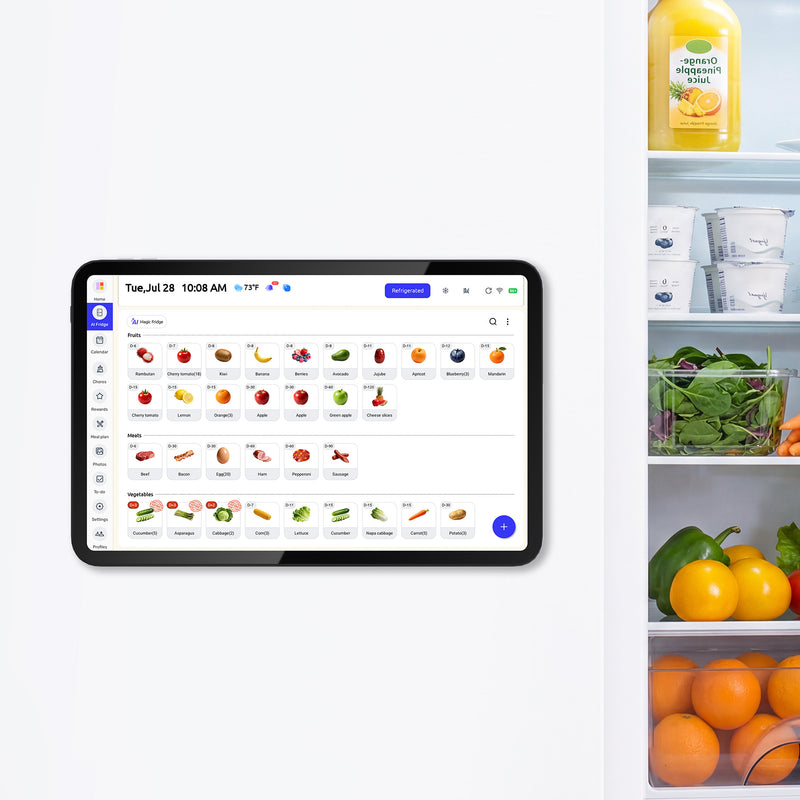
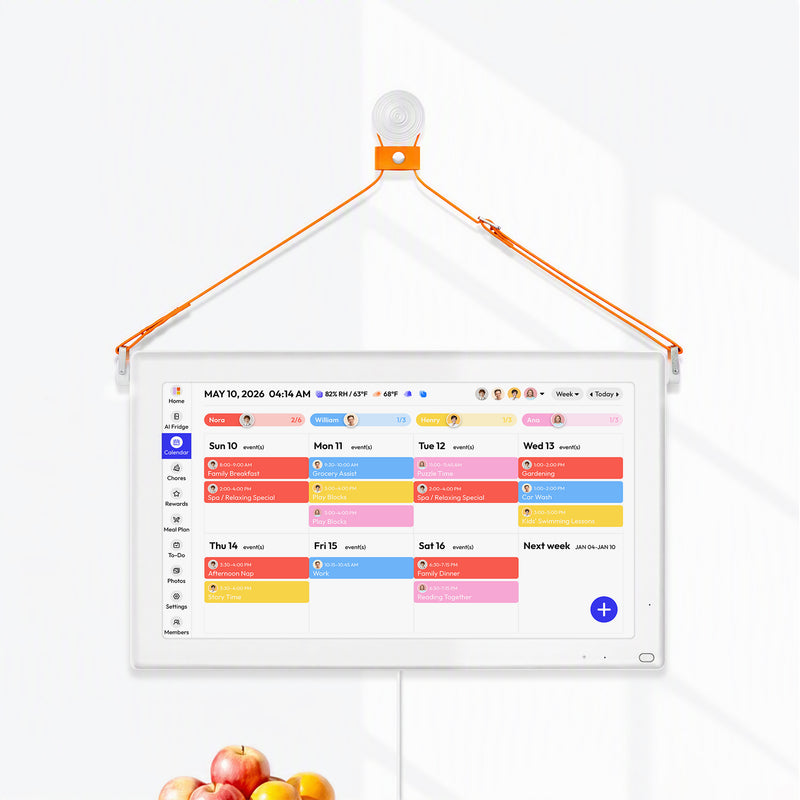
A dedicated wall display can bridge the gap between household visibility and digital automation. One example is Everblog’s digital family calendar, which is built around a 21.5-inch shared wall display and combines synced calendars with chores, meals, grocery planning, and media in one hub. That model keeps the “everyone can see it” benefit of a wall planner while reducing the rewrite burden that makes physical boards wear people out.
The better question to ask
Most families frame this as whiteboard versus app.
That’s not quite right. The better question is this: Do you need a visible schedule, or do you need a visible schedule that also stays current without constant manual work?
If your household is relatively stable, a whiteboard may be enough. If schedules change often, if multiple adults manage logistics, or if missed reminders create real stress, analog starts showing its limits fast.
Here’s the clean comparison.
| Factor | Physical whiteboard calendar | Digital wall calendar system |
|---|---|---|
| Visibility in the home | Strong | Strong |
| Manual upkeep | High | Lower |
| Remote access | Weak | Strong |
| Reminders | None built in | Available |
| Accessibility customization | Limited | Better potential |
| Handling schedule changes | Slower | Faster |
A whiteboard is often the right first command center. It just isn’t always the right long-term one.
Conclusion Creating a System That Truly Connects Your Family
The point of a family calendar isn’t neat handwriting.
It’s lower stress. Fewer repeated questions. Better handoffs. More confidence that the right person will be in the right place with the right gear at the right time.
A monthly whiteboard wall calendar can absolutely help with that. It gives a household one visible planning surface. It makes the month tangible. It helps kids participate. It can improve family rhythm quickly when the alternative is scattered notes and one overburdened parent trying to remember everything.
But physical systems come with ownership costs. Surface wear. Cleaning. Size mistakes. Manual rewriting. Accessibility limits. The board may be visible, yet still hard to read if the writing area is too small. That matters because family members often view shared calendars from 6-12 feet away, and daily boxes smaller than 4 inches are difficult to parse at that distance, according to EverWhiteBoards’ calendar sizing guidance.
That’s the practical dividing line.
If your family needs a simple shared visual anchor, a good whiteboard can be enough. Choose the surface carefully, give it enough space, and design the layout around real household questions.
If your primary friction comes from constant schedule changes, repeated reminders, and one person carrying the whole system, then the limitation isn’t your discipline. It’s the tool. At that point, a digital command center starts making more sense because it preserves visibility while removing much of the maintenance burden.
The best system is the one your family will still be using six months from now. Not the one that looks organized on day one.
If you want a family planning system that keeps the wall-calendar visibility but reduces rewriting, syncing, and reminder gaps, take a look at Everblog. It’s a practical option for households that have outgrown paper notes and want schedules, chores, meals, and shared context in one place.


