


The lost shoe is never just a lost shoe.
It's the soccer cleat that vanished after practice, the water bottle still sitting in yesterday's car, the permission slip signed but not packed, and the child who remembers the class project while you're already backing out of the driveway. Nobody in that moment thinks, “What this family needs is organizational efficiency.” You think, “Why is everything so hard before 8 a.m.?”
That's why I've come to love the idea anyway.
Organizational efficiency sounds corporate, but in family life it's the difference between a home that runs on memory and stress, and a home that runs on shared clarity. It isn't about turning your kids into employees or your kitchen into a boardroom. It's about reducing the repeated friction that steals your patience before the day even starts.
A lot of us have tried piecemeal fixes. A sticky note on the counter. A paper planner. A text thread. A mental list that one parent carries alone. Those things can help for a day, then the cracks show again. What finally changes things is treating the household like a real system, with visible routines, clear ownership, and fewer moving parts hidden in one person's head.
Beyond the Morning Scramble
One of the clearest signs that a home needs a better system is when everyone is busy, but nobody feels ahead.
A parent is packing lunches while answering a work message. One child is half dressed and looking for library books. Another says they need poster board today, not tomorrow. Someone asks what's for dinner before breakfast is even over. By 8:15, the family has already spent a lot of energy, and most of it went to recovering from surprises.
That kind of chaos doesn't usually come from laziness or lack of love. It comes from too much information floating around without a reliable place to land.
When good families rely on memory
Many homes operate on what I think of as verbal project management. One parent remembers the dentist appointment. The other parent remembers the spirit day theme. A child remembers the bake sale, but only after school starts. Everyone is trying, but the system depends on perfect recall.
That's fragile.
If you've got younger kids, it often helps to build routines outside the rush itself. Teachers do this all the time. Simple preview activities, visual cues, and repeatable steps lower the emotional temperature of a morning. That's one reason resources like Soul Shoppe's 2nd grade activities are useful even beyond the classroom. They show how a predictable start can calm minds before the day's main tasks begin.
A smoother morning usually starts the night before, when fewer decisions are left hanging in the air.
Calm is usually built, not discovered
The shift many parents need isn't more effort. It's a more visible routine.
A family morning checklist works because it removes the need to renegotiate the same steps every day. Instead of asking, reminding, and repeating, you can point to a shared sequence. If you want a simple example, this morning checklist for kids shows how breaking the routine into clear actions can reduce the usual bottlenecks.
That's the heart of organizational efficiency in a family. You replace recurring confusion with repeatable structure. And when you do, the payoff isn't just getting out the door on time. It's having enough calm left over to say goodbye like you mean it.
What Organizational Efficiency Means for Your Family
A well-run home is a lot like a well-run kitchen during dinner prep. You are not trying to make everyone move faster for the sake of speed. You want the right things to happen in the right order, with less confusion, fewer repeated questions, and less stress on the person carrying the mental load.
In family life, organizational efficiency means your household can do what matters with less friction and less wasted energy.
For one family, that means school mornings no longer depend on one parent remembering every detail. For another, it means dinner, homework, and bedtime stop piling up at the same hour. For many parents, it means the house runs on shared systems instead of one overworked brain.

A family system has two parts
One useful way to understand this is to separate what gets done from what it costs your family to get it done.
If the lunches are packed, the homework is finished, and everyone gets where they need to go, the household is producing results. But if those results require constant reminders, last-minute searches, and one parent acting like the family project manager, the hidden cost is high.
That difference matters.
Here is the same idea in family language:
| Family concept | What it means at home |
|---|---|
| Throughput | How reliably recurring tasks get finished |
| Resource intensity | How much time, energy, nagging, and follow-up those tasks require |
| Goal attainment | Whether the family is meeting the priorities it cares about |
| Process health | Whether routines are clear enough to repeat without drama |
A home can look productive from the outside and still feel exhausting on the inside. That is why efficiency is not just about output. It is also about how heavy the system feels to the people living in it.
Parents often miss this point because the task got done, so it seems good enough. But a routine that only works when one adult keeps every moving part in their head is like a diaper bag packed in a panic. You made it out the door, but you would not call that a reliable system.
Shared visibility lowers the load
Organizational efficiency at home also means fewer private systems.
If one person knows the pediatrician appointment, the library due date, the spirit week costume, and what is for dinner, the family is functioning through memory instead of structure. That works right up until it doesn't. Visible systems spread the load by putting important information where other people can see and act on it.
Paper is a good example. School forms, medical records, and activity schedules often create chaos because they sit in piles until someone urgently needs them. A simple reference setup, like Blu Monaco's paperwork organization guide, can turn that constant scavenger hunt into a routine people can follow.
Efficiency should increase connection, not squeeze it out
Business language can make this topic sound cold, but the family version is deeply human.
A good household system protects energy for patience, attention, and follow-through. It helps kids know what is expected before emotions rise. It helps partners share responsibility without having to decode each other's mental notes. It gives everyone a clearer path through the day.
So the goal is not to run your home like a company. The goal is to borrow the useful part. Clear roles, visible information, and repeatable routines help a family spend less time recovering from preventable chaos, and more time being together in a way that feels calm.
Common Roadblocks to a Smoothly Run Home
Most household stress doesn't come from one giant failure. It comes from a pile of small breakdowns that keep repeating.
The permission slip gets signed, but nobody puts it back in the backpack. Dinner ingredients exist, but not in the right combination. One parent knows the pickup plan, the other doesn't. A child agrees to do a chore, but there's no shared definition of when it's due or what “done” means.
That's not a character issue. It's a system issue.

The hidden friction points
A few patterns show up again and again in family life:
- Information silos mean one person carries the schedule, the school details, the grocery plan, and the social calendar in their head.
- Fragmented tools mean the family uses paper notes, text messages, a fridge calendar, and separate apps that don't talk to each other.
- Unclear ownership means everyone assumes someone else is handling the dog food, the form, or the dishwasher.
- Routine drift happens when a good system exists for three days, then disappears because nobody maintained it.
- Overcomplicated fixes create a new problem. A parent ends up managing the system instead of being helped by it.
That last one matters more than most of us realize.
McKinsey notes that many efficiency efforts fail because they shift work elsewhere, even while agile operating models can improve efficiency and decision speed. In family terms, a “better” system isn't better if it saves one person time by adding more tracking and oversight to another person's plate, as discussed in McKinsey's look at organizational efficiency and effectiveness.
When clutter is informational, not just physical
Paper clutter is a good example. Most families don't struggle because paper exists. They struggle because paper contains decisions. School forms, medical reminders, receipts, activity flyers, login details. Every loose page becomes a tiny open loop.
If paperwork is one of your pressure points, Blu Monaco's paperwork organization guide offers practical sorting ideas that can reduce the “where did that form go?” problem before it turns into last-minute panic.
If a household task depends on one person remembering it at exactly the right moment, the process is already shaky.
Another common roadblock is expecting instant buy-in. Kids resist systems that feel vague or unfair. Adults resist systems that create more steps than they remove. A workable household rhythm usually starts smaller. One routine. One shared place for information. One clear handoff.
That's how you lower resistance. Not with perfection, but with less friction.
A Practical Framework for Household Harmony
The most useful framework I've found for organizational efficiency is people, process, and technology. It works because it stops you from fixing the wrong thing.
If mornings are chaotic, the answer isn't always “get a better app.” Sometimes the problem is that nobody owns backpack prep. Sometimes the routine itself has too many steps. Sometimes the information exists, but it's scattered across too many places.

Start with people
People come first because families need clarity before they need tools.
One parent shouldn't be the unpaid operations department for the whole home. Each recurring responsibility needs a real owner, even if the owner is a child with support. “Help with laundry” is fuzzy. “Put your clothes in the hamper after school and move them to your drawer on Saturdays” is clearer.
A simple way to test this is to ask, “If I disappeared for one afternoon, would anyone know what still needs to happen?” If the answer is no, your family probably has too much invisible management.
Then simplify the process
A process is just the repeatable path from start to finish. Families use processes all day long, whether they call them that or not.
The strongest ones have three qualities:
- They begin at the right time. A smooth morning starts the night before.
- They reduce handoffs. Fewer “Can you tell them to tell me?” moments mean less confusion.
- They end with a visible done state. Everyone knows when the task is complete.
If cleaning is one of the hardest categories to stabilize, it helps to borrow a realistic routine instead of inventing one from scratch. Neat Hive Cleaning tips for moms are useful for this because they focus on recurring household flow, not fantasy-level perfection.
Use technology to shorten the loop
Technology helps when it reduces the time between task assignment, acknowledgment, and completion. That loop matters. When a task sits in limbo, parents follow up, kids forget, and the household pays the cost in extra mental load. A people-process-technology model improves efficiency when tools directly support information flow and decision-making, rather than adding another layer, as described in this guide to organizational effectiveness.
Here's a family example.
The Millers have two school-aged kids, one parent with variable work hours, and a constant evening problem. Appointments get missed, chores spark arguments, and dinner planning starts too late. Their first instinct is to “be more on top of things,” but that doesn't last.
They make three changes:
- People. Each child gets a small set of clearly owned chores. One adult owns calendar updates. The other owns grocery restocking.
- Process. Sunday evening becomes the family reset. They review the week, note activity changes, and sketch meals.
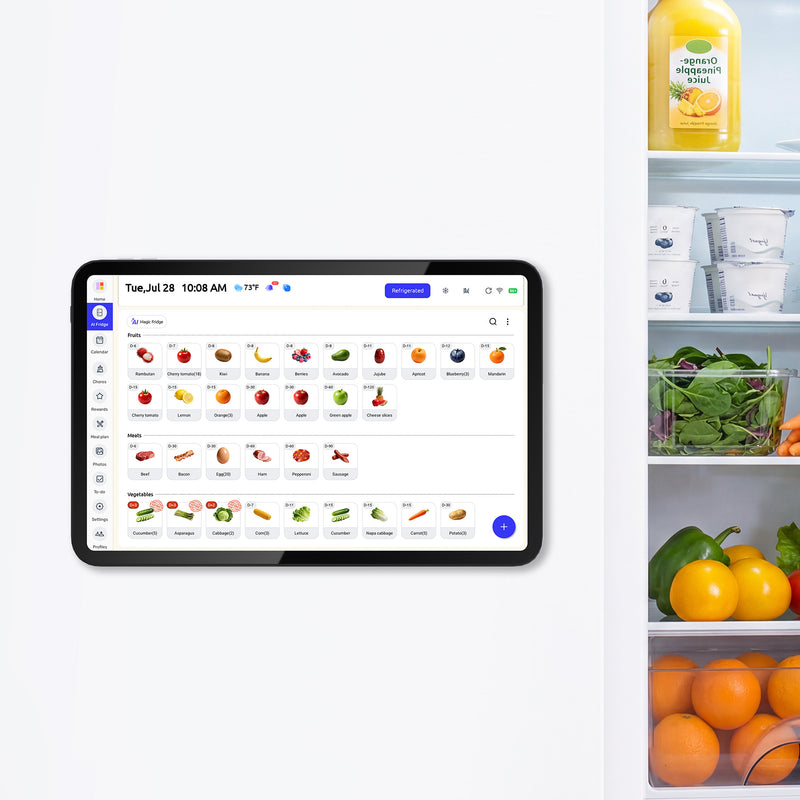
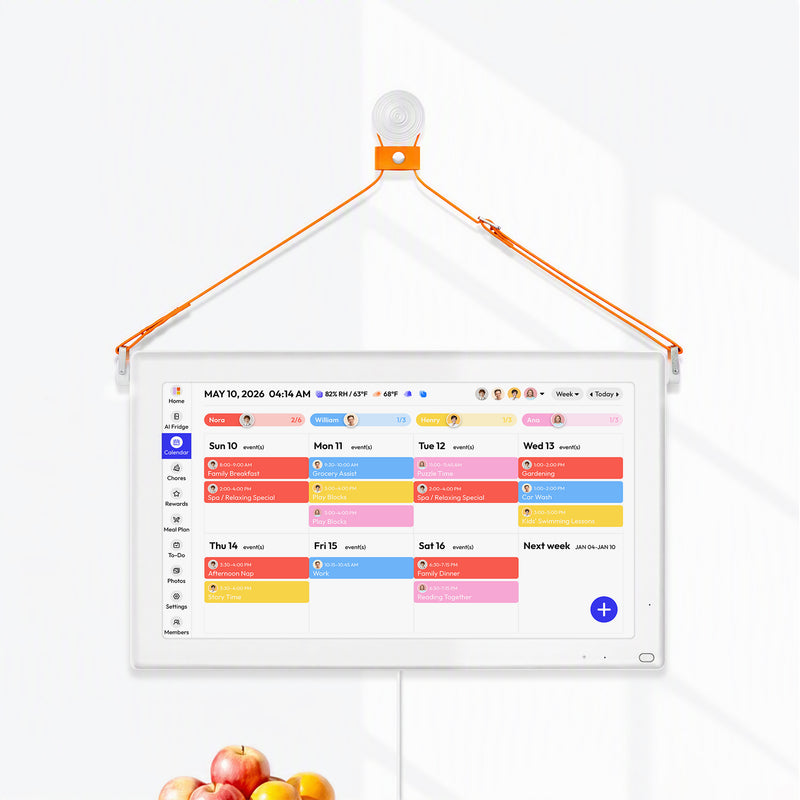
- Technology. They put the shared information in one visible place using a family hub. One option is Everblog's family organization system, which brings schedules, chores, meals, and lists into one shared display so family members can see what's coming without asking the same questions over and over.
A short demo helps make this kind of setup easier to picture.
The breakthrough isn't that the Millers become ultra-disciplined. It's that fewer tasks depend on one person remembering, reminding, or rescuing. The home gets lighter because the system carries more of the load.
How to Know If Your System Is Working
You can usually tell a household system is working before you could ever prove it on paper. The morning still has noise. Kids still forget things sometimes. But the whole house no longer feels like one long chain of reminders, last-minute searches, and rushed apologies.
That shift matters.
Organizational efficiency at home is not about squeezing more tasks into the day. It is more like keeping a family kitchen in working order. You know it is functioning well when dinner gets made without opening every drawer, hunting for the spatula, and asking who used the last clean pan. A home system works the same way. The signs are practical, visible, and felt by everyone living in it.

Look for progress your family can feel
A useful family scorecard is simple. It checks whether your home is helping your family do what matters, whether routines hold up during a busy week, and whether the people carrying the work feel less strained.
In plain language, look for signs like these:
- Fewer “I forgot” moments. Your system is catching details before they turn into mini-crises.
- Calmer transitions. People know what happens next, so every shift does not require a parent to direct traffic.
- Less nagging. Responsibilities are visible enough that the system is doing some of the reminding.
- Better evening energy. The day ends with enough margin left for connection, not just cleanup and recovery.
The key is trend, not perfection. One rough Tuesday does not mean the system is broken. A month of the same preventable scramble usually means one part of the system needs repair.
Ask three simple questions each week
A short weekly check-in can tell you more than a complicated tracker. Try asking:
| Question | What you're really checking |
|---|---|
| Did we get where we needed to go on time? | Whether the system is helping your family meet its goals |
| Did our routines hold up under pressure? | Whether your process still works on real-life days |
| Did the week feel fair and manageable? | Whether the workload is shared in a healthy way |
These questions work because they cover the three pressure points families feel first. Did life happen as planned? Did the routine survive real conditions? Did one person end the week carrying too much?
Measure success by how quickly the household recovers and how much stress it prevents.
If you are not sure where the strain still lives, a mental load checklist for families can help you spot the tasks that stay invisible until one tired person drops them.
A strong home system does not create a robotic house. It creates a house where information is easier to find, work is easier to share, and family members have more energy left for each other.
The True Goal Is More Time for What Matters
A well-run home shouldn't feel robotic. It should feel breathable.
That's why I think organizational efficiency is worth reclaiming from corporate language. In family life, it isn't about squeezing more output from everyone. It's about removing the repeated friction that steals patience, creates resentment, and crowds out connection.
When the schedule is visible, chores are clearer, and dinner doesn't begin as a daily mystery, the benefit isn't the tidy system itself. The benefit is what returns to the family. More relaxed conversations. More unhurried evenings. More attention for the child who wants to tell a long story at the wrong time, which suddenly becomes the right time because you aren't putting out three other fires.
You don't need a flawless household to get there. You need a home where important information is shared, responsibilities are understood, and routines support the people living inside them.
That's organizational efficiency at its most human. Less chaos. Less carrying. More room for family life to feel like family life.
If you want one shared place for schedules, chores, meals, and family routines, Everblog is built for exactly that kind of household visibility. It gives families a central hub so fewer details stay trapped in one person's head, which can make daily coordination feel calmer and more manageable.


